


1. Search Result
Search Result
Pathways Recommended: Stem Cell/Wnt Cell Cycle/DNA Damage
Results for "

mouse T cells

" in MedChemExpress (MCE) Product Catalog:

313

Inhibitors & Agonists

3

Fluorescent Dyes

6

Biochemical Assay Reagents

25

Peptides

4

MCE Kits

142

Inhibitory Antibodies

10

Natural
Products

2

Isotope-Labeled Compounds

2

Click Chemistry

4

Oligonucleotides

1

GMP Molecules

Cat. No. Product Name Target Research Areas Chemical Structure
  • HY-P99132
    Anti-Mouse CTLA-4 Antibody (9D9)
    2 Publications Verification

    CTLA-4 Inflammation/Immunology Cancer
    Anti-Mouse CTLA-4 Antibody (9D9) is an anti-mouse CTLA-4 IgG2b monoclonal antibody. Anti-Mouse CTLA-4 Antibody (9D9) can bind to CTLA-4 and block its binding to B7. Anti-Mouse CTLA-4 Antibody (9D9) enhances T cell function by increasing the ratio of CD8 + T cells to regulatory T cells (Tregs). Anti-Mouse CTLA-4 Antibody (9D9) can be used for research on cancer such as colon cancer and melanoma .
    Anti-Mouse CTLA-4 Antibody (9D9)
  • HY-129492
    GNF4877
    1 Publications Verification

    DYRK GSK-3 Metabolic Disease
    GNF4877 is a potent DYRK1A and GSK3β inhibitor with IC50s of 6 nM and 16 nM, respectively, which leads to blockade of nuclear factor of activated T-cells (NFATc) nuclear export and increased β-cell proliferation (EC50 of 0.66 μM for mouse β (R7T1) cells) .
    GNF4877
  • HY-P99948

    AMG-596

    EGFR CD3 Neurological Disease Cancer
    Etevritamab (AMG-596) is a bispecific T-cell engager that targets EGFRvIII and CD3. Etevritamab simultaneously binds CD3 on T cells and EGFRvIII on glioblastoma multiforme cells, thereby forming a bridge structure. Etevritamab triggers T-cell activation, proliferation, secretion of cytotoxic substances, and tumor cell lysis. Etevritamab extends overall survival and induces tumor regression in mouse models of glioblastoma multiforme. Etevritamab can be used for research related to glioblastoma .
    Etevritamab
  • HY-P99728

    RG7835; RO7049665

    Interleukin Related Metabolic Disease Inflammation/Immunology
    Melredableukin alfa (RG7835) is a bivalent conjugate composed of a human IL-2 mutant (T3A, N88D, C125A) and human IgG1. Melredableukin alfa exhibits enhanced Treg cell selectivity in cynomolgus monkey and humanized mouse models. Melredableukin alfa can be used in research related to ulcerative colitis and autoimmune hepatitis .
    Melredableukin alfa
  • HY-P99623

    MGD006; S80880

    CD3 Cancer
    Flotetuzumab (MGD006; S80880) is an investigational CD123/CD3 bispecific dual-affinity retargeting antibody (DART) molecule. Flotetuzumab reactivates T cells by simultaneously binding to CD123 in target cells and CD3 in effector T cells, leading to T-cell-mediated cytotoxicity in target cells. Flotetuzumab shows inhibitory effect on a mouse model of patient-derived xenograft (PDX) in acute myeloid leukemia (AML) .
    Flotetuzumab
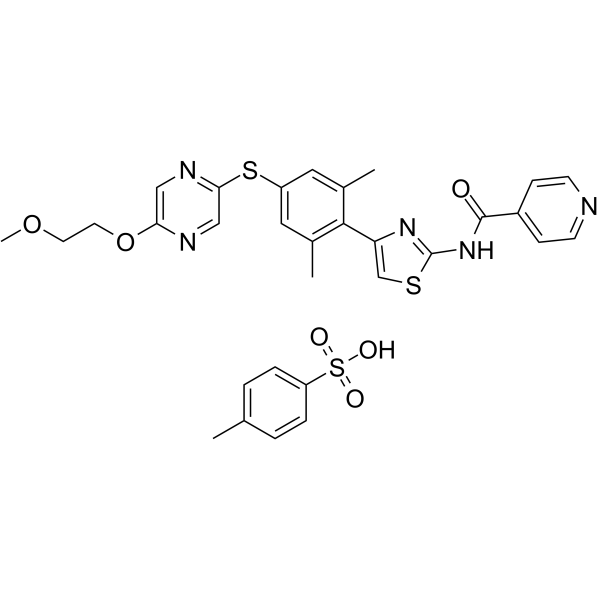
  • HY-120356A
    T-1101 tosylate
    1 Publications Verification

    TAI-95 tosylate

    NEKs Apoptosis Cancer
    T-1101 tosylate (TAI-95 tosylate) is the tosylate salt form of T-1101 (HY-120356). T-1101 tosylate is an orally active inhibitor for mitose regulating highly expressed oncoprotein 1 (Hec1). T-1101 tosylate blocks the interaction between Hec1 and NEK2, exhibits cytotoxicity in human liver cancer cells with GI50 of 15-70 nM. T-1101 tosylate induces apoptosis in Huh-7. T-1101 tosylate exhibits antitumor efficacy in mouse models .
    T-1101 tosylate
  • HY-P99152

    Muromanab-CD3

    CD3 Interleukin Related IFNAR Inflammation/Immunology Cancer
    Muromonab (Muromonab-CD3; OKT3) is a mouse monoclonal antibody targeting the CD3 antigen. Muromonab specifically binds to the CD3 antigen on the surface of human and higher primate T cells. Muromonab blocks the function of T cell receptors to recognize foreign antigens and inhibits T cell-mediated immune responses, including cell-mediated lymphocyte lysis and T cell proliferation responses. Muromonab can be used to study acute kidney, liver, heart and combined kidney-pancreas transplant rejection, and can also be used to study graft-versus-host disease in bone marrow transplant patients .
    Muromonab
  • HY-131140
    BD750
    5 Publications Verification

    JAK STAT Inflammation/Immunology Cancer
    BD750, an effective immunosuppressant and a JAK3/STAT5 inhibitor, inhibits IL-2-induced JAK3/STAT5-dependent T cell proliferation, with IC50 values of 1.5 μM and 1.1 μM in mouse and human T cells, respectively .
    BD750
  • HY-P990802

    CD3 Metabolic Disease Inflammation/Immunology
    Anti-Mouse CD3ε Antibody (145-2C11) is an orally active anti-mouse CD3ε IgG1 monoclonal antibody. Anti-Mouse CD3ε Antibody (145-2C11) can inhibit the proliferation of effector T cells and improve the function of regulatory T cells (Tregs). Anti-Mouse CD3ε Antibody (145-2C11) relieves inflammatory response by inhibiting the production of pro-inflammatory cytokines and increasing the secretion of anti-inflammatory factors. Anti-Mouse CD3ε Antibody (145-2C11) can be used for researches on metabolic and immune system conditions such as diabetes and lupus. The recommend isotype control of Anti-Mouse CD3ε Antibody (145-2C11): Armenian hamster IgG, Isotype Control (HY-P990305) .
    Anti-Mouse CD3ε Antibody (145-2C11)
  • HY-N0600

    Interleukin Related IFNAR NF-κB Inflammation/Immunology
    Ginsenoside F3 is a saponin extracted from the leaves of Panax ginseng with immunoenhancing and antitumor immunostimulatory activities. Ginsenoside F3 upregulates RIPOR2 with a Kd value of 3.77 μM. Ginsenoside F3 enhances NF‑κB activation, upregulates T‑bet and downregulates GATA‑3, increases the production of IL‑2 and IFN‑γ, decreases the production of IL‑4 and IL‑10, reverses CD8⁺ Tcell exhaustion, restores cytokine secretion, and enhances antitumor immunity in a mouse non‑small cell lung cancer model. Ginsenoside F3 can be used for the research of non-small cell lung cancer .
    Ginsenoside F3
  • HY-P990273

    CD38 ERK CD1 Apoptosis Inflammation/Immunology Cancer
    Anti-Mouse CD38 Antibody (NIMR5) is an anti-mouse CD38 IgG2a monoclonal antibody. Anti-Mouse CD38 Antibody (NIMR5) can activate the ERK signaling pathway and promote cell apoptosis. Anti-Mouse CD38 Antibody (NIMR5) can restore T cell function. Anti-Mouse CD38 Antibody (NIMR5) upregulates the expression of CD1d protein and enhances spleen cell proliferation, dendritic cell (DC) and natural killer T cell (NKT) expansion. Anti-Mouse CD38 Antibody (NIMR5) can be used for researches on cancer and immunology such as melanoma and colon cancer .
    Anti-Mouse CD38 Antibody (NIMR5)
  • HY-P99129
    Anti-Mouse CD8a Antibody (53-6.7)
    3 Publications Verification

    Transmembrane Glycoprotein Inflammation/Immunology
    Anti-Mouse CD8a Antibody (53-6.7) is an anti-mouse CD8a IgG2a antibody inhibitor derived from host Rat. Anti-Mouse CD8a Antibody (53-6.7) binds to CD8αβ stabilizes a conformation with a higher affinity for interaction with MHC class I. Anti-Mouse CD8a Antibody (53-6.7) induces the phosphorylation and activation of TCR proximal signaling pathway components Lck and ZAP70 in polyclonal memory T cells. Anti-Mouse CD8a Antibody (53-6.7) depletes CD8+ T cells and neutralizes cytokine in mice .
    Anti-Mouse CD8a Antibody (53-6.7)
  • HY-P990680

    Transmembrane Glycoprotein TNF Receptor Infection Inflammation/Immunology Cancer
    Anti-Mouse CD40 Antibody (FGK4.5/FGK45) is an agonistic rat-derived IgG2a monoclonal antibody targeting mouse CD40. Anti-Mouse CD40 Antibody (FGK4.5/FGK45) enhances T cells responses, dendritic cells maturation and NK cells activation. Anti-Mouse CD40 Antibody (FGK4.5/FGK45) can be used for the researches of cancer, infection, inflammation and immunology, such as CT26 tumor, vesicular stomatitis virus (VSV) infection and transplantation .
    Anti-Mouse CD40 Antibody (FGK4.5/FGK45)
  • HY-P990795

    Osteopontin Inflammation/Immunology Cancer
    Anti-Mouse osteopontin/SPP1 Antibody (100D3) is an anti-mouse osteopontin/SPP1 IgG2c monoclonal antibody. Anti-Mouse osteopontin/SPP1 Antibody (100D3) can reverse the inhibition of osteopontin (OPN) on T cells and enhance cytotoxic T lymphocyte (CTL) killing ability. Anti-Mouse osteopontin/SPP1 Antibody (100D3) can improve dentin density. Anti-Mouse osteopontin/SPP1 Antibody (100D3) can be used for researches on cancer and dental related conditions such as colon cancer. The recommend isotype control of Anti-Mouse osteopontin/SPP1 Antibody (100D3): Mouse IgG2c kappa, Isotype Control (HY-P99981) .
    Anti-Mouse osteopontin/SPP1 Antibody (100D3)
  • HY-P99916

    AMG-427

    FLT3 CD3 TNF Receptor Inflammation/Immunology Cancer
    Emirodatamab (AMG-427) is a bispecific T-cell engager (BiTE). Emirodatamab simultaneously binds FLT3 on the surface of acute myeloid leukemia (AML) cells and CD3 on the surface of T cells, thereby precisely recruiting immune effector cells to tumor sites. Emirodatamab potently induces T cell activation, secretion of proinflammatory cytokines (such as IFNγ, TNFα), and specific cytotoxicity, effectively lysing FLT3-positive tumor cells and inhibiting their growth. Emirodatamab not only significantly prolongs survival in mouse xenograft models and eliminates diseased cells in primates, but also exhibits a synergistic enhancement effect when combined with PD-1 blockade therapy. Emirodatamab is used in studies of acute myeloid leukemia, especially relapsed or refractory cases .
    Emirodatamab
  • HY-175802

    HYBI-084

    WDR5 Potassium Channel Inflammation/Immunology Cancer
    HBI-2375 (HYBI-084) is a brain-penetrant WDR5 inhibitor with an IC50 of 4.48 nM. HBI-2375 binds to the WINR5 and disrupts MLL1-WDR5 protein-protein interactions. HBI-2375 inhibits cancer cells proliferation and shows anti-tumor activity in AML mouse models, and increases tumor CD8 + cytotoxic T lymphocyte infiltration. HBI-2375 inhibits hERG with an IC50 of 17 µM .
    HBI-2375
  • HY-P99124
    Anti-Mouse CD3 Antibody (17A2)
    1 Publications Verification

    CD3 Inflammation/Immunology
    Anti-Mouse CD3 Antibody (17A2) is an anti-mouse CD3 IgG2b antibody inhibitor derived from the host Rat. Anti-Mouse CD3 Antibody (17A2) enhances T-cell proliferation and activation and stimulate IFN-γ or IL-17 production in splenic T cells. Anti-Mouse CD3 Antibody (17A2) significantly suppresses mortality in Graft-versus-host disease (GVHD) mice models .
    Anti-Mouse CD3 Antibody (17A2)
  • HY-154974

    Liposome Cancer
    LNP Lipid-8 (11-A-M) is an ionizable single-tail multi-head lipid that can be used as a lipid nanoparticle (LNP) to deliver siRNA to T cells without targeting ligands. LNP Lipid-8 is more selective for T cells than other cell types such as hepatocytes. LNP Lipid-8 selectively delivers siRNA/sgRNA to T cells (especially CD8+ T cells) through endogenous lipid transport pathways, and can enter cells and release RNA through endocytosis to achieve gene silencing. LNP Lipid-8 loaded with GFP siRNA (siGFP) significantly led to GFP gene silencing in mouse models. LNP Lipid-8 showed good efficacy and safety in both cells and animals, without obvious liver targeting and toxicity. LNP Lipid-8 can be used for RNA delivery research in the fields of tumor immunotherapy and T cell-mediated autoimmune diseases .
    LNP Lipid-8
  • HY-P99128

    Transmembrane Glycoprotein Inflammation/Immunology
    Anti-Mouse CD8 beta Antibody (53-5.8) is an anti-mouse CD8 beta IgG2a monoclonal antibody. Anti-Mouse CD8 beta Antibody (53-5.8) can deplete CD8 + T cells and enhance cytotoxicity. Anti-Mouse CD8 beta Antibody (53-5.8) can be used for research on immunology .
    Anti-Mouse CD8 beta Antibody (53-5.8)
  • HY-P99123
    Anti-Mouse CD28 Antibody (37.51)
    2 Publications Verification

    CD28 Inflammation/Immunology
    Anti-Mouse CD28 Antibody (37.51) is an agonistic agonistic CD28-specific antibody derived from the host Syrian Hamster. Anti-Mouse CD28 Antibody (37.51) partially prevents lethal graft-versus-hostdisease (GVHD) by selective depletion of alloreactive T cells in mice .
    Anti-Mouse CD28 Antibody (37.51)
  • HY-144088
    ZYF0033
    2 Publications Verification

    HPK1-IN-22

    MAP4K Inflammation/Immunology Cancer
    ZYF0033 is an orally active inhibitor of the hematopoietic progenitor cell kinase HPK1 with an IC50 of less than 10 nM based on the phosphorylation inhibition of MBP protein. ZYF0033 promotes anti-cancer immune responses and reduces phosphorylation of SLP76 (serine 376). ZYF0033 inhibits tumor growth in the 4T-1 syngeneic mouse model and leads to increased intratumoral infiltration of DCs, NK cells, and CD107a +CD8 + T cells, but not T cells, PD-1 +CD8 + T cells, TIM-3 +CD8 + Infiltration of T cells and LAG3 +CD8 + T cells was reduced .
    ZYF0033
  • HY-162655
    SLF80821178
    1 Publications Verification

    LPL Receptor Neurological Disease
    SLF80821178 is a potent and orally active inhibitor of Sphingosine-1-Phosphate Transporter (Spns2). SLF80821178 inhibits S1P release with an IC50 of 51 nM in HeLa cells and a T1/2 of 2.4 h in mouse .
    SLF80821178
  • HY-P99141

    LAG-3 Inflammation/Immunology Cancer
    Anti-Mouse LAG-3 Antibody (C9B7W) is an anti-mouse LAG-3 IgG1 monoclonal antibody. Anti-Mouse LAG-3 Antibody (C9B7W) can enhance CD4 + T cell function and exert anti-tumor effects without blocking the interaction between LAG-3 and MHCII. Anti-Mouse LAG-3 Antibody (C9B7W) can be used for research on cancer such as head and neck squamous cell carcinoma (HNSCC) .
    Anti-Mouse LAG-3 Antibody (C9B7W)
  • HY-162133

    STING Apoptosis IKK IFNAR NF-κB Cancer
    MSA-2-Pt, platinum salt-modified MSA-2 (HY-136927), is a STING agonist. MSA-2-Pt inducing cell
    death by platinum and activating the STING pathway by MSA-2. MSA-2-Pt direct activates STING pathway, induces phosphorylation of TBK1, IRF3, and NF-κB p65. MSA-2-Pt enhances tumor infiltration of CD4 + and CD8 + T cells, and induces tumor cell death and apoptosis in mouse colon carcinoma and melanoma models .
    MSA-2-Pt
  • HY-P990303

    Nuclear Factor of activated T Cells (NFAT) Others
    Anti-Mouse 2C TCR Antibody (1B2) is a mouse-derived IgG1 type antibody inhibitor, targeting to mouse 2C TCR. Anti-Mouse 2C TCR Antibody (1B2) recognizes determinants on the variable regions of both the α and β subunits of the TCR (T cell receptor) expressed by the mouse cytotoxic T lymphocyte clone 2C. Anti-Mouse 2C TCR Antibody (1B2) can be used for the detections of immunofluorescence and flow cytometry .
    Anti-Mouse 2C TCR Antibody (1B2)
  • HY-106934A
    Peldesine dihydrochloride
    1 Publications Verification

    BCX 34 dihydrochloride

    Nucleoside Antimetabolite/Analog HIV Infection Inflammation/Immunology Cancer
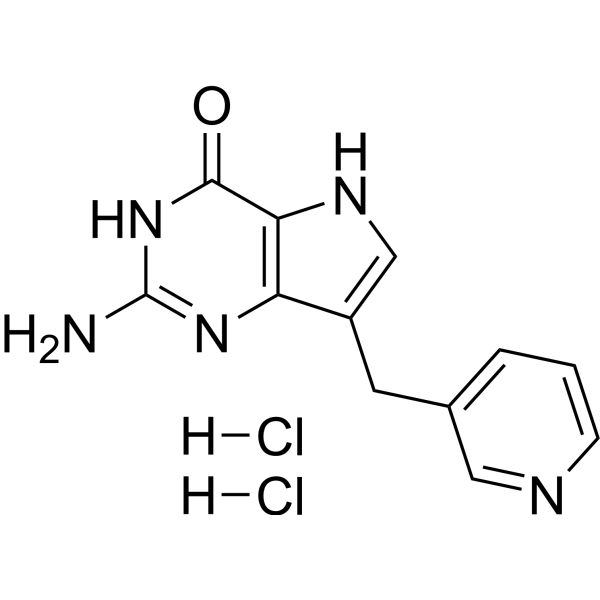
    Peldesine (BCX 34) dihydrochloride is a potent, competitive, reversible and orally active purine nucleoside phosphorylase (PNP) inhibitor with IC50s of 36 nM, 5 nM, and 32 nM for human, rat, and mouse red blood cell (RBC) PNP, respectively. Peldesine dihydrochloride is also a T-cell proliferation inhibitor with an IC50 of 800 nM. Peldesine dihydrochloride has the potential for cutaneous T-cell lymphoma, psoriasis and HIV infection research .
    Peldesine dihydrochloride
  • HY-24504

    Mixed Lineage Kinase Inflammation/Immunology Cancer
    MBA-m1 is a MLKL inhibitor. MBA-m1 inhibits necroptosis in Mlkl −/− NIH-3T3 cells. MBA-m1 ameliorates disease in MLKL-induced dermatitis and abdominal aortic aneurysm mouse model .
    MBA-m1
  • HY-P10323

    Tumstatin (74-98), human

    Integrin FAK mTOR Apoptosis Cancer
    T7 Peptide is a protein synthesis inhibitor and anti-angiogenic agent, with a Kd of 10 nM for human transferrin receptor. T7 Peptide inhibits the phosphorylation of focal adhesion kinase, the activation of phosphatidylinositol 3-kinase and Akt, the kinase activity of mTOR, as well as the phosphorylation of 4E-BP1 in endothelial cells. T7 Peptide induces G0/G1 cell cycle arrest, apoptosis and protective autophagy in hepatocellular carcinoma cells, and suppresses tumor growth in mouse models. T7 Peptide is applicable to research related to cancer, glioblastoma, hepatocellular carcinoma and glioma .
    T7 Peptide
  • HY-P10323A

    Tumstatin (74-98), human TFA

    Integrin FAK mTOR Apoptosis Cancer
    T7 Peptide TFA is a protein synthesis inhibitor and anti-angiogenic agent, with a Kd of 10 nM for human transferrin receptor. T7 Peptide TFA inhibits the phosphorylation of focal adhesion kinase, the activation of phosphatidylinositol 3-kinase and Akt, the kinase activity of mTOR, as well as the phosphorylation of 4E-BP1 in endothelial cells. T7 Peptide TFA induces G0/G1 cell cycle arrest, apoptosis and protective autophagy in hepatocellular carcinoma cells, and suppresses tumor growth in mouse models. T7 Peptide TFA is applicable to research related to cancer, glioblastoma, hepatocellular carcinoma and glioma .
    T7 Peptide TFA
  • HY-P990953

    Gen1047

    CD3 Cancer
    Zubotamig (Gen1047) is an CD3E/VTCN1-targeting Ig(G1 -κ_G1 -λ2) type chimeric human antibody. The recommed isotype control is Human IgG1 kappa, Isotype Control (HY-P99001). Zubotamig induces T-cell mediated cytotoxicity of B7H4-positive tumor cells, triggers T-cell activation, and induces cytokine release from T cells in the presence of B7H4-expressing tumor cells. Zubotamig demonstrates antitumor activity in mouse patient-derived xenograft (PDX) models. Zubotamig can be used for the research of solid cancers (including breast, ovarian and lung cancer) .
    Zubotamig
  • HY-P991110

    Interleukin Related Inflammation/Immunology
    Anti-Mouse CD25 Antibody (7D4) is a mouse IgG2 monoclonal antibody targeting CD25. Anti-Mouse CD25 Antibody (7D4) enables the isolation of naive CD4 + T cells by depleting CD25-expressing cells .
    Anti-Mouse CD25 Antibody (7D4)
  • HY-131598C

    6-Thioguanosine-5'-triphosphate tetrasodium

    Ras Inflammation/Immunology
    6-Thio-GTP (tetrasodium) is a Vav1-Rac inhibitor. 6-Thio-GTP (tetrasodium) inhibits TCR-stimulated T cell proliferation and CD28-mediated T cell survival. 6-Thio-GTP (tetrasodium) has an immunosuppressive effect in a mouse cardiac allograft transplant model and prolongs cardiac allograft survival .
    6-Thio-GTP tetrasodium
  • HY-P5396A

    Amino Acid Decarboxylase Others
    GAD65 (524-543) acetate is a biological active peptide with amino acids 524 to 543 fragment of glutamic acid decarboxylase 65 (GAD65). GAD65 (524-543) acetate is one of the first fragments of the islet antigen to induce proliferative T cell responses in the non-obese diabetic (NOD) mouse model of spontaneous autoimmune diabetes. GAD65 (524-543) acetate is a specific, possibly low affinity, stimulus for the spontaneously arising diabetogenic T cell clone BDC2.5. Immunization with GAD65 (524-543) acetate increases the susceptibility of the NOD mice to type 1 diabetes induced by the adoptive transfer of BDC2.5 T cells .
    GAD65 (524-543) acetate
  • HY-P991112

    Transmembrane Glycoprotein Infection
    Anti-Mouse CD8α Antibody (YTS169.4) is an IgG2 monoclonal antibody targeting mouse CD8α. Anti-Mouse CD8α Antibody (YTS169.4) rapidly depletes or downregulates CD8 + T cells in the spleens of Biozzi AB/H mice. Anti-Mouse CD8α Antibody (YTS169.4) is applicable to research related to hepatitis B virus infection . Recommended isotype control: Rat IgG2b kappa, Isotype Control (HY-P990682).
    Anti-Mouse CD8α Antibody (YTS169.4)
  • HY-P99138

    Interleukin Related Inflammation/Immunology Cancer
    Anti-Mouse IL-1a Antibody (ALF-161) is an anti-mouse IL-1a IgG1 monoclonal antibody. Anti-Mouse IL-1a Antibody (ALF-161) can inhibit CD8 + T cell response by blocking IL-1a signaling. Anti-Mouse IL-1a Antibody (ALF-161) can reversibly transform myeloid cell expansion and improve T cell function. Anti-Mouse IL-1a Antibody (ALF-161) can be used for researches on immune response and cancer such as breast cancer .
    Anti-Mouse IL-1a Antibody (ALF-161)
  • HY-P990820

    Transmembrane Glycoprotein Inflammation/Immunology Cancer
    Anti-Mouse TIM-4 Antibody (RMT4-53) is a rat-derived IgG2b κ type antibody inhibitor, targeting to mouse TIM-4. Anti-Mouse TIM-4 Antibody (RMT4-53) can block T cell immunoglobulin and mucin domain 4 (TIM-4). Anti-Mouse TIM-4 Antibody (RMT4-53) can inhibit the engulfment of apoptotic cells and T cell proliferation. Anti-Mouse TIM-4 Antibody (RMT4-53) can be used for the researches of cancer, immunology and metabolic disease, such as MC38 tumor and graft .
    Anti-Mouse TIM-4 Antibody (RMT4-53)
  • HY-147696

    HSP AMPK Reactive Oxygen Species (ROS) Cancer
    SMTIN-T140 (compound 6a) is a potent TRAP1 (tumor-necrosis-factor-receptor associated protein 1) inhibitor, with an IC50 of 1.646 μM. SMTIN-T140 shows anticancer activity. SMTIN-T140 leads to mitochondrial dysfunction, increases mitochondrial ROS production and activates AMPK. SMTIN-T140 potently suppressed tumor growth without any noticeable in vivo toxicity in a mouse model xenografted with PC3 prostate cancer cells .
    SMTIN-T140
  • HY-P990242

    Galectin TNF Receptor IFNAR Interleukin Related Inflammation/Immunology Cancer
    Anti-Mouse Galectin-9 Antibody (RG9-1) is an anti-mouse Galectin-9 IgG2b monoclonal antibody. Anti-Mouse Galectin-9 Antibody (RG9-1) promotes inflammatory response by enhancing the secretion of IFN-γ, TNF-α, and IL-6. Anti-Mouse Galectin-9 Antibody (RG9-1) can increase CD8 T cell and Treg frequency. Anti-Mouse Galectin-9 Antibody (RG9-1) reduces graft survival time by increasing CD4 + and CD8 + T cell infiltration. Anti-Mouse Galectin-9 Antibody (RG9-1) can be used for researches on inflammation conditions, cancer and xenotransplantation such as ischemia-reperfusion, colon cancer, breast cancer and leukemia .
    Anti-Mouse Galectin-9 Antibody (RG9-1)
  • HY-P990264

    Transmembrane Glycoprotein Inflammation/Immunology
    Anti-Mouse CD70 Antibody (FR70) is a rat-derived ant-mouse CD70 IgG2b κ type antibody inhibitor. Anti-Mouse CD70 Antibody (FR70) decreases CD4 +, CD8 + T cells and eosinophils. Anti-Mouse CD70 Antibody (FR70) shows potent anti-inflammatory and anti-immune effects on allergic lung inflammation and cardiac transplant mice models .
    Anti-Mouse CD70 Antibody (FR70)
  • HY-P990124

    TNF Receptor NF-κB Interleukin Related Inflammation/Immunology Cancer
    Anti-Mouse GITR Antibody (DTA-1) is a rat derived IgG2b monoclonal agonist antibody targeting mouse GITR. Anti-Mouse GITR Antibody (DTA-1) can activate T cells and B cells to enhance immune response. Anti-Mouse GITR Antibody (DTA-1) selectively enhances Th2 cell effector function through GITR signaling. Anti-Mouse GITR Antibody (DTA-1) may exacerbate allergic reactions. Anti-Mouse GITR Antibody (DTA-1) can be used for researches on cancer and allergic conditions such as colon cancer and allergic asthma. The recommed isotype control of Anti-Mouse GITR Antibody (DTA-1) is Rat IgG2b kappa, Isotype Control (HY-P990682) .
    Anti-Mouse GITR Antibody (DTA-1)
  • HY-145239

    PD-1/PD-L1 Cancer
    PD-1/PD-L1-IN-13 (Compound 43) is a potent immune checkpoint PD-1/PD-L1 inhibitor with an IC50 value of 10.2 nM. PD-1/PD-L1-IN-13 promots CD8 + T cell activation and delays the tumor growth in the Hepa1-6 syngeneic mouse model .
    PD-1/PD-L1-IN-13
  • HY-106934

    BCX 34

    Nucleoside Antimetabolite/Analog HIV Infection Inflammation/Immunology Cancer
    Peldesine (BCX 34) is a potent, competitive, reversible and orally active purine nucleoside phosphorylase (PNP) inhibitor with IC50s of 36 nM, 5 nM, and 32 nM for human, rat, and mouse red blood cell (RBC) PNP, respectively. Peldesine is also a T-cell proliferation inhibitor with an IC50 of 800 nM. Peldesine has the potential for cutaneous T-cell lymphoma, psoriasis and HIV infection research .
    Peldesine
  • HY-P990115

    Orexin Receptor (OX Receptor) Inflammation/Immunology Cancer
    Anti-Mouse OX40/CD134 Antibody (OX-86) is an anti-mouse OX40/CD134 IgG1 monoclonal antibody. Anti-Mouse OX40/CD134 Antibody (OX-86) can enhance the anti-tumor function of CD8 + T cells. Anti-Mouse OX40/CD134 Antibody (OX-86) can reverse immune suppression, enhance antigen presentation and T cell activation. Anti-Mouse OX40/CD134 Antibody (OX-86) can be used for research on cancer such as papilloma and leukemia .
    Anti-Mouse OX40/CD134 Antibody (OX-86)
  • HY-P99131

    Transmembrane Glycoprotein Infection Inflammation/Immunology
    Anti-Mouse CD90.2 Antibody (30H12) is an anti-mouse CD90.2 IgG2b antibody inhibitor derived from host Rat. Anti-Mouse CD90.2 Antibody (30H12) can deplete innate lymphoid cells (ILC) and T cells. Anti-Mouse CD90.2 Antibody (30H12) can be used for the researches of infection, inflammation and immunology, such as Yersinia enterocolitica infection and airway inflammation .
    Anti-Mouse CD90.2 Antibody (30H12)
  • HY-P990261

    Transmembrane Glycoprotein Inflammation/Immunology Cancer
    Anti-Mouse CD83 Antibody (Michel-17) is a rat-derived IgG1 κ type antibody inhibitor, targeting to mouse CD83. Anti-Mouse CD83 Antibody (Michel-17) can block CD83 and inhibit T cells proliferation. Anti-Mouse CD83 Antibody (Michel-17) can be used for the researches of cancer and immunology, such as solid tumor .
    Anti-Mouse CD83 Antibody (Michel-17)
  • HY-149920

    Microtubule/Tubulin Cancer
    Anticancer agent 98 (compound 12k) is a microtubule/tubulin-polymerization inhibitor (Kd=16.9 μM). Anticancer agent 98 exerts antiproliferative potency against tumor cells, exhibits anti-angiogenesis effect in vitro. Anticancer agent 98 exhibits good human and mouse liver microsomes stability with both t1/2>300 min .
    Anticancer agent 98
  • HY-P990123

    Transmembrane Glycoprotein Influenza Virus Infection Inflammation/Immunology
    Anti-Mouse ICOSL/CD275 Antibody (HK5.3) is an anti-mouse ICOSL/CD275 IgG2a monoclonal antibody. Anti-Mouse ICOSL/CD275 Antibody (HK5.3) can inhibit the adhesion between T cells and endothelial cells. Anti-Mouse ICOSL/CD275 Antibody (HK5.3) can reduce the expansion of tissue resident (TR) Treg cells. Anti-Mouse ICOSL/CD275 Antibody (HK5.3) can be used for researches on inflammation and infection conditions such as influenza virus infection and arthritis .
    Anti-Mouse ICOSL/CD275 Antibody (HK5.3)
  • HY-P990803

    CD28 Inflammation/Immunology Cancer
    Anti-Mouse CD28 Antibody (PV-1) is an anti-mouse CD28 IgG monoclonal antibody. Anti-Mouse CD28 Antibody (PV-1) can activate T cells. Anti-Mouse CD28 Antibody (PV-1) can be used for researches on cancer and immunology such as leukemia. The recommend isotype control of Anti-Mouse CD28 Antibody (PV-1): Armenian hamster IgG, Isotype Control (HY-P990305) .
    Anti-Mouse CD28 Antibody (PV-1)
  • HY-P991307

    LILRB Transmembrane Glycoprotein Cancer
    BND-35 is a human monoclonal antibody (mAb) targeting LILRB4/ILT3/CD85k. BND-35 blocks the interaction of ILT3 with APOE and fibronectin, enhances the pro-inflammatory activity of various myeloid cells, and reverses ILT3-mediated immunosuppression of T cells by various suppressive myeloid cells. BND-35 has anti-tumor activity in the hILT3 transgenic mouse tumor model .
    BND-35
  • HY-NP158D

    Biochemical Assay Reagents Others
    Type II Collagen, T Cell Grade, from Mouse is a T-cell dependent antigen with unique immunological features. Type II Collagen, T Cell Grade, from Mouse can be used as a stimulating antigen for T-cells in in vitro culture systems .
    Type II Collagen, T Cell Grade, from Mouse

Inquiry Online

Your information is safe with us. * Required Fields.

Salutation


Country or Region *

Applicant Name *


Organization Name *

Department *


Email Address *


Product Name *

Cat. No.


Requested quantity *

Phone Number *


Remarks

Inquiry Online

Inquiry Information

Product Name:
Cat. No.:
Quantity:
MCE Japan Authorized Agent:

