



MOG (35-55) mouse, rat
Based on 9 publication(s) in Google Scholar
MOG (35-55) mouse, rat (Myelin Oligodendrocyte Glycoprotein Peptide (35-55), mouse, rat) is a minor component of CNS myelin. MOG (35-55) mouse, rat has encephalitogenic activity and induces T cell proliferative. MOG (35-55) mouse, rat induces Th1 cytokine response as well as relatively high levels of IgG antibodies. MOG (35-55) mouse, rat produces a relapsing-remitting neurological disease with extensive plaque-like demyelination. MOG (35-55) mouse, rat (MOG (35-55)) can be used for experimental autoimmune encephalomyelitis (EAE) modeling.
For research use only. We do not sell to patients.
- Purity : 99.73%
- CAS No.: 149635-73-4
- Formula: C118H177N35O29S
- Molecular Weight:2581.95
-
Storage:
Sealed storage, away from moisture and light.
Powder -80°C, 2 years , -20°C, 1 year* In solvent : -80°C, 6 months; -20°C, 1 month (sealed storage, away from moisture and light)

To place orders, for customer services and technical support, please contact: MedChemExpress USA
Tel: 609-228-6898 E-mail: [email protected] [email protected]


-
 Biological Activity
-
Chemical Information
-
Solvent & Solubility
- Purity & Documentation
- References
-
 Help & FAQs


-

HY-153808
Complete Freund's adjuvant (CFA) -
HY-10583
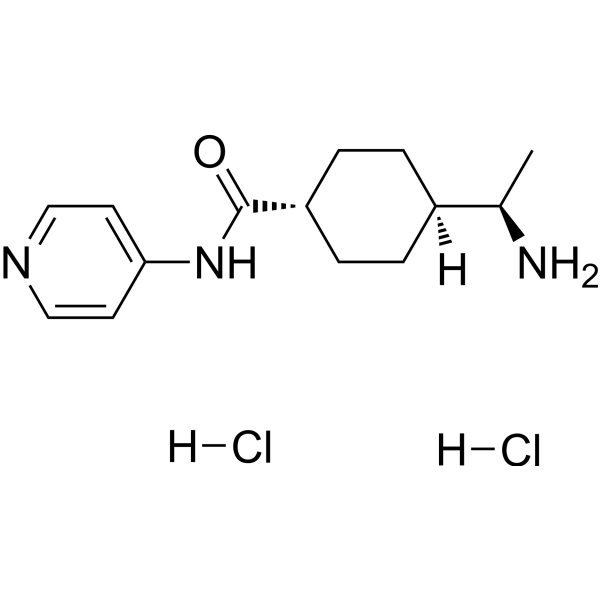
Y-27632 dihydrochloride -

HY-Y0320C
Dimethyl sulfoxide -
HY-10001
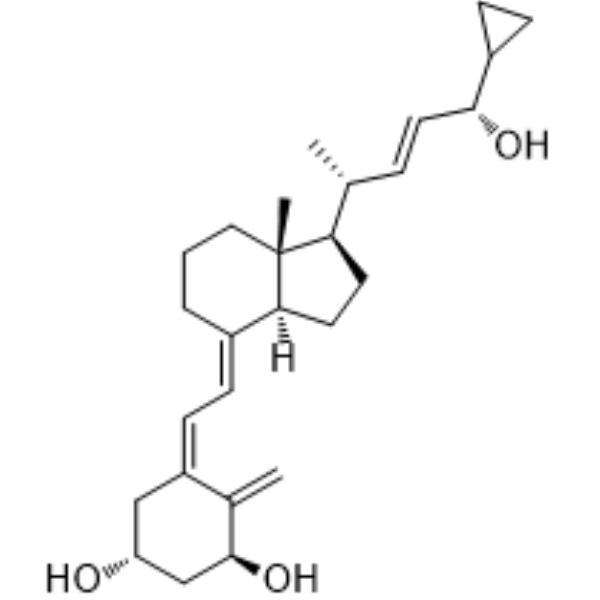
Calcipotriol -
HY-P1242
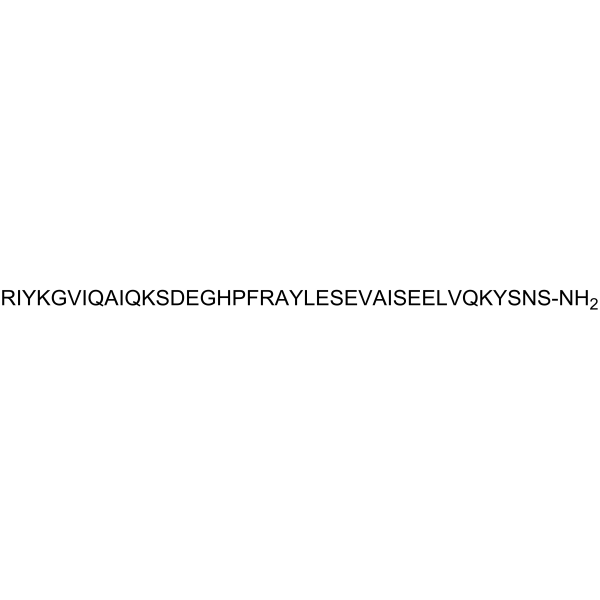
NEP(1-40) -
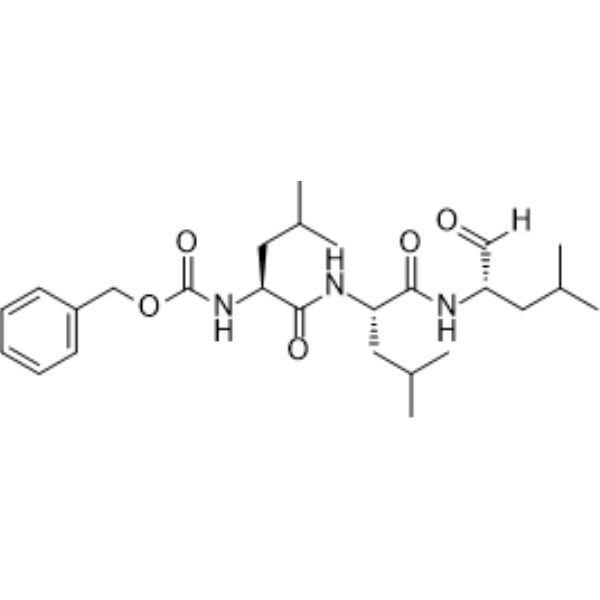
HY-13259
MG-132 -
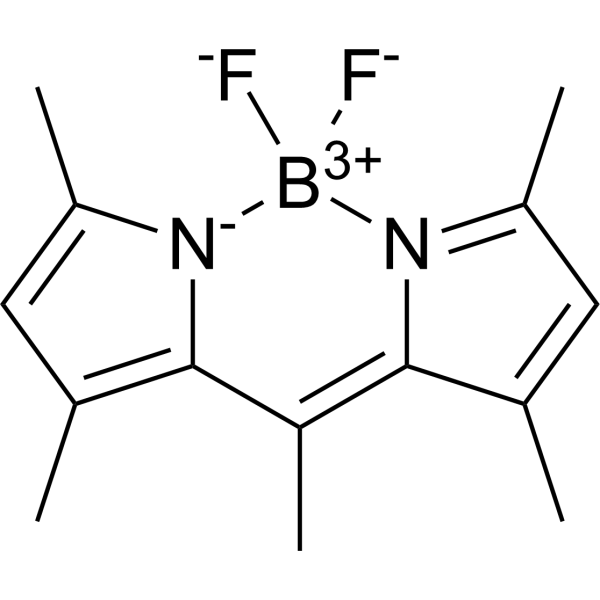
HY-W090090
BODIPY 493/503 -

HY-153808A
Incomplete Freund's adjuvant (IFA) -
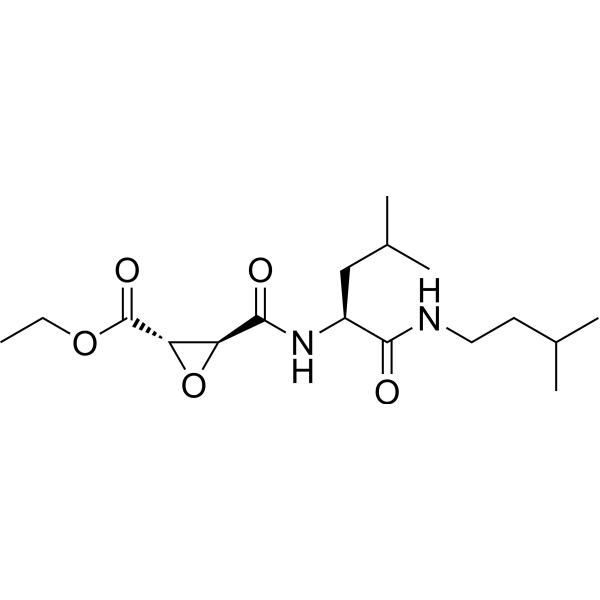
HY-100229
Aloxistatin -
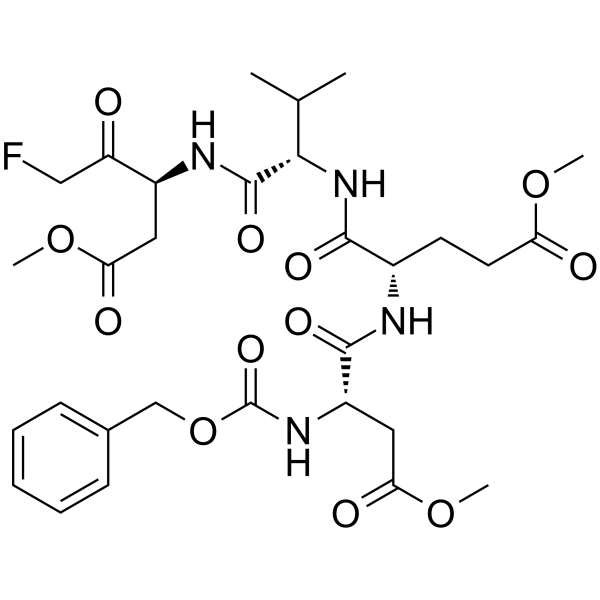
HY-12466
Z-DEVD-FMK -
HY-12364
C75 -
HY-15142
Doxorubicin hydrochloride
Publications Citing Use of MedChemExpress (MCE) MOG (35-55) mouse, rat
More- Adv Sci (Weinh). 2025 Apr;12(14):e2409086. [Abstract]
- Cell Death Dis. 2022 Sep 2;13(9):759. [Abstract]
- EMBO Mol Med. 2025 Sep 29. [Abstract]
- Acta Physiol. 2023 Jun;238(2):e13974. [Abstract]
- Int Immunopharmacol. 2022 Apr:105:108566. [Abstract]
- Front Biosci (Landmark Ed). 2025 May 23;30(5):37838. [Abstract]
- Mol Biol Rep. 2025 Nov 15;53(1):92. [Abstract]
- Cornell University. 2025.
- Research Square Print. September 28th, 2022.
 Customer Validation & Images

-
Others
-
Histological Imaging/Staining
-
Others
-
Cell Proliferation/Viability Assay
-
ELISA
All Endogenous Metabolite Isoforms
More

Biological Activity
Description
In Vitro
MOG (35-55) mouse, rat (Myelin Oligodendrocyte Glycoprotein Peptide (35-55), mouse, rat); 0-50 μg/mL; 72 h; lymph nodes cells) induces T cell proliferative and secretes Th1 cytokines including IFN-γ, TNF-α, IL-10, IL-4 and IL-5. MOG (35-55) mouse, rat increases the level of IgG[1].
MedChemExpress (MCE) has not independently confirmed the accuracy of these methods. They are for reference only.
In Vivo
-
Animal Model:HLA-DR2 (DRB1*1501) mice[1]
-
Dosage:200 μg (0.2 mL)
-
Administration:Intraperitoneal injection; once, for 38 days
-
Result:Resulted in paralysis of both hind and forelimbs.
Induced Disease Models
Please do not refer to only one article to determine the experimental conditions. It is recommended to determine the optimal experimental conditions (animal strain, age, dosage, frequency and cycle, detection time and indicators, etc.) through preliminary experiments before the formal experiment.
Myelin oligodendrocyte glycoprotein (MOG) peptide 35-55 is one of the targets of self-reactive T cell responses, leading to acute and later chronic autoimmune processes. MOG 35-55 is capable of inducing experimental autoimmune encephalomyelitis (EAE) in B6 mice[1].
Administration: On day 0: 3 mg/mL peptide plus CFA (4 mg/mL) • Mix thoroughly 1: 1 peptide and CFA solutions • s.c. • 100 μL for each hind flank; • On day 0 and day 2: 2.5 μg/mL of Bordetella pertussis toxin • i.p. • 200 μL
2. Once peptide and CFA emulsion is formed, it can be stored at 4 °C for a few hours or used immediately.
3. Symptoms appear approximately 10-15 days after immunization.
4. When mice have clinical symptoms of EAE, hydrated food is placed on the cage floor to facilitate access to these mice.
5. Record parameters every other day at the beginning, and daily from 7th postimmunization day. Body weight decreases usually precedes EAE clinical signs and is a very objective and valuable measure.
prototypical histopathological changes: Luxol fast blue staining of spinal cord for myelin evaluation shows infiltrates and demyelination in EAE animals.
MedChemExpress (MCE) has not independently confirmed the accuracy of these methods. They are for reference only.


Chemical Information
-
CAS No. 149635-73-4
-
Appearance Solid
-
Molecular Weight 2581.95
-
Formula C118H177N35O29S
-
Color White to off-white
-
Synonyms
Myelin Oligodendrocyte Glycoprotein Peptide (35-55), mouse, rat
-
Sequence
Met-Glu-Val-Gly-Trp-Tyr-Arg-Ser-Pro-Phe-Ser-Arg-Val-Val-His-Leu-Tyr-Arg-Asn-Gly-Lys
-
Sequence Shortening
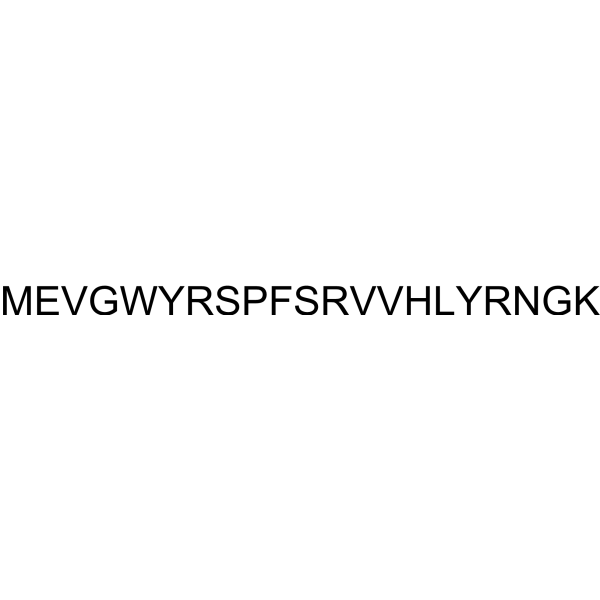
MEVGWYRSPFSRVVHLYRNGK
-
Shipping
Room temperature in continental US; may vary elsewhere.
-
Storage
Sealed storage, away from moisture and light
Powder -80°C 2 years -20°C 1 year * In solvent : -80°C, 6 months; -20°C, 1 month (sealed storage, away from moisture and light)


Publications (9)
-
Journal Impact Factor
-
Most Recent
-
Adv Sci (Weinh)
TIA1-Mediated Stress Granules Promote the Neuroinflammation and Demyelination in Experimental Autoimmune Encephalomyelitis through Upregulating IL-31RA Signaling. [Abstract]2025 Apr;12(14):e2409086. PMID: 39804990 -
Cell Death Dis
Astrocytic SARM1 promotes neuroinflammation and axonal demyelination in experimental autoimmune encephalomyelitis through inhibiting GDNF signaling. [Abstract]2022 Sep 2;13(9):759. PMID: 36055989 -
EMBO Mol Med
Selective inhibition of mitochondrial Kv1.3 prevents and alleviates multiple sclerosis in vivo. [Abstract]2025 Sep 29. PMID: 41023199
MOG (35-55) mouse, rat purchased from MedChemExpress. Usage Cited in: EMBO Mol Med. 2025 Sep 29. [Abstract]
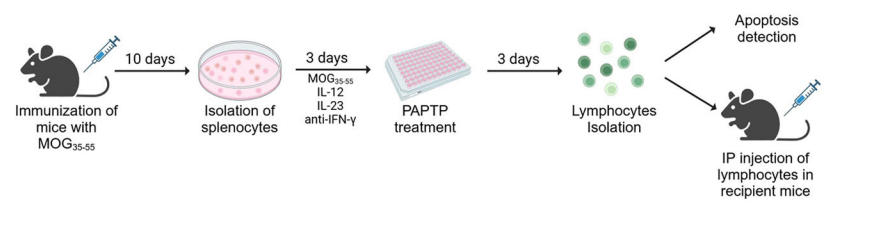
Scheme of the EAE Adoptive Transfer Model: Mice underwent immunization via subcutaneous injection of MOG35–55 in complete Freund’s adjuvant. Ten days post-immunization, spleens were harvested, and single-cell suspensions were prepared. These splenocytes were treated for 3 days with IL-12, IL-23, and anti-IFN-γ. Subsequently, the splenocytes were subjected to a 3-day treatment with 1 μM PAPTP, or left untreated. Antigen-specificity of the cells was confirmed by additional proliferation assays of isolated donor lymphocytes (see Methods). Lymphocytes were isolated, and the induction of apoptosis was assessed using flow cytometry. Additionally, these lymphocytes were transferred into wild-type recipient animals, and the animals’ clinical scores were monitored daily for 10 days. Following the observation period, the animals were euthanized for further analysis.
MOG (35-55) mouse, rat purchased from MedChemExpress. Usage Cited in: EMBO Mol Med. 2025 Sep 29. [Abstract]
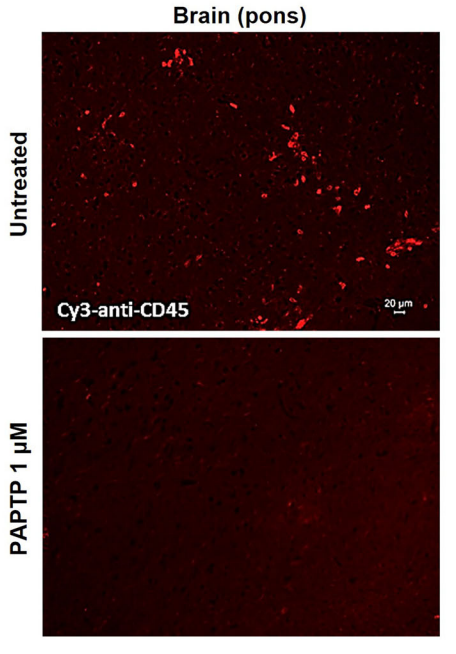
Representative image (of 5 sections) of brains (upper part of the pons region) stained with PE-anti-CD45, from wild-type mice intraperitoneally injected with either untreated or PAPTP 1 μM treated, MOG35–55 activated lymphocytes.3J
MOG (35-55) mouse, rat purchased from MedChemExpress. Usage Cited in: EMBO Mol Med. 2025 Sep 29. [Abstract]
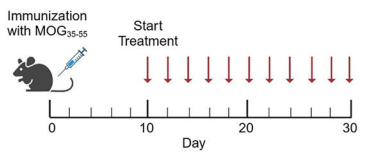
Treatment scheme for wild-type mice immunized via subcutaneous injection of MOG35–55: upon the manifestation of initial symptoms, typically around day 10 post-immunization, treatment commenced. The treatment regimen was administered every 48 h, totaling 11 injections. Mice were euthanized the day following the final injection for subsequent analysis of peripheral blood, brains, and spinal cords.
-
Acta Physiol
SARM1 promotes the neuroinflammation and demyelination through IGFBP2/NF-κB pathway in experimental autoimmune encephalomyelitis mice. [Abstract]2023 Jun;238(2):e13974. PMID: 37186158 -
Int Immunopharmacol
High-density lipoprotein reduces microglia activation and protects against experimental autoimmune encephalomyelitis in mice. [Abstract]2022 Apr:105:108566. PMID: 35101849 -
Front Biosci (Landmark Ed)
HMGB1 Mediates Microglia-Astrocyte/Neuron Crosstalk and Pyroptosis by the TLR4/NF-κB Pathway in Multiple Sclerosis. [Abstract]2025 May 23;30(5):37838. PMID: 40464519
MOG (35-55) mouse, rat purchased from MedChemExpress. Usage Cited in: Front Biosci (Landmark Ed). 2025 May 23;30(5):37838. [Abstract]
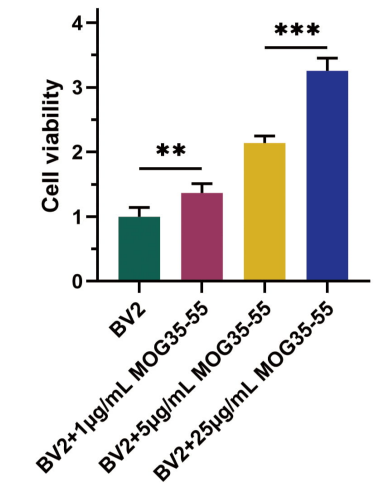
The BV-2 cells were cultured in designated concentrations of MOG35-55 (0-25μg/mL, 24 h). MTT analysis of BV-2 cell viability.
MOG (35-55) mouse, rat purchased from MedChemExpress. Usage Cited in: Front Biosci (Landmark Ed). 2025 May 23;30(5):37838. [Abstract]
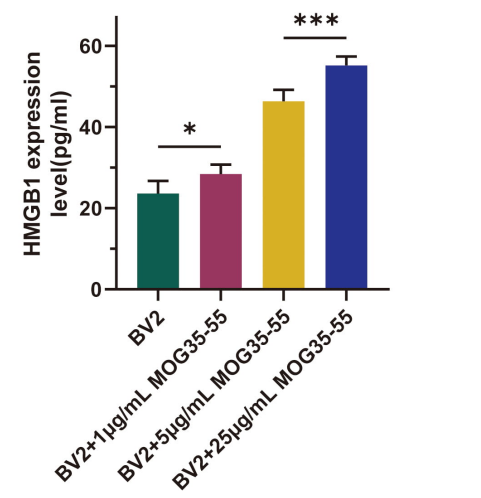
The BV-2 cells were cultured in designated concentrations of MOG35-55 (0-25μg/mL, 24 h). ELISA analysis of the release of HMGB1.
MOG (35-55) mouse, rat purchased from MedChemExpress. Usage Cited in: Front Biosci (Landmark Ed). 2025 May 23;30(5):37838. [Abstract]
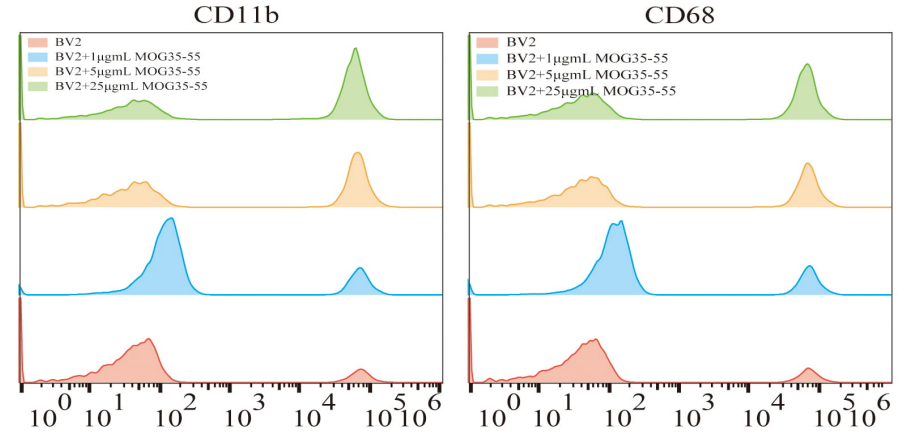
The BV-2 cells were cultured in designated concentrations of MOG35-55 (0-25μg/mL). Cytometry analysis for CD11b+ and CD68+ cells.
-
Mol Biol Rep
Th2 cell-derived exosomes alleviate central nervous system inflammation and demyelination in experimental autoimmune encephalomyelitis by regulating inflammasomes to inhibit microglia activation. [Abstract]2025 Nov 15;53(1):92. PMID: 41240231 -
-


Solvent & Solubility
In Vitro:
H2O : ≥ 100 mg/mL (38.73 mM)
* "≥" means soluble, but saturation unknown.
Please refer to the solubility information to select the appropriate solvent. Once prepared, please aliquot and store the solution to prevent product inactivation from repeated freeze-thaw cycles.
Storage method and period of stock solution: -80°C, 6 months; -20°C, 1 month (sealed storage, away from moisture and light). When stored at -80°C, please use it within 6 months. When stored at -20°C, please use it within 1 month.
* Note: If you choose water as the stock solution, please dilute it to the working solution, then filter and sterilize it with a 0.22 μm filter before use.
Please refer to the solubility information to select the appropriate solvent. Once prepared, please aliquot and store the solution to prevent product inactivation from repeated freeze-thaw cycles.
Storage method and period of stock solution: -80°C, 6 months; -20°C, 1 month (sealed storage, away from moisture and light). When stored at -80°C, please use it within 6 months. When stored at -20°C, please use it within 1 month.
* Note: If you choose water as the stock solution, please dilute it to the working solution, then filter and sterilize it with a 0.22 μm filter before use.
Concentration (start) × Volume (start) = Concentration (final) × Volume (final)


Purity & Documentation
-
Data Sheet (284 KB)
-
SDS (252 KB)
- English - EN (252 KB)
- Français - FR (252 KB)
- Deutsch - DE (252 KB)
- Norwegian - NO (252 KB)
- Español - ES (252 KB)
- Swedish - SV (252 KB)
- Italian - IT (252 KB)
- Korean - KR (252 KB)
- Portuguese - PT (252 KB)
-
Handling Instructions (2659 KB)
References
[1]. Rich C, et, al. Myelin oligodendrocyte glycoprotein-35-55 peptide induces severe chronic experimental autoimmune encephalomyelitis in HLA-DR2-transgenic mice. Eur J Immunol. 2004 May;34(5):1251-61. [Content Brief]
[2]. Slavin A, et, al. Induction of a multiple sclerosis-like disease in mice with an immunodominant epitope of myelin oligodendrocyte glycoprotein. Autoimmunity. 1998;28(2):109-20. [Content Brief]
[3]. Giralt M, et, al. Active Induction of Experimental Autoimmune Encephalomyelitis (EAE) with MOG35-55 in the Mouse. Methods Mol Biol. 2018;1791:227-232. [Content Brief]


Complete Stock Solution Preparation Table
Please refer to the solubility information to select the appropriate solvent. Once prepared, please aliquot and store the solution to prevent product inactivation from repeated freeze-thaw cycles.
Storage method and period of stock solution: -80°C, 6 months; -20°C, 1 month (sealed storage, away from moisture and light). When stored at -80°C, please use it within 6 months. When stored at -20°C, please use it within 1 month.
| Optional Solvent | Concentration Solvent Mass | 1 mg | 5 mg | 10 mg | 25 mg |
|---|---|---|---|---|---|
| H2O | 1 mM | 0.3873 mL | 1.9365 mL | 3.8730 mL | 9.6826 mL |
| 5 mM | 0.0775 mL | 0.3873 mL | 0.7746 mL | 1.9365 mL | |
| 10 mM | 0.0387 mL | 0.1937 mL | 0.3873 mL | 0.9683 mL | |
| 15 mM | 0.0258 mL | 0.1291 mL | 0.2582 mL | 0.6455 mL | |
| 20 mM | 0.0194 mL | 0.0968 mL | 0.1937 mL | 0.4841 mL | |
| 25 mM | 0.0155 mL | 0.0775 mL | 0.1549 mL | 0.3873 mL | |
| 30 mM | 0.0129 mL | 0.0646 mL | 0.1291 mL | 0.3228 mL |
* Note: If you choose water as the stock solution, please dilute it to the working solution, then filter and sterilize it with a 0.22 μm filter before use.


MOG (35-55) mouse, rat Related Classifications
HY-P1240 Related Classifications
 Powered by Bioz