



Encephalomyelitis Models
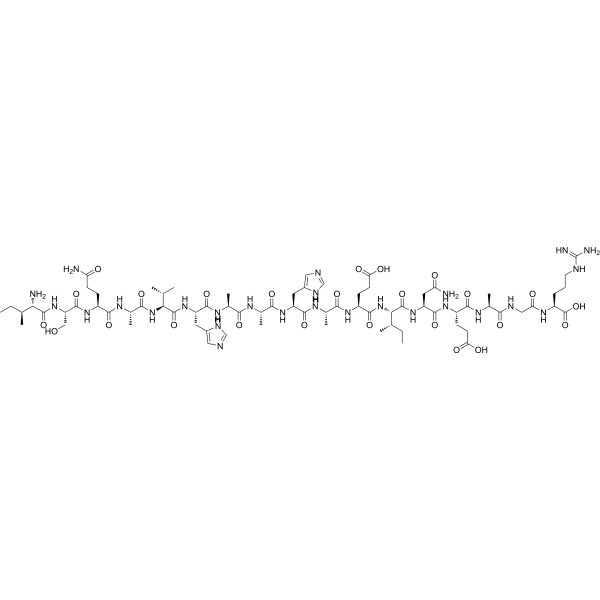
- Formula: C74H120N26O25
- Molecular Weight: 1773.90
OVA Peptide (323-339) represents a T and B cell epitope of Ovalbumin (Ova), which is important in the generation and development of immediate hypersensitivity responses in BALB/c mice.

- Formula: C118H177N35O29S
- Molecular Weight: 2581.95
MOG (35-55) mouse, rat (Myelin Oligodendrocyte Glycoprotein Peptide (35-55), mouse, rat) is a minor component of CNS myelin. MOG (35-55) mouse, rat has encephalitogenic activity and induces T cell proliferative. MOG (35-55) mouse, rat induces Th1 cytokine response as well as relatively high levels of IgG antibodies. MOG (35-55) mouse, rat produces a relapsing-remitting neurological disease with extensive plaque-like demyelination. MOG (35-55) mouse, rat (MOG (35-55)) can be used for experimental autoimmune encephalomyelitis (EAE) modeling.
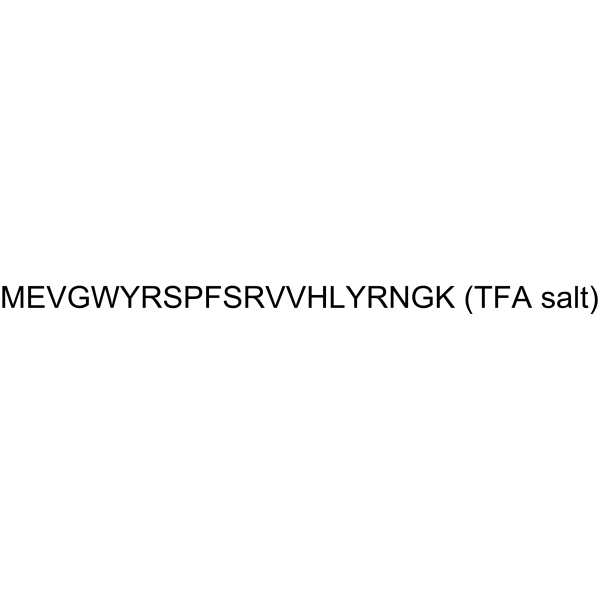
- Formula: C120H178F3N35O31S
- Molecular Weight: 2695.97
MOG (35-55) (MOG (35-55)) TFA is a minor component of CNS myelin. MOG (35-55) (TFA) has encephalitogenic activity and induces T cell proliferative. MOG (35-55) (TFA) induces Th1 cytokine response as well as relatively high levels of IgG antibodies. MOG (35-55) (TFA) produces a relapsing-remitting neurological disease with extensive plaque-like demyelination. MOG (35-55) (MOG (35-55)) TFA can be used for experimental autoimmune encephalomyelitis (EAE) modeling.
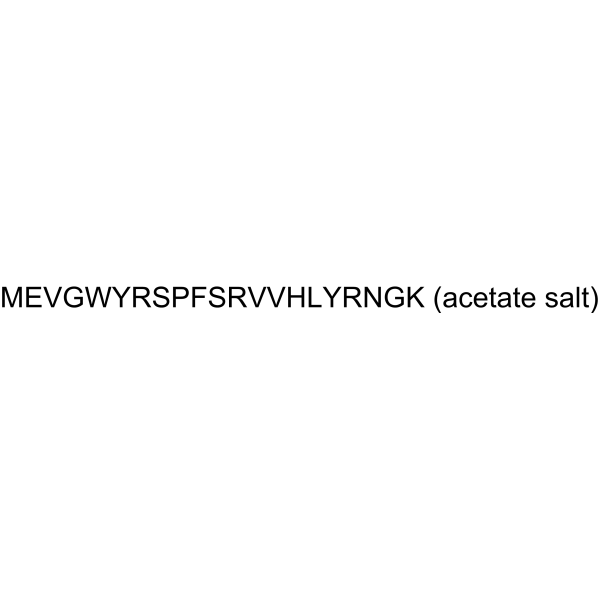
- Formula: C120H181N35O31S
- Molecular Weight: 2642.00
MOG (35-55) (Myelin Oligodendrocyte Glycoprotein Peptide (35-55), mouse, rat) acetate is a minor component of CNS myelin. MOG (35-55) (acetate) has encephalitogenic activity and induces T cell proliferative. MOG (35-55) (acetate) induces Th1 cytokine response as well as relatively high levels of IgG antibodies. MOG (35-55) (acetate) produces a relapsing-remitting neurological disease with extensive plaque-like demyelination. MOG (35-55) (Myelin Oligodendrocyte Glycoprotein Peptide (35-55), mouse, rat) acetate can be used for experimental autoimmune encephalomyelitis (EAE) modeling.

- Formula: C97H143N27O27S·xC2HF3O2
- Molecular Weight: 2151.40 (free acid)
AQP4 (201-220) TFA is an encephalitogenic epitope of AQP-4. AQP4 (201-220) TFA can induce experimental autoimmune encephalomyelitis (EAE) (characterized by midline lesions in the brain, retinal pathology, and lesions at the grey matter/white matter border zone in the spinal cord). AQP-4 is a target antigen in neuromyelitis optica.

- Formula: C97H143N27O27S
- Molecular Weight: 2151.40
AQP4 (201-220) is an encephalitogenic epitope of AQP-4. AQP4 (201-220) can induce experimental autoimmune encephalomyelitis (EAE) (characterized by midline lesions in the brain, retinal pathology, and lesions at the grey matter/white matter border zone in the spinal cord). AQP-4 is a target antigen in neuromyelitis optica.

- Formula: C92H145N23O30S.xC2HF2O3
- Molecular Weight: 2085.34 (free base)
PLP (180-199) TFA is a myelin proteolipid protein-derived peptide corresponding to amino acids 180-199 of PLP. PLP (180-199) TFA acts as an encephalitogenic peptide and induces experimental autoimmune encephalomyelitis (EAE) in susceptible BALB/c mice. PLP (180-199) TFA can stimulate antigen-specific T-cell responses, promote inflammatory cytokine production including IFN-γ and TNF-α, and is used for the study of autoimmune encephalomyelitis and multiple sclerosis-related immune responses.
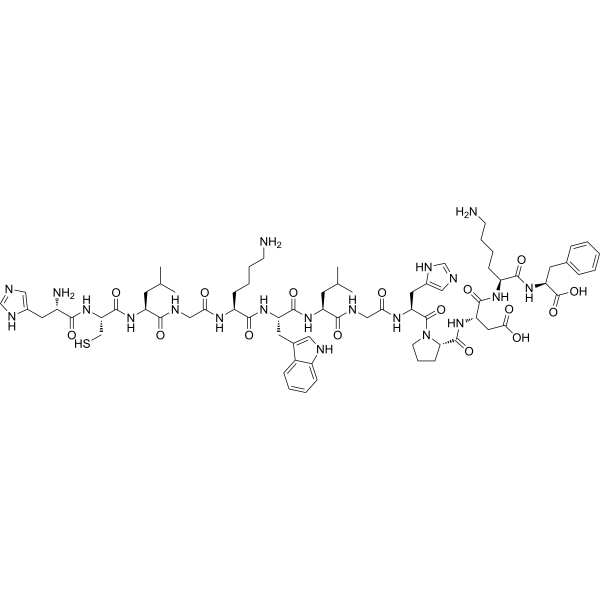
- Formula: C72H104N20O16S
- Molecular Weight: 1537.79
PLP (139-151) is amino acid residue 139 to 151 of myelin proteolipid protein (PLP) used to induce experimental autoimmune encephalomyelitis (EAE).

- Formula: C85H144N24O29S2
- Molecular Weight: 2030.33
PLP (190-209) is a myelin proteolipid protein (PLP) fragment. PLP (190-209) is used to induce experimental autoimmune encephalomyelitis (EAE) animal models for multiple sclerosis research.



