
27 Results for "

mouse brain tissue

" in MedChemExpress (MCE) Product Catalog:
Products (27)

27 Results for "mouse brain tissue" in MCE Product Catalog:

3
3 Cited Publications
Cat. No.: HY-147081
CAS No.: 301636-59-9
Purity:  99.52%
Synonyms: AGRO-100
Research Areas:  

Cancer

AS 1411 (AGRO-100) is an oligonucleotide aptamer targeting nucleoproteins. AS 1411 inhibits tumor cell proliferation by affecting the activity of nucleoprotein-containing complexes and can be used as a carrier to precisely deliver nanoparticles, oligonucleotides and small molecules to cancer cells. AS 1411 reduces PRMT5 expression to inhibit tumor growth in DU145 prostate cancer cells. AS 1411 works by blocking the binding of nucleoproteins to bcl-2 mRNA in MCF-7 breast cancer cells. AS 1411-coupled Jin nanospheres can inhibit breast cancer cell proliferation in vitro and in mouse models, has the ability to cross the blood-brain barrier with low tissue toxicity .
loading...
    loading...
3
3 Cited Publications
Cat. No.: HY-147081A
Synonyms: AGRO-100 sodium
Research Areas:  

Cancer

AS 1411 (AGRO-100) sodium is an oligonucleotide aptamer targeting nucleoproteins. AS 1411 sodium inhibits tumor cell proliferation by affecting the activity of nucleoprotein-containing complexes and can be used as a carrier to precisely deliver nanoparticles, oligonucleotides and small molecules to cancer cells. AS 1411 sodium reduces PRMT5 expression to inhibit tumor growth in DU145 prostate cancer cells. S 1411 sodium works by blocking the binding of nucleoproteins to bcl-2 mRNA in MCF-7 breast cancer cells. S 1411 sodium-coupled Jin nanospheres can inhibit breast cancer cell proliferation in vitro and in mouse models, has the ability to cross the blood-brain barrier with low tissue toxicity
loading...
    loading...
2
2 Cited Publications
Cat. No.: HY-107661
CAS No.: 185517-21-9
Purity:  ≥98.0%
Synonyms: ONO-2506; (R)-2-Propyloctanoic acid
Target:  

ERK Akt NF-κB EAAT

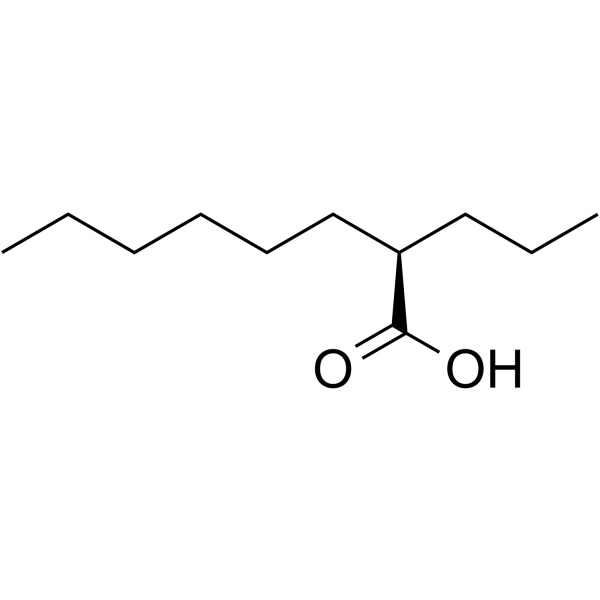
Arundic Acid is an orally effective astrocyte function modulator and neuroprotective agent. Arundic Acid increases the expression and function of the astrocytic glutamate transporter EAAT1 by activating the ERK, Akt and NF-κB pathways. Arundic Acid attenuates retinal ganglion cell death in a normal-tension glaucoma model. Arundic Acid exerts neuroprotective effects in a mouse model of Parkinson's disease. Arundic Acid is a S100β protein synthesis inhibitor that prevents neurological deficits and brain tissue damage after intracerebral hemorrhage in rats. Arundic Acid downregulates neuroinflammation and astrocytic dysfunction after status epilepticus in immature rats. Arundic Acid is applicable to research related to Parkinson's disease, cerebral ischemia, glaucoma, intracerebral hemorrhage and epilepsy .
loading...
    loading...
1
1 Cited Publications
Cat. No.: HY-N8157
CAS No.: 1464-33-1
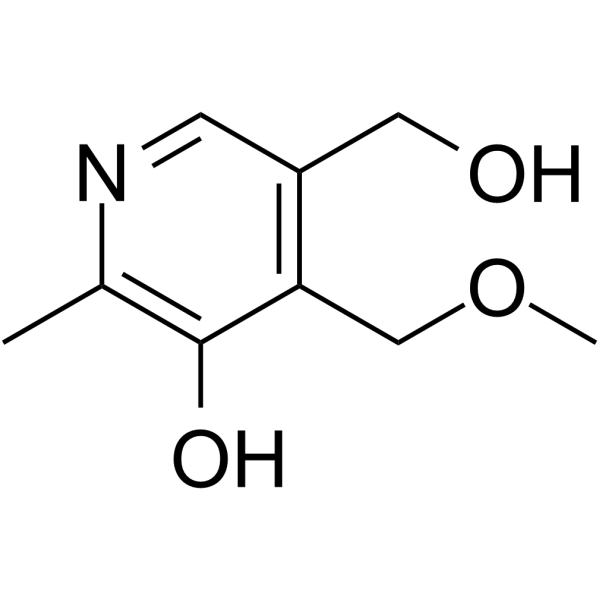
4'-O-Methylpyridoxine is an orally active antivitamin B6 compound found in Ginkgo biloba seeds and leaves. 4'-O-Methylpyridoxine inhibits pyridoxal kinase. 4'-O-Methylpyridoxine reduces brain pyridoxal-5'-phosphate (PLP) levels, decreases gamma-aminobutyric acid/glutamate (GABA/Glu) ratio. 4'-O-Methylpyridoxine increases plasma levels of pyridoxal-5'-phosphate and pyridoxal. 4'-O-Methylpyridoxine induces hyperactivity, convulsions, pathological tissue changes, organ damage in rodent brain and heart .
loading...
    loading...
1
1 Cited Publications
Cat. No.: HY-149170
CAS No.: 2210244-83-8
Purity:  99.79%
Research Areas:  

Neurological Disease

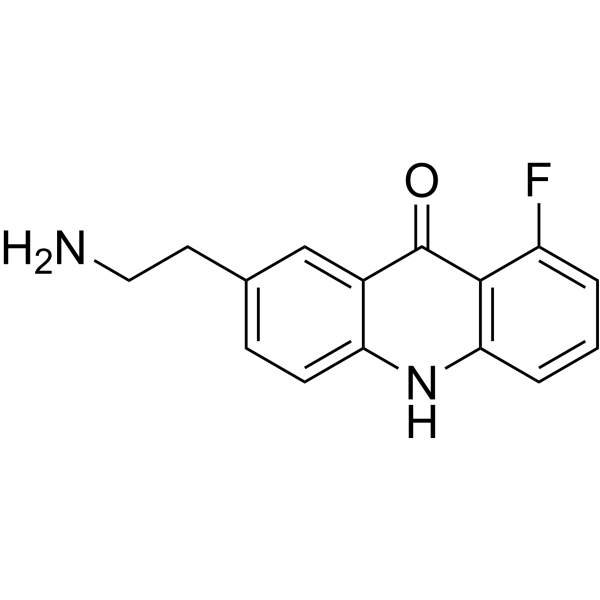
FFN246 is a fluorescent, dual substrate of serotonin transporter (SERT) probe and vesicular monoamine transporter 2 (VMAT2) with excitation and emission spectra 392/427 nm. FFN246 can be used for labeling serotonergic neurons in mouse brain tissue through SERT-dependent accumulation .
loading...
    loading...
Cat. No.: HY-N2909
CAS No.: 58115-31-4
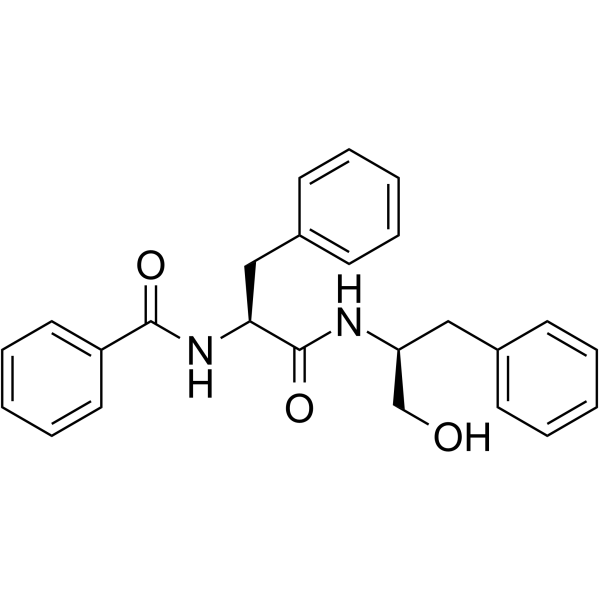
Aurantiamide is a non-covalent, orally active, blood-brain-permeable GRPR selective antagonist with anti-inflammatory and neuroprotective effects. Aurantiamide reduces inflammation and oxidative stress in renal tissue by inhibiting GRPR-mediated renal necrosis pathways (such as RIPK3/MLKL signaling) and NF-κB inflammatory pathways, exerting anti-acute kidney injury and endothelial function activities. Aurantiamide also inhibits the M1 polarization of microglia and inhibits NLRP3 activation, thereby improving AD mouse models. Aurantiamide has in vivo inhibitory efficacy in acute kidney injury models such as ischemia/reperfusion, sepsis, and hypertension models .
loading...
    loading...
Cat. No.: HY-P10932A
Research Areas:  

Neurological Disease

pGk13a TFA is an azide (azide group can be combined with fluorophore)-containing amphiphilic membrane labeling probe. pGk13a TFA enables high-resolution imaging of cell membranes in the ultrastructural membrane expansion microscopy (umExM) technique, facilitating the observation of membrane-associated structures and proteins. pGk13a TFA can be used for neuronal structural studies .
loading...
    loading...
Cat. No.: HY-175748
CAS No.: 3056154-69-6
MK-7337 is an α-synuclein ligand with an affinity of < 1 nM. MK-7337 labeled with 11C can be used as a PET tracer for neurodegenerative disorders like Parkinson’s disease imagination .
loading...
    loading...
Cat. No.: HY-P10216
CAS No.: 2088281-24-5
Research Areas:  

Neurological Disease

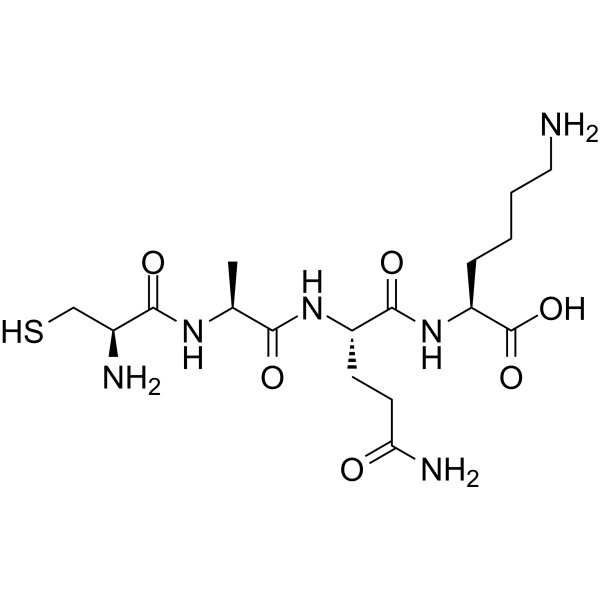
CAQK peptide selectively binds to injured mouse brain. CAQK peptide selectively targets demyelinating areas and it is absent from healthy tissue. The CAQK peptide target is a proteoglycan complex upregulated in brain injuries and is used for drug delivery. CAQK peptide can penetrate the blood-brain barrier .
loading...
    loading...
Cat. No.: HY-133737
CAS No.: 2409538-70-9
Purity:  99.93%
Synonyms: PROTAC BRD4 Degrader-5
Research Areas:  

Cancer

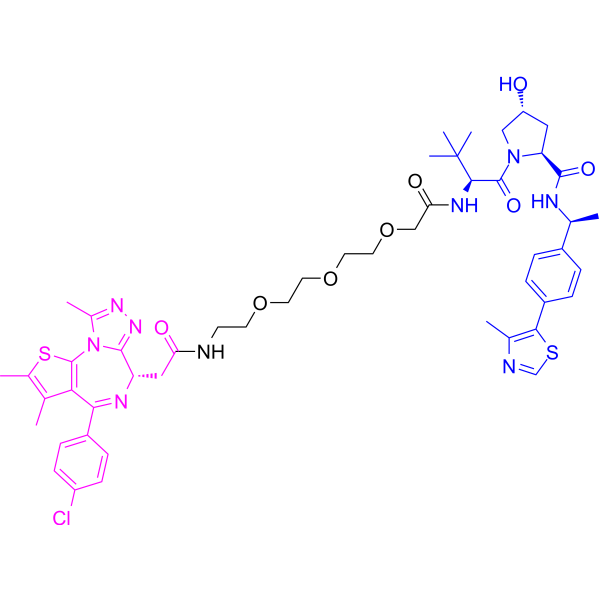
GAL-02-221 is a BRD4 PROTAC degrader with blood-brain barrier permeability, with a DC50 of 0.009 μM (Jurkat BRD4-HiBiT). GAL-02-221 induces proteasome-catalyzed BRD4 degradation, binds to VHL to trigger BRD4 ubiquitination, and recruits the VHL E3 ligase complex to participate in protein degradation. GAL-02-221 degrades BRD4 in breast cancer cells as well as mouse liver and brain tissues. GAL-02-221 is applicable to research related to breast cancer .
loading...
    loading...
Cat. No.: HY-12115
CAS No.: 2149-70-4
Purity:  99.78%
Synonyms: Nω-nitro-L-arginine; L-NOARG; L-NG-Nitroarginine
Target:  

NO Synthase

Research Areas:  

Cardiovascular Disease

NG-nitro-L-arginine (Nω-nitro-L-arginine; L-NOARG; L-NG-Nitroarginine) is a nitric oxide synthase (NO Synthase) inhibitor, with a Kd of 15 nM for constitutive NOS from bovine brain and a Ki of 4.4 μM for inducible NOS from mouse macrophages. NG-nitro-L-arginine competitively blocks the synthesis of NO from L-arginine; in addition, it inhibits endothelium-dependent vasodilation, and exhibits effects such as blood pressure elevation, heart rate reduction and vasoconstriction. NG-nitro-L-arginine regulates mitochondrial respiratory efficiency, antioxidant enzyme activity, lipid peroxidation level and tissue lead content in rats. NG-nitro-L-arginine can be used in studies related to cardiovascular diseases .
loading...
    loading...
Cat. No.: HY-149010
CAS No.: 2254492-08-3
Purity:  98.18%
Target:  

Keap1-Nrf2

Research Areas:  

Neurological Disease

NXPZ-2 is an orally active Keap1-Nrf2 protein–protein interaction (PPI) inhibitor with a Ki value of 95 nM, EC50 value of 120 and 170 nM. NXPZ-2 can dose-dependently ameliorate Aβ[1-42]-Induced cognitive dysfunction, improve brain tissue pathological changes in Alzheimer’s disease (AD) mouse by increasing neuron quantity and function. NXPZ-2 can inhibit oxidative stress by increasing Nrf2 expression levels and promoting its cytoplasm to nuclear translocation, which is helpful for Keap1-Nrf2 PPI inhibitors and AD associated disease research .
loading...
    loading...
Cat. No.: HY-143792
CAS No.: 2254502-89-9
Research Areas:  

Neurological Disease

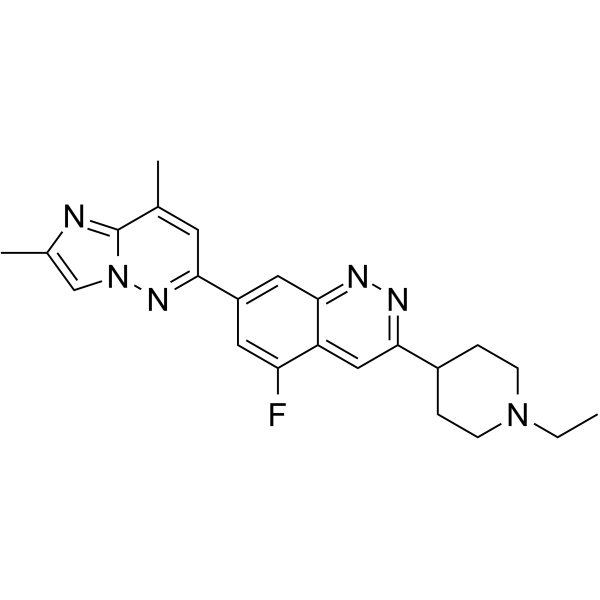
HTT-D3 is an orally active, blood-brain barrier penetrant splicing modulator of huntingtin (HTT). HTT-D3 promotes the inclusion of a pseudo-exon containing a premature termination codon into HTT pre-mRNA, triggers nonsense-mediated mRNA degradation and reduces HTT protein levels. HTT-D3 induces dose-dependent, comparable reductions in mutant HTT protein in both the brain and peripheral tissues of transgenic mouse models. HTT-D3 can be used for the research of Huntington's disease .
loading...
    loading...
Cat. No.: HY-P10427
DV1 is a CXCR4 inhibitor with anti-proteolytic properties that specifically blocks the binding of SDF-1α to its receptor. DV1 inhibits the migration of breast cancer cells and enables the targeted delivery of avidin-PLGA nanoparticles to CXCR4-expressing cancer cells. DV1 not only effectively suppresses the progression of metastatic breast cancer in mouse models, but also preferentially accumulates in brain tumor tissues rather than normal brain tissues, showing potential for inhibiting intracranial tumor metastasis. As a humoral immune stimulant, DV1 induces the production of specific IgG, neutralizing antibodies and cellular immune responses, thereby providing the host with protection against lethal challenges. DV1 has been applied to studies on CXCR4-expressing cancers, glioblastoma, dengue fever and other related diseases .
loading...
    loading...
Cat. No.: HY-P10932
Research Areas:  

Neurological Disease

pGk13a is an amphipathic membrane-labeling probe containing an azide group, which can bind to fluorophores. pGk13a enables high-resolution imaging of cell membranes in the ultrastructure expansion microscopy (umExM) technique, facilitating the observation of membrane-associated structures and proteins. pGk13a is applicable to neuronal structure research .
loading...
    loading...
Cat. No.: HY-P10427A
Target:  

CXCR Dengue Virus

Research Areas:  

Infection

DV1 TFA is a CXCR4 inhibitor with anti-proteolytic properties that specifically blocks the binding of SDF-1α to its receptor. DV1 TFA inhibits the migration of breast cancer cells and enables the targeted delivery of avidin-PLGA nanoparticles to CXCR4-expressing cancer cells. DV1 TFA not only effectively suppresses the progression of metastatic breast cancer in mouse models, but also preferentially accumulates in brain tumor tissues rather than normal brain tissues, showing potential for inhibiting intracranial tumor metastasis. As a humoral immune stimulant, DV1 TFA induces the production of specific IgG, neutralizing antibodies and cellular immune responses, thereby providing the host with protection against lethal challenges. DV1 TFA has been applied to studies on CXCR4-expressing cancers, glioblastoma, dengue fever and other related diseases .
loading...
    loading...
Cat. No.: HY-117702
CAS No.: 135949-60-9
RB 101 is a blood-brain barrier-crossing prodrug as well as aminopeptidase N and neutral endopeptidase-24.11 inhibitor. RB 101 blocks enkephalin breakdown, elevates extracellular enkephalin levels and activate δ-opioid receptor and dopamine D1 receptor. RB 101 can be used for the research of pain, depressive syndromes, and diabetic neuropathy .
loading...
    loading...
Cat. No.: HY-165072
CAS No.: 252846-08-5
Synonyms: C2 Sulfatide; N-Acetyl sulfatide
Research Areas:  

Others

C2 3'-Sulfo galactosylceramide (d18:1/2:0) (C2 Sulfatide) is one of the sulfatide class of glycolipids. C2 3'-Sulfo galactosylceramide (d18:1/2:0) can be used in the quantification of lysosulfatides in mouse brain tissue and plasma .
loading...
    loading...
Cat. No.: HY-159941
CAS No.: 2200453-71-8
Target:  

α-synuclein

Research Areas:  

Neurological Disease

tau-0N4R-IN-1 (Compound 6T) is an BBB-penetrable inhibitor of tau 0N4R oligomerization. tau-0N4R-IN-1 effectively inhibits the fibrosis of tau 0N4R, 2N3R, and 2N4R, exhibits an anti-seeding effect on tau in vitro, reduces the oligomerization of α-syn dose-dependently, and prevents formation of α-syn inclusions. tau-0N4R-IN-1 is stable in mouse microsomes and reduces plaques in brain tissues from AD patients. tau-0N4R-IN-1 has good pharmacokinetic properties in mice .
loading...
    loading...
Cat. No.: HY-K6143

MCE Mouse Fetal Brain Organoid (Expansion) Kit contains Mouse Fetal Brain Organoid Expansion Basal Medium and Mouse Fetal Brain Organoid Expansion Culture Supplement . This kit enables the efficient in vitro generation of mouse fetal brain organoids (mFBs). Within this culture system, mouse fetal brain tissue can spontaneously form organoid structures that faithfully recapitulate key features of in vivo cellular heterogeneity and complex tissue organization.

loading...
    loading...

