1. Search Result
Search Result
Results for "

nucleosome

" in MedChemExpress (MCE) Product Catalog:

15

Inhibitors & Agonists

1

Biochemical Assay Reagents

4

Recombinant Proteins

1

Antibodies

1

Oligonucleotides

Cat. No. Product Name Target Research Areas Chemical Structure
  • HY-13803
    Tazemetostat
    Maximum Cited Publications
    89 Publications Verification

    EPZ-6438; E-7438

    Histone Methyltransferase Apoptosis Cancer
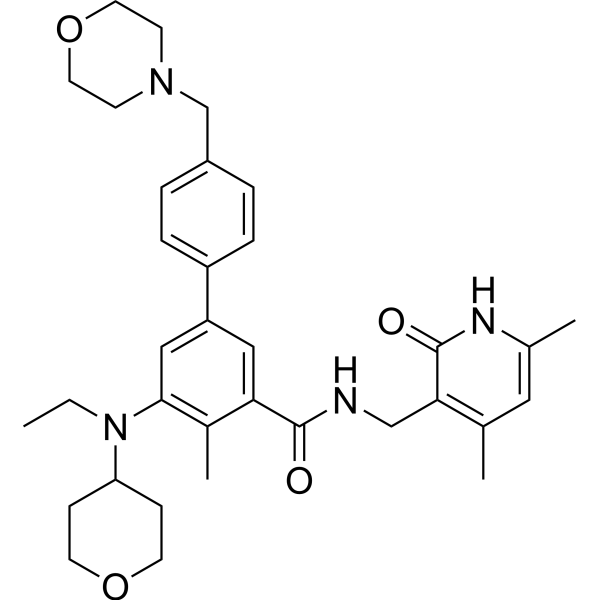
    Tazemetostat (EPZ-6438) is a potent, selective and orally available EZH2 inhibitor. Tazemetostat inhibits the activity of human polycomb repressive complex 2 (PRC2)-containing wild-type EZH2 with a Ki value of 2.5 nM. Tazemetostat inhibits EZH2 with IC50s of 11 and 16 nM in peptide assay and nucleosome assay, respectively. Tazemetostat inhibits rat EZH2 with an IC50 of 4 nM. Tazemetostat also inhibits EZH1 with an IC50 of 392 nM. Tazemetostat induces apoptosis and differentiation specifically in SMARCB1-deleted MRT cells .
    Tazemetostat
  • HY-15435
    CHAPS
    4 Publications Verification

    Exosomes Biochemical Assay Reagents Others
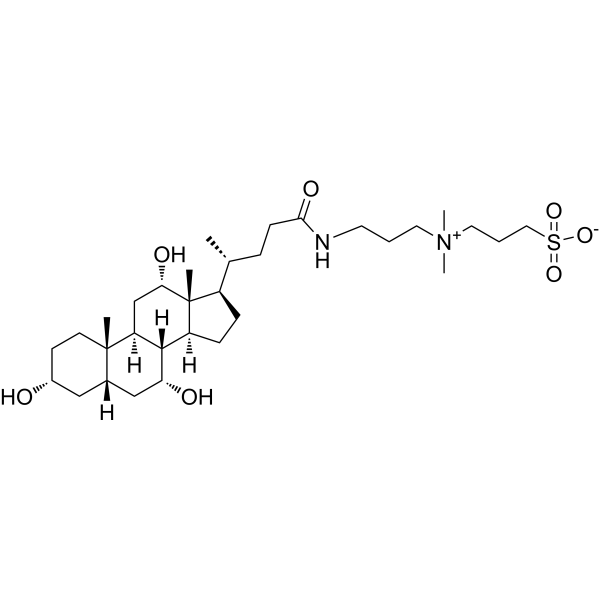
    CHAPS is a cholic acid-derived, sulfobetaine-type zwitterionic detergent and micelle-forming agent. CHAPS exhibits properties of weak cationic or nonionic surfactants in different solution systems, undergoes micellization, and forms small, loose hydrophilic aggregates that are temperature-dependent. CHAPS stabilizes mononucleosomes under different ionic strengths, reduces nucleosome sequence specificity, promotes sliding of histone cores along DNA, solubilizes Tamm-Horsfall protein to reduce its interference with urinary exosome isolation, and maintains vesicle structure and the activity of related proteins at the same time. CHAPS is used to recover native folded fusion proteins, enhance the binding capacity of GST fusion proteins, and restore GST enzyme activity. However, CHAPS cannot refold proteins denatured by urea, guanidine hydrochloride or heat, nor can it construct the structure of intrinsically disordered proteins. CHAPS is commonly used in research on the separation and purification of membrane proteins .
    CHAPS
  • HY-173156

    Histone Methyltransferase Cancer
    UNC10013 is an inhibitor targeting the triple Tudor domain (3TD) of SETDB1. UNC10013 covalently binds to Cys385 of SETDB1 3TD, acts as a negative allosteric modulator of the methyltransferase domain of SETDB1, reduces the level of Akt methylation mediated by SETDB1, and blocks Tyr308 phosphorylation of Akt. UNC10013 is applicable to cancer-related research .
    UNC10013
  • HY-W011725

    m6dA

    Nucleoside Antimetabolite/Analog Mitochondrial Metabolism DNA/RNA Synthesis Neurological Disease Cancer
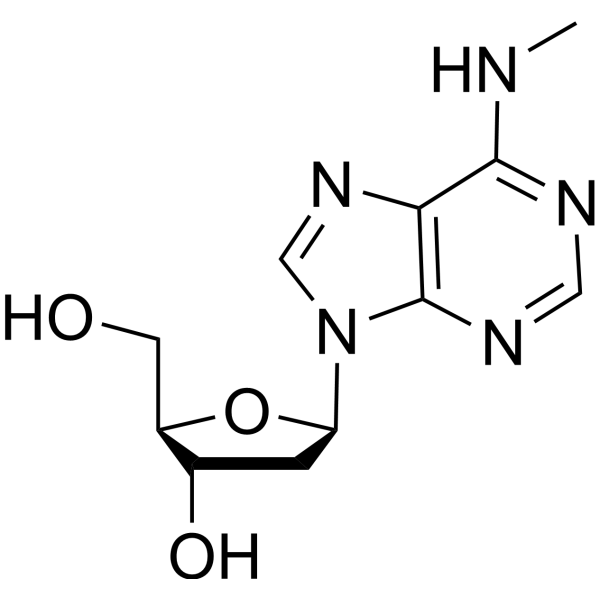
    N-6-Methyl-2-deoxyadenosine (m6dA) is an adenine nucleoside analogue. N-6-Methyl-2-deoxyadenosine targets nuclear processes and DNA replication machineries including WER, SATB1, TFAM, Jumu, SSBP1, DNA polymerase η and phage polymerase Gp90 exo . N-6-Methyl-2-deoxyadenosine acts as a multifunctional epigenetic regulator that modulates transcription, DNA damage response, cell cycle, transposon silencing, stress adaptation, epigenetic crosstalk, and nucleosome organization in both prokaryotes and eukaryotes. N-6-Methyl-2-deoxyadenosine regulates mitochondrial epigenetic inheritance and is required for fear extinction memory in mice. N-6-Methyl-2-deoxyadenosine exhibits dysregulated levels in cancers. N-6-Methyl-2-deoxyadenosine can be used for the research of glioblastoma, triple negative breast cancer, and conditioned fear (fear extinction impairment) .
    N-6-Methyl-2-deoxyadenosine
  • HY-141550

    NF-κB Inflammation/Immunology
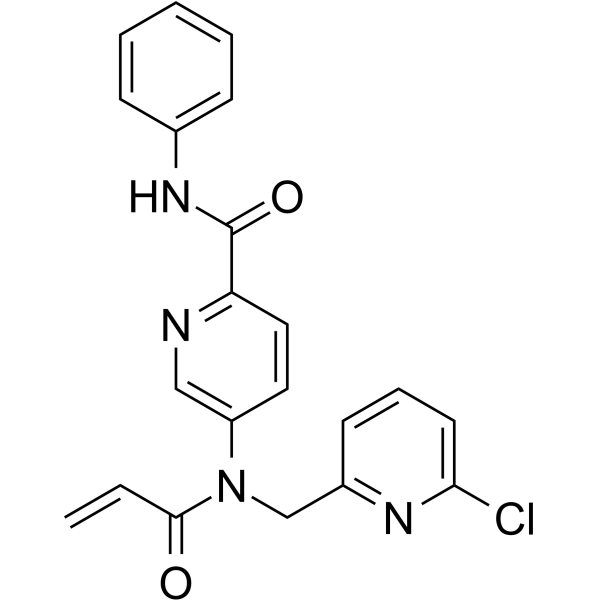
    BPK-25, an active acrylamide, promotes degradation of nucleosome remodeling and deacetylation (NuRD) complex proteins by a post-translational mechanism involving covalent protein engagement. BPK-25 inhibits TMEM173 activation by the cyclic dinucleotide ligand cGAMP .
    BPK-25
  • HY-15435A
    CHAPS hydrate
    4 Publications Verification

    Biochemical Assay Reagents Exosomes Others
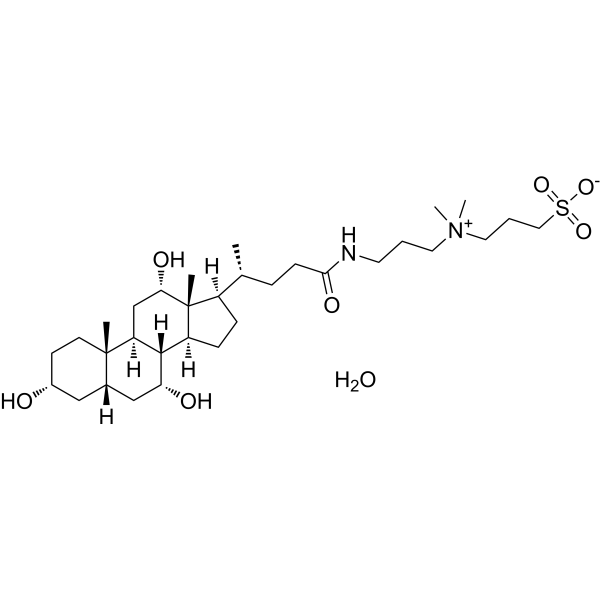
    CHAPS hydrate is a cholic acid-derived, sulfobetaine-type zwitterionic detergent and micelle-forming agent. CHAPS hydrate exhibits properties of weak cationic or nonionic surfactants in different solution systems, undergoes micellization, and forms small, loose hydrophilic aggregates that are temperature-dependent. CHAPS hydrate stabilizes mononucleosomes under different ionic strengths, reduces nucleosome sequence specificity, promotes sliding of histone cores along DNA, solubilizes Tamm‑Horsfall protein to reduce its interference with urinary exosome isolation, and maintains vesicle structure and the activity of related proteins at the same time. CHAPS hydrate is used to recover native folded fusion proteins, enhance the binding capacity of GST fusion proteins, and restore GST enzyme activity. However, CHAPS hydrate cannot refold proteins denatured by urea, guanidine hydrochloride or heat, nor can it construct the structure of intrinsically disordered proteins. CHAPS hydrate is commonly used in research on the separation and purification of membrane proteins .
    CHAPS hydrate
  • HY-W123005
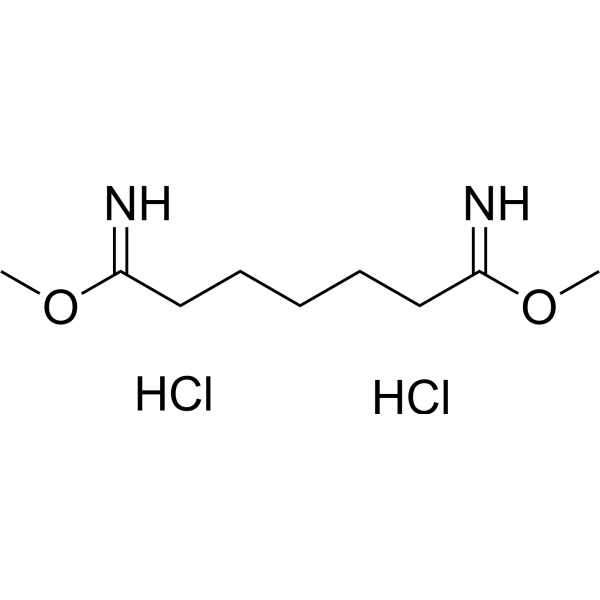
    Dimethyl pimelimidate dihydrochloride
    1 Publications Verification

    Biochemical Assay Reagents Others
    Dimethyl pimelimidate dihydrochloride is a bifunctional imidoester protein-protein crosslinker used in chromatin immunoprecipitation (ChIP) assays .
    Dimethyl pimelimidate dihydrochloride
  • HY-13803R

    EPZ-6438 (Standard); E-7438 (Standard)

    Reference Standards Histone Methyltransferase Apoptosis Cancer
    Tazemetostat (Standard) is the analytical standard of Tazemetostat. This product is intended for research and analytical applications. Tazemetostat (EPZ-6438) is a potent, selective and orally available EZH2 inhibitor. Tazemetostat inhibits the activity of human polycomb repressive complex 2 (PRC2)-containing wild-type EZH2 with a Ki value of 2.5 nM. Tazemetostat inhibits EZH2 with IC50s of 11 and 16 nM in peptide assay and nucleosome assay, respectively. Tazemetostat inhibits rat EZH2 with an IC50 of 4 nM. Tazemetostat also inhibits EZH1 with an IC50 of 392 nM. Tazemetostat induces apoptosis and differentiation specifically in SMARCB1-deleted MRT cells .
    Tazemetostat (Standard)
  • HY-179238

    Estrogen Receptor/ERR Cancer
    CS-1-103 is a potent estrogen receptor (ER) inhibitor. CS-1-103 inhibits ER transcriptional activity with an EC50 of 0.36 μM by recruiting methyl-CpG binding domain protein 2 (MBD2), HDACs and the nucleosome remodeling and deacetylase (NuRD) complex. CS-1-103 can be used for breast and prostate cancer research .
    CS-1-103
  • HY-113786

    Histone Methyltransferase Cancer
    EZH2-IN-21 is a potent inhibitor of the histone lysine methyltransferase enhancer of zeste homologue 2 (EZH2) with anticancer activity. EZH2-IN-21 is competitive with the cofactor SAM and noncompetitive with peptide or nucleosome substrates .
    EZH2-IN-21
  • HY-120750

    Endogenous Metabolite Cancer
    A 62176 hydrochloride is a compound that targets DNA topoisomerase II and has the activity of inhibiting purine synthesis in cancer cells. A 62176 hydrochloride interferes with c-MYC mRNA expression by interacting with G-quadruplex. The main mechanism of action of A 62176 hydrochloride is by displacing nucleosomes from the quadruplex of non-template strand rDNA, resulting in rapid redistribution of nucleosomes. The application potential of A 62176 hydrochloride is that it causes DNA damage and relies on BRCA1/2-mediated homologous recombination and DNA-PK-mediated non-homologous end-joining pathways to repair the damage .
    A 62176 hydrochloride
  • HY-162815

    PROTACs Epigenetic Reader Domain Cancer
    PROTAC SMARCA2/4-degrader-26 (compound 6) is a PROTAC targeting SMARCA2/4. SMARCA2 and SMARCA4 are genes and cancer targets with complementary functions that catalyze nucleosome movement. PROTAC SMARCA2/4-degrader-25 is composed of PROTAC target protein ligand 2-(4-(3-Amino-6-(2-hydroxyphenyl)pyridazin-4-yl)piperazin-1-yl)acetic acid (HY-46618) (red part), E3 ligase ligand (2S,4R)-4-Hydroxy-N-(4-(4-methylthiazol-5-yl)benzyl)pyrrolidine-2-carboxamide (HY-W998248) (blue part), PROTAC linker (S)-2-Amino-3,3-dimethylbutanoic acid (HY-59140) (black part), and the conjugate composed of E3 ubiquitin ligase ligand + Linker is (S,R,S)-AHPC (HY-125845) [1] .
    PROTAC SMARCA2/4-degrader-26
  • HY-181914

    Histone Methyltransferase Cancer
    UNC7242 is an antagonist that binds to the Tudor domains of PHF1 and PHF19, with a Kd of 1.13 μM for PHF1 and 0.64 μM for PHF19. UNC7242 fails to displace full-length PHF1 or PHF19 from H3K36me3 nucleosomes or chromatin. UNC7242 can be used in studies related to multiple myeloma, endometrial stromal sarcoma, and ossifying fibromyxoid tumor .
    UNC7242
  • HY-179651

    Histone Methyltransferase Cancer
    NSD2-PWWP1-IN-6 (Compound 16) is an effective NSD2-PWWP1 inhibitor with a Kd value of 30 nM. NSD2-PWWP1-IN-6 competitively blocks the recognition of H3K36me2 and DNA by NSD2-PWWP1, thereby weakening its binding ability to nucleosomes. NSD2-PWWP1-IN-6 can be used for cancer research .
    NSD2-PWWP1-IN-6
  • HY-179650

    Histone Methyltransferase Apoptosis Cancer
    NSD2-PWWP1-IN-5 (Compound 13) is an effective NSD2-PWWP1 inhibitor with a Kd value of 78 nM. NSD2-PWWP1-IN-5 competitively blocks the recognition of H3K36me2 and DNA by NSD2-PWWP1, thereby weakening its binding ability to nucleosomes. NSD2-PWWP1-IN-5 inhibits the proliferation of U2OS osteosarcoma cells and induces cell cycle arrest and apoptosis. NSD2-PWWP1-IN-5 can be used for the study of osteosarcoma .
    NSD2-PWWP1-IN-5

Inquiry Online

Your information is safe with us. * Required Fields.

Salutation


Country or Region *

Applicant Name *


Organization Name *

Department *


Email Address *


Product Name *

Cat. No.


Requested quantity *

Phone Number *


Remarks

Inquiry Online

Inquiry Information

Product Name:
Cat. No.:
Quantity:
MCE Japan Authorized Agent:

