

1. Search Result
Search Result
Results for "

optic

" in MedChemExpress (MCE) Product Catalog:

22

Inhibitors & Agonists

1

Inhibitory Antibodies

1

Natural
Products

2

Antibodies

2

Oligonucleotides

Cat. No. Product Name Target Research Areas Chemical Structure
  • HY-B0535A
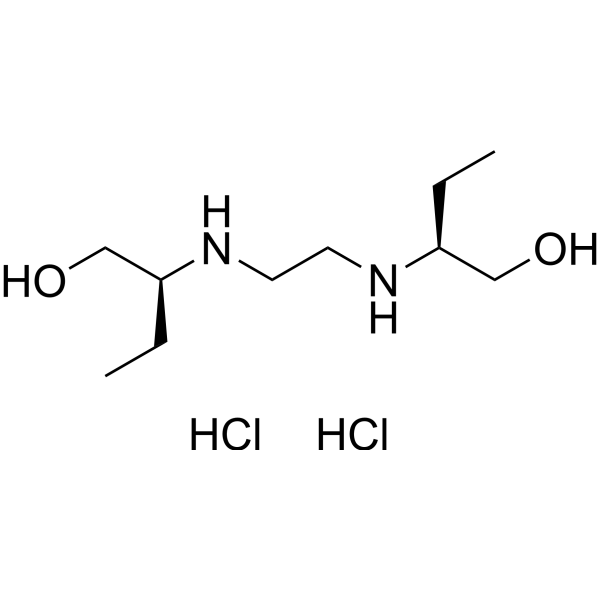
    Ethambutol dihydrochloride
    4 Publications Verification

    Emb dihydrochloride

    Bacterial Antibiotic Infection
    Ethambutol dihydrochloride is an antimycobacterial compound that prevents cell wall formation by inhibiting arabinosyltransferase activity. Ethambutol dihydrochloride can be used to establish animal models of hyperuricemia and optic neuropathy.
    Ethambutol dihydrochloride
  • HY-B0535
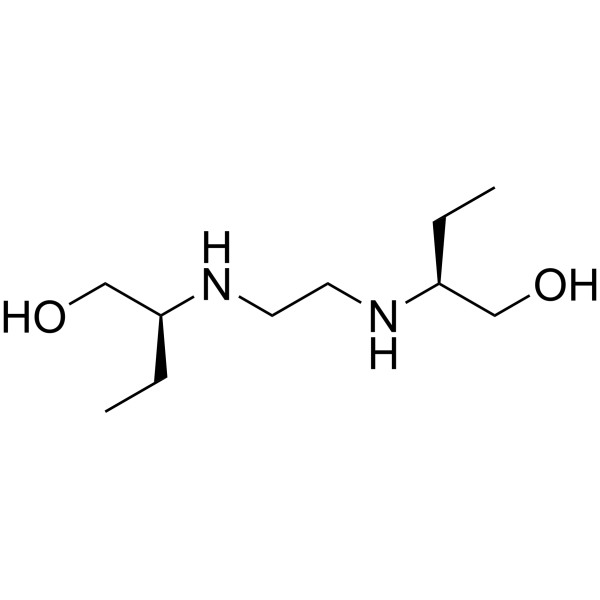
    Ethambutol
    4 Publications Verification

    Bacterial Antibiotic Infection
    Ethambutol is an antimycobacterial compound that prevents cell wall formation by inhibiting arabinosyltransferase activity. Ethambutol can be used to establish animal models of hyperuricemia and optic neuropathy.
    Ethambutol
  • HY-18939
    N6-Cyclohexyladenosine
    3 Publications Verification

    CHA

    Adenosine Receptor PI3K Akt Epigenetic Reader Domain Neurological Disease Cancer
    N6-Cyclohexyladenosine is a selective adenosine A1 receptor agonist (EC50 = 8.2 nM). N6-Cyclohexyladenosine enhances the activation of the PI3K/Akt/CREB/BDNF axis. N6-Cyclohexyladenosine promotes remyelination, induces sleep, and improves 3-NP-induced Huntington's disease. N6-Cyclohexyladenosine can be used in liver cancer research .
    N6-Cyclohexyladenosine
  • HY-P99780

    BIIB033

    Transmembrane Glycoprotein Neurological Disease Inflammation/Immunology
    Opicinumab (BIIB033) is a human IgG1 monoclonal antibody targeting LINGO-1. Opicinumab binds LINGO-1 to block its negative regulatory signaling, suppress axonal degeneration, enhance axonal regeneration, promote remyelination, and exert neuroprotective effects. Opicinumab maintains axonal protective effects during co-administration with methylprednisolone. Opicinumab can be used for the research of multiple sclerosis, acute optic neuritis, and optic neuritis. .
    Opicinumab
  • HY-123607

    Ephrin Receptor Neurological Disease Cancer
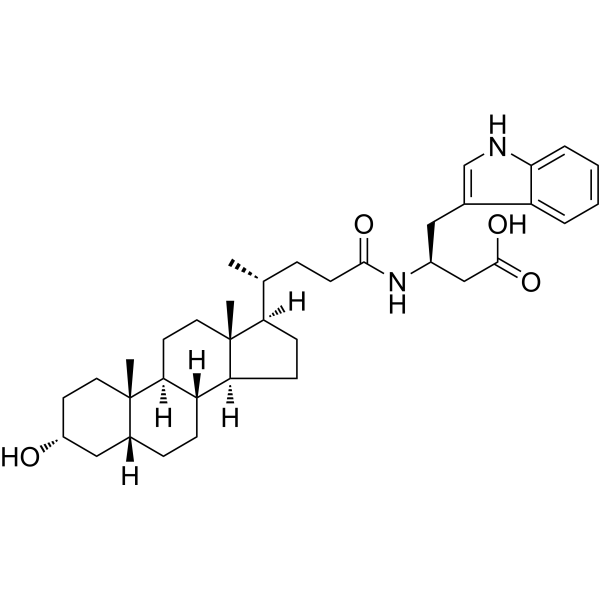
    UniPR129 is a potent and orally active Eph/ephrin antagonist. UniPR129 can inhibit EphA2-ephrin-A1 interaction with an IC50 of 945 nM and a Ki of 370 nM. UniPR129 can inhibit angiogenesis and show antitumor and neuroprotective effect. UniPR129 can be used for the researches of cancer and neurological disease, such as colorectal cancer and optic neuropathy .
    UniPR129
  • HY-B0600

    AFP-168; MK2452

    Prostaglandin Receptor Cardiovascular Disease Others
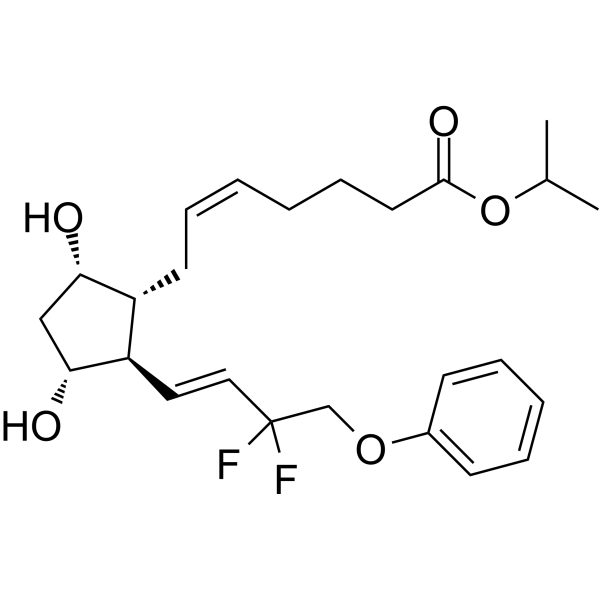
    Tafluprost (AFP-168) is an anti-glaucoma prostaglandin (PG) analog. Tafluprost can inhibit the apoptosis of retinal ganglion cells (RGCs) and rat RGCs cells. Tafluprost promotes axon regeneration by regulating Zn 2+-mTORpathway, inhibits intracellular lipid accumulation in human preorbital adipocytes. Tafluprost can be used in the study of optic nerve injury in glaucoma .
    Tafluprost
  • HY-135749

    IGF-1R Neurological Disease Inflammation/Immunology
    BN201 promotes neuronal differentiation, the differentiation of precursor cells to mature oligodendrocytes (EC50 of 6.3 μM) in vitro, and the myelination of new axons (EC50 of 16.6 μM). BN201 is able to cross the blood-brain barrier by active transport and activate pathways (IGF-1 pathway) associated with the response to stress and neuron survival. BN201 has potently neuroprotective effects .
    BN201
  • HY-W017457

    (±)-Penicillamine

    Biochemical Assay Reagents Others
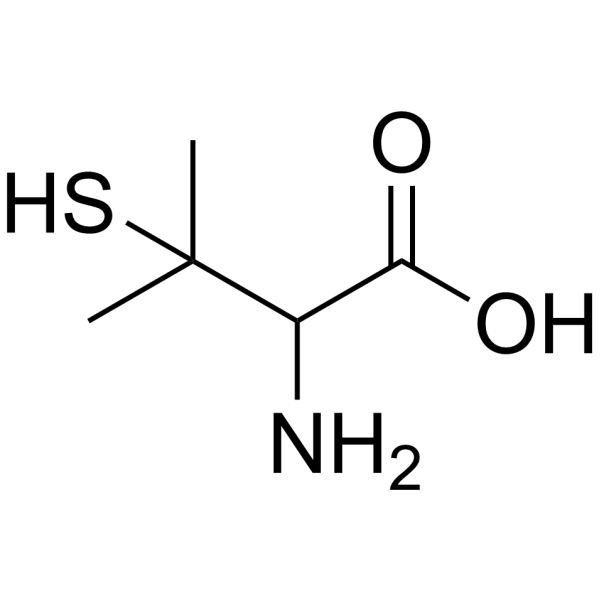
    DL-Penicillamine [(±)-Penicillamine] is a copper chelating agent. DL-Penicillamine has antidotal effects in thallotoxicosis rats when co-treated with Prussian blue (HY-106594A). DL-Penicillamine can cause pyridoxine deficiency and then induce optic axial neuritis. DL-Penicillamine can also depress primary immune response .
    DL-Penicillamine
  • HY-152142
    DN-1289
    1 Publications Verification

    JNK Neurological Disease
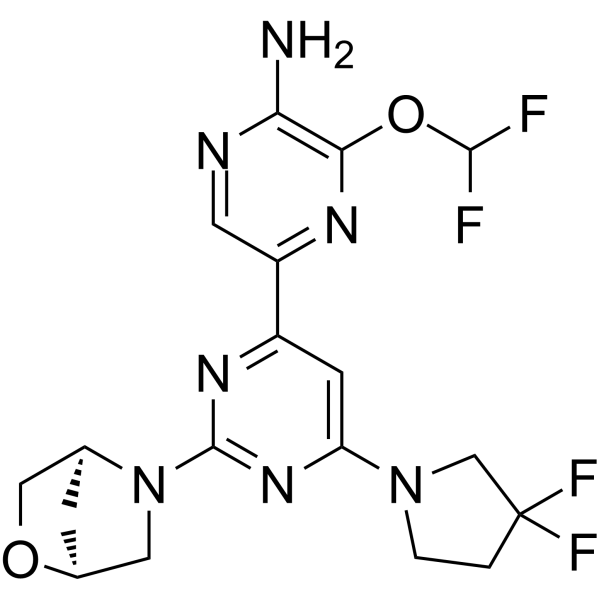
    DN-1289 is an orally active and selective inhibitor of dual leucine zipper kinase (DLK; IC50=17 nM) and leucine zipper-bearing kinase (LZK; IC50=40 nM). DN-1289 results significant attenuation of optic nerve crush (ONC)-induced p-c-Jun in mice model. DN-1289 has excellent in vivo plasma half-life and blood-brain barrier permeability .
    DN-1289
  • HY-15195

    Ro 67-0565; SPP-301

    Endothelin Receptor Cardiovascular Disease Endocrinology
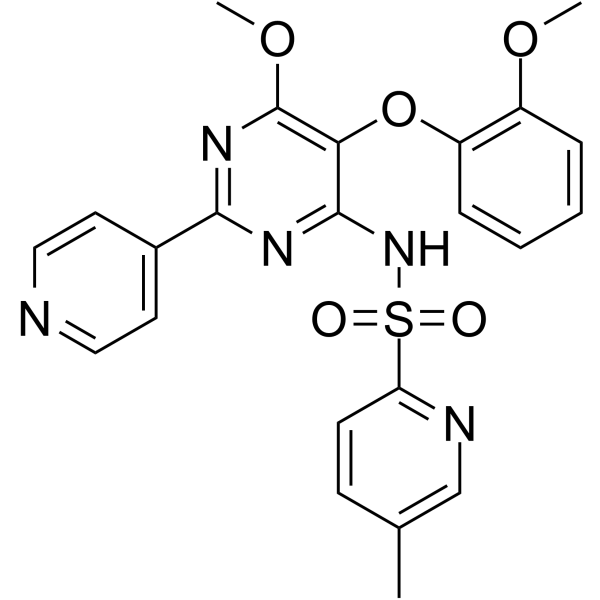
    Avosentan (Ro 67-0565; SPP-301) is an orally active endothelin (ETA) receptor antagonist. Avosentan can block the ETA receptor, thereby reducing vascular contraction and exerting a renal protective effect. Avosentan inhibits vascular contraction caused by ET-1 and alleviates the reduction in retinal and optic nerve head blood flow induced by it, lowering intraocular pressure in the glaucoma monkey model. Avosentan non-specifically blocks ETB receptors at high doses, inhibiting ETB-mediated diuresis and natriuresis, and may cause fluid retention. Avosentan can be used to reduce proteinuria with diabetic nephropathy, but induces significant fluid overload and congestive heart failure .
    Avosentan
  • HY-101446

    Trk Receptor ERK Apoptosis Neurological Disease
    HIOC is a potent and selective activator of TrkB (tropomyosin related kinase B) receptor. HIOC can pass the blood-brain and blood-retinal barriers.HIOC activates TrkB/ERK pathway and decreases neuronal cell apoptosis. HIOC attenuates early brain injury after SAH (subarachnoid hemorrhage). HIOC shows protective activity in an animal model for light-induced retinal degeneration .
    HIOC
  • HY-D1677

    Fluorescent Dye Others
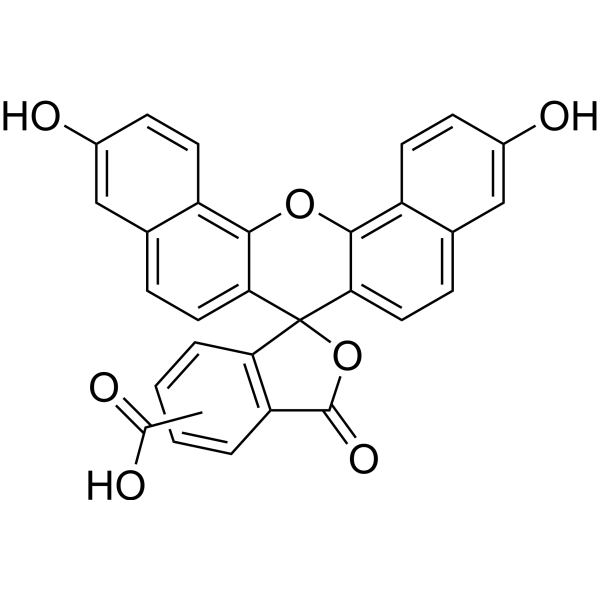
    5(6)-Carboxynaphthofluorescein is a pH-dependent fluorophore. 5(6)-Carboxynaphthofluorescein shows good sensitivity in an alkaline pH range and it can be exploited in the construction of fiber-optic pH sensors. 5(6)-Carboxynaphthofluorescein can be used as a fluorescent pH indicator (Ex/Em=593/668 nm) .
    5(6)-Carboxynaphthofluorescein
  • HY-158820
    Cosdosiran
    1 Publications Verification

    QPI-1007

    Small Interfering RNA (siRNA) Caspase Cardiovascular Disease
    Cosdosiran is a chemically modified siRNA designed to temporarily inhibit expression of the caspase 2 protein and can be used for the study of nonarteritic anterior ischemic optic neuropathy and other optic neuropathies such as glaucoma that result in the death of retinal ganglion cells.
    Cosdosiran
  • HY-10068

    Y-39983

    ROCK Neurological Disease
    Y-33075 hydrochloride (Y-39983) is a selective ROCK inhibitor derived from Y-27632, and is more potent than Y-27632, with an IC50 of 3.6 nM.
    Y-33075 hydrochloride
  • HY-177306

    Dynamin Cancer
    Opitor-0 is a potent and selective inhibitor of mitochondrial dynamin-related protein Optic Atrophy 1 (OPA1) guanosine triphosphatase (GTPase) with an IC50 of 3 μM. Opitor-0 can induce fragmentation of mitochondria and remodeling of cristae, disrupt the stability of OPA1 oligomers, and significantly enhance the release of cytochrome c and induce apoptosis. Opitor-0 has a synergistic antitumor effect with Bcl-2 inhibitors, such as ABT-737 (HY-50907) and Venetoclax (HY-15531). Opitor-0 can be used for the research of malignant tumors that are resistant to Bcl-2 inhibitors, such as triple-negative breast cancer (TNBC) .
    Opitor-0
  • HY-158820A
    Cosdosiran sodium
    1 Publications Verification

    QPI-1007 sodium

    Small Interfering RNA (siRNA) Caspase Cardiovascular Disease
    Cosdosiran sodium is a chemically modified siRNA designed to temporarily inhibit expression of the caspase 2 protein and can be used for the study of nonarteritic anterior ischemic optic neuropathy and other optic neuropathies such as glaucoma that result in the death of retinal ganglion cells.
    Cosdosiran sodium
  • HY-118294

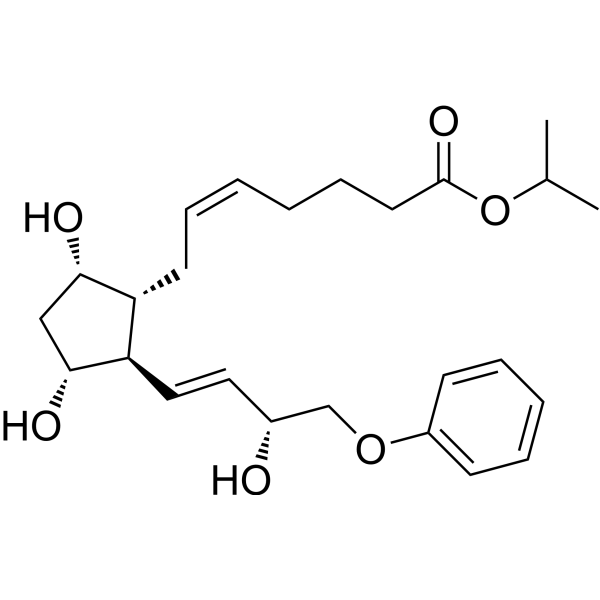
    16-Phenoxy tetranor prostaglandin F2α isopropyl ester; 16-Phenoxy tetranor PGF2α isopropyl ester

    Prostaglandin Receptor Cardiovascular Disease
    15-OH Tafluprost, a prostaglandin F2a (PGF2a) analog, relieves endothelin-1 (ET-1)-induced optic nerve head (ONH) blood flow impairment and ET-1-induced contraction of isolated ciliary artery segments .
    15-OH Tafluprost
  • HY-W017457R

    (±)-Penicillamine (Standard)

    Biochemical Assay Reagents Reference Standards Others
    DL-Penicillamine (Standard) is the analytical standard of DL-Penicillamine. This product is intended for research and analytical applications. DL-Penicillamine [(±)-Penicillamine] is a copper chelating agent. DL-Penicillamine has antidotal effects in thallotoxicosis rats when co-treated with Prussian blue (HY-106594A). DL-Penicillamine can cause pyridoxine deficiency and then induce optic axial neuritis. DL-Penicillamine can also depress primary immune response .
    DL-Penicillamine (Standard)
  • HY-B0600R

    AFP-168 (Standard); MK2452 (Standard)

    Prostaglandin Receptor Reference Standards Cardiovascular Disease Others
    Tafluprost (Standard) is the analytical standard of Tafluprost. This product is intended for research and analytical applications. Tafluprost (AFP-168) is an anti-glaucoma prostaglandin (PG) analog. Tafluprost can inhibit the apoptosis of retinal ganglion cells (RGCs) and rat RGCs cells. Tafluprost promotes axon regeneration by regulating Zn2+-mTORpathway, inhibits intracellular lipid accumulation in human preorbital adipocytes. Tafluprost can be used in the study of optic nerve injury in glaucoma [4] .
    Tafluprost (Standard)
  • HY-168177

    Reactive Oxygen Species (ROS) Neurological Disease
    ROS-IN-3 (compound x38) is a ROS inhibitor. ROS-IN-3 can be used in neuro-related research .
    ROS-IN-3
  • HY-178030

    Carbonic Anhydrase Adrenergic Receptor Neurological Disease
    CAXII-IN-3 is an effective carbonic anhydrase (CA XII) inhibitor with a Ki of 53 nM. CAXII-IN-3 exhibits selective inhibition against multiple human CA subtypes with Kis of 5.3 μM, 75 nM, 1.9 μM, > 10 μM against CA I, CA II, CA IV and CA IX. CAXII-IN-3 mainly inhibits CA II and XII, and reduces aqueous humor production. CAXII-IN-3 exhibits β3-AR agonistic activity, can dilate retinal blood vessels, and improve optic nerve perfusion. CAXII-IN-3 can be used in the research of ocular disorders such as glaucoma .
    CAXII-IN-3
  • HY-15195R

    Ro 67-0565 (Standard); SPP-301 (Standard)

    Reference Standards Endothelin Receptor Cardiovascular Disease Endocrinology
    Avosentan (Standard) is the analytical standard of Avosentan (HY-15195). This product is intended for research and analytical applications. Avosentan is an orally active endothelin (ETA) receptor antagonist. Avosentan can block the ETA receptor, thereby reducing vascular contraction, and exerting a renal protective effect. Avosentan inhibits vascular contraction caused by ET-1 and alleviates the reduction in retinal and optic nerve head blood flow induced by it, lowering intraocular pressure in the glaucoma monkey model. Avosentan non-specifically blocks ETB receptors at high doses, inhibiting ETB-mediated diuresis and natriuresis, and may cause fluid retention. Avosentan can be used to reduce proteinuria with diabetic nephropathy, but induces significant fluid overload and congestive heart failure.
    Avosentan (Standard)

Inquiry Online

Your information is safe with us. * Required Fields.

Salutation


Country or Region *

Applicant Name *


Organization Name *

Department *


Email Address *


Product Name *

Cat. No.


Requested quantity *

Phone Number *


Remarks

Inquiry Online

Inquiry Information

Product Name:
Cat. No.:
Quantity:
MCE Japan Authorized Agent:

