



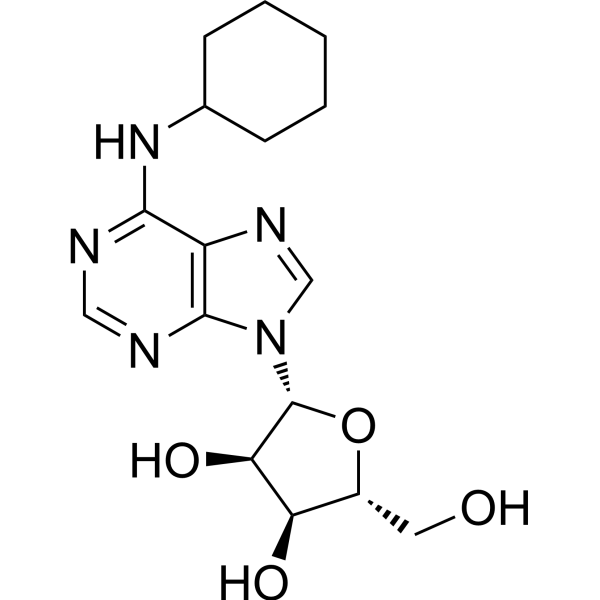
N6-Cyclohexyladenosine
Based on 3 publication(s) in Google Scholar
N6-Cyclohexyladenosine is a selective adenosine A1 receptor agonist (EC50 = 8.2 nM). N6-Cyclohexyladenosine enhances the activation of the PI3K/Akt/CREB/BDNF axis. N6-Cyclohexyladenosine promotes remyelination, induces sleep, and improves 3-NP-induced Huntington's disease. N6-Cyclohexyladenosine can be used in liver cancer research.
For research use only. We do not sell to patients.
- Purity : 99.79%
- CAS No.: 36396-99-3
- Formula: C16H23N5O4
- Molecular Weight:349.38
-
Storage:Powder -20°C, 3 years , 4°C, 2 years ; In solvent -80°C, 2 years , -20°C, 1 year

To place orders, for customer services and technical support, please contact: MedChemExpress USA
Tel: 609-228-6898 E-mail: [email protected] [email protected]


-
 Biological Activity
-
Chemical Information
-
Solvent & Solubility
- Protocols
- Purity & Documentation
- References
-
 Help & FAQs


-
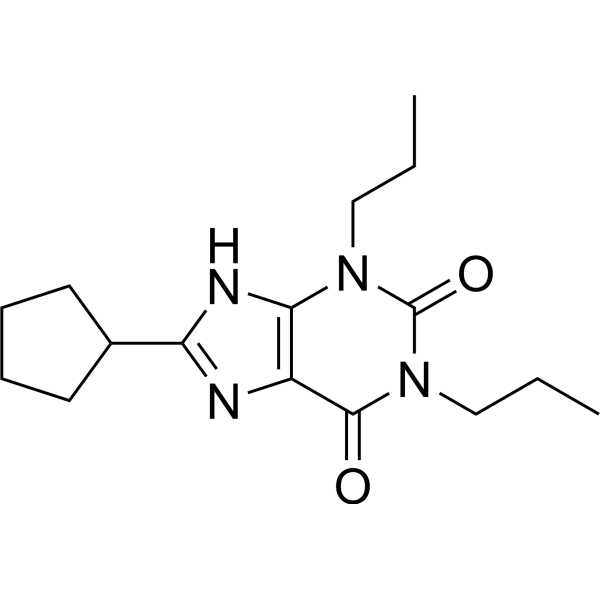
HY-100937
DPCPXA1 Receptor Antagonist -
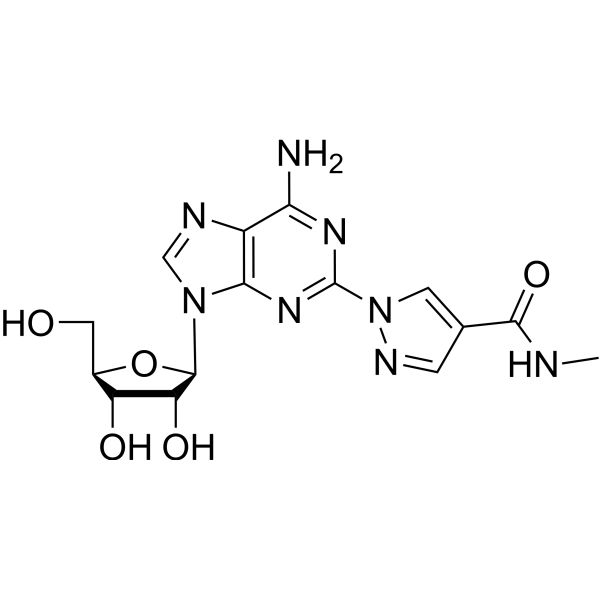
HY-A0168
RegadenosonVasodilator/A2A Adenosine Receptor Agonist -
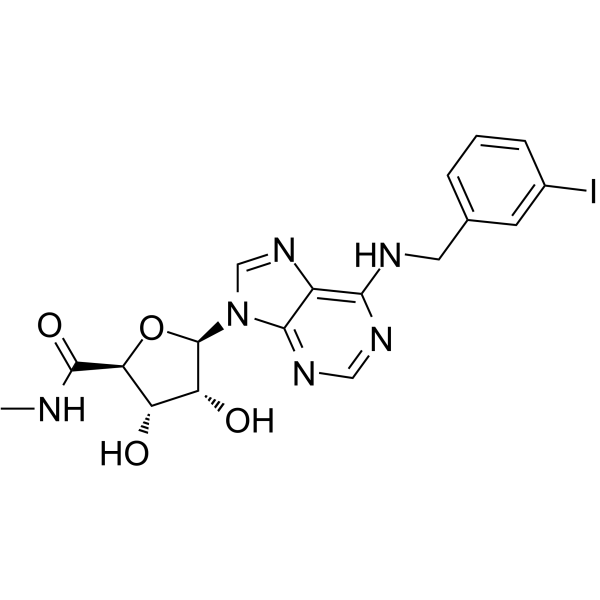
HY-13591
PiclidenosonA3AR Agonist -
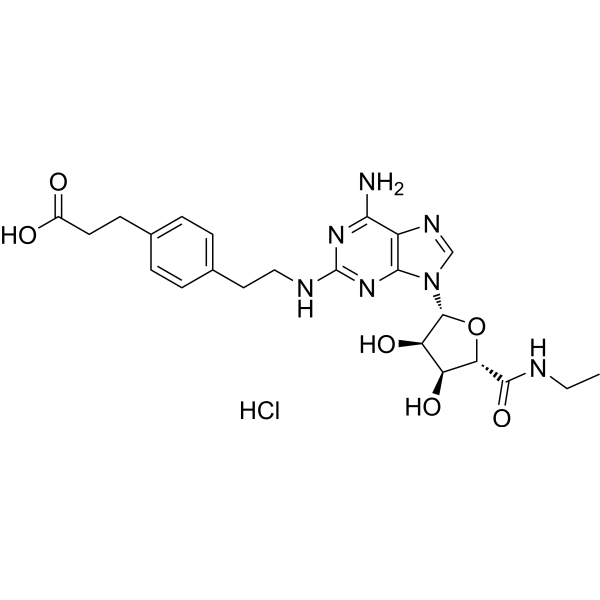
HY-13201A
CGS 21680 HydrochlorideAdenosine A2A Receptor Agonist -
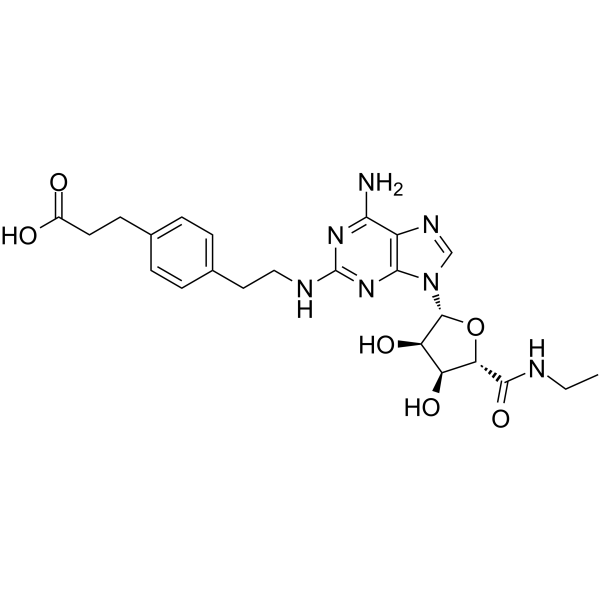
HY-13201
CGS 21680 -
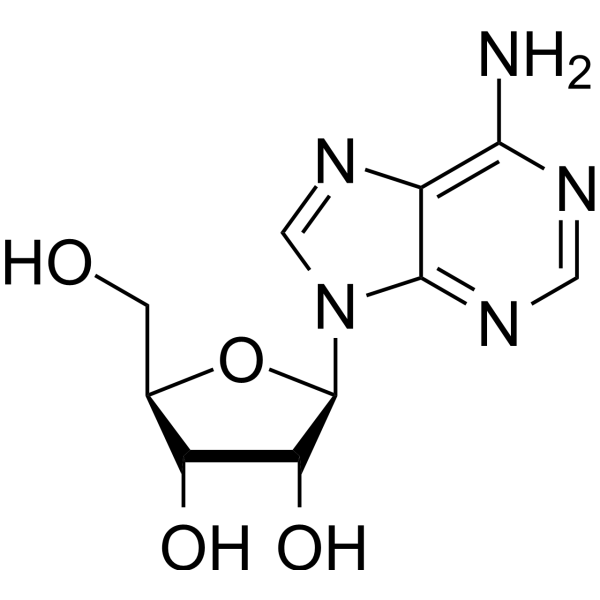
HY-B0228
AdenosineEndogenous Autacoid -
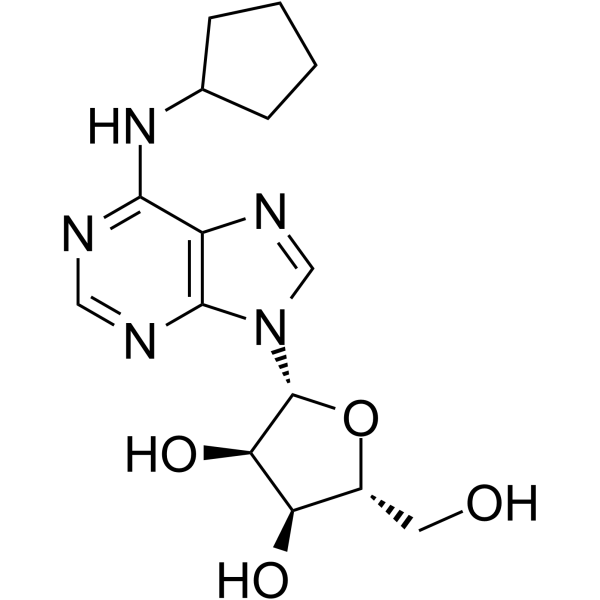
HY-103181
N6-CyclopentyladenosineAdenosine A1 Receptor Agonist -
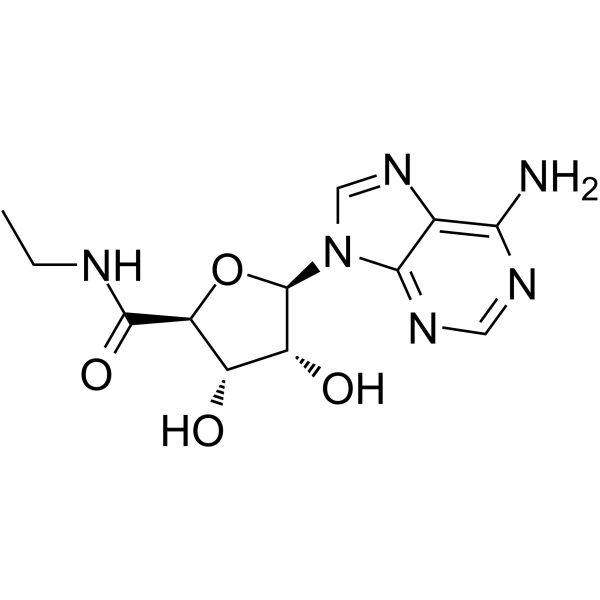
HY-103173
5'-N-EthylcarboxamidoadenosineAdenosine Receptor Agonist -
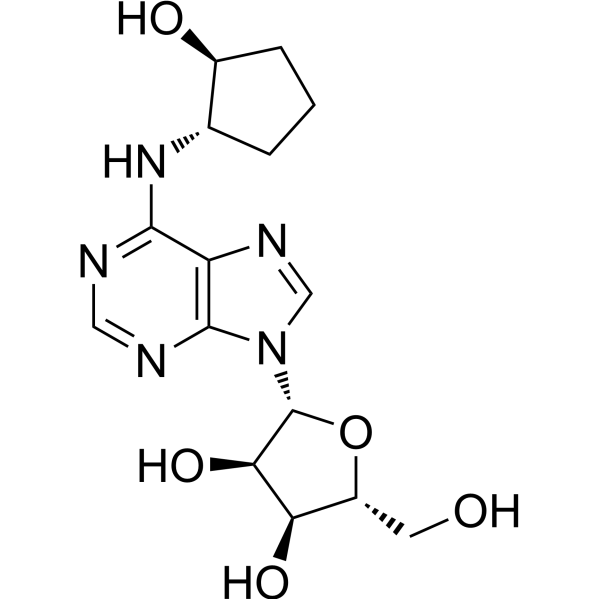
HY-18978
GR79236Adenosine A1 Receptor Agonist -
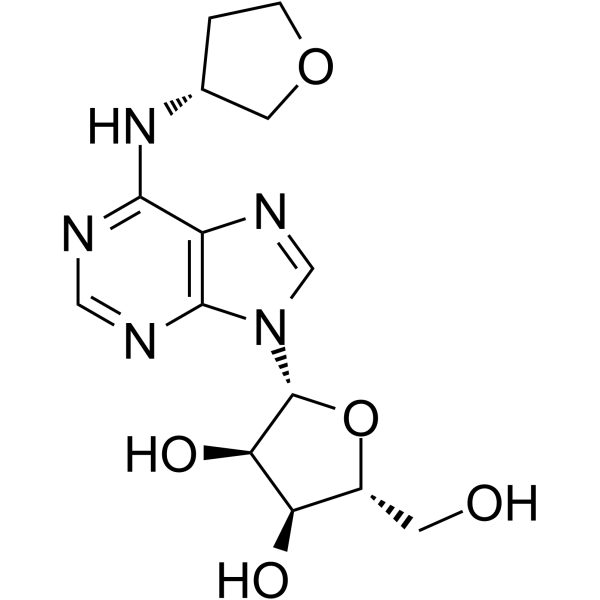
HY-19661
TecadenosonA1 Adenosine Receptor Agonist -
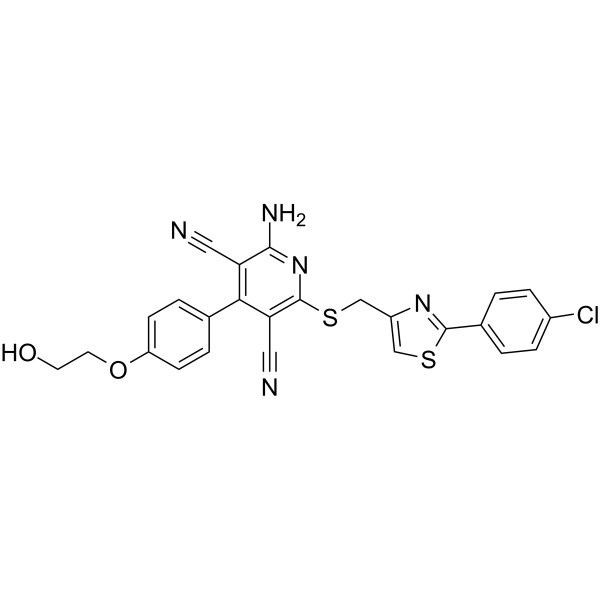
HY-14917
CapadenosonAdenosine Receptor Agonist -

HY-103181R
N6-Cyclopentyladenosine (Standard)Reference Standard
Publications Citing Use of MedChemExpress (MCE) N6-Cyclohexyladenosine
MoreAll Adenosine Receptor Isoforms
More

Biological Activity
Description
Cellular Effect
|
Cell Line

|
Type | Value | Description | References |
|---|---|---|---|---|
| Caco-2 | GI50 |
>250 μM
Compound: 16, CHA
|
Antitumor activity against human CaCo2 cells after 48 hrs by MTS assay
Antitumor activity against human CaCo2 cells after 48 hrs by MTS assay
|
[PMID: 18588281] |
| HT-29 | GI50 |
>250 μM
Compound: 16, CHA
|
Antitumor activity against human HT29 cells after 48 hrs by MTS assay
Antitumor activity against human HT29 cells after 48 hrs by MTS assay
|
[PMID: 18588281] |
| K562 | GI50 |
>250 μM
Compound: 16, CHA
|
Antitumor activity against human K562 cells after 48 hrs by MTS assay
Antitumor activity against human K562 cells after 48 hrs by MTS assay
|
[PMID: 18588281] |
| MCF7 | GI50 |
>250 μM
Compound: 16, CHA
|
Antitumor activity against human MCF7 cells after 48 hrs by MTS assay
Antitumor activity against human MCF7 cells after 48 hrs by MTS assay
|
[PMID: 18588281] |
In Vitro
N6-Cyclohexyladenosine reduces the extent of demyelination and promote remyelination in rat optic chiasm[1].
N6-Cyclohexyladenosine (10 nM-50 μM; 20 h) significantly increases the secretion of Erythropoietin in human hepatoma cell line Hep 3B under hypoxic conditions[4].
MedChemExpress (MCE) has not independently confirmed the accuracy of these methods. They are for reference only.
In Vivo
N6-Cyclohexyladenosine (10-100 μM; infused into the basal forebrain via a microdialysis probe) can induce sleep in a rat model of basal forebrain cholinergic neuron injury [2].
N6-Cyclohexyladenosine (60 μg/kg; i.p.) is a potent locomotor depressant in mice[3].
N6-Cyclohexyladenosine (6.25 nM/1 μL; intrastriatal injection; single) attenuates neuronal death and improves cognitive and motor deficits in a rat model of Huntington's disease induced by 3-NP[6].
N6-Cyclohexyladenosine (1.5 mg/kg induction dose, followed by three 1.0 mg/kg doses every 6 hours for a total of 4 doses; i.p.; 4 times) does not show neuroprotective effects in a rat model of middle cerebral artery occlusion (MCAO), failing to reduce infarct volume and improve neurological function[7].
MedChemExpress (MCE) has not independently confirmed the accuracy of these methods. They are for reference only.
-
Animal Model:Adult male Sprague-Dawley rats (weight 180-220 g), 3-nitropropionic acid (3-NP)-induced Huntington's disease model[6]
-
Dosage:6.25 nM/1 μL (dissolved in DMSO)
-
Administration:Intrastriatal injection, single administration, 45 min after 3-NP injection
-
Result:Significantly attenuated neuronal death in the striatum.
Improved cognitive and motor deficits as shown by increased time spent in the target quadrant in the Morris Water Maze test and increased fall off latency in the rotarod test.
Enhanced the activation of the PI3K/Akt/CREB/BDNF axis.
Increased pERK1/2 levels, attenuated neuroinflammatory and oxidative stress status.
Reduced the immunoreactivity of glial fibrillary acidic protein (GFAP).
Increased the number of intact neurons in the striatum.


Chemical Information
-
CAS No. 36396-99-3
-
Appearance Solid
-
Molecular Weight 349.38
-
Formula C16H23N5O4
-
Color White to off-white
-
SMILES
OC[C@@H]1[C@H]([C@H]([C@H](N2C=NC3=C2N=CN=C3NC4CCCCC4)O1)O)O
-
Synonyms
CHA
-
Shipping
Room temperature in continental US; may vary elsewhere.
-
Storage
Powder -20°C 3 years 4°C 2 years In solvent -80°C 2 years -20°C 1 year


Publications (3)
-
Journal Impact Factor
-
Most Recent
-
Nature
2026 Jan;649(8096):423-431. PMID: 41193806 -
Int J Mol Sci
Torpor-like Hypothermia Induced by A1 Adenosine Receptor Agonist: A Novel Approach to Protect against Neuroinflammation. [Abstract]2023 Jul 3;24(13):11036. PMID: 37446216 -
Exp Brain Res
Adenosine receptor A1 enhanced mitochondrial biogenesis and exerted neuroprotection after cerebral ischemia through PGC-1α. [Abstract]2023 Jun;241(6):1471-1488. PMID: 37081178


Solvent & Solubility
In Vitro:
DMSO : ≥ 100 mg/mL (286.22 mM; Hygroscopic DMSO has a significant impact on the solubility of product, please use newly opened DMSO)
* "≥" means soluble, but saturation unknown.
Please refer to the solubility information to select the appropriate solvent. Once prepared, please aliquot and store the solution to prevent product inactivation from repeated freeze-thaw cycles.
Storage method and period of stock solution: -80°C, 2 years; -20°C, 1 year. When stored at -80°C, please use it within 2 years. When stored at -20°C, please use it within 1 year.
Please refer to the solubility information to select the appropriate solvent. Once prepared, please aliquot and store the solution to prevent product inactivation from repeated freeze-thaw cycles.
Storage method and period of stock solution: -80°C, 2 years; -20°C, 1 year. When stored at -80°C, please use it within 2 years. When stored at -20°C, please use it within 1 year.
Concentration (start) × Volume (start) = Concentration (final) × Volume (final)
In Vivo:
Select the appropriate dissolution method based on your experimental animal and administration route.
- For the following dissolution methods, please ensure to first prepare a clear stock solution using an In Vitro approach and then sequentially add co-solvents:
- To ensure reliable experimental results, the clarified stock solution can be appropriately stored based on storage conditions. As for the working solution for In Vivo experiments, it is recommended to prepare freshly and use it on the same day.
- The percentages shown for the solvents indicate their volumetric ratio in the final prepared solution. If precipitation or phase separation occurs during preparation, heat and/or sonication can be used to aid dissolution.
Add each solvent one by one: 10% DMSO 40% PEG300 5% Tween-80 45% Saline
Solubility: ≥ 2.5 mg/mL (7.16 mM); Clear solution
This protocol yields a clear solution of ≥ 2.5 mg/mL (saturation unknown).
Taking 1 mL working solution as an example, add 100 μL DMSO stock solution (25.0 mg/mL) to 400 μL PEG300, and mix evenly; then add 50 μL Tween-80 and mix evenly; then add 450 μL Saline to adjust the volume to 1 mL.
Preparation of Saline: Dissolve 0.9 g sodium chloride in ddH₂O and dilute to 100 mL to obtain a clear Saline solution.
Add each solvent one by one: 10% DMSO 90% (20% SBE-β-CD in Saline)
Solubility: ≥ 2.5 mg/mL (7.16 mM); Clear solution
This protocol yields a clear solution of ≥ 2.5 mg/mL (saturation unknown).
Taking 1 mL working solution as an example, add 100 μL DMSO stock solution (25.0 mg/mL) to 900 μL 20% SBE-β-CD in Saline, and mix evenly.
Preparation of 20% SBE-β-CD in Saline (4°C, storage for one week): 2 g SBE-β-CD powder is dissolved in 10 mL Saline, completely dissolve until clear.
In Vivo Dissolution Calculator
Please enter the basic information of animal experiments:
-
-
-
-
Recommended: Prepare an additional quantity of animals to account for potential losses during experiments.
Please enter your animal formula composition:
-
%DMSO +
Recommended: Keep the proportion of DMSO in working solution below 2% if your animal is weak.
-
%+
-
+%Tween-80 + +
-
%Saline +
The co-solvents required include: DMSO, . All of co-solvents are available by MedChemExpress (MCE). , Tween 80. All of co-solvents are available by MedChemExpress (MCE).
Working solution concentration: 0.22 mg/mL
Method for preparing stock solution: mg drug dissolved in μL DMSO. Stock solution concentration: mg/mL.
1. Take μL DMSO stock solution;
2. Add μL .
μL , mix evenly;
3. Then add μL Tween 80, mix evenly;
4. Then add μL
Please ensure that the stock solution in the first step is dissolved to a clear state, and add co-solvents in sequence. You can use ultrasonic heating (ultrasonic cleaner, recommended frequency 20-40 kHz), vortexing, etc. to assist dissolution.


Purity & Documentation
-
Data Sheet (283 KB)
-
SDS (393 KB)
- English - EN (393 KB)
- Français - FR (393 KB)
- Deutsch - DE (393 KB)
- Norwegian - NO (393 KB)
- Español - ES (393 KB)
- Swedish - SV (393 KB)
- Italian - IT (393 KB)
- Korean - KR (393 KB)
- Portuguese - PT (393 KB)
-
Handling Instructions (2659 KB)
References
[1]. Asghari AA, et al. Adenosine A1 receptor agonist, N6-cyclohexyladenosine, protects myelin and induces remyelination in an experimental model of rat optic chiasm demyelination; electrophysiological and histopathological studies. J Neurol Sci. 2013 Feb 15;325(1-2):22-28. [Content Brief]
[2]. Blanco-Centurion C, et al. Adenosine and sleep homeostasis in the Basal forebrain. J Neurosci. 2006 Aug 2;26(31):8092-100. [Content Brief]
[3]. Nikodijević O, et al. Characterization of the locomotor depression produced by an A2-selective adenosine agonist. FEBS Lett. 1990 Feb 12;261(1):67-70. [Content Brief]
[4]. Nakashima J, et al. Increased erythropoietin secretion in human hepatoma cells by N6-cyclohexyladenosine. Am J Physiol. 1991 Sep;261(3 Pt 1):C455-60. [Content Brief]
[5]. Churchill PC, et al. Renin secretory effects of N6-cyclohexyladenosine: effects of dietary sodium. Am J Physiol. 1987 May;252(5 Pt 2):F872-6. [Content Brief]
[6]. Rabie MA, et al. Adenosine A1 receptor agonist, N6-cyclohexyladenosine, attenuates Huntington's disease via stimulation of TrKB/PI3K/Akt/CREB/BDNF pathway in 3-nitropropionic acid rat model. Chem Biol Interact. 2023 Jan 5;369:110288. [Content Brief]
[7]. Liddle LJ, et al. An Assessment of Physical and N6-Cyclohexyladenosine-Induced Hypothermia in Rodent Distal Focal Ischemic Stroke. Ther Hypothermia Temp Manag. 2024 Mar;14(1):36-45. [Content Brief]


Complete Stock Solution Preparation Table
Please refer to the solubility information to select the appropriate solvent. Once prepared, please aliquot and store the solution to prevent product inactivation from repeated freeze-thaw cycles.
Storage method and period of stock solution: -80°C, 2 years; -20°C, 1 year. When stored at -80°C, please use it within 2 years. When stored at -20°C, please use it within 1 year.
| Optional Solvent | Concentration Solvent Mass | 1 mg | 5 mg | 10 mg | 25 mg |
|---|---|---|---|---|---|
| DMSO | 1 mM | 2.8622 mL | 14.3111 mL | 28.6221 mL | 71.5553 mL |
| 5 mM | 0.5724 mL | 2.8622 mL | 5.7244 mL | 14.3111 mL | |
| 10 mM | 0.2862 mL | 1.4311 mL | 2.8622 mL | 7.1555 mL | |
| 15 mM | 0.1908 mL | 0.9541 mL | 1.9081 mL | 4.7704 mL | |
| 20 mM | 0.1431 mL | 0.7156 mL | 1.4311 mL | 3.5778 mL | |
| 25 mM | 0.1145 mL | 0.5724 mL | 1.1449 mL | 2.8622 mL | |
| 30 mM | 0.0954 mL | 0.4770 mL | 0.9541 mL | 2.3852 mL | |
| 40 mM | 0.0716 mL | 0.3578 mL | 0.7156 mL | 1.7889 mL | |
| 50 mM | 0.0572 mL | 0.2862 mL | 0.5724 mL | 1.4311 mL | |
| 60 mM | 0.0477 mL | 0.2385 mL | 0.4770 mL | 1.1926 mL | |
| 80 mM | 0.0358 mL | 0.1789 mL | 0.3578 mL | 0.8944 mL | |
| 100 mM | 0.0286 mL | 0.1431 mL | 0.2862 mL | 0.7156 mL |


N6-Cyclohexyladenosine Related Classifications
HY-18939 Related Classifications
 Powered by Bioz