Search Result
Results for "
paralysis
" in MedChemExpress (MCE) Product Catalog:
1
Biochemical Assay Reagents
1
Isotope-Labeled Compounds
| Cat. No. |
Product Name |
Target |
Research Areas |
Chemical Structure |
-
- HY-12640
-
|
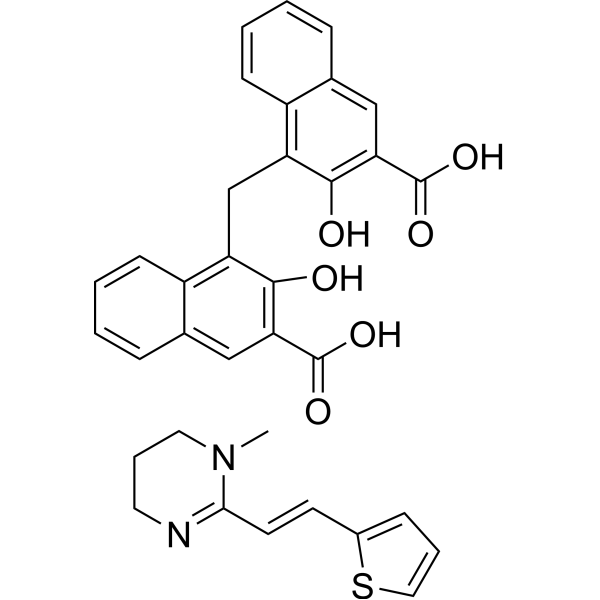
Pyrantel embonate
|
Parasite
nAChR
Antibiotic
|
Infection
|
|
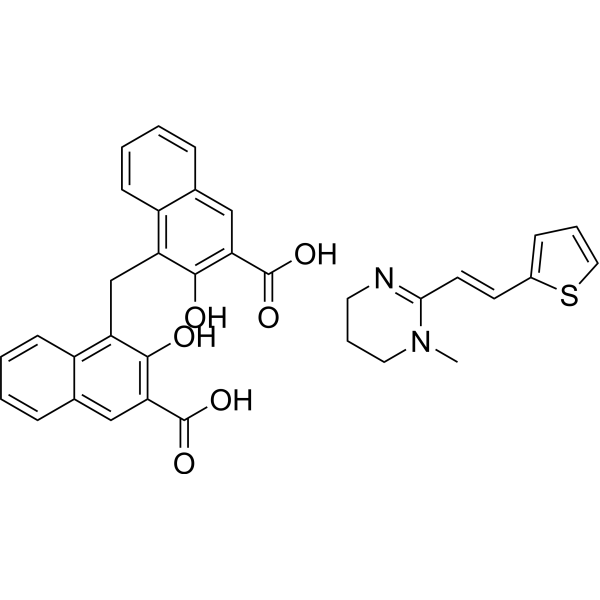
Pyrantel pamoate (Pyrantel embonate) is an orally active anthelmintic and an agonist of the nicotinic acetylcholine receptor (nAChR). Pyrantel pamoate can cause spasmodic muscle paralysis in parasites. Pyrantel pamoate can be used in the study of parasitic infections such as ascariasis, hookworm infections, intestinal worms (pinworm infections), trichinosis and trichinosis .
|
-
-
- HY-15308
-
|
Abamectin B1a
|
Parasite
Antibiotic
|
Infection
|
|
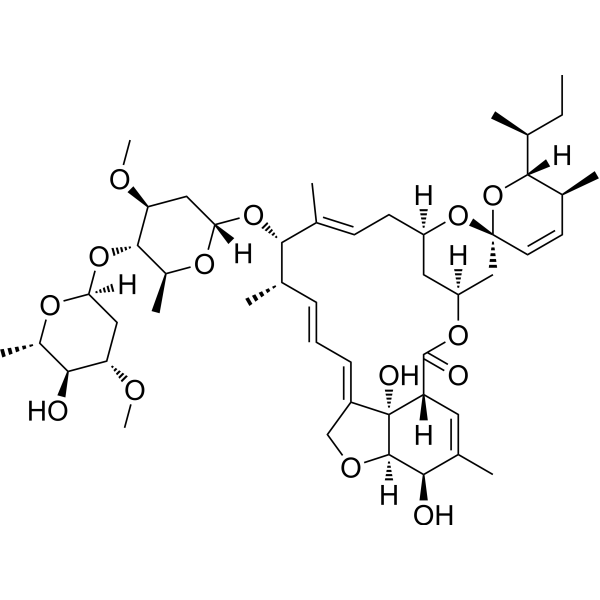
Avermectin B1a is an antiparasitic agent that paralyzes nematodes without causing hypercontraction or flaccid paralysis.
|
-
-
- HY-B1139
-
|
|
Apoptosis
|
Neurological Disease
|
|
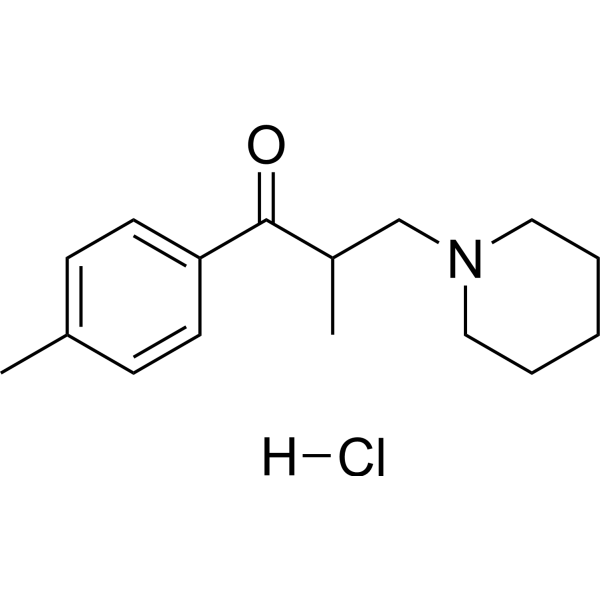
Tolperisone hydrochloride is a centrally acting muscle relaxant studied in neurological disorders causing pathological rhabdomyosclerosis (pyramidal tract injury, multiple sclerosis, myelopathy, encephalomyelitis), spastic paralysis, and other muscle dystonia-related Encephalopathy. Tolperisone hydrochloride also has antiviral activity .
|
-
-
- HY-125159
-
|
PF-00520904
|
Parasite
nAChR
|
Infection
|
|
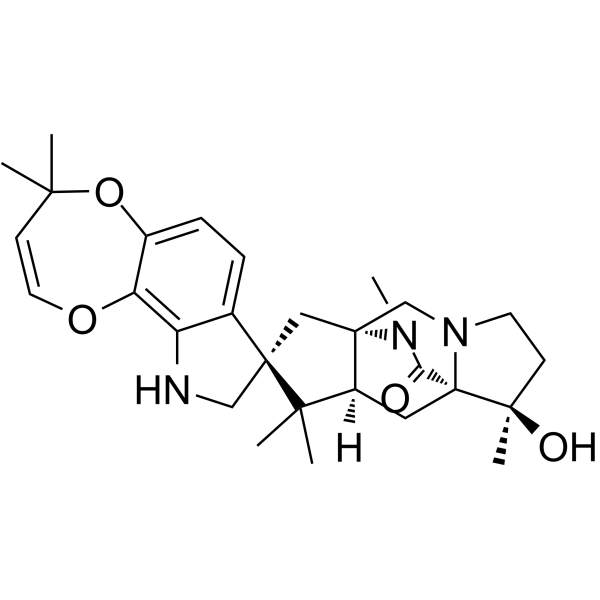
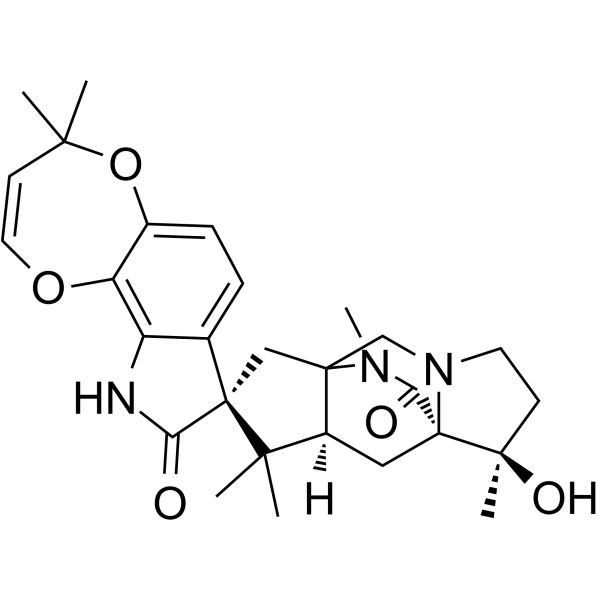
Derquantel, a spirocyclic anthelmintic, is a competitive, orally active nicotinic acetylcholine receptor (nAChR) antagonist. Derquantel inhibits ACh-induced depolarization with an IC50 of 0.22 μM. By selectively antagonizing nAChRs on the somatic muscles of nematodes, Derquantel causes flaccid paralysis of muscles, thereby dislodging parasites from the host's gastrointestinal tract. Derquantel is applicable to research related to Haemonchus contortus infection and Ascaris suum infection .
|
-
-
- HY-B0416
-
|
|
mAChR
Adrenergic Receptor
|
Neurological Disease
|
|
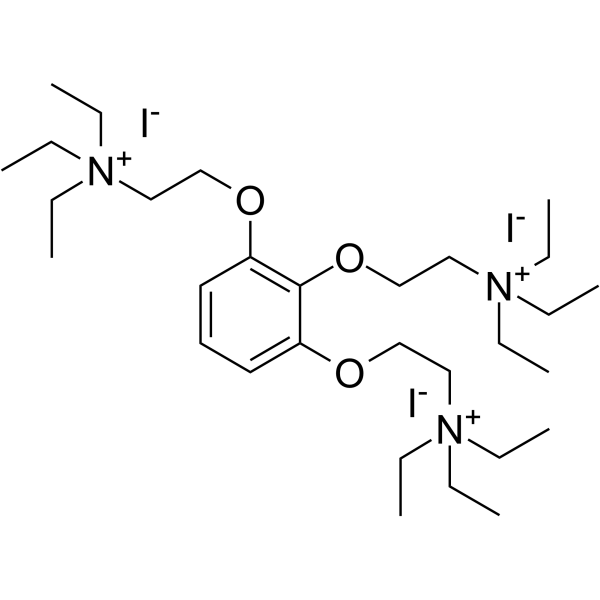
Gallamine Triethiodide is a blood-brain barrier-permeable skeletal muscle relaxant. Gallamine Triethiodide induces skeletal muscle paralysis by blocking acetylcholine. Gallamine Triethiodide directly stimulates intracardiac β receptors. Gallamine Triethiodide prolongs the duration of afterdischarge in the cat cerebral cortex. Gallamine Triethiodide can be used in studies related to convulsive disorders .
|
-
-
- HY-B1007
-
|
|
Sodium Channel
|
Neurological Disease
|
|
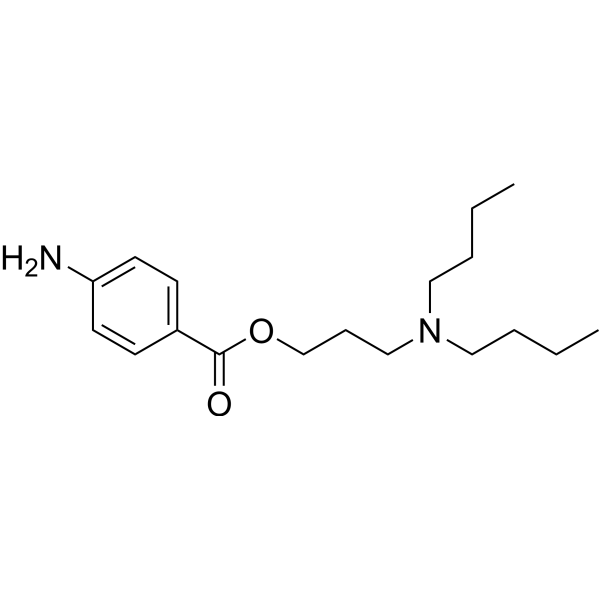
Butacaine is a reversible nerve conduction blocker. Butacaine acts on the nervous system and nerve fibers, can cause both sensory and motor paralysis. Butacaine inhibits the NavBh currents. Butacaine can form inclusion complexes with α-cyclodextrin (α-CD) and β-cyclodextrin (β-CD). Butacaine is commonly used as a negative control for other local anesthetics .
|
-
-
- HY-B0570
-
|
|
nAChR
|
Neurological Disease
|
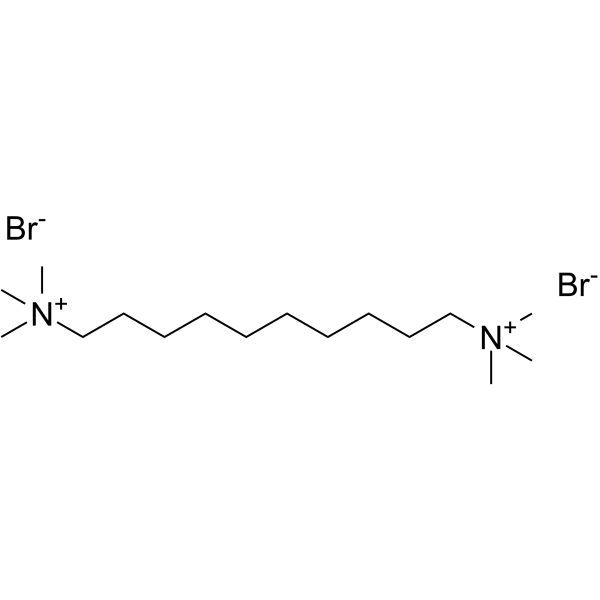
Decamethonium Bromide is an acetylcholine receptor inhibitor and muscle relaxant. Decamethonium Bromide first induces depolarization of skeletal muscles, and then binds to postsynaptic acetylcholine receptors to induce persistent paralysis .\n
|
-
-
- HY-W010144
-
|
|
COX
Lipoxygenase
|
Cardiovascular Disease
Inflammation/Immunology
|
|
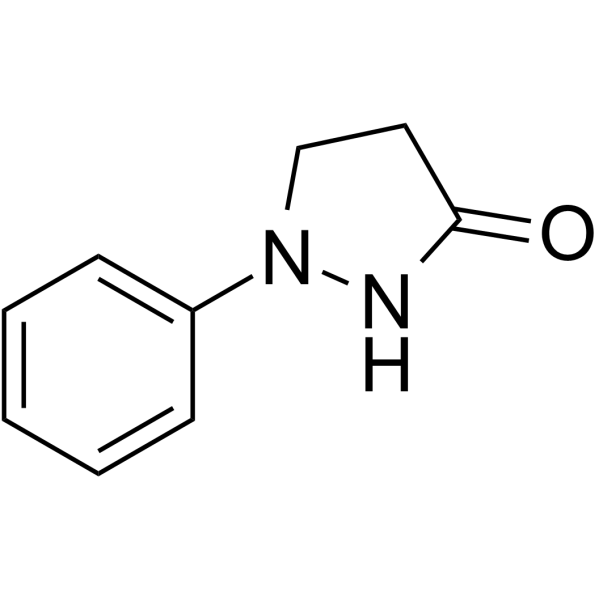
Phenidone, an orally active dual inhibitor of cyclooxygenase (COX) and lipoxygenase (LOX), ameliorates rat paralysis in experimental autoimmune encephalomyelitis. Phenidone is a potent hypotensive agent in the spontaneously hypertensive rat . Phenidone is used as a photographic developer .
|
-
-
- HY-136330
-
|
|
Insecticide
Parasite
Sodium Channel
|
Infection
|
|
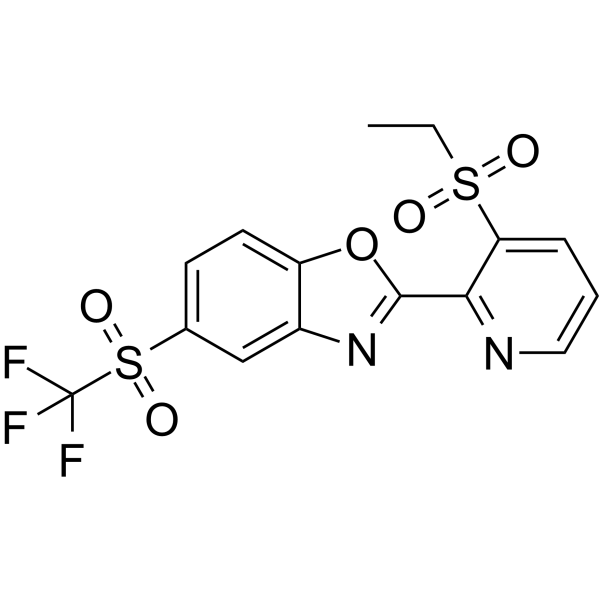
Oxazosulfyl is a sulfyl insecticide with potent and cross-spectrum insecticidal activity. Oxazosulfyl inhibits sodium currents by binding to and stabilizing the slow-inactivated state of voltage-gated sodium channels, leading to insect paralysis. Oxazosulfyl's ability to block sodium channels is correlated with its insecticidal activity .
|
-
-
- HY-12640R
-
|
Pyrantel embonate (Standard)
|
Reference Standards
Parasite
nAChR
Antibiotic
|
Infection
|
|
Pyrantel (pamoate) (Standard) is the analytical standard of Pyrantel (pamoate). This product is intended for research and analytical applications. Pyrantel pamoate (Pyrantel embonate) is an orally active anthelmintic and an agonist of the nicotinic acetylcholine receptor (nAChR). Pyrantel pamoate can cause spasmodic muscle paralysis in parasites. Pyrantel pamoate can be used in the study of parasitic infections such as ascariasis, hookworm infections, intestinal worms (pinworm infections), trichinosis and trichinosis .
|
-
-
- HY-P5142
-
|
ω-ACTX-Hv1; ω-Atracotoxin-HV1
|
Insecticide
Calcium Channel
Apoptosis
Necroptosis
|
Cardiovascular Disease
Neurological Disease
Inflammation/Immunology
|
|
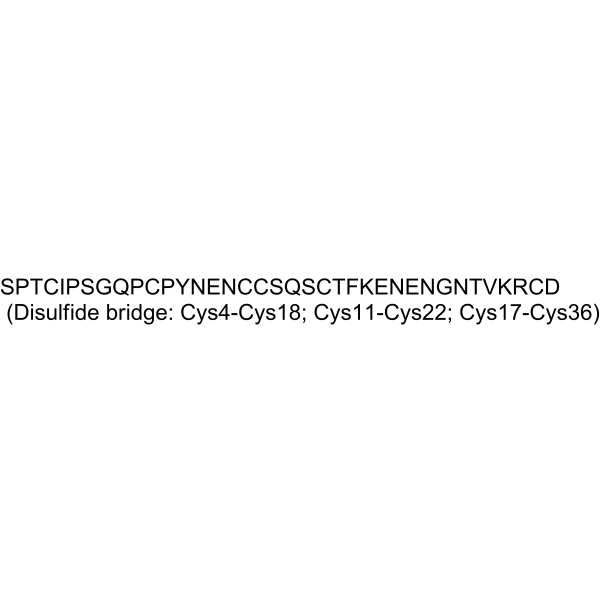
ω-Hexatoxin-Hv1a (ω-ACTX-Hv1; ω-Atracotoxin-HV1) is an orally active insecticidal neurotoxin containing an inhibitor cystine knot motif and a selective calcium channel inhibitor. ω-Hexatoxin-Hv1a blocks L-type voltage-dependent Ca 2+ channels and reduces intracellular calcium ion concentration, thereby decreasing apoptosis, necroptosis and oxidative stress, and promoting cell recovery and energy level elevation. ω-Hexatoxin-Hv1a causes larval paralysis and death by impairing neurotransmission in the central nervous system of insects. It shows high injectable toxicity against insects of multiple orders, but exhibits weak oral toxicity. ω-Hexatoxin-Hv1a is widely applicable to studies related to ischemia-reperfusion injury, atopic dermatitis, and ischemic injury of cardiomyocytes and neurons .
|
-
-
- HY-N0329
-
|
|
Others
|
Neurological Disease
|
|
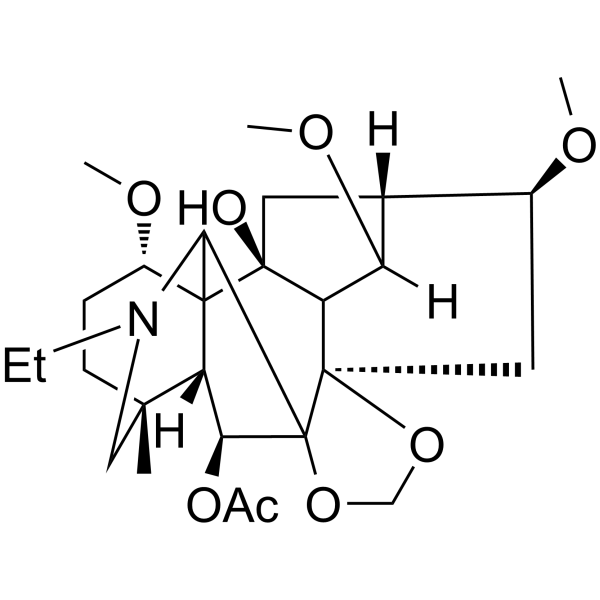
Deltaline is a diterpenoid alkaloid and isolated from plants of the genus Delphinium delavayi Franch. Deltaline itself has analgesic properties, and plants of the genus Delphinium delavayi Franch have also been therapeutically used to treat rheumaticpain, paralysis due to stroke, rheumatoid arthritis .
|
-
-
- HY-W339331
-
|
NNI-0001
|
Insecticide
Calcium Channel
Reactive Oxygen Species (ROS)
Apoptosis
|
Infection
Metabolic Disease
|
|
Flubendiamide (NNI-0001) is an orally active phthalic diamide insecticide that acts by targeting insect ryanodine receptors (RyRs), causing insect muscle dysfunction, paralysis and death. Flubendiamide disrupts molting, metamorphosis and reproductive processes, induces oxidative stress by increasing the levels of ROS/RNS, MDA and 8OHdG and decreasing the levels of SOD, CAT and GST, activates the CncC/Maf apoptosis pathway, impairs calcium homeostasis, promotes adipogenesis, increases triglyceride accumulation, and upregulates the expression of regulatory factors for adipocyte differentiation and adipogenesis .
|
-
-
- HY-15308R
-
|
Abamectin B1a (Standard)
|
Reference Standards
Parasite
Antibiotic
|
Infection
|
|
Avermectin B1a (Standard) is the analytical standard of Avermectin B1a. This product is intended for research and analytical applications. Avermectin B1a is an antiparasitic agent that paralyzes nematodes without causing hypercontraction or flaccid paralysis.
|
-
-
- HY-12641
-
|
|
Parasite
nAChR
Antibiotic
|
Infection
|
|
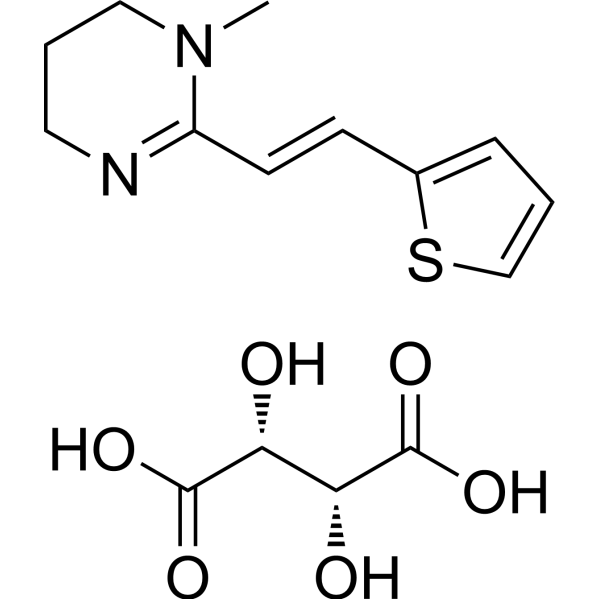
Pyrantel tartrate is an orally active anthelmintic and an agonist of the nicotinic acetylcholine receptor (nAChR). Pyrantel tartrate can cause spasmodic muscle paralysis in parasites. Pyrantel tartrate can be used in the study of parasitic infections such as ascariasis, hookworm infections, intestinal worms (pinworm infections), trichinosis and trichinosis .
|
-
-
- HY-114899
-
|
|
Environmental Pollutants
Cholinesterase (ChE)
Insecticide
|
Infection
Neurological Disease
|
|
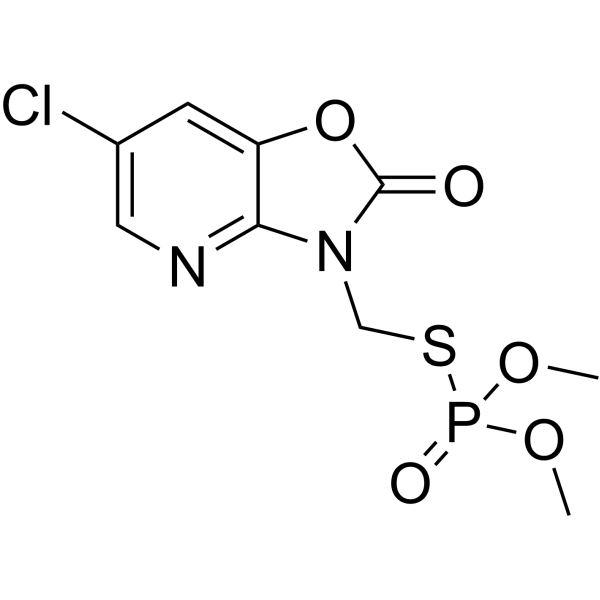
Azamethiphos is an acetylcholinesterase inhibitor and insecticide. Azamethiphos covalently binds to acetylcholinesterase via phosphorylation, inhibits its activity, causes acetylcholine to accumulate in cholinergic synapses, triggers uncontrolled excitation of cholinergic sites, induces paralysis and leads to death. Azamethiphos can be used as a bath insecticide in salmonid aquaculture to control sea lice infestations, and it exerts acute toxicity to European lobster larvae, including mortality and movement disorders .
|
-
-
- HY-N16475
-
|
|
nAChR
|
Infection
|
|
Spinosyn L is a selective nicotinic acetylcholine receptors (nAChR) agonist. Spinosyn L causes sustained neural excitation and paralysis in insects. Spinosyn L is promising for research of pesticides for controlling Lepidoptera, Diptera, and other agricultural pests .
|
-
-
- HY-12641A
-
|
|
nAChR
Parasite
Antibiotic
|
Infection
|
|
Pyrantel is an orally active anthelmintic and an agonist of the nicotinic acetylcholine receptor (nAChR). Pyrantel can cause spasmodic muscle paralysis in parasites. Pyrantel can be used in the study of parasitic infections such as ascariasis, hookworm infections, intestinal worms (pinworm infections), trichinosis and trichinosis .
|
-
-
- HY-175165
-
|
|
Enterovirus
|
Infection
|
|
Jun6504 is an enterovirus 2C inhibitor. Jun6504 shows potent and broad-spectrum antiviral activity against multiple strains of EV-D68 (EC50 = 250 nM), EV-A71 (EC50 = 502.4 nM), and CVB3 (EC50 = 1049 nM). Jun6504 improves paralysis score and weight gain in a neonatal mouse model of EV-D68 infection. Jun6504 reduces viral titers in the spinal cord and the infected quadriceps muscle. Jun6504 can be used for EV-D68 antiviral research .
|
-
-
- HY-119893
-
|
|
Parasite
|
Infection
|
|
Diamfenetide is used for the study of Fasciola hepatica infections in vitro. Diamfenetide leads to irreversible paralysis in vitro of immature and adult Fasciola hepatica .
|
-
-
- HY-W424017A
-
|
|
Endogenous Metabolite
|
Neurological Disease
|
|
Lophophine hydrochloride is the drug intermediate of anhalonine and Lophophorine (HY-119478), and can be found in Lophophora diffusa. Anhalonine causes slight sleepiness in frog. Lophophorine causes long-lasting convulsions, reflex excitability, muscle stiffness, and paralysis in rabbit and frog model .
|
-
-
- HY-119893R
-
|
|
Reference Standards
Parasite
|
Infection
|
|
Diamfenetide (Standard) is the analytical standard of Diamfenetide. This product is intended for research and analytical applications. Diamfenetide is used for the study of Fasciola hepatica infections in vitro.?Diamfenetide?leads to irreversible paralysis in vitro of immature and adult Fasciola hepatica .
|
-
-
- HY-N12622
-
|
|
Cholinesterase (ChE)
|
Neurological Disease
|
|
AChE-IN-58 (Compound 3) is an acetylcholinesterase (AChE) inhibitor. AChE-IN-58 can extend the mean lifespan, delay the Aβ1-42-induced paralysis, enhanc the locomotion, and alleviate glutamic acid (Glu)-induced neurotoxicity of CL4176 worms .
|
-
-
- HY-W740651
-
|
|
Insecticide
Sodium Channel
|
Infection
|
|
Jasmolin II is an insecticide targeting voltage-gated sodium channels in insects. Jasmolin II leads to neuronal hyperexcitation and insect paralysis. Jasmolin II is promising for research of agricultural pests .
|
-
-
- HY-N2746
-
|
7-Geranyloxy-6-methoxycoumarin
|
Others
|
Neurological Disease
Metabolic Disease
|
|
7-O-Geranylscopoletin is a coumarin from the root of Atalantia monophylla. Various parts of this plant have been used for folk medicine for several purposes such as chronic rheumatism, paralysis, antispasmodic, stimulant and hemiplegia .
|
-
-
- HY-G0003R
-
|
P88 (Standard); Hydroxy Iloperidone (Standard)
|
Reference Standards
Drug Metabolite
|
Others
|
|
Diamfenetide (Standard) is the analytical standard of Diamfenetide. This product is intended for research and analytical applications. Diamfenetide is used for the study of Fasciola hepatica infections in vitro.?Diamfenetide?leads to irreversible paralysis in vitro of immature and adult Fasciola hepatica .
|
-
-
- HY-Z8942
-
|
|
Insecticide
Parasite
Chloride Channel
|
Infection
|
|
Avermectin B2a is an insecticide targeting glutamate-gated chloride channels (GluCls). Avermectin B2a causes hyperpolarization of nematode/insect neurons and subsequent paralysis/death. Avermectin B2a is promising for research of agricultural pests .
|
-
-
- HY-W010144R
-
-
-
- HY-169871
-
|
|
iGluR
|
Neurological Disease
|
|
Argiotoxin 636 is a toxin and the non-specific, non-competitive, and potent ionotropic glutamate receptor (iGluR) antagonist. Argiotoxin 636 blocks excitatory synaptic transmission in neurons and has paralysis and muscle relaxation effects. Argiotoxin 636 can be used in the study of nervous system diseases .
|
-
-
- HY-B1139R
-
|
|
Reference Standards
Apoptosis
|
Neurological Disease
|
|
Tolperisone (hydrochloride) (Standard) is the analytical standard of Tolperisone (hydrochloride). This product is intended for research and analytical applications. Tolperisone hydrochloride is a centrally acting muscle relaxant studied in neurological disorders causing pathological rhabdomyosclerosis (pyramidal tract injury, multiple sclerosis, myelopathy, encephalomyelitis), spastic paralysis, and other muscle dystonia-related Encephalopathy. Tolperisone hydrochloride also has antiviral activity .
|
-
-
- HY-W127670
-
|
|
Biochemical Assay Reagents
|
Others
|
|
Decamethonium (iodide) is an organic compound containing ammonium and iodide ions. It is commonly used as a neuromuscular blocking agent in anesthesia to induce muscle relaxation during surgery. Decamethonium Iodide acts by binding to nicotinic acetylcholine receptors (nAChRs) in the neuromuscular junction, causing depolarization block and subsequent skeletal muscle paralysis. In addition, it can also serve as a reference standard for pharmacological studies of nAChRs.
|
-
-
- HY-12641R
-
|
|
Reference Standards
Parasite
nAChR
Antibiotic
|
Infection
|
|
Pyrantel (tartrate) (Standard) is the analytical standard of Pyrantel (tartrate). This product is intended for research and analytical applications. Pyrantel tartrate is an orally active anthelmintic and an agonist of the nicotinic acetylcholine receptor (nAChR). Pyrantel tartrate can cause spasmodic muscle paralysis in parasites. Pyrantel tartrate can be used in the study of parasitic infections such as ascariasis, hookworm infections, intestinal worms (pinworm infections), trichinosis and trichinosis .
|
-
-
- HY-15308B
-
|
|
Parasite
Chloride Channel
|
Neurological Disease
|
|
Δ²-Avermectin B₁ₐ (Compound 3) is an antiparasitic agent targeting glutamate-gated chloride channels (GluCls) in the neuromuscular system of invertebrates. Δ²-Avermectin B₁ₐ enhances chloride ion influx, leading to hyperpolarization of the neuromuscular cell membrane, inhibition of neural signal transmission, and ultimately paralysis and death of parasites. Δ²-Avermectin B₁ₐ is promising for research of agricultural pests .
|
-
-
- HY-B0416R
-
|
|
Reference Standards
mAChR
|
Cardiovascular Disease
|
|
Gallamine Triethiodide (Standard) is the analytical standard of Gallamine Triethiodide. This product is intended for research and analytical applications. Gallamine Gallamine Triethiodide is a blood-brain barrier-permeable skeletal muscle relaxant. Gallamine Triethiodide induces skeletal muscle paralysis by blocking acetylcholine. Gallamine Triethiodide directly stimulates intracardiac β receptors. Gallamine Triethiodide prolongs the duration of afterdischarge in the cat cerebral cortex. Gallamine Triethiodide can be used in studies related to convulsive disorders .
|
-
-
- HY-120131
-
|
|
Insecticide
Cholinesterase (ChE)
|
Neurological Disease
|
|
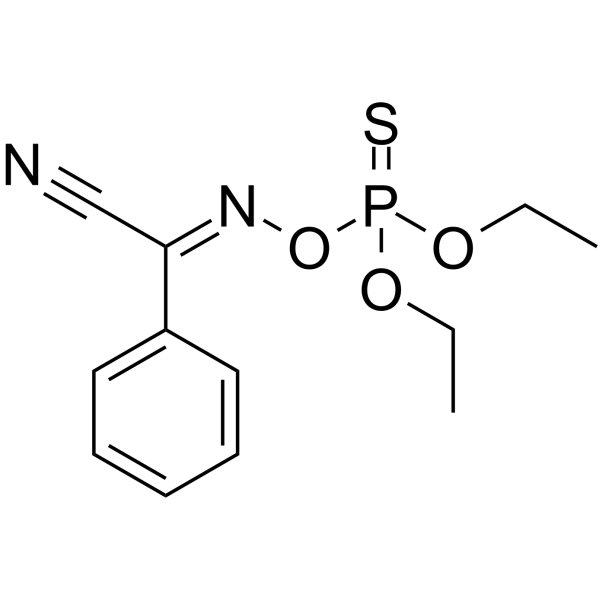
Cyanofenphos is an orally active organophosphate insecticide and brain AChE inhibitor with neurotoxicity. Cyanofenphos induces delayed neurotoxicity such as ataxia and paralysis. Cyanofenphos also causes symptoms including somnolence, reduced feed intake and weight loss in hens. Cyanofenphos has a unique self-antagonistic effect: repeated low-dose pre-treatment not only reduces subsequent acute toxicity, but also exacerbates delayed neurotoxicity and attenuates enzyme inhibition, with the protective effect peaking at 24 h after the last pre-treatment. Cyanofenphos is commonly used in studies related to delayed neurotoxicity .
|
-
-
- HY-175339
-
|
|
nAChR
|
Infection
|
|
Insecticidal agent 25 (Compound WZ18) is an insecticide targeting the nicotinic acetylcholine receptors (nAChRs) in insect nervous systems. Insecticidal agent 25 disrupts neurotransmission by competitively binding to nAChRs, leading to insect paralysis and death .
|
-
-
- HY-W783593
-
|
|
Parasite
|
Infection
|
|
Avermectin A1a is a potent and broad-spectrum antiparasitic agent. Avermectin A1a targets nematodes and arthropods by binding to their glutamate-gated chloride channels to block nerve signal transmission and induce paralysis. Avermectin A1a can be used for the study of parasitic infection .
|
-
-
- HY-B1139S
-
|
|
Isotope-Labeled Compounds
|
Neurological Disease
|
|
Tolperisone-d10 (hydrochloride) is the deuterium labeled Tolperisone hydrochloride. Tolperisone hydrochloride is a centrally acting muscle relaxant, is indicated for use in the treatment of pathologically increased tone of the cross-striated muscle caused by neurological diseases (damage of the pyramidal tract, multiple sclerosis, myelopathy, encephalomyelitis) and of spastic paralysis and other encephalopathies manifested with muscular dystonia.
|
-
-
- HY-180160
-
|
|
Amyloid-β
|
Neurological Disease
|
|
Aβ aggregation-IN-3 (Compound B7) is an Aβ aggregation inhibitor. Aβ aggregation-IN-3 inhibits Aβ aggregation. Aβ aggregation-IN-3 confers protection in both neuronal and microglial models. Aβ aggregation-IN-3 reduces Aβ-induced paralysis in C. elegans. Aβ aggregation-IN-3 improves Alzheimer's disease .
|
-
-
- HY-179116
-
|
BS2463
|
Parasite
|
Infection
|
|
BL-1005 (BS2463), thiophen-2-yl pyrimidine (TTP), is a potent paralytic of Schistosoma mansoni with an EC50 of 37 nM. BL-1005 shows low cytotoxicity for HEK293, HeLa and HepG2 cell with CC50 >20 μM. BL-1005 can induce paralysis in both adult and juvenile S. mansoni. BL-1005 can be used for the research of infection .
|
-
-
- HY-P5142A
-
|
ω-ACTX-Hv1 TFA; ω-Atracotoxin-HV1 TFA
|
Insecticide
Apoptosis
Calcium Channel
Necroptosis
|
Cardiovascular Disease
Neurological Disease
Inflammation/Immunology
|
|
ω-Hexatoxin-Hv1a (ω-ACTX-Hv1; ω-Atracotoxin-HV1) TFA is an orally active insecticidal neurotoxin containing an inhibitor cystine knot motif and a selective calcium channel inhibitor. ω-Hexatoxin-Hv1a TFA blocks L-type voltage-dependent Ca 2+ channels and reduces intracellular calcium ion concentration, thereby decreasing apoptosis, necroptosis and oxidative stress, and promoting cell recovery and energy level elevation. ω-Hexatoxin-Hv1a TFA causes larval paralysis and death by impairing neurotransmission in the central nervous system of insects. It shows high injectable toxicity against insects of multiple orders, but exhibits weak oral toxicity. ω-Hexatoxin-Hv1a TFA is widely applicable to studies related to ischemia-reperfusion injury, atopic dermatitis, and ischemic injury of cardiomyocytes and neurons .
|
-
| Cat. No. |
Product Name |
Type |
-
- HY-W127670
-
|
|
Biochemical Assay Reagents
|
|
Decamethonium (iodide) is an organic compound containing ammonium and iodide ions. It is commonly used as a neuromuscular blocking agent in anesthesia to induce muscle relaxation during surgery. Decamethonium Iodide acts by binding to nicotinic acetylcholine receptors (nAChRs) in the neuromuscular junction, causing depolarization block and subsequent skeletal muscle paralysis. In addition, it can also serve as a reference standard for pharmacological studies of nAChRs.
|
| Cat. No. |
Product Name |
Target |
Research Area |
-
- HY-P5142
-
|
ω-ACTX-Hv1; ω-Atracotoxin-HV1
|
Insecticide
Calcium Channel
Apoptosis
Necroptosis
|
Cardiovascular Disease
Neurological Disease
Inflammation/Immunology
|
|
ω-Hexatoxin-Hv1a (ω-ACTX-Hv1; ω-Atracotoxin-HV1) is an orally active insecticidal neurotoxin containing an inhibitor cystine knot motif and a selective calcium channel inhibitor. ω-Hexatoxin-Hv1a blocks L-type voltage-dependent Ca 2+ channels and reduces intracellular calcium ion concentration, thereby decreasing apoptosis, necroptosis and oxidative stress, and promoting cell recovery and energy level elevation. ω-Hexatoxin-Hv1a causes larval paralysis and death by impairing neurotransmission in the central nervous system of insects. It shows high injectable toxicity against insects of multiple orders, but exhibits weak oral toxicity. ω-Hexatoxin-Hv1a is widely applicable to studies related to ischemia-reperfusion injury, atopic dermatitis, and ischemic injury of cardiomyocytes and neurons .
|
-
- HY-P5151
-
|
|
Peptides
|
Others
|
|
LiTx3 is a lethal and cysteine-rich peptide. LiTx3 can be isolated from L. intermedia crude venom. LiTx3 induces flaccid paralysis in Spodoptera frugiperda larvae .
|
-
- HY-P5142A
-
|
ω-ACTX-Hv1 TFA; ω-Atracotoxin-HV1 TFA
|
Insecticide
Apoptosis
Calcium Channel
Necroptosis
|
Cardiovascular Disease
Neurological Disease
Inflammation/Immunology
|
|
ω-Hexatoxin-Hv1a (ω-ACTX-Hv1; ω-Atracotoxin-HV1) TFA is an orally active insecticidal neurotoxin containing an inhibitor cystine knot motif and a selective calcium channel inhibitor. ω-Hexatoxin-Hv1a TFA blocks L-type voltage-dependent Ca 2+ channels and reduces intracellular calcium ion concentration, thereby decreasing apoptosis, necroptosis and oxidative stress, and promoting cell recovery and energy level elevation. ω-Hexatoxin-Hv1a TFA causes larval paralysis and death by impairing neurotransmission in the central nervous system of insects. It shows high injectable toxicity against insects of multiple orders, but exhibits weak oral toxicity. ω-Hexatoxin-Hv1a TFA is widely applicable to studies related to ischemia-reperfusion injury, atopic dermatitis, and ischemic injury of cardiomyocytes and neurons .
|
| Cat. No. |
Product Name |
Category |
Target |
Chemical Structure |
| Cat. No. |
Product Name |
Chemical Structure |
-
- HY-B1139S
-
|
|
|
Tolperisone-d10 (hydrochloride) is the deuterium labeled Tolperisone hydrochloride. Tolperisone hydrochloride is a centrally acting muscle relaxant, is indicated for use in the treatment of pathologically increased tone of the cross-striated muscle caused by neurological diseases (damage of the pyramidal tract, multiple sclerosis, myelopathy, encephalomyelitis) and of spastic paralysis and other encephalopathies manifested with muscular dystonia.
|
-
Your information is safe with us. * Required Fields.
Inquiry Information
- Product Name:
- Cat. No.:
- Quantity:
- MCE Japan Authorized Agent:

