1. Search Result
Search Result
Results for "

penicillin

" in MedChemExpress (MCE) Product Catalog:

213

Inhibitors & Agonists

4

Screening Libraries

2

Fluorescent Dyes

5

Biochemical Assay Reagents

6

Peptides

4

MCE Kits

30

Natural
Products

2

Recombinant Proteins

23

Isotope-Labeled Compounds

1

Click Chemistry

Cat. No. Product Name Target Research Areas Chemical Structure
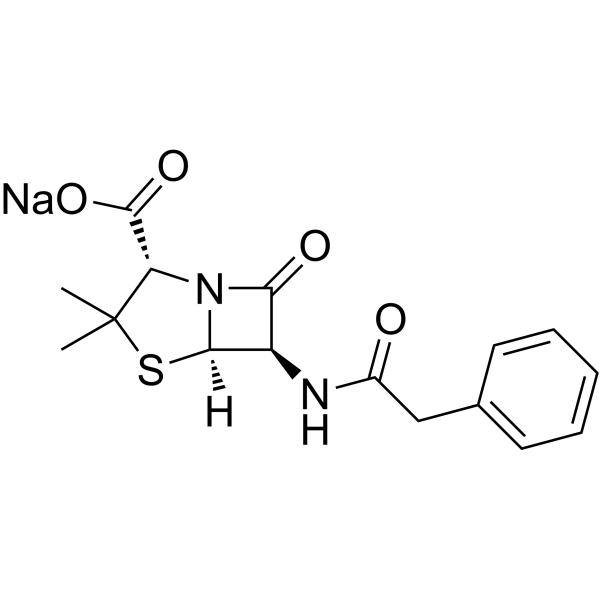
  • HY-B1463
    Penicillin G sodium salt
    Maximum Cited Publications
    25 Publications Verification

    Benzylpenicillin sodium salt

    Beta-lactamase Bacterial Antibiotic Infection
    Penicillin G sodium salt is a typical β-lactam antibiotic.
    Penicillin G sodium salt
  • HY-B0974
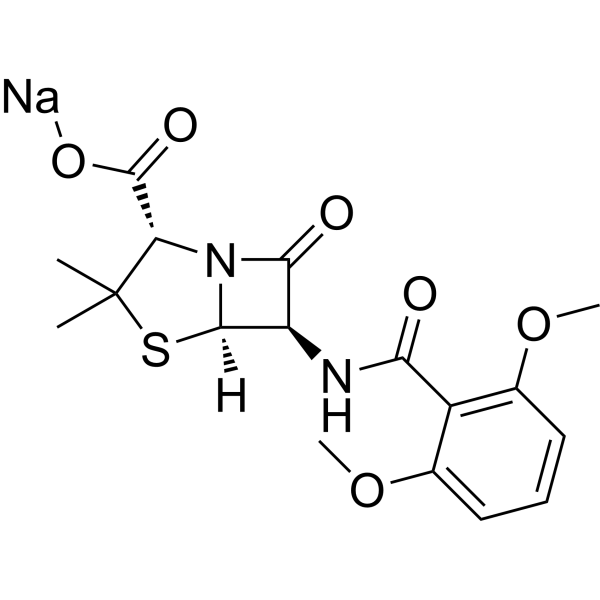
    Methicillin sodium salt
    5+ Cited Publications

    Meticillin sodium

    Penicillin-binding protein (PBP) Bacterial Antibiotic Infection
    Methicillin sodium salt (Meticillin sodium) is a β-lactam, semi-synthetic antibiotic related to penicillin antibiotic. Methicillin sodium salt inhibits penicillin-binding proteins involved in the synthesis of peptidoglycan. Methicillin sodium salt inhibits S. aureus with a MIC value of 2.1 μg/mL. Methicillin sodium salt can be used for the research of inflammation .
    Methicillin sodium salt
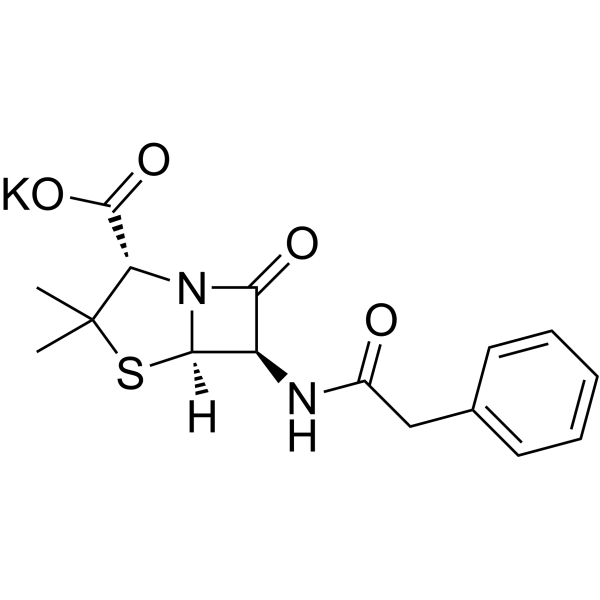
  • HY-17591
    Penicillin G potassium
    Maximum Cited Publications
    25 Publications Verification

    Benzylpenicillin potassium

    Antibiotic Bacterial Infection
    Penicillin G potassium is a fast-acting penicillin family antibiotic. Penicillin G potassium can be used for the research of bacterial infections that affect the blood, heart, lungs, joints, and genital areas .
    Penicillin G potassium
  • HY-B0925
    Oxacillin sodium salt
    10+ Cited Publications

    Bacterial Antibiotic Infection
    Oxacillin sodium salt is an orally active synthetic penicillin with good bactericidal activity against staphylococci and other gram-positive pathogens .
    Oxacillin sodium salt
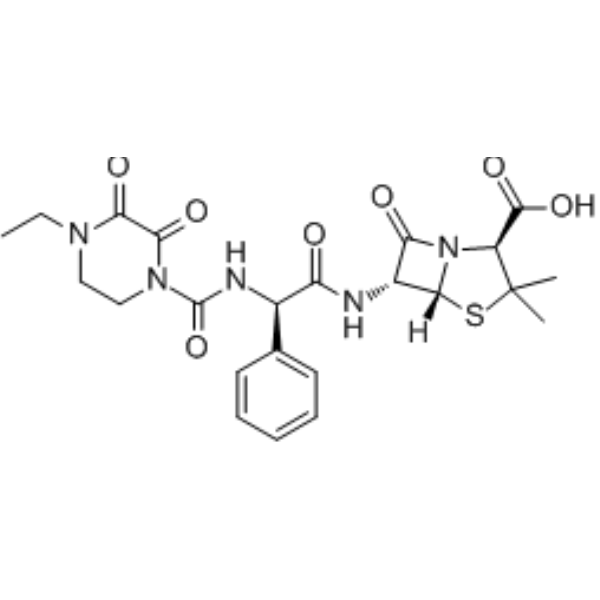
  • HY-B1923
    Piperacillin
    10+ Cited Publications

    Pipracil

    Antibiotic Bacterial Beta-lactamase Penicillin-binding protein (PBP) Infection Cancer
    Piperacillin is a semisynthetic broad-spectrum β-lactam antibiotic which exhibits potent bactericidal activity against Gram-negative bacteria as well as select Gram-positive strains through penicillin-binding proteins. Piperacillin is most commonly used in combination with the β-lactamase inhibitor Tazobactam .
    Piperacillin
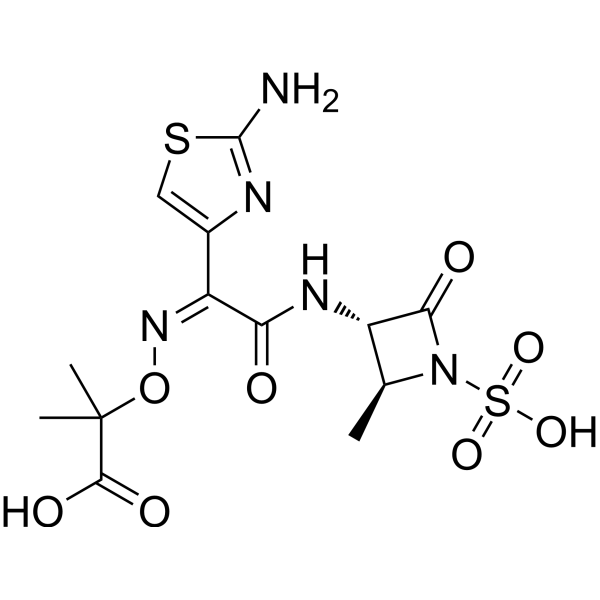
  • HY-B0129
    Aztreonam
    15+ Cited Publications

    SQ-26,776

    Penicillin-binding protein (PBP) Bacterial Antibiotic Infection Cancer
    Aztreonam (SQ-26,776) is a synthetic monocyclic beta-lactam antibiotic, which has a very high affinity for penicillin-binding protein 3 (PBP-3).
    Aztreonam
  • HY-120859
    Zidebactam
    5+ Cited Publications

    WCK-5107

    Beta-lactamase Penicillin-binding protein (PBP) Bacterial Infection
    Zidebactam (WCK-5107) is a potent β-lactamase inhibitor . Zidebactam also is a penicillin-binding protein2 (PBP2) inhibitor with an IC50 of 0.26 μg/mL .
    Zidebactam
  • HY-B0975

    Phenoxymethylpenicillin potassium salt

    Bacterial Antibiotic Infection
    Penicillin V Potassium (Phenoxymethylpenicillin potassium salt) is an orally active antibiotic. Penicillin V Potassium inhibits the growth of Streptococci, C. difficile and S. aureus. Penicillin V Potassium can be used for the research of otitis, sinusitis, pharyngitis and tonsillitis .
    Penicillin V Potassium
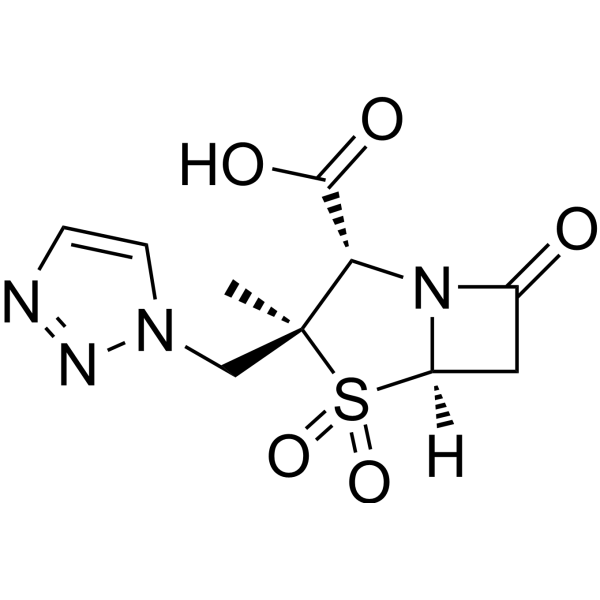
  • HY-B1418
    Tazobactam
    15+ Cited Publications

    CL-298741; YTR-830H

    Beta-lactamase Antibiotic Bacterial Infection Cancer
    Tazobactam (CL-298741) is a potent β-lactamases inhibitor and penicillin antibiotic. Tazobactam has antibacterial activity. Tazobactam can be used for pneumonia research .
    Tazobactam
  • HY-B0396

    L084

    Penicillin-binding protein (PBP) Bacterial Antibiotic Infection
    Tebipenem pivoxil (L084) is an orally active antibiotic against a variety of pathogenic bacteria. Tebipenem pivoxil binds penicillin-binding protein (PBP), thereby inhibiting cell wall synthesis .
    Tebipenem pivoxil
  • HY-112579
    Ceftobiprole
    3 Publications Verification

    Ro 63-9141; BAL 9141

    Bacterial Antibiotic Infection Inflammation/Immunology
    Ceftobiprole (Ro 63-9141) is a broad-spectrum cephalosporin with high levels of in vitro activity against methicillin- (MRSA) and vancomycin-resistant staphylococci (VRSA) and penicillin-resistant streptococci with a MIC90 value of 2 μg/mL for MRSA. Ceftobiprole also inhibits gram-positive and gram-negative pathogens. Ceftobiprole can be used for the study of hospital-acquired pneumonia (excluding ventilator-associated pneumonia) and community-acquired pneumonia .
    Ceftobiprole
  • HY-B0810A

    FL-1039 hydrochloride

    Bacterial Antibiotic Infection
    Pivmecillinam hydrochloride (FL-1039 hydrochloride) is an orally active proagent of mecillinam, an extended-spectrum penicillin antibiotic.
    Pivmecillinam hydrochloride
  • HY-B0975A

    Phenoxymethylpenicillin

    Antibiotic Bacterial Infection
    Penicillin V (Phenoxymethylpenicillin) is a potent and orally active antibiotic. Penicillin V shows antibacterial activity for Streptococci, Clostridium difficile and staphylococcus aureus. Penicillin V has the potential for the research of otitis, sinusitis, pharyngitis and tonsillitis .
    Penicillin V
  • HY-106574A

    BAL5788 sodium

    Bacterial Infection Inflammation/Immunology
    Ceftobiprole medocaril (BAL5788) sodium is the parenteral proagent of Ceftobiprole (HY-112579). Ceftobiprole is a parenteral pyrrolidinone cephalosporin. Ceftobiprole is a broad-spectrum cephalosporin with high levels of in vitro activity against methicillin- (MRSA) and vancomycin-resistant staphylococci (VRSA) and penicillin-resistant streptococci. Ceftobiprole also inhibits gram-positive and gram-negative pathogens .
    Ceftobiprole medocaril sodium
  • HY-N7139

    Benzylpenicillin

    Antibiotic Bacterial Infection
    Penicillin G is a potent penicillinantibiotic. Penicillin G can be used for bacterial infection. Penicillin G has potent activity against all Gram-positive bacteria and Gram-negative cocci .
    Penicillin G
  • HY-P2834

    PGA

    Biochemical Assay Reagents Others
    Penicillin amidase, E. coli (Immobilized) (PGA) is an amidohydrolase commonly used in industrial biocatalysis. Penicillin amidase, E. coli (Immobilized) serves as a starting material in the synthesis of semi-synthetic penicillins. Penicillin amidase, E. coli (Immobilized) promotes the production of semi-synthetic β-lactam antibiotics, participates in peptide synthesis, and catalyzes the formation of chiral compounds. Penicillin amidase, E. coli (Immobilized) is regulated by temperature and phenylacetic acid in E. coli. In free E. coli, it participates in the assimilation of aromatic compounds as a carbon source. Penicillin amidase, E. coli (Immobilized) is hypothesized to act as a scavenging enzyme for phenylacetyl-containing compounds in microbial metabolism and is associated with bacterial quorum sensing .
    Penicillin amidase, E. coli (Immobilized)
  • HY-N7139A

    Benzathine benzylpenicillin

    Bacterial Antibiotic Infection
    Penicillin G benzathine (Benzathine benzylpenicillin) is an antibiotic against many bacterial infections .
    Penicillin G benzathine
  • HY-128449
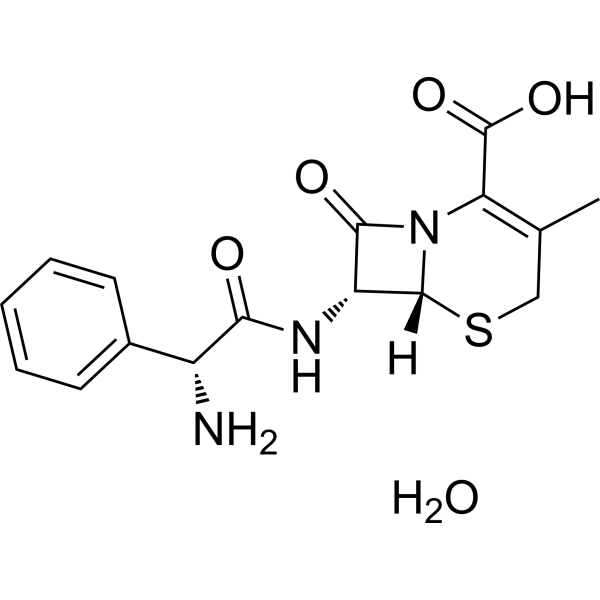
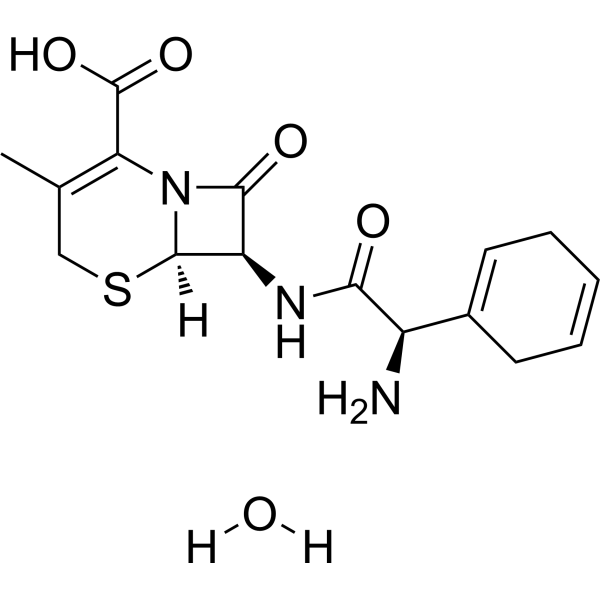
    Cephradine monohydrate
    5 Publications Verification

    Cefradine monohydrate

    Bacterial Antibiotic TOPK Infection Inflammation/Immunology
    Cephradine (Cefradine) monohydrate is a broad-spectrum and orally active cephalosporin. Cephradine monohydrate is active against both grampositive and gram-negative pathogens and effective in eradicating most penicillinase-producing organisms known to be resistant to penicillin G, penicillin V, and ampicillin. Cephradine monohydrate has been used in the research of genitourinary, gastrointestinal and respiratory tract infections, and in infections of the skin and soft tissues. Cephradine monohydrate blocks solar-ultraviolet induced skin inflammation through direct inhibition of TOPK .
    Cephradine monohydrate
  • HY-20512

    Biochemical Assay Reagents Others
    N,N'-Dibenzylethylenediamine forms chelator with metals. N,N'-Dibenzylethylenediamine interacts with penicillin, forms a stable and tasteless salt of penicillin .
    N,N'-Dibenzylethylenediamine
  • HY-B0529A
    Azlocillin sodium salt
    1 Publications Verification

    Sodium azlocillin

    Bacterial Parasite Antibiotic Infection
    Azlocillin sodium salt (Sodium azlocillin), a semisynthetic penicillin, is a broad spectrum β-lactam antibiotic. Azlocillin sodium salt shows antipseudomonal activity, and also potent against the malarial parasite Plasmodium falciparum .
    Azlocillin sodium salt
  • HY-W013549

    6-APA

    Drug Metabolite Bacterial Infection Inflammation/Immunology
    6-Aminopenicillanic acid (6-APA) is a parent amine, an important precursor for the synthesis of β-lactam antibiotics and an antibacterial agent. 6-Aminopenicillanic acid interferes with cell wall synthesis during bacterial division in a manner similar to penicillin. 6-Aminopenicillanic acid has antibacterial activity against Gram-negative bacteria. 6-Aminopenicillanic acid is mainly used in the study of Penicillin-associated immune responses .
    6-Aminopenicillanic acid
  • HY-B1824
    Cefpirome sulfate
    1 Publications Verification

    HR-810 sulfate

    Bacterial Antibiotic Infection
    Cefpirome (HR-810) sulfate is a cephalosporin antibiotic that can cross cell membranes and the blood-brain barrier. Cefpirome sulfate binds to penicillin-binding proteins with high affinity, thereby inhibiting bacterial cell wall synthesis. Cefpirome sulfate exhibits bactericidal and growth-inhibitory activities against Gram-negative bacteria, Gram-positive bacteria, and susceptible anaerobic bacteria (including some β-lactamase-producing strains) .
    Cefpirome sulfate
  • HY-E70318

    Endogenous Metabolite Others
    Penicillin G acylase (Immobilized) is an immobilized penicillin acylase with improved temperature and pH stability. Penicillin G acylase (Immobilized) has reusable performance and high recovery rates, retaining much of its original activity after 12 cycles. Among them, Penicillin G acylase (Immobilized) can catalyze penicillin G (PG) to generate 6-aminopenicillanic acid (6-APA) and 7-aminodeacetoxycephalosporanic acid, which are key intermediates for β-lactam antibiotics .
    Penicillin G acylase (Immobilized)
  • HY-B1459
    Dicloxacillin sodium
    3 Publications Verification

    Beta-lactamase Bacterial Antibiotic Infection
    Dicloxacillin sodium is a β-lactam antibiotic of the penicillin family. Dicloxacillin sodium against Gram-positive bacteria. Dicloxacillin sodium is active against β-lactamase-producing organisms such as Staphylococcus aureus .
    Dicloxacillin sodium
  • HY-B1923R

    Pipracil (Standard)

    Bacterial Reference Standards Antibiotic Beta-lactamase Penicillin-binding protein (PBP) Infection Cancer
    Piperacillin (Standard) is the analytical standard of Piperacillin. This product is intended for research and analytical applications. Piperacillin is a semisynthetic broad-spectrum β-lactam antibiotic which exhibits potent bactericidal activity against Gram-negative bacteria as well as select Gram-positive strains through penicillin-binding proteins. Piperacillin is most commonly used in combination with the β-lactamase inhibitor Tazobactam .
    Piperacillin (Standard)
  • HY-B1923S

    Pipracil-d5

    Isotope-Labeled Compounds Antibiotic Bacterial Beta-lactamase Penicillin-binding protein (PBP) Infection
    Piperacillin-d5 is deuterium labeled Piperacillin. Piperacillin is kind of semisynthetic penicillins. Piperacillin has a broad spectrum of activity against Gram-positive and Gram-negative aerobic and anaerobic bacteria. Piperacillin has shown greater activity against β-lactamase-producing organisms than the other penicillins .
    Piperacillin-d5
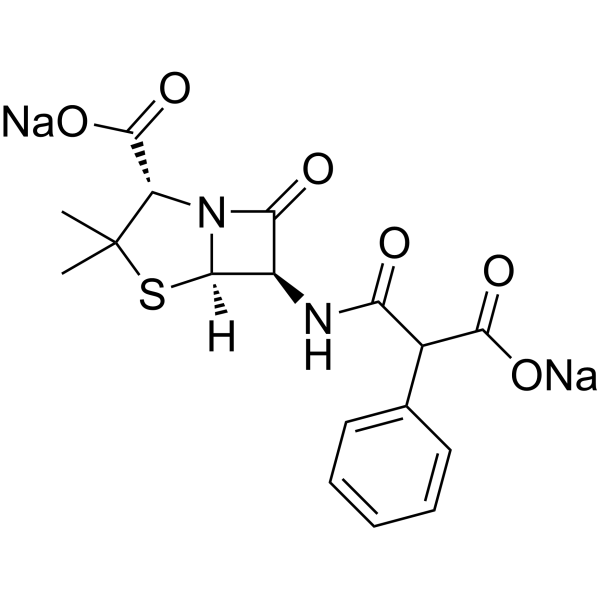
  • HY-B0525

    Antibiotic Bacterial Infection
    Carbenicillin is a broad-spectrum semi-synthetic penicillin antibiotic for gram-negative bacteria. Carbenicillin can interfere the cell wall synthesis while displaying low toxicity to plant tissue .
    Carbenicillin
  • HY-N7120

    PGP hydrate

    Bacterial Antibiotic Infection
    Penicillin G Procaine hydrate (PGP hydrate) is a β-lactam antibiotic and sustained-release formulation. Penicillin G procaine (hydrate) hydrolyzes in vivo to release penicillin G and Procaine (HY-B0546), thereby delaying the absorption of penicillin G .
    Penicillin G procaine hydrate
  • HY-N7139B

    Benzathine benzylpenicillin tetrahydrate

    Antibiotic Bacterial Infection
    Penicillin G benzathine tetrahydrate (Benzathine benzylpenicillin tetrahydrate) is an antibiotic against many bacterial infections .
    Penicillin G benzathine tetrahydrate
  • HY-P3519

    Drug Intermediate Infection
    ACV Tripeptide, a tripeptide, is the first dedicated intermediate in the biosynthetic pathway leading to the penicillin and cephalosporin classes of β-lactam natural products in bacteria and fungi. ACV Tripeptide is is synthesized nonribosomally by the ACV synthetase (ACVS) enzyme, which is encoded by the 11 kb The pchAB gene encodes this enzyme. ACV Tripeptide can be used for the biosynthesis of β-lactam antibiotics .
    ACV Tripeptide
  • HY-19964
    Potassium clavulanate cellulose
    2 Publications Verification

    Potassium clavulanate:cellulose (1:1)

    Beta-lactamase Bacterial Antibiotic Infection
    Potassium clavulanate cellulose (Potassium clavulanate:cellulose (1:1)) is a mixture of potassium clavulanate and cellulose, is a bacterial β-lactamase inhibitor. Clavulanate potassium is a form of Clavulanic acid. Clavulanate potassium fights bacteria that resistant to penicillins and other antibiotics. Potassium clavulanate with the combination of amoxicillin can be used for the research of different infections caused by bacteria, such as sinusitis, pneumonia, ear infections, bronchitis, urinary tract infections, and infections of the skin .
    Potassium clavulanate cellulose
  • HY-17591R
    Penicillin G potassium (Standard)
    1 Publications Verification

    Benzylpenicillin potassium (Standard)

    Reference Standards Antibiotic Bacterial Infection
    Penicillin G (potassium) (Standard) is the analytical standard of Penicillin G (potassium). This product is intended for research and analytical applications. Penicillin G potassium is a fast-acting penicillin family antibiotic. Penicillin G potassium can be used for the research of bacterial infections that affect the blood, heart, lungs, joints, and genital areas .
    Penicillin G potassium (Standard)
  • HY-121544

    Penicillin-binding protein (PBP) Bacterial Antibiotic Histamine Receptor Infection
    Methicillin is a narrow-spectrum β-lactam antibiotic, acts by inhibiting penicillin-binding proteins (PBPs). Methicillin is active against Staphylococcus aureus and Staphylococcus epidermidis that are resistant to other penicillins.Methicillin can be used for the research of skin infections, osteomyelitis, and endocarditis .
    Methicillin
  • HY-B0810AR

    FL-1039 hydrochloride (Standard)

    Reference Standards Bacterial Antibiotic Infection
    Pivmecillinam (hydrochloride) (Standard) is the analytical standard of Pivmecillinam (hydrochloride). This product is intended for research and analytical applications. Pivmecillinam hydrochloride (FL-1039 hydrochloride) is an orally active proagent of mecillinam, an extended-spectrum penicillin antibiotic.
    Pivmecillinam hydrochloride (Standard)
  • HY-17591S

    Benzylpenicillin-d5 potassium

    Isotope-Labeled Compounds Bacterial Antibiotic Infection
    Penicillin G-d5 (potassium) is the deuterium labeled Penicillin G potassium. Penicillin G potassium is a fast-acting antibiotic; used to treat bacterial infections that affect the blood, heart, lungs, joints, and genital areas .
    Penicillin G-d5 potassium
  • HY-E70012

    Bacterial Infection Neurological Disease
    Penicillinase is an enzyme capable of hydrolyzing penicillin. Penicillinase converts penicillin into penicilloic acid, which has no antigenicity, and destroys the antibacterial, antigenic and epileptogenic properties of penicillin. Penicillinase shortens the duration of penicillin-induced seizures and neutralizes the ability of penicillin to form epileptogenic foci. Penicillinase can be used in research related to penicillin hypersensitivity and penicillin-induced encephalopathy .
    Penicillinase
  • HY-B0925A

    Bacterial Antibiotic Infection
    Oxacillin is an orally active synthetic penicillin with good bactericidal activity against staphylococci and other gram-positive pathogens .
    Oxacillin
  • HY-N7139S1

    Benzylpenicillin-d7 potassium salt

    Antibiotic Bacterial Isotope-Labeled Compounds Others
    Penicillin G-d7 (potassium) is the deuterium labeled Penicillin G potassium salt .
    Penicillin G-d7 potassium salt
  • HY-B1459A

    Beta-lactamase Bacterial Antibiotic Infection
    Dicloxacillin is a β-lactam antibiotic of the penicillin family. Dicloxacillin against Gram-positive bacteria. Dicloxacillin is active against β-lactamase-producing organisms such as Staphylococcus aureus .
    Dicloxacillin
  • HY-B0810

    FL-1039

    Bacterial Antibiotic Infection
    Pivmecillinam (FL-1039) is an orally active proagent of mecillinam, an extended-spectrum penicillin antibiotic.
    Pivmecillinam
  • HY-B0925S

    Isotope-Labeled Compounds Bacterial Antibiotic Infection
    Oxacillin- 13C6 (sodium) is the 13C6 labeled Oxacillin (sodium). Oxacillin sodium salt is a narrow-spectrum β-lactam antibiotic of the penicillin class.
    Oxacillin-13C6 sodium
  • HY-B0975S1

    Phenoxymethylpenicillin-d5 potassium salt

    Bacterial Antibiotic Infection
    Penicillin V-d5 (potassium) is the deuterium labeled Penicillin V Potassium . Penicillin V Potassium (Phenoxymethylpenicillin potassium salt) is an orally active antibiotic. Penicillin V Potassium inhibits the growth of Streptococci, C. difficile and S. aureus. Penicillin V Potassium can be used for the research of otitis, sinusitis, pharyngitis and tonsillitis .
    Penicillin V-d5 potassium
  • HY-130079

    penicillin G procaine

    Bacterial Infection
    Procaine benzylpenicillin (Penicillin G procaine) is an antimicrobial agent. Procaine benzylpenicillin shows inhibitory activity against gram-positive bacteria and synergistic activity with Neomycin (HY-B0470). Procaine benzylpenicillin can be used in the study of bovine mastitis in animal husbandry .
    Procaine benzylpenicillin
  • HY-B0555B

    Beta-lactamase Antibiotic Bacterial Infection
    Nafcillin sodium, an antibiotic, is a reversible inhibitor of β-lactamase. Nafcillin sodium can be used for the research of staphylococcal infections .
    Nafcillin sodium
  • HY-120859A

    WCK-5107 sodium salt

    Beta-lactamase Penicillin-binding protein (PBP) Bacterial Infection
    Zidebactam sodium salt (WCK-5107 sodium salt) is a potent β-lactamase inhibitor . Zidebactam also is a penicillin-binding protein2 (PBP2) inhibitor with an IC50 of 0.26 μg/mL .
    Zidebactam sodium salt
  • HY-B0975AR

    Phenoxymethylpenicillin (Standard)

    Reference Standards Antibiotic Bacterial Infection
    Penicillin V (Standard) is the analytical standard of Penicillin V. This product is intended for research and analytical applications. Penicillin V (Phenoxymethylpenicillin) is a potent and orally active antibiotic. Penicillin V shows antibacterial activity for Streptococci, Clostridium difficile and staphylococcus aureus. Penicillin V has the potential for the research of otitis, sinusitis, pharyngitis and tonsillitis [4].
    Penicillin V (Standard)
  • HY-E70077

    Endogenous Metabolite Infection Metabolic Disease
    Penicillinase (from calf stomach) is an enzyme that degrades penicillin by hydrolyzing the cyclic amide bonds in the lactam ring of penicillin, which can inactivate penicillin. Penicillinase (from calf stomach) can be isolated from penicillin resistant strains. Penicillinase (from calf stomach) has potential application as a marker for steroid hormone enzyme linked immunosorbent assay .
    Penicillinase (from calf stomach)
  • HY-B0529
    Azlocillin
    1 Publications Verification

    Bacterial Parasite Antibiotic Infection
    Azlocillin, an antibiotic, is a semisynthetic penicillin, and has broad-spectrum antibacterial activity. Azlocillin is active against drug-tolerant B. burgdorferi sensu stricto JLB31 infection .
    Azlocillin
  • HY-W013549R

    6-APA (Standard)

    Drug Metabolite Reference Standards Bacterial Infection
    6-Aminopenicillanic acid (Standard) is the analytical standard of 6-Aminopenicillanic acid. This product is intended for research and analytical applications. 6-Aminopenicillanic acid (6-APA) is a parent amine, an important precursor for the synthesis of β-lactam antibiotics and an antibacterial agent. 6-Aminopenicillanic acid interferes with cell wall synthesis during bacterial division in a manner similar to penicillin. 6-Aminopenicillanic acid has antibacterial activity against Gram-negative bacteria. 6-Aminopenicillanic acid is mainly used in the study of Penicillin-associated immune responses.
    6-Aminopenicillanic acid (Standard)
  • HY-106574

    BAL5788

    Bacterial Infection Inflammation/Immunology
    Ceftobiprole medocaril (BAL5788) is the parenteral proagent of Ceftobiprole (HY-112579). Ceftobiprole is a parenteral pyrrolidinone cephalosporin. Ceftobiprole is a broad-spectrum cephalosporin with high levels of in vitro activity against methicillin- (MRSA) and vancomycin-resistant staphylococci (VRSA) and penicillin-resistant streptococci. Ceftobiprole also inhibits gram-positive and gram-negative pathogens .
    Ceftobiprole medocaril

Inquiry Online

Your information is safe with us. * Required Fields.

Salutation


Country or Region *

Applicant Name *


Organization Name *

Department *


Email Address *


Product Name *

Cat. No.


Requested quantity *

Phone Number *


Remarks

Inquiry Online

Inquiry Information

Product Name:
Cat. No.:
Quantity:
MCE Japan Authorized Agent:

