



Oxacillin sodium salt
Based on 14 publication(s) in Google Scholar
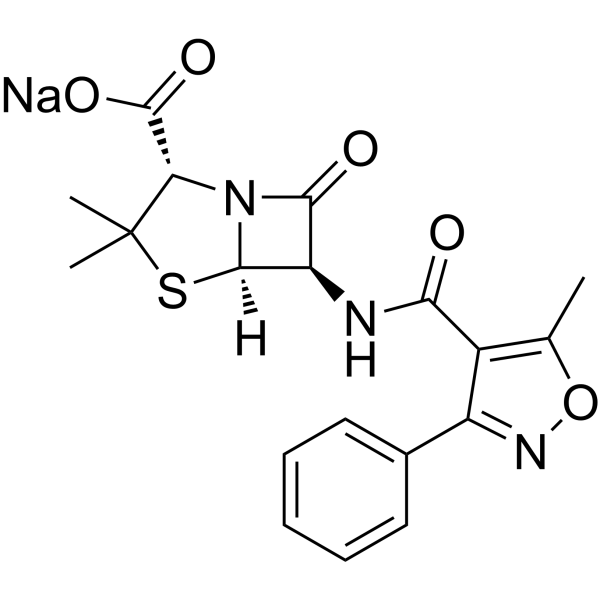
Oxacillin sodium salt is an orally active synthetic penicillin with good bactericidal activity against staphylococci and other gram-positive pathogens.
For research use only. We do not sell to patients.
- Purity : 99.63%
- CAS No.: 1173-88-2
- Formula: C19H18N3NaO5S
- Molecular Weight:423.42
-
Storage:
4°C, sealed storage, away from moisture
* In solvent : -80°C, 6 months; -20°C, 1 month (sealed storage, away from moisture)

To place orders, for customer services and technical support, please contact: MedChemExpress USA
Tel: 609-228-6898 E-mail: [email protected] [email protected]


-
 Biological Activity
-
Chemical Information
-
Solvent & Solubility
- Purity & Documentation
- References
-
 Help & FAQs


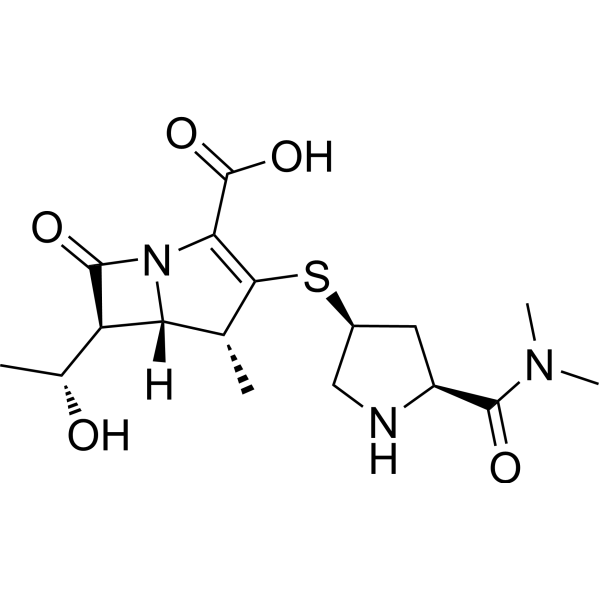
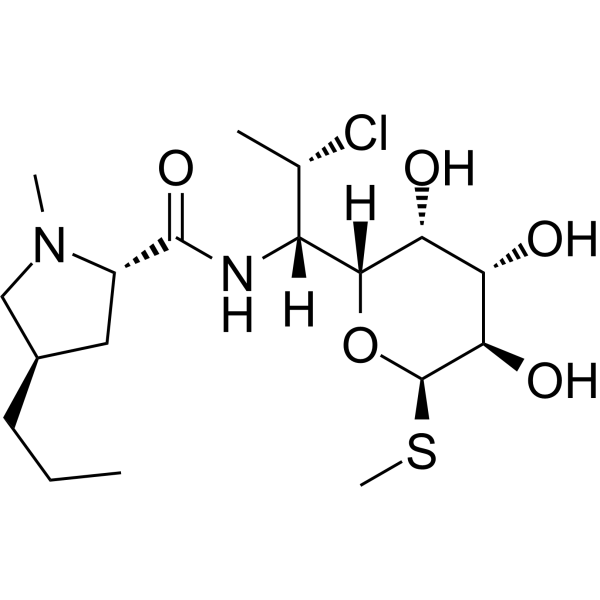
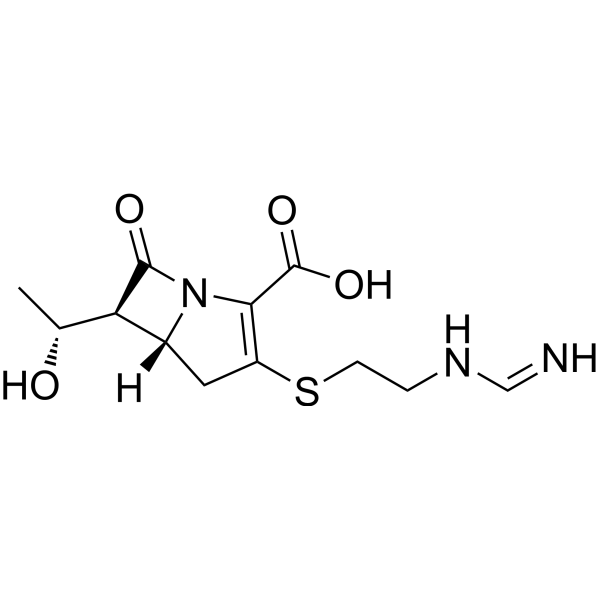
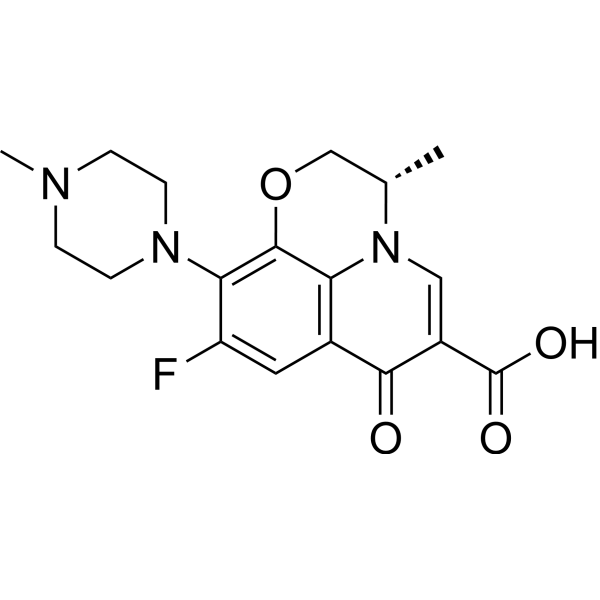
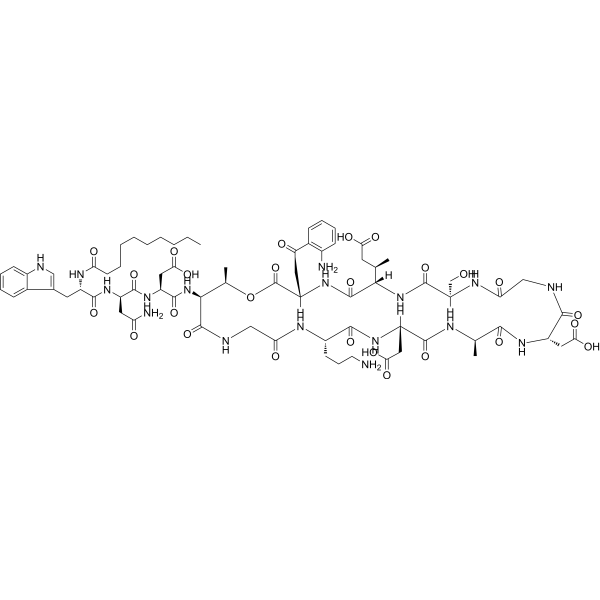
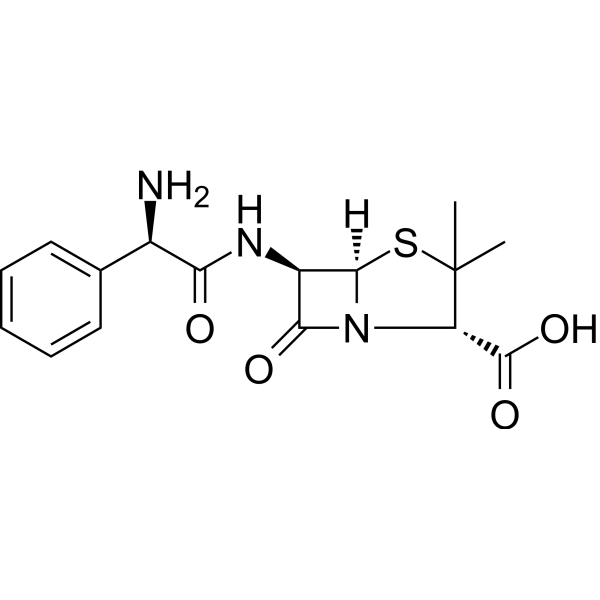
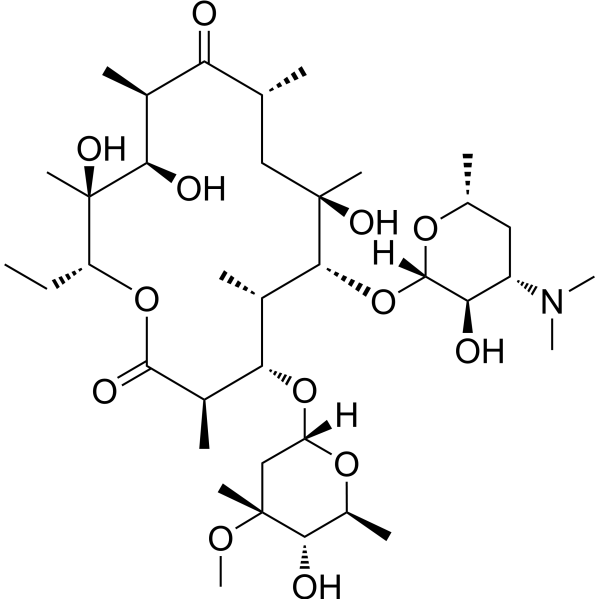
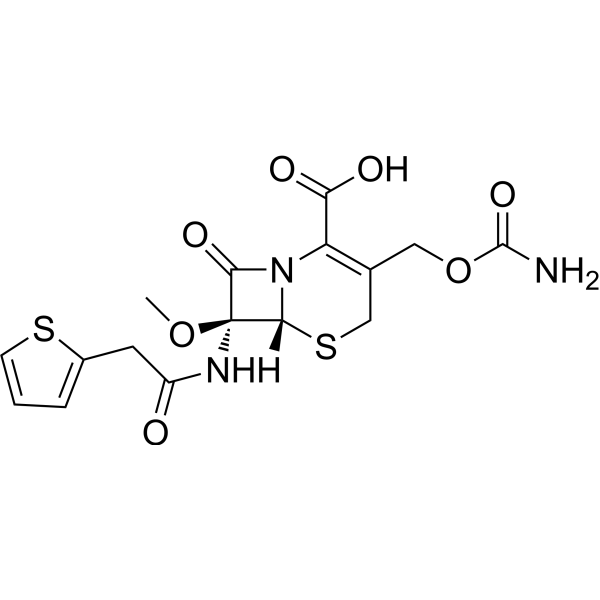
Publications Citing Use of MedChemExpress (MCE) Oxacillin sodium salt
More- J Exp Med. 2026 Mar 2;223(3):e20241287. [Abstract]
- Emerg Microbes Infect. 2024 Dec;13(1):2321981. [Abstract]
- Front Microbiol. 2020 Jul 31:11:1720. [Abstract]
- BMC Microbiol. 2023 Apr 20;23(1):109. [Abstract]
- ACS Omega. 2022 Mar 3;7(10):9004-9014. [Abstract]
- Microorganisms. 2024 Jan 25;12(2):256. [Abstract]
- iScience. 2022 Jan 5;25(2):103731. [Abstract]
- Microbiol Spectr. 2022 Apr 27;10(2):e0054121. [Abstract]
- AMB Express. 2024 Dec 24;14(1):141. [Abstract]
- Biomed Res Int. 2018 Jul 2:2018:3579832. [Abstract]
- Curr Microbiol. 2023 May 31;80(7):230. [Abstract]
- bioRxiv. 2025 Oct 27.
- bioRxiv. 2024 May 10.
- Research Square Print. December 5th, 2022.
 Customer Validation & Images

-
Microbiological Assay
All Antibiotic Isoforms
More

Biological Activity
Description
IC50 & Target
|
β-lactam |
In Vitro
Oxacillin inhibits gram positive pathogens with MICs of 0.05, 0.09, 0.32 and 0.80 μg/mL against group A streptococci, Pneutnococci, susceptible staphylococci and penicillin-resistant staphylococci, respectively[1].
The Oxacillin-resistant strains are highly resistant to other penicillins[1].
MedChemExpress (MCE) has not independently confirmed the accuracy of these methods. They are for reference only.
In Vivo
MedChemExpress (MCE) has not independently confirmed the accuracy of these methods. They are for reference only.
-
Animal Model:CD-1 strain male albino mice infected with S. aureus Evans[2]
-
Dosage:50, 100, 200, 400 and 800 mg/kg
-
Administration:Subcutaneous injection, once
-
Result:Showed therapeutic activity with CD50 of 253.3 mg/kg.


Chemical Information
-
CAS No. 1173-88-2
-
Appearance Solid
-
Molecular Weight 423.42
-
Formula C19H18N3NaO5S
-
Color White to off-white
-
SMILES
O=C(O[Na])[C@@H](C(C)(C)S[C@]1([H])[C@@H]2NC(C3=C(C)ON=C3C4=CC=CC=C4)=O)N1C2=O
-
Shipping
Room temperature in continental US; may vary elsewhere.
-
Storage
4°C, sealed storage, away from moisture
* In solvent : -80°C, 6 months; -20°C, 1 month (sealed storage, away from moisture)


Publications (14)
-
Journal Impact Factor
-
Most Recent
-
J Exp Med
2026 Mar 2;223(3):e20241287. PMID: 41400657 -
Emerg Microbes Infect
AMXT-1501 targets membrane phospholipids against Gram-positive and -negative multidrug-resistant bacteria. [Abstract]2024 Dec;13(1):2321981. PMID: 38422452 -
Front Microbiol
Repurposing Antispasmodic Agent Otilonium Bromide for Treatment of Staphylococcus aureus Infections. [Abstract]2020 Jul 31:11:1720. PMID: 32849366 -
BMC Microbiol
The antimicrobial activity of cethromycin against Staphylococcus aureus and compared with erythromycin and telithromycin. [Abstract]2023 Apr 20;23(1):109. PMID: 37081393 -
ACS Omega
Lapatinib Acts against Biofilm Formation and the Hemolytic Activity of Staphylococcus aureus. [Abstract]2022 Mar 3;7(10):9004-9014. PMID: 35309438 -
Microorganisms
The Staphylococcus aureus ArlS Kinase Inhibitor Tilmicosin Has Potent Anti-Biofilm Activity in Both Static and Flow Conditions. [Abstract]2024 Jan 25;12(2):256. PMID: 38399660 -
iScience
2022 Jan 5;25(2):103731. PMID: 35098100 -
Microbiol Spectr
Clemastine Inhibits the Biofilm and Hemolytic of Staphylococcus aureus through the GdpP Protein. [Abstract]2022 Apr 27;10(2):e0054121. PMID: 35234502 -
AMB Express
Repurposing pinaverium bromide against Staphylococcus and its biofilms with new mechanisms. [Abstract]2024 Dec 24;14(1):141. PMID: 39718732
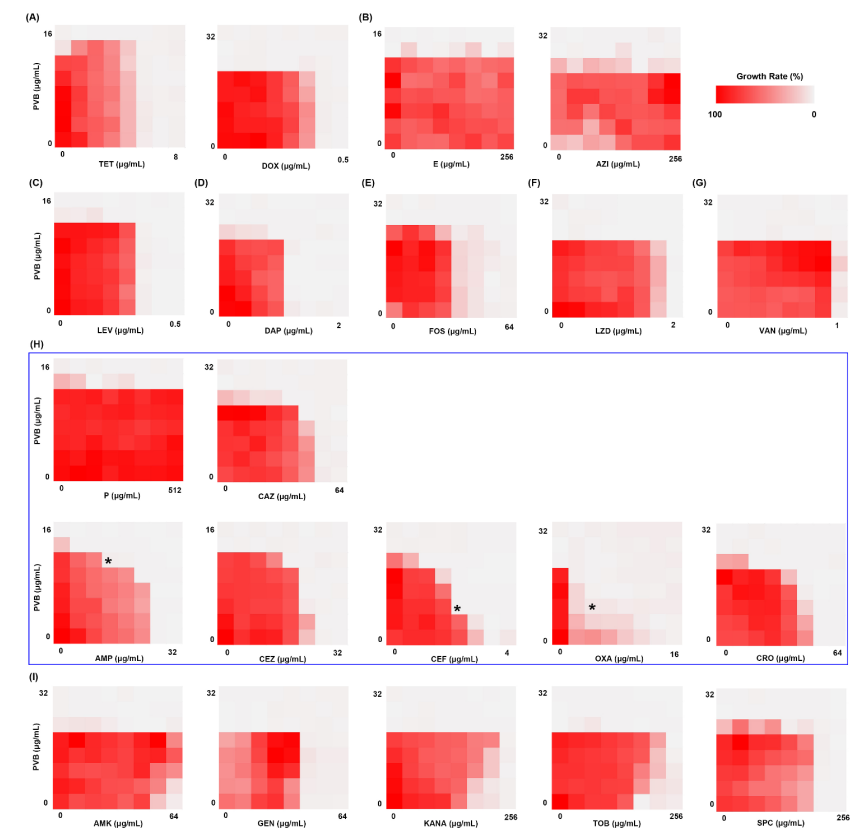
Oxacillin sodium salt purchased from MedChemExpress. Usage Cited in: AMB Express. 2024 Dec 24;14(1):141. [Abstract]
Combinational antimicrobial effects between PVB and conventional antibiotics against MRSA ATCC 43,300. TET, Tetracycline. DOX, Doxycycline. E, Erythromycin. AZI, Azithromycin. P, Penicillin. CAZ, Ceftazidime. AMP, Ampicillin. CEZ, Cefazolin. CEF, Cefotaxime. OXA, Oxacillin. CRO, Ceftriaxone. AMK, Amikacin. GEN, Gentamycin, KANA, Kanamycin. TOB, Tobramycin. SPC, Spectinomycin.
-
Biomed Res Int
In Vitro Activity of β-Lactams in Combination with β-Lactamase Inhibitors against Mycobacterium tuberculosis Clinical Isolates. [Abstract]2018 Jul 2:2018:3579832. PMID: 30065936 -
Curr Microbiol
Repurposing CD5789 as an Antimicrobial Agent Against MRSA and Its High Resistant Phonotypes. [Abstract]2023 May 31;80(7):230. PMID: 37256372 -
-
-


Solvent & Solubility
In Vitro:
DMSO : 100 mg/mL (236.17 mM; Need ultrasonic; Hygroscopic DMSO has a significant impact on the solubility of product, please use newly opened DMSO)
Please refer to the solubility information to select the appropriate solvent. Once prepared, please aliquot and store the solution to prevent product inactivation from repeated freeze-thaw cycles.
Storage method and period of stock solution: -80°C, 6 months; -20°C, 1 month (sealed storage, away from moisture). When stored at -80°C, please use it within 6 months. When stored at -20°C, please use it within 1 month.
Please refer to the solubility information to select the appropriate solvent. Once prepared, please aliquot and store the solution to prevent product inactivation from repeated freeze-thaw cycles.
Storage method and period of stock solution: -80°C, 6 months; -20°C, 1 month (sealed storage, away from moisture). When stored at -80°C, please use it within 6 months. When stored at -20°C, please use it within 1 month.
Concentration (start) × Volume (start) = Concentration (final) × Volume (final)
In Vivo:
Select the appropriate dissolution method based on your experimental animal and administration route.
- For the following dissolution methods, please ensure to first prepare a clear stock solution using an In Vitro approach and then sequentially add co-solvents:
- To ensure reliable experimental results, the clarified stock solution can be appropriately stored based on storage conditions. As for the working solution for In Vivo experiments, it is recommended to prepare freshly and use it on the same day.
- The percentages shown for the solvents indicate their volumetric ratio in the final prepared solution. If precipitation or phase separation occurs during preparation, heat and/or sonication can be used to aid dissolution.
Add each solvent one by one: 10% DMSO 40% PEG300 5% Tween-80 45% Saline
Solubility: ≥ 5 mg/mL (11.81 mM); Clear solution
This protocol yields a clear solution of ≥ 5 mg/mL (saturation unknown).
Taking 1 mL working solution as an example, add 100 μL DMSO stock solution (50.0 mg/mL) to 400 μL PEG300, and mix evenly; then add 50 μL Tween-80 and mix evenly; then add 450 μL Saline to adjust the volume to 1 mL.
Preparation of Saline: Dissolve 0.9 g sodium chloride in ddH₂O and dilute to 100 mL to obtain a clear Saline solution.
Add each solvent one by one: 10% DMSO 90% (20% SBE-β-CD in Saline)
Solubility: ≥ 5 mg/mL (11.81 mM); Clear solution
This protocol yields a clear solution of ≥ 5 mg/mL (saturation unknown).
Taking 1 mL working solution as an example, add 100 μL DMSO stock solution (50.0 mg/mL) to 900 μL 20% SBE-β-CD in Saline, and mix evenly.
Preparation of 20% SBE-β-CD in Saline (4°C, storage for one week): 2 g SBE-β-CD powder is dissolved in 10 mL Saline, completely dissolve until clear.
In Vivo Dissolution Calculator
Please enter the basic information of animal experiments:
-
-
-
-
Recommended: Prepare an additional quantity of animals to account for potential losses during experiments.
Please enter your animal formula composition:
-
%DMSO +
Recommended: Keep the proportion of DMSO in working solution below 2% if your animal is weak.
-
%+
-
+%Tween-80 + +
-
%Saline +
The co-solvents required include: DMSO, . All of co-solvents are available by MedChemExpress (MCE). , Tween 80. All of co-solvents are available by MedChemExpress (MCE).
Working solution concentration: 0.22 mg/mL
Method for preparing stock solution: mg drug dissolved in μL DMSO. Stock solution concentration: mg/mL. * In solvent : -80°C, 6 months; -20°C, 1 month (sealed storage, away from moisture)
1. Take μL DMSO stock solution;
2. Add μL .
μL , mix evenly;
3. Then add μL Tween 80, mix evenly;
4. Then add μL
Please ensure that the stock solution in the first step is dissolved to a clear state, and add co-solvents in sequence. You can use ultrasonic heating (ultrasonic cleaner, recommended frequency 20-40 kHz), vortexing, etc. to assist dissolution.


Purity & Documentation
-
Data Sheet (281 KB)
-
SDS (396 KB)
- English - EN (396 KB)
- Français - FR (396 KB)
- Deutsch - DE (396 KB)
- Norwegian - NO (396 KB)
- Español - ES (396 KB)
- Swedish - SV (396 KB)
- Italian - IT (396 KB)
- Korean - KR (396 KB)
- Portuguese - PT (396 KB)
-
Handling Instructions (2659 KB)
References


Complete Stock Solution Preparation Table
Please refer to the solubility information to select the appropriate solvent. Once prepared, please aliquot and store the solution to prevent product inactivation from repeated freeze-thaw cycles.
Storage method and period of stock solution: -80°C, 6 months; -20°C, 1 month (sealed storage, away from moisture). When stored at -80°C, please use it within 6 months. When stored at -20°C, please use it within 1 month.
| Optional Solvent | Concentration Solvent Mass | 1 mg | 5 mg | 10 mg | 25 mg |
|---|---|---|---|---|---|
| DMSO | 1 mM | 2.3617 mL | 11.8086 mL | 23.6172 mL | 59.0430 mL |
| 5 mM | 0.4723 mL | 2.3617 mL | 4.7234 mL | 11.8086 mL | |
| 10 mM | 0.2362 mL | 1.1809 mL | 2.3617 mL | 5.9043 mL | |
| 15 mM | 0.1574 mL | 0.7872 mL | 1.5745 mL | 3.9362 mL | |
| 20 mM | 0.1181 mL | 0.5904 mL | 1.1809 mL | 2.9522 mL | |
| 25 mM | 0.0945 mL | 0.4723 mL | 0.9447 mL | 2.3617 mL | |
| 30 mM | 0.0787 mL | 0.3936 mL | 0.7872 mL | 1.9681 mL | |
| 40 mM | 0.0590 mL | 0.2952 mL | 0.5904 mL | 1.4761 mL | |
| 50 mM | 0.0472 mL | 0.2362 mL | 0.4723 mL | 1.1809 mL | |
| 60 mM | 0.0394 mL | 0.1968 mL | 0.3936 mL | 0.9841 mL | |
| 80 mM | 0.0295 mL | 0.1476 mL | 0.2952 mL | 0.7380 mL | |
| 100 mM | 0.0236 mL | 0.1181 mL | 0.2362 mL | 0.5904 mL |


Oxacillin sodium salt Related Classifications
HY-B0925 Related Classifications
 Powered by Bioz