1. Search Result
Search Result
Results for "

peptidyl

" in MedChemExpress (MCE) Product Catalog:

65

Inhibitors & Agonists

2

Fluorescent Dyes

15

Peptides

1

MCE Kits

1

Inhibitory Antibodies

8

Natural
Products

34

Recombinant Proteins

1

Isotope-Labeled Compounds

12

Antibodies

2

Oligonucleotides

Cat. No. Product Name Target Research Areas Chemical Structure
  • HY-18982
    Anisomycin
    135+ Cited Publications

    Flagecidin; Wuningmeisu C

    DNA/RNA Synthesis JNK Bacterial Apoptosis Antibiotic Parasite Infection Cancer
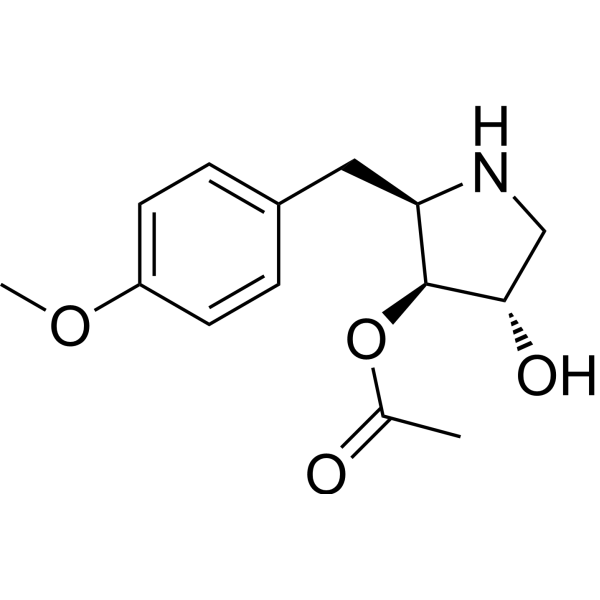
    Anisomycin is a potent protein synthesis inhibitor which interferes with protein and DNA synthesis by inhibiting peptidyl transferase or the 80S ribosome system . Anisomycin is a JNK activator, which increases phospho-JNK . Anisomycin is a bacterial antibiotic .
    Anisomycin
  • HY-139361
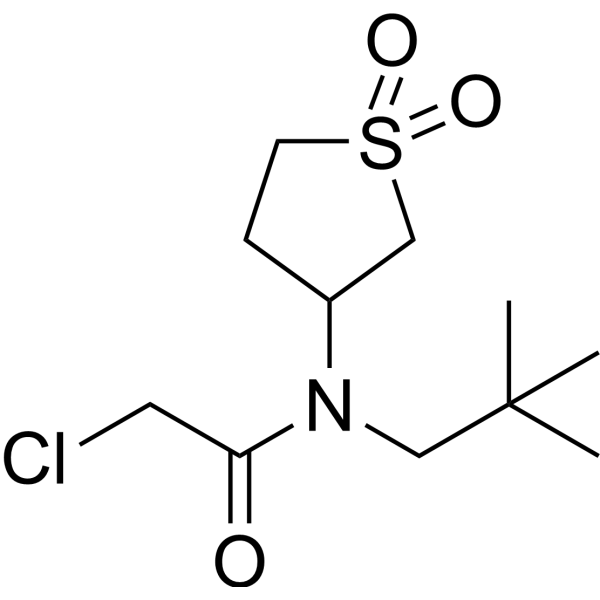
    Sulfopin
    3 Publications Verification

    PIN1-3

    PIN1 Cancer
    Sulfopin (PIN1-3) is a highly selective covalent inhibitor of Pin1 with an apparent Ki of 17 nM. Sulfopin blocks Myc-driven tumors in vivo. The peptidyl-prolyl isomerase, Pin1, is exploited in cancer to activate oncogenes and inactivate tumor suppressors .
    Sulfopin
  • HY-P0190
    Iberiotoxin
    2 Publications Verification

    Potassium Channel Cardiovascular Disease
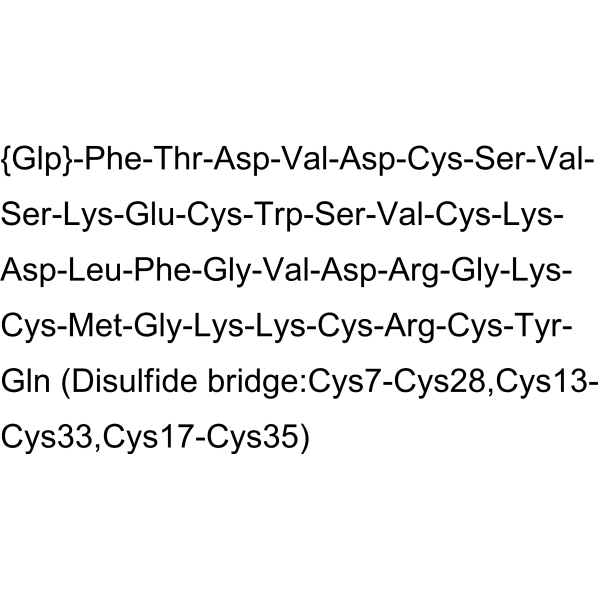
    Iberiotoxin is a toxin isolated from Buthus tamulus scorpion venom. Iberiotoxin is a selective high conductance high conductance Ca 2+-activated K + channel inhibitor with a Kd of ~1 nM. Iberiotoxin does not block other types of voltage-dependent ion channels .
    Iberiotoxin
  • HY-123606
    GSK484
    45+ Cited Publications

    Protein Arginine Deiminase MHC Cardiovascular Disease Inflammation/Immunology
    GSK484 is a PAD4 inhibitor that effectively inhibits protein citrullination and the formation of neutrophil extracellular traps (NETs) by blocking the catalytic activity of PAD4. GSK484 suppresses the production of histone H3, MHC-I expression, CD8 + T cell activation, proliferation and inflammatory cytokine release. GSK484 reduces inflammation and bone destruction in collagen-induced rheumatoid arthritis, alleviates pain and mast cell activation in sickle cell disease, and improves myocardial ischemia-reperfusion injury and experimental colitis. In addition, GSK484 restores intestinal microbial homeostasis by reversing ferroptosis-induced dysbiosis. GSK484 can be used to study the disease mechanisms of rheumatoid arthritis, sickle cell disease, thrombosis, myocardial injury, colitis and other conditions .
    GSK484
  • HY-16908A
    Lefamulin acetate
    4 Publications Verification

    BC-3781 acetate

    Bacterial Antibiotic Infection Inflammation/Immunology
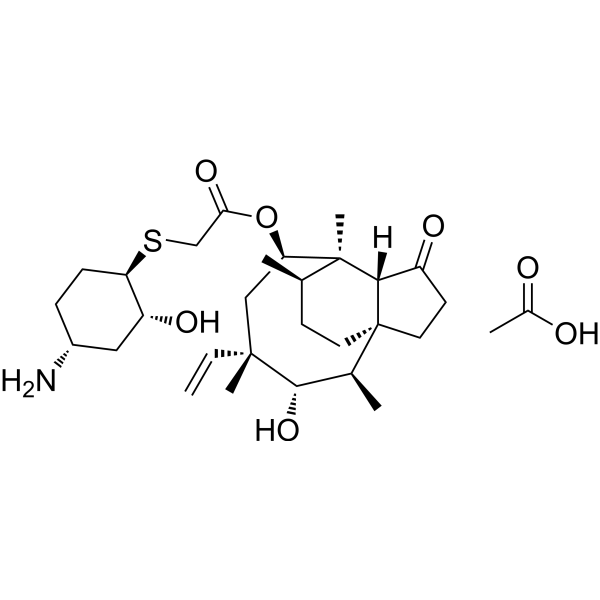
    Lefamulin (BC-3781) acetate is an orally active antibiotic. Lefamulin acetate inhibits protein synthesis by binding to the peptidyl transferase center of the 50S bacterial ribosome. Lefamulin acetate has anti-inflammatory activity. Lefamulin acetate can be used in the research of bacterial infections, such as bacterial pneumonia .
    Lefamulin acetate
  • HY-B0027
    Valnemulin hydrochloride
    2 Publications Verification

    Antibiotic Bacterial Infection Metabolic Disease
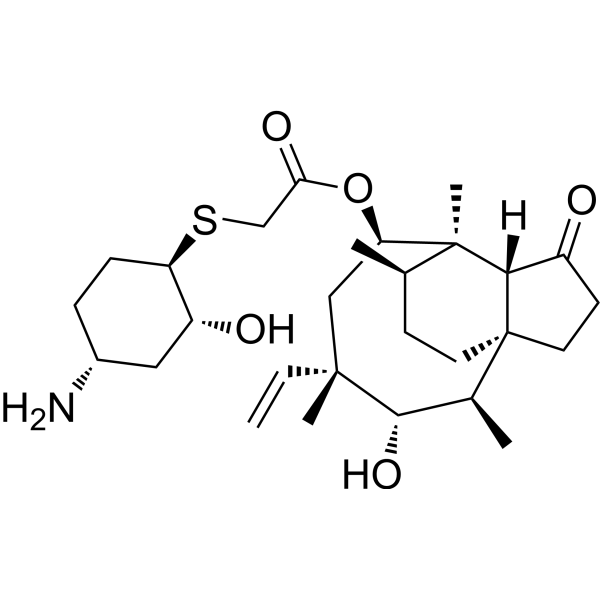
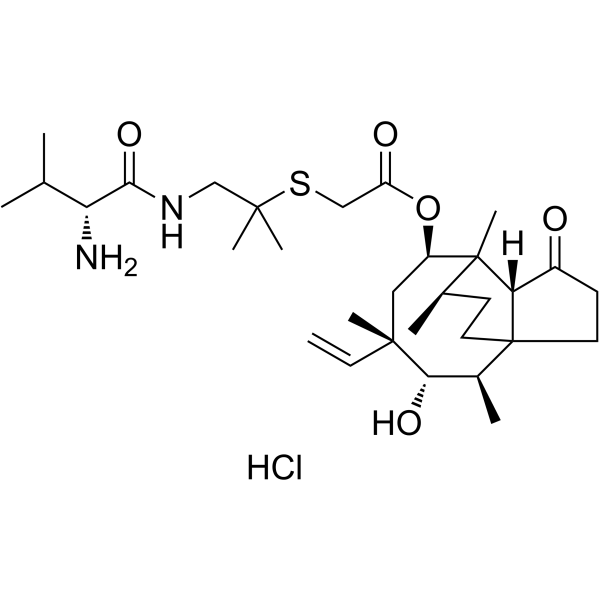
    Valnemulin hydrochloride is an orally effective truncated pleurotin antibiotic that inhibits protein synthesis in bacteria by binding to peptidyl transferase in the 50s ribosome subunit. Valnemulin hydrochloride effectively eliminates Mycobacterium bovis in the lungs in an experimental bovine model of Mycoplasma bovis infection. Valnemulin hydrochloride can reduce the mortality of epidemic rabbit enteropathy and has no adverse effect on the growth performance of rabbits .
    Valnemulin hydrochloride
  • HY-137844

    Leu-AMC hydrochloride

    Fluorescent Dye Others
    L-Leucine-7-amido-4-methylcoumarin (Leu-AMC) hydrochloride is a bright blue fluorogenic peptidyl substrate for LAP3 (leucine aminopeptidase). L-Leucine-7-amido-4-methylcoumarin hydrochloride can be used for leucine aminopeptidase inhibition assays in vitro .
    L-Leucine-7-amido-4-methylcoumarin hydrochloride
  • HY-13336
    Imisopasem manganese
    2 Publications Verification

    M40403; GC4403

    SOD Cancer
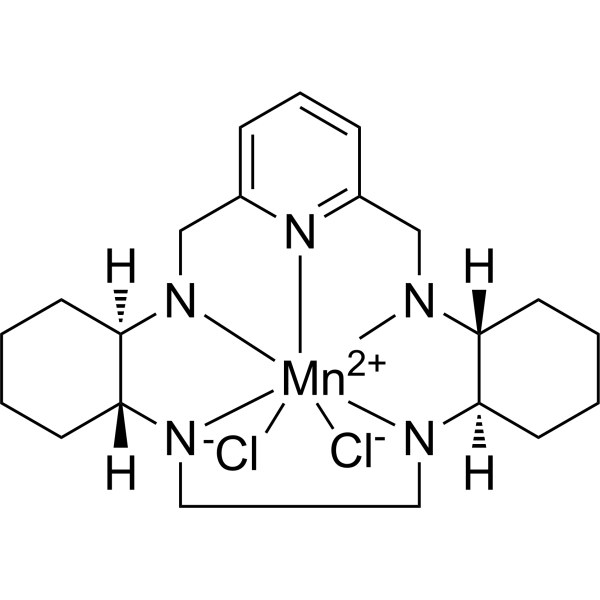
    Imisopasem manganese (M40403) is a stable non-peptidyl mimetic of manganese superoxide MnSOD.
    Imisopasem manganese
  • HY-172815

    JNK Eukaryotic Initiation Factor (eIF) p38 MAPK Cancer
    IDB-001 is a human ribosomal peptidyl transferase center (PTC) inhibitor that induces conformational changes and blocks translational elongation in specific sequence contexts through complementary interactions with Asp/Glu residues in nascent polypeptides. IDB-001 preferentially stalls ribosomes at positions containing acidic peptide motifs, thereby inhibiting cancer cell proliferation, and activates the integrated stress response via eIF2α phosphorylation at high concentrations. In addition, IDB-001 mildly triggers ribotoxic stress responses through phosphorylation of JNK and p38. IDB-001 has been applied to mechanistic studies of triple-negative breast cancer .
    IDB-001
  • HY-P4202

    Suc-AEPF-pNA

    Biochemical Assay Reagents Others
    Suc-Ala-Glu-Pro-Phe-pNA (Suc-AEPF-pNA) is a chromogenic substrate for the peptidyl-prolyl isomerase Pin1. Suc-Ala-Glu-Pro-Phe-pNA is used to evaluate the inhibitory effect of target compounds on Pin1, the catalytic activity of Pin1, and other related assays .
    Suc-Ala-Glu-Pro-Phe-pNA
  • HY-16908
    Lefamulin
    4 Publications Verification

    BC-3781

    Bacterial Antibiotic Infection
    Lefamulin (BC-3781) is an orally active antibiotic. Lefamulin inhibits protein synthesis by binding to the peptidyl transferase center of the 50S bacterial ribosome. Lefamulin has anti-inflammatory activity. Lefamulin can be used in the research of bacterial infections, such as bacterial pneumonia .
    Lefamulin
  • HY-116716
    PIN1 inhibitor API-1
    1 Publications Verification

    MicroRNA Cancer
    PIN1 inhibitor API-1 is a specific Pin1 (peptidyl-prolyl cis-trans isomerase NIMA-interacting 1) inhibitor (API-1) with an IC50 of 72.3 nM. PIN1 inhibitor API-1 directly and specifically binds to the Pin1 peptidyl-prolyl isomerase (PPIase) domain and potently inhibits Pin1 cis-trans isomerizing activity. PIN1 inhibitor API-1 retains the active conformation of pXPO5 and restores the ability of pXPO5 to transport pre-miRNAs from nucleus to cytoplasm, thus up-regulating the anticancer miRNA biogenesis to suppress both in vitro and in vivo hepatocellular carcinoma development .
    PIN1 inhibitor API-1
  • HY-107721

    Opioid Receptor Neurological Disease
    (±)-J-113397 is a potent and selective non-peptidyl ORL1 receptor antagonist with a Ki of 1.8 nM for cloned human ORL1. J-113397 inhibited nociceptin/orphanin FQ-stimulated GTPγS binding to CHO cells expressing ORL1 with an IC50 value of 5.3 nM. J-113397 can be used for researching the physiological roles of nociceptin/orphanin FQ .
    (±)-J-113397
  • HY-157088

    Caspase Apoptosis Cyclophilin Others
    C105SR is a cyclophilin D (CypD) inhibitor targeting to peptidyl-prolylcis-trans isomerase (PPIase). C105SR inhibits mitochondrial permeability transition opening (mPTP) with an IC 50 of 5 nM. C105SR inhibits hypoxia and reoxygenation inudced hepatocyte apoptosis and increases the level of calcium retention capacity (CRC). C105SR exhibits hepaprotective effect in ischaemia-reperfusion injury (IRI) mouse model .
    C105SR
  • HY-P4581

    Suc-ALPF-pNA

    FKBP Others
    Suc-Ala-Leu-Pro-Phe-pNA (Suc-ALPF-pNA) is a synthetic polypeptide substrate that targets FK506-binding protein (FKBP). Suc-Ala-Leu-Pro-Phe-pNA can be used to determine peptidyl-prolyl cis-trans isomerase activity via the chymotrypsin-coupled assay. Suc-Ala-Leu-Pro-Phe-pNA serves as a substrate for human FK506-binding protein hFKBP-12 in the chymotrypsin-FKBP coupled PPIase assay. Suc-Ala-Leu-Pro-Phe-pNA is applicable for the detection and research of PPIase activity .
    Suc-Ala-Leu-Pro-Phe-pNA
  • HY-152296

    Nucleoside Antimetabolite/Analog Bacterial Infection
    8-Methyladenosine is a modified adenosine nucleoside. Through methylation at the 8-position, 8-Methyladenosine confers bacterial resistance to five classes of antibiotics that bind to the ribosomal peptidyl transferase center. 8-Methyladenosine can be used in studies of antibiotic-resistant bacterial infections .
    8-Methyladenosine
  • HY-P1074
    SNX-482
    1 Publications Verification

    Calcium Channel Neurological Disease
    SNX-482, a peptide, is a potent, high affinity, selective and voltage-dependent R-type CaV2.3 channel blocker with an IC50 of 30 nM. SNX-482 has antinociceptive effect .
    SNX-482
  • HY-123517

    Enterovirus Infection
    DC07090 dihydrochloride is a low toxicity, potent, reversible and competitive non-peptidyl human enterovirus 71 3C protease inhibitor with an IC50 and a Ki value for 21.72 μM and 23.29 μM. DC07090 dihydrochloride could also inhibit coxsackievirus A16 (CVA16) replication with an EC50 value of 27.76 μM .
    DC07090 dihydrochloride
  • HY-P1079

    Calcium Channel Neurological Disease
    ω-Agatoxin TK, a peptidyl toxin of the venom of Agelenopsis aperta, is a potent and selective P/Q type Ca 2+ channel blocker. ω-Agatoxin TK inhibits the high K + depolarisation-induced rise in internal Ca 2+ in cerebral isolated nerve endings with an IC50 of of 60 nM. ω-Agatoxin TK has no effect on L-type, N-type, or T-type calcium channels .
    ω-Agatoxin TK
  • HY-P2966

    Endogenous Metabolite Metabolic Disease
    Protein-arginine deiminase is a unique family of enzymes that catalyzes the hydrolysis of peptidyl-arginine to form peptidyl-citrulline .
    Protein-arginine deiminase
  • HY-122386

    Mocimycin; Delvomycin

    Bacterial Antibiotic Infection
    Kirromycin (Mocimycin; Delvomycin) is an elongation factor Tu (EF-Tu) inhibitor targeting protein biosynthesis. As an antibiotic, Kirromycin exerts antibacterial activity against Gram-negative bacteria by acting on EF-Tu to interfere with the peptidyl transfer reaction. Kirromycin is applicable to studies on bacterial infections .
    Kirromycin
  • HY-18982R

    Flagecidin (Standard); Wuningmeisu C (Standard)

    Reference Standards DNA/RNA Synthesis JNK Bacterial Apoptosis Antibiotic Parasite Infection Cancer
    Anisomycin (Standard) is the analytical standard of Anisomycin. This product is intended for research and analytical applications. Anisomycin is a potent protein synthesis inhibitor which interferes with protein and DNA synthesis by inhibiting peptidyl transferase or the 80S ribosome system[1]. Anisomycin is a JNK activator, which increases phospho-JNK[2][3]. Anisomycin is a bacterial antibiotic[4].
    Anisomycin (Standard)
  • HY-147253

    NS 089; NCNP 02

    DNA/RNA Synthesis Neurological Disease
    Brogidirsen (NS 089; NCNP 02) is a a dual-targeting antisense oligonucleotide. Brogidirsen can induce dystrophin protein experession. Brogidirsen can be used for the research of Duchenne muscular dystrophy .
    Brogidirsen
  • HY-118593

    Madumycin II; Antibiotic A 2315A

    Antibiotic Infection
    A2315A (Madumycin II) is an alanine-containing streptogramin A antibiotic. A2315A is a potent peptidyl transferase center (PTC) inhibitor. A2315A inhibits the ribosome prior to the first cycle of peptide bond formation .
    A2315A
  • HY-111903

    Bacterial Infection
    Levomecol (Chloramphenicol), made up of Chloramphenicol, Methyluracil, is a broad-spectrum antibiotic that is derived from the bacterium Streptomyces venezuelae. Levomecol (Chloramphenicol)) stops bacterial growth by binding to the bacterial ribosome (blocking peptidyl transferase) and inhibiting protein synthesis .
    Levomecol
  • HY-P99844

    ALPN-202; CD80 vIgD-Fc

    CTLA-4 Cancer
    Davoceticept (ALPN-202; CD80 vIgD-Fc) is a variant CD80 vIgD-Fc fusion protein targeting CTLA-4 and PD-L1. Davoceticept consists of the (1-107) fragment of CD80 linked to IGHG1 Fc via a peptidyl linker. The expression system of Davoceticept is usually CHO (Chinese Hamster Ovary) cells .
    Davoceticept
  • HY-W109513

    Amino Acid Derivatives Inflammation/Immunology
    Boc-Lys(Z)-OH (DCHA) is a involves in synthesis thymosin β4, βg and β6 fragments, and increases E-rosette forming capacity in Lupus Nephritis model. Boc-Lys(Z)-OH (DCHA) involves in synthesis Boc-Lyz-OCH3 and acts as a reagent of peptidyl thrombin inhibitors production .
    Boc-Lys(Z)-OH (DCHA)
  • HY-P4359

    PIN1 Others
    Suc-AEPF-AMC is a peptide substrate of Pin1 and Par14 peptidyl prolyl isomerase .
    Suc-AEPF-AMC
  • HY-153613

    Ac-Pro-Leu-Val-Glu(OMe)-CH2F

    Cathepsin Cancer
    Ac-PLVE-FMK (Ac-Pro-Leu-Val-Glu(OMe)-CH2F), a tetrapeptidyl m-FMKs, is a Cats inhibitor. Ac-PLVE-FMK can be used for the research of cancer .
    Ac-PLVE-FMK
  • HY-12480

    GSK 1322322

    Bacterial Infection
    Lanopepden (GSK 1322322) is a peptidyl peptidase (PDF) inhibitor. Lanopepden inhibits PDF activity, preventing bacterial protein synthesis, thereby exerting antibacterial activity. Lanopepden is primarily effective against Gram-positive bacteria. Lanopepden is used in the study of acute bacterial skin and skin structure infections .
    Lanopepden
  • HY-N16459

    Antibiotic Bacterial Infection
    Albomycin δ1 is a selective bacterial ribosome-targeted antibiotic (MIC: 0.0625 μg/mL against S. pneumoniae). Albomycin δ1 exerts bactericidal activity via covalent binding to 70S ribosomes and irreversible inhibition of peptidyl transferase. Albomycin δ1 is promising for research of S. pneumoniae and S. aureus infections .
    Albomycin δ1
  • HY-174349

    Protein Arginine Deiminase Inflammation/Immunology Cancer
    PAD-IN-3 (Compound 16) is a potent dual peptidyl arginine deiminases 4 (PAD4) and PAD1 inhibitor with IC50 values of 0.204 μM and 0.273 μM, respectively. PAD-IN-3 is promising for research of citrullination-associated disorders such as cancer and autoimmune diseases .
    PAD-IN-3
  • HY-B0239S3

    Isotope-Labeled Compounds Bacterial Antibiotic Infection
    Chloramphenicol-d4 is deuterium labeled Chloramphenicol. Chloramphenicol, a broad-spectrum antibiotic, acts as a potent inhibitor of bacterial protein biosynthesis . Chloramphenicol acts primarily on the 50S subunit of bacterial 70S rihosomes and inhibits peptide bond formation by suppressing peptidyl transferase activity .
    Chloramphenicol-d4
  • HY-118522

    Proteasome NF-κB Caspase PARP IAP Apoptosis Cancer
    TP-110 is a proteasome inhibitor. TP-110 specifically inhibits the protease-like activity of the 20S proteasome, but does not affect the trypsin-like or peptidyl-glutamyl peptide hydrolysis activity. TP-110 inhibits the NF-κB pathway, activates caspase-8, -9, and -3, and causes PARP cleavage, significantly reducing the levels of cIAP-1 and XIAP. TP-110 causes cell cycle arrest at the G2/M phase and promotes apoptosis of cancer cells. TP-110 can be used in cancer research of prostate cancer and multiple myeloma, etc .
    TP-110
  • HY-W686760A

    Bacterial Infection
    Bromamphenicol (Compound Ib) is a derivative of Chloramphenicol (HY-B0239), and exhibits antibacterial activity. Bromamphenicol binds to S50 ribosomal subunit, interfers with the activity of peptidyl transferase, and exhibits inhibitory activity against protein synthesis .
    Bromamphenicol
  • HY-177301

    Bacterial Infection
    PDF-IN-2 is a peptidyl deformylase (PDF) inhibitor. PDF-IN-2 has average IC50 values of 0.25, 0.50 and 0.34 nM, and average MIC values of 0.16, 0.33 and 0.25 μg/mL for Streptococcus pneumoniae PDF WT, G70V and G70D, respectively. PDF-IN-2 can be used in the research of infectious diseases .
    PDF-IN-2
  • HY-16908AR

    BC-3781 acetate (Standard)

    Reference Standards Bacterial Antibiotic Infection Inflammation/Immunology
    Lefamulin (acetate) (Standard) is the analytical standard of Lefamulin (acetate). This product is intended for research and analytical applications. Lefamulin (BC-3781) acetate is an orally active antibiotic. Lefamulin acetate inhibits protein synthesis by binding to the peptidyl transferase center of the 50S bacterial ribosome. Lefamulin acetate has anti-inflammatory activity. Lefamulin acetate can be used in the research of bacterial infections, such as bacterial pneumonia[1].
    Lefamulin acetate (Standard)
  • HY-P1281

    Potassium Channel Neurological Disease
    Kaliotoxin is a peptidyl inhibitor of neuronal BK-Type. Kaliotoxin can specific inhibit Kv channels and calcium-activated potassium channels. Kaliotoxin can be used for the research of the regulation of membrane potential and neuron excitability .
    Kaliotoxin
  • HY-N15105

    Dipeptidyl Peptidase Others
    Acetyl-L-Ieucyl-L-argininal shows inhibition of peptidyl amin-peptidase III activity .
    Acetyl-L-Ieucyl-L-argininal
  • HY-170766

    PIN1 Others
    PIN1 inhibitor 4 (compound 6a) is a covalent inhibitor of peptidyl-prolyl isomerase Pin1, with IC50=3.15 μM .
    PIN1 inhibitor 4
  • HY-119673

    Antibiotic Others
    Lincophenicol is a hybrid antibiotic that has the activity of inhibiting the puromycin reaction catalyzed by Escherichia coli ribosomal peptidyl transferase and also inhibits the binding of specific compounds to the Escherichia coli ribosome.
    Lincophenicol
  • HY-128592

    PIN1 Cancer
    TAB29 is a potent inhibitor of peptidyl-prolyl cis-trans isomerase NIMA-interacting 1 (Pin1) with an IC50 of 874 nM, possesses therapeutic potential for human cancers .
    TAB29
  • HY-117231

    Others Cancer
    RM 06 is an immunomodulator with a peptidyl hypoxanthine structure that significantly reduces the number of lung metastases of B16 melanoma cells in mice after lethal irradiation and bone marrow reconstitution by stimulating the activity of natural killer (NK) cells .
    RM 06
  • HY-P5202

    Amino Acid Derivatives Others
    H-Gly-Gly-Arg-AMC is a fluorogenic peptidyl-AMC substrate containing C-terminal 7-amino-4-methylcoumarin (AMC). H-Gly-Gly-Arg-AMC is a suitable for monitoring continuous thrombin generation (TGT) .
    H-Gly-Gly-Arg-AMC
  • HY-P3006

    Drug Metabolite Cardiovascular Disease
    Des-Leu10-angiotensin I is a nonapeptide that inhibits rabbit lung angiotensin-converting enzyme peptidyl-dipeptide hydrolase with a Ki value of 31 μM, which is generated from angiotensin I by the action of carboxypeptidase-like activities residing in the human platelet and mast cell .
    Des-Leu10-angiotensin I
  • HY-143902

    PIN1 Cancer
    ZL-Pin01 is a high potent covalent Pin1 (Peptidyl-Prolyl Isomerase NIMA-Interacting-1) inhibitor. ZL-Pin01 shows potent disruption of the Pin1-substrate interaction with an IC50 of 1.33 μM .
    ZL-Pin01
  • HY-P3480

    Fluorescent Dye Others
    H-Trp-Phe-Tyr-Ser(PO3H2)-Pro-Arg-pNA is a chromogenic substrate for Pin1. Pin1 is an essential and conserved mitotic peptidyl-prolyl isomerase, and can recognize the phosphoserine-proline bonds present in mitotic phosphoproteins .
    H-Trp-Phe-Tyr-Ser(PO3H2)-Pro-Arg-pNA
  • HY-143903

    PIN1 Cancer
    ZL-Pin13 is a high potent cell-active covalent inhibitor targeting the Pin1 (Peptidyl-Prolyl Isomerase NIMA-Interacting-1) with an IC50 of 67 nM. ZL-Pin13 effectively inhibits the proliferation and downregulated the Pin1 substrates in MDA-MB-231 cells .
    ZL-Pin13
  • HY-168902

    Proteasome Cancer
    Proteasome-IN-7 (Compound 6f) is an epoxyketone macrocyclic peptidyl proteasome inhibitor (IC50 value of 37.92 nM for 20S proteasome ChT-L subunit). Proteasome-IN-7 displays robust antiproliferative effects against multiple myeloma, acute lymphoblastic leukemia and non-small cell lung cancer .
    Proteasome-IN-7
  • HY-123517A

    Enterovirus Infection
    DC07090 is a potent, reversible and competitive non-peptidyl human enterovirus 71 3C protease inhibitor with an IC50 and a Ki value for 21.72 μM and 23.29 μM. DC07090 could also inhibit coxsackievirus A16 (CVA16) replication with an EC50 value of 27.76 μM .
    DC07090

Inquiry Online

Your information is safe with us. * Required Fields.

Salutation


Country or Region *

Applicant Name *


Organization Name *

Department *


Email Address *


Product Name *

Cat. No.


Requested quantity *

Phone Number *


Remarks

Inquiry Online

Inquiry Information

Product Name:
Cat. No.:
Quantity:
MCE Japan Authorized Agent:

