



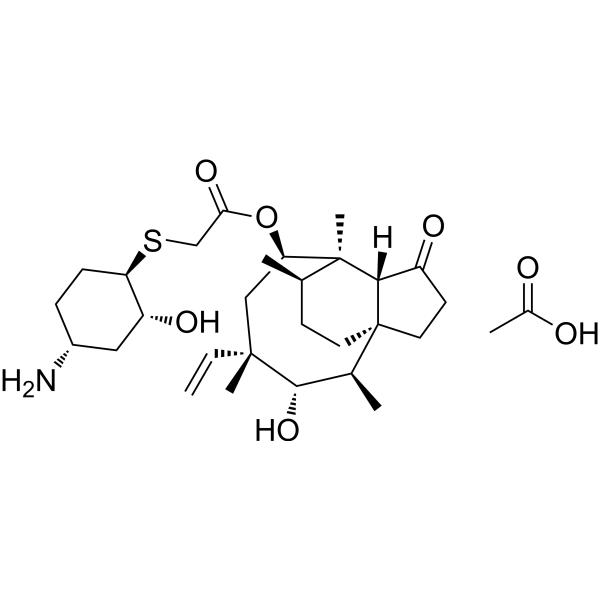
Lefamulin acetate
Based on 5 publication(s) in Google Scholar
Lefamulin (BC-3781) acetate is an orally active antibiotic. Lefamulin acetate inhibits protein synthesis by binding to the peptidyl transferase center of the 50S bacterial ribosome. Lefamulin acetate has anti-inflammatory activity. Lefamulin acetate can be used in the research of bacterial infections, such as bacterial pneumonia.
For research use only. We do not sell to patients.
- Purity : 99.66%
- CAS No.: 1350636-82-6
- Formula: C30H49NO7S
- Molecular Weight:567.78
-
Storage:
4°C, sealed storage, away from moisture
* In solvent : -80°C, 6 months; -20°C, 1 month (sealed storage, away from moisture)

To place orders, for customer services and technical support, please contact: MedChemExpress USA
Tel: 609-228-6898 E-mail: [email protected] [email protected]


-
 Biological Activity
-
Chemical Information
-
Solvent & Solubility
- Protocols
- Purity & Documentation
- References
-
 Help & FAQs


-
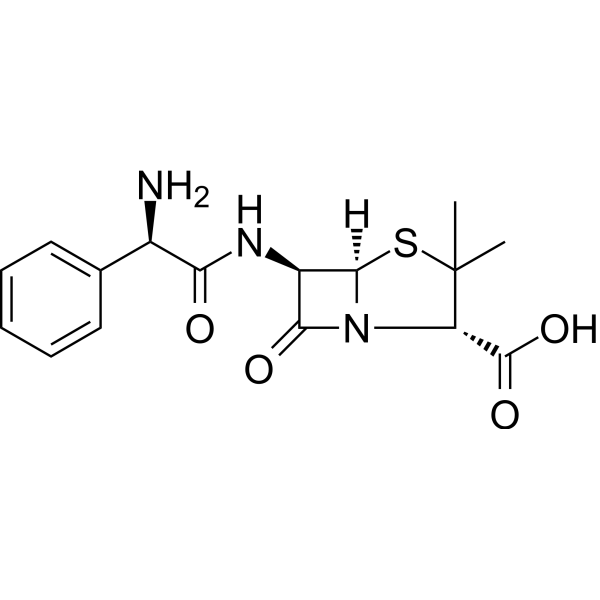
HY-B0522
AmpicillinBacterial Inhibitor -
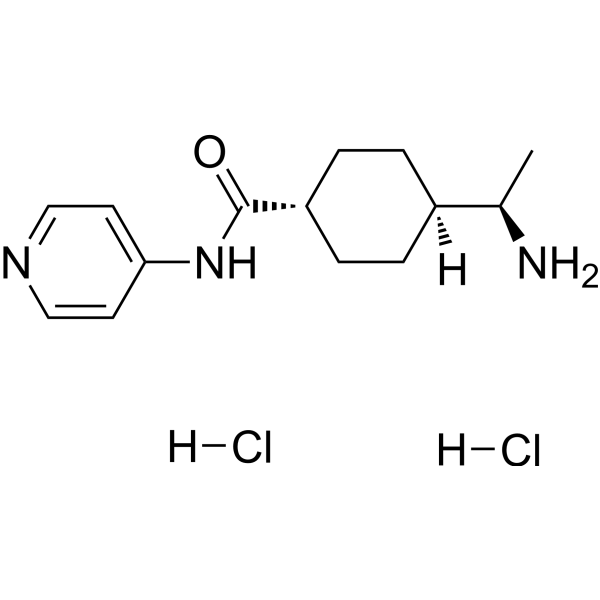
HY-10583
Y-27632 dihydrochlorideROCK Inhibitor -
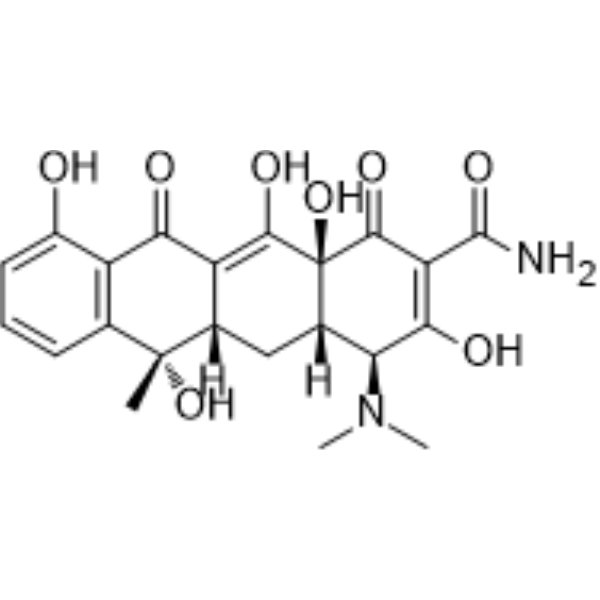
HY-A0107
TetracyclineAntibiotic -

HY-16908AR
Lefamulin acetate (Standard)Antibiotic -
HY-14865
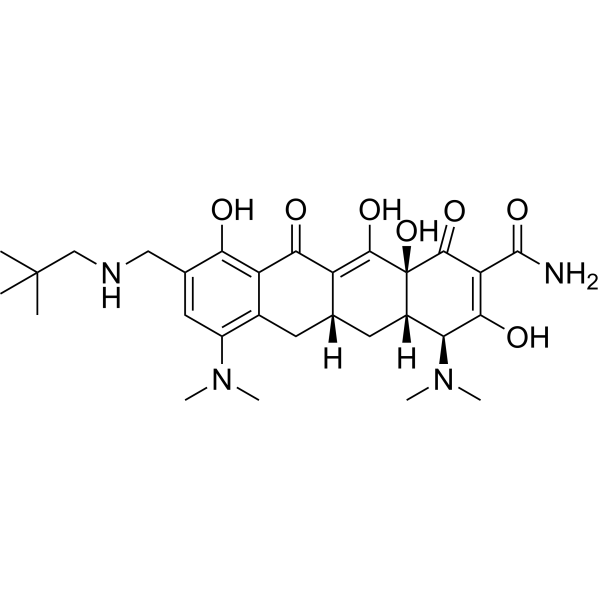
OmadacyclineAntimicrobial Agent -

HY-A0107R
Tetracycline (Standard)Antibacterial Agent -

HY-14865R
Omadacycline (Standard)Antimicrobial Agent
Publications Citing Use of MedChemExpress (MCE) Lefamulin acetate
MoreAll Antibiotic Isoforms
More

Biological Activity
Description
In Vitro
Lefamulin (0-1 mg/L) acetate shows inhibitory activity against C. trachomatis, N. gonorrhoeae, and M. genitalium[2].
Lefamulin acetate shows potent activity against all M. pneumoniae strains with MIC values of ≤0.008 μg/mL[3].
MedChemExpress (MCE) has not independently confirmed the accuracy of these methods. They are for reference only. Further protocols information, click here.
-
Cell Line:C. trachomatis, N. gonorrhoeae, and M. genitalium
-
Concentration:0-1 mg/L
-
Incubation Time:
-
Result:Inhibited bacterial activity with MIC50s of 0.02 mg/L, 0.063 mg/L and 0.12 mg/L respectively.
In Vivo
Lefamulin (1.25-160 mg/kg, s.c.) acetate shows antibacterial effect in S. pneumoniae or S. aureus challenged lung infection mice[5].
MedChemExpress (MCE) has not independently confirmed the accuracy of these methods. They are for reference only.
-
Animal Model:LPS-induced lung neutrophilia mouse model[4]
-
Dosage:10-140 mg/kg
-
Administration:Subcutaneous injection (s.c.)
-
Result:Reduced BALF neutrophil cell counts.
Reduced pro-inflammatory cytokine (TNF-α, IL-6, IL-1β, and GM-CSF), chemokine (CXCL-1, CXCL-2, and CCL-2) and MMP-9 levels in mouse lung tissue.


Chemical Information
-
CAS No. 1350636-82-6
-
Appearance Solid
-
Molecular Weight 567.78
-
Formula C30H49NO7S
-
Color White to off-white
-
SMILES
CC(O)=O.C[C@@H]1[C@]23[C@](C(CC3)=O)([H])[C@]([C@@H](C[C@](C)([C@H]1O)C=C)OC(CS[C@H]4[C@@H](C[C@@H](CC4)N)O)=O)([C@@H](CC2)C)C
-
Synonyms
BC-3781 acetate
-
Shipping
Room temperature in continental US; may vary elsewhere.
-
Storage
4°C, sealed storage, away from moisture
* In solvent : -80°C, 6 months; -20°C, 1 month (sealed storage, away from moisture)


Publications (5)
-
Journal Impact Factor
-
Most Recent
-
Microorganisms
In Vitro Synergistic Effect of Lefamulin with Doxycycline, Rifampin, and Quinupristin/Dalfopristin Against Enterococci. [Abstract]2024 Dec 6;12(12):2515. PMID: 39770718 -
-
Antimicrob Agents Chemother
2021 Sep 17;65(10):e0061921. PMID: 34252305 -
J Antimicrob Chemother
Phenotypic antibiotic resistance of Mycoplasma genitalium and its variation between different macrolide resistance-associated mutations. [Abstract]2025 Feb 3;80(2):465-471. PMID: 39656801 -
Pathology
In vitro activity of recently introduced Gram-positive-specific antimicrobial agents against Australian methicillin-resistant Staphylococcus aureus isolates. [Abstract]2026 Feb 6:S0031-3025(26)00393-4. PMID: 41760492


Solvent & Solubility
In Vitro:
DMSO : ≥ 100 mg/mL (176.12 mM; Hygroscopic DMSO has a significant impact on the solubility of product, please use newly opened DMSO)
H2O : < 0.1 mg/mL (insoluble)
* "≥" means soluble, but saturation unknown.
Please refer to the solubility information to select the appropriate solvent. Once prepared, please aliquot and store the solution to prevent product inactivation from repeated freeze-thaw cycles.
Storage method and period of stock solution: -80°C, 6 months; -20°C, 1 month (sealed storage, away from moisture). When stored at -80°C, please use it within 6 months. When stored at -20°C, please use it within 1 month.
Please refer to the solubility information to select the appropriate solvent. Once prepared, please aliquot and store the solution to prevent product inactivation from repeated freeze-thaw cycles.
Storage method and period of stock solution: -80°C, 6 months; -20°C, 1 month (sealed storage, away from moisture). When stored at -80°C, please use it within 6 months. When stored at -20°C, please use it within 1 month.
Concentration (start) × Volume (start) = Concentration (final) × Volume (final)
In Vivo:
Select the appropriate dissolution method based on your experimental animal and administration route.
- For the following dissolution methods, please ensure to first prepare a clear stock solution using an In Vitro approach and then sequentially add co-solvents:
- To ensure reliable experimental results, the clarified stock solution can be appropriately stored based on storage conditions. As for the working solution for In Vivo experiments, it is recommended to prepare freshly and use it on the same day.
- The percentages shown for the solvents indicate their volumetric ratio in the final prepared solution. If precipitation or phase separation occurs during preparation, heat and/or sonication can be used to aid dissolution.
Add each solvent one by one: 10% DMSO 40% PEG300 5% Tween-80 45% Saline
Solubility: ≥ 2.5 mg/mL (4.40 mM); Clear solution
This protocol yields a clear solution of ≥ 2.5 mg/mL (saturation unknown).
Taking 1 mL working solution as an example, add 100 μL DMSO stock solution (25.0 mg/mL) to 400 μL PEG300, and mix evenly; then add 50 μL Tween-80 and mix evenly; then add 450 μL Saline to adjust the volume to 1 mL.
Preparation of Saline: Dissolve 0.9 g sodium chloride in ddH₂O and dilute to 100 mL to obtain a clear Saline solution.
Add each solvent one by one: 10% DMSO 90% (20% SBE-β-CD in Saline)
Solubility: 2.5 mg/mL (4.40 mM); Clear solution; Need ultrasonic
This protocol yields a clear solution of 2.5 mg/mL.
Taking 1 mL working solution as an example, add 100 μL DMSO stock solution (25.0 mg/mL) to 900 μL 20% SBE-β-CD in Saline, and mix evenly.
Preparation of 20% SBE-β-CD in Saline (4°C, storage for one week): 2 g SBE-β-CD powder is dissolved in 10 mL Saline, completely dissolve until clear.
For the following dissolution methods, please prepare the working solution directly:
It is recommended to prepare fresh solutions and use them promptly within a short period of time.
The percentages shown for the solvents indicate their volumetric ratio in the final prepared solution. If precipitation or phase separation occurs during preparation, heat and/or sonication can be used to aid dissolution.
Add each solvent one by one: PBS
Solubility: 100 mg/mL (176.12 mM); Clear solution; Need ultrasonic
In Vivo Dissolution Calculator
Please enter the basic information of animal experiments:
-
-
-
-
Recommended: Prepare an additional quantity of animals to account for potential losses during experiments.
Please enter your animal formula composition:
-
%DMSO +
Recommended: Keep the proportion of DMSO in working solution below 2% if your animal is weak.
-
%+
-
+%Tween-80 + +
-
%Saline +
The co-solvents required include: DMSO, . All of co-solvents are available by MedChemExpress (MCE). , Tween 80. All of co-solvents are available by MedChemExpress (MCE).
Working solution concentration: 0.22 mg/mL
Method for preparing stock solution: mg drug dissolved in μL DMSO. Stock solution concentration: mg/mL. * In solvent : -80°C, 6 months; -20°C, 1 month (sealed storage, away from moisture)
1. Take μL DMSO stock solution;
2. Add μL .
μL , mix evenly;
3. Then add μL Tween 80, mix evenly;
4. Then add μL
Please ensure that the stock solution in the first step is dissolved to a clear state, and add co-solvents in sequence. You can use ultrasonic heating (ultrasonic cleaner, recommended frequency 20-40 kHz), vortexing, etc. to assist dissolution.

Protocols
-
Cotton Pellet Granuloma
Cotton pellet granuloma is a classical in vivo chronic inflammation model used to evaluate the anti-inflammatory potential of test substances by measuring their ability to inhibit granuloma tissue formation around an implanted foreign body (cotton pellet) in rodents. The method is based on the biological response to a sterile implanted material, which induces proliferative phase inflammation characterized by fibroblast proliferation and collagen-rich granuloma formation, and the final readout reflects the extent of chronic inflammatory tissue growth surrounding the pellet. In multiple preclinical pharmacological evaluations, inhibition of cotton pellet-induced granuloma formation has been used as an indicator of anti-inflammatory activity in both synthetic and natural product screening contexts.
-
Carrageenan-Induced Paw Edema
Carrageenan-induced paw edema is an acute inflammation model in which intraplantar injection of carrageenan induces localized inflammatory swelling characterized by vascular permeability, leukocyte infiltration, and production of inflammatory mediators such as prostaglandins and cytokines, making it widely used to evaluate anti-inflammatory agents in vivo. The resulting paw volume or thickness increase is quantified over time as a direct readout of inflammatory intensity and drug efficacy, typically reflecting cyclooxygenase-mediated prostaglandin-driven edema formation and immune cell recruitment in peripheral tissue[20].
-
Research Protocol for Inflammation-related Diseases
The NLRP3 inflammasome is a cytosolic innate immune signaling platform that integrates priming signals and danger-signal activation to promote caspase-1 activation, maturation of IL-1β and IL-18, and gasdermin D-mediated pyroptotic cell death. The core experimental logic is to determine whether inflammatory disease phenotypes are driven by increased NLRP3 expression, ASC-containing inflammasome assembly, caspase-1 cleavage, GSDMD cleavage, and extracellular release of IL-1β/IL-18 rather than by nonspecific cell injury alone. The pathway is strongly linked to inflammation-related disease phenotypes because monosodium urate crystals activate NALP3/NLRP3 inflammasome signaling in gout-like crystal inflammation, cholesterol crystals activate NLRP3 inflammasomes in atherogenesis models, and DSS-induced intestinal inflammation has been reported to involve NLRP3 inflammasome activity. However, experimental colitis studies also show context-dependent protective effects of NLRP3 inflammasome co


Purity & Documentation
-
Data Sheet (281 KB)
-
SDS (393 KB)
- English - EN (393 KB)
- Français - FR (393 KB)
- Deutsch - DE (393 KB)
- Norwegian - NO (393 KB)
- Español - ES (393 KB)
- Swedish - SV (393 KB)
- Italian - IT (393 KB)
- Korean - KR (393 KB)
- Portuguese - PT (393 KB)
-
Handling Instructions (2659 KB)
References
[1]. Veve MP, et al. Lefamulin: Review of a Promising Novel Pleuromutilin Antibiotic. Pharmacotherapy. 2018 Sep;38(9):935-946. doi: 10.1002/phar.2166. Epub 2018 Aug 20. [Content Brief]
[2]. Susanne Paukner, et al. Antimicrob Agents Chemother. 2018 Apr 26;62(5):e02380-17. [Content Brief]
[3]. Ken B Waites, et al. In Vitro Activities of Lefamulin and Other Antimicrobial Agents against Macrolide-Susceptible and Macrolide-Resistant Mycoplasma pneumoniae from the United States, Europe, and China. Antimicrob Agents Chemother. 2017 Jan 24;61(2):e02008-16. [Content Brief]
[4]. Michael Hafner, et al. Anti-inflammatory activity of lefamulin versus azithromycin and dexamethasone in vivo and in vitro in a lipopolysaccharide-induced lung neutrophilia mouse model. PLoS One. 2021 Sep 29;16(9): e0237659. [Content Brief]
[5]. Wolfgang W Wicha, et al. Pharmacokinetics/pharmacodynamics of lefamulin in a neutropenic murine pneumonia model with Staphylococcus aureus and Streptococcus pneumonia. J Antimicrob Chemother. 2019 Apr 1;74(Suppl 3):iii11-iii18. [Content Brief]


Complete Stock Solution Preparation Table
Please refer to the solubility information to select the appropriate solvent. Once prepared, please aliquot and store the solution to prevent product inactivation from repeated freeze-thaw cycles.
Storage method and period of stock solution: -80°C, 6 months; -20°C, 1 month (sealed storage, away from moisture). When stored at -80°C, please use it within 6 months. When stored at -20°C, please use it within 1 month.
| Optional Solvent | Concentration Solvent Mass | 1 mg | 5 mg | 10 mg | 25 mg |
|---|---|---|---|---|---|
| DMSO | 1 mM | 1.7612 mL | 8.8062 mL | 17.6125 mL | 44.0311 mL |
| 5 mM | 0.3522 mL | 1.7612 mL | 3.5225 mL | 8.8062 mL | |
| 10 mM | 0.1761 mL | 0.8806 mL | 1.7612 mL | 4.4031 mL | |
| 15 mM | 0.1174 mL | 0.5871 mL | 1.1742 mL | 2.9354 mL | |
| 20 mM | 0.0881 mL | 0.4403 mL | 0.8806 mL | 2.2016 mL | |
| 25 mM | 0.0704 mL | 0.3522 mL | 0.7045 mL | 1.7612 mL | |
| 30 mM | 0.0587 mL | 0.2935 mL | 0.5871 mL | 1.4677 mL | |
| 40 mM | 0.0440 mL | 0.2202 mL | 0.4403 mL | 1.1008 mL | |
| 50 mM | 0.0352 mL | 0.1761 mL | 0.3522 mL | 0.8806 mL | |
| 60 mM | 0.0294 mL | 0.1468 mL | 0.2935 mL | 0.7339 mL | |
| 80 mM | 0.0220 mL | 0.1101 mL | 0.2202 mL | 0.5504 mL | |
| 100 mM | 0.0176 mL | 0.0881 mL | 0.1761 mL | 0.4403 mL |


Lefamulin acetate Related Classifications
HY-16908A Related Classifications
 Powered by Bioz