



iNOS Antibody
(Synonyms: NOS2; NOS2A; Nitric oxide synthase; inducible; Hepatocyte NOS; HEP-NOS; Inducible NO synthase; Inducible NOS; iNOS; NOS type II; Peptidyl-cysteine S-nitrosylase NOS2)Based on 4 publication(s) in Google Scholar
iNOS Antibody is a Rabbit-derived and non-conjugated IgG polyclonal antibody, targeting to iNOS.
-
Host:
Rabbit
-
Isotype:
IgG
-
Application:
WB, IHC-P, IHC-F, ICC/IF
-
Reactivity :
Human, Mouse, Rat
-
Formulation:
Supplied in 1*PBS (pH 7.3), 50% glycerol and 0.5% BSA. Preservative: 0.02% sodium azide.
-
Conjugation:
Non-conjugated


To place orders, for customer services and technical support, please contact: MedChemExpress USA
Tel: 609-228-6898 E-mail: [email protected] [email protected]



-

HY-P80609
CD86 Antibody -
HY-P86350
Macrophage mannose receptor 1 Antibody (YA6042) -
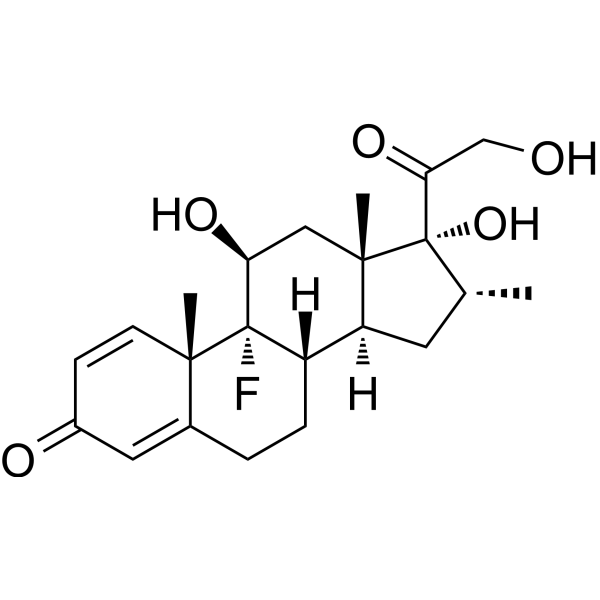
HY-14648
DexamethasoneGR Agonist -
HY-P86409
Arginase-1 Antibody (YA6101) -
HY-P80137
GAPDH Antibody (YA418) -
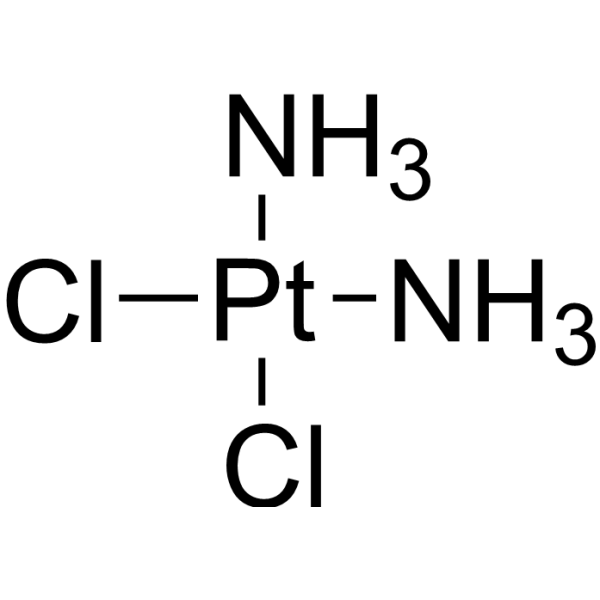
HY-17394
CisplatinDNA Alkylator -
HY-P80856
Phospho-STAT1 (Tyr701) Antibody -
HY-K0501A
SYBR Green qPCR Master Mix (Universal) -
HY-P80720
IL-1 beta Antibody -
HY-K1005
Ultra High Sensitivity ECL Kit -

HY-P70445
IL-4 Protein, Human -
HY-P81214
Macrophage mannose receptor 1 Antibody (YA3531)
Publications Citing Use of MedChemExpress (MCE) iNOS Antibody
More
 4 Publications Citing Use of MCE iNOS Antibody (4)
-
IF

-
IF

-
IF

-
IF


Applications
| Application |
WB

WB: Western Blot
|
IHC-P
IHC-P: Immunohistochemistry-Paraffin
|
IHC-F
IHC-F: Immunohistochemistry-Frozen
|
ICC/IF
ICC/IF: Immunocytochemistry/
Immunofluorescence |
|---|---|---|---|---|
| Dilution Ratio | 1:500-1:1000 | 1:50-1:100 | 1:50-1:100 | 1:50-1:200 |


Product Details
iNOS Antibody is a Rabbit-derived and non-conjugated IgG polyclonal antibody, targeting to iNOS.
-
Host Rabbit

-
Clonality Polyclonal

-
Species ReactivityHuman, Mouse, Rat
-
Observed Molecular WeightObserved band size: 131 kDa
Note: Due to possible protein modifications or aggregation, the molecular weight should be confirmed by actual measurement, and the predicted value is for reference only.

-
Calculated Molecular Weight Predicted band size: 131 kDa

Entrez Gene: 4843 Human ; 18126 Mouse ; 24599 Rat
SwissProt: P35228 Human ; P29477 Mouse ; Q06518 Rat
OMIM: 163730 Human
Synthetic peptide corresponding to Human iNOS.AA range:117-166.
Endogenous
affinity purified
Non-conjugated
Unmodified
IgG


Product Properties
-
Appearance
Solution
-
Formulation
Supplied in 1*PBS (pH 7.3), 50% glycerol and 0.5% BSA. Preservative: 0.02% sodium azide.
-
Concentration
Batch-dependent, Please check the COA for the concentration of each lot. Check Lot Concentration
-
Storage & Stability
Stored at -20°C for 1 year. Avoid repeated freeze / thaw cycles.
-
Shipping
Shipping with blue ice.


Publications (4)
-
Journal Impact Factor
-
Most Recent
-
J Nanobiotechnology
Intranasal delivery of engineered extracellular vesicles promotes neurofunctional recovery in traumatic brain injury. [Abstract]2025 Mar 21;23(1):229. PMID: 40114197
iNOS Antibody purchased from MedChemExpress. Usage Cited in: J Nanobiotechnology. 2025 Mar 21;23(1):229. [Abstract]
iNOS Antibody (1:200; 4℃; overnight). IF of IBA1 (green) and INOS (red) in an in vitro BV2 microglial activation model treated with 5.0 × 10⁵ hADSCs or 20 µg total protein of EVs (n = 3).
iNOS Antibody purchased from MedChemExpress. Usage Cited in: J Nanobiotechnology. 2025 Mar 21;23(1):229. [Abstract]
iNOS Antibody (1:200; 4℃; overnight). IF of IBA1 (green) and INOS (red) in an in vitro BV2 microglial activation model treated with 20 µg total protein of EVs.
iNOS Antibody purchased from MedChemExpress. Usage Cited in: J Nanobiotechnology. 2025 Mar 21;23(1):229. [Abstract]
iNOS Antibody (1:200; 4℃; overnight). IF showed INOS (green) expression in the inflammation model of human brain organoids treated with 20 µg total protein of EVs/EEVs.
-
J Ethnopharmacol
Polysaccharide from Campanumoea javanica Bl. accelerate wound healing via moderating TGF-β1/Smad3 pathways and promoting SIRT1-mediated macrophage polarization in rats. [Abstract]2026 Feb 28:357:120851. PMID: 41232631 -
Neurol Res
Astragaloside IV alleviates neuroinflammation in cerebral ischemia-reperfusion injury by inhibiting HTR2B-mediated microglial M1 polarization. [Abstract]2025 Jul 11:1-14. PMID: 40641386
iNOS Antibody purchased from MedChemExpress. Usage Cited in: Neurol Res. 2025 Jul 11:1-14. [Abstract]
iNOS Antibody (1:200; overnight). Immunofluorescence detected iNOS expression in brain tissue of mouse subjected to MCAO/R.


Verification Images
-
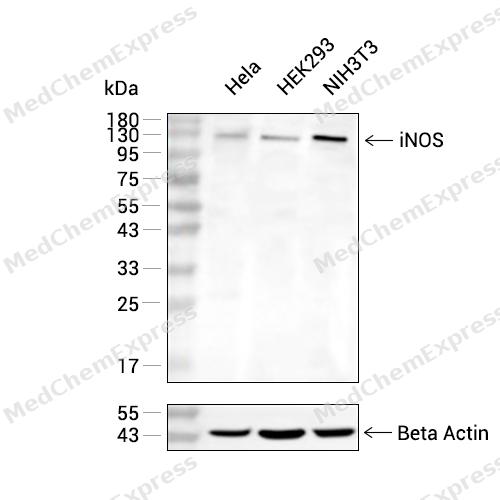 Western blot analysis of extracts from Hela (lane 2(20μg), HEK293 (lane 3(20μg) and NIH3T3 (lane 4(20μg) using iNOS (HY-P80725) Rabbit mAb. Proteins were transferred to a PVDF membrane and blocked with 5% non-fat milk in TBST for 2 hour at room temperature. The primary antibody (1/1000) and Loading control antibody (Beta Actin, HY-P80438, 1/10000) was used in 5% non-fat milk in TBST at 4°C overnight. Goat Anti-Mouse/Rabbit IgG-HRP Secondary Antibody (1/10000) was used for 1 hour at room temperature.
 -
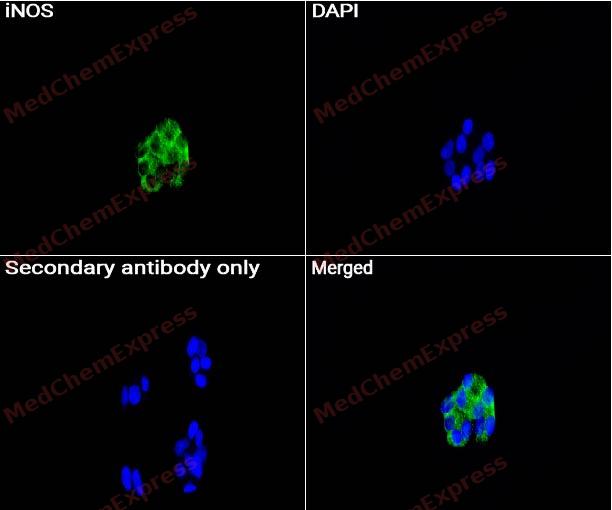 Immunocytochemistry analysis of HepG2 cells labeling iNOS with iNOS antibody (HY-P80725) at 1/50 dilution. Cells were fixed in 4% paraformaldehyde for 15 minutes at room temperature, permeabilized with 0.1% Triton X-100 for 10 minutes at room temperature, then blocked with QuickBlock™ Blocking Buffer for Immunol Staining for 10 min at room temperature. Cells were then incubated with iNOS antibody (HY-P80725) at 1/50 dilution in QuickBlock™ Blocking Buffer for Immunol Staining at 4℃. Alexa Fluor® 488-conjugated AffiniPure Goat Anti-Rabbit IgG H&L(HY-P8002, Green) was used as the secondary antibody at 1/1,000 dilution. PBS instead of the primary antibody was used as the secondary antibody only control. The Nuclear counterstain was DAPI (Blue).
 -
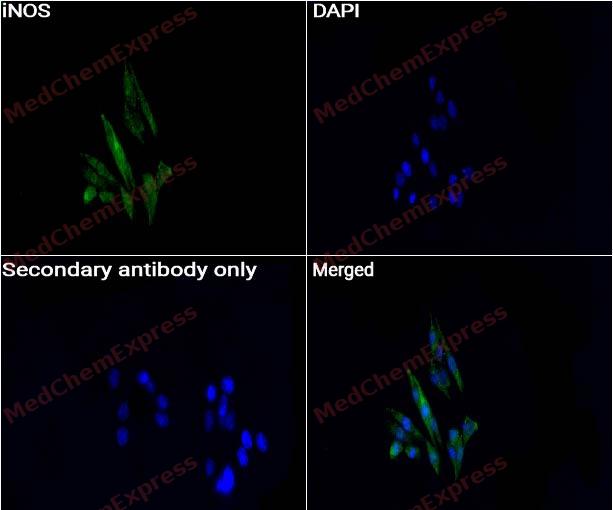 Immunocytochemistry analysis of C6 cells labeling iNOS with iNOS antibody (HY-P80725) at 1/50 dilution. Cells were fixed in 4% paraformaldehyde for 15 minutes at room temperature, permeabilized with 0.1% Triton X-100 for 10 minutes at room temperature, then blocked with QuickBlock™ Blocking Buffer for Immunol Staining for 10 min at room temperature. Cells were then incubated with iNOS antibody (HY-P80725) at 1/50 dilution in QuickBlock™ Blocking Buffer for Immunol Staining at 4℃. Alexa Fluor® 488-conjugated AffiniPure Goat Anti-Rabbit IgG H&L(HY-P8002, Green) was used as the secondary antibody at 1/1,000 dilution. PBS instead of the primary antibody was used as the secondary antibody only control. The Nuclear counterstain was DAPI (Blue).
 -
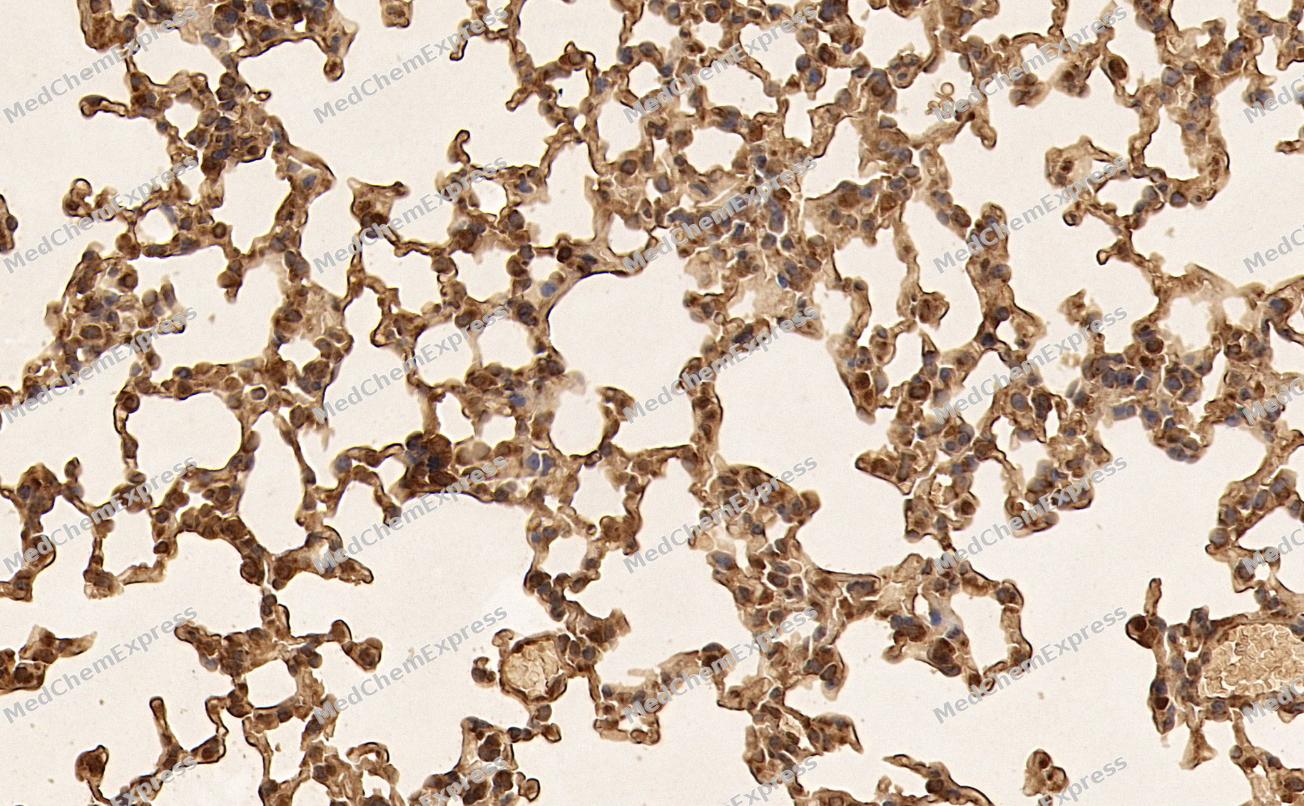 Immunohistochemical analysis of paraffin-embedded Mouse lung tissue using iNOS Antibody. The section was pre-treated using heat mediated antigen retrieval with Tris-EDTA buffer (pH 9.0) for 8 minutes. The tissues were blocked in QuickBlock for 20 minutes at room temperature, washed with ddH2O and PBS, and then probed with the primary antibody (HY-P80725, 1/100) in 4℃ overnight. The detection was performed using an HRP conjugated compact polymer system. DAB was used as the chromogen. Tissues were counterstained with hematoxylin and mounted with DPX.
 -
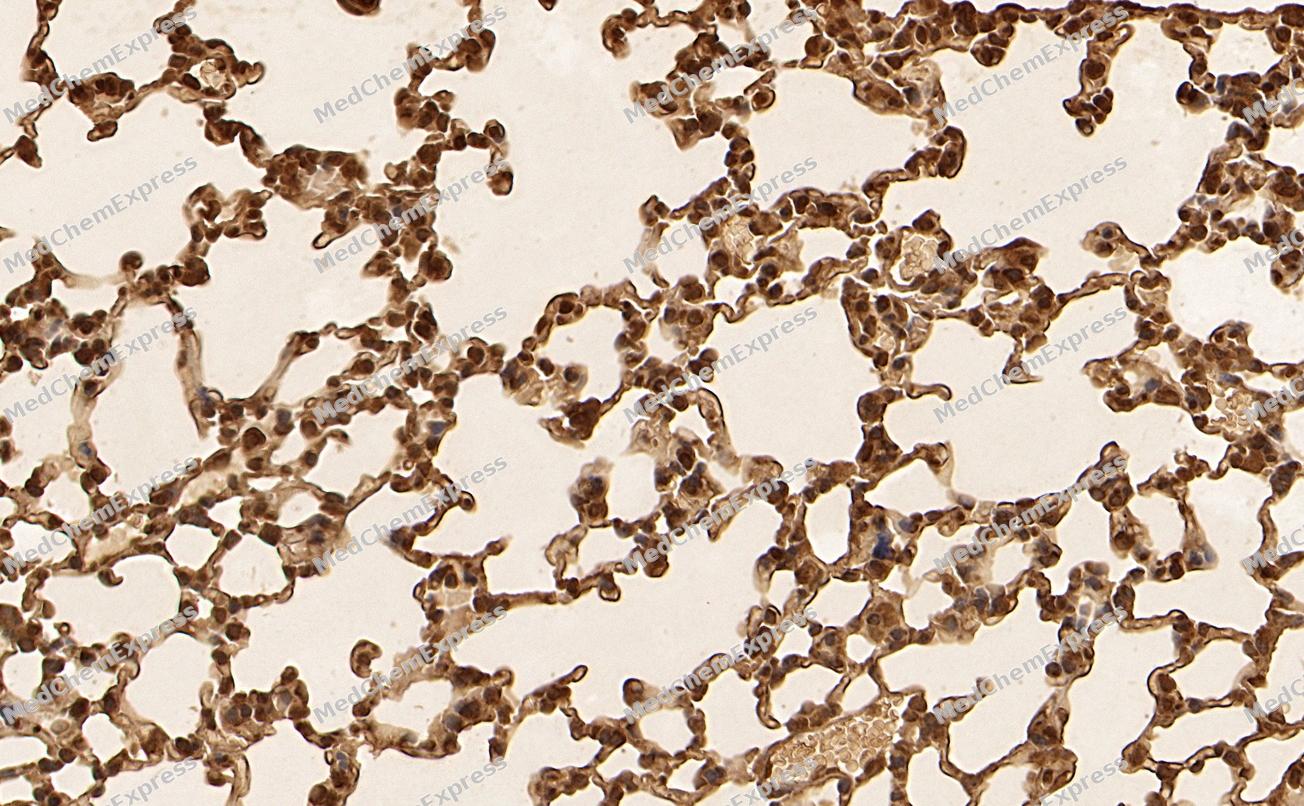 Immunohistochemical analysis of paraffin-embedded Mouse lung tissue using iNOS Antibody. The section was pre-treated using heat mediated antigen retrieval with Tris-EDTA buffer (pH 9.0) for 8 minutes. The tissues were blocked in QuickBlock for 20 minutes at room temperature, washed with ddH2O and PBS, and then probed with the primary antibody (HY-P80725, 1/100) in 4℃ overnight. The detection was performed using an HRP conjugated compact polymer system. DAB was used as the chromogen. Tissues were counterstained with hematoxylin and mounted with DPX.


Background
-
Function
iNOS is an inducible nitric oxide synthase that produces nitric oxide from L-arginine and acts as a key mediator of immune activation and inflammation[1]. Mechanistically, inflammatory cells such as macrophages produce nitric oxide mainly through iNOS during inflammatory processes, where nitric oxide functions as an innate immune effector molecule[2]. iNOS expression is regulated by inflammatory signaling pathways, including PKC, NF-κB, STAT3-NF-κB interaction, and PKCδ-IRF1 signaling, which connect cytokine or LPS stimulation to nitric oxide production[2][3][4]. In disease models, dysregulated iNOS has been linked to sepsis, cancer, neurodegeneration, pain, arthritis, inflammatory bowel disease, liver fibrosis, and neurological disease models[1][5][6][7]. Compared with nNOS and eNOS, iNOS differs by stimulus-responsive expression and high nitric oxide output, whereas nNOS mainly supports neuronal signaling and eNOS supports endothelial vascular regulation[8]. However, iNOS is not solely pathological, because traumatic brain injury models showed worse outcomes after iNOS inhibition or iNOS gene deletion[9]. For experimental applications, selective iNOS inhibitors remain useful tools for testing nitric oxide-dependent mechanisms, although no iNOS inhibitor is approved for human use[1].
-
Subcellular Localization
Cytoplasm, cytosol
-
Expression
Tissue_specificity:It is expressed in liver, retina, bone cells, and lung airway epithelial cells. It is not expressed in platelets. It is expressed in chondrocytes (PubMed:7504305) .
Induction:By endotoxins and cytokines. Induced by IFNG/IFN-gamma acting synergistically with bacterial lipopolysaccharides (LPS) , TNF or IL1B/interleukin-1 beta (PubMed:7504305, PubMed:7528267) . Down-regulated by zinc due to inhibition of NF-kappa-B transactivation activity (PubMed:25180171) . By oxidatively-modified low-densitity lipoprotein (LDL (ox) ) (PubMed:25417112) -
Isoforms & Post-Translational Modification
P35228 has 2 isomers: P35228-1: 131117 Da (predicted); P35228-2: 126749 Da (predicted).
Polyubiquitinated; mediated by SPSB1, SPSB2 and SPSB4, leading to proteasomal degradation -
Subunit
Homodimer (PubMed:10074942, PubMed:10409685). Interacts with NHERF1 (PubMed:12080081). Interacts with GAPDH; induced by oxidatively-modified low-densitity lipoprotein (LDL(ox)) (PubMed:25417112). Interacts with S100A8 and S100A9 to form the iNOS-S100A8/9 transnitrosylase complex (PubMed:25417112). Interacts with SPSB1, SPSB2 and SPSB4 (PubMed:21199876). Interacts with ELOC and CUL5 in the presence of SPSB1 or SPSB2 or SPSB4 (PubMed:21199876). Forms a complex with ASL, ASS1 and HSP90AA1; the complex regulates cell-autonomous L-arginine synthesis and citrulline recycling while channeling extracellular L-arginine to nitric oxide synthesis pathway
-
SwissProt ID
-
Synonyms
NOS2; NOS2A; Nitric oxide synthase; inducible; Hepatocyte NOS; HEP-NOS; Inducible NO synthase; Inducible NOS; iNOS; NOS type II; Peptidyl-cysteine S-nitrosylase NOS2
-
Research Field
Neuroscience
Documentation
-
Data Sheet (262 KB)
-
SDS (252 KB)
- English - EN (252 KB)
- Français - FR (252 KB)
- Deutsch - DE (252 KB)
- Norwegian - NO (252 KB)
- Español - ES (252 KB)
- Swedish - SV (252 KB)
- Italian - IT (252 KB)
- Korean - KR (252 KB)
- Portuguese - PT (252 KB)
-
User Guide for Antibodies (1077 KB)
References
[1]. Cinelli MA, et al. Inducible nitric oxide synthase: Regulation, structure, and inhibition. Med Res Rev. 2020 Jan;40(1):158-189. [Content Brief]
[2]. Leppänen T, et al. Protein kinase C and its inhibitors in the regulation of inflammation: inducible nitric oxide synthase as an example. Basic Clin Pharmacol Toxicol. 2014 Jan;114(1):37-43. [Content Brief]
[3]. Yu Z, et al. Signal transducers and activators of transcription 3 (STAT3) inhibits transcription of the inducible nitric oxide synthase gene by interacting with nuclear factor kappaB. Biochem J. 2002 Oct 1;367(Pt 1):97-105. [Content Brief]
[4]. Leppänen T, et al. Down-regulation of protein kinase Cδ inhibits inducible nitric oxide synthase expression through IRF1. PLoS One. 2013;8(1):e52741. [Content Brief]
[5]. Kolios G, et al. Nitric oxide in inflammatory bowel disease: a universal messenger in an unsolved puzzle. Immunology. 2004 Dec;113(4):427-37. [Content Brief]
[6]. Cinar R, et al. Hybrid inhibitor of peripheral cannabinoid-1 receptors and inducible nitric oxide synthase mitigates liver fibrosis. JCI Insight. 2016;1(11):e87336. [Content Brief]
[7]. Gage MC, et al. Inhibitors of Src Family Kinases, Inducible Nitric Oxide Synthase, and NADPH Oxidase as Potential CNS Drug Targets for Neurological Diseases. CNS Drugs. 2021 Jan;35(1):1-20. [Content Brief]
[8]. Förstermann U, et al. Nitric oxide synthases: regulation and function. Eur Heart J. 2012 Apr;33(7):829-37, 837a-837d. [Content Brief]
[9]. Sinz EH, et al. Inducible nitric oxide synthase is an endogenous neuroprotectant after traumatic brain injury in rats and mice. J Clin Invest. 1999 Sep;104(5):647-56. [Content Brief]

 Powered by Bioz
