1. Search Result
Search Result
Results for "

primary hypertension

" in MedChemExpress (MCE) Product Catalog:

12

Inhibitors & Agonists

1

Screening Libraries

1

Natural
Products

1

Isotope-Labeled Compounds

Cat. No. Product Name Target Research Areas Chemical Structure
  • HY-129630

    Microtubule/Tubulin Neurological Disease Cancer
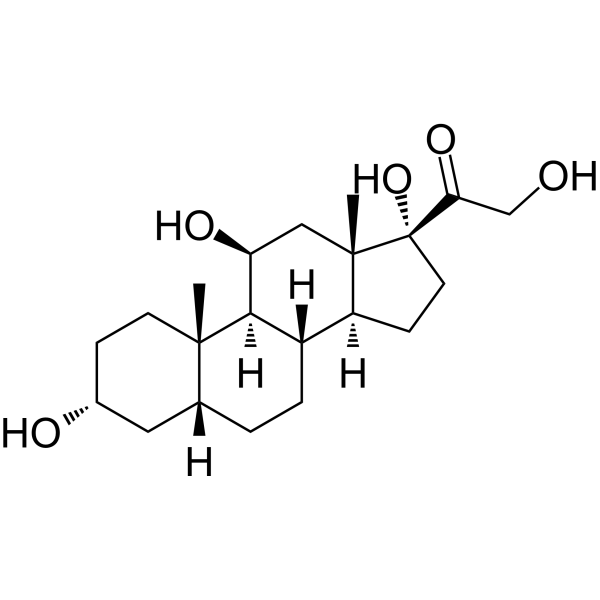
    Tetrahydrocortisol is a cortisol metabolite that inhibits dexamethasone-induced formation of cross-linked actin networks. Tetrahydrocortisol can be used in the research of primary open-angle glaucoma, glucocorticoid-induced ocular hypertension, Lewis lung carcinoma, and EMT-6 mouse breast cancer .
    Tetrahydrocortisol
  • HY-12798
    Netarsudil
    1 Publications Verification

    AR-13324

    Monoamine Transporter ROCK Cardiovascular Disease Neurological Disease
    Netarsudil (AR-13324) is a competitive inhibitor of Rho-associated protein kinases (ROCK I and ROCK II) and a reversible inhibitor of the norepinephrine transporter (NET). Netarsudil reduces intraocular pressure by inhibiting ROCK, causing relaxation of trabecular meshwork cells and dilation of episcleral veins, thereby increasing the ease of aqueous humor outflow, while inhibiting NET to reduce aqueous humor production. Netarsudil is mainly used in the study of ocular hypertension and primary open-angle glaucoma .
    Netarsudil
  • HY-113986

    (R)-Fadrozole; (R)-CGS 16949A free base; FAD286

    Cytochrome P450 Cardiovascular Disease
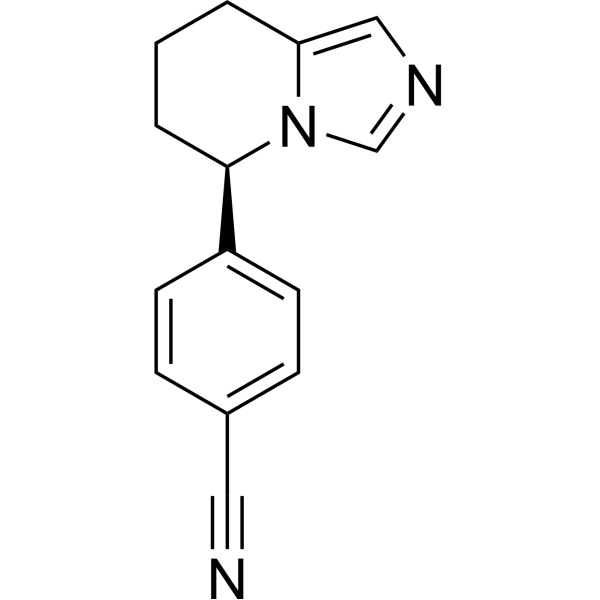
    Dexfadrostat ((R)-Fadrozole) is an orally active and selective aromatase inhibitor, with human aromatase IC50 values of 6.4 nM. Dexfadrostat suppresses estrogen synthesis, reduces circulating estradiol levels and suppresses aldosterone production. Dexfadrostat can be used for the research of breast cancer, primary aldosteronism, and hypertension .
    Dexfadrostat
  • HY-12798B
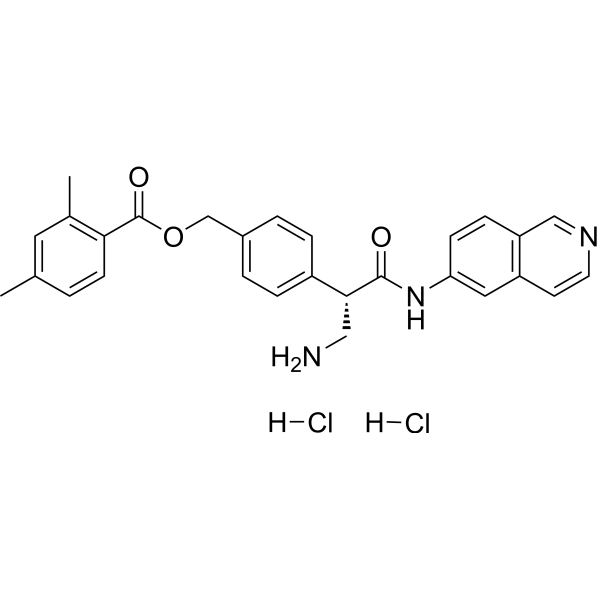
    Netarsudil hydrochloride
    1 Publications Verification

    AR-13324 hydrochloride

    ROCK Cardiovascular Disease Neurological Disease
    Netarsudil (AR-13324) hydrochloride is a competitive inhibitor of Rho-associated protein kinases (ROCK I and ROCK II) and a reversible inhibitor of the norepinephrine transporter (NET). Netarsudil hydrochloride reduces intraocular pressure by inhibiting ROCK, causing relaxation of trabecular meshwork cells and dilation of episcleral veins, thereby increasing the ease of aqueous humor outflow, while inhibiting NET to reduce aqueous humor production. Netarsudil hydrochloride is mainly used in the study of ocular hypertension and primary open-angle glaucoma .
    Netarsudil hydrochloride
  • HY-12798A
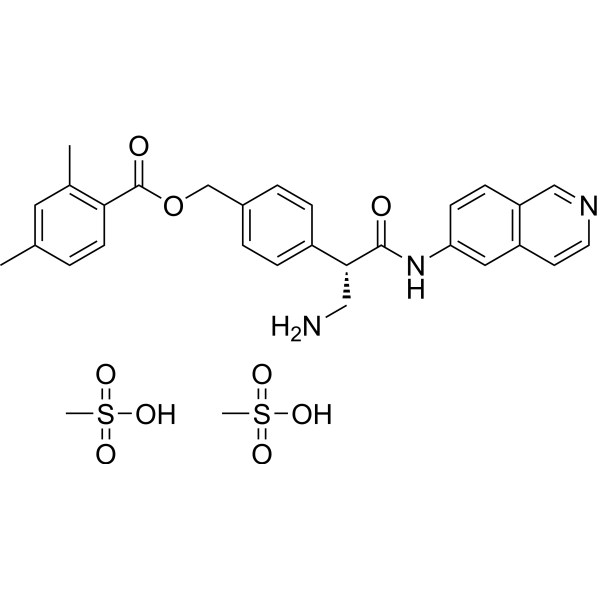
    Netarsudil dimesylate
    1 Publications Verification

    AR-13324 dimesylate

    ROCK Cardiovascular Disease Neurological Disease
    Netarsudil (AR-13324) dimesylate is a competitive inhibitor of Rho-associated protein kinases (ROCK I and ROCK II) and a reversible inhibitor of the norepinephrine transporter (NET). Netarsudil dimesylate reduces intraocular pressure by inhibiting ROCK, causing relaxation of trabecular meshwork cells and dilation of episcleral veins, thereby increasing the ease of aqueous humor outflow, while inhibiting NET to reduce aqueous humor production. Netarsudil dimesylate is mainly used in the study of ocular hypertension and primary open-angle glaucoma .
    Netarsudil dimesylate
  • HY-118010A

    d-Norfenfluramine hydrochloride

    5-HT Receptor Cardiovascular Disease
    (+)-Norfenfluramine hydrochloride, a major hepatic metabolite of (+)-fenfluramine, is a selective 5-HT2B receptor agonist (Ki: 11.2 nM). (+)-Norfenfluramine hydrochloride potently stimulates the hydrolysis of inositol phosphates and increases intracellular Ca 2+. (+)-Norfenfluramine hydrochloride can be used for the research of primary pulmonary hypertension and valvular heart disease .
    (+)-Norfenfluramine hydrochloride
  • HY-W131725

    d-Norfenfluramine

    5-HT Receptor Cardiovascular Disease
    (+)-Norfenfluramine a major hepatic metabolite of (+)-fenfluramine, is a selective 5-HT2B receptor agonist (Ki: 11.2 nM). (+)-Norfenfluramine potently stimulates the hydrolysis of inositol phosphates and increases intracellular Ca 2+. (+)-Norfenfluramine can be used for the research of primary pulmonary hypertension and valvular heart disease .
    (+)-Norfenfluramine
  • HY-129630S

    Isotope-Labeled Compounds Endogenous Metabolite Metabolic Disease
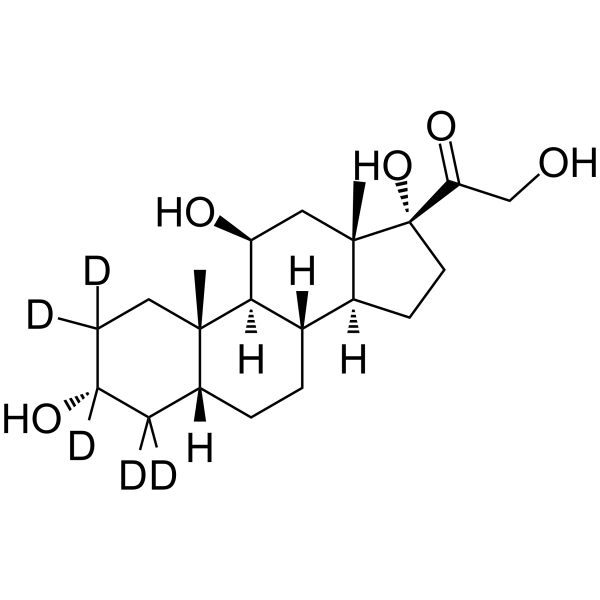
    Tetrahydrocortisol-d5 is the deuterium labeled Tetrahydrocortisol. Tetrahydrocortisol is a cortisol metabolite that inhibits dexamethasone-induced formation of cross-linked actin networks. Tetrahydrocortisol can be used in the research of primary open-angle glaucoma, glucocorticoid-induced ocular hypertension, Lewis lung carcinoma, and EMT-6 mouse breast cancer .
    Tetrahydrocortisol-d5
  • HY-106570

    Potassium Channel Metabolic Disease
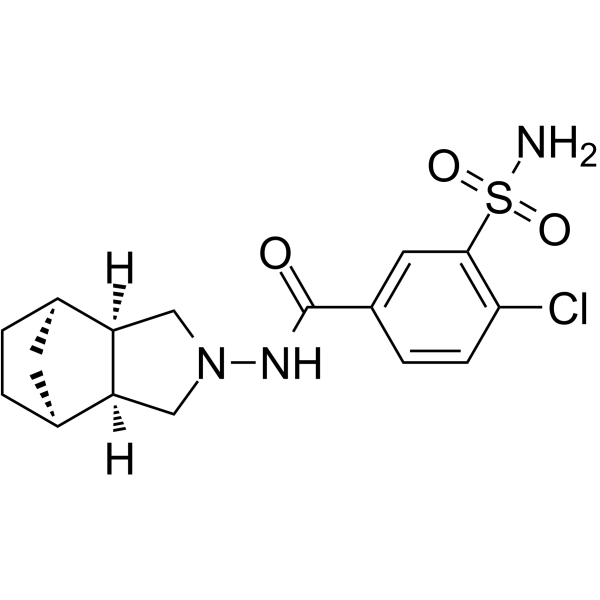
    Tripamide is an orally active sulfonamide-derived diuretic antihypertensive agent .
    Tripamide
  • HY-A0114

    RS 10029

    Angiotensin-converting Enzyme (ACE) Cardiovascular Disease
    Moexiprilat is an inhibitor of angiotensin-converting enzyme (ACE; IC50=2.1 nM) and an active metabolite of the prodrug Moexipril (HY-117281). It is formed from moexipril in vivo by side chain ester hydrolysis. Moexiprilat (10 nM) prevents the estrone- or angiotensin II-stimulated proliferation of primary neonatal rat cardiac fibroblasts. It reduces mean arterial blood pressure and increases the levels of atrial natriuretic peptide, a marker of hypertension, in ovariectomized mice when administered at a dose of 50 mg/kg per day.
    Moexiprilat
  • HY-113986C

    (R)-Fadrozole hydrochloride; (R)-CGS 16949A; FAD286 hydrochloride

    Cytochrome P450 Cardiovascular Disease Cancer
    Dexfadrostat ((R)-Fadrozole) hydrochloride is an orally active and selective aromatase inhibitor, with human aromatase IC50 values of 6.4 nM. Dexfadrostat hydrochloride suppresses estrogen synthesis, reduces circulating estradiol levels and suppresses aldosterone production. Dexfadrostat hydrochloride can be used for the research of breast cancer, primary aldosteronism, and hypertension .
    Dexfadrostat hydrochloride
  • HY-W343043

    PZG

    Drug Derivative Cardiovascular Disease Metabolic Disease
    Pyrazinoylguanidine (PZG) is an analogue of the potassium sparing diuretic, Amiloride (HY-B0285). Pyrazinoylguanidine can lower the systolic and diastolic blood pressure of patients with primary hypertension, has a certain effect on reducing heart rate, and does not affect the concentrations of electrolytes such as sodium, potassium, and chloride in the blood serum. Pyrazinoylguanidine can reduce the hyperglycemia and hyperinsulinemia in type 2 diabetes, reduce the levels of triglycerides, cholesterol, and free fatty acids, and reverse the hyperglycemia and hyperlipidemia induced by thiazide diuretics, such as Hydrochlorothiazide (HY-B0252). Pyrazinoylguanidine ican nhibit the reabsorption of urea by the renal tubules, thereby increasing the clearance rate and excretion volume of urea, reducing the serum urea concentration, and minimizing its toxic accumulation .
    Pyrazinoylguanidine

Inquiry Online

Your information is safe with us. * Required Fields.

Salutation


Country or Region *

Applicant Name *


Organization Name *

Department *


Email Address *


Product Name *

Cat. No.


Requested quantity *

Phone Number *


Remarks

Inquiry Online

Inquiry Information

Product Name:
Cat. No.:
Quantity:
MCE Japan Authorized Agent:

