


1. Search Result
Search Result
Results for "

proteins/peptides

" in MedChemExpress (MCE) Product Catalog:

973

Inhibitors & Agonists

7

Screening Libraries

92

Fluorescent Dyes

152

Biochemical Assay Reagents

843

Peptides

5

MCE Kits

9

Inhibitory Antibodies

28

Natural
Products

16

Isotope-Labeled Compounds

23

Click Chemistry

19

Oligonucleotides

1

GMP Molecules

Cat. No. Product Name Target Research Areas Chemical Structure
  • HY-D0819
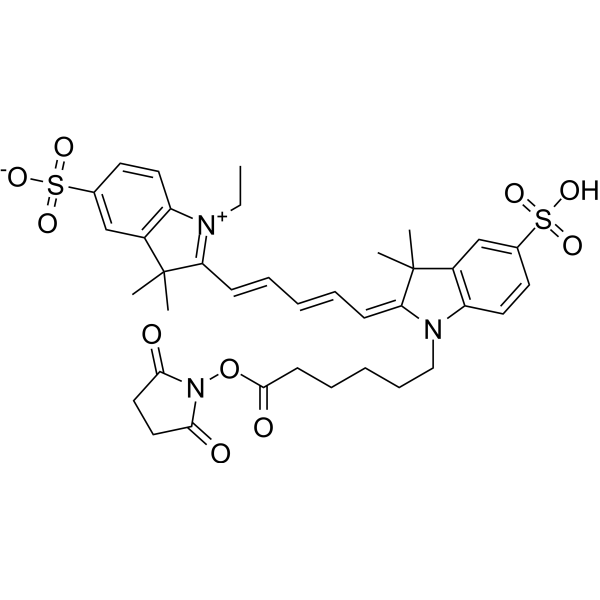
    CY5-SE
    35+ Cited Publications

    Cy5 NHS Ester; Sulfo-Cyanine5 Succinimidyl Ester

    Fluorescent Dye Others
    Cy5-SE (Cy5 NHS Ester) is a reactive dye for the labeling of amino-groups in peptides, proteins, and oligonucleotides. This dye requires small amount of organic co-solvent (such as DMF or DMSO) to be used in labeling reaction. This reagent is ideal for very cost-efficient labeling of soluble proteins, as well as all kinds of peptides and oligonucleotides. This reagent also works well in organic solvents for small molecule labeling. Excitation (nm):649, Emission (nm): 670.
    CY5-SE
  • HY-P0223
    FLAG peptide
    25+ Cited Publications

    Biochemical Assay Reagents Inflammation/Immunology
    FLAG peptide is a multifunctional fusion tag for the purification of recombinant proteins. FLAG peptide maintances the natural folding of its fusing proteins. FLAG peptide can be removed by enterokinase, and eluted under non-denaturing conditions .
    FLAG peptide
  • HY-P0319
    3X FLAG peptide
    20+ Cited Publications

    Biochemical Assay Reagents Others
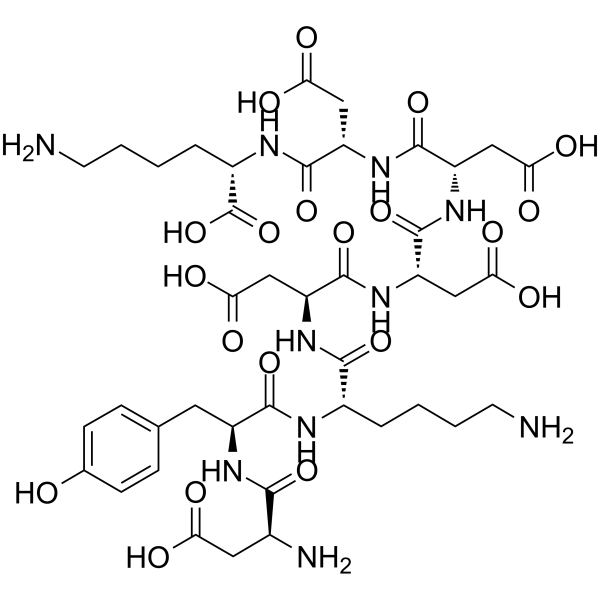
    3X FLAG peptides are FLAG-tagged peptides containing three repeats of the Asp-Tyr-Lys-Xaa-Xaa-Asp motif. 3X FLAG peptide can be used for protein separation and purification, and competitive elution with target proteins.
    3X FLAG peptide
  • HY-W019543

    Biochemical Assay Reagents Cancer
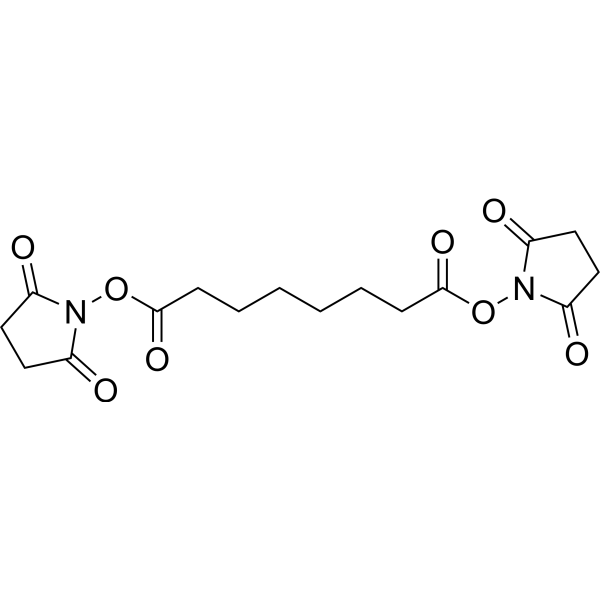
    Disuccinimidyl suberate Crosslinker is an amine-reactive bifunctional protein crosslinker. Disuccinimidyl suberate Crosslinker enables stable protein-protein, peptide, and biomolecule conjugation.
    Disuccinimidyl suberate Crosslinker
  • HY-114697
    DSG Crosslinker
    4 Publications Verification

    Disuccinimidyl glutarate

    Biochemical Assay Reagents Inflammation/Immunology
    DSG Crosslinker is an amine-reactive and noncleavable protein crosslinker. DSG Crosslinker enables stable protein-protein, peptide, and biomolecule conjugation.
    DSG Crosslinker
  • HY-124329
    BS3 Crosslinker
    1 Publications Verification

    Biochemical Assay Reagents Cancer
    BS3 Crosslinker is an amine-reactive homobifunctional protein crosslinker. BS3 Crosslinker enables stable protein-protein, peptide, and biomolecule conjugation.
    BS3 Crosslinker
  • HY-118759
    DSP Crosslinker
    2 Publications Verification

    Biochemical Assay Reagents Inflammation/Immunology
    DSP Crosslinker is an amine-reactive and cleavable protein crosslinker. DSP Crosslinker enables stable protein-protein, peptide, and biomolecule conjugation.
    DSP Crosslinker
  • HY-135414
    Cyanine5 NHS ester chloride
    1 Publications Verification

    Fluorescent Dye Others
    Cyanine5 NHS ester chloride is a red emitting fluorescent dye for labeling of amino-groups in peptides, proteins, and oligonucleotides .
    Cyanine5 NHS ester chloride
  • HY-D0819A
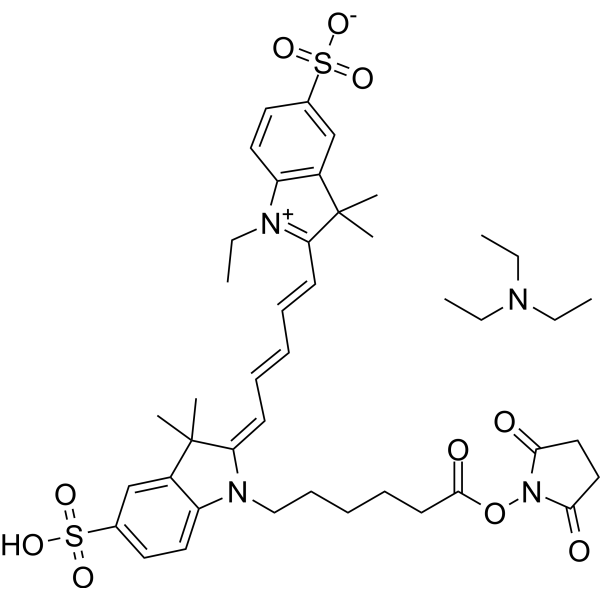
    CY5-SE triethylamine salt
    35+ Cited Publications

    Cy5 NHS Ester triethylamine salt; Sulfo-Cyanine5 Succinimidyl Ester triethylamine salt

    Fluorescent Dye Others
    Cy5-SE (Cy5 NHS Ester) triethylamine salt is a reactive dye for the labeling of amino-groups in peptides, proteins, and oligonucleotides. Cy5-SE triethylamine salt is ideal for very cost-efficient labeling of soluble proteins, as well as all kinds of peptides and oligonucleotides Ex=649 nm; Em=670 nm) .
    CY5-SE triethylamine salt
  • HY-15938

    Fluorescent Dye Others
    5-FAM SE is a single isomer, is a fluorescent labeling reagent used for labeling peptides, proteins and nucleotides. 5-FAM SE can react with amines and can yield stable amine conjugates .
    5-FAM SE
  • HY-125586

    DNA/RNA Synthesis ADC Payload Cancer
    β-Amanitin is a cyclic peptide toxin in the poisonous Amanita phalloides mushroom. β-Amanitin inhibits inhibits eukaryotic RNA polymerase II and III. β-Amanitin inhibits protein synthesis. β-Amanitin can be used as a cytotoxic component of antibody-drug conjugates (ADCs) .
    β-Amanitin
  • HY-157414

    Biochemical Assay Reagents Others
    Azide-A-DSBSO crosslinker is a mass spectrometry (MS) cleavable, membrane permeable, homobifunctional, azide-labeled, acid-cleavable crosslinking peptide. Azide-A-DSBSO crosslinker crosslinks proteins via NHS ester reaction with lysine residues. Azide-A-DSBSO crosslinker can be used to study protein-protein interactions by cross-linking mass spectrometry (XL-MS) [1] .
    Azide-A-DSBSO crosslinker
  • HY-W048688

    Amino Acid Derivatives Others
    Fmoc-Trp(Me)-OH is an amino acid derivative. Fmoc-Trp(Me)-OH is formed by introducing a methyl group onto the nitrogen atom (N-1 position) of the indole ring of tryptophan (Trp) and protecting the amino group with Fmoc (9-fluorenylmethyloxycarbonyl). Fmoc-Trp(Me)-OH can be used in the synthesis of proteins or peptides .
    Fmoc-Trp(Me)-OH
  • HY-P3732

    Integrin Cancer
    RGD-4C is a arginine-glycine-aspartic acid peptide (ACDCRGDCFC) with integrin binding activity. The Arg-Gly-Asp (RGD) sequence serves as the primary integrin recognition site in extracellular matrix proteins, and peptides containing this sequence can mimic the recognition specificity of the matrix proteins. RGD-4C is a αv-integrin ligand, can conjugate with bioactive molecule to exert antitumor effects in animal models .
    RGD-4C
  • HY-P11146

    Sakacin P inducer peptide

    Bacterial Infection
    SppIP (Sakacin P inducer peptide) is a peptide consisting of 19 amino acids . SppIP is an essential inducer for sakacin P production . SppIP can induce the expression of PRRSV GP5 and SARS-CoV-2 spike protein in recombinant Lactobacillus plantarum. SppIP can activate the transcription of the sakacin P promoter to drive the expression of downstream heterologous capsid proteins, increasing the proportion of PCV2d capsid proteins displayed on the cell surface of Lactobacillus plantarum. SppIP can be used in studies related to sakacin P induction .
    SppIP
  • HY-112465

    PKA PKC PKG Neurological Disease Cancer
    H-8 dihydrochloride is a selective Cyclic nucleotide-dependent protein kinase inhibitor. H-8 dihydrochloride potently inhibits cGMP- and cAMP-dependent protein phosphorylation. H-8 dihydrochloride enhances the vasodilatory effect induced by 8-bromo-cAMP (HY-12306A). H-8 dihydrochloride fails to attenuate the vasodilatory effects induced by 8-bromo-cGMP (HY-101379A), atrial natriuretic peptide II, or Sodium nitroprusside (HY-B0564) in rat aorta .
    H-8 dihydrochloride
  • HY-P0325

    Biochemical Assay Reagents Others
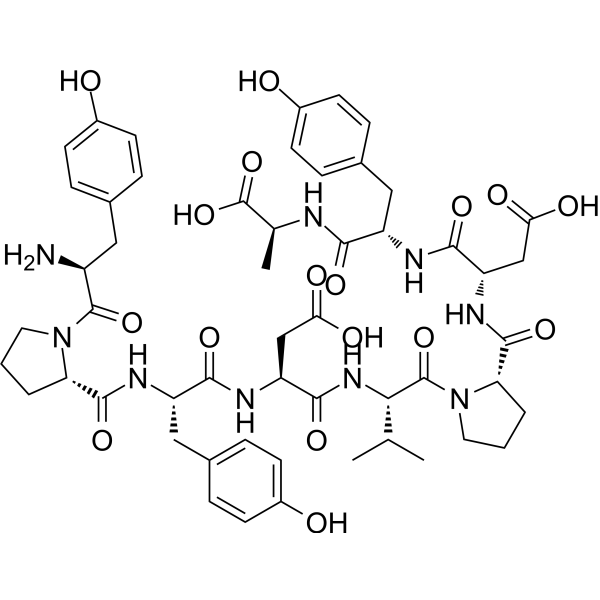
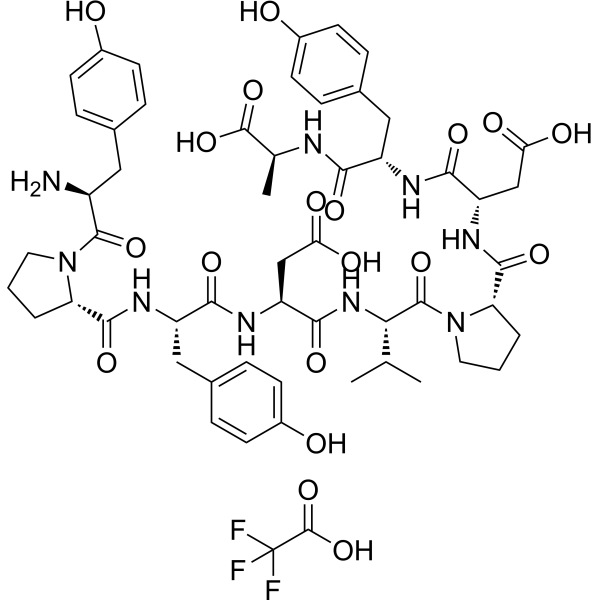
    V5 Epitope Tag Peptide TFA is a tag peptide derived from a small epitope present on the P and V proteins of the paramyxovirus of simian virus 5. V5 Epitope Tag Peptide TFA can be used for protein separation and purification, and competitive elution with target proteins .
    V5 Epitope Tag Peptide TFA
  • HY-P2932
    Cholecystokinin
    1 Publications Verification

    Cholecystokinin-33(human); CCK-33(human)

    Cholecystokinin Receptor Metabolic Disease
    Cholecystokinin is a peptide hormone. Cholecystokinin, as a hunger suppressant, inhibits food intake and stimulates the digestion of fat and protein. Cholecystokinin can be used for the research of gastrointestinal system .
    Cholecystokinin
  • HY-148263
    Biotin-PEG2000-Thiol
    1 Publications Verification

    Fluorescent Dye Cancer
    Biotin-PEG2000-Thiol is an active compound. Biotin-PEG2000-Thiol is pegylated by binding to streptavidin or antibiotin with high affinity and specificity. Biotin-PEG2000-Thiol can modify biomolecules, proteins, peptides and other small molecule materials. Biotin-PEG2000-Thiol is widely used in the research of agent release and nano new materials .
    Biotin-PEG2000-Thiol
  • HY-P1527
    Bim BH3
    1 Publications Verification

    Bcl-2 Family Others
    Bim BH3 is a biological active peptide. (This Bim peptide belongs to the pro-apoptotic Bcl-2 family of proteins.)
    Bim BH3
  • HY-P1707A

    Tau Protein Neurological Disease
    Tau protein (592-597), human TFA is a peptide fragment of human Tau protein. The dysfunction of Tau protein is involved in neurodegeneration and dementia .
    Tau protein (592-597), human TFA
  • HY-P1889

    Bcl-2 Family Inflammation/Immunology
    Bim BH3, Peptide IV is a 26-residue peptide from BH3-only protein Bim, which belongs to the pro-apoptotic group of the Bcl-2 family of proteins .
    Bim BH3, Peptide IV
  • HY-P3414A
    Proteasome-activating peptide 1 TFA
    3 Publications Verification

    Proteasome Neurological Disease
    Proteasome-activating peptide 1 TFA is a peptide and a potent proteasome activator. Proteasome-activating peptide 1 TFA increases the chymotrypsin-like proteasomal catalytic activity and, consequently, proteolytic rates both in vitro and in culture. Proteasome-activating peptide 1 TFA prevents protein aggregation in a cellular model of amyotrophic lateral sclerosis .
    Proteasome-activating peptide 1 TFA
  • HY-125372

    ABAO

    Biochemical Assay Reagents Others
    2-Amino benzamidoxime (ABAO) acts as a bioconjugation reagent precursor and a fluorescent probe precursor. 2-Amino benzamidoxime contains an aniline group for imine activation of aldehydes, as well as a nucleophilic group (Nu:) located at the ortho position of the amine, which is responsible for intramolecular cyclization. 2-Amino benzamidoxime reacts with glyoxal at the N-terminus of phage-displayed peptide libraries. Derivatives of 2-Amino benzamidoxime can be used for protein bioconjugation. Derivatives of 2-Amino benzamidoxime serve as fluorescent probes .\n


    2-Amino benzamidoxime
  • HY-DY1063

    Fluorescent Dye Others
    Cy5-SE (Cy5 NHS Ester) (solution) is a reactive dye for the labeling of amino-groups in peptides, proteins, and oligonucleotides. This dye requires small amount of organic co-solvent (such as DMF or DMSO) to be used in labeling reaction. This reagent is ideal for very cost-efficient labeling of soluble proteins, as well as all kinds of peptides and oligonucleotides. This reagent also works well in organic solvents for small molecule labeling. Excitation (nm) :649, Emission (nm) : 670.
    Solvent and concentration: DMSO: 10 mM
    CY5-SE (solution)
  • HY-P5731

    Bacterial Infection
    Bac7(1-35) is a proline-rich antimicrobial peptide. Bac7(1-35) efficiently binds to different regions of prokaryote ribosomes, leading to the inhibition of protein synthesis. Bac7(1-35) demonstrates in vitro activity against P. aeruginosa strains .
    Bac7(1-35)
  • HY-P0223A
    FLAG peptide TFA
    25+ Cited Publications

    Biochemical Assay Reagents Others
    FLAG peptide TFA is the TFA salt form of FLAG peptide (HY-P0223). FLAG peptide TFA is a multifunctional fusion tag for the purification of recombinant proteins. FLAG peptide TFA maintances the natural folding of its fusing proteins. FLAG peptide TFA can be removed by enterokinase, and eluted under non-denaturing conditions .
    FLAG peptide TFA
  • HY-P1746
    Protein Kinase C (19-31)
    1 Publications Verification

    PKC (19-31)

    PKC Inflammation/Immunology
    Protein Kinase C (19-31), a peptide inhibitor of protein kinase C (PKC), derived from the pseudo-substrate regulatory domain of PKCa (residues 19-31), is used as protein kinase C substrate peptide for testing the protein kinase C activity .
    Protein Kinase C (19-31)
  • HY-P5426

    Bcr-Abl Others
    Abl protein tyrosine kinase substrate is a biological active peptide. (Abltide is a peptide substrate for Abl Kinase (Abl protein tyrosine kinase), a partner in the gag-Abl fusion protein of the Abelson murine leukemia virus. Used in Western blot and kinase assay.)
    Abl protein tyrosine kinase substrate
  • HY-P10280

    ATM/ATR Cancer
    ATR kinase substrate peptide (ASELPASQPQPFSAKKK) is a peptide substrate for ATR protein kinase and can be used to detect ATR kinase activity .
    ATR kinase substrate peptide
  • HY-P3828

    Fluorescent Dye Neurological Disease
    Biotin-myelin basic protein (94-102) is a peptide fragemt. Myelin basic protein is responsible for adhesion of the cytosolic surfaces of multilayered compact myelin, it plays an important role in the process of myelination of nerves in the nervous system. Myelin basic protein also acts as a membrane actin-binding protein, which might allow it to participate in transmission of extracellular signals to the cytoskeleton in oligodendrocytes and tight junctions in myelin .
    Biotin-myelin basic protein (94-102)
  • HY-P4125

    HIV Fluorescent Dye Infection
    FITC-LC-TAT (47-57) is a FITC-labeled TAT peptide (HY-P0281) (λex: 493 nm, λem: 522 nm). Derived from the trans-activator of transcription (TAT) of human immunodeficiency virus (HIV-1), TAT enhances the yield of heterologous proteins .
    FITC-LC-TAT (47-57)
  • HY-P5969

    Biochemical Assay Reagents Others
    Cys-V5 Peptide, a tag peptide, is the V5 Peptide with an N-terminal cysteine. Cys-V5 Peptide can be used to label proteins
    Cys-V5 Peptide
  • HY-P4029

    HCV Infection
    HCV-1 e2 Protein (484-499) is a peptide consisting of 16 amino acids. HCV-1 e2 Protein (484-499) is derived from the envelope 2 protein of hepatitis C virus in the sera from individuals with antibodies to HCV .
    HCV-1 e2 Protein (484-499)
  • HY-P3414

    Proteasome Neurological Disease
    Proteasome-activating peptide 1 is a peptide, which increases the chymotrypsin-like proteasomal catalytic activity and, consequently, proteolytic rates both in vitro and in culture. Proteasome-activating peptide 1 prevents protein aggregation in a cellular model of amyotrophic lateral sclerosis .
    Proteasome-activating peptide 1
  • HY-P5731A

    Bacterial Infection
    Bac7(1-35) acetate is a proline-rich antimicrobial peptide. Bac7(1-35) acetate efficiently binds to different regions of prokaryote ribosomes, leading to the inhibition of protein synthesis. Bac7(1-35) acetate demonstrates in vitro activity against P. aeruginosa strains .
    Bac7(1-35) acetate
  • HY-P1801

    Cys-[HIV-Tat (47-57)]

    HIV Drug Derivative Others
    Cys-TAT(47-57) (Cys-[HIV-Tat (47-57)]), TAT (HY-P0281) derivative, is a Cysteine (HY-Y0337)-tagged cell-penetrating peptide (CPP) derived from the HIV TAT protein. Cys-TAT(47-57) can be used for the research for the research of drug delivery .
    Cys-TAT(47-57)
  • HY-P3838

    PKC Others
    Protein Kinase C γ Peptide is a peptide fragment of Protein Kinase Cγ. Protein Kinase Cγ is a protein causative for dominant ataxia, that can negatively regulate nuclear import of recessive-ataxia-related aprataxin .
    Protein Kinase C γ Peptide
  • HY-P3940

    PKC Others
    Ac-MBP (4-14) Peptide is an acetylated MBP (4-14) peptide. MBP (4-14) Peptide is a very selective (protein kinase C) PKC substrate. Ac-MBP (4-14) Peptide can be used for PKC assay in extracts without prior purification to eliminate interfering protein kinases or phosphatases .
    Ac-MBP (4-14) Peptide
  • HY-P3841

    PKC Others
    Protein Kinase C β Peptide is a peptide fragment of Protein Kinase Cβ. Protein Kinase Cβ is related with hyperglycemia decreases endothelium-derived nitric oxide. Inhibition of Protein kinase Cβ prevents the reduction in endothelium-dependent vasodilation induced by acute hyperglycemia .
    Protein Kinase C β Peptide
  • HY-P5964A

    GABA Receptor Neurological Disease
    K1 peptide TFA is a high-affinity peptide ligand for GABAA receptor-associated protein (GABARAP) .
    K1 peptide TFA
  • HY-P3770

    PKC Others
    Phosphate acceptor peptide is a substrate for cAMP-dependent protein kinase (PKA). phosphate acceptor peptide is also a weak PKC inhibitor .
    Phosphate acceptor peptide
  • HY-P1344A

    DAPK Cancer
    DAPK Substrate Peptide TFA is a synthetic peptide substrate for death associated protein kinase (DAPK), with a Km of 9 μM .
    DAPK Substrate Peptide TFA
  • HY-P4036

    HCV Infection
    HCV Core Protein (59-68) is a peptide containing residues 59-68 of the HCV core protein .
    HCV Core Protein (59-68)
  • HY-E70453

    Prostate Transglutaminase; TG4; TGase 4

    Biochemical Assay Reagents Metabolic Disease
    Human prostate transglutaminase (TG4; TGase 4) is an enzyme that mediates the transfer of acyl groups from glutamine residues in proteins or peptides to primary amines and belongs to the prostate transglutaminase protein family. Human prostate transglutaminase forms an ε-(γ-glutamyl)lysine bond between proteins by transferring the acyl group of a peptide-bound glutamine residue to the primary amino group of a peptide-bound lysine residue .
    Human prostate transglutaminase
  • HY-P2299A

    HPV Cancer
    Protein E7(43-62) TFA is an E7-derived peptide with anti-tumor effects (short peptide spanning the 43th to 62th amino acid residues in the E7 protein) .
    Protein E7(43-62) TFA
  • HY-P10516

    DNA/RNA Synthesis RAD51 Cancer
    BRC4 peptide is a specific peptide in BRCA2 protein that interacts with RAD51 protein to help repair broken DNA chains. BRC4 peptide can be used to study DNA repair mechanisms and cancer occurrence .
    BRC4 peptide
  • HY-147050

    Target Protein Ligand-Linker Conjugates Others
    Ahx-DM1 (compound 2A) is a conjugate of protein/peptide which can be combined with a therapeutic, diagnostic or labelling agent .
    Ahx-DM1
  • HY-P3402

    Amino Acid Derivatives Others
    HBpep-K is a peptide that can form co aggregated droplets. HBpep-K can efficiently load and deliver small peptides, proteins, and mRNA. HBpep-K can protect mRNA from RNase degradation. HBpep-K is commonly used for drug delivery .
    HBpep-K
  • HY-P3402A

    Amino Acid Derivatives Others
    HBpep-K acetate is a peptide that can form co aggregated droplets. HBpep-K acetate can efficiently load and deliver small peptides, proteins, and mRNA. HBpep-K acetate can protect mRNA from RNase degradation. HBpep-K acetate is commonly used for drug delivery .
    HBpep-K acetate

Inquiry Online

Your information is safe with us. * Required Fields.

Salutation


Country or Region *

Applicant Name *


Organization Name *

Department *


Email Address *


Product Name *

Cat. No.


Requested quantity *

Phone Number *


Remarks

Inquiry Online

Inquiry Information

Product Name:
Cat. No.:
Quantity:
MCE Japan Authorized Agent:

