Search Result
Results for "
reactive reagent
" in MedChemExpress (MCE) Product Catalog:
27
Biochemical Assay Reagents
| Cat. No. |
Product Name |
Target |
Research Areas |
Chemical Structure |
-
- HY-D0819
-
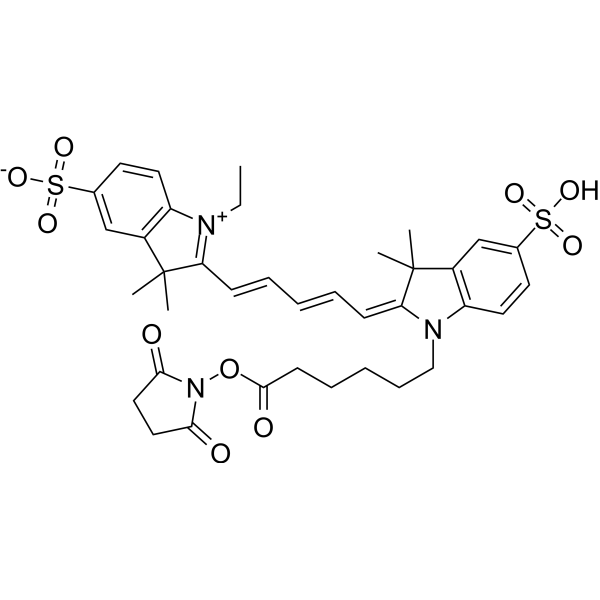
CY5-SE
Maximum Cited Publications
37 Publications Verification
Cy5 NHS Ester; Sulfo-Cyanine5 Succinimidyl Ester
|
Fluorescent Dye
|
Others
|
|
Cy5-SE (Cy5 NHS Ester) is a reactive dye for the labeling of amino-groups in peptides, proteins, and oligonucleotides. This dye requires small amount of organic co-solvent (such as DMF or DMSO) to be used in labeling reaction. This reagent is ideal for very cost-efficient labeling of soluble proteins, as well as all kinds of peptides and oligonucleotides. This reagent also works well in organic solvents for small molecule labeling.
Excitation (nm):649, Emission (nm): 670.
|
-
-
- HY-D0802
-
|
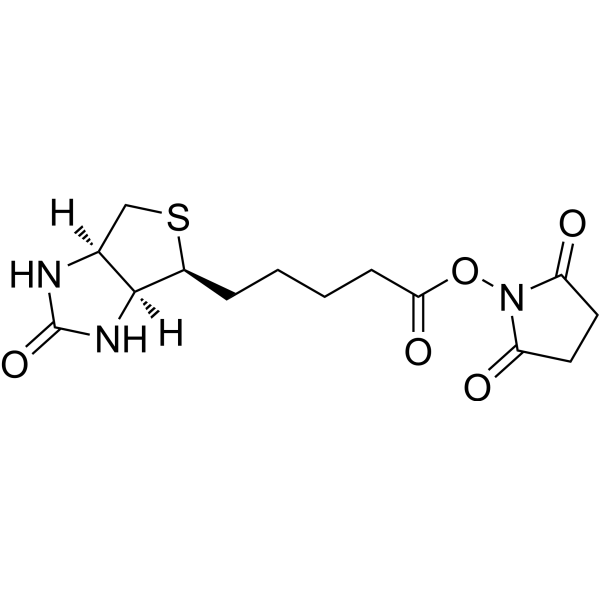
Biotin N-hydroxysuccinimide ester; NHS-Biotin
|
Fluorescent Dye
|
Others
|
|
Biotin NHS is an amino reactive biotin reagent used in the preparation of biotinylated surfaces or polypeptides.
|
-
-
- HY-111496
-
|
|
Biochemical Assay Reagents
|
Others
|
|
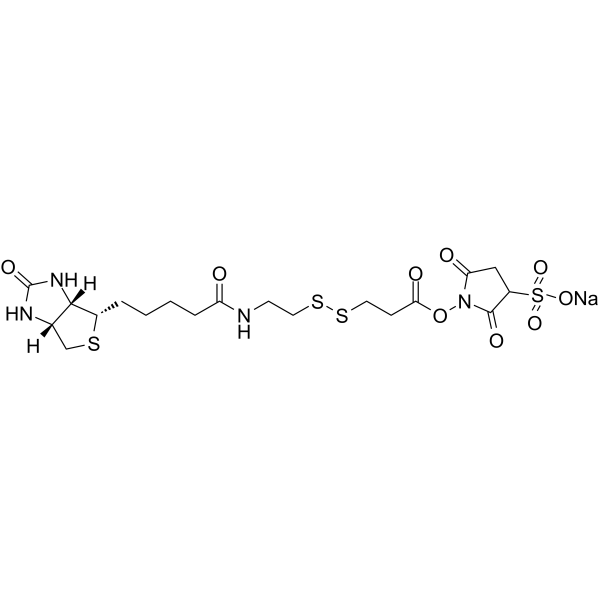
Sulfo-NHS-SS-biotin sodium is a long-chain cleavable and cell-impermeant amine-reactive biotinylation reagent. Sulfo-NHS-SS-biotin sodium can be used for the labeling and purifying of cell-surface protein .
|
-
-
- HY-W441011
-
|
|
Liposome
|
Neurological Disease
Inflammation/Immunology
Cancer
|
|
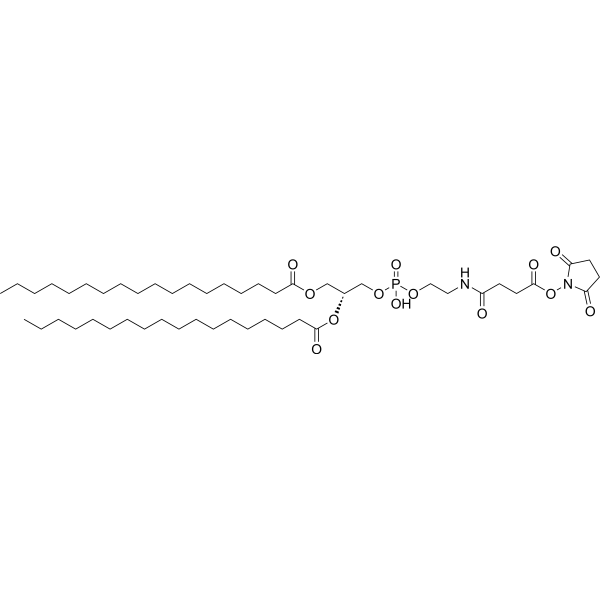
DSPE-NHS is a bioconjugation phospholipid molecule with two hydrophobic lipid tails. DSPE-NHS is a self-assembling reagent which forms lipid bilayer in aqueous solution. The NHS-ester is reactive with N-terminal of protein/peptide or other amine molecule to form a stable amide linkage. DSPE-NHS labels antibodies. DSPE-NHS can be used to prepare liposomes as agent nanocarrier .
|
-
-
- HY-79880
-
|
1,1'-Carbonyldiimidazole
|
MOFs
|
Others
|
|
N,N'-Carbonyldiimidazole (1,1'-Carbonyldiimidazole) is a highly reactive carboxylating reagent that can activate hydroxyl groups to form reactive carbonyl groups. N,N'-Carbonyldiimidazole can be used as a coupling agent and a peptide synthesis reagent .
|
-
-
- HY-Y0481
-
|
Stannous chloride, 98%; Tin(II) chloride, anhydrous, 98%; Anhydrous stannous chloride, 98%
|
Biochemical Assay Reagents
|
Others
|
Anhydrous stannous chloride, 98% is a biochemical reagent with genotoxicity, mutagenicity, mitotic recombinogenicity, and reactive oxygen species-inducing activity.
|
-
-
- HY-136205
-
|
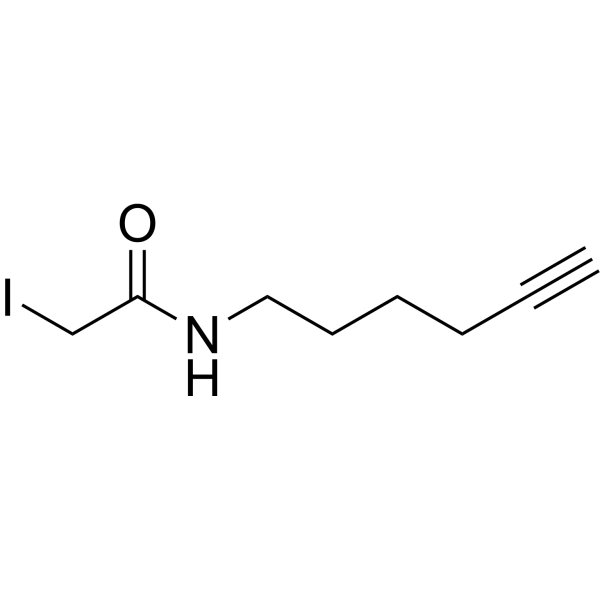
Iodoacetamide-alkyne; N-Hex-5-ynyl-2-iodo-acetamide
|
TRP Channel
|
Infection
Inflammation/Immunology
|
|
IA-Alkyne (Iodoacetamide-alkyne; N-Hex-5-ynyl-2-iodo-acetamide) is a TRP channel (TRPC) agonist and has the potential for the study of respiratory infection . IA-Alkyne can be used to develop an isotopically tagged probe for quantitative cysteine-reactivity profiling . IA-Alkyne is a click chemistry reagent, it contains an Alkyne group and can undergo copper-catalyzed azide-alkyne cycloaddition (CuAAc) with molecules containing Azide groups.
|
-
-
- HY-100215
-
-
-
- HY-D0913
-
|
1M7
|
Fluorescent Dye
|
Others
|
|
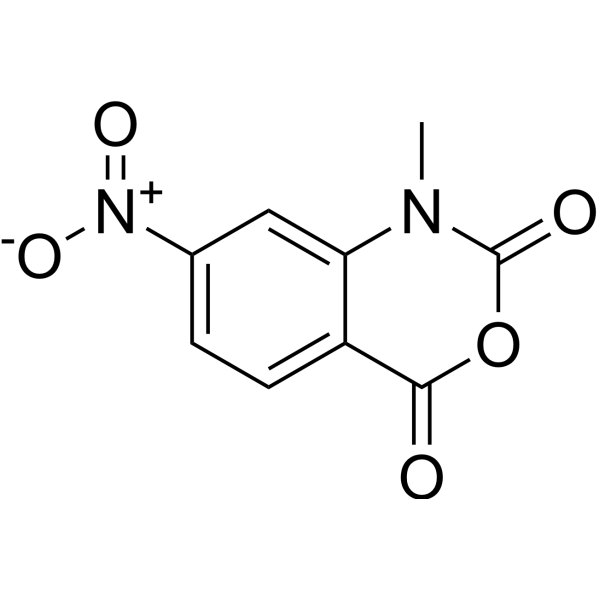
1-Methyl-7-nitroisatoic anhydride (1M7) is a reagent that detects local nucleotide flexibility, for probing 2'-hydroxyl reactivity, can be used for RNA structure analysis .
|
-
-
- HY-W879045
-
|
Endo-BCN-PEG5-NH2
|
Biochemical Assay Reagents
|
Others
|
|
Endo-BCN-PEG5-amine (Endo-BCN-PEG5-NH2) is a click chemistry crosslinker reagent. The BCN groupis very reactive with azide-tagged molecules. The amino group is reactive with carboxylic acids, activated NHS esters, carbonyls (ketone, aldehyde) etc .
|
-
-
- HY-76222
-
|
|
Drug Intermediate
|
Others
|
|
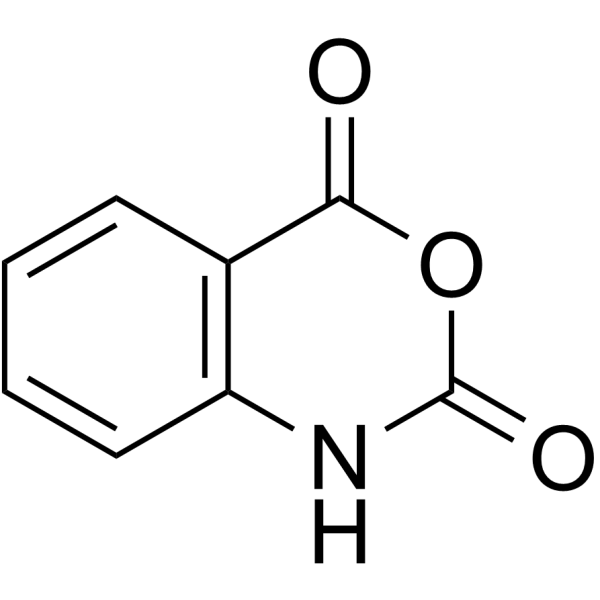
Isatoic anhydride is a single-adduct forming reagent and a monofunctional SHAPE reagent. Isatoic anhydride reacts with the 2'-hydroxyl group of RNA nucleotides via a single reactive group to form a single adduct, without forming cross-links between nucleotides. In SHAPE-JuMP experiments, Isatoic anhydride serves as a control reagent for single-adduct formation, which is used to distinguish true cross-links from single-adduct formation .
|
-
-
- HY-136426
-
|
|
Environmental Pollutants
Reactive Oxygen Species (ROS)
Herbicide
|
Others
|
|
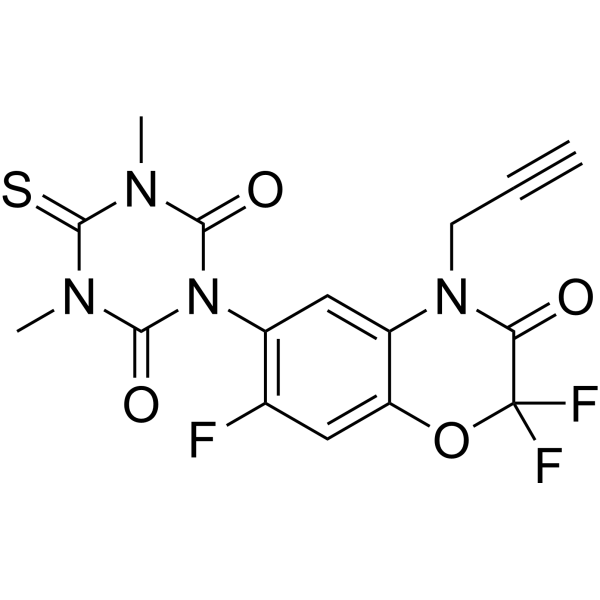
Trifludimoxazin is a click chemistry reagent, a protoporphyrinogen oxidase (PPO) inhibitor and herbicide. Trifludimoxazin inhibits PPO, accumulates reactive oxygen species, damages cell membranes, and thereby causes weed death. Trifludimoxazin exhibits high-efficiency activity in controlling broadleaf weeds and grassy weeds .
|
-
-
- HY-W998680
-
|
5-FITC-Maleimide
|
Fluorescent Dye
|
Others
|
|
Fluorescein-maleimide (5-FITC-Maleimide) is a thiol-reactive fluorescent derivatization reagent and non-specific protein labeling reagent. Fluorescein-maleimide covalently binds to protein thiol groups for protein labeling. Fluorescein-maleimide covalently binds to protein amino and imidazole groups under neutral pH conditions. Fluorescein-maleimide is used for fluorescent labeling of proteins, nucleic acids or other molecules containing one or more thiol groups (Ex/Em = 494/519 nm) .
|
-
-
- HY-D1635
-
|
Biotin-XX-SSE
|
Fluorescent Dye
Exosomes
|
Infection
|
|
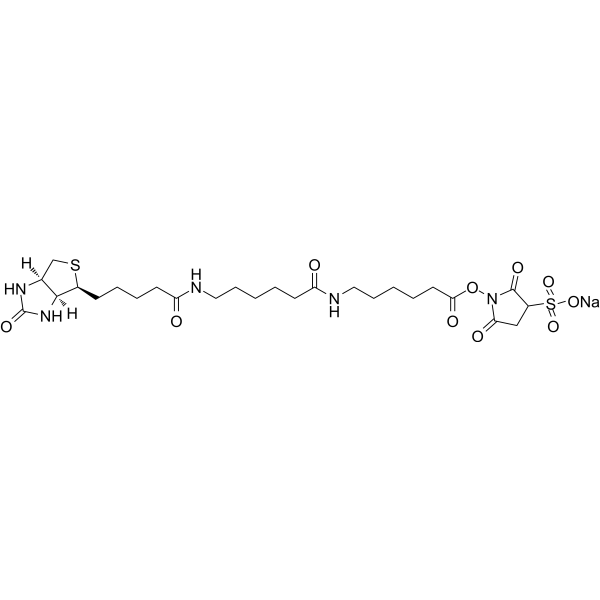
Sulfo-NHS-LC-LC-Biotin (Biotin-XX-SSE), a biotin reagent, is used to label the proteins exposed to the external leaflet of intact exosomes and contains a larger spacer arm between the biotin and amine reactive linker. The size of this linker helps to overcome steric hindrance and increases labeling efficiency at the crowded exosome surface .
|
-
-
- HY-137541
-
|
NTCB
|
Biochemical Assay Reagents
|
Others
|
|
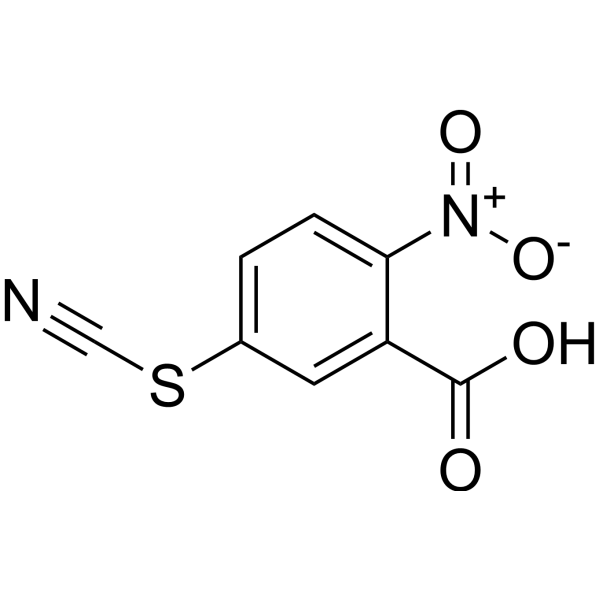
2-Nitro-5-thiocyanatobenzoic acid (NTCB) is a highly reactive reagent that transfers its cyano group rapidly to a nucleophilic thiolate. 2-Nitro-5-thiocyanatobenzoic acid has been proposed as a reagent for converting thiol groups in proteins into their S-cyano derivatives .
|
-
-
- HY-151776
-
|
TZ-Cy3
|
Fluorescent Dye
|
Others
|
|
Cy3 methyltetrazine (TZ-Cy3) is a click chemistry reagent with methyltetrazine building blocks that is highly reactive towards cyclooctene. Cy3 methyltetrazine is also a tetrazine-modified fluorescent probe that can be used to analyze protein phosphorylation in solution and living cells .
|
-
-
- HY-D0820
-
|
Sulfo-Cyanine5-alkyne
|
Fluorescent Dye
|
Others
|
|
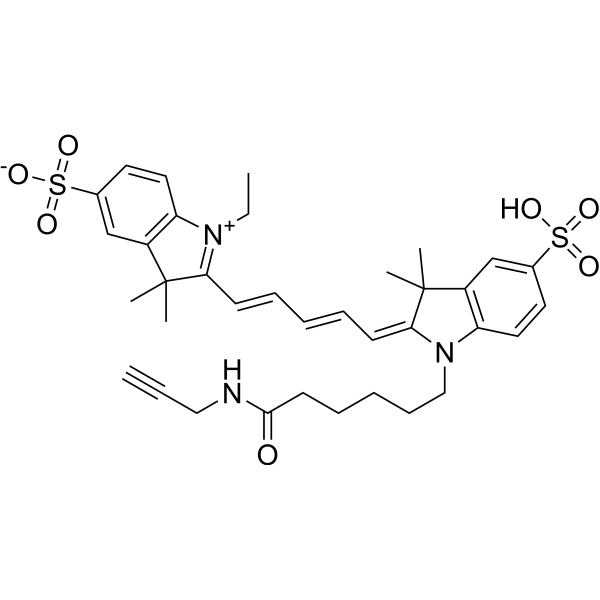
CY5-YNE (Sulfo-Cyanine5-alkyne) is a reactive dye for the labeling of amino-groups in peptides, proteins, and oligonucleotides (Ex: 650 nM; Em: 680 nm). CY5-YNE is a click chemistry reagent, it contains an Alkyne group and can undergo copper-catalyzed azide-alkyne cycloaddition (CuAAc) with molecules containing Azide groups.
|
-
-
- HY-DY1063
-
|
|
Fluorescent Dye
|
Others
|
Cy5-SE (Cy5 NHS Ester) (solution) is a reactive dye for the labeling of amino-groups in peptides, proteins, and oligonucleotides. This dye requires small amount of organic co-solvent (such as DMF or DMSO) to be used in labeling reaction. This reagent is ideal for very cost-efficient labeling of soluble proteins, as well as all kinds of peptides and oligonucleotides. This reagent also works well in organic solvents for small molecule labeling.
Excitation (nm) :649, Emission (nm) : 670. Solvent and concentration: DMSO: 10 mM
|
-
-
- HY-151771
-
|
|
ADC Linker
|
Others
|
|
DACN(Tos,Mal) is a click chemistry reagent containing an azide. DACN(Tos,Mal) possess high thermal and chemical stability along with comparable click reactivity .
|
-
-
- HY-D2575
-
|
|
Biochemical Assay Reagents
|
Inflammation/Immunology
|
|
WYneN (compound 10) is a functionalized Wittig-alkyne probe. WYneN exhibits strong reactivity with sulfinic acid dipeptide models, similar to the parent Wittig reagent. WYneN can be used to reveal the function of oxidative modifications on a proteome-wide scale .
|
-
-
- HY-D0878
-
|
|
Biochemical Assay Reagents
|
Others
|
|
TAPSO is a commonly used biological buffer and pH-stabilizing reagent, with an effective pH range of 7-8 and a pKa range of 7.5-9. TAPSO contains a Tris group, exhibits considerable reactivity, and can interact with zwitterionic glycine peptides .
|
-
-
- HY-W800839
-
|
|
Biochemical Assay Reagents
|
Others
|
|
TCO-PEG4-TFP Ester is an amine-reactive labeling reagent used to modify proteins, antibodies, and other amine-containing biopolymers. A 2,3,5,6-tetrafluorophenol (TFP) is a reactive ester that displays much better stability toward hydrolysis in aqueous media resulting in more efficiency and better reproducible labeling of biopolymers. TFP ester of carboxylic acids react with primary amines at the same rate as NHS ester forming covalent amide bond that is identical to one formed by the reaction between primary amines and NHS esters or sulfo-NHS esters.
|
-
-
- HY-21626
-
|
p-Tolylboronic acid
|
Biochemical Assay Reagents
|
Others
|
|
4-Tolylboronic acid is an organoboron compound with important chemical applications. It can be used as an important intermediate in organic synthesis for the synthesis of organic compounds such as drugs, pesticides, and cosmetics, as well as for the research of coordination chemistry and material science. Due to its high chemical reactivity, 4-Tolylboronic acid has become a widely used reagent in organic synthesis.
|
-
-
- HY-D2529
-
|
|
Fluorescent Dye
|
Others
|
|
Cy5-PEG2000-SH is a fluorescent labeling reagent that combines Cy5 (HY-D0821) fluorescent dye, polyethylene glycol (PEG) and sulfhydryl (SH) derivatives, and is suitable for molecular coupling. SH is highly reactive and can react with a variety of functional groups (such as maleimide) to form stable thioether bonds.
|
-
-
- HY-W051391
-
|
Me3TACN
|
Biochemical Assay Reagents
|
Others
|
|
1,4,7-Trimethyl-1,4,7-triazonane, also known as TMT or trimethylenetris(aziridine), is a cyclic organic compound. TMT is commonly used as a crosslinking agent and a precursor for polymer and resin synthesis. In addition, it is used as a stabilizer in the production of polyurethane foam and as a curing agent for epoxy resins. Due to its high reactivity and stability, TMT is considered to be a versatile and efficient reagent in various applications.
|
-
-
- HY-176509A
-
|
|
Liposome
|
Others
|
|
DSPE-PEG2000-CHO is a linear heterobifunctional PEGylation reagent with DSPE phospholipids and aldehyde groups. PEG linkers have good hydrophilicity and water solubility. Aldehyde-polyethylene glycol (DSPE) is one of the most commonly used reactive phospholipids to bind antibodies, peptides or other ligands to the surface of liposomes and other lipid-polyethylene glycol nanoparticles. DSPE-PEG2000-CHO can be used for drug delivery .
|
-
-
- HY-E70394
-
|
Acetonyl-coenzyme A
|
Biochemical Assay Reagents
N-myristoyltransferase
|
Metabolic Disease
|
|
S-Acetonyl-CoA (Acetonyl-coenzyme A) is a non-reactive structural analog of acetyl-CoA that acts as a competitive inhibitor against multiple target enzymes. S-Acetonyl-CoA lacks the characteristic thioester group of acetyl-CoA, retaining only a thioether structure. S-Acetonyl-CoA competes with acetyl-CoA for binding to citrate synthase, phosphate transacetylase, carnitine acetyltransferase, and N-myristoyltransferase 1. S-Acetonyl-CoA serves as a reagent for investigating acetyl-CoA-dependent physiological processes .
|
-
-
- HY-151794
-
|
|
ADC Linker
|
Others
|
|
DACN(Ms) hydrochloride (compound 1ba) is a click chemistry reagent containing cyclononyne alkyne. DCN(Ms) hydrochloride has high thermal stability, chemical stability, water solubility, and high reactivity for cycloaddition reactions .
|
-
-
- HY-151795
-
|
|
ADC Linker
|
Others
|
|
DACN(Tos) hydrochloride is a click chemistry reagent containing a cycloalkyne group. The alkyne moiety within the ring has a unique bent structure and high reactivity toward cycloaddition reactions, such strain-promoted azide-alkyne cycloadditions (SPAAC) by using cycloalkynes. DACNs possesses high thermal and chemical stability along with comparable click reactivity. DACN(Tos) hydrochloride can be used for the research of molecular conjugation .
|
-
-
- HY-125501
-
|
Biotin-(AC5)2-hydrazide
|
Biochemical Assay Reagents
|
Others
|
|
Biotin-XX hydrazide (Biotin-(AC5)2-hydrazide) is a carbonyl-reactive biotinylation reagent which contains two aminohexanoic acid spacers. Biotin-XX hydrazide has higher efficiency of avidin-binding .
|
-
-
- HY-W440927
-
|
|
Liposome
|
Others
|
|
Stearic acid-PEG2000-NHS is an amphiphatic PEG polymer which forms micelles in an aqueous solution for drug-loaded nanoparticles. The NHS ester is reactive with amine to form a stable amide bond. Reagent grade, for research purpose.
|
-
-
- HY-D1352A
-
|
|
Fluorescent Dye
|
Others
|
|
Sulfo-Cyanine7 NHS ester (TEA) is an amine-reactive succinimide ester. Sulfo-Cyanine7 NHS ester (TEA) reagent allows to prepare sulfo-Cyanine7-labeled biomolecules, such as proteins, with ease. Dye labeled molecules can be subsequently used for various research and agent design related experiments.
|
-
-
- HY-151712
-
|
|
Fluorescent Dye
|
Others
|
|
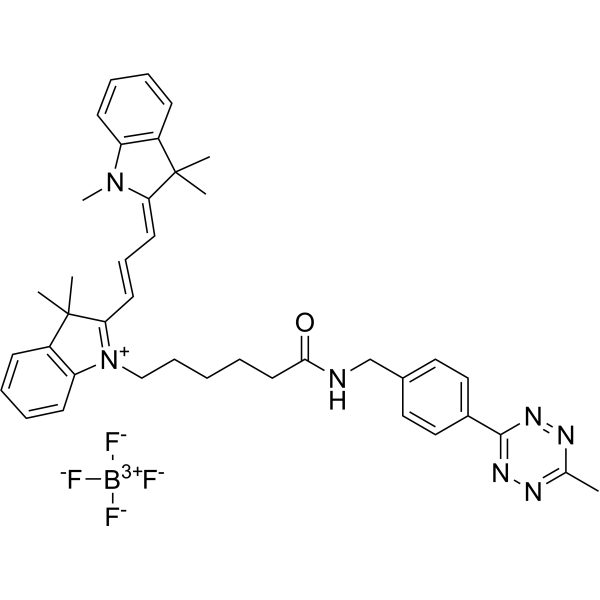
Sulfo-Cy5-Methyltetrazine is a click chemistry reagent containing a methyltetrazine group. Sulfo-Cy5-Methyltetrazine acts as a fluorophore linker for trans-cyclooctene-based labeling. Sulfo-Cy5-Methyltetrazine shows good stability at physiological pH and is also highly reactive towards cyclooctene.
|
-
-
- HY-D2531
-
|
|
Fluorescent Dye
|
Others
|
|
Cy5-PEG5000-SH is a fluorescent labeling reagent that combines Cy5 (HY-D0821) fluorescent dye, polyethylene glycol (PEG) and sulfhydryl (SH) derivatives, and is suitable for molecular coupling. SH is highly reactive and can react with a variety of functional groups (such as maleimide) to form stable thioether bonds.
|
-
-
- HY-151713
-
|
|
Fluorescent Dye
|
Others
|
|
Sulfo-Cy3-Methyltetrazine (figure 7 compound 5) is a click chemistry reagent containing methyltetrazine and a water-soluble dye. Sulfo-Cy3-Methyltetrazine shows good stability at physiological pH. Sulfo-Cy3-Methyltetrazine can be coupled to trans-cyclooctene and is also highly reactive towards cyclooctene .
|
-
-
- HY-D2556
-
|
|
Fluorescent Dye
|
Others
|
|
Cy5.5-PEG1000-SH is a fluorescent labeling reagent that combines Cy5.5 (HY-D0924) fluorescent dye, polyethylene glycol (PEG) and sulfhydryl (SH) derivatives, and is suitable for molecular coupling. SH is highly reactive and can react with a variety of functional groups (such as maleimide) to form stable thioether bonds.
|
-
-
- HY-151697
-
|
|
ADC Linker
|
Others
|
|
DACN(Tos2) is a a click chemistry reagent containing an cycloalkynes group. The alkyne moiety within the ring has a unique bent structure and high reactivity toward cycloaddition reactions. DACN(Tos2) through such strain-promoted azide-alkyne cycloadditions (SPAAC) using cycloalkynes. DACN(Tos2) can be used for the research of molecular conjugation .
|
-
-
- HY-W612372
-
|
Fluorosulfonylbenzyl bromide
|
Biochemical Assay Reagents
Endogenous Metabolite
|
|
|
4-(Bromomethyl)benzenesulfonyl fluoride (Fluorosulfonylbenzyl bromide) is an important chemical reagent with good biological activity. 4-(Bromomethyl)benzenesulfonyl fluoride can be used to prepare various bioactive molecules, especially in the process of compound discovery and synthesis, showing excellent reactivity. 4-(Bromomethyl)benzenesulfonyl fluoride is often used in the development of new biological agents, promoting the research progress of organic chemistry and biochemistry.
|
-
-
- HY-176509C
-
|
|
Liposome
|
Others
|
|
DSPE-PEG5000-CHO is a linear heterobifunctional PEGylation reagent with DSPE phospholipids and aldehyde groups. PEG linkers have good hydrophilicity and water solubility. Aldehyde-polyethylene glycol (DSPE) is one of the most commonly used reactive phospholipids to bind antibodies, peptides or other ligands to the surface of liposomes and other lipid-polyethylene glycol nanoparticles. DSPE-PEG5000-CHO can be used for drug delivery .
|
-
-
- HY-157006A
-
|
|
Biochemical Assay Reagents
|
Others
|
|
TCO-PEG3-NH2 is a click chemistry reagent, it contains a TCO group that can undergo an inverse electron demand Diels-Alder reaction (iEDDA) with molecules containing Tetrazine groups. The amino group of TCO-PEG3-NH2 can react with compounds containing carboxyl, ester, or other reactive groups to form stable amide bonds, enabling site-specific conjugation or modification of biomolecules.
|
-
-
- HY-176509
-
|
|
Liposome
|
Others
|
|
DSPE-PEG1000-CHO is a linear heterobifunctional PEGylation reagent with DSPE phospholipids and aldehyde groups. PEG linkers have good hydrophilicity and water solubility. Aldehyde-polyethylene glycol (DSPE) is one of the most commonly used reactive phospholipids to bind antibodies, peptides or other ligands to the surface of liposomes and other lipid-polyethylene glycol nanoparticles. DSPE-PEG1000-CHO can be used for drug delivery .
|
-
-
- HY-D1886
-
|
|
Fluorescent Dye
|
Others
|
|
Vari Fluor 647 SE is a fluorescent dye, SE stands for "succinimidyl ester". Vari Fluor 647 SE belongs to the Vari Fluor family of labeling reagents used in cell and molecular biology research. Vari Fluor 647 SE can react with an amino group to form a covalent bond, thereby introducing Vari Fluor 647 dye into the target molecule or cell. Vari Fluor 647 SE is a reactive dye that produces a fluorescent signal after binding to a target molecule or cell.
|
-
-
- HY-W190918
-
|
|
Biochemical Assay Reagents
|
Others
|
|
endo-BCN-PEG4-amine is a click chemistry crosslinker reagent. The BCN groupis very reactive with azide-tagged molecules. The amino group is reactive with carboxylic acids, activated NHS esters, carbonyls (ketone, aldehyde) etc.
|
-
-
- HY-79880R
-
|
1,1'-Carbonyldiimidazole (Standard)
|
Biochemical Assay Reagents
Reference Standards
|
Others
|
|
N,N'-Carbonyldiimidazole (Standard) (1,1'-Carbonyldiimidazole (Standard)) is the analytical standard of N,N'-Carbonyldiimidazole (HY-79880). This product is intended for research and analytical applications. N,N'-Carbonyldiimidazole (1,1'-Carbonyldiimidazole) is a highly reactive carboxylating reagent that can activate hydroxyl groups to form reactive carbonyl groups. N,N'-Carbonyldiimidazole can be used as a coupling agent and a peptide synthesis reagent .
|
-
-
- HY-W879025
-
|
Endo-BCN-PEG8-NH2
|
Biochemical Assay Reagents
|
Others
|
|
Endo-BCN-PEG8-amine (Endo-BCN-PEG8-NH2) is a click chemistry crosslinker reagent. The BCN groupis very reactive with azide-tagged molecules. The amino group is reactive with carboxylic acids, activated NHS esters, carbonyls (ketone, aldehyde) etc .
|
-
-
- HY-151766
-
|
|
ADC Linker
|
Others
|
|
DACN(Tos,Suc-OH) is a click chemistry reagent containing a cycloalkyne group. The alkyne moiety within the ring has a unique bent structure and high reactivity toward cycloaddition reactions. Such strain-promoted azide-alkyne cycloadditions (SPAAC) using cycloalkynes have served for reliable molecular conjugation in a broad range of fields. The nitrogens are used as connection points for a variety of functional units. DACNs possess high thermal and chemical stability along with comparable click reactivity .
|
-
-
- HY-173569
-
|
|
Biochemical Assay Reagents
|
Others
|
|
DBCO-propargyl-PEG5-TFP ester is an amine-reactive labeling reagent. DBCO-propargyl-PEG5-TFP ester contains a DBCO group, which can undergo a strain-promoted alkyne-azide cycloaddition (SPAAC) reaction with molecules containing an azide group [1] .
|
-
-
- HY-W451405
-
|
|
Biochemical Assay Reagents
|
Others
|
|
2,5-Dioxopyrrolidin-1-yl hept-6-ynoate is an amine reactive four carbon reagent that can be used for derivatizing peptides, antibodies, amine coated surfaces etc. The alkyne group reacts with azide-bearing compounds or biomolecules in copper catalyzed Click Chemistry reactions.
|
-
-
- HY-D2532
-
|
|
Fluorescent Dye
|
Others
|
|
Cy5-PEG10000-SH is a fluorescent labeling reagent that combines Cy5 (HY-D0821) fluorescent dye, polyethylene glycol (PEG) and sulfhydryl (SH) derivatives, and is suitable for molecular coupling. SH is highly reactive and can react with a variety of functional groups (such as maleimide) to form stable thioether bonds.
|
-
-
- HY-D2589
-
|
|
Fluorescent Dye
|
Others
|
|
Cy7.5 PEG-SH is a fluorescent labeling reagent that combines CY7.5 (HY-D0926) fluorescent dye, polyethylene glycol (PEG) and sulfhydryl (SH) derivatives, and is suitable for molecular coupling. SH is highly reactive and can react with a variety of functional groups (such as maleimide) to form stable thioether bonds (Ex/Em = 770/820 nm).
|
-
- HY-W108867
-
|
|
Drug Intermediate
|
|
|
N-Fmoc-ethylenediamine hydrobromide is an important chemical reagent with the activity of promoting organic synthesis reactions. N-Fmoc-ethylenediamine hydrobromide is often used in the synthesis of peptides and other amino compounds in the field of biochemistry because it can effectively protect the amino group and provide good reactivity. The application of N-Fmoc-ethylenediamine hydrobromide helps to improve the efficiency and selectivity of synthesis and becomes a key component in organic synthesis.
|
-
- HY-141460
-
|
Ile-Ala; L-Isoleucyl-L-alanine
|
Biochemical Assay Reagents
|
Others
|
|
H-Ile-Ala-OH (Ile-Ala; L-Isoleucyl-L-alanine) is a linear aliphatic dipeptide and self-reactive cyclization reagent that self-assembles into amorphous films or spherical structures from specific solvents. H-Ile-Ala-OH also serves as a precursor for the synthesis of the cyclic peptide cyclo (L-isoleucyl-L-alanine) (HY-N9251). H-Ile-Ala-OH undergoes solid-state cyclization when heated above 206 °C, and its initiation temperature is closely related to the size of side-chain substituents .
|
-
- HY-151791
-
|
|
ADC Linker
|
Others
|
|
(S,R,S)-AHPC-C6-PEG3-butyl-N3 is a click chemistry reagent containing an azide group. (S,R,S)-AHPC-C6-PEG3-butyl-N3 serves as crosslinker-E3 ligase ligand conjugate, Click reactive protein degrader building block for PROTAC research, Template for synthesis of targeted protein degrader, VH032 conjugate . (S,R,S)-AHPC-C6-PEG3-butyl-N3 is a click chemistry reagent, it contains an Azide group and can undergo copper-catalyzed azide-alkyne cycloaddition reaction (CuAAc) with molecules containing Alkyne groups. It can also undergo strain-promoted alkyne-azide cycloaddition (SPAAC) reactions with molecules containing DBCO or BCN groups.
|
-
- HY-151687
-
|
|
ADC Linker
|
Others
|
|
Fmoc-L-Tyr(2-azidoethyl)-OH is a click chemistry reagent containing an azide group. Fmoc-L-Tyr(2-azidoethyl)-OH is unnatural Fmoc-protected Tyrosine derivative bears an azidoethyl substitution as reactive handle e.g. for biorthogonal conjugations, via a Cu(I)-catalyzed 1,3-dipolar Click cycloaddition with alkynes. And azido-UAAs can be employed as IR reporters . It contains an azide group and can undergo copper-catalyzed azide-alkyne cycloaddition (CuAAc) with molecules containing alkyne groups. It can also undergo ring strain-promoted alkyne-azide cycloaddition (SPAAC) with molecules containing DBCO or BCN groups.
|
-
- HY-172513
-
|
|
Biochemical Assay Reagents
|
Others
|
|
Methyltetrazine-PEG11-DBCO is a TCO reactive reagent with a DBCO group and water-soluble PEG spacer. This reagent can be used to convert azido-containing peptides or proteins into tetrazine-modified peptides or protein without catalyst or axillary reagents. DBCO is commonly used for copper-free Click Chemistry reactions.
|
-
- HY-W800723
-
|
|
Biochemical Assay Reagents
|
Others
|
|
Methyltetrazine-PEG2-DBCO is a TCO reactive reagent with a DBCO group and water-soluble PEG spacer. This reagent can be used to convert azido-containing peptides or proteins into tetrazine-modified peptides or protein without catalyst or axillary reagents. DBCO is commonly used for copper-free Click Chemistry reactions.
|
-
- HY-131097
-
|
|
Fluorescent Dye
|
Others
|
|
Malachite green isothiocyanate is an amine-reactive probe that reacts with amines to give the corresponding thiourea. Malachite green isothiocyanate is a reagent that has been used for the measurement of concentration of protein .
|
-
- HY-W879044
-
|
Endo-BCN-PEG15-NH2
|
Biochemical Assay Reagents
|
Others
|
|
Endo-BCN-PEG15-amine (Endo-BCN-PEG15-NH2) is a click chemistry crosslinker reagent. The BCN groupis very reactive with azide-tagged molecules. The amino group is reactive with carboxylic acids, activated NHS esters, carbonyls (ketone, aldehyde) etc .
|
-
- HY-W1049129C
-
|
|
Biochemical Assay Reagents
|
Others
|
|
Mal-PEG20000-mal is a linear bifunctional PEG reagent with reactive maleimide groups. Mal-PEG20000-mal can be used for drug delivery .
|
-
- HY-W1049129B
-
|
|
Biochemical Assay Reagents
|
Others
|
|
Mal-PEG10000-mal is a linear bifunctional PEG reagent with reactive maleimide groups. Mal-PEG10000-mal can be used for drug delivery .
|
-
- HY-W1048552
-
|
|
Biochemical Assay Reagents
|
Others
|
|
Mal-PEG1000-mal is a linear bifunctional PEG reagent with reactive maleimide groups. Mal-PEG1000-mal can be used for drug delivery .
|
-
- HY-W800724
-
|
|
Biochemical Assay Reagents
|
Others
|
|
Methyltetrazine-PEG4-DBCO is a PEG linker with a terminal TCO reactive reagent and a DBCO group. DBCO is commonly used for copper-free Click Chemistry reactions. Methyltetrazine can be used to convert azido-containing peptides or proteins into tetrazine-modified peptides or protein without catalyst or axillary reagents.
|
-
- HY-151754
-
|
|
ADC Linker
|
Others
|
|
DACN(Tos2,6-OH) is a click chemistry reagent containing an Azide. The alkyne moiety within the ring has a unique bent structure and high reactivity toward cycloaddition reactions. The reactivity of an alkyne heavily depends on the electronic and steric characteristics of the substituents as well as structural strain. In comparison to nonbent acyclic alkynes, cyclononyne alkynes show remarkably high reactivity. Such strain-promoted azide-alkyne cycloadditions (SPAAC) using cycloalkynes have served for reliable molecular conjugation in a broad range of fields. The nitrogens are used as connection points for a variety of functional units. In comparison to cyclooctynes, DACNs possess high thermal and chemical stability along with comparable click reactivity . DACN(Tos2,6-OH) is a click chemistry reagent, it contains an Alkyne group and can undergo copper-catalyzed azide-alkyne cycloaddition (CuAAc) with molecules containing Azide groups.
|
-
- HY-D2752
-
|
|
Fluorescent Dye
|
Others
|
|
Cy5.5 dimethyl is a free non-activated dye and can be used as a non-reactive fluorophore for experiment controls and instrument calibration. It is a non-sulfonated reagent with good solubility in organic solvents and limited aquous solubility.
|
-
- HY-W009330
-
|
|
Biochemical Assay Reagents
|
Others
|
|
TAPSO sodium is a commonly used biological buffer and pH-stabilizing reagent, with an effective pH range of 7-8 and a pKa range of 7.5-9. TAPSO sodium contains a Tris group, exhibits considerable reactivity, and can interact with zwitterionic glycine peptides .
|
-
- HY-D1352
-
|
|
Fluorescent Dye
|
Others
|
|
Sulfo-Cyanine7 NHS ester potassium is an amine-reactive succinimide ester. Sulfo-Cyanine7 NHS ester reagent allows to prepare sulfo-Cyanine7-labeled biomolecules, such as proteins, with ease. Dye labeled molecules can be subsequently used for various research and agent design related experiments.
|
-
- HY-N15963
-
|
|
Biochemical Assay Reagents
|
Others
|
|
18:1 DBCO PE ammonium is a functionalized lipid that combines the biocompatible properties of phosphatidylethanolamine (PE) with the reactive dibenzocyclooctyne (DBCO) group. 18:1 DBCO PE ammonium is a click chemistry reagent, it contains a DBCO group that can undergo strain-promoted alkyne-azide cycloaddition (SPAAC) with molecules containing Azide groups .
|
-
- HY-139050
-
|
|
Biochemical Assay Reagents
|
Others
|
|
16:0 DBCO PE ammonium is a functionalized lipid that combines the biocompatible properties of phosphatidylethanolamine (PE) with the reactive dibenzocyclooctyne (DBCO) group. 16:0 DBCO PE ammonium is a click chemistry reagent, it contains a DBCO group that can undergo strain-promoted alkyne-azide cycloaddition (SPAAC) with molecules containing Azide groups .
|
-
- HY-164076
-
|
|
Biochemical Assay Reagents
|
Others
|
|
mPEG-Epoxide is an activated polyethylene glycol (mPEG) derivative, which is achieved by converting the hydroxyl groups of mPEG into reactive epoxy groups. mPEG-Epoxide is a mild PEGylation reagent that reacts with amino groups in peptides and proteins to form stable secondary amine bonds. mPEG-Epoxide can be used in protein engineering and biomaterials research .
|
-
- HY-D2740
-
|
|
Fluorescent Dye
|
Others
|
|
ROX azide, 6-isomer is an alkyne-reactive derivative of ROX (Rhodamine X, Rhodamine 101) dye. ROX is a red-emitting fluorophore possessing high brightness and fluorescence quantum yield. This reagent is a pure 6-isomer. It is used for labeling alkyne and cycloalkyne-containing biomolecules via copper-catalyzed and copper-free click chemistry reactions.
|
-
- HY-D2509
-
|
|
Fluorescent Dye
|
Others
|
|
Cy3-PEG1000-SH is a fluorescent labeling reagent that combines Cy3 (HY-D0822) fluorescent dye, polyethylene glycol (PEG) and sulfhydryl (SH) derivatives, and is suitable for molecular coupling. SH is highly reactive and can react with a variety of functional groups (such as maleimide) to form stable thioether bonds .
|
-
- HY-W440883
-
|
|
Liposome
|
Others
|
|
DSPE-PEG2000-Ald is a phospholipid polyPEG which can self-assemble to form lipid bilayer in aqueous solution. The polymer can be used to prepare liposome as a drug delivery vehicle for administration of drugs or nutrients, such as mRNA vaccines. The aldehyde is reactive with aminooxy to form a stable oxime linkage or with amine at pH < 7 to form a reversible imine bond. Reagent grade, for research use only.
|
-
- HY-D0820A
-
|
Sulfo-Cyanine5-alkyne triethylamine
|
Fluorescent Dye
|
Others
|
|
CY5-YNE (Sulfo-Cyanine5-alkyne) triethylamine is a reactive dye for the labeling of amino-groups in peptides, proteins, and oligonucleotides (Ex: 650 nM; Em: 680 nm). CY5-YNE triethylamine is a click chemistry reagent, it contains an Alkyne group and can undergo copper-catalyzed azide-alkyne cycloaddition (CuAAc) with molecules containing Azide groups.
|
-
- HY-176509D
-
|
|
Liposome
|
Others
|
|
DSPE-PEG10000-CHO is a linear heterobifunctional PEGylation reagent with DSPE phospholipids and aldehyde groups. PEG linkers have good hydrophilicity and water solubility. Aldehyde-polyethylene glycol (DSPE) is one of the most commonly used reactive phospholipids to bind antibodies, peptides or other ligands to the surface of liposomes and other lipid-polyethylene glycol nanoparticles. DSPE-PEG10000-CHO can be used for drug delivery .
|
-
- HY-176509B
-
|
|
Liposome
|
Others
|
|
DSPE-PEG3400-CHO is a linear heterobifunctional PEGylation reagent with DSPE phospholipids and aldehyde groups. PEG linkers have good hydrophilicity and water solubility. Aldehyde-polyethylene glycol (DSPE) is one of the most commonly used reactive phospholipids to bind antibodies, peptides or other ligands to the surface of liposomes and other lipid-polyethylene glycol nanoparticles. DSPE-PEG3400-CHO can be used for drug delivery .
|
-
- HY-176509H
-
|
|
Liposome
|
Others
|
|
DSPE-PEG40000-CHO is a linear heterobifunctional PEGylation reagent with DSPE phospholipids and aldehyde groups. PEG linkers have good hydrophilicity and water solubility. Aldehyde-polyethylene glycol (DSPE) is one of the most commonly used reactive phospholipids to bind antibodies, peptides or other ligands to the surface of liposomes and other lipid-polyethylene glycol nanoparticles. DSPE-PEG40000-CHO can be used for drug delivery .
|
-
- HY-W591390
-
|
|
Biochemical Assay Reagents
|
Others
|
|
6-Azidohexanoic Acid STP Ester is an amine-reactive, water-soluble labeling reagent with an azide group and a terminal 4-Sulfo-2,3,5,6-tetrafluorophenyl (STP) group. 6-Azidohexanoic Acid STP Ester is used to modify proteins, antibodies, and other amine-containing biopolymers in aqueous media. The azide group can react with alkyne, BCN, DBCO via Click Chemistry to yield a stable triazole linkage. STP esters can react with primary amines, forming covalent amide bonds, and typically display much better stability toward hydrolysis in aqueous media, resulting in more efficiency and better reproducible labeling of biopolymers.
|
-
- HY-W800650
-
|
|
Biochemical Assay Reagents
|
Others
|
|
Aminooxy-PEG1-amine is a chemical reagent containing an aminooxy group and a primary amine. The aminooxy group is reactive with an aldehyde to form an oxime bond. If a reductant is used, it will form a hydroxylamine linkage. The amino group is reactive withactivated NHS esters, or carboxylic acid in the presence of coupling reagent EDC. Aminooxy compounds are very reactive and sensitive; they cannot be stored for long term.
|
-
- HY-D3049
-
|
|
Fluorescent Dye
|
Others
|
|
5(6)-carbonylated rhodamine 110 NHS ester is a reactive ester fluorescent reagent based on 5(6)-carbonylated rhodamine 110. NHS ester is a highly reactive ester capable of covalently coupling with primary amine groups in molecules such as proteins, peptides, amino sugars, and nucleic acids to form stable amide bonds (Ex/Em = 502/527 nm).
|
-
- HY-D3050
-
|
|
Fluorescent Dye
|
Others
|
|
5(6)-carbonylated rhodamine 110 X NHS ester is a reactive ester fluorescent reagent based on 5(6)-carbonylated rhodamine 110 X. NHS ester is a highly reactive ester capable of covalently coupling with primary amine groups in molecules such as proteins, peptides, amino sugars, and nucleic acids to form stable amide bonds (Ex/Em = 496/522 nm).
|
-
- HY-D3053
-
|
|
Fluorescent Dye
|
Others
|
|
5(6)-Rhodamine 6G NHS ester is a reactive ester fluorescent reagent based on Rhodamine 6G (HY-D0309). NHS ester is a highly reactive ester capable of covalently coupling with primary amine groups in molecules such as proteins, peptides, amino sugars, and nucleic acids to form stable amide bonds (Ex/Em = 526/547 nm).
|
-
- HY-W1049129D
-
|
|
Biochemical Assay Reagents
|
Others
|
|
Mal-PEG40000-mal is a linear bifunctional PEG reagent with reactive maleimide groups. Mal-PEG40000-mal can be used for drug delivery .
|
-
- HY-100215R
-
|
|
Biochemical Assay Reagents
Reference Standards
|
Others
|
|
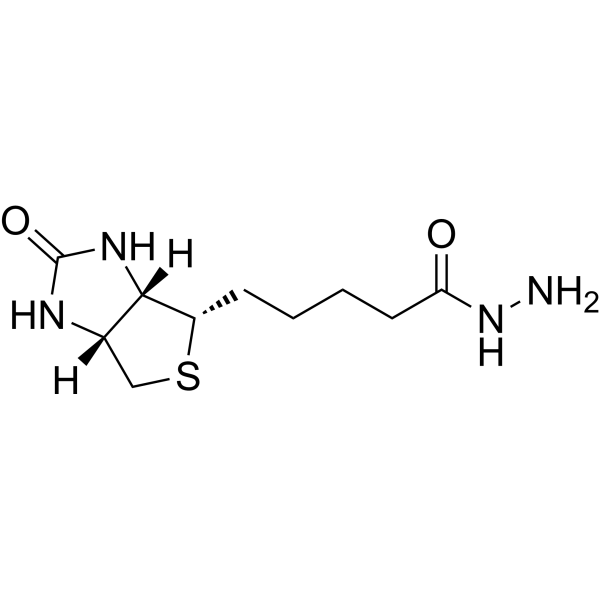
Biotin Hydrazide (Standard) is the analytical standard of Biotin Hydrazide (HY-100215). This product is intended for research and analytical applications. Biotin Hydrazide is a carbonyl-reactive biotinylation reagent, which is a carbonyl probe.
|
-
- HY-W598191
-
|
|
Biochemical Assay Reagents
|
Others
|
|
tert-Butyl (3-azidopropyl)carbamate is a reagent containing an azide group and Boc-protected amino group. It is reactive with alkyne, BCN, DBCO via Click Chemistry. The Boc group can be deprotected under mild acidic conditions to form the free amine.
|
-
- HY-42360G
-
|
|
ADC Linker
|
Inflammation/Immunology
Cancer
|
|
SMCC (GMP) is the GMP level of SMCC (HY-42360). GMP guidelines are used to produce SMCC (HY-42360) (GMP). GMP small molecules works appropriately as an auxiliary reagent for cell research manufacture. SMCC (GMP) is a protein crosslinker. SMCC (GMP) contains an amine-reactive N-hydroxysuccinimide ester and a sulfhydryl-reactive maleimide group that can be used in the conjugation of proteins. SMCC-conjugated antigen coupled spleen cells to induce antigen-specific immune responses.
|
-
- HY-D3241
-
|
|
Fluorescent Dye
|
Others
|
|
CD649.2 is a red-emitting copper-targeted acylimidazole-reactive Fluorescent probe and a highly specific Cu 2+ detection reagent. CD649.2 enables visualization of labile Cu 2+ pools and their dynamic changes in living cells .
|
-
- HY-W800715
-
|
|
Biochemical Assay Reagents
|
Others
|
|
(Acid-PEG10)-Tri-(Azide-PEG10-ethoxymethyl)-methane can undergo Click Chemistry with Propargyl, BCN or DBCO reagents. Carboxylic acid (CO2H) group is reactive with primary amino groups in the presence of EDCor HATU.
|
-
- HY-D3346
-
|
|
Fluorescent Dye
|
Others
|
|
Dusquench1 NHS ester is an amino-reactive fluorescent quencher (it does not emit light and has no emission wavelength, Ex = 480-580 nM), specially designed for labeling proteins, oligonucleotides and other biopolymers containing primary amines. It is a core reagent in the fields of qPCR probes, FRET detection and molecular beacons.
|
-
- HY-W590588
-
|
|
Biochemical Assay Reagents
|
Others
|
|
Diethyl acetal-PEG4-amine is a PEG reagent containing an amino (NH2) group and a terminal diethyl acetal protecting group, which can be deprotected to form the free aldehyde. NH2 group is reactive with carboxylic acids, activated NHS esters, carbonyls (ketone, aldehyde), etc.
|
-
- HY-D2530
-
|
|
Fluorescent Dye
|
Others
|
|
Cy5-PEG3400-SH is a fluorescent labeling reagent that combines Cy5 (HY-D0821) fluorescent dye, polyethylene glycol (PEG) and sulfhydryl (SH) derivatives, and is suitable for molecular coupling. SH is highly reactive and can react with a variety of functional groups (such as maleimide) to form stable thioether bonds.
|
-
- HY-D2512
-
|
|
Fluorescent Dye
|
Others
|
|
Cy3-PEG5000-SH is a fluorescent labeling reagent that combines Cy3 (HY-D0822) fluorescent dye, polyethylene glycol (PEG) and sulfhydryl (SH) derivatives, and is suitable for molecular coupling. SH is highly reactive and can react with a variety of functional groups (such as maleimide) to form stable thioether bonds .
|
-
- HY-D2557
-
|
|
Fluorescent Dye
|
Others
|
|
Cy5.5-PEG3400-SH is a fluorescent labeling reagent that combines Cy5.5 (HY-D0924) fluorescent dye, polyethylene glycol (PEG) and sulfhydryl (SH) derivatives, and is suitable for molecular coupling. SH is highly reactive and can react with a variety of functional groups (such as maleimide) to form stable thioether bonds.
|
-
- HY-W800750
-
|
|
Biochemical Assay Reagents
|
Others
|
|
TCO-PEG2-acid is a click chemistry linker containing a TCO (trans-cycloctene) and a terminal carboxylic acid. The terminal carboxylic acid can react with primary amine groups in the presence of activators such as EDC. TCO reagent is highly reactive with tetrazine in an inverse electron demand Diels Alder (IEDDA) reaction followed by a retro-DA reaction. The hydrophilic PEG spacer increases solubility in aqueous media.
|
-
- HY-D2559
-
|
|
Fluorescent Dye
|
Others
|
|
Cy5.5-PEG10000-SH is a fluorescent labeling reagent that combines Cy5.5 (HY-D0924) fluorescent dye, polyethylene glycol (PEG) and sulfhydryl (SH) derivatives, and is suitable for molecular coupling. SH is highly reactive and can react with a variety of functional groups (such as maleimide) to form stable thioether bonds.
|
-
- HY-D2558
-
|
|
Fluorescent Dye
|
Others
|
|
Cy5.5-PEG5000-SH is a fluorescent labeling reagent that combines Cy5.5 (HY-D0924) fluorescent dye, polyethylene glycol (PEG) and sulfhydryl (SH) derivatives, and is suitable for molecular coupling. SH is highly reactive and can react with a variety of functional groups (such as maleimide) to form stable thioether bonds.
|
-
- HY-W800653
-
|
|
Biochemical Assay Reagents
|
Others
|
|
N-(Azido-PEG3)-NH-PEG3-t-butyl ester is a click chemistry reagent with a terminal azide group and secondary amine NH group. NH group is reactive with NHS ester, The terminal carboxylic acid can react with primary amine groups in the presence of activators (e.g. EDC, or HATU) to form a stable amide bond. The azide group can participate in Click Chemistry.
|
-
- HY-W451460
-
|
|
Biochemical Assay Reagents
|
Others
|
|
2,5-Dioxopyrrolidin-1-yl 2-(prop-2-yn-1-yloxy)acetate is a Click Chemistry reagent with a propargyl group and an NHS ester group. The propargyl group can react with biomolecules containing azide group via copper catalyzed Click Chemistry reaction. The NHS ester is an amine reactive group which can be used for derivatizing peptides, antibodies, amine coated surfaces, etc.
|
-
- HY-W190720
-
|
|
Biochemical Assay Reagents
|
Others
|
|
Fmoc-NH-PEG4-HZ-BOC is a PEG reagent containing an Fmoc-protected amine and a Boc-protected hydrazide. The Fmoc group can be deprotected under basic condition to obtain the free amine which can be used for further conjugations. The hydrophilic PEG spacer increases solubility in aqueous media. The Boc can be deprotected under mild acidic conditions to form a reactive hydrazide, which can then be coupled with various carbonyl groups.
|
-
- HY-176509E
-
|
|
Liposome
|
Others
|
|
DSPE-PEG20000-CHO is a linear heterobifunctional PEGylation reagent with DSPE phospholipids and aldehyde groups. PEG linkers have good hydrophilicity and water solubility. Aldehyde-polyethylene glycol (DSPE) is one of the most commonly used reactive phospholipids to bind antibodies, peptides or other ligands to the surface of liposomes and other lipid-polyethylene glycol nanoparticles. DSPE-PEG20000-CHO can be used for drug delivery .
|
-
- HY-W1048843AG
-
|
4-Arm PEG5000-amine
|
Biochemical Assay Reagents
|
Others
|
|
4-Arm PEG5000-NH2 (GMP) (4-Arm PEG5000-amine (GMP)) is 4-Arm PEG-NH2 (HY-W1048843A) produced by using GMP guidelines. GMP small molecules works appropriately as an auxiliary reagent for cell therapy manufacture. 4-Arm PEG5000-NH2 is a multi-arm PEG derivative with amine groups at each end of four arms attached to a pentaerythritol core. The reactive primary amine or NH2 groups can react rapidly with activated carboxylic acids such as NHS esters to form stable amide bonds .
|
-
- HY-114354
-
|
BOD FL alkyne
|
Fluorescent Dye
|
Inflammation/Immunology
|
|
BODIPY (BOD) FL alkyne is an alkyne-containing BODIPY fluorophore derivative. BODIPY FL alkyne is a bioorthogonal labeling reagent with low toxicity and extremely low non-specific reactivity, and it is widely used in fluorescent bioimaging. BODIPY FL alkyne specifically labels azide groups on intracellular glycoconjugates mainly via strain-promoted azide-alkyne cycloaddition (SPAAC), or mediates site-specific conjugation with proteins such as IL-33, and supports positive cross-linking with other probes (e.g., DBCO-SCy5) for dual labeling. With the advantages of high specificity and low background interference, BODIPY FL alkyne can be used in the research of related diseases such as asthma, atopic dermatitis and inflammatory bowel disease .
|
-
- HY-W1048843AGL
-
|
4-Arm PEG5000-amine (GMP Like)
|
Biochemical Assay Reagents
|
Others
|
|
4-Arm PEG5000-NH2 (GMP Like) (4-Arm PEG5000-amine (GMP Like)) is 4-Arm PEG-NH2 (HY-W1048843A) produced by using GMP like guidelines. GMP like small molecules works appropriately as an auxiliary reagent for cell therapy manufacture. 4-Arm PEG5000-NH2 is a multi-arm PEG derivative with amine groups at each end of four arms attached to a pentaerythritol core. The reactive primary amine or NH2 groups can react rapidly with activated carboxylic acids such as NHS esters to form stable amide bonds .
|
-
- HY-151792
-
|
|
E3 Ligase Ligand-Linker Conjugates
|
Metabolic Disease
Inflammation/Immunology
Cancer
|
|
Pomalidomid-C6-PEG3-butyl-N3 is a click chemistry reagent containing an azide group. Pomalidomid-C6-PEG3-butyl-N3 also is a crosslinker-E3 ligase ligand conjugate, which be used in click reactive protein degrader building block for PROTAC research.
Pomalidomid-C6-PEG3-butyl-N3 also can be used in the template for synthesis of targeted protein degrader . It contains an azide group and can undergo copper-catalyzed azide-alkyne cycloaddition (CuAAc) with molecules containing alkyne groups. It can also undergo ring strain-promoted alkyne-azide cycloaddition (SPAAC) with molecules containing DBCO or BCN groups.
|
-
- HY-130086
-
|
|
ADC Linker
|
Cancer
|
|
Bis-PEG4-NHS ester is a crosslinking reagent and amine-reactive modulator .Bis-PEG4-NHS ester reacts with primary amine groups on liposome surfaces via amide bond formation to covalently attach dibenzylcyclooctyne groups, with a hydrophilic PEG4 spacer reducing steric hindrance for subsequent click chemistry .Bis-PEG4-NHS ester enables site-specific antibody coupling to liposome surfaces via copper-free strain-promoted alkyne-azide cycloaddition click chemistry without disrupting liposome structure in minimal organic solvent volumes .Bis-PEG4-NHS ester undergoes hydrolysis during annealing to form -COOH groups that interact with PbI and FAI to enhance perovskite structural integrity, passivate defects, and modulate nucleation kinetics to regulate crystal growth .Bis-PEG4-NHS ester enhances device efficiency and long-term stability when used as an antisolvent additive for p-i-n perovskite solar cells .
|
-
| Cat. No. |
Product Name |
Type |
-
- HY-D0819
-
CY5-SE
Maximum Cited Publications
37 Publications Verification
Cy5 NHS Ester; Sulfo-Cyanine5 Succinimidyl Ester
|
Fluorescent Dyes
|
|
Cy5-SE (Cy5 NHS Ester) is a reactive dye for the labeling of amino-groups in peptides, proteins, and oligonucleotides. This dye requires small amount of organic co-solvent (such as DMF or DMSO) to be used in labeling reaction. This reagent is ideal for very cost-efficient labeling of soluble proteins, as well as all kinds of peptides and oligonucleotides. This reagent also works well in organic solvents for small molecule labeling.
Excitation (nm):649, Emission (nm): 670.
|
-
- HY-D0802
-
|
Biotin N-hydroxysuccinimide ester; NHS-Biotin
|
Fluorescent Dyes
|
|
Biotin NHS is an amino reactive biotin reagent used in the preparation of biotinylated surfaces or polypeptides.
|
-
- HY-111496
-
|
|
Fluorescent Dyes
|
|
Sulfo-NHS-SS-biotin sodium is a long-chain cleavable and cell-impermeant amine-reactive biotinylation reagent. Sulfo-NHS-SS-biotin sodium can be used for the labeling and purifying of cell-surface protein .
|
-
- HY-D0913
-
|
1M7
|
Fluorescent Dyes
|
|
1-Methyl-7-nitroisatoic anhydride (1M7) is a reagent that detects local nucleotide flexibility, for probing 2'-hydroxyl reactivity, can be used for RNA structure analysis .
|
-
- HY-W998680
-
|
5-FITC-Maleimide
|
Fluorescent Dyes
|
|
Fluorescein-maleimide (5-FITC-Maleimide) is a thiol-reactive fluorescent derivatization reagent and non-specific protein labeling reagent. Fluorescein-maleimide covalently binds to protein thiol groups for protein labeling. Fluorescein-maleimide covalently binds to protein amino and imidazole groups under neutral pH conditions. Fluorescein-maleimide is used for fluorescent labeling of proteins, nucleic acids or other molecules containing one or more thiol groups (Ex/Em = 494/519 nm) .
|
-
- HY-114354
-
|
BOD FL alkyne
|
Fluorescent Dyes
|
|
BODIPY (BOD) FL alkyne is an alkyne-containing BODIPY fluorophore derivative. BODIPY FL alkyne is a bioorthogonal labeling reagent with low toxicity and extremely low non-specific reactivity, and it is widely used in fluorescent bioimaging. BODIPY FL alkyne specifically labels azide groups on intracellular glycoconjugates mainly via strain-promoted azide-alkyne cycloaddition (SPAAC), or mediates site-specific conjugation with proteins such as IL-33, and supports positive cross-linking with other probes (e.g., DBCO-SCy5) for dual labeling. With the advantages of high specificity and low background interference, BODIPY FL alkyne can be used in the research of related diseases such as asthma, atopic dermatitis and inflammatory bowel disease .
|
-
- HY-151776
-
|
TZ-Cy3
|
Fluorescent Dyes
|
|
Cy3 methyltetrazine (TZ-Cy3) is a click chemistry reagent with methyltetrazine building blocks that is highly reactive towards cyclooctene. Cy3 methyltetrazine is also a tetrazine-modified fluorescent probe that can be used to analyze protein phosphorylation in solution and living cells .
|
-
- HY-D0820
-
|
Sulfo-Cyanine5-alkyne
|
Fluorescent Dyes
|
|
CY5-YNE (Sulfo-Cyanine5-alkyne) is a reactive dye for the labeling of amino-groups in peptides, proteins, and oligonucleotides (Ex: 650 nM; Em: 680 nm). CY5-YNE is a click chemistry reagent, it contains an Alkyne group and can undergo copper-catalyzed azide-alkyne cycloaddition (CuAAc) with molecules containing Azide groups.
|
-
- HY-DY1063
-
|
|
Fluorescent Dyes
|
Cy5-SE (Cy5 NHS Ester) (solution) is a reactive dye for the labeling of amino-groups in peptides, proteins, and oligonucleotides. This dye requires small amount of organic co-solvent (such as DMF or DMSO) to be used in labeling reaction. This reagent is ideal for very cost-efficient labeling of soluble proteins, as well as all kinds of peptides and oligonucleotides. This reagent also works well in organic solvents for small molecule labeling.
Excitation (nm) :649, Emission (nm) : 670. Solvent and concentration: DMSO: 10 mM
|
-
- HY-D2575
-
|
|
Fluorescent Dyes
|
|
WYneN (compound 10) is a functionalized Wittig-alkyne probe. WYneN exhibits strong reactivity with sulfinic acid dipeptide models, similar to the parent Wittig reagent. WYneN can be used to reveal the function of oxidative modifications on a proteome-wide scale .
|
-
- HY-D2529
-
|
|
Fluorescent Dyes
|
|
Cy5-PEG2000-SH is a fluorescent labeling reagent that combines Cy5 (HY-D0821) fluorescent dye, polyethylene glycol (PEG) and sulfhydryl (SH) derivatives, and is suitable for molecular coupling. SH is highly reactive and can react with a variety of functional groups (such as maleimide) to form stable thioether bonds.
|
-
- HY-D1352A
-
|
|
Fluorescent Dyes
|
|
Sulfo-Cyanine7 NHS ester (TEA) is an amine-reactive succinimide ester. Sulfo-Cyanine7 NHS ester (TEA) reagent allows to prepare sulfo-Cyanine7-labeled biomolecules, such as proteins, with ease. Dye labeled molecules can be subsequently used for various research and agent design related experiments.
|
-
- HY-151712
-
|
|
Fluorescent Dyes
|
|
Sulfo-Cy5-Methyltetrazine is a click chemistry reagent containing a methyltetrazine group. Sulfo-Cy5-Methyltetrazine acts as a fluorophore linker for trans-cyclooctene-based labeling. Sulfo-Cy5-Methyltetrazine shows good stability at physiological pH and is also highly reactive towards cyclooctene.
|
-
- HY-D2531
-
|
|
Fluorescent Dyes
|
|
Cy5-PEG5000-SH is a fluorescent labeling reagent that combines Cy5 (HY-D0821) fluorescent dye, polyethylene glycol (PEG) and sulfhydryl (SH) derivatives, and is suitable for molecular coupling. SH is highly reactive and can react with a variety of functional groups (such as maleimide) to form stable thioether bonds.
|
-
- HY-151713
-
|
|
Fluorescent Dyes
|
|
Sulfo-Cy3-Methyltetrazine (figure 7 compound 5) is a click chemistry reagent containing methyltetrazine and a water-soluble dye. Sulfo-Cy3-Methyltetrazine shows good stability at physiological pH. Sulfo-Cy3-Methyltetrazine can be coupled to trans-cyclooctene and is also highly reactive towards cyclooctene .
|
-
- HY-D2556
-
|
|
Fluorescent Dyes
|
|
Cy5.5-PEG1000-SH is a fluorescent labeling reagent that combines Cy5.5 (HY-D0924) fluorescent dye, polyethylene glycol (PEG) and sulfhydryl (SH) derivatives, and is suitable for molecular coupling. SH is highly reactive and can react with a variety of functional groups (such as maleimide) to form stable thioether bonds.
|
-
- HY-D1886
-
|
|
Fluorescent Dyes
|
|
Vari Fluor 647 SE is a fluorescent dye, SE stands for "succinimidyl ester". Vari Fluor 647 SE belongs to the Vari Fluor family of labeling reagents used in cell and molecular biology research. Vari Fluor 647 SE can react with an amino group to form a covalent bond, thereby introducing Vari Fluor 647 dye into the target molecule or cell. Vari Fluor 647 SE is a reactive dye that produces a fluorescent signal after binding to a target molecule or cell.
|
-
- HY-D2532
-
|
|
Fluorescent Dyes
|
|
Cy5-PEG10000-SH is a fluorescent labeling reagent that combines Cy5 (HY-D0821) fluorescent dye, polyethylene glycol (PEG) and sulfhydryl (SH) derivatives, and is suitable for molecular coupling. SH is highly reactive and can react with a variety of functional groups (such as maleimide) to form stable thioether bonds.
|
-
- HY-D2589
-
|
|
Fluorescent Dyes
|
|
Cy7.5 PEG-SH is a fluorescent labeling reagent that combines CY7.5 (HY-D0926) fluorescent dye, polyethylene glycol (PEG) and sulfhydryl (SH) derivatives, and is suitable for molecular coupling. SH is highly reactive and can react with a variety of functional groups (such as maleimide) to form stable thioether bonds (Ex/Em = 770/820 nm).
|
-
- HY-W1048843AGL
-
|
4-Arm PEG5000-amine (GMP Like)
|
Fluorescent Dyes
|
|
4-Arm PEG5000-NH2 (GMP Like) (4-Arm PEG5000-amine (GMP Like)) is 4-Arm PEG-NH2 (HY-W1048843A) produced by using GMP like guidelines. GMP like small molecules works appropriately as an auxiliary reagent for cell therapy manufacture. 4-Arm PEG5000-NH2 is a multi-arm PEG derivative with amine groups at each end of four arms attached to a pentaerythritol core. The reactive primary amine or NH2 groups can react rapidly with activated carboxylic acids such as NHS esters to form stable amide bonds .
|
-
- HY-D2752
-
|
|
Fluorescent Dyes
|
|
Cy5.5 dimethyl is a free non-activated dye and can be used as a non-reactive fluorophore for experiment controls and instrument calibration. It is a non-sulfonated reagent with good solubility in organic solvents and limited aquous solubility.
|
-
- HY-D1352
-
|
|
Fluorescent Dyes
|
|
Sulfo-Cyanine7 NHS ester potassium is an amine-reactive succinimide ester. Sulfo-Cyanine7 NHS ester reagent allows to prepare sulfo-Cyanine7-labeled biomolecules, such as proteins, with ease. Dye labeled molecules can be subsequently used for various research and agent design related experiments.
|
-
- HY-D2740
-
|
|
Fluorescent Dyes
|
|
ROX azide, 6-isomer is an alkyne-reactive derivative of ROX (Rhodamine X, Rhodamine 101) dye. ROX is a red-emitting fluorophore possessing high brightness and fluorescence quantum yield. This reagent is a pure 6-isomer. It is used for labeling alkyne and cycloalkyne-containing biomolecules via copper-catalyzed and copper-free click chemistry reactions.
|
-
- HY-D2509
-
|
|
Fluorescent Dyes
|
|
Cy3-PEG1000-SH is a fluorescent labeling reagent that combines Cy3 (HY-D0822) fluorescent dye, polyethylene glycol (PEG) and sulfhydryl (SH) derivatives, and is suitable for molecular coupling. SH is highly reactive and can react with a variety of functional groups (such as maleimide) to form stable thioether bonds .
|
-
- HY-D3049
-
|
|
Fluorescent Dyes
|
|
5(6)-carbonylated rhodamine 110 NHS ester is a reactive ester fluorescent reagent based on 5(6)-carbonylated rhodamine 110. NHS ester is a highly reactive ester capable of covalently coupling with primary amine groups in molecules such as proteins, peptides, amino sugars, and nucleic acids to form stable amide bonds (Ex/Em = 502/527 nm).
|
-
- HY-D3050
-
|
|
Fluorescent Dyes
|
|
5(6)-carbonylated rhodamine 110 X NHS ester is a reactive ester fluorescent reagent based on 5(6)-carbonylated rhodamine 110 X. NHS ester is a highly reactive ester capable of covalently coupling with primary amine groups in molecules such as proteins, peptides, amino sugars, and nucleic acids to form stable amide bonds (Ex/Em = 496/522 nm).
|
-
- HY-D3053
-
|
|
Fluorescent Dyes
|
|
5(6)-Rhodamine 6G NHS ester is a reactive ester fluorescent reagent based on Rhodamine 6G (HY-D0309). NHS ester is a highly reactive ester capable of covalently coupling with primary amine groups in molecules such as proteins, peptides, amino sugars, and nucleic acids to form stable amide bonds (Ex/Em = 526/547 nm).
|
-
- HY-42360G
-
|
|
Fluorescent Dyes
|
|
SMCC (GMP) is the GMP level of SMCC (HY-42360). GMP guidelines are used to produce SMCC (HY-42360) (GMP). GMP small molecules works appropriately as an auxiliary reagent for cell research manufacture. SMCC (GMP) is a protein crosslinker. SMCC (GMP) contains an amine-reactive N-hydroxysuccinimide ester and a sulfhydryl-reactive maleimide group that can be used in the conjugation of proteins. SMCC-conjugated antigen coupled spleen cells to induce antigen-specific immune responses.
|
-
- HY-D3241
-
|
|
Fluorescent Dyes
|
|
CD649.2 is a red-emitting copper-targeted acylimidazole-reactive Fluorescent probe and a highly specific Cu 2+ detection reagent. CD649.2 enables visualization of labile Cu 2+ pools and their dynamic changes in living cells .
|
-
- HY-D3346
-
|
|
Fluorescent Dyes
|
|
Dusquench1 NHS ester is an amino-reactive fluorescent quencher (it does not emit light and has no emission wavelength, Ex = 480-580 nM), specially designed for labeling proteins, oligonucleotides and other biopolymers containing primary amines. It is a core reagent in the fields of qPCR probes, FRET detection and molecular beacons.
|
-
- HY-D2530
-
|
|
Fluorescent Dyes
|
|
Cy5-PEG3400-SH is a fluorescent labeling reagent that combines Cy5 (HY-D0821) fluorescent dye, polyethylene glycol (PEG) and sulfhydryl (SH) derivatives, and is suitable for molecular coupling. SH is highly reactive and can react with a variety of functional groups (such as maleimide) to form stable thioether bonds.
|
-
- HY-D2512
-
|
|
Fluorescent Dyes
|
|
Cy3-PEG5000-SH is a fluorescent labeling reagent that combines Cy3 (HY-D0822) fluorescent dye, polyethylene glycol (PEG) and sulfhydryl (SH) derivatives, and is suitable for molecular coupling. SH is highly reactive and can react with a variety of functional groups (such as maleimide) to form stable thioether bonds .
|
-
- HY-D2557
-
|
|
Fluorescent Dyes
|
|
Cy5.5-PEG3400-SH is a fluorescent labeling reagent that combines Cy5.5 (HY-D0924) fluorescent dye, polyethylene glycol (PEG) and sulfhydryl (SH) derivatives, and is suitable for molecular coupling. SH is highly reactive and can react with a variety of functional groups (such as maleimide) to form stable thioether bonds.
|
-
- HY-D2559
-
|
|
Fluorescent Dyes
|
|
Cy5.5-PEG10000-SH is a fluorescent labeling reagent that combines Cy5.5 (HY-D0924) fluorescent dye, polyethylene glycol (PEG) and sulfhydryl (SH) derivatives, and is suitable for molecular coupling. SH is highly reactive and can react with a variety of functional groups (such as maleimide) to form stable thioether bonds.
|
-
- HY-D2558
-
|
|
Fluorescent Dyes
|
|
Cy5.5-PEG5000-SH is a fluorescent labeling reagent that combines Cy5.5 (HY-D0924) fluorescent dye, polyethylene glycol (PEG) and sulfhydryl (SH) derivatives, and is suitable for molecular coupling. SH is highly reactive and can react with a variety of functional groups (such as maleimide) to form stable thioether bonds.
|
-
- HY-W1048843AG
-
|
4-Arm PEG5000-amine
|
Fluorescent Dyes
|
|
4-Arm PEG5000-NH2 (GMP) (4-Arm PEG5000-amine (GMP)) is 4-Arm PEG-NH2 (HY-W1048843A) produced by using GMP guidelines. GMP small molecules works appropriately as an auxiliary reagent for cell therapy manufacture. 4-Arm PEG5000-NH2 is a multi-arm PEG derivative with amine groups at each end of four arms attached to a pentaerythritol core. The reactive primary amine or NH2 groups can react rapidly with activated carboxylic acids such as NHS esters to form stable amide bonds .
|
| Cat. No. |
Product Name |
Type |
-
- HY-W441011
-
|
|
Biochemical Assay Reagents
|
|
DSPE-NHS is a bioconjugation phospholipid molecule with two hydrophobic lipid tails. DSPE-NHS is a self-assembling reagent which forms lipid bilayer in aqueous solution. The NHS-ester is reactive with N-terminal of protein/peptide or other amine molecule to form a stable amide linkage. DSPE-NHS labels antibodies. DSPE-NHS can be used to prepare liposomes as agent nanocarrier .
|
-
- HY-100215
-
-
- HY-W879045
-
|
Endo-BCN-PEG5-NH2
|
Biochemical Assay Reagents
|
|
Endo-BCN-PEG5-amine (Endo-BCN-PEG5-NH2) is a click chemistry crosslinker reagent. The BCN groupis very reactive with azide-tagged molecules. The amino group is reactive with carboxylic acids, activated NHS esters, carbonyls (ketone, aldehyde) etc .
|
-
- HY-77961
-
|
N-ε-Maleimidocaproic acid hydrazide TFA
|
Biochemical Assay Reagents
|
|
6-Maleimidocaproic acid hydrazide TFA is a carbonyl and sulfhydryl reactive heterobifunctional crosslinking reagent .
|
-
- HY-D0878
-
|
|
Biochemical Assay Reagents
|
|
TAPSO is a commonly used biological buffer and pH-stabilizing reagent, with an effective pH range of 7-8 and a pKa range of 7.5-9. TAPSO contains a Tris group, exhibits considerable reactivity, and can interact with zwitterionic glycine peptides .
|
-
- HY-21626
-
|
p-Tolylboronic acid
|
Biochemical Assay Reagents
|
|
4-Tolylboronic acid is an organoboron compound with important chemical applications. It can be used as an important intermediate in organic synthesis for the synthesis of organic compounds such as drugs, pesticides, and cosmetics, as well as for the research of coordination chemistry and material science. Due to its high chemical reactivity, 4-Tolylboronic acid has become a widely used reagent in organic synthesis.
|
-
- HY-W051391
-
|
Me3TACN
|
Biochemical Assay Reagents
|
|
1,4,7-Trimethyl-1,4,7-triazonane, also known as TMT or trimethylenetris(aziridine), is a cyclic organic compound. TMT is commonly used as a crosslinking agent and a precursor for polymer and resin synthesis. In addition, it is used as a stabilizer in the production of polyurethane foam and as a curing agent for epoxy resins. Due to its high reactivity and stability, TMT is considered to be a versatile and efficient reagent in various applications.
|
-
- HY-176509A
-
|
|
Biochemical Assay Reagents
|
|
DSPE-PEG2000-CHO is a linear heterobifunctional PEGylation reagent with DSPE phospholipids and aldehyde groups. PEG linkers have good hydrophilicity and water solubility. Aldehyde-polyethylene glycol (DSPE) is one of the most commonly used reactive phospholipids to bind antibodies, peptides or other ligands to the surface of liposomes and other lipid-polyethylene glycol nanoparticles. DSPE-PEG2000-CHO can be used for drug delivery .
|
-
- HY-125501
-
|
Biotin-(AC5)2-hydrazide
|
Biochemical Assay Reagents
|
|
Biotin-XX hydrazide (Biotin-(AC5)2-hydrazide) is a carbonyl-reactive biotinylation reagent which contains two aminohexanoic acid spacers. Biotin-XX hydrazide has higher efficiency of avidin-binding .
|
-
- HY-176509C
-
|
|
Biochemical Assay Reagents
|
|
DSPE-PEG5000-CHO is a linear heterobifunctional PEGylation reagent with DSPE phospholipids and aldehyde groups. PEG linkers have good hydrophilicity and water solubility. Aldehyde-polyethylene glycol (DSPE) is one of the most commonly used reactive phospholipids to bind antibodies, peptides or other ligands to the surface of liposomes and other lipid-polyethylene glycol nanoparticles. DSPE-PEG5000-CHO can be used for drug delivery .
|
-
- HY-176509
-
|
|
Biochemical Assay Reagents
|
|
DSPE-PEG1000-CHO is a linear heterobifunctional PEGylation reagent with DSPE phospholipids and aldehyde groups. PEG linkers have good hydrophilicity and water solubility. Aldehyde-polyethylene glycol (DSPE) is one of the most commonly used reactive phospholipids to bind antibodies, peptides or other ligands to the surface of liposomes and other lipid-polyethylene glycol nanoparticles. DSPE-PEG1000-CHO can be used for drug delivery .
|
-
- HY-W879025
-
|
Endo-BCN-PEG8-NH2
|
Biochemical Assay Reagents
|
|
Endo-BCN-PEG8-amine (Endo-BCN-PEG8-NH2) is a click chemistry crosslinker reagent. The BCN groupis very reactive with azide-tagged molecules. The amino group is reactive with carboxylic acids, activated NHS esters, carbonyls (ketone, aldehyde) etc .
|
-
- HY-W1048843AGL
-
|
4-Arm PEG5000-amine (GMP Like)
|
Biochemical Assay Reagents
|
|
4-Arm PEG5000-NH2 (GMP Like) (4-Arm PEG5000-amine (GMP Like)) is 4-Arm PEG-NH2 (HY-W1048843A) produced by using GMP like guidelines. GMP like small molecules works appropriately as an auxiliary reagent for cell therapy manufacture. 4-Arm PEG5000-NH2 is a multi-arm PEG derivative with amine groups at each end of four arms attached to a pentaerythritol core. The reactive primary amine or NH2 groups can react rapidly with activated carboxylic acids such as NHS esters to form stable amide bonds .
|
-
- HY-131097
-
|
|
Biochemical Assay Reagents
|
|
Malachite green isothiocyanate is an amine-reactive probe that reacts with amines to give the corresponding thiourea. Malachite green isothiocyanate is a reagent that has been used for the measurement of concentration of protein .
|
-
- HY-W879044
-
|
Endo-BCN-PEG15-NH2
|
Biochemical Assay Reagents
|
|
Endo-BCN-PEG15-amine (Endo-BCN-PEG15-NH2) is a click chemistry crosslinker reagent. The BCN groupis very reactive with azide-tagged molecules. The amino group is reactive with carboxylic acids, activated NHS esters, carbonyls (ketone, aldehyde) etc .
|
-
- HY-W1049129C
-
|
|
Biochemical Assay Reagents
|
|
Mal-PEG20000-mal is a linear bifunctional PEG reagent with reactive maleimide groups. Mal-PEG20000-mal can be used for drug delivery .
|
-
- HY-W1049129B
-
|
|
Biochemical Assay Reagents
|
|
Mal-PEG10000-mal is a linear bifunctional PEG reagent with reactive maleimide groups. Mal-PEG10000-mal can be used for drug delivery .
|
-
- HY-W1048552
-
|
|
Biochemical Assay Reagents
|
|
Mal-PEG1000-mal is a linear bifunctional PEG reagent with reactive maleimide groups. Mal-PEG1000-mal can be used for drug delivery .
|
-
- HY-W009330
-
|
|
Biochemical Assay Reagents
|
|
TAPSO sodium is a commonly used biological buffer and pH-stabilizing reagent, with an effective pH range of 7-8 and a pKa range of 7.5-9. TAPSO sodium contains a Tris group, exhibits considerable reactivity, and can interact with zwitterionic glycine peptides .
|
-
- HY-176509D
-
|
|
Biochemical Assay Reagents
|
|
DSPE-PEG10000-CHO is a linear heterobifunctional PEGylation reagent with DSPE phospholipids and aldehyde groups. PEG linkers have good hydrophilicity and water solubility. Aldehyde-polyethylene glycol (DSPE) is one of the most commonly used reactive phospholipids to bind antibodies, peptides or other ligands to the surface of liposomes and other lipid-polyethylene glycol nanoparticles. DSPE-PEG10000-CHO can be used for drug delivery .
|
-
- HY-176509B
-
|
|
Biochemical Assay Reagents
|
|
DSPE-PEG3400-CHO is a linear heterobifunctional PEGylation reagent with DSPE phospholipids and aldehyde groups. PEG linkers have good hydrophilicity and water solubility. Aldehyde-polyethylene glycol (DSPE) is one of the most commonly used reactive phospholipids to bind antibodies, peptides or other ligands to the surface of liposomes and other lipid-polyethylene glycol nanoparticles. DSPE-PEG3400-CHO can be used for drug delivery .
|
-
- HY-176509H
-
|
|
Biochemical Assay Reagents
|
|
DSPE-PEG40000-CHO is a linear heterobifunctional PEGylation reagent with DSPE phospholipids and aldehyde groups. PEG linkers have good hydrophilicity and water solubility. Aldehyde-polyethylene glycol (DSPE) is one of the most commonly used reactive phospholipids to bind antibodies, peptides or other ligands to the surface of liposomes and other lipid-polyethylene glycol nanoparticles. DSPE-PEG40000-CHO can be used for drug delivery .
|
-
- HY-W1049129D
-
|
|
Biochemical Assay Reagents
|
|
Mal-PEG40000-mal is a linear bifunctional PEG reagent with reactive maleimide groups. Mal-PEG40000-mal can be used for drug delivery .
|
-
- HY-100215R
-
|
|
Biochemical Assay Reagents
|
|
Biotin Hydrazide (Standard) is the analytical standard of Biotin Hydrazide (HY-100215). This product is intended for research and analytical applications. Biotin Hydrazide is a carbonyl-reactive biotinylation reagent, which is a carbonyl probe.
|
-
- HY-42360G
-
|
|
Biochemical Assay Reagents
|
|
SMCC (GMP) is the GMP level of SMCC (HY-42360). GMP guidelines are used to produce SMCC (HY-42360) (GMP). GMP small molecules works appropriately as an auxiliary reagent for cell research manufacture. SMCC (GMP) is a protein crosslinker. SMCC (GMP) contains an amine-reactive N-hydroxysuccinimide ester and a sulfhydryl-reactive maleimide group that can be used in the conjugation of proteins. SMCC-conjugated antigen coupled spleen cells to induce antigen-specific immune responses.
|
-
- HY-176509E
-
|
|
Biochemical Assay Reagents
|
|
DSPE-PEG20000-CHO is a linear heterobifunctional PEGylation reagent with DSPE phospholipids and aldehyde groups. PEG linkers have good hydrophilicity and water solubility. Aldehyde-polyethylene glycol (DSPE) is one of the most commonly used reactive phospholipids to bind antibodies, peptides or other ligands to the surface of liposomes and other lipid-polyethylene glycol nanoparticles. DSPE-PEG20000-CHO can be used for drug delivery .
|
-
- HY-W1048843AG
-
|
4-Arm PEG5000-amine
|
Biochemical Assay Reagents
|
|
4-Arm PEG5000-NH2 (GMP) (4-Arm PEG5000-amine (GMP)) is 4-Arm PEG-NH2 (HY-W1048843A) produced by using GMP guidelines. GMP small molecules works appropriately as an auxiliary reagent for cell therapy manufacture. 4-Arm PEG5000-NH2 is a multi-arm PEG derivative with amine groups at each end of four arms attached to a pentaerythritol core. The reactive primary amine or NH2 groups can react rapidly with activated carboxylic acids such as NHS esters to form stable amide bonds .
|
| Cat. No. |
Product Name |
Category |
Target |
Chemical Structure |
-
- HY-N15963
-
|
|
Lipid
|
Biochemical Assay Reagents
|
|
18:1 DBCO PE ammonium is a functionalized lipid that combines the biocompatible properties of phosphatidylethanolamine (PE) with the reactive dibenzocyclooctyne (DBCO) group. 18:1 DBCO PE ammonium is a click chemistry reagent, it contains a DBCO group that can undergo strain-promoted alkyne-azide cycloaddition (SPAAC) with molecules containing Azide groups .
|
-
| Cat. No. |
Product Name |
|
Classification |
-
- HY-136205
-
|
Iodoacetamide-alkyne; N-Hex-5-ynyl-2-iodo-acetamide
|
|
Alkynes
|
|
IA-Alkyne (Iodoacetamide-alkyne; N-Hex-5-ynyl-2-iodo-acetamide) is a TRP channel (TRPC) agonist and has the potential for the study of respiratory infection . IA-Alkyne can be used to develop an isotopically tagged probe for quantitative cysteine-reactivity profiling . IA-Alkyne is a click chemistry reagent, it contains an Alkyne group and can undergo copper-catalyzed azide-alkyne cycloaddition (CuAAc) with molecules containing Azide groups.
|
-
- HY-W879045
-
|
Endo-BCN-PEG5-NH2
|
|
BCN
|
|
Endo-BCN-PEG5-amine (Endo-BCN-PEG5-NH2) is a click chemistry crosslinker reagent. The BCN groupis very reactive with azide-tagged molecules. The amino group is reactive with carboxylic acids, activated NHS esters, carbonyls (ketone, aldehyde) etc .
|
-
- HY-136426
-
|
|
|
Alkynes
|
|
Trifludimoxazin is a click chemistry reagent, a protoporphyrinogen oxidase (PPO) inhibitor and herbicide. Trifludimoxazin inhibits PPO, accumulates reactive oxygen species, damages cell membranes, and thereby causes weed death. Trifludimoxazin exhibits high-efficiency activity in controlling broadleaf weeds and grassy weeds .
|
-
- HY-151776
-
|
TZ-Cy3
|
|
Labeling and Fluorescence Imaging
Tetrazine
|
|
Cy3 methyltetrazine (TZ-Cy3) is a click chemistry reagent with methyltetrazine building blocks that is highly reactive towards cyclooctene. Cy3 methyltetrazine is also a tetrazine-modified fluorescent probe that can be used to analyze protein phosphorylation in solution and living cells .
|
-
- HY-D0820
-
|
Sulfo-Cyanine5-alkyne
|
|
Labeling and Fluorescence Imaging
Alkynes
|
|
CY5-YNE (Sulfo-Cyanine5-alkyne) is a reactive dye for the labeling of amino-groups in peptides, proteins, and oligonucleotides (Ex: 650 nM; Em: 680 nm). CY5-YNE is a click chemistry reagent, it contains an Alkyne group and can undergo copper-catalyzed azide-alkyne cycloaddition (CuAAc) with molecules containing Azide groups.
|
-
- HY-151712
-
|
|
|
Labeling and Fluorescence Imaging
Tetrazine
|
|
Sulfo-Cy5-Methyltetrazine is a click chemistry reagent containing a methyltetrazine group. Sulfo-Cy5-Methyltetrazine acts as a fluorophore linker for trans-cyclooctene-based labeling. Sulfo-Cy5-Methyltetrazine shows good stability at physiological pH and is also highly reactive towards cyclooctene.
|
-
- HY-151713
-
|
|
|
Labeling and Fluorescence Imaging
Tetrazine
|
|
Sulfo-Cy3-Methyltetrazine (figure 7 compound 5) is a click chemistry reagent containing methyltetrazine and a water-soluble dye. Sulfo-Cy3-Methyltetrazine shows good stability at physiological pH. Sulfo-Cy3-Methyltetrazine can be coupled to trans-cyclooctene and is also highly reactive towards cyclooctene .
|
-
- HY-151792
-
|
|
|
Azide
PROTAC Synthesis
|
|
Pomalidomid-C6-PEG3-butyl-N3 is a click chemistry reagent containing an azide group. Pomalidomid-C6-PEG3-butyl-N3 also is a crosslinker-E3 ligase ligand conjugate, which be used in click reactive protein degrader building block for PROTAC research.
Pomalidomid-C6-PEG3-butyl-N3 also can be used in the template for synthesis of targeted protein degrader . It contains an azide group and can undergo copper-catalyzed azide-alkyne cycloaddition (CuAAc) with molecules containing alkyne groups. It can also undergo ring strain-promoted alkyne-azide cycloaddition (SPAAC) with molecules containing DBCO or BCN groups.
|
-
- HY-173569
-
|
|
|
Alkynes
DBCO
|
|
DBCO-propargyl-PEG5-TFP ester is an amine-reactive labeling reagent. DBCO-propargyl-PEG5-TFP ester contains a DBCO group, which can undergo a strain-promoted alkyne-azide cycloaddition (SPAAC) reaction with molecules containing an azide group [1] .
|
-
- HY-151791
-
|
|
|
Azide
|
|
(S,R,S)-AHPC-C6-PEG3-butyl-N3 is a click chemistry reagent containing an azide group. (S,R,S)-AHPC-C6-PEG3-butyl-N3 serves as crosslinker-E3 ligase ligand conjugate, Click reactive protein degrader building block for PROTAC research, Template for synthesis of targeted protein degrader, VH032 conjugate . (S,R,S)-AHPC-C6-PEG3-butyl-N3 is a click chemistry reagent, it contains an Azide group and can undergo copper-catalyzed azide-alkyne cycloaddition reaction (CuAAc) with molecules containing Alkyne groups. It can also undergo strain-promoted alkyne-azide cycloaddition (SPAAC) reactions with molecules containing DBCO or BCN groups.
|
-
- HY-151687
-
|
|
|
Azide
|
|
Fmoc-L-Tyr(2-azidoethyl)-OH is a click chemistry reagent containing an azide group. Fmoc-L-Tyr(2-azidoethyl)-OH is unnatural Fmoc-protected Tyrosine derivative bears an azidoethyl substitution as reactive handle e.g. for biorthogonal conjugations, via a Cu(I)-catalyzed 1,3-dipolar Click cycloaddition with alkynes. And azido-UAAs can be employed as IR reporters . It contains an azide group and can undergo copper-catalyzed azide-alkyne cycloaddition (CuAAc) with molecules containing alkyne groups. It can also undergo ring strain-promoted alkyne-azide cycloaddition (SPAAC) with molecules containing DBCO or BCN groups.
|
-
- HY-172513
-
|
|
|
DBCO
Tetrazine
|
|
Methyltetrazine-PEG11-DBCO is a TCO reactive reagent with a DBCO group and water-soluble PEG spacer. This reagent can be used to convert azido-containing peptides or proteins into tetrazine-modified peptides or protein without catalyst or axillary reagents. DBCO is commonly used for copper-free Click Chemistry reactions.
|
-
- HY-W800723
-
|
|
|
DBCO
|
|
Methyltetrazine-PEG2-DBCO is a TCO reactive reagent with a DBCO group and water-soluble PEG spacer. This reagent can be used to convert azido-containing peptides or proteins into tetrazine-modified peptides or protein without catalyst or axillary reagents. DBCO is commonly used for copper-free Click Chemistry reactions.
|
-
- HY-W800724
-
|
|
|
DBCO
|
|
Methyltetrazine-PEG4-DBCO is a PEG linker with a terminal TCO reactive reagent and a DBCO group. DBCO is commonly used for copper-free Click Chemistry reactions. Methyltetrazine can be used to convert azido-containing peptides or proteins into tetrazine-modified peptides or protein without catalyst or axillary reagents.
|
-
- HY-D2740
-
|
|
|
Azide
|
|
ROX azide, 6-isomer is an alkyne-reactive derivative of ROX (Rhodamine X, Rhodamine 101) dye. ROX is a red-emitting fluorophore possessing high brightness and fluorescence quantum yield. This reagent is a pure 6-isomer. It is used for labeling alkyne and cycloalkyne-containing biomolecules via copper-catalyzed and copper-free click chemistry reactions.
|
-
- HY-W591390
-
|
|
|
Azide
|
|
6-Azidohexanoic Acid STP Ester is an amine-reactive, water-soluble labeling reagent with an azide group and a terminal 4-Sulfo-2,3,5,6-tetrafluorophenyl (STP) group. 6-Azidohexanoic Acid STP Ester is used to modify proteins, antibodies, and other amine-containing biopolymers in aqueous media. The azide group can react with alkyne, BCN, DBCO via Click Chemistry to yield a stable triazole linkage. STP esters can react with primary amines, forming covalent amide bonds, and typically display much better stability toward hydrolysis in aqueous media, resulting in more efficiency and better reproducible labeling of biopolymers.
|
-
- HY-W800653
-
|
|
|
Azide
|
|
N-(Azido-PEG3)-NH-PEG3-t-butyl ester is a click chemistry reagent with a terminal azide group and secondary amine NH group. NH group is reactive with NHS ester, The terminal carboxylic acid can react with primary amine groups in the presence of activators (e.g. EDC, or HATU) to form a stable amide bond. The azide group can participate in Click Chemistry.
|
| Cat. No. |
Product Name |
|
Classification |
-
- HY-W441011
-
|
|
|
Phospholipids
|
|
DSPE-NHS is a bioconjugation phospholipid molecule with two hydrophobic lipid tails. DSPE-NHS is a self-assembling reagent which forms lipid bilayer in aqueous solution. The NHS-ester is reactive with N-terminal of protein/peptide or other amine molecule to form a stable amide linkage. DSPE-NHS labels antibodies. DSPE-NHS can be used to prepare liposomes as agent nanocarrier .
|
-
- HY-176509A
-
|
|
|
Pegylated Lipids
|
|
DSPE-PEG2000-CHO is a linear heterobifunctional PEGylation reagent with DSPE phospholipids and aldehyde groups. PEG linkers have good hydrophilicity and water solubility. Aldehyde-polyethylene glycol (DSPE) is one of the most commonly used reactive phospholipids to bind antibodies, peptides or other ligands to the surface of liposomes and other lipid-polyethylene glycol nanoparticles. DSPE-PEG2000-CHO can be used for drug delivery .
|
-
- HY-W440927
-
|
|
|
Pegylated Lipids
|
|
Stearic acid-PEG2000-NHS is an amphiphatic PEG polymer which forms micelles in an aqueous solution for drug-loaded nanoparticles. The NHS ester is reactive with amine to form a stable amide bond. Reagent grade, for research purpose.
|
-
- HY-176509C
-
|
|
|
Pegylated Lipids
|
|
DSPE-PEG5000-CHO is a linear heterobifunctional PEGylation reagent with DSPE phospholipids and aldehyde groups. PEG linkers have good hydrophilicity and water solubility. Aldehyde-polyethylene glycol (DSPE) is one of the most commonly used reactive phospholipids to bind antibodies, peptides or other ligands to the surface of liposomes and other lipid-polyethylene glycol nanoparticles. DSPE-PEG5000-CHO can be used for drug delivery .
|
-
- HY-176509
-
|
|
|
Pegylated Lipids
|
|
DSPE-PEG1000-CHO is a linear heterobifunctional PEGylation reagent with DSPE phospholipids and aldehyde groups. PEG linkers have good hydrophilicity and water solubility. Aldehyde-polyethylene glycol (DSPE) is one of the most commonly used reactive phospholipids to bind antibodies, peptides or other ligands to the surface of liposomes and other lipid-polyethylene glycol nanoparticles. DSPE-PEG1000-CHO can be used for drug delivery .
|
-
- HY-W440883
-
|
|
|
Pegylated Lipids
|
|
DSPE-PEG2000-Ald is a phospholipid polyPEG which can self-assemble to form lipid bilayer in aqueous solution. The polymer can be used to prepare liposome as a drug delivery vehicle for administration of drugs or nutrients, such as mRNA vaccines. The aldehyde is reactive with aminooxy to form a stable oxime linkage or with amine at pH < 7 to form a reversible imine bond. Reagent grade, for research use only.
|
-
- HY-176509D
-
|
|
|
Pegylated Lipids
|
|
DSPE-PEG10000-CHO is a linear heterobifunctional PEGylation reagent with DSPE phospholipids and aldehyde groups. PEG linkers have good hydrophilicity and water solubility. Aldehyde-polyethylene glycol (DSPE) is one of the most commonly used reactive phospholipids to bind antibodies, peptides or other ligands to the surface of liposomes and other lipid-polyethylene glycol nanoparticles. DSPE-PEG10000-CHO can be used for drug delivery .
|
-
- HY-176509B
-
|
|
|
Pegylated Lipids
|
|
DSPE-PEG3400-CHO is a linear heterobifunctional PEGylation reagent with DSPE phospholipids and aldehyde groups. PEG linkers have good hydrophilicity and water solubility. Aldehyde-polyethylene glycol (DSPE) is one of the most commonly used reactive phospholipids to bind antibodies, peptides or other ligands to the surface of liposomes and other lipid-polyethylene glycol nanoparticles. DSPE-PEG3400-CHO can be used for drug delivery .
|
-
- HY-176509H
-
|
|
|
Pegylated Lipids
|
|
DSPE-PEG40000-CHO is a linear heterobifunctional PEGylation reagent with DSPE phospholipids and aldehyde groups. PEG linkers have good hydrophilicity and water solubility. Aldehyde-polyethylene glycol (DSPE) is one of the most commonly used reactive phospholipids to bind antibodies, peptides or other ligands to the surface of liposomes and other lipid-polyethylene glycol nanoparticles. DSPE-PEG40000-CHO can be used for drug delivery .
|
-
- HY-176509E
-
|
|
|
Pegylated Lipids
|
|
DSPE-PEG20000-CHO is a linear heterobifunctional PEGylation reagent with DSPE phospholipids and aldehyde groups. PEG linkers have good hydrophilicity and water solubility. Aldehyde-polyethylene glycol (DSPE) is one of the most commonly used reactive phospholipids to bind antibodies, peptides or other ligands to the surface of liposomes and other lipid-polyethylene glycol nanoparticles. DSPE-PEG20000-CHO can be used for drug delivery .
|
| Cat. No. |
Product Name |
Target |
Research Areas |
Chemical Structure |
-
- HY-42360G
-
|
|
ADC Linker
|
Inflammation/Immunology
Cancer
|
|
SMCC (GMP) is the GMP level of SMCC (HY-42360). GMP guidelines are used to produce SMCC (HY-42360) (GMP). GMP small molecules works appropriately as an auxiliary reagent for cell research manufacture. SMCC (GMP) is a protein crosslinker. SMCC (GMP) contains an amine-reactive N-hydroxysuccinimide ester and a sulfhydryl-reactive maleimide group that can be used in the conjugation of proteins. SMCC-conjugated antigen coupled spleen cells to induce antigen-specific immune responses.
|
-
-
- HY-W1048843AG
-
|
4-Arm PEG5000-amine
|
Biochemical Assay Reagents
|
Others
|
|
4-Arm PEG5000-NH2 (GMP) (4-Arm PEG5000-amine (GMP)) is 4-Arm PEG-NH2 (HY-W1048843A) produced by using GMP guidelines. GMP small molecules works appropriately as an auxiliary reagent for cell therapy manufacture. 4-Arm PEG5000-NH2 is a multi-arm PEG derivative with amine groups at each end of four arms attached to a pentaerythritol core. The reactive primary amine or NH2 groups can react rapidly with activated carboxylic acids such as NHS esters to form stable amide bonds .
|
-
-
- HY-W1048843AGL
-
|
4-Arm PEG5000-amine (GMP Like)
|
Biochemical Assay Reagents
|
Others
|
|
4-Arm PEG5000-NH2 (GMP Like) (4-Arm PEG5000-amine (GMP Like)) is 4-Arm PEG-NH2 (HY-W1048843A) produced by using GMP like guidelines. GMP like small molecules works appropriately as an auxiliary reagent for cell therapy manufacture. 4-Arm PEG5000-NH2 is a multi-arm PEG derivative with amine groups at each end of four arms attached to a pentaerythritol core. The reactive primary amine or NH2 groups can react rapidly with activated carboxylic acids such as NHS esters to form stable amide bonds .
|
-
Your information is safe with us. * Required Fields.
Inquiry Information
- Product Name:
- Cat. No.:
- Quantity:
- MCE Japan Authorized Agent:

