1. Search Result
Search Result
Results for "

relaxant responses

" in MedChemExpress (MCE) Product Catalog:

11

Inhibitors & Agonists

1

Peptides

2

Natural
Products

2

Isotope-Labeled Compounds

Cat. No. Nombre del producto Target Áreas de investigación Chemical Structure
  • HY-Y0337A
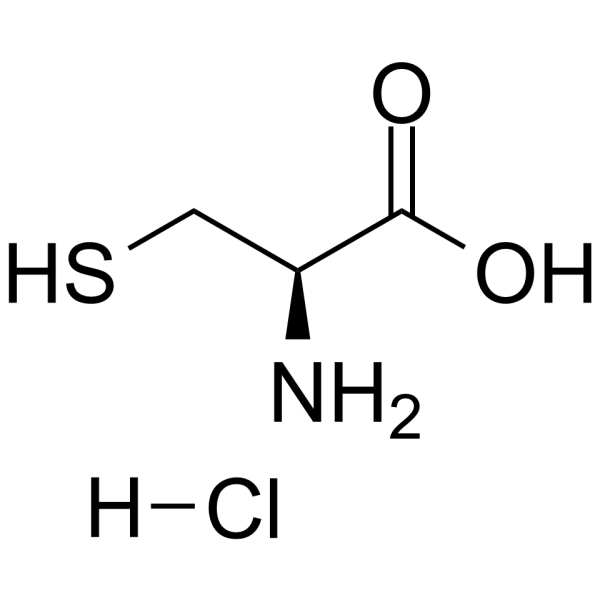
    L-Cysteine hydrochloride
    10+ Cited Publications

    Endogenous Metabolite Metabolic Disease Cancer
    L-Cysteine hydrochloride is an orally active conditionally essential amino acid, which acts as a precursor for biologically active molecules such as hydrogen sulphide (H2S), glutathione and taurine. L-Cysteine hydrochloride suppresses ghrelin and reduces appetite in rodents. L-Cysteine hydrochloride inhibits Aspergillus flavus growth and AFB synthesis by disrupting cell structure and antioxidant system balance. L-Cysteine hydrochloride enhances relaxant responses of rat aortic rings to NO and reduces responses to endothelium-derived relaxing factor (EDRF) .
    L-Cysteine hydrochloride
  • HY-B0464
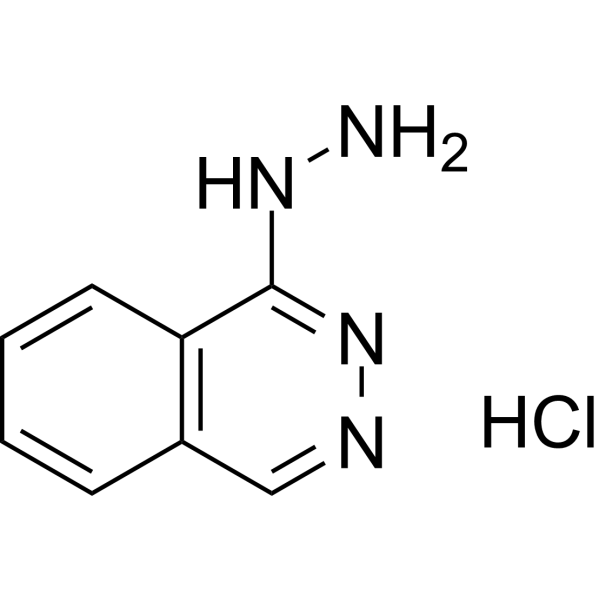
    Hydralazine hydrochloride
    3 Publications Verification

    PGE synthase NO Synthase Reactive Oxygen Species (ROS) DNA Methyltransferase COX Cardiovascular Disease Inflammation/Immunology Cancer
    Hydralazine hydrochloride is an orally active, blood-brain barrier-permeable DNA methyltransferase inhibitor with vasodilatory, arterial smooth muscle relaxant and hypotensive activities. Hydralazine hydrochloride reactivates silenced tumor suppressor genes via mediating DNA demethylation, while exerting neuroprotective and anti-inflammatory properties. Hydralazine hydrochloride inhibits NOS-2 (iNOS) and COX-2, and reduces the production of NO and PGEE2; meanwhile, Hydralazine hydrochloride scavenges reactive oxygen species and inhibits macrophage activation. Hydralazine hydrochloride alleviates motor dysfunction, neuropathic inflammatory pain, and formalin-induced somatic and emotional pain responses. In addition, Hydralazine hydrochloride directly induces DNA strand breaks and sister chromatid exchange, exhibiting certain mutagenic characteristics. Hydralazine hydrochloride has been widely used in studies on hypertension, various cancers (such as cervical cancer, leukemia), spinal cord injury and the mechanisms of inflammatory pain .
    Hydralazine hydrochloride
  • HY-12379
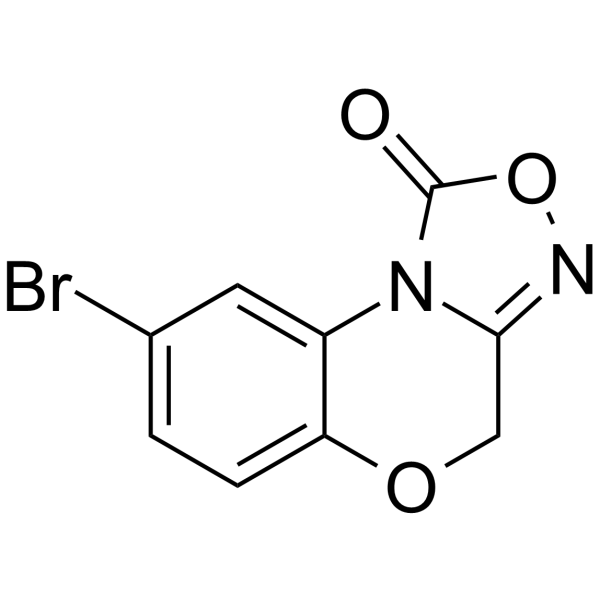
    NS-2028
    1 Publications Verification

    Guanylate Cyclase Inflammation/Immunology
    NS-2028 is a highly selective soluble Guanylyl Cyclase (sGC) inhibitor with IC50 values of 30 nM and 200 nM for basal and NO-stimulated enzyme activity . NS-2028 inhibits soluble Guanylyl Cyclase activity in homogenates of mouse cerebellum and neuronal NO synthase with IC50 values of 17 nM and 20 nM . NS-2028 inhibits 3-morpholino-sydnonimine (SIN-1)-elicited formation of cyclic GMP in human cultured umbilical vein endothelial cells with an IC50 of 30 nM . NS-2028 is commonly used in the research of nitric oxide signaling pathways, it inhibits NO-dependent relaxant responses in non-vascular smooth muscle completely (1 μM) . NS-2028 reduces vascular endothelial growth factor-induced angiogenesis and permeability .
    NS-2028
  • HY-B0464A
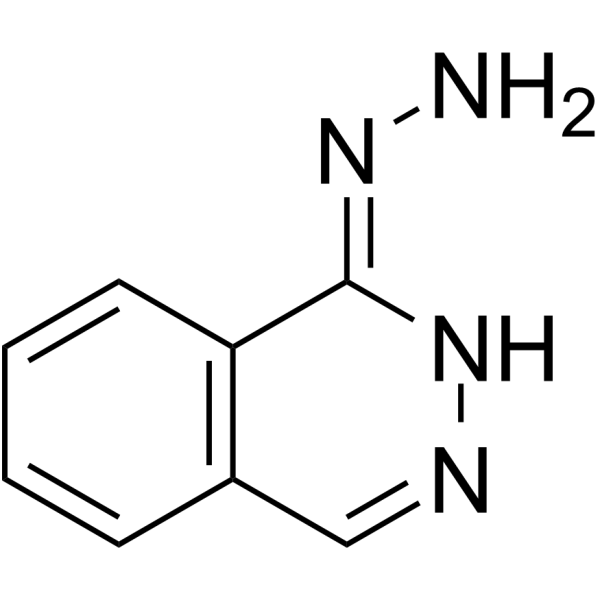
    Hydralazine
    3 Publications Verification

    DNA Methyltransferase Reactive Oxygen Species (ROS) COX NO Synthase PGE synthase Cardiovascular Disease Neurological Disease Inflammation/Immunology Cancer
    Hydralazine is an orally active, blood-brain barrier-permeable DNA methyltransferase inhibitor with vasodilatory, arterial smooth muscle relaxant and hypotensive activities. Hydralazine reactivates silenced tumor suppressor genes via mediating DNA demethylation, while exerting neuroprotective and anti-inflammatory properties. Hydralazine inhibits NOS-2 (iNOS) and COX-2, and reduces the production of NO and PGEE2; meanwhile, Hydralazine scavenges reactive oxygen species and inhibits macrophage activation. Hydralazine alleviates motor dysfunction, neuropathic inflammatory pain, and formalin-induced somatic and emotional pain responses. In addition, Hydralazine directly induces DNA strand breaks and sister chromatid exchange, exhibiting certain mutagenic characteristics. Hydralazine has been widely used in studies on hypertension, various cancers (such as cervical cancer, leukemia), spinal cord injury and the mechanisms of inflammatory pain .
    Hydralazine
  • HY-B0464S1

    Isotope-Labeled Compounds PGE synthase NO Synthase Reactive Oxygen Species (ROS) DNA Methyltransferase COX Cancer
    Hydralazine-d5 (hydrochloride) is deuterium-labeled Hydralazine (hydrochloride) (HY-B0464). Hydralazine hydrochloride is an orally active, blood-brain barrier-permeable DNA methyltransferase inhibitor with vasodilatory, arterial smooth muscle relaxant and hypotensive activities. Hydralazine hydrochloride reactivates silenced tumor suppressor genes via mediating DNA demethylation, while exerting neuroprotective and anti-inflammatory properties. Hydralazine hydrochloride inhibits NOS-2 (iNOS) and COX-2, and reduces the production of NO and PGEE2; meanwhile, Hydralazine hydrochloride scavenges reactive oxygen species and inhibits macrophage activation. Hydralazine hydrochloride alleviates motor dysfunction, neuropathic inflammatory pain, and formalin-induced somatic and emotional pain responses. In addition, Hydralazine hydrochloride directly induces DNA strand breaks and sister chromatid exchange, exhibiting certain mutagenic characteristics. Hydralazine hydrochloride has been widely used in studies on hypertension, various cancers (such as cervical cancer, leukemia), spinal cord injury and the mechanisms of inflammatory pain .
    Hydralazine-d5 hydrochloride
  • HY-B0464S

    Isotope-Labeled Compounds PGE synthase NO Synthase Reactive Oxygen Species (ROS) DNA Methyltransferase COX Cardiovascular Disease
    Hydralazine-d4 hydrochloride is the deuterium labeled Hydralazine hydrochloride. Hydralazine hydrochloride is an orally active, blood-brain barrier-permeable DNA methyltransferase inhibitor with vasodilatory, arterial smooth muscle relaxant and hypotensive activities. Hydralazine hydrochloride reactivates silenced tumor suppressor genes via mediating DNA demethylation, while exerting neuroprotective and anti-inflammatory properties. Hydralazine hydrochloride inhibits NOS-2 (iNOS) and COX-2, and reduces the production of NO and PGEE2; meanwhile, Hydralazine hydrochloride scavenges reactive oxygen species and inhibits macrophage activation. Hydralazine hydrochloride alleviates motor dysfunction, neuropathic inflammatory pain, and formalin-induced somatic and emotional pain responses. In addition, Hydralazine hydrochloride directly induces DNA strand breaks and sister chromatid exchange, exhibiting certain mutagenic characteristics. Hydralazine hydrochloride has been widely used in studies on hypertension, various cancers (such as cervical cancer, leukemia), spinal cord injury and the mechanisms of inflammatory pain .
    Hydralazine-d4 hydrochloride
  • HY-Y0337AR

    Reference Standards Endogenous Metabolite Metabolic Disease Cancer
    L-Cysteine (hydrochloride) (Standard) is the analytical standard of L-Cysteine (hydrochloride). This product is intended for research and analytical applications. L-Cysteine hydrochloride is an orally active conditionally essential amino acid, which acts as a precursor for biologically active molecules such as hydrogen sulphide (H2S), glutathione and taurine. L-Cysteine hydrochloride suppresses ghrelin and reduces appetite in rodents. L-Cysteine hydrochloride inhibits Aspergillus flavus growth and AFB synthesis by disrupting cell structure and antioxidant system balance. L-Cysteine hydrochloride enhances relaxant responses of rat aortic rings to NO and reduces responses to endothelium-derived relaxing factor (EDRF) [4].
    L-Cysteine hydrochloride (Standard)
  • HY-P1721

    Bradykinin Receptor Cardiovascular Disease
    NPC 17731 is a new bradykinin (BK) receptor antagonist. NPC 17731 antagonized both the contractile and relaxant responses caused by BK in longitudinal smooth muscle with IC50 of 23 and 29 nM, respectively .
    NPC 17731
  • HY-121670

    Others Neurological Disease
    Ambenoxan is a central nervous system-acting skeletal muscle relaxant that is effective in mice, rats, rabbits, dogs, and monkeys without loss of the righting reflex. It has no peripheral neuromuscular blocking effects and significantly reduces or eliminates decerebrate rigidity in rabbits, but does not antagonize the effects of strychnine, leptazol, or tremorine. Like other central nervous system depressants, ambenoxan prolongs sleep duration with hexobarbitone, but it has no local anesthetic effects. In anesthetized cats, the agent lowers blood pressure and reduces the pressor response to epinephrine, but has no effect on norepinephrine.
    Ambenoxan
  • HY-121670A

    Adrenergic Receptor Neurological Disease
    Ambenoxan hydrochloride is a central nervous system-acting skeletal muscle relaxant that is effective in mice, rats, rabbits, dogs, and monkeys without loss of the righting reflex. It has no peripheral neuromuscular blocking effects and significantly reduces or eliminates decerebrate rigidity in rabbits, but does not antagonize the effects of strychnine, leptazol, or tremorine. Like other central nervous system depressants, ambenoxan prolongs sleep duration with hexobarbitone, but it has no local anesthetic effects. In anesthetized cats, the agent lowers blood pressure and reduces the pressor response to epinephrine, but has no effect on norepinephrine.
    Ambenoxan hydrochloride
  • HY-B0464R

    Reference Standards PGE synthase NO Synthase Reactive Oxygen Species (ROS) DNA Methyltransferase COX Cardiovascular Disease Inflammation/Immunology Cancer
    Hydralazine (hydrochloride) (Standard) is the analytical standard of Hydralazine (hydrochloride). This product is intended for research and analytical applications. Hydralazine hydrochloride is an orally active, blood-brain barrier-permeable DNA methyltransferase inhibitor with vasodilatory, arterial smooth muscle relaxant and hypotensive activities. Hydralazine hydrochloride reactivates silenced tumor suppressor genes via mediating DNA demethylation, while exerting neuroprotective and anti-inflammatory properties. Hydralazine hydrochloride inhibits NOS-2 (iNOS) and COX-2, and reduces the production of NO and PGEE2; meanwhile, Hydralazine hydrochloride scavenges reactive oxygen species and inhibits macrophage activation. Hydralazine hydrochloride alleviates motor dysfunction, neuropathic inflammatory pain, and formalin-induced somatic and emotional pain responses. In addition, Hydralazine hydrochloride directly induces DNA strand breaks and sister chromatid exchange, exhibiting certain mutagenic characteristics. Hydralazine hydrochloride has been widely used in studies on hypertension, various cancers (such as cervical cancer, leukemia), spinal cord injury and the mechanisms of inflammatory pain .
    Hydralazine hydrochloride (Standard)

Consulta en línea

Your information is safe with us. * Required Fields.

Saludo


Country or Region *

Nombre del solicitante *


Nombre de la Organizaciòn *

Department *


Direcciòn del E-mail *


Nombre del producto *

Cat. No.


Requested quantity *

Número de teléfono *


Observaciones

Consulta en línea

Inquiry Information

Nombre del producto:
Cat. No.:
Cantidad:
MCE Japan Authorized Agent:

