

32 Results for "

reticulocyte

" in MedChemExpress (MCE) Product Catalog:
Products (32)

32 Results for "reticulocyte" in MCE Product Catalog:

6
6 Publications Verification
Cat. No.: HY-103157
CAS No.: 4079-26-9
Purity:  99.59%
Synonyms: NSC168807
Target:  

Autophagy Ferroptosis

Research Areas:  

Cardiovascular Disease

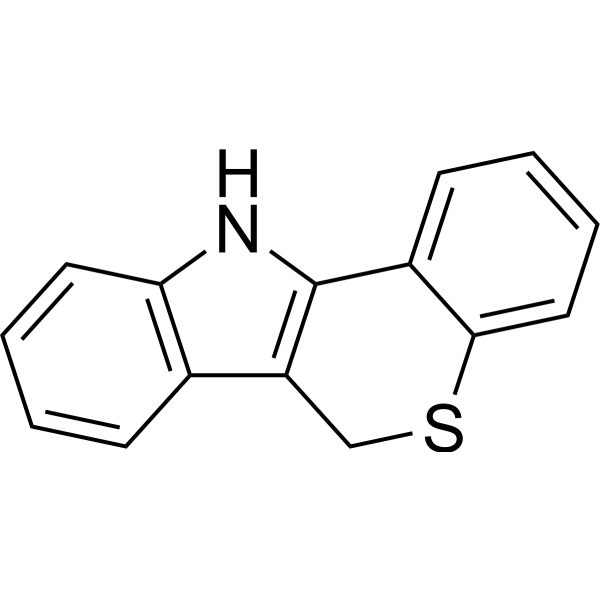
PD146176 (NSC168807), a 15-Lipoxygenase (15-LO) inhibitor, inhibits rabbit reticulocyte 15-LO (Ki=197 nM, IC50=0.54 μM). PD146176 reverses cognitive impairment, brain amyloidosis, and tau pathology by stimulating autophagy in aged triple transgenic mice .
loading...
    loading...
1
1 Cited Publications
Cat. No.: HY-D0150
CAS No.: 107091-89-4
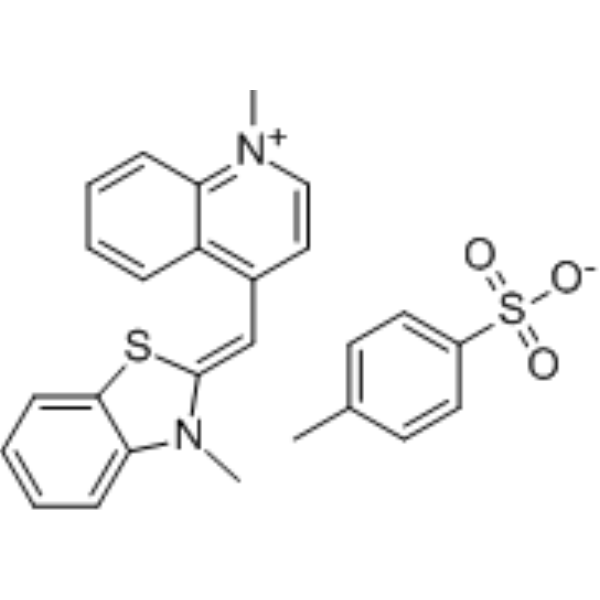
Thiazole Orange is an asymmetric anthocyanin dye that can be coupled with oligonucleotides (ONs) to prepare fluorescent hybridization probes. Thiazole Orange has been widely used in biomolecular detection and staining of DNA/ RNA in gels and can be used for reticulocyte analysis. Thiazole orange generates a significant fluorescence enhancement and high quantum yield when it binds with nucleic acids, especially RNA. Thiazole orange can permeate living cell membranes. Thiazole orange can use UV light for detection, but can also be detected with blue light. The excitation and emission of Thiazole orange are λex = 510 nm (488 nm and 470 nm also show strong excitation) and λem = 527 nm, respectively .
loading...
    loading...
Cat. No.: HY-D0996
CAS No.: 181885-68-7
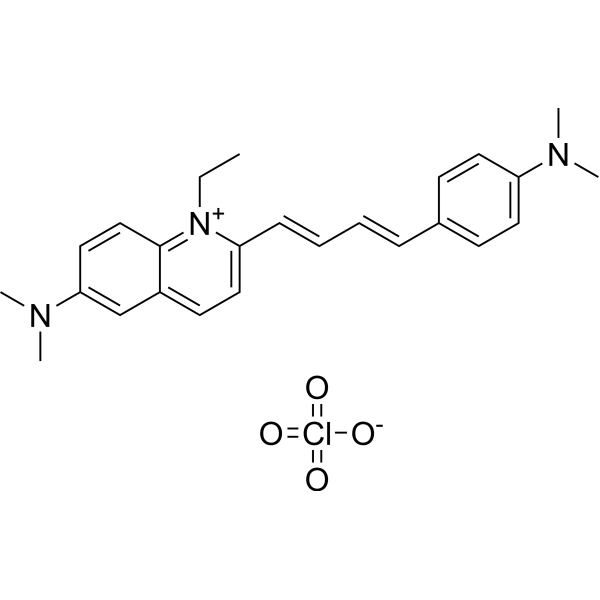
Lds-751 is a nucleic acid stain that mainly detects DNA. Lds-751 is a nucleic acid stain that mainly detects DNA. Lds-751 has a high affinity for DNA and fluorescence is enhanced after binding, but the maximum emission wavelength is 670nm. Lds-751 and Thiazole orange can be used for the differentiation of red blood cells, platelets, reticulocytes, and nucleated cells and can be stimulated at 488nm. Studies have shown that LDS-751 binds almost exclusively to mitochondria when incubated with nucleated living cells. After nucleated Acridine Orange (HY-101879) staining and LDS-751 treatment of cells, confocal microscopy revealed almost no co-location of the cells. Staining with Rhodamine 123 (HY-D0816), a dye known to bind polarized mitochondria, was almost identical to the pattern observed with LDS-751 .
loading...
    loading...
Cat. No.: HY-P990952
CAS No.: 2527079-60-1
Synonyms: OMS906
Zaltenibart (OMS906) is an IgG4 humanized monoclonal antibody and MASP-3 inhibitor. By inhibiting MASP-3, Zaltenibart achieves upstream inhibition of the alternative complement pathway. MASP-3 is an upstream activator of Factor D (Factor D), a key enzyme in the alternative complement pathway. Zaltenibart prevents both intravascular hemolysis and extravascular hemolysis. Zaltenibart is applicable to research related to paroxysmal nocturnal hemoglobinuria .
loading...
    loading...
Cat. No.: HY-114134
CAS No.: 122312-54-3
Purity:  ≥95.0%
Synonyms: rhEPO; EPOCH; Genetical recombination

Target:  

Inhibitory Antibodies

Research Areas:  

Metabolic Disease Cancer

Epoetin beta (rhEPO) is a recombinant form of erythropoietin. Epoetin beta is responsible for the maintenance of erythropoiesis and can be used for anaemia research .
loading...
    loading...
Cat. No.: HY-131920A
CAS No.: 28086-43-3
Synonyms: Polyuridylic acid potassium
Polyuridylic acid potassium is a polynucleotide. In protein synthesis systems based on active mammalian ribosomes, Polyuridylic acid potassium acts as a specific messenger to induce the biosynthesis of polyphenylalanine, with no effect on the incorporation of non-phenylalanine amino acids. Polyuridylic acid potassium serves as a template to promote the non-enzymatic synthesis of oligoadenylates .
loading...
    loading...
Cat. No.: HY-150145
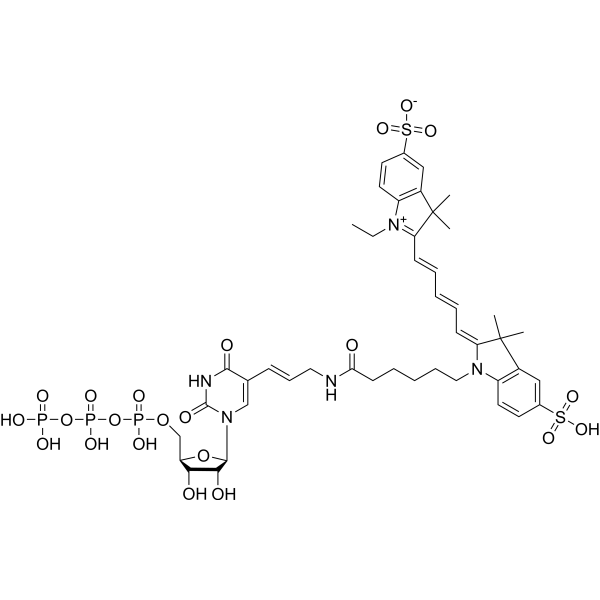
Cy5-UTP is a fluorescently labeled ribonucleotide triphosphate that can be used as a substrate for terminal deoxynucleotidyl transferase (TdT). Cy5-UTP can be employed to label RNA probes generated in vitro (Ex/Em: 650/665 nm). Cy5-UTP can be applied in FISH, multi-color fluorescence analysis, especially in dual-color expression arrays that combine with Cy5-UTP .
loading...
    loading...
Cat. No.: HY-167846
CAS No.: 2417685-83-5
Target:  

JAK

Research Areas:  

Cancer

YLIU-4-105-1 is a Type II JAK2 inhibitor. YLIU-4-105-1 binds to the ATP-binding pocket of JH1. YLIU-4-105-1 has in vivo pharmacodynamic activity as evidenced by inhibiting pSTAT5, reducing spleen to body weight, and lowering blood reticulocyte counts in a dose-dependent manner .
loading...
    loading...
Cat. No.: HY-139098
CAS No.: 62828-64-2
Synonyms: m7Gp3G
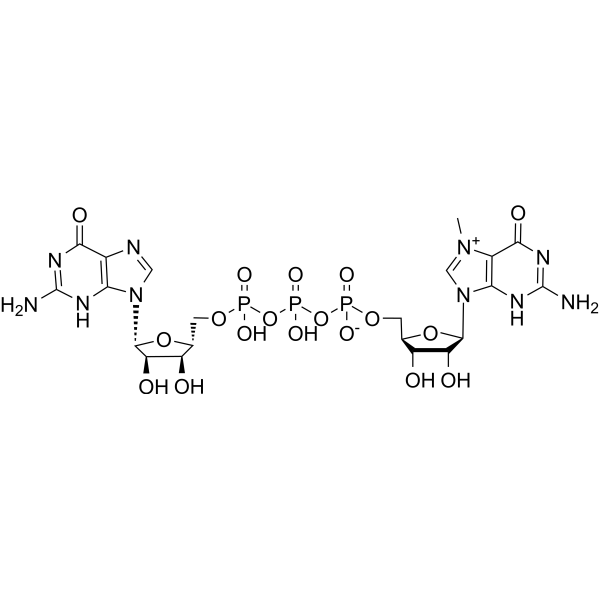
7-Methyl-diguanosine triphosphate (m7Gp3G) is an mRNA cap structure analog that inhibits in vitro protein synthesis by binding to the translation initiation complex. 7-Methyl-diguanosine triphosphate binds to eIF4E, promotes cap-dependent translation initiation, stabilizes mRNA, and acts as a translation enhancer. 7-Methyl-diguanosine triphosphate can be used to prepare synthetic capped RNA transcripts for studies related to mRNA translation, splicing, turnover, and intracellular transport .
loading...
    loading...
Cat. No.: HY-P3756
CAS No.: 180088-82-8
Synonyms: EMP-1
Target:  

Peptides

Research Areas:  

Cardiovascular Disease

EPO mimetic peptide-1 (EMP-1), a 20 amino acid peptide. EPO mimetic peptide-1 stimulates cell proliferation, affects cell cycle and induces the production of reticulocytes in vivo .
loading...
    loading...
Cat. No.: HY-117682
CAS No.: 134-90-7
Synonyms: (+)-Chloramphenicol; Dextramycine; Dextromycetin
Target:  

Antibiotic

Research Areas:  

Infection

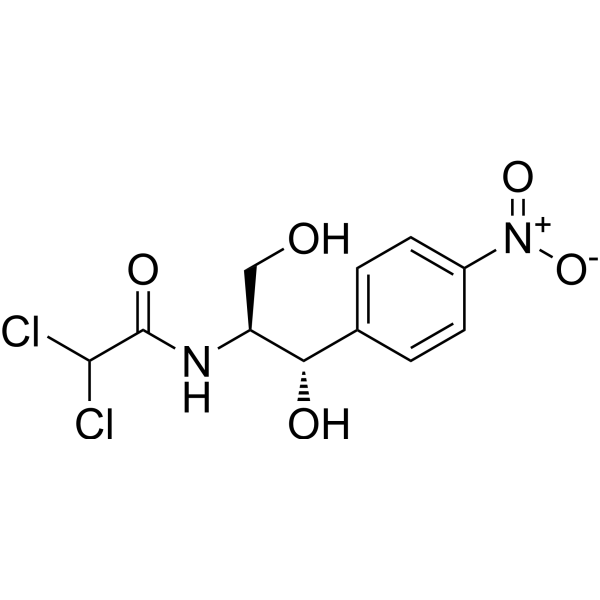
L-(+)-threo-Chloramphenicol ((+)-Chloramphenicol) is the S,S-stereoisomer of Chloramphenicol (HY-B0239). L-(+)-Threo-chloramphenicol inhibits protein synthesis in reticulocytes. L-(+)-threo-Chloramphenicol also inhibits the oxidative activity of isolated mitochondria .
loading...
    loading...
Cat. No.: HY-123341
CAS No.: 54232-59-6
Synonyms: 9-KODE
Target:  

Endogenous Metabolite

Research Areas:  

Metabolic Disease

9-OxoODE results from oxidation of the allylic hydroxyl of either 9(S)- or 9(R)-HODE. Rabbit reticulocyte plasma and mitochondrial membranes contain both 9- and 13-oxoODEs, representing about 2% of the total linoleate residues in the membranes. Most of these oxidized linoleate residues are esterified to membrane lipids.
loading...
    loading...
Cat. No.: HY-174495
Target:  

mRNA

Research Areas:  

Others

Human EPO mRNA encodes the human erythropoietin (EPO) protein, a hormone that controls erythropoiesis, or red blood cell production. EPO also plays a role in wound healing and the brain’s response to neural injury. Kariko et al. showed that transfection of EPO mRNA in vivo resulted in significant increases of both reticulocyte counts and hematocrits.
loading...
    loading...
Cat. No.: HY-W585843
CAS No.: 132685-02-0
1,1′-Ethylidenebis[L-tryptophan] is an orally active amino acid analog. 1,1′-Ethylidenebis[L-tryptophan] promotes the release of adrenocorticotropic hormone and corticosterone in rat plasma, and transiently inhibits CRH mRNA in the paraventricular nucleus of the hypothalamus via glucocorticoid negative feedback. 1,1′-Ethylidenebis[L-tryptophan] induces multi-tissue inflammation and fibrosis in rodents and human cells, increases the number of degranulated mast cells, and activates the IL-5 pathway in lymphocytes. 1,1′-Ethylidenebis[L-tryptophan] is activated by tryptophanyl-tRNA synthetase and replaces L-tryptophan during translation; it also interferes with tryptophan metabolism in mice via the kynurenine pathway and dynamically alters their plasma quinolinic acid levels. 1,1′-Ethylidenebis[L-tryptophan] can be used for studies on metabolism-related mechanisms .
loading...
    loading...
Cat. No.: HY-103157R
CAS No.: 4079-26-9
Synonyms: NSC168807 (Standard)
PD146176 (Standard) is the analytical standard of PD146176. This product is intended for research and analytical applications. PD146176 (NSC168807), a 15-Lipoxygenase (15-LO) inhibitor, inhibits rabbit reticulocyte 15-LO (Ki=197 nM, IC50=0.54 μM). PD146176 reverses cognitive impairment, brain amyloidosis, and tau pathology by stimulating autophagy in aged triple transgenic mice .
loading...
    loading...
Cat. No.: HY-N13880
CAS No.: 69579-74-4
Adustin, an antifungal antibiotic, is a polypeptide with translation-inhibiting activity. Adustin inhibits translation in a cell-free rabbit reticulocyte lysate system with an IC50 of 0.34 μM .
loading...
    loading...
Cat. No.: HY-W995025
CAS No.: 24397-89-5
Synonyms: (+)-Actinobolin
Target:  

Antibiotic Bacterial

Research Areas:  

Infection

Actinobolin ((+)-Actinobolin) is an antibiotic, that inhibits protein synthesis by targeting bacterial and eukaryotic ribosomes. Actinobolin inhibits Mycobacterium smegmatis, Escherichia coli and rabbit reticulocyte lysate (RRL) with an IC50 of 19.2, 27.9, and 288 μmol/L, respectively .
loading...
    loading...
Cat. No.: HY-W995025A
CAS No.: 18802-17-0
Synonyms: (+)-Actinobolin hemisulfate
Target:  

Antibiotic Bacterial

Research Areas:  

Infection

Actinobolin hemisulfate ((+)-Actinobolin hemisulfate) is the hemisulfate form of Actinobolin (HY-W995025). Actinobolin hemisulfate is an antibiotic, that inhibits protein synthesis by targeting bacterial and eukaryotic ribosomes. Actinobolin hemisulfate inhibits Mycobacterium smegmatis, Escherichia coli and rabbit reticulocyte lysate (RRL) with an IC50 of 19.2, 27.9, and 288 μmol/L, respectively .
loading...
    loading...
Cat. No.: HY-170831
CAS No.: 2757191-62-9
Research Areas:  

Others

DS79932728 is an orally active inhibitor for G9a and GLP with IC50 of 12.6 nM and 75.7 nM. DS79932728 induces the production of γ-globin, thereby increasing the level of fetal hemoglobin (HbF). DS79932728 increases F-reticulocytes (F-rets) proportion and exhibits good oral absorption characteristics in cynomolgus monkey models .
loading...
    loading...
Cat. No.: HY-W747575
CAS No.: 167354-91-8
Target:  

Endogenous Metabolite

Research Areas:  

Metabolic Disease

(±)13-HODE cholesteryl ester is originally extracted from atherosclerotic lesions1 and shown to be produced by Cu2+-catalyzed oxidation of LDL. Later studies determined that 15-LO from rabbit reticulocytes and human monocytes were able to metabolize cholesteryl linoleate, a major component of LDL, to 13-HODE cholesteryl ester.
loading...
    loading...

