1. Search Result
Search Result
Results for "

stasis

" in MedChemExpress (MCE) Product Catalog:

21

Inhibitors & Agonists

2

Screening Libraries

1

Biochemical Assay Reagents

1

Inhibitory Antibodies

5

Natural
Products

1

Isotope-Labeled Compounds

1

Click Chemistry

Cat. No. Product Name Target Research Areas Chemical Structure
  • HY-N0298
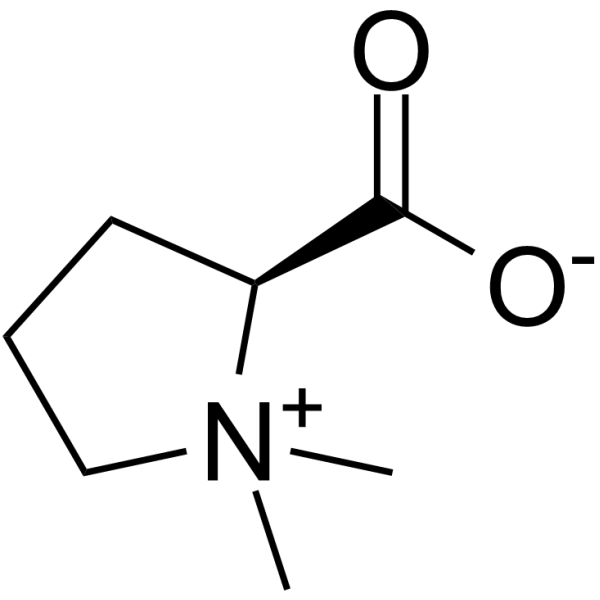
    Stachydrine
    5+ Cited Publications

    NF-κB Endogenous Metabolite Cardiovascular Disease Cancer
    Stachydrine is a major constituent of Chinese herb leonurus heterophyllus sweet used to promote blood circulation and dispel blood stasis. Stachydrine can inhibit the NF-κB signal pathway.
    Stachydrine
  • HY-P990688

    AMG-509

    CD3 Cancer
    Xaluritamig (AMG-509) is a bispecific T cell engager and cytolytic agent with a Kd of 27.6 nM for human CD3ε. Xaluritamig binds to CD3ε via an anti-CD3 single-chain variable fragment (scFv) domain, and to STEAP1 via a bispecific anti-STEAP1 antigen-binding fragment (Fab) domain, thereby recruiting and activating T cells and forming a bridge between T cells and STEAP1-expressing cancer cells. Xaluritamig induces T cell-mediated redirected cytotoxicity, tumor cell lysis, cytokine release, CD8 + T cell activation and expansion, as well as tumor stasis or regression. Xaluritamig contains an Fc domain with no effector function, which prolongs serum half-life, exhibits only minimal activity against cells with low STEAP1 expression and normal cells, and shows extremely low target-related off-tumor toxicity in cynomolgus monkeys. Xaluritamig is used in STEAP1×CD3 XmAb 2+1 immunotherapy and in research on metastatic castration-resistant prostate cancer and Ewing sarcoma .
    Xaluritamig
  • HY-139399
    Safimaltib
    2 Publications Verification

    JNJ-67856633

    MALT1 Cancer
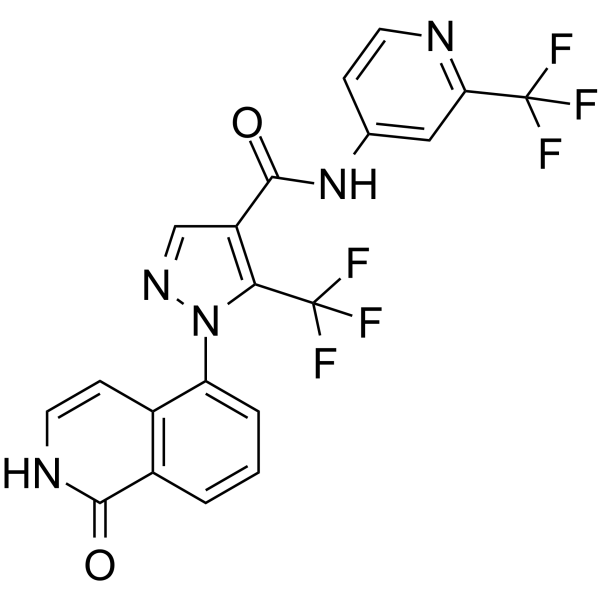
    Safimaltib (JNJ-67856633) is an orally active, first-in-class, potent, selective and allosteric MALT1 protease inhibitor. Safimaltib in some cases lead to tumor stasis .
    Safimaltib
  • HY-175842

    CDK Cancer
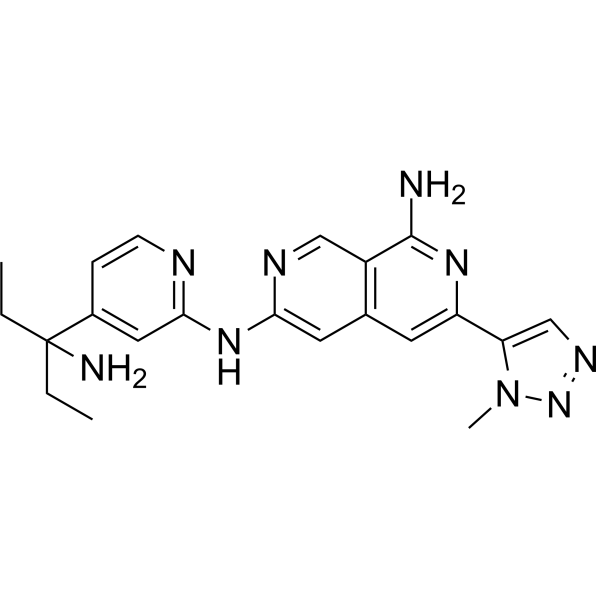
    CDK2 degrader 7 is an orally active CDK2 degrader, with DC50 values of 13 nM (MKN1cells) and 17 nM (TOV21G cells). CDK2 degrader 7 induces G1 phase arrest in MKN1 cells. CDK2 degrader 7 achieves tumor stasis in HCC1569 (CCNE1-amplified) xenograft models. CDK2 degrader 7 can be used for the study of CCNE1-amplified cancers .
    CDK2 degrader 7
  • HY-167874

    Heme Oxygenase (HO) NF-κB Transmembrane Glycoprotein Cardiovascular Disease
    ASP-8731 is an orally active BACH1 inhibitor. ASP-8731 activates antioxidant, anti-inflammatory and globin gene pathways by relieving the inhibitory effect of BACH1 on NRF2-mediated gene transcription. ASP-8731 significantly upregulates the expression of HMOX1, FTH1 and various globins (such as HGB, HBG, HBA), increases fetal hemoglobin (HbF) levels, and effectively induces F-cell production in hydroxyurea-unresponsive cells. Meanwhile, ASP-8731 reduces inflammatory responses and white blood cell counts by downregulating VCAM1, ICAM-1 and the phosphorylation level of NF-κB(p65), and blocks heme-induced glutathione depletion and microcirculatory stasis. ASP-8731 holds potential for inhibiting sickle cell disease and related hematological disorders .
    ASP-8731
  • HY-W250721A

    CBM 940

    Biochemical Assay Reagents Others
    Carbomer 940 (CBM 940) is an acrylic polymer with high viscosity, good thermal stability and histocompatibility. Carbomer 940 serves as a transdermal drug delivery carrier and an external gel matrix. Carbomer 940 has no cytotoxicity, and it can also improve blood supply in the stasis zone of burns and promote wound repair. Carbomer 940 is applicable to pharmaceutical research .
    Carbomer 940
  • HY-177512

    FLAP Cancer
    MSC778 is an effective and orally active flap endonuclease 1 (FEN1) inhibitor with an IC50 of 3 nM and a KD of 2.9 nM. MSC778 exhibits 145-fold, 516-fold, and 65-fold selectivity over EXO1, GEN1, and XPG, respectively. MSC778 selectively kills BRCA2-deficient cells and potentiates the activity of Niraparib (HY-10619) to induce tumor stasis in a BRCA2 KO DLD-1 mouse xenograft. MSC778 can be used in the research of colorectal cancer .
    MSC778
  • HY-156715

    MASTL Cancer
    MASTL-IN-1 is a selective and orally active MASTL inhibitor with a Ki <0.03 nM. MASTL-IN-1 inhibits phosphorylation of ENSA and inhibits proliferation in cancer cells. MASTL-IN-1 induces tumor growth inhibition and stasis in pancreatic cancer xenograft models .
    MASTL-IN-1
  • HY-N0518
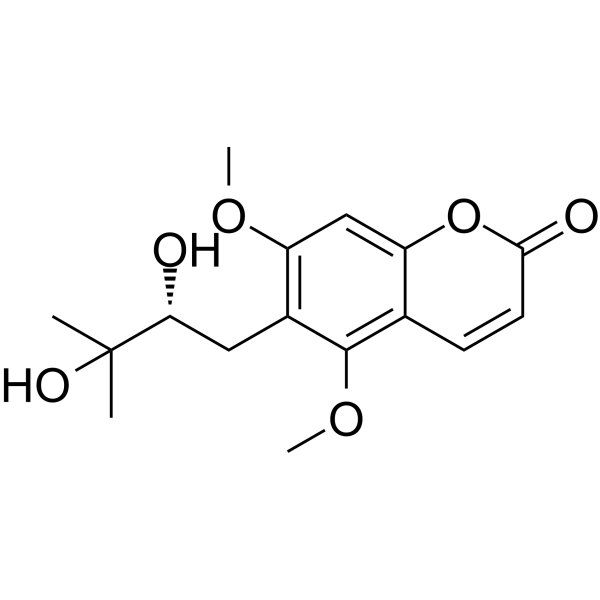
    Toddalolactone
    1 Publications Verification

    PAI-1 Cardiovascular Disease
    Toddalolactone, a main component of Toddalia asiatica, inhibits the activity of recombinant human plasminogen activator inhibitor-1 (PAI-1), with an IC50 value of 37.31 μM .
    Toddalolactone
  • HY-N0298S

    Isotope-Labeled Compounds NF-κB Endogenous Metabolite Cardiovascular Disease
    Stachydrine-d6 is a deuterated labeled Stachydrine (HY-N0298). Stachydrine is a major constituent of Chinese herb leonurus heterophyllus sweet used to promote blood circulation and dispel blood stasis. Stachydrine can inhibit the NF-κB signal pathway .
    Stachydrine-d6
  • HY-179403

    Ras Cancer
    KRASG12C IN-17 is an orally active covalent KRAS G12C inhibitor, showing strong inhibitory activity in KRAS G12C-mutant cancer cells (NCI-H23 IC50 = 0.7 nM; NCI-H358 IC50 = 0.5 nM). KRASG12C IN-17 covalently and irreversibly binds to KRAS G12C with > 96% modification efficiency in both GDP-bound and GMPPNP-bound conformations. KRASG12C IN-17 can be used for studies of KRAS-driven cancers, including colorectal cancer .
    KRASG12C IN-17
  • HY-N0298R

    NF-κB Endogenous Metabolite Reference Standards Cardiovascular Disease Cancer
    Stachydrine (Standard) is the analytical standard of Stachydrine. This product is intended for research and analytical applications. Stachydrine is a major constituent of Chinese herb leonurus heterophyllus sweet used to promote blood circulation and dispel blood stasis. Stachydrine can inhibit the NF-κB signal pathway.
    Stachydrine (Standard)
  • HY-105919

    Factor Xa Cardiovascular Disease
    Naroparcil is an orally active antithrombotic agent. Naroparcil exhibits antithrombotic effects in rabbit Wessler stasis model with EC50s of 21.9 mg/kg and 36.0 mg/kg after respectively intravenous injection and oral administration .
    Naroparcil
  • HY-N0518R

    Reference Standards PAI-1 Cardiovascular Disease
    Toddalolactone (Standard) is the analytical standard of Toddalolactone. This product is intended for research and analytical applications. Toddalolactone, a main component of Toddalia asiatica, inhibits the activity of recombinant human plasminogen activator inhibitor-1 (PAI-1), with an IC50 value of 37.31 μM .
    Toddalolactone (Standard)
  • HY-N13208

    MMP TGF-beta/Smad Others
    Stevia Powder is a natural sweetener with antioxidant activity. Stevia Powder can downregulate pro fibrotic pathways in cirrhotic rats, including reduced hepatic myofibroblasts and decreased expression of matrix metalloproteinases MMP2 and MMP13, upregulate anti fibrotic molecule Smad7, prevent serum necrosis and elevated bile stasis markers, thereby inhibiting the development of liver fibrosis .
    Stevia Powder
  • HY-N7748A

    Estrogen Receptor/ERR Prostaglandin Receptor Inflammation/Immunology Endocrinology
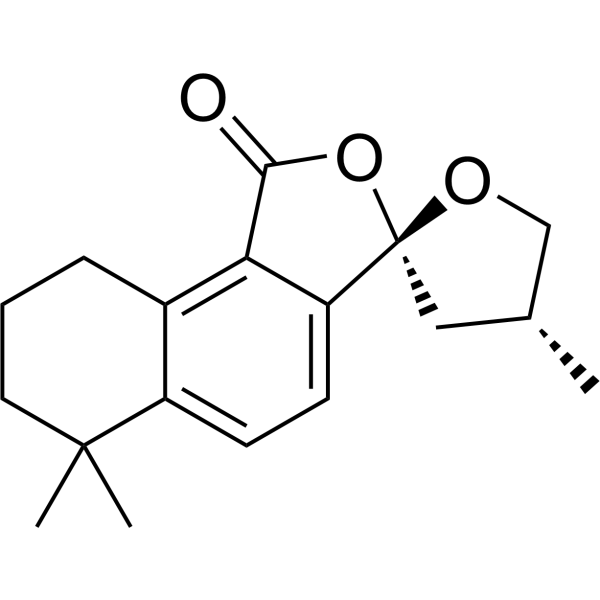
    Epi-cryptoacetalide is a natural diterpenoid. Epi-cryptoacetalide reveals high affinity to ER-α and PGE2 receptor (EP2 subtype) with Ki values of 0.3 μM and 1.92 μM, respectively. Epi-cryptoacetalide has anti-endometriosis activities .
    Epi-cryptoacetalide
  • HY-170919

    FGFR Cancer
    FGFR2/3-IN-2 (compound 10) is an orally active FGFR2 and FGFR3 inhibitor. FGFR2/3-IN-2 inhibits FGFR2 and FGFR3 with IC50s of 3.7 nM and 31.2 nM (preincubation time 1 h), respectively. FGFR2/3-IN-2 spares FGFR1/4 and other kinases without causing diarrhea and serum phosphate elevation in vivo. FGFR2/3-IN-2 induces tumor stasis or regression in the SNU-16 gastric cancer model .
    FGFR2/3-IN-2
  • HY-B2105

    Tetranitrate; Nitroerythrite

    Drug Derivative Cardiovascular Disease
    Erythrityl tetranitrate (Tetranitrate; Nitroerythrite), a nitrate ester, is a long-acting vasodilator with properties similar to nitroglycerin. Erythrityl tetranitrate decreases the counter load of the heart and improvement of the pump function of left ventricle in an acute experiment in case of chronic cardiac insufficiency with stasis .
    Erythrityl tetranitrate
  • HY-180131

    ASB17061

    Proteasome Inflammation/Immunology
    INVA8001 (ASB17061) is a highly selective and orally active chymase inhibitor with IC50 values for human chymase and mouse mast cell proteinase 4 (mMCP-4) of 0.02 and 0.03 μM, respectively. INVA8001 exhibits IC50 values for bovine α-chymotrypsin and human cathesin G of 3.4 and 32.1 μM, respectively, and it shows over 1000-fold selectivity for other related serine proteases. INVA8001 inhibits mast cells in a mouse primary sclerosing cholangitis (PSC) model, improves bile duct pathology, and alleviates bile stasis, demonstrating anti-inflammatory and anti-fibrotic effects .
    INVA8001
  • HY-186132

    PROTACs CDK Cancer
    PROTAC CDK2-pRb degrader-1 is an orally active PROTAC-class degrader of CDK2. PROTAC CDK2-pRb degrader-1 effectively inhibits the phosphorylation of retinoblastoma protein (Rb) at serine residues 807/811 by inducing ubiquitination and proteasomal degradation of CDK2. PROTAC CDK2-pRb degrader-1 exhibits significant activity against human cells (with EC50 values of 12 nM and 125 nM, respectively). In xenograft models, PROTAC CDK2-pRb degrader-1 effectively inhibits tumor growth and induces tumor stasis, making it suitable for research related to CCNE1-amplified cancers (such as ovarian cancer, gastric cancer, and breast cancer) .
    PROTAC CDK2-pRb degrader-1
  • HY-W154247

    Bacterial Infection
    IP6C is a specific inhibitor and phage sensitizer targeting type II Thoeris systems. IP6C competitively binds to histidine in the catalytic pocket of ThsB, blocks the production of the His-ADPR alarm signal and inhibits ThsA activation, thereby relieving bacterial stasis of phage replication. IP6C selectively resensitizes drug-resistant bacteria carrying type II Thoeris systems (such as Pseudomonas aeruginosa) to phage lysis, without affecting other bacteria, and shows no toxicity to mice and human cell lines. IP6C significantly improves the survival rate of infected mice, and can be used to overcome bacterial phage defense mechanisms and study Pseudomonas aeruginosa infections .
    Thoeris system: (named after the Egyptian goddess of fertility and protection), is a widespread anti-phage immune defense system in bacteria and archaea. Thoeris system belongs to the "Abortion Infection (Abi)" mechanism of bacteria: when an individual bacterium detects phage invasion, it initiates a suicide program and dies, thereby blocking phage replication and spread, and protecting the surrounding bacterial population from infection.
    IP6C

Inquiry Online

Your information is safe with us. * Required Fields.

Salutation


Country or Region *

Applicant Name *


Organization Name *

Department *


Email Address *


Product Name *

Cat. No.


Requested quantity *

Phone Number *


Remarks

Inquiry Online

Inquiry Information

Product Name:
Cat. No.:
Quantity:
MCE Japan Authorized Agent:

