
1. Search Result
Search Result
Results for "

swimming

" in MedChemExpress (MCE) Product Catalog:

21

Inhibitors & Agonists

3

Peptides

Cat. No. Product Name Target Research Areas Chemical Structure
  • HY-30236

    Bacterial Infection
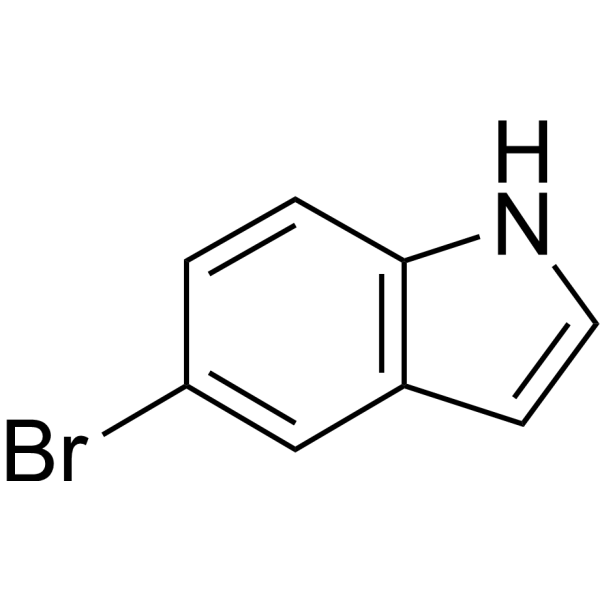
    5-Bromoindole is an antibacterial agent with a MIC of 200 μg/mL. 5-Bromoindole inhibits biofilm and curli formation, reduces swarming motility and swimming motility. 5-Bromoindole can be used for the research of enterohemorrhagic escherichia coli o157:h7 infection .
    5-Bromoindole
  • HY-103151

    5-HT Receptor Neurological Disease Metabolic Disease
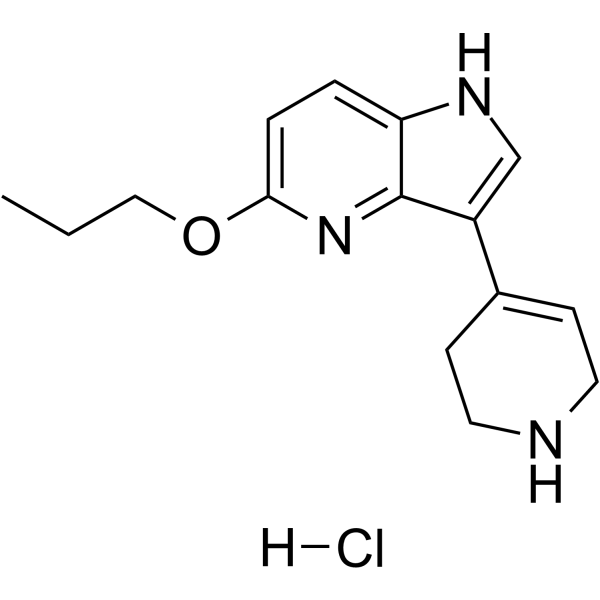
    CP94253 hydrochloride is an orally active, brain-penetrant and selective 5-HT1B receptor agonist with an Ki of 2 nM. CP94253 hydrochloride induces antidepressant-like effects, waking enhancement, sleep inhibition, increased sleep latency, hyperlocomotion, and suppressed aggressive behavior. CP94253 hydrochloride can be used for the research of depression and heightened aggressive behavior .
    CP94253 hydrochloride
  • HY-P1173

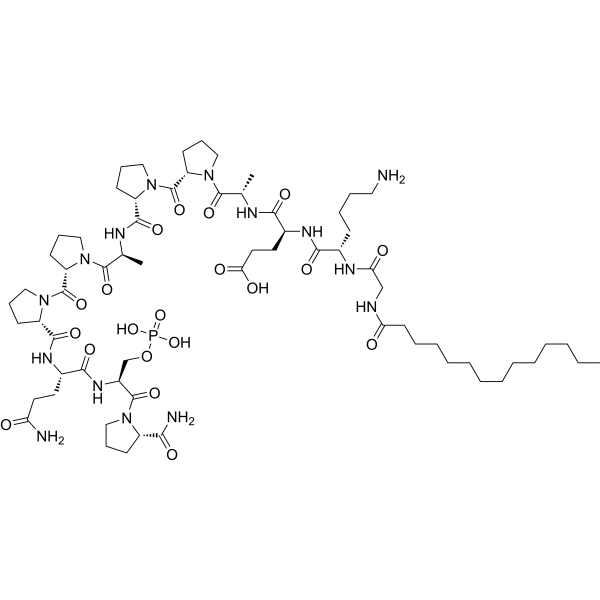
    Myristoylated L 803; GSK-3β Inhibitor XIII

    GSK-3 Amyloid-β Neurological Disease
    L803-mts (Myristoylated L 803) is a selective and substrate-competitive GSK-3 peptide inhibitor (IC50: 40 μM). L803-mts also reduces Aβ deposits and ameliorates cognitive deficits in 5XFAD mice. L803-mts shows antidepressive effect in the forced swimming test .
    L803-mts
  • HY-14196
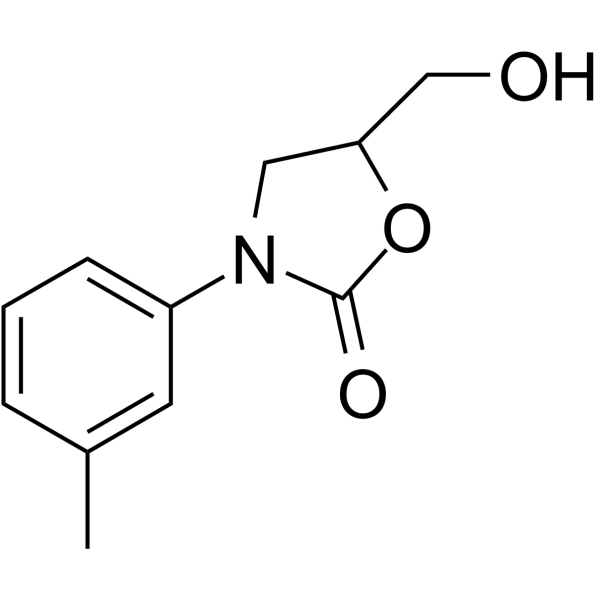
    Toloxatone
    1 Publications Verification

    MD 69276

    Monoamine Oxidase Neurological Disease
    Toloxatone (MD 69276) is a reversible, selective MAO-A inhibitor that can cross the blood-brain barrier. Toloxatone increases the levels of serotonin (5-HT) and norepinephrine in the brain. Toloxatone reduces the immobility time in the forced swimming test in mice, inhibits killing behavior in rats without causing sedation, and shows a correlation between its free plasma concentration and cerebrospinal fluid concentration. Toloxatone is widely used in research related to depression, depressive disorders and Parkinson's disease .
    Toloxatone
  • HY-12392

    Opioid Receptor Neurological Disease
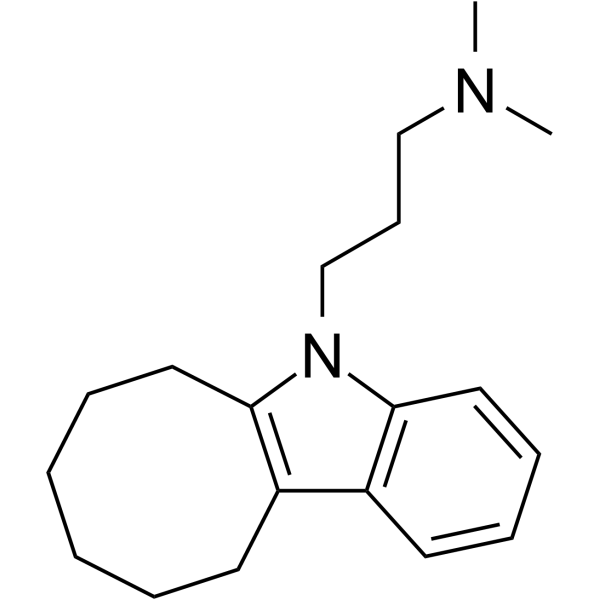
    Iprindole, an opioid receptor agonist, is a tricyclic antidepressant. Iprindole shortens the immobility time in mice forced swimming test, which can be reversed by the opiate antagonist Naloxone (HY-17417A). Iprindole induces lamellar body formation but devoid of lamellar bodies. Iprindole can be used for the research of depression .
    Iprindole
  • HY-107750A

    Opioid Receptor Neurological Disease
    Cyprodime hydrochloride is a highly selective μ-opioid receptor antagonist with Ki values of 5.4 nM, 244.6 nM and 2187 nM for μ-, δ- and κ-opioid receptors, respectively. Cyprodime hydrochloride has anti-depressant-like effect .
    Cyprodime hydrochloride
  • HY-116594A

    Sigma Receptor 5-HT Receptor Neurological Disease
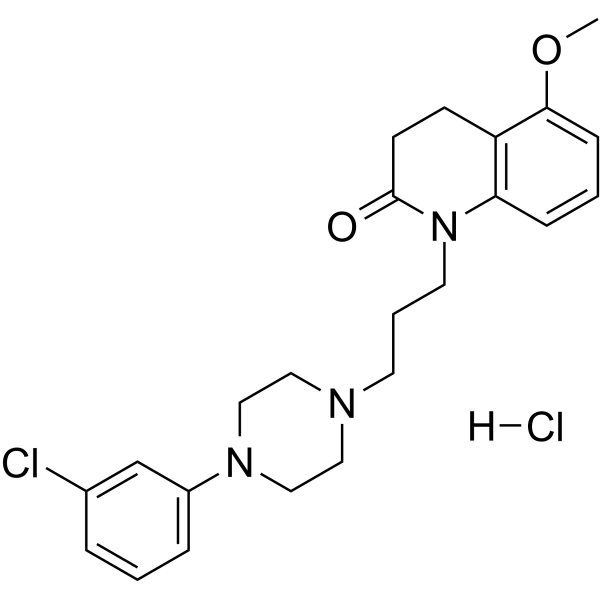
    OPC-14523 hydrochloride is an orally active sigma and 5-HT1A receptor agonist, with high affinity for sigma receptors (σ1/2 IC50=47/56 nM), the 5-HT1A receptor (IC50=2.3 nM), and the 5-HT transporter (IC50=80 nM). OPC-14523 hydrochloride shows antidepressant-like activity .
    OPC-14523 hydrochloride
  • HY-P1299A

    Opioid Receptor Neurological Disease
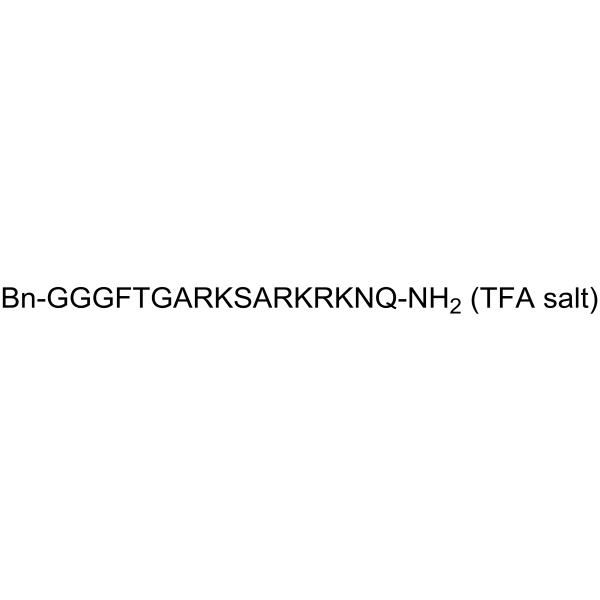
    UFP-101 TFA is a potent, selective, and competitive antagonist of the N/OFQ peptide (NOP) receptor, with a pKi of 10.24. UFP-101 TFA displays >3000-fold selectivity over δ, μ and κ opioid receptors. UFP-101 TFA shows antidepressant-like effect .
    UFP-101 TFA
  • HY-129807

    5-HT Receptor Neurological Disease
    LY-228729 is a selective 5-HT1A receptor agonist. LY-228729 can reduce the rearing frequency of rats and decrease their activity in the central area in the open field test. LY-228729 can reduce the immobility time of rats and increase their swimming time in the forced swim test. LY-228729 can be used in the research of neurological diseases .
    LY-228729
  • HY-P1299

    Opioid Receptor Neurological Disease
    UFP-101 is a potent, selective, and competitive antagonist of the NOP receptor, with a pKi of 10.24. UFP-101 displays >3000-fold selectivity over δ, μ and κ opioid receptors. UFP-101 shows antidepressant-like effect .
    UFP-101
  • HY-W052508R

    N-Desalkylquetiapine (Standard)

    5-HT Receptor Reference Standards Neurological Disease
    Norquetiapine is an antidepressant and neuroprotective agent and is the active metabolic component of Quetiapine (HY-14544). Norquetiapine is also a partial 5-HT1A receptor agonist, and a presynaptic α2, 5-HT2C and 5-HT7 b> Receptor antagonist. Norquetiapine can also selectively inhibit norepinephrine transporter (NET), inhibit norepinephrine reuptake, and has potential inhibitory effects on bipolar depression, major depressive disorder, and generalized anxiety disorder. Norquetiapine demonstrated in vivo activity in forced swimming in mice and learned helplessness tests in rats .
    Norquetiapine (Standard)
  • HY-W151617A

    Dopamine Receptor Neurological Disease
    Desethoxy Quetiapine dihydrochloride (Compound 28) is an antagonist for dopamine D2 receptor with an IC50 of 1330 nM. Desethoxy Quetiapine dihydrochloride antagonises Apomorphine (HY-12723)-induced climbing and swimming disruption in mouse models .
    Desethoxy Quetiapine dihydrochloride
  • HY-116594

    Sigma Receptor 5-HT Receptor Neurological Disease
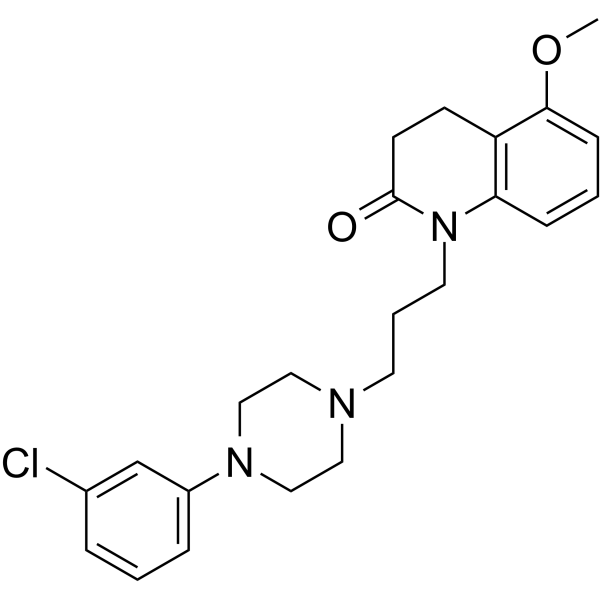
    OPC-14523 free base is an orally active sigma and 5-HT1A receptor agonist, with high affinity for sigma receptors (σ1/2 IC50=47/56 nM), the 5-HT1A receptor (IC50=2.3 nM), and the 5-HT transporter (IC50=80 nM). OPC-14523 free base shows antidepressant-like activity .
    OPC-14523 free base
  • HY-12392R

    Reference Standards Opioid Receptor Neurological Disease
    Iprindole (Standard) is the analytical standard of Iprindole. This product is intended for research and analytical applications. Iprindole, an opioid receptor agonist, is a tricyclic antidepressant. Iprindole shortens the immobility time in mice forced swimming test, which can be reversed by the opiate antagonist Naloxone (HY-17417A). Iprindole induces lamellar body formation but devoid of lamellar bodies. Iprindole hydrochloride can be used for the research of depression .
    Iprindole (Standard)
  • HY-147735

    GABA Receptor Neurological Disease
    GABAA receptor agonist 1 (compound 3e) is a potent GABAA receptor agonist. GABAA receptor agonist 1 shows anti-depression activities in classical mouse models of depression of FST and TST. GABAA receptor agonist 1 binds at the GABA binding site of GABAA receptor in order to produce GABAergic effects. GABAA receptor agonist 1 has the potential for the research of depression .
    GABAA receptor agonist 1
  • HY-147736

    GABA Receptor Neurological Disease
    GABAA receptor agonist 2 (compound 4c) is a potent GABAA receptor agonist. GABAA receptor agonist 2 shows anti-depression activities in classical mouse models of depression of FST and TST. GABAA receptor agonist 2 binds at the GABA binding site of GABAA receptor in order to produce GABAergic effects. GABAA receptor agonist 2 has the potential for the research of depression .
    GABAA receptor agonist 2
  • HY-103151A

    5-HT Receptor Neurological Disease Metabolic Disease
    CP94253 is an orally active, brain-penetrant and selective 5-HT1B receptor agonist with an Ki of 2 nM. CP94253 induces antidepressant-like effects, waking enhancement, sleep inhibition, increased sleep latency, hyperlocomotion, and suppressed aggressive behavior. CP94253 can be used for the research of depression and heightened aggressive behavior .
    CP94253
  • HY-181760

    Bacterial Infection
    Quorum sensing-IN-11 is a quorum sensining inhibitor and a LasR antagonist with an IC50 of 0.7399 μM. Quorum sensing-IN-11 inhibits biofilm, pyocyanin formation and swimming motility in Pseudomonas aeruginosa. Quorum sensing-IN-11 can be used for the research of Pseudomonas aeruginosa infection .
    Quorum sensing-IN-11
  • HY-12392A

    Opioid Receptor Neurological Disease
    Iprindole hydrochloride, an opioid receptor agonist, is a tricyclic antidepressant. Iprindole hydrochloride shortens the immobility time in mice forced swimming test, which can be reversed by the opiate antagonist Naloxone (HY-17417A). Iprindole hydrochloride induces lamellar body formation but devoid of lamellar bodies. Iprindole hydrochloride can be used for the research of depression .
    Iprindole hydrochloride
  • HY-180212A

    Opioid Receptor Neurological Disease
    SYK-1106 dihydrochloride is a selective δ opioid receptor (DOR) agonist with an EC50 of 0.089 nM. SYK-1106 dihydrochloride shows high selectivity over MOR and KOR. SYK-1106 dihydrochloride exhibits antidepressant-like effects in the mouse forced-swimming tests. SYK-1106 dihydrochloride can be used for the research of depression .
    SYK-1106 dihydrochloride
  • HY-183324

    iGluR Dopamine Transporter Neurological Disease
    AMPA receptor modulator-12 is an orally acrive AMPA receptor positive allosteric modulator. AMPA receptor modulator-12 also exhibits moderate binding affinity for the human dopamine transporter with a Kd of 1.57 μM. AMPA receptor modulator-12 enhances AMPA receptor-mediated ion currents, delays channel deactivation. AMPA receptor modulator-12 prolongs sleep latency, reduces sleep duration, extends forced swimming time, improves rotarod endurance, and alleviates acute sleep deprivation-related behavioral deficits. AMPA receptor modulator-12 does not increase spontaneous locomotion. AMPA receptor modulator-12 can be used for the research of narcolepsy and fatigue-related conditions .
    AMPA receptor modulator-12

Inquiry Online

Your information is safe with us. * Required Fields.

Salutation


Country or Region *

Applicant Name *


Organization Name *

Department *


Email Address *


Product Name *

Cat. No.


Requested quantity *

Phone Number *


Remarks

Inquiry Online

Inquiry Information

Product Name:
Cat. No.:
Quantity:
MCE Japan Authorized Agent:

