Search Result
Results for "
triazole linker
" in MedChemExpress (MCE) Product Catalog:
1
Biochemical Assay Reagents
| Cat. No. |
Product Name |
Target |
Research Areas |
Chemical Structure |
-
- HY-128945
-
|
|
ADC Linker
|
Inflammation/Immunology
Cancer
|
|
CL2A is a claevable complicated PEG8- and triazole-containing PABC-peptide-mc linker. CL2A is cleavable through pH sensitivity, giving rise to bystander effect, and binds the antibody at a cysteine residue via a disulfide bond. Labetuzumab govitecan used this linker .
|
-
-
- HY-174304
-
|
|
Drug-Linker Conjugates for ADC
|
Cancer
|
|
Bis (vinylsulfonyl) piperazine-triazole-PEG3-O-diisopropylsilyl-triptolide is a drug-linker conjugates for ADC. Bis (vinylsulfonyl) piperazine-triazole-PEG3-O-diisopropylsilyl-triptolide consists of Triptolide (HY-32735) and a stable cleavable linker (Bis (vinylsulfonyl) piperazine-triazole-PEG3-O-diisopropylsilyl-Cl) (HY-174810). Bis (vinylsulfonyl) piperazine-triazole-PEG3-O-diisopropylsilyl-triptolide can be used for the synthesis of antibody-drug conjugates (ADCs) .
|
-
-
- HY-W096079
-
|
|
ADC Linker
|
Cancer
|
|
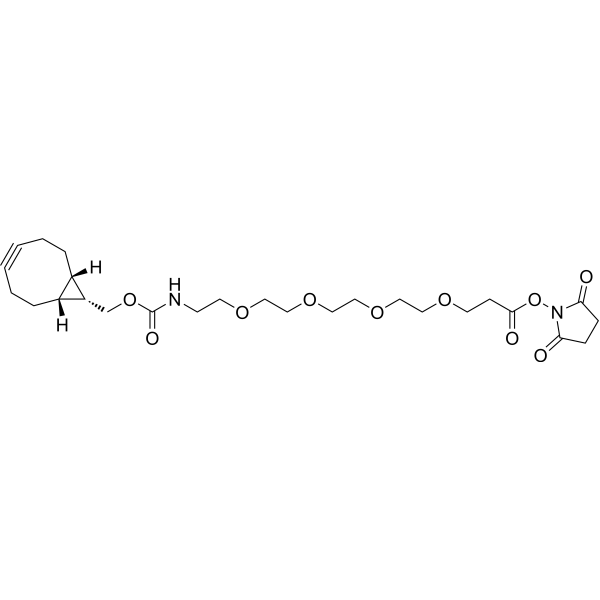
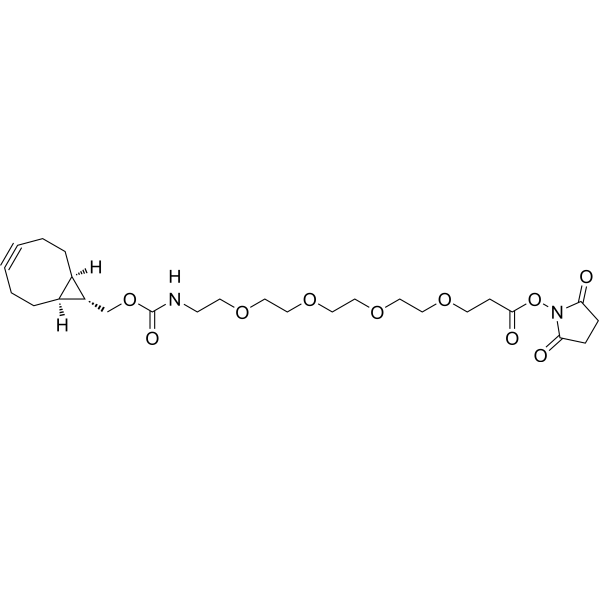
BCN-endo-PEG4-NHS is an ADC Linker containing 4 PEG units. BCN-endo-PEG4-NHS contains the lyophilic bidentate macrocyclic ligand endo-BCN, which allows for further synthesis of macrocyclic complexes. In click chemistry, endo-BCN can react with molecules containing azide groups to form stable triazoles in the absence of catalysts.
|
-
-
- HY-156311
-
|
|
ADC Linker
|
Cancer
|
|
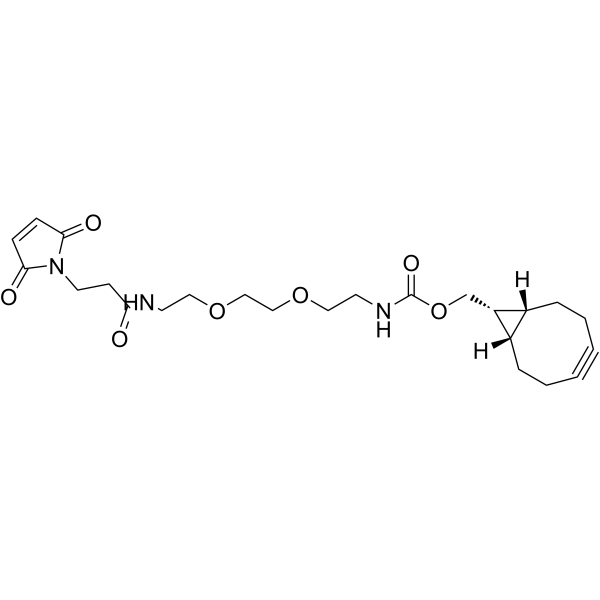
BCN-endo-PEG2-maleimide is an ADC Linker containing 4 PEG units. BCN-endo-PEG2-maleimide contains the lyophilic bidentate macrocyclic ligand endo-BCN, which can further synthesize macrocyclic complexes. In click chemistry, endo-BCN can react with molecules containing azide groups to form stable triazoles in the absence of catalysts. Its maleimide group (-Maleimide) degrades in aqueous media and has been used in drug delivery studies.
|
-
-
- HY-134734
-
|
|
ADC Linker
|
Cancer
|
|
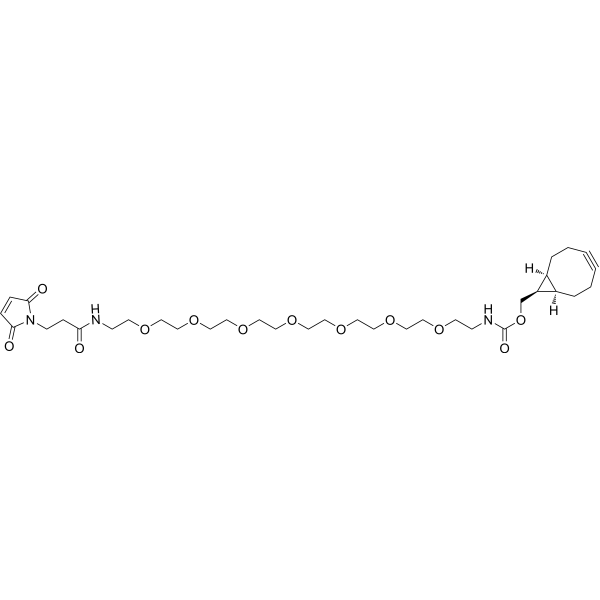
BCN-exo-PEG7-maleimide is an ADC Linker containing 7 PEG units. BCN-exo-PEG7-maleimide contains the lyophilic bidentate macrocyclic ligand BCN, which allows for further synthesis of macrocyclic complexes. In click chemistry, BCN reacts with molecules containing azide groups to form stable triazoles in the absence of catalysts. Its maleimide group (-Maleimide) degrades in aqueous media and has been used in drug delivery studies.
|
-
-
- HY-156322
-
|
|
ADC Linker
|
Cancer
|
|
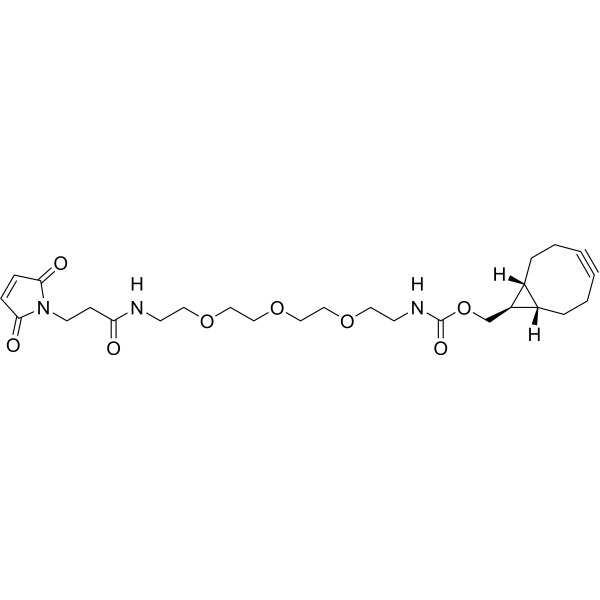
BCN-exo-PEG3-maleimide is an ADC Linker containing 3 PEG units. BCN-exo-PEG3-maleimide contains the lyophilic bidentate macrocyclic ligand BCN, which enables the further synthesis of macrocyclic complexes. In click chemistry, BCN reacts with molecules containing azide groups to form stable triazoles in the absence of catalysts. Its maleimide group (-Maleimide) degrades in aqueous media and has been used in drug delivery studies.
|
-
-
- HY-156320
-
|
|
ADC Linker
|
Cancer
|
|
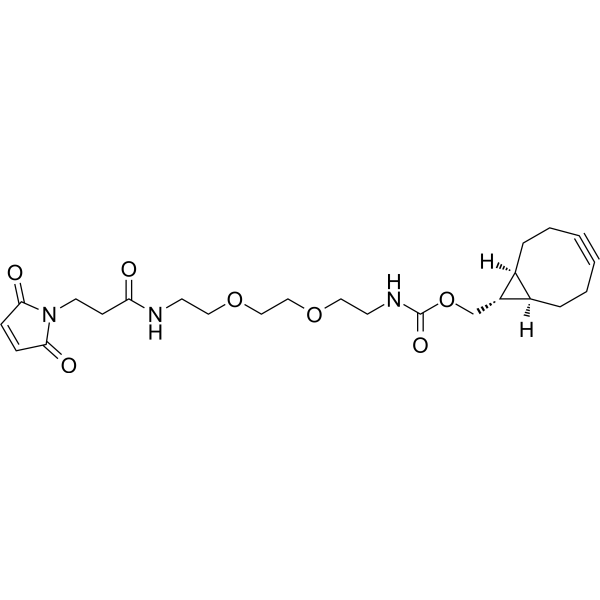
BCN-exo-PEG2-maleimide is an ADC Linker containing 2 PEG units. BCN-exo-PEG2-maleimide contains the lyophilic bidentate macrocyclic ligand BCN, which allows for further synthesis of macrocyclic complexes. In click chemistry, BCN reacts with molecules containing azide groups to form stable triazoles in the absence of catalysts. Its maleimide group (-Maleimide) degrades in aqueous media and has been used in drug delivery studies.
|
-
-
- HY-N7497
-
|
|
Others
|
Others
|
|
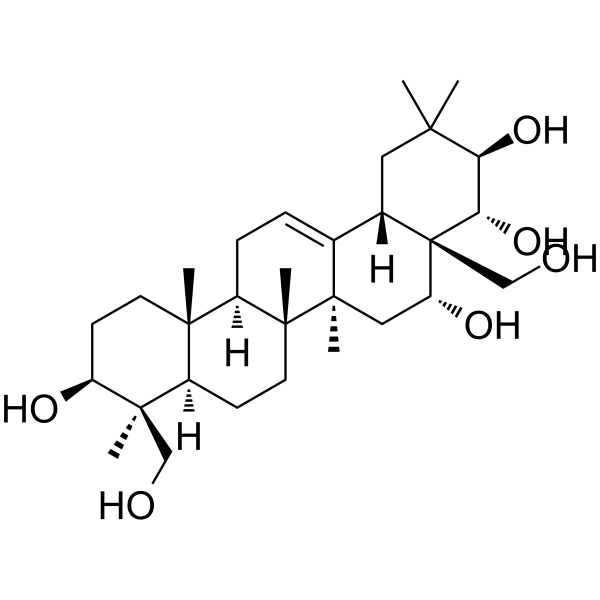
Protoescigenin is the main aglycone of horse chestnut saponin mixture known as escin. Protoescigenin is selected as substrate for exploratory chemistry towards selective protection, followed by propargyl ether formation and subsequent condensation with azido-monosaccharides, to obtain novel triazole linked conjugates of the triterpene .
|
-
-
- HY-W598198
-
|
|
Biochemical Assay Reagents
|
Others
|
|
Ethyl 3-azidopropanoate comprises an ethyl ester and a terminal azide group with a 2-carbon linker. The azide can react with alkyne, BCN, DBCO via Click Chemistry to yield a stable triazole linkage. The methyl ester groups can be hydrolyzed, reduced, or substituted under different conditions.
|
-
-
- HY-W190926
-
|
|
Biochemical Assay Reagents
|
Others
|
|
2,5 -Dioxo-1-pyrrolidinyl 11-azidoundecanoate is a linker containing an azide group and an NHS ester. The azide group can react with alkyne, BCN, DBCO via Click Chemistry to yield a stable triazole linkage. The NHS ester can be used to label the primary amines (-NH2) of proteins, amine-modified oligonucleotides, and other amine-containing molecules.
|
-
-
- HY-156317
-
|
|
ADC Linker
|
Cancer
|
|
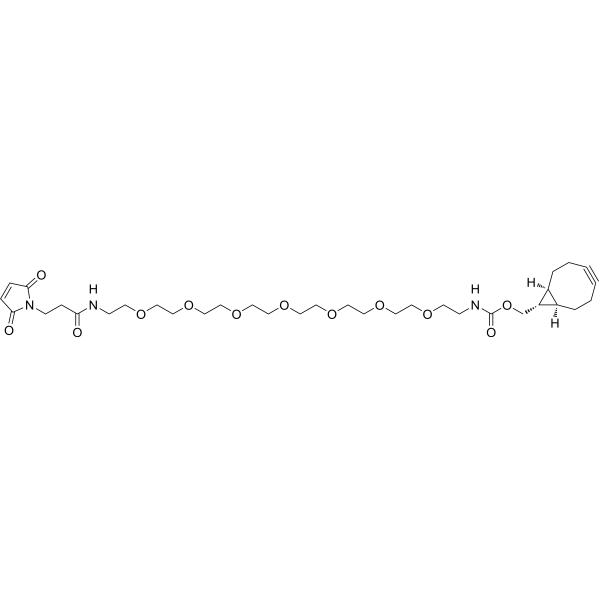
BCN-endo-PEG7-maleimide is an ADC Linker containing 7 PEG units. BCN-endo-PEG7-maleimide contains the lyophilic bidentate macrocyclic ligand endo-BCN, which can further synthesize macrocyclic complexes. In click chemistry, endo-BCN can react with molecules containing azide groups to form stable triazoles in the absence of catalysts.
|
-
-
- HY-W190881
-
|
|
Biochemical Assay Reagents
|
Others
|
|
N3-PEG11-CH2CH2Br is a PEG linker containing a bromine and an azide group. The hydrophilic PEG spacer increases solubility in aqueous media. The azide group can react with alkyne, BCN, DBCO via Click Chemistry to yield a stable triazole linkage. The bromine (Br) is a very good leaving group for nucleophilic substitution reactions.
|
-
-
- HY-161943
-
|
|
Influenza Virus
|
Neurological Disease
|
|
NEU3-IN-1 (compound 963) is a NEU3 inhibitor (Ki: 0.12 μM; IC50: 0.31 μM) based on the 2-deoxy-2,3-didehydro-N-acetylneuraminic acid (DANA) scaffold and is a C9 biphenylcarbamate derivative. NEU is a human neuraminidase with 4 isozymes; NEU3-IN-1 is an important tool for studying the function of NEU3 isozymes; its amide and triazole linker analogs are selective for NEU1 and NEU4 isozymes, respectively .
|
-
-
- HY-151647
-
|
|
Biochemical Assay Reagents
|
Others
|
|
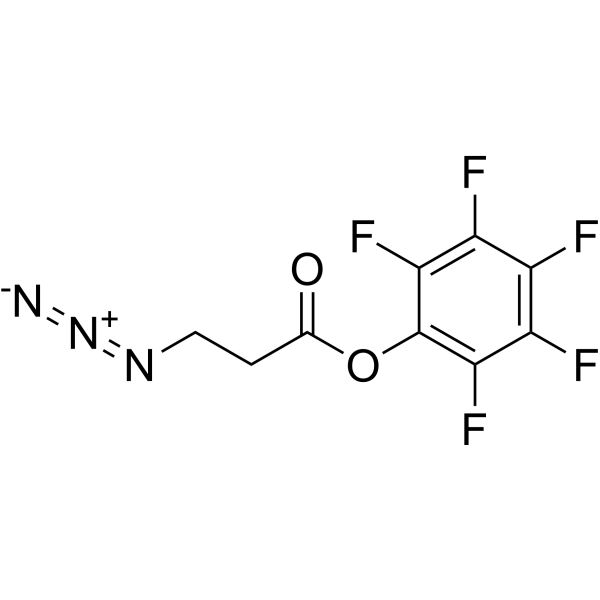
3-Azidopropanoic acid-PFP ester is an azidopropanoic acid linker that contains an activated PFP ester. The azide group can undergo copper-catalyzed Click Chemistry reactions with alkynes, DBCO and BCN to form triazole linkages. The activated PFP ester can react with amine groups to form stable amide bonds . 3-Azidopropanoic acid-PFP ester is a click chemistry reagent, it contains an Azide group and can undergo copper-catalyzed azide-alkyne cycloaddition reaction (CuAAc) with molecules containing Alkyne groups. It can also undergo strain-promoted alkyne-azide cycloaddition (SPAAC) reactions with molecules containing DBCO or BCN groups.
|
-
-
- HY-174810
-
|
|
ADC Linker
|
Cancer
|
|
Bis(vinylsulfonyl)piperazine-triazole-PEG3-O-diisopropylsilyl-Cl is a cleavable and silyl ether-based ADC linker that can be used in the synthesis of antibody-drug conjugates (ADC) .
|
-
-
- HY-128945A
-
|
|
ADC Linker
|
Inflammation/Immunology
Cancer
|
|
CL2A TFA is a claevable complicated PEG8- and triazole-containing PABC-peptide-mc linker. CL2A TFA is cleavable through pH sensitivity, giving rise to bystander effect, and binds the antibody at a cysteine residue via a disulfide bond. Labetuzumab govitecan used this linker .
|
-
-
- HY-155791
-
|
|
ADC Linker
|
Cancer
|
|
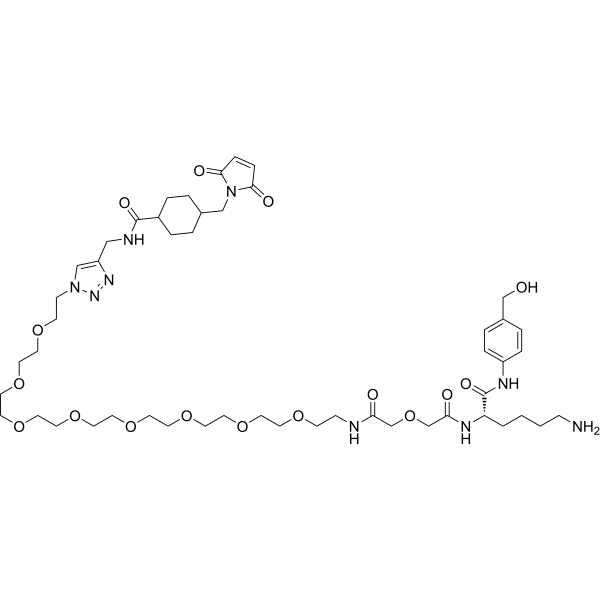
SMCC-NH-CH2-triazole-PEG8-oxydiacetamide-Lys(MTT)-PAB (Page 7, Compound C) is an ADC linker that can be used for the synthesis of antibody-conjugated active molecules (ADC) .
|
-
-
- HY-D2756
-
|
|
Fluorescent Dye
|
Others
|
|
OG 488 alkyne is a bright, green-fluorescent alkyne-activated probe routinely used for imaging of azide-containing biomolecules. OG 488 Alkyne reacts with azides via a copper-catalyzed click reaction (CuAAC) to form a stable triazole linker.
|
-
-
- HY-156323
-
|
|
ADC Linker
|
Cancer
|
|
BCN-exo-PEG4-NHS is an ADC Linker containing 4 PEG units. BCN-exo-PEG4-NHS contains the lyophilic bidentate macrocyclic ligand BCN, which allows for further synthesis of macrocyclic complexes. In click chemistry, BCN reacts with molecules containing azide groups to form stable triazoles in the absence of catalysts.
|
-
-
- HY-156324
-
|
|
ADC Linker
|
Cancer
|
|
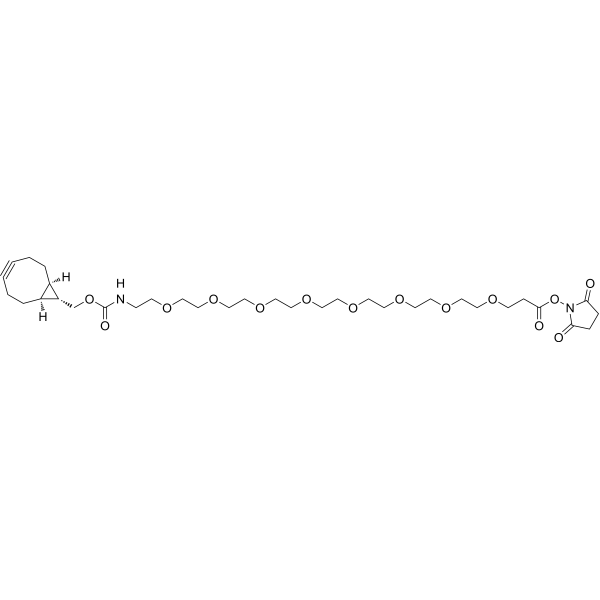
BCN-exo-PEG8-NHS is an ADC Linker containing 8 PEG units. BCN-exo-PEG8-NHS contains the lyophilic bidentate macrocyclic ligand BCN, which allows for further synthesis of macrocyclic complexes. In click chemistry, BCN reacts with molecules containing azide groups to form stable triazoles in the absence of catalysts.
|
-
-
- HY-156319
-
|
|
ADC Linker
|
Cancer
|
|
BCN-exo-PEG2-NH2 is an ADC Linker containing 2 PEG units. BCN-exo-PEG2-NH2 contains the lyophilic bidentate macrocyclic ligand BCN, which can further synthesize macrocyclic complexes. In click chemistry, BCN reacts with molecules containing azide groups to form stable triazoles in the absence of catalysts.
|
-
-
- HY-156310
-
|
|
ADC Linker
|
Cancer
|
|
BCN-endo-PEG7-NH2 is an ADC Linker containing 7 PEG units. BCN-endo-PEG7-NH2 contains the lyophilic bidentate macrocyclic ligand endo-BCN, which can further synthesize macrocyclic complexes. In click chemistry, endo-BCN can react with molecules containing azide groups to form stable triazoles in the absence of catalysts.
|
-
-
- HY-180121
-
|
|
Drug Intermediate
|
Others
|
|
tBu-MTX-CO-NH-C2-O-C2-N3 (Compound 4a) is an azide compound, which can be used as a drug intermediate for the construction of chemical inducers of dimerisation.
|
-
-
- HY-126677
-
|
|
ADC Linker
PROTAC Linkers
|
Cancer
|
|
Boc-NH-PEG3-C2-triazole-DBCO-PEG4-VC-PAB-DMEA is a double claevable 3-unit and 4-unit PEG linker for antibody-agent-conjugation (ADC). Boc-NH-PEG3-C2-triazole-DBCO-PEG4-VC-PAB-DMEA also is a PROTAC linker that can be used in the synthesis of PROTACs.
|
-
-
- HY-163789
-
|
|
ADC Linker
|
Cancer
|
|
Desthiobiotin-PEG3-triazole-DBCO-sulfo-Maleimide is an ADC linker used in the synthesis of antibody-drug conjugates (ADCs). Desthiobiotin-PEG3-triazole-DBCO-sulfo-Maleimide is a click chemistry reagent, it contains a DBCO group that can undergo strain-promoted alkyne-azide cycloaddition (SPAAC) with molecules containing Azide groups .
|
-
-
- HY-W800671
-
|
1,5-Pentane diazide
|
Biochemical Assay Reagents
|
Others
|
|
1,5-Diazidopentane (1,5-Pentane diazide) is a linker with two azide groups which can react with alkyne, BCN, DBCO via Click Chemistry to yield a stable triazole linkage.
|
-
-
- HY-W800704
-
|
|
Fluorescent Dye
|
Others
|
|
BP Fluor 594 alkyne is a bright, red-fluorescent alkyne-activated probe routinely used for imaging of azide-containing biomolecules. BP Fluor 594 alkyne reacts with azides via a copper-catalyzed click reaction (CuAAC) to form a stable triazole linker.
|
-
-
- HY-W096068
-
|
|
Biochemical Assay Reagents
|
Others
|
|
Propargyl-PEG5-Ms represents a bifunctional linker possessing a proparygyl group reactive towards azides in copper (I) click chemistry to form stable triazoles with the target compound as well as a mesyl group which is a good leaving group for nucleophilic reactions.
|
-
-
- HY-W540023
-
|
|
ADC Linker
|
Cancer
|
|
Endo-BCN-Fmoc-L-Lysine is a linker containing the lyophilic bidentate macrocyclic ligand endo-BCN, which can further synthesize macrocyclic complexes. In click chemistry, endo-BCN can react with molecules containing azide groups to form stable triazoles in the absence of catalysts.
|
-
-
- HY-W800657
-
|
|
Biochemical Assay Reagents
|
Others
|
|
Azido-PEG1-hydrazide hydrochloride is a bifunctional PEG linker containing an azide group and a hydrazide group. The azide group can react with alkyne, BCN, DBCO via Click Chemistry to yield a stable triazole linkage. Hydrazine moiety reacts with an aldehyde to form semi-permanent hydrazone bonds.
|
-
-
- HY-W591964
-
|
|
Biochemical Assay Reagents
|
Others
|
|
t-Boc-Aminooxy-pentane-azide is a linker containing an azide group and Boc-protected amino group. The azide group can react with alkyne, BCN, DBCO via Click Chemistry to yield a stable triazole linkage. The Boc group can be deprotected under mild acidic conditions to form the free amine.
|
-
-
- HY-W190917
-
|
|
Biochemical Assay Reagents
|
Others
|
|
N1, N4-Bisazidospermine bistosylate is a spermine linker containing two azide groups. The azide group can react with alkyne, BCN, DBCO via Click Chemistry to yield a stable triazole linkage. Spermidine is a polyamine that modulates various cellular activities like cellular development and differentiation, stability of DNA, and apoptosis.
|
-
-
- HY-N7497R
-
|
|
Reference Standards
Others
|
Others
|
|
Protoescigenin (Standard) is the analytical standard of Protoescigenin. This product is intended for research and analytical applications. Protoescigenin is the main aglycone of horse chestnut saponin mixture known as escin. Protoescigenin is selected as substrate for exploratory chemistry towards selective protection, followed by propargyl ether formation and subsequent condensation with azido-monosaccharides, to obtain novel triazole linked conjugates of the triterpene .
|
-
-
- HY-W591962
-
|
1-Pentanol, 5-azido-
|
Biochemical Assay Reagents
|
Others
|
|
5-Azidopentan-1-ol (1-Pentanol, 5-azido-) is a linker containing an azide group and a terminal hydroxyl group. The azide group can react with alkyne, BCN, DBCO via Click Chemistry to yield a stable triazole linkage. The hydroxyl group enables further derivatization or replacement with other reactive functional groups.
|
-
-
- HY-W800670
-
|
|
Biochemical Assay Reagents
|
Others
|
|
Mal-amido-PEG5-alkyne is a PEG linker containing a maleimide group and an alkyne. The hydrophilic PEG spacer increases solubility in aqueous media. The alkyne group can react with azide-bearing compounds or biomolecules via copper catalyzed azide-alkyne Click Chemistry to yield a stable triazole linkage. The maleimide group will react with a thiol group to form a covalent bond, enabling the connection of biomolecule with a thiol.
|
-
-
- HY-W800698
-
|
|
Fluorescent Dye
|
Others
|
|
BP Fluor 430 Alkyne is a green-fluorescent alkyne-activated probe routinely used for imaging of moderate to high abundance azide-containing biomolecules. BP Fluor 430 Alkyne reacts with azides via a copper-catalyzed click reaction (CuAAC) to form a stable triazole linker.
BP Fluor 430 is a bright, photostable, green-fluorescent probe optimally excited near 430 nm. This probe is water-soluble and its fluorescence is pH independent over a wide pH range.
|
-
-
- HY-169368
-
-
-
- HY-W590592
-
|
|
Biochemical Assay Reagents
|
Others
|
|
Azido-PEG12-azide is a monodisperse PEG linker containing two azide groups. The azide group can react with alkyne, BCN, or DBCO via Click Chemistry to yield a stable triazole linkage.
|
-
-
- HY-181058
-
|
|
Drug-Linker Conjugates for ADC
|
Cancer
|
|
Cyclopamine-COO-2-ethoxy-1,3-benzodioxole-O-C-Triazole-C5-AC is a drug-linker conjugate, with Cyclopamine (HY-17024) as its drug moiety. Cyclopamine-COO-2-ethoxy-1,3-benzodioxole-O-C-Triazole-C5-AC itself exhibits no significant anti-tumor activity. Cyclopamine-COO-2-ethoxy-1,3-benzodioxole-O-C-Triazole-C5-AC can be used for the synthesis of ADC molecules .
|
-
-
- HY-W590575
-
|
|
Biochemical Assay Reagents
|
Others
|
|
Azido-PEG3-flouride is a PEG linker containing a fluorine atom and an azide group. The hydrophilic PEG spacer increases solubility in aqueous media. The azide group can react with alkyne, BCN, DBCO via Click Chemistry to yield a stable triazole linkage.
|
-
-
- HY-W197430
-
|
|
Biochemical Assay Reagents
|
Others
|
|
Ethyl 6-azidohexanoate comprises an ethyl ester and a terminal azide group with a 5-carbon linker. The azide can react with alkyne, BCN, DBCO via Click Chemistry to yield a stable triazole linkage. The methyl ester groups can be hydrolyzed, reduced, or substituted under different conditions.
|
-
-
- HY-W598199
-
|
|
Biochemical Assay Reagents
|
Others
|
|
Ethyl 4-azidobutyrate comprises an ethyl ester and a terminal azide group with a 3-carbon linker. The azide can react with alkyne, BCN, DBCO via Click Chemistry to yield a stable triazole linkage. The methyl ester groups can be hydrolyzed, reduced, or substituted under different conditions.
|
-
-
- HY-W190928
-
|
|
Biochemical Assay Reagents
|
Others
|
|
2-(Azido-PEG2-amido)-1,3-bis-(tert-butyldimethylsilanoxy)propane is a PEG linker containing a TBDMS acid labile, alcohol protecting group. The azide group is able to participate in copper-catalyzed Click Chemistry reactions with alkynes, DBCO and BCN to generate triazole linkages. The hydrophilic PEG linker increases the solubility properties of compounds in aqueous media.
|
-
-
- HY-W591963
-
|
Tos-pentane-azide
|
Biochemical Assay Reagents
|
Others
|
|
5-Azidopentyl 4-methylbenzenesulfonate (Tos-pentane-azide) is a linker containing an azide group and a tosyl group. The azide group can react with alkyne, BCN, DBCO via Click Chemistry to yield a stable triazole linkage. The tosyl group is a good leaving group for nucleophilic substitution reactions.
|
-
-
- HY-W591360
-
|
|
Biochemical Assay Reagents
|
Others
|
|
Iodoacetamido-PEG6-azide is an aqueous soluble PEG linker containing an azide and a terminal Iodoacetamido group. The azide group can react with alkyne, BCN, DBCO via Click Chemistry to yield a stable triazole linkage. The Iodoacetamido moiety is commonly used to bind covalently with the thiol group of cysteine so the protein cannot form disulfide bonds.
|
-
-
- HY-W454989
-
|
|
Biochemical Assay Reagents
|
Others
|
|
Hept-6-yn-1-yl 4-methylbenzenesulfonate is a linker containing a tosyl group and a propargyl group. The tosyl group is a very good leaving group for nucleophilic substitution reactions. The propargyl group can react with azide-bearing compounds or biomolecules via copper catalyzed azide-alkyne Click Chemistry to yield a stable triazole linkage.
|
-
-
- HY-W800706
-
|
|
Biochemical Assay Reagents
|
Others
|
|
Azidobutanamide-tri-(carboxyethoxymethyl)-methane is a aqueous soluble PEG linker with an azide group with three terminal carboxylic acids. The azide group can react with alkyne, BCN, DBCO via Click Chemistry to yield a stable triazole linkage. The terminal carboxylic acids can react with primary amine groups in the presence of activators (e.g. EDC, or HATU) to form a stable amide bond.
|
-
-
- HY-W800664
-
|
|
Biochemical Assay Reagents
|
Others
|
|
5-(Azido-PEG4)-pent-2-yn-1-Ol is a PEG linker containing an azide group and a terminal hydroxyl group. The hydrophilic PEG spacer increases solubility in aqueous media. The azide group can react with alkyne, BCN, DBCO via Click Chemistry to yield a stable triazole linkage. The hydroxyl group enables further derivatization or replacement with other reactive functional groups.
|
-
-
- HY-W800694
-
|
|
Fluorescent Dye
|
Others
|
|
BP Fluor 405 alkyne triTEA is a blue-fluorescent dye that often used in multi-color applications, including flow cytometry and super-resolution microscopy using STORM. Its excitation is ideally suited for the 407 nm spectral line of the krypton laser or the 408 nm violet laser diode. BP Fluor 405 alkyne triTEA reacts with azides via a copper-catalyzed click reaction (CuAAC) to form a stable triazole linker. A probe for copper-less detection (BP Fluor 405 DBCO) is also available for application where the presence of copper is not acceptable.
|
-
| Cat. No. |
Product Name |
Type |
-
- HY-D2756
-
|
|
Fluorescent Dyes
|
|
OG 488 alkyne is a bright, green-fluorescent alkyne-activated probe routinely used for imaging of azide-containing biomolecules. OG 488 Alkyne reacts with azides via a copper-catalyzed click reaction (CuAAC) to form a stable triazole linker.
|
-
- HY-W800704
-
|
|
Fluorescent Dyes
|
|
BP Fluor 594 alkyne is a bright, red-fluorescent alkyne-activated probe routinely used for imaging of azide-containing biomolecules. BP Fluor 594 alkyne reacts with azides via a copper-catalyzed click reaction (CuAAC) to form a stable triazole linker.
|
-
- HY-W800698
-
|
|
Fluorescent Dyes
|
|
BP Fluor 430 Alkyne is a green-fluorescent alkyne-activated probe routinely used for imaging of moderate to high abundance azide-containing biomolecules. BP Fluor 430 Alkyne reacts with azides via a copper-catalyzed click reaction (CuAAC) to form a stable triazole linker.
BP Fluor 430 is a bright, photostable, green-fluorescent probe optimally excited near 430 nm. This probe is water-soluble and its fluorescence is pH independent over a wide pH range.
|
-
- HY-W800694
-
|
|
Fluorescent Dyes
|
|
BP Fluor 405 alkyne triTEA is a blue-fluorescent dye that often used in multi-color applications, including flow cytometry and super-resolution microscopy using STORM. Its excitation is ideally suited for the 407 nm spectral line of the krypton laser or the 408 nm violet laser diode. BP Fluor 405 alkyne triTEA reacts with azides via a copper-catalyzed click reaction (CuAAC) to form a stable triazole linker. A probe for copper-less detection (BP Fluor 405 DBCO) is also available for application where the presence of copper is not acceptable.
|
| Cat. No. |
Product Name |
Type |
-
- HY-163789
-
|
|
Biochemical Assay Reagents
|
|
Desthiobiotin-PEG3-triazole-DBCO-sulfo-Maleimide is an ADC linker used in the synthesis of antibody-drug conjugates (ADCs). Desthiobiotin-PEG3-triazole-DBCO-sulfo-Maleimide is a click chemistry reagent, it contains a DBCO group that can undergo strain-promoted alkyne-azide cycloaddition (SPAAC) with molecules containing Azide groups .
|
| Cat. No. |
Product Name |
Category |
Target |
Chemical Structure |
-
- HY-N7497
-
-
-
- HY-N7497R
-
|
|
Triterpenes
other families
Terpenoids
Plants
Source Classification
|
Reference Standards
Others
|
|
Protoescigenin (Standard) is the analytical standard of Protoescigenin. This product is intended for research and analytical applications. Protoescigenin is the main aglycone of horse chestnut saponin mixture known as escin. Protoescigenin is selected as substrate for exploratory chemistry towards selective protection, followed by propargyl ether formation and subsequent condensation with azido-monosaccharides, to obtain novel triazole linked conjugates of the triterpene .
|
-
| Cat. No. |
Product Name |
|
Classification |
-
- HY-W096079
-
|
|
|
ADC Synthesis
BCN
|
|
BCN-endo-PEG4-NHS is an ADC Linker containing 4 PEG units. BCN-endo-PEG4-NHS contains the lyophilic bidentate macrocyclic ligand endo-BCN, which allows for further synthesis of macrocyclic complexes. In click chemistry, endo-BCN can react with molecules containing azide groups to form stable triazoles in the absence of catalysts.
|
-
- HY-156311
-
|
|
|
ADC Synthesis
BCN
|
|
BCN-endo-PEG2-maleimide is an ADC Linker containing 4 PEG units. BCN-endo-PEG2-maleimide contains the lyophilic bidentate macrocyclic ligand endo-BCN, which can further synthesize macrocyclic complexes. In click chemistry, endo-BCN can react with molecules containing azide groups to form stable triazoles in the absence of catalysts. Its maleimide group (-Maleimide) degrades in aqueous media and has been used in drug delivery studies.
|
-
- HY-134734
-
|
|
|
BCN
|
|
BCN-exo-PEG7-maleimide is an ADC Linker containing 7 PEG units. BCN-exo-PEG7-maleimide contains the lyophilic bidentate macrocyclic ligand BCN, which allows for further synthesis of macrocyclic complexes. In click chemistry, BCN reacts with molecules containing azide groups to form stable triazoles in the absence of catalysts. Its maleimide group (-Maleimide) degrades in aqueous media and has been used in drug delivery studies.
|
-
- HY-156322
-
|
|
|
BCN
|
|
BCN-exo-PEG3-maleimide is an ADC Linker containing 3 PEG units. BCN-exo-PEG3-maleimide contains the lyophilic bidentate macrocyclic ligand BCN, which enables the further synthesis of macrocyclic complexes. In click chemistry, BCN reacts with molecules containing azide groups to form stable triazoles in the absence of catalysts. Its maleimide group (-Maleimide) degrades in aqueous media and has been used in drug delivery studies.
|
-
- HY-156320
-
|
|
|
BCN
|
|
BCN-exo-PEG2-maleimide is an ADC Linker containing 2 PEG units. BCN-exo-PEG2-maleimide contains the lyophilic bidentate macrocyclic ligand BCN, which allows for further synthesis of macrocyclic complexes. In click chemistry, BCN reacts with molecules containing azide groups to form stable triazoles in the absence of catalysts. Its maleimide group (-Maleimide) degrades in aqueous media and has been used in drug delivery studies.
|
-
- HY-156317
-
|
|
|
BCN
|
|
BCN-endo-PEG7-maleimide is an ADC Linker containing 7 PEG units. BCN-endo-PEG7-maleimide contains the lyophilic bidentate macrocyclic ligand endo-BCN, which can further synthesize macrocyclic complexes. In click chemistry, endo-BCN can react with molecules containing azide groups to form stable triazoles in the absence of catalysts.
|
-
- HY-W190881
-
|
|
|
Azide
|
|
N3-PEG11-CH2CH2Br is a PEG linker containing a bromine and an azide group. The hydrophilic PEG spacer increases solubility in aqueous media. The azide group can react with alkyne, BCN, DBCO via Click Chemistry to yield a stable triazole linkage. The bromine (Br) is a very good leaving group for nucleophilic substitution reactions.
|
-
- HY-151647
-
|
|
|
Azide
|
|
3-Azidopropanoic acid-PFP ester is an azidopropanoic acid linker that contains an activated PFP ester. The azide group can undergo copper-catalyzed Click Chemistry reactions with alkynes, DBCO and BCN to form triazole linkages. The activated PFP ester can react with amine groups to form stable amide bonds . 3-Azidopropanoic acid-PFP ester is a click chemistry reagent, it contains an Azide group and can undergo copper-catalyzed azide-alkyne cycloaddition reaction (CuAAc) with molecules containing Alkyne groups. It can also undergo strain-promoted alkyne-azide cycloaddition (SPAAC) reactions with molecules containing DBCO or BCN groups.
|
-
- HY-D2756
-
|
|
|
Alkynes
|
|
OG 488 alkyne is a bright, green-fluorescent alkyne-activated probe routinely used for imaging of azide-containing biomolecules. OG 488 Alkyne reacts with azides via a copper-catalyzed click reaction (CuAAC) to form a stable triazole linker.
|
-
- HY-156323
-
|
|
|
BCN
|
|
BCN-exo-PEG4-NHS is an ADC Linker containing 4 PEG units. BCN-exo-PEG4-NHS contains the lyophilic bidentate macrocyclic ligand BCN, which allows for further synthesis of macrocyclic complexes. In click chemistry, BCN reacts with molecules containing azide groups to form stable triazoles in the absence of catalysts.
|
-
- HY-156324
-
|
|
|
BCN
|
|
BCN-exo-PEG8-NHS is an ADC Linker containing 8 PEG units. BCN-exo-PEG8-NHS contains the lyophilic bidentate macrocyclic ligand BCN, which allows for further synthesis of macrocyclic complexes. In click chemistry, BCN reacts with molecules containing azide groups to form stable triazoles in the absence of catalysts.
|
-
- HY-156319
-
|
|
|
BCN
|
|
BCN-exo-PEG2-NH2 is an ADC Linker containing 2 PEG units. BCN-exo-PEG2-NH2 contains the lyophilic bidentate macrocyclic ligand BCN, which can further synthesize macrocyclic complexes. In click chemistry, BCN reacts with molecules containing azide groups to form stable triazoles in the absence of catalysts.
|
-
- HY-156310
-
|
|
|
BCN
|
|
BCN-endo-PEG7-NH2 is an ADC Linker containing 7 PEG units. BCN-endo-PEG7-NH2 contains the lyophilic bidentate macrocyclic ligand endo-BCN, which can further synthesize macrocyclic complexes. In click chemistry, endo-BCN can react with molecules containing azide groups to form stable triazoles in the absence of catalysts.
|
-
- HY-180121
-
|
|
|
Azide
|
|
tBu-MTX-CO-NH-C2-O-C2-N3 (Compound 4a) is an azide compound, which can be used as a drug intermediate for the construction of chemical inducers of dimerisation.
|
-
- HY-163789
-
|
|
|
DBCO
|
|
Desthiobiotin-PEG3-triazole-DBCO-sulfo-Maleimide is an ADC linker used in the synthesis of antibody-drug conjugates (ADCs). Desthiobiotin-PEG3-triazole-DBCO-sulfo-Maleimide is a click chemistry reagent, it contains a DBCO group that can undergo strain-promoted alkyne-azide cycloaddition (SPAAC) with molecules containing Azide groups .
|
-
- HY-W096068
-
|
|
|
Alkynes
|
|
Propargyl-PEG5-Ms represents a bifunctional linker possessing a proparygyl group reactive towards azides in copper (I) click chemistry to form stable triazoles with the target compound as well as a mesyl group which is a good leaving group for nucleophilic reactions.
|
-
- HY-W540023
-
|
|
|
BCN
|
|
Endo-BCN-Fmoc-L-Lysine is a linker containing the lyophilic bidentate macrocyclic ligand endo-BCN, which can further synthesize macrocyclic complexes. In click chemistry, endo-BCN can react with molecules containing azide groups to form stable triazoles in the absence of catalysts.
|
-
- HY-W800657
-
|
|
|
Azide
|
|
Azido-PEG1-hydrazide hydrochloride is a bifunctional PEG linker containing an azide group and a hydrazide group. The azide group can react with alkyne, BCN, DBCO via Click Chemistry to yield a stable triazole linkage. Hydrazine moiety reacts with an aldehyde to form semi-permanent hydrazone bonds.
|
-
- HY-W800698
-
|
|
|
Alkynes
|
|
BP Fluor 430 Alkyne is a green-fluorescent alkyne-activated probe routinely used for imaging of moderate to high abundance azide-containing biomolecules. BP Fluor 430 Alkyne reacts with azides via a copper-catalyzed click reaction (CuAAC) to form a stable triazole linker.
BP Fluor 430 is a bright, photostable, green-fluorescent probe optimally excited near 430 nm. This probe is water-soluble and its fluorescence is pH independent over a wide pH range.
|
-
- HY-W590592
-
|
|
|
Azide
|
|
Azido-PEG12-azide is a monodisperse PEG linker containing two azide groups. The azide group can react with alkyne, BCN, or DBCO via Click Chemistry to yield a stable triazole linkage.
|
-
- HY-W590575
-
|
|
|
Azide
|
|
Azido-PEG3-flouride is a PEG linker containing a fluorine atom and an azide group. The hydrophilic PEG spacer increases solubility in aqueous media. The azide group can react with alkyne, BCN, DBCO via Click Chemistry to yield a stable triazole linkage.
|
-
- HY-W190928
-
|
|
|
Azide
|
|
2-(Azido-PEG2-amido)-1,3-bis-(tert-butyldimethylsilanoxy)propane is a PEG linker containing a TBDMS acid labile, alcohol protecting group. The azide group is able to participate in copper-catalyzed Click Chemistry reactions with alkynes, DBCO and BCN to generate triazole linkages. The hydrophilic PEG linker increases the solubility properties of compounds in aqueous media.
|
-
- HY-W591360
-
|
|
|
Azide
|
|
Iodoacetamido-PEG6-azide is an aqueous soluble PEG linker containing an azide and a terminal Iodoacetamido group. The azide group can react with alkyne, BCN, DBCO via Click Chemistry to yield a stable triazole linkage. The Iodoacetamido moiety is commonly used to bind covalently with the thiol group of cysteine so the protein cannot form disulfide bonds.
|
-
- HY-W800664
-
|
|
|
Azide
|
|
5-(Azido-PEG4)-pent-2-yn-1-Ol is a PEG linker containing an azide group and a terminal hydroxyl group. The hydrophilic PEG spacer increases solubility in aqueous media. The azide group can react with alkyne, BCN, DBCO via Click Chemistry to yield a stable triazole linkage. The hydroxyl group enables further derivatization or replacement with other reactive functional groups.
|
-
- HY-W800694
-
|
|
|
Alkynes
|
|
BP Fluor 405 alkyne triTEA is a blue-fluorescent dye that often used in multi-color applications, including flow cytometry and super-resolution microscopy using STORM. Its excitation is ideally suited for the 407 nm spectral line of the krypton laser or the 408 nm violet laser diode. BP Fluor 405 alkyne triTEA reacts with azides via a copper-catalyzed click reaction (CuAAC) to form a stable triazole linker. A probe for copper-less detection (BP Fluor 405 DBCO) is also available for application where the presence of copper is not acceptable.
|
Your information is safe with us. * Required Fields.
Inquiry Information
- Product Name:
- Cat. No.:
- Quantity:
- MCE Japan Authorized Agent:

