Search Result
Results for "
water micelles
" in MedChemExpress (MCE) Product Catalog:
106
Biochemical Assay Reagents
| Cat. No. |
상품명 |
Target |
연구분야 |
Chemical Structure |
-
- HY-W099535
-
|
|
Biochemical Assay Reagents
|
Others
|
|
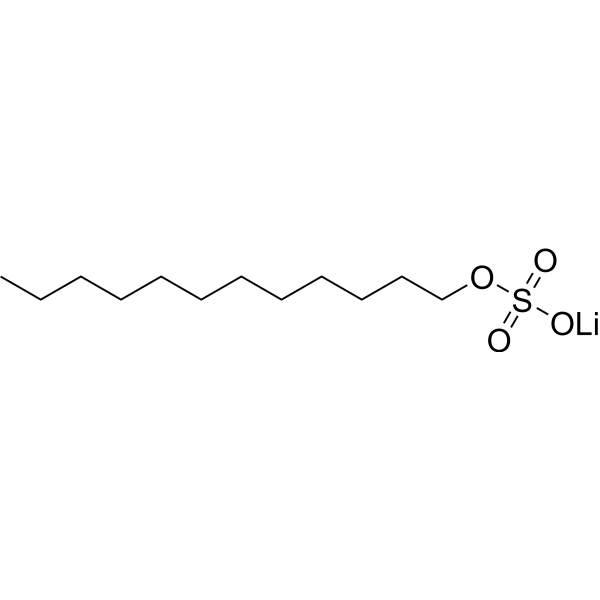
Lithium dodecyl sulfate is an anionic hydrocarbon surfactant with both surface tension reduction and interfacial adsorption capabilities. Lithium dodecyl sulfate induces low surface viscosity; it forms micelles in aqueous solutions through entropy-driven (low temperature) and enthalpy-driven (high temperature) mechanisms. When acting synergistically with tetrabutylammonium bromide, Lithium dodecyl sulfate exhibits cloud point behavior due to micelle aggregation and phase separation. Lithium dodecyl sulfate can form an adsorption layer at the air-water interface with quantifiable surface excess and minimum area per molecule, and it has higher equilibrium surface tension and foamability compared to other dodecyl sulfate counterion variants. The foam stability of Lithium dodecyl sulfate above its critical micelle concentration is low, and its dynamic surface tension pattern changes dynamically with bubble frequency .
|
-
-
- HY-W440690
-
|
|
Liposome
|
Cancer
|
|
Cholesterol-PEG2000-amine is a pegylated lipids which can be used for preparation of liposome or nanoparticle. The lipophilic moiety can encapsulate hydrophobic drugs whereas the hydrophilic PEG chain helps the overal water solubility of the micelles.
|
-
-
- HY-N16025
-
|
|
Liposome
Biochemical Assay Reagents
|
Others
|
|
DOPE-PEG(2000) Amine ammonium is a polydisperse PEG covalently attached to a phospholipid. The polymer is an amphiphilic molecule with hydrophobic fatty acid chains and hydrophilic PEG head which enables lipid bilayer or micelle formation in water. The phospholipid PEG can be used to prepare liposome or nanoparticles for targeted agent delivery and is reactive with alkyne to form a triazole ring .
|
-
-
- HY-W440915
-
|
|
Liposome
|
Inflammation/Immunology
|
|
DSPE-PEG2000-FITC is a PEG lipid conjugated with fluorescein. FITC is a green dye with a peak absorption at 494 nm and a maximum emission at 520 nm, which is used for staining biological samples or nanoparticles. DSPE-PEG2000-FITC spontaneously forms lipid bilayers or micelles in water and can be used to prepare liposomes for delivering substances such as mRNA vaccines .
|
-
-
- HY-W440706
-
|
|
Liposome
|
Cancer
|
|
Cholesterol-PEG2000-alcohol is a pegylated lipids which can be used for preparation of liposome or nanoparticle. The lipophilic moiety can encapsulate hydrophobic drugs whereas the hydrophilic PEG chain helps the overal water solubility of the micelles. The amine can react with an activated NHS ester to form a stable amide bond.
|
-
-
- HY-W440833
-
|
|
Liposome
|
Others
|
|
DSPE-PEG3400-azide is a polydisperse PEG covalently attached to a phospholipid. The polymer is an amphiphilic molecule with hydrophobic fatty acid chains and hydrophilic PEG head which enables lipid bilayer or micelles formation in water. The phospholipid PEG can be used to prepare liposome or nanoparticles for targeted drug delivery and is reactive with alkyne to form triazole bond.
|
-
-
- HY-W440939
-
|
|
Liposome
|
Others
|
|
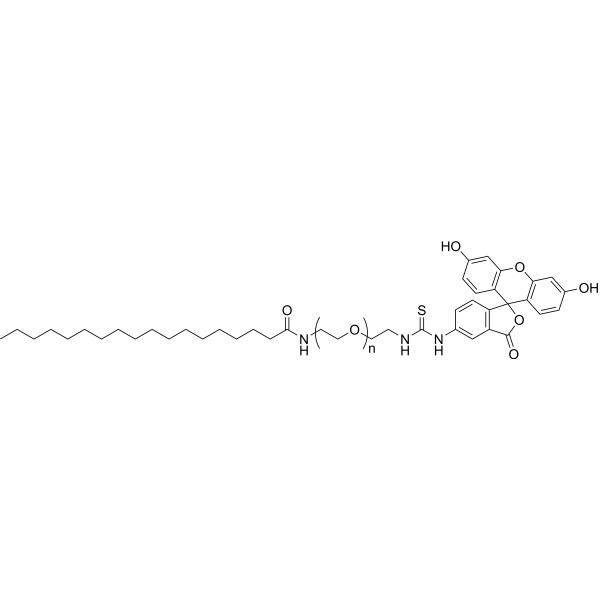
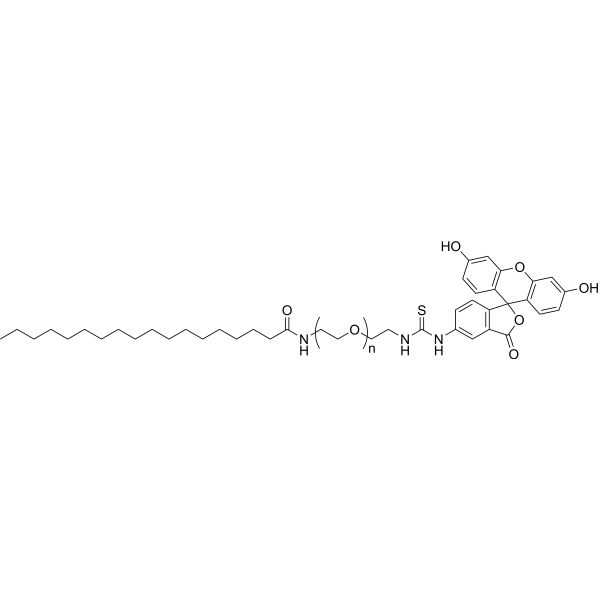
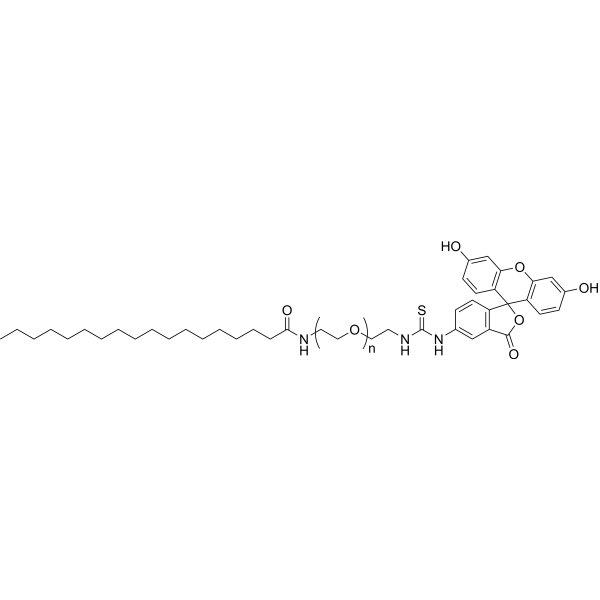
Stearic acid-PEG3400-FITC is a PEG lipid which forms micelles in water and can be used for drug delivery applications. The FITC fluorescent can be easily traced by miscroscopy. FITC is a green dye with peak absorption at 494 nm and maximum emission at 520 nm and can be used for staining biological samples or nanoparticles. FITC can be easily traced by fluorescence microscopy.
|
-
-
- HY-W590593
-
|
|
Liposome
|
Cancer
|
|
mPEG-Cholesterol,MW 2000 is a PEG derivative which self-assembles in water to form micelle-like structure. The cholesterol tail can be used to encapsulate hydrophobic drugs while the PEG chain ehances the water solubility of the micelles.
|
-
-
- HY-W155121
-
-
-
- HY-W591913
-
|
|
Liposome
|
Cancer
|
|
Cholesterol-PEG2000-methoxy is a PEG derivative which self-assembles in water to form micelle-like structure. The cholesterol tail can be used to encapsulate hydrophobic drugs while the PEG chain ehances the water solubility of the micelles.
|
-
-
- HY-W440722
-
|
|
Liposome
|
Others
|
|
Cholesterol-PEG1000-Thiol is a PEGylated lipid that forms micelles in water and can be used to prepare liposomes or nanoparticles as drug delivery systems. The thiol moiety reacts with maleimide to form a stable thioether bond .
|
-
-
- HY-W440724
-
|
|
Liposome
|
Cancer
|
|
Cholesterol-PEG3400-Thiol is an amphiphatic PEG derivative which forms micelles in water and can be used to prepare liposomes or nanoparticles for drug delivery system. The thiol moiety is reactive with maleimide to form a stable thioether bond.
|
-
-
- HY-167410
-
|
|
Biochemical Assay Reagents
|
Others
|
|
PLLA10000-PEG2000-ALK is a polylactic acid derivative that can form micelles in water. PLLA10000-PEG2000-ALK can be used in drug delivery research .
|
-
-
- HY-167405
-
|
|
Biochemical Assay Reagents
|
Others
|
|
PLLA1000-PEG3000-ALK is a polylactic acid derivative that can form micelles in water. PLLA1000-PEG3000-ALK can be used in drug delivery research .
|
-
-
- HY-167401
-
|
|
Biochemical Assay Reagents
|
Others
|
|
PLLA2000-PEG3000-ALK is a polylactic acid derivative that can form micelles in water. PLLA2000-PEG3000-ALK can be used in drug delivery research .
|
-
-
- HY-W440934
-
|
|
Liposome
|
Others
|
|
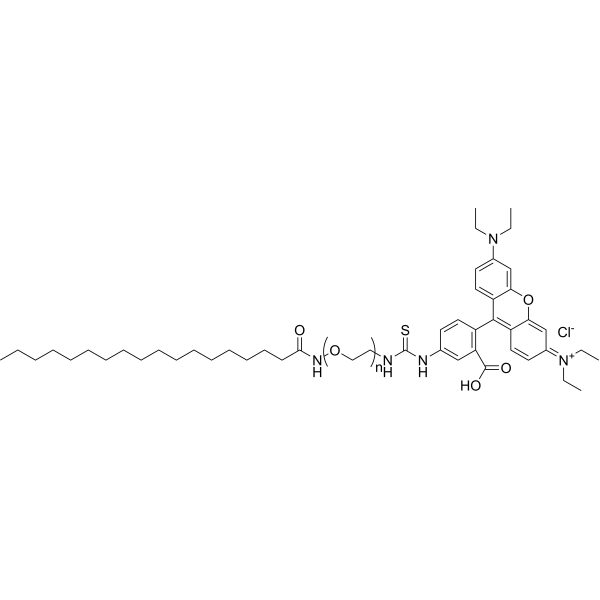
Stearic acid-PEG2000-Rhodamine is an amphiphilic PEG polymer which can form micelles in water. The rhodamine can be used for staining sample and easily traced by fluorescence microscopy. Rhodamine has maximum absorption at 570 nm and emission around 595 nm.
|
-
-
- HY-W440885
-
|
|
Biochemical Assay Reagents
|
Others
|
|
DSPE-PEG5000-Ald is a phospholipid PEG polymer which can self-assemble spontaneously in water with their hydrophilic heads oriented toward the water (micelles). The polymer can be used to prepare liposome as a drug nanocarrier for administration of nutrients and therapeutic drugs, such as lipid nanoparticles in mRNA or DNA vaccines. The aldehyde is reactive with aminooxy to form a stable oxime linkage or with amine at pH < 7 to form a reversible imine bond.
|
-
-
- HY-W440991
-
|
DOPE-PEG2000-NH2
|
Liposome
|
Cancer
|
|
DOPE-PEG-Amine (MW 2000) is a polydisperse PEG covalently attached to a phospholipid. The polymer is an amphiphilic molecule with hydrophobic fatty acid chains and hydrophilic PEG head which enables lipid bilayer or micelle formation in water. The phospholipid PEG can be used to prepare liposome or nanoparticles for targeted drug delivery and is reactive with alkyne to form a triazole ring.
|
-
-
- HY-W440938
-
|
|
Liposome
|
Others
|
|
Stearic acid-PEG2000-FITC is an amphiphatic polyPEG which can self assemble to form micelles in water. The polymer can be used to encapsulate therapeutic agent. FITC is a green dye with peak absorption at 494 nm and maximum emission at 520 nm and can be used for staining biological samples or nanoparticles. FITC can be easily traced by fluorescence microscopy.
|
-
-
- HY-W440902
-
|
|
Biochemical Assay Reagents
|
Others
|
|
DSPE-PEG3400-IA is an iodoacetyll PEG lipid. The polymer can form lipid bilayer or micelles spontaneoulsy in water. The lipophilic tails can be used to encapsulate hydrophobic therapeutic agents while the hydrophilic head can be used to encapuslate hydrophilic drugs/nutrient, such as antibody, mRNA/DNA. The iodoacetyl group is reactive with thiol to produce a thioether linkage.
|
-
-
- HY-W440940
-
|
|
Liposome
|
Others
|
|
Stearic acid-PEG5000-FITC is a PEG lipid which forms micelles in water and can be used for drug delivery applications. The FITC fluorescent can be easily traced by miscroscopy. FITC is a green dye with peak absorption at 494 nm and maximum emission at 520 nm and can be used for staining biological samples or nanoparticles. FITC can be easily traced by fluorescence microscopy.
|
-
-
- HY-167384
-
|
|
Biochemical Assay Reagents
|
Others
|
|
PLLA1000-PEG1000-BIO is a polylactic acid derivative that can form micelles in water. In addition, PLLA1000-PEG1000-BIO can bind tightly to avidin or streptavidin for protein labeling. PLLA1000-PEG1000-BIO can be used in drug delivery research .
|
-
-
- HY-W440903
-
|
|
Biochemical Assay Reagents
|
Others
|
|
DSPE-PEG5000-IA is a cyclooctyne containing phospholipid PEG polymer. The polymer can self-assemble spontaneously in water to form micelles/lipid bilayer. It can be used to prepare nanoparticles or liposomes as drug carrier in targeted drug delivery system. The DBCO can react with azide molecule via copper free click chemistry to form a stable triazole bond.
|
-
-
- HY-167388
-
|
|
Biochemical Assay Reagents
|
Others
|
|
PLLA5000-PEG5000-ALK is a polylactic acid derivative that can form micelles in water. PLLA5000-PEG5000-ALK can be used in drug delivery research .
|
-
-
- HY-167408
-
|
|
Biochemical Assay Reagents
|
Others
|
|
PLLA10000-PEG5000-ALK is a polylactic acid derivative that can form micelles in water. PLLA10000-PEG5000-ALK can be used in drug delivery research .
|
-
-
- HY-167409
-
|
|
Biochemical Assay Reagents
|
Others
|
|
PLLA10000-PEG3000-ALK is a polylactic acid derivative that can form micelles in water. PLLA10000-PEG3000-ALK can be used in drug delivery research .
|
-
-
- HY-167404
-
|
|
Biochemical Assay Reagents
|
Others
|
|
PLLA1000-PEG5000-ALK is a polylactic acid derivative that can form micelles in water. PLLA1000-PEG5000-ALK can be used in drug delivery research .
|
-
-
- HY-167392
-
|
|
Biochemical Assay Reagents
|
Others
|
|
PLLA4000-PEG5000-ALK is a polylactic acid derivative that can form micelles in water. PLLA4000-PEG5000-ALK can be used in drug delivery research .
|
-
-
- HY-167394
-
|
|
Biochemical Assay Reagents
|
Others
|
|
PLLA4000-PEG2000-ALK is a polylactic acid derivative that can form micelles in water. PLLA4000-PEG2000-ALK can be used in drug delivery research .
|
-
-
- HY-167391
-
|
|
Biochemical Assay Reagents
|
Others
|
|
PLLA5000-PEG1000-ALK is a polylactic acid derivative that can form micelles in water. PLLA5000-PEG1000-ALK can be used in drug delivery research .
|
-
-
- HY-167400
-
|
|
Biochemical Assay Reagents
|
Others
|
|
PLLA2000-PEG5000-ALK is a polylactic acid derivative that can form micelles in water. PLLA2000-PEG5000-ALK can be used in drug delivery research .
|
-
-
- HY-167403
-
|
|
Biochemical Assay Reagents
|
Others
|
|
PLLA2000-PEG1000-ALK is a polylactic acid derivative that can form micelles in water. PLLA2000-PEG1000-ALK can be used in drug delivery research .
|
-
-
- HY-167393
-
|
|
Biochemical Assay Reagents
|
Others
|
|
PLLA4000-PEG3000-ALK is a polylactic acid derivative that can form micelles in water. PLLA4000-PEG3000-ALK can be used in drug delivery research .
|
-
-
- HY-167389
-
|
|
Biochemical Assay Reagents
|
Others
|
|
PLLA5000-PEG3000-ALK is a polylactic acid derivative that can form micelles in water. PLLA5000-PEG3000-ALK can be used in drug delivery research .
|
-
-
- HY-167390
-
|
|
Biochemical Assay Reagents
|
Others
|
|
PLLA5000-PEG2000-ALK is a polylactic acid derivative that can form micelles in water. PLLA5000-PEG2000-ALK can be used in drug delivery research .
|
-
-
- HY-167402
-
|
|
Biochemical Assay Reagents
|
Others
|
|
PLLA2000-PEG2000-ALK is a polylactic acid derivative that can form micelles in water. PLLA2000-PEG2000-ALK can be used in drug delivery research .
|
-
-
- HY-167396
-
|
|
Biochemical Assay Reagents
|
Others
|
|
PLLA3000-PEG5000-ALK is a polylactic acid derivative that can form micelles in water. PLLA3000-PEG5000-ALK can be used in drug delivery research .
|
-
-
- HY-167407
-
|
|
Biochemical Assay Reagents
|
Others
|
|
PLLA1000-PEG1000-ALK is a polylactic acid derivative that can form micelles in water. PLLA1000-PEG1000-ALK can be used in drug delivery research .
|
-
-
- HY-167395
-
|
|
Biochemical Assay Reagents
|
Others
|
|
PLLA4000-PEG1000-ALK is a polylactic acid derivative that can form micelles in water. PLLA4000-PEG1000-ALK can be used in drug delivery research .
|
-
-
- HY-167398
-
|
|
Biochemical Assay Reagents
|
Others
|
|
PLLA3000-PEG2000-ALK is a polylactic acid derivative that can form micelles in water. PLLA3000-PEG2000-ALK can be used in drug delivery research .
|
-
-
- HY-167406
-
|
|
Biochemical Assay Reagents
|
Others
|
|
PLLA1000-PEG2000-ALK is a polylactic acid derivative that can form micelles in water. PLLA1000-PEG2000-ALK can be used in drug delivery research .
|
-
-
- HY-167397
-
|
|
Biochemical Assay Reagents
|
Others
|
|
PLLA3000-PEG3000-ALK is a polylactic acid derivative that can form micelles in water. PLLA3000-PEG3000-ALK can be used in drug delivery research .
|
-
-
- HY-167399
-
|
|
Biochemical Assay Reagents
|
Others
|
|
PLLA3000-PEG1000-ALK is a polylactic acid derivative that can form micelles in water. PLLA3000-PEG1000-ALK can be used in drug delivery research .
|
-
-
- HY-167335
-
|
|
Biochemical Assay Reagents
|
Others
|
|
PLLA1000-PEG3000-SPDP is a polylactic acid derivative that can form micelles in water and the SPDP moiety can react with thiols. PLLA1000-PEG3000-SPDP can be used in drug delivery research .
|
-
-
- HY-167306
-
|
|
Biochemical Assay Reagents
|
Others
|
|
PLLA2000-PEG5000-Thiol is a polylactic acid derivative that forms micelles in water and initiates biodegradation by attacking ester bonds through hydrolysis. PLLA2000-PEG5000-Thiol can be used in drug delivery research .
|
-
-
- HY-167299
-
|
|
Biochemical Assay Reagents
|
Others
|
|
PLLA4000-PEG3000-Thiol is a polylactic acid derivative that forms micelles in water and initiates biodegradation by attacking ester bonds through hydrolysis. PLLA4000-PEG3000-Thiol can be used in drug delivery research .
|
-
-
- HY-167338
-
|
|
Biochemical Assay Reagents
|
Others
|
|
PLLA10000-PEG5000-SPDP is a polylactic acid derivative that can form micelles in water and the SPDP moiety can react with thiols. PLLA10000-PEG5000-SPDP can be used in drug delivery research .
|
-
-
- HY-167341
-
|
|
Biochemical Assay Reagents
|
Others
|
|
PLLA10000-PEG1000-SPDP is a polylactic acid derivative that can form micelles in water and the SPDP moiety can react with thiols. PLLA10000-PEG1000-SPDP can be used in drug delivery research .
|
-
-
- HY-167295
-
|
|
Biochemical Assay Reagents
|
Others
|
|
PLLA5000-PEG3000-Thiol is a polylactic acid derivative that forms micelles in water and initiates biodegradation by attacking ester bonds through hydrolysis. PLLA5000-PEG3000-Thiol can be used in drug delivery research .
|
-
-
- HY-167311
-
|
|
Biochemical Assay Reagents
|
Others
|
|
PLLA1000-PEG3000-Thiol is a polylactic acid derivative that forms micelles in water and initiates biodegradation by attacking ester bonds through hydrolysis. PLLA1000-PEG3000-Thiol can be used in drug delivery research .
|
-
- HY-167316
-
|
|
Biochemical Assay Reagents
|
Others
|
|
PLLA10000-PEG2000-Thiol is a polylactic acid derivative that forms micelles in water and initiates biodegradation by attacking ester bonds through hydrolysis. PLLA10000-PEG2000-Thiol can be used in drug delivery research .
|
-
- HY-167336
-
|
|
Biochemical Assay Reagents
|
Others
|
|
PLLA1000-PEG2000-SPDP is a polylactic acid derivative that can form micelles in water and the SPDP moiety can react with thiols. PLLA1000-PEG2000-SPDP can be used in drug delivery research .
|
-
- HY-167305
-
|
|
Biochemical Assay Reagents
|
Others
|
|
PLLA3000-PEG1000-Thiol is a polylactic acid derivative that forms micelles in water and initiates biodegradation by attacking ester bonds through hydrolysis. PLLA3000-PEG1000-Thiol can be used in drug delivery research .
|
-
- HY-167324
-
|
|
Biochemical Assay Reagents
|
Others
|
|
PLLA4000-PEG2000-SPDP is a polylactic acid derivative that can form micelles in water and the SPDP moiety can react with thiols. PLLA4000-PEG2000-SPDP can be used in drug delivery research .
|
-
- HY-167333
-
|
|
Biochemical Assay Reagents
|
Others
|
|
PLLA2000-PEG1000-SPDP is a polylactic acid derivative that can form micelles in water and the SPDP moiety can react with thiols. PLLA2000-PEG1000-SPDP can be used in drug delivery research .
|
-
- HY-167304
-
|
|
Biochemical Assay Reagents
|
Others
|
|
PLLA3000-PEG2000-Thiol is a polylactic acid derivative that forms micelles in water and initiates biodegradation by attacking ester bonds through hydrolysis. PLLA3000-PEG2000-Thiol can be used in drug delivery research .
|
-
- HY-167301
-
|
|
Biochemical Assay Reagents
|
Others
|
|
PLLA4000-PEG1000-Thiol is a polylactic acid derivative that forms micelles in water and initiates biodegradation by attacking ester bonds through hydrolysis. PLLA4000-PEG1000-Thiol can be used in drug delivery research .
|
-
- HY-167331
-
|
|
Biochemical Assay Reagents
|
Others
|
|
PLLA2000-PEG3000-SPDP is a polylactic acid derivative that can form micelles in water and the SPDP moiety can react with thiols. PLLA2000-PEG3000-SPDP can be used in drug delivery research .
|
-
- HY-167332
-
|
|
Biochemical Assay Reagents
|
Others
|
|
PLLA2000-PEG2000-SPDP is a polylactic acid derivative that can form micelles in water and the SPDP moiety can react with thiols. PLLA2000-PEG2000-SPDP can be used in drug delivery research .
|
-
- HY-167309
-
|
|
Biochemical Assay Reagents
|
Others
|
|
PLLA2000-PEG1000-Thiol is a polylactic acid derivative that forms micelles in water and initiates biodegradation by attacking ester bonds through hydrolysis. PLLA2000-PEG1000-Thiol can be used in drug delivery research .
|
-
- HY-167296
-
|
|
Biochemical Assay Reagents
|
Others
|
|
PLLA5000-PEG2000-Thiol is a polylactic acid derivative that forms micelles in water and initiates biodegradation by attacking ester bonds through hydrolysis. PLLA5000-PEG2000-Thiol can be used in drug delivery research .
|
-
- HY-167321
-
|
|
Biochemical Assay Reagents
|
Others
|
|
PLLA5000-PEG1000-SPDP is a polylactic acid derivative that can form micelles in water and the SPDP moiety can react with thiols. PLLA5000-PEG1000-SPDP can be used in drug delivery research .
|
-
- HY-167328
-
|
|
Biochemical Assay Reagents
|
Others
|
|
PLLA3000-PEG2000-SPDP is a polylactic acid derivative that can form micelles in water and the SPDP moiety can react with thiols. PLLA3000-PEG2000-SPDP can be used in drug delivery research .
|
-
- HY-167297
-
|
|
Biochemical Assay Reagents
|
Others
|
|
PLLA5000-PEG1000-Thiol is a polylactic acid derivative that forms micelles in water and initiates biodegradation by attacking ester bonds through hydrolysis. PLLA5000-PEG1000-Thiol can be used in drug delivery research .
|
-
- HY-167300
-
|
|
Biochemical Assay Reagents
|
Others
|
|
PLLA4000-PEG2000-Thiol is a polylactic acid derivative that forms micelles in water and initiates biodegradation by attacking ester bonds through hydrolysis. PLLA4000-PEG2000-Thiol can be used in drug delivery research .
|
-
- HY-167320
-
|
|
Biochemical Assay Reagents
|
Others
|
|
PLLA5000-PEG2000-SPDP is a polylactic acid derivative that can form micelles in water and the SPDP moiety can react with thiols. PLLA5000-PEG2000-SPDP can be used in drug delivery research .
|
-
- HY-167315
-
|
|
Biochemical Assay Reagents
|
Others
|
|
PLLA10000-PEG3000-Thiol is a polylactic acid derivative that forms micelles in water and initiates biodegradation by attacking ester bonds through hydrolysis. PLLA10000-PEG3000-Thiol can be used in drug delivery research .
|
-
- HY-167317
-
|
|
Biochemical Assay Reagents
|
Others
|
|
PLLA10000-PEG1000-Thiol is a polylactic acid derivative that forms micelles in water and initiates biodegradation by attacking ester bonds through hydrolysis. PLLA10000-PEG1000-Thiol can be used in drug delivery research .
|
-
- HY-167303
-
|
|
Biochemical Assay Reagents
|
Others
|
|
PLLA3000-PEG3000-Thiol is a polylactic acid derivative that forms micelles in water and initiates biodegradation by attacking ester bonds through hydrolysis. PLLA3000-PEG3000-Thiol can be used in drug delivery research .
|
-
- HY-167327
-
|
|
Biochemical Assay Reagents
|
Others
|
|
PLLA3000-PEG3000-SPDP is a polylactic acid derivative that can form micelles in water and the SPDP moiety can react with thiols. PLLA3000-PEG3000-SPDP can be used in drug delivery research .
|
-
- HY-167314
-
|
|
Biochemical Assay Reagents
|
Others
|
|
PLLA10000-PEG5000-Thiol is a polylactic acid derivative that forms micelles in water and initiates biodegradation by attacking ester bonds through hydrolysis. PLLA10000-PEG5000-Thiol can be used in drug delivery research .
|
-
- HY-167326
-
|
|
Biochemical Assay Reagents
|
Others
|
|
PLLA3000-PEG5000-SPDP is a polylactic acid derivative that can form micelles in water and the SPDP moiety can react with thiols. PLLA3000-PEG5000-SPDP can be used in drug delivery research .
|
-
- HY-167334
-
|
|
Biochemical Assay Reagents
|
Others
|
|
PLLA1000-PEG5000-SPDP is a polylactic acid derivative that can form micelles in water and the SPDP moiety can react with thiols. PLLA1000-PEG5000-SPDP can be used in drug delivery research .
|
-
- HY-167312
-
|
|
Biochemical Assay Reagents
|
Others
|
|
PLLA1000-PEG2000-Thiol is a polylactic acid derivative that forms micelles in water and initiates biodegradation by attacking ester bonds through hydrolysis. PLLA1000-PEG2000-Thiol can be used in drug delivery research .
|
-
- HY-167318
-
|
|
Biochemical Assay Reagents
|
Others
|
|
PLLA5000-PEG5000-SPDP is a polylactic acid derivative that can form micelles in water and the SPDP moiety can react with thiols. PLLA5000-PEG5000-SPDP can be used in drug delivery research .
|
-
- HY-167308
-
|
|
Biochemical Assay Reagents
|
Others
|
|
PLLA2000-PEG2000-Thiol is a polylactic acid derivative that forms micelles in water and initiates biodegradation by attacking ester bonds through hydrolysis. PLLA2000-PEG2000-Thiol can be used in drug delivery research .
|
-
- HY-167294
-
|
|
Biochemical Assay Reagents
|
Others
|
|
PLLA5000-PEG5000-Thiol is a polylactic acid derivative that forms micelles in water and initiates biodegradation by attacking ester bonds through hydrolysis. PLLA5000-PEG5000-Thiol can be used in drug delivery research .
|
-
- HY-167323
-
|
|
Biochemical Assay Reagents
|
Others
|
|
PLLA4000-PEG3000-SPDP is a polylactic acid derivative that can form micelles in water and the SPDP moiety can react with thiols. PLLA4000-PEG3000-SPDP can be used in drug delivery research .
|
-
- HY-167322
-
|
|
Biochemical Assay Reagents
|
Others
|
|
PLLA4000-PEG5000-SPDP is a polylactic acid derivative that can form micelles in water and the SPDP moiety can react with thiols. PLLA4000-PEG5000-SPDP can be used in drug delivery research .
|
-
- HY-167302
-
|
|
Biochemical Assay Reagents
|
Others
|
|
PLLA3000-PEG5000-Thiol is a polylactic acid derivative that forms micelles in water and initiates biodegradation by attacking ester bonds through hydrolysis. PLLA3000-PEG5000-Thiol can be used in drug delivery research .
|
-
- HY-167310
-
|
|
Biochemical Assay Reagents
|
Others
|
|
PLLA1000-PEG5000-Thiol is a polylactic acid derivative that forms micelles in water and initiates biodegradation by attacking ester bonds through hydrolysis. PLLA1000-PEG5000-Thiol can be used in drug delivery research .
|
-
- HY-167298
-
|
|
Biochemical Assay Reagents
|
Others
|
|
PLLA4000-PEG5000-Thiol is a polylactic acid derivative that forms micelles in water and initiates biodegradation by attacking ester bonds through hydrolysis. PLLA4000-PEG5000-Thiol can be used in drug delivery research .
|
-
- HY-167339
-
|
|
Biochemical Assay Reagents
|
Others
|
|
PLLA10000-PEG3000-SPDP is a polylactic acid derivative that can form micelles in water and the SPDP moiety can react with thiols. PLLA10000-PEG3000-SPDP can be used in drug delivery research .
|
-
- HY-167330
-
|
|
Biochemical Assay Reagents
|
Others
|
|
PLLA2000-PEG5000-SPDP is a polylactic acid derivative that can form micelles in water and the SPDP moiety can react with thiols. PLLA2000-PEG5000-SPDP can be used in drug delivery research .
|
-
- HY-167325
-
|
|
Biochemical Assay Reagents
|
Others
|
|
PLLA4000-PEG1000-SPDP is a polylactic acid derivative that can form micelles in water and the SPDP moiety can react with thiols. PLLA4000-PEG1000-SPDP can be used in drug delivery research .
|
-
- HY-167307
-
|
|
Biochemical Assay Reagents
|
Others
|
|
PLLA2000-PEG3000-Thiol is a polylactic acid derivative that forms micelles in water and initiates biodegradation by attacking ester bonds through hydrolysis. PLLA2000-PEG3000-Thiol can be used in drug delivery research .
|
-
- HY-167313
-
|
|
Biochemical Assay Reagents
|
Others
|
|
PLLA1000-PEG1000-Thiol is a polylactic acid derivative that forms micelles in water and initiates biodegradation by attacking ester bonds through hydrolysis. PLLA1000-PEG1000-Thiol can be used in drug delivery research .
|
-
- HY-167340
-
|
|
Biochemical Assay Reagents
|
Others
|
|
PLLA10000-PEG2000-SPDP is a polylactic acid derivative that can form micelles in water and the SPDP moiety can react with thiols. PLLA10000-PEG2000-SPDP can be used in drug delivery research .
|
-
- HY-167337
-
|
|
Biochemical Assay Reagents
|
Others
|
|
PLLA1000-PEG1000-SPDP is a polylactic acid derivative that can form micelles in water and the SPDP moiety can react with thiols. PLLA1000-PEG1000-SPDP can be used in drug delivery research .
|
-
- HY-167319
-
|
|
Biochemical Assay Reagents
|
Others
|
|
PLLA5000-PEG3000-SPDP is a polylactic acid derivative that can form micelles in water and the SPDP moiety can react with thiols. PLLA5000-PEG3000-SPDP can be used in drug delivery research .
|
-
- HY-167329
-
|
|
Biochemical Assay Reagents
|
Others
|
|
PLLA3000-PEG1000-SPDP is a polylactic acid derivative that can form micelles in water and the SPDP moiety can react with thiols. PLLA3000-PEG1000-SPDP can be used in drug delivery research .
|
-
- HY-N17984
-
|
|
Biochemical Assay Reagents
|
Others
|
|
Hemsloside Ma3 is an anionic surfactant and solubilizer. Hemsloside Ma3 is an oleanolic acid bisdesmosidic saponin that can be isolated from the rhizomes of Hemsleya macrosperma and Hemsleya chinensis. Hemsloside Ma3 improves the water solubility of saikosaponin a, a poorly water-soluble monodesmosidic saponin, and its solubilizing effect appears near the critical micelle concentration. At a constant ionic strength, Hemsloside Ma3 exhibits the property of reduced surface tension with the increase in hydrogen ion concentration .
|
-
- HY-167376
-
|
|
Biochemical Assay Reagents
|
Others
|
|
PLLA3000-PEG5000-BIO is a polylactic acid derivative that can form micelles in water. In addition, PLLA3000-PEG5000-BIO can bind tightly to avidin or streptavidin for protein labeling. PLLA3000-PEG5000-BIO can be used in drug delivery research .
|
-
- HY-167373
-
|
|
Biochemical Assay Reagents
|
Others
|
|
PLLA4000-PEG5000-BIO is a polylactic acid derivative that can form micelles in water. In addition, PLLA4000-PEG5000-BIO can bind tightly to avidin or streptavidin for protein labeling. PLLA4000-PEG5000-BIO can be used in drug delivery research .
|
-
- HY-167379
-
|
|
Biochemical Assay Reagents
|
Others
|
|
PLLA2000-PEG5000-BIO is a polylactic acid derivative that can form micelles in water. In addition, PLLA2000-PEG5000-BIO can bind tightly to avidin or streptavidin for protein labeling. PLLA2000-PEG5000-BIO can be used in drug delivery research .
|
-
- HY-167381
-
|
|
Biochemical Assay Reagents
|
Others
|
|
PLLA2000-PEG1000-BIO is a polylactic acid derivative that can form micelles in water. In addition, PLLA2000-PEG1000-BIO can bind tightly to avidin or streptavidin for protein labeling. PLLA2000-PEG1000-BIO can be used in drug delivery research .
|
-
- HY-167372
-
|
|
Biochemical Assay Reagents
|
Others
|
|
PLLA5000-PEG1000-BIO is a polylactic acid derivative that can form micelles in water. In addition, PLLA5000-PEG1000-BIO can bind tightly to avidin or streptavidin for protein labeling. PLLA5000-PEG1000-BIO can be used in drug delivery research .
|
-
- HY-167377
-
|
|
Biochemical Assay Reagents
|
Others
|
|
PLLA3000-PEG2000-BIO is a polylactic acid derivative that can form micelles in water. In addition, PLLA3000-PEG2000-BIO can bind tightly to avidin or streptavidin for protein labeling. PLLA3000-PEG2000-BIO can be used in drug delivery research .
|
-
- HY-167380
-
|
|
Biochemical Assay Reagents
|
Others
|
|
PLLA2000-PEG2000-BIO is a polylactic acid derivative that can form micelles in water. In addition, PLLA2000-PEG2000-BIO can bind tightly to avidin or streptavidin for protein labeling. PLLA2000-PEG2000-BIO can be used in drug delivery research .
|
-
- HY-167378
-
|
|
Biochemical Assay Reagents
|
Others
|
|
PLLA3000-PEG1000-BIO is a polylactic acid derivative that can form micelles in water. In addition, PLLA3000-PEG1000-BIO can bind tightly to avidin or streptavidin for protein labeling. PLLA3000-PEG1000-BIO can be used in drug delivery research .
|
-
- HY-167383
-
|
|
Biochemical Assay Reagents
|
Others
|
|
PLLA1000-PEG2000-BIO is a polylactic acid derivative that can form micelles in water. In addition, PLLA1000-PEG2000-BIO can bind tightly to avidin or streptavidin for protein labeling. PLLA1000-PEG2000-BIO can be used in drug delivery research .
|
-
- HY-167385
-
|
|
Biochemical Assay Reagents
|
Others
|
|
PLLA10000-PEG5000-BIO is a polylactic acid derivative that can form micelles in water. In addition, PLLA10000-PEG5000-BIO can bind tightly to avidin or streptavidin for protein labeling. PLLA10000-PEG5000-BIO can be used in drug delivery research .
|
-
- HY-167370
-
|
|
Biochemical Assay Reagents
|
Others
|
|
PLLA5000-PEG5000-BIO is a polylactic acid derivative that can form micelles in water. In addition, PLLA5000-PEG5000-BIO can bind tightly to avidin or streptavidin for protein labeling. PLLA5000-PEG5000-BIO can be used in drug delivery research .
|
-
- HY-167374
-
|
|
Biochemical Assay Reagents
|
Others
|
|
PLLA4000-PEG2000-BIO is a polylactic acid derivative that can form micelles in water. In addition, PLLA4000-PEG2000-BIO can bind tightly to avidin or streptavidin for protein labeling. PLLA4000-PEG2000-BIO can be used in drug delivery research .
|
-
- HY-167387
-
|
|
Biochemical Assay Reagents
|
Others
|
|
PLLA10000-PEG1000-BIO is a polylactic acid derivative that can form micelles in water. In addition, PLLA10000-PEG1000-BIO can bind tightly to avidin or streptavidin for protein labeling. PLLA10000-PEG1000-BIO can be used in drug delivery research .
|
-
- HY-167386
-
|
|
Biochemical Assay Reagents
|
Others
|
|
PLLA10000-PEG2000-BIO is a polylactic acid derivative that can form micelles in water. In addition, PLLA10000-PEG2000-BIO can bind tightly to avidin or streptavidin for protein labeling. PLLA10000-PEG2000-BIO can be used in drug delivery research .
|
-
- HY-167375
-
|
|
Biochemical Assay Reagents
|
Others
|
|
PLLA4000-PEG1000-BIO is a polylactic acid derivative that can form micelles in water. In addition, PLLA4000-PEG1000-BIO can bind tightly to avidin or streptavidin for protein labeling. PLLA4000-PEG1000-BIO can be used in drug delivery research .
|
-
- HY-167371
-
|
|
Biochemical Assay Reagents
|
Others
|
|
PLLA5000-PEG2000-BIO is a polylactic acid derivative that can form micelles in water. In addition, PLLA5000-PEG2000-BIO can bind tightly to avidin or streptavidin for protein labeling. PLLA5000-PEG2000-BIO can be used in drug delivery research .
|
-
- HY-W440926
-
|
|
Liposome
|
Others
|
|
Stearic acid-PEG1000-NHS is a cyclooctyne containing phospholipid PEG polymer. The polymer can self-assemble spontaneously in water to form micelles/lipid bilayer. It can be used to prepare nanoparticles or liposomes as drug carrier in targeted drug delivery system. The DBCO can react with azide molecule via copper free click chemistry to form a stable triazole bond.
|
-
- HY-160269
-
|
|
Fluorescent Dye
|
Others
|
|
DSPE-PEG2000-Fluor 488 is a PEG-dye-lipid conjugate consisting of a DSPE phospholipid and a Fluor 488 dye. DSPE is a phospholipid that spontaneously forms micelles in a water medium, and Fluor 488 is a cyanine dye that is widely used in fluorescence microscopy. Fluor 488 has excitation and emission maxima at 499 nm and 520 nm. Polyethylene glycol lipids are commonly used for the stabilization of lipid nanoparticles .
|
-
- HY-161750
-
|
|
PROTACs
Anaplastic lymphoma kinase (ALK)
|
Cancer
|
|
PROTAC ALK degrader-2 (B1-PEG) is an ALK degrader based on PROTACs, with the DC50 of 45 nM in H3122 EML4-ALK DC50 (GSH+). PROTAC ALK degrader-2, through PEGylation, is engineered to self-organize into micelles in water and releases its active form in response to the tumor-specific high GSH environment .
|
-
- HY-172754
-
|
|
Fluorescent Dye
|
Cancer
|
|
ICAAc is a solvatochromic fluorophore with reduced basicity. ICAAc demonstrates significant solvatochromic behavior across solvents of varying polarity, with a large dipole moment difference and low quantum yield in water, making it a tunable solvatochromic fluorophore. ICAAc enables pH sensing via UV-vis/fluorescence detection and in microenvironments including sodium lauryl sulfate micelle Stern layers. ICAAc acts as a supravital cell stain for epifluorescence imaging of live cancer cells .
|
-
- HY-W440954
-
|
|
Liposome
|
Others
|
|
Stearic acid-PEG2000-CH2CO2H is a heterobifunctional polyPEG with 18-carbon aliphatic chain and carboxyl. The polymer has stearic acid as the hydrophobic tail and PEG as the hydrophilic chain, therefore it forms micelles in water. Carboxyl can react with amine in the presence of activator, such as HATU/EDC to generate a stable amide bond. Reagent grade, for research use only.
|
-
- HY-125940
-
|
1,2-Dipalmitoyl-sn-glycero-3-phosphoglycerol sodium
|
Liposome
|
Others
|
|
DPPG (1,2-Dipalmitoyl-sn-glycero-3-phosphoglycerol sodium) is a phospholipid that contains long-chain (16:0) palmitic acid inserted at the sn-1 and sn-2 positions, and it serves as an active component to prevent BaP molecules from entering the water subphase. DPPG is used to prepare micelles, liposomes, and other types of artificial membranes that can resist damage from UV radiation .
|
-
- HY-D1005A7
-
|
PEG-PPG-PEG, 2400 (Average)
|
Biochemical Assay Reagents
|
Others
|
|
Poloxamer 125 (L45) (PEG-PPG-PEG, 2400 (Average)) is a block polymer of polyoxyethylene and polyoxypropylene, belonging to water-soluble non-ionic biosurfactants with properties such as emulsification and wetting. Poloxamer 125 (L45) has thermosensitive characteristics and can form thermoreversible hydrogels in aqueous solutions, presenting a fluid state at room temperature and transforming into a viscous gel under body temperature conditions; when its concentration is higher than the critical micelle concentration, it can also self-assemble into micelles in aqueous systems. Poloxamer 125 (L45) enables controlled drug release, prolongs the local retention time of drugs, and is often used as a drug delivery carrier. Poloxamer 125 (L45) can be applied in the fields of cosmetics, biomedicine and tissue engineering .
|
-
- HY-W099547
-
|
|
Liposome
|
Others
|
|
Dihexadecyl hydrogen phosphateIt is an organic compound belonging to phospholipids. It's often used as an emulsifier, which means it helps mix two substances together that don't usually mix well, such as oil and water. Dihexadecyl hydrogen phosphateIt has several applications in the food industry, especially in the production of processed foods where it improves texture and stability. Additionally, it has applications in the pharmaceutical industry where it can be used ain the generation of micelles, liposomes, and other types of artificial membranes.
|
-
- HY-155882
-
|
mPEG750-NH2
|
Biochemical Assay Reagents
|
Cancer
|
|
mPEG750-amine (mPEG750-NH2) is a chemical modification reagent for nanoparticles, capable of covalently binding to Ad-PVA to form Ad-PVA-PEG polymers. mPEG750-amine stabilizes gene delivery complexes by providing steric hindrance, reducing particle aggregation, while enhancing the water solubility and serum stability of the complex, reducing carrier cytotoxicity, and assisting in the efficient condensation of pDNA by cationic components to form nanoparticles that can be endocytosed by cells. mPEG750-amine can also be used to synthesize folate-conjugated polymer micelles for encapsulating the anticancer agent Camptothecin (HY-16560). Folate-conjugated polymer micelles are effective carriers for poorly soluble anticancer drugs, capable of avoiding macrophages and acting through folate receptor (FR)-mediated endocytosis to target tumor cells. mPEG750-amine can be applied to research in the field of non-viral gene delivery, as a component of gene delivery vectors, facilitating the safe and efficient delivery of nucleic acid drugs to target cells .
|
-
-
- HY-172754
-
|
|
Fluorescent Dyes
|
|
ICAAc is a solvatochromic fluorophore with reduced basicity. ICAAc demonstrates significant solvatochromic behavior across solvents of varying polarity, with a large dipole moment difference and low quantum yield in water, making it a tunable solvatochromic fluorophore. ICAAc enables pH sensing via UV-vis/fluorescence detection and in microenvironments including sodium lauryl sulfate micelle Stern layers. ICAAc acts as a supravital cell stain for epifluorescence imaging of live cancer cells .
|
-
- HY-W099535
-
|
|
Biochemical Assay Reagents
|
|
Lithium dodecyl sulfate is an anionic hydrocarbon surfactant with both surface tension reduction and interfacial adsorption capabilities. Lithium dodecyl sulfate induces low surface viscosity; it forms micelles in aqueous solutions through entropy-driven (low temperature) and enthalpy-driven (high temperature) mechanisms. When acting synergistically with tetrabutylammonium bromide, Lithium dodecyl sulfate exhibits cloud point behavior due to micelle aggregation and phase separation. Lithium dodecyl sulfate can form an adsorption layer at the air-water interface with quantifiable surface excess and minimum area per molecule, and it has higher equilibrium surface tension and foamability compared to other dodecyl sulfate counterion variants. The foam stability of Lithium dodecyl sulfate above its critical micelle concentration is low, and its dynamic surface tension pattern changes dynamically with bubble frequency .
|
-
- HY-W440915
-
|
|
Biochemical Assay Reagents
|
|
DSPE-PEG2000-FITC is a PEG lipid conjugated with fluorescein. FITC is a green dye with a peak absorption at 494 nm and a maximum emission at 520 nm, which is used for staining biological samples or nanoparticles. DSPE-PEG2000-FITC spontaneously forms lipid bilayers or micelles in water and can be used to prepare liposomes for delivering substances such as mRNA vaccines .
|
-
- HY-W440833
-
|
|
Biochemical Assay Reagents
|
|
DSPE-PEG3400-azide is a polydisperse PEG covalently attached to a phospholipid. The polymer is an amphiphilic molecule with hydrophobic fatty acid chains and hydrophilic PEG head which enables lipid bilayer or micelles formation in water. The phospholipid PEG can be used to prepare liposome or nanoparticles for targeted drug delivery and is reactive with alkyne to form triazole bond.
|
-
- HY-W440939
-
|
|
Biochemical Assay Reagents
|
|
Stearic acid-PEG3400-FITC is a PEG lipid which forms micelles in water and can be used for drug delivery applications. The FITC fluorescent can be easily traced by miscroscopy. FITC is a green dye with peak absorption at 494 nm and maximum emission at 520 nm and can be used for staining biological samples or nanoparticles. FITC can be easily traced by fluorescence microscopy.
|
-
- HY-W155121
-
-
- HY-W440722
-
|
|
Biochemical Assay Reagents
|
|
Cholesterol-PEG1000-Thiol is a PEGylated lipid that forms micelles in water and can be used to prepare liposomes or nanoparticles as drug delivery systems. The thiol moiety reacts with maleimide to form a stable thioether bond .
|
-
- HY-167410
-
|
|
Biochemical Assay Reagents
|
|
PLLA10000-PEG2000-ALK is a polylactic acid derivative that can form micelles in water. PLLA10000-PEG2000-ALK can be used in drug delivery research .
|
-
- HY-167405
-
|
|
Biochemical Assay Reagents
|
|
PLLA1000-PEG3000-ALK is a polylactic acid derivative that can form micelles in water. PLLA1000-PEG3000-ALK can be used in drug delivery research .
|
-
- HY-167401
-
|
|
Biochemical Assay Reagents
|
|
PLLA2000-PEG3000-ALK is a polylactic acid derivative that can form micelles in water. PLLA2000-PEG3000-ALK can be used in drug delivery research .
|
-
- HY-W440934
-
|
|
Biochemical Assay Reagents
|
|
Stearic acid-PEG2000-Rhodamine is an amphiphilic PEG polymer which can form micelles in water. The rhodamine can be used for staining sample and easily traced by fluorescence microscopy. Rhodamine has maximum absorption at 570 nm and emission around 595 nm.
|
-
- HY-W440885
-
|
|
Biochemical Assay Reagents
|
|
DSPE-PEG5000-Ald is a phospholipid PEG polymer which can self-assemble spontaneously in water with their hydrophilic heads oriented toward the water (micelles). The polymer can be used to prepare liposome as a drug nanocarrier for administration of nutrients and therapeutic drugs, such as lipid nanoparticles in mRNA or DNA vaccines. The aldehyde is reactive with aminooxy to form a stable oxime linkage or with amine at pH < 7 to form a reversible imine bond.
|
-
- HY-W440938
-
|
|
Biochemical Assay Reagents
|
|
Stearic acid-PEG2000-FITC is an amphiphatic polyPEG which can self assemble to form micelles in water. The polymer can be used to encapsulate therapeutic agent. FITC is a green dye with peak absorption at 494 nm and maximum emission at 520 nm and can be used for staining biological samples or nanoparticles. FITC can be easily traced by fluorescence microscopy.
|
-
- HY-W440902
-
|
|
Biochemical Assay Reagents
|
|
DSPE-PEG3400-IA is an iodoacetyll PEG lipid. The polymer can form lipid bilayer or micelles spontaneoulsy in water. The lipophilic tails can be used to encapsulate hydrophobic therapeutic agents while the hydrophilic head can be used to encapuslate hydrophilic drugs/nutrient, such as antibody, mRNA/DNA. The iodoacetyl group is reactive with thiol to produce a thioether linkage.
|
-
- HY-W440940
-
|
|
Biochemical Assay Reagents
|
|
Stearic acid-PEG5000-FITC is a PEG lipid which forms micelles in water and can be used for drug delivery applications. The FITC fluorescent can be easily traced by miscroscopy. FITC is a green dye with peak absorption at 494 nm and maximum emission at 520 nm and can be used for staining biological samples or nanoparticles. FITC can be easily traced by fluorescence microscopy.
|
-
- HY-167384
-
|
|
Biochemical Assay Reagents
|
|
PLLA1000-PEG1000-BIO is a polylactic acid derivative that can form micelles in water. In addition, PLLA1000-PEG1000-BIO can bind tightly to avidin or streptavidin for protein labeling. PLLA1000-PEG1000-BIO can be used in drug delivery research .
|
-
- HY-W440903
-
|
|
Biochemical Assay Reagents
|
|
DSPE-PEG5000-IA is a cyclooctyne containing phospholipid PEG polymer. The polymer can self-assemble spontaneously in water to form micelles/lipid bilayer. It can be used to prepare nanoparticles or liposomes as drug carrier in targeted drug delivery system. The DBCO can react with azide molecule via copper free click chemistry to form a stable triazole bond.
|
-
- HY-167388
-
|
|
Biochemical Assay Reagents
|
|
PLLA5000-PEG5000-ALK is a polylactic acid derivative that can form micelles in water. PLLA5000-PEG5000-ALK can be used in drug delivery research .
|
-
- HY-167408
-
|
|
Biochemical Assay Reagents
|
|
PLLA10000-PEG5000-ALK is a polylactic acid derivative that can form micelles in water. PLLA10000-PEG5000-ALK can be used in drug delivery research .
|
-
- HY-167409
-
|
|
Biochemical Assay Reagents
|
|
PLLA10000-PEG3000-ALK is a polylactic acid derivative that can form micelles in water. PLLA10000-PEG3000-ALK can be used in drug delivery research .
|
-
- HY-167404
-
|
|
Biochemical Assay Reagents
|
|
PLLA1000-PEG5000-ALK is a polylactic acid derivative that can form micelles in water. PLLA1000-PEG5000-ALK can be used in drug delivery research .
|
-
- HY-167392
-
|
|
Biochemical Assay Reagents
|
|
PLLA4000-PEG5000-ALK is a polylactic acid derivative that can form micelles in water. PLLA4000-PEG5000-ALK can be used in drug delivery research .
|
-
- HY-167394
-
|
|
Biochemical Assay Reagents
|
|
PLLA4000-PEG2000-ALK is a polylactic acid derivative that can form micelles in water. PLLA4000-PEG2000-ALK can be used in drug delivery research .
|
-
- HY-167391
-
|
|
Biochemical Assay Reagents
|
|
PLLA5000-PEG1000-ALK is a polylactic acid derivative that can form micelles in water. PLLA5000-PEG1000-ALK can be used in drug delivery research .
|
-
- HY-167400
-
|
|
Biochemical Assay Reagents
|
|
PLLA2000-PEG5000-ALK is a polylactic acid derivative that can form micelles in water. PLLA2000-PEG5000-ALK can be used in drug delivery research .
|
-
- HY-167403
-
|
|
Biochemical Assay Reagents
|
|
PLLA2000-PEG1000-ALK is a polylactic acid derivative that can form micelles in water. PLLA2000-PEG1000-ALK can be used in drug delivery research .
|
-
- HY-167393
-
|
|
Biochemical Assay Reagents
|
|
PLLA4000-PEG3000-ALK is a polylactic acid derivative that can form micelles in water. PLLA4000-PEG3000-ALK can be used in drug delivery research .
|
-
- HY-167389
-
|
|
Biochemical Assay Reagents
|
|
PLLA5000-PEG3000-ALK is a polylactic acid derivative that can form micelles in water. PLLA5000-PEG3000-ALK can be used in drug delivery research .
|
-
- HY-167390
-
|
|
Biochemical Assay Reagents
|
|
PLLA5000-PEG2000-ALK is a polylactic acid derivative that can form micelles in water. PLLA5000-PEG2000-ALK can be used in drug delivery research .
|
-
- HY-167402
-
|
|
Biochemical Assay Reagents
|
|
PLLA2000-PEG2000-ALK is a polylactic acid derivative that can form micelles in water. PLLA2000-PEG2000-ALK can be used in drug delivery research .
|
-
- HY-167396
-
|
|
Biochemical Assay Reagents
|
|
PLLA3000-PEG5000-ALK is a polylactic acid derivative that can form micelles in water. PLLA3000-PEG5000-ALK can be used in drug delivery research .
|
-
- HY-167407
-
|
|
Biochemical Assay Reagents
|
|
PLLA1000-PEG1000-ALK is a polylactic acid derivative that can form micelles in water. PLLA1000-PEG1000-ALK can be used in drug delivery research .
|
-
- HY-167395
-
|
|
Biochemical Assay Reagents
|
|
PLLA4000-PEG1000-ALK is a polylactic acid derivative that can form micelles in water. PLLA4000-PEG1000-ALK can be used in drug delivery research .
|
-
- HY-167398
-
|
|
Biochemical Assay Reagents
|
|
PLLA3000-PEG2000-ALK is a polylactic acid derivative that can form micelles in water. PLLA3000-PEG2000-ALK can be used in drug delivery research .
|
-
- HY-167406
-
|
|
Biochemical Assay Reagents
|
|
PLLA1000-PEG2000-ALK is a polylactic acid derivative that can form micelles in water. PLLA1000-PEG2000-ALK can be used in drug delivery research .
|
-
- HY-167397
-
|
|
Biochemical Assay Reagents
|
|
PLLA3000-PEG3000-ALK is a polylactic acid derivative that can form micelles in water. PLLA3000-PEG3000-ALK can be used in drug delivery research .
|
-
- HY-167399
-
|
|
Biochemical Assay Reagents
|
|
PLLA3000-PEG1000-ALK is a polylactic acid derivative that can form micelles in water. PLLA3000-PEG1000-ALK can be used in drug delivery research .
|
-
- HY-167335
-
|
|
Biochemical Assay Reagents
|
|
PLLA1000-PEG3000-SPDP is a polylactic acid derivative that can form micelles in water and the SPDP moiety can react with thiols. PLLA1000-PEG3000-SPDP can be used in drug delivery research .
|
-
- HY-167306
-
|
|
Biochemical Assay Reagents
|
|
PLLA2000-PEG5000-Thiol is a polylactic acid derivative that forms micelles in water and initiates biodegradation by attacking ester bonds through hydrolysis. PLLA2000-PEG5000-Thiol can be used in drug delivery research .
|
-
- HY-167299
-
|
|
Biochemical Assay Reagents
|
|
PLLA4000-PEG3000-Thiol is a polylactic acid derivative that forms micelles in water and initiates biodegradation by attacking ester bonds through hydrolysis. PLLA4000-PEG3000-Thiol can be used in drug delivery research .
|
-
- HY-167338
-
|
|
Biochemical Assay Reagents
|
|
PLLA10000-PEG5000-SPDP is a polylactic acid derivative that can form micelles in water and the SPDP moiety can react with thiols. PLLA10000-PEG5000-SPDP can be used in drug delivery research .
|
-
- HY-167341
-
|
|
Biochemical Assay Reagents
|
|
PLLA10000-PEG1000-SPDP is a polylactic acid derivative that can form micelles in water and the SPDP moiety can react with thiols. PLLA10000-PEG1000-SPDP can be used in drug delivery research .
|
-
- HY-167295
-
|
|
Biochemical Assay Reagents
|
|
PLLA5000-PEG3000-Thiol is a polylactic acid derivative that forms micelles in water and initiates biodegradation by attacking ester bonds through hydrolysis. PLLA5000-PEG3000-Thiol can be used in drug delivery research .
|
-
- HY-167311
-
|
|
Biochemical Assay Reagents
|
|
PLLA1000-PEG3000-Thiol is a polylactic acid derivative that forms micelles in water and initiates biodegradation by attacking ester bonds through hydrolysis. PLLA1000-PEG3000-Thiol can be used in drug delivery research .
|
-
- HY-167316
-
|
|
Biochemical Assay Reagents
|
|
PLLA10000-PEG2000-Thiol is a polylactic acid derivative that forms micelles in water and initiates biodegradation by attacking ester bonds through hydrolysis. PLLA10000-PEG2000-Thiol can be used in drug delivery research .
|
-
- HY-167336
-
|
|
Biochemical Assay Reagents
|
|
PLLA1000-PEG2000-SPDP is a polylactic acid derivative that can form micelles in water and the SPDP moiety can react with thiols. PLLA1000-PEG2000-SPDP can be used in drug delivery research .
|
-
- HY-167305
-
|
|
Biochemical Assay Reagents
|
|
PLLA3000-PEG1000-Thiol is a polylactic acid derivative that forms micelles in water and initiates biodegradation by attacking ester bonds through hydrolysis. PLLA3000-PEG1000-Thiol can be used in drug delivery research .
|
-
- HY-167324
-
|
|
Biochemical Assay Reagents
|
|
PLLA4000-PEG2000-SPDP is a polylactic acid derivative that can form micelles in water and the SPDP moiety can react with thiols. PLLA4000-PEG2000-SPDP can be used in drug delivery research .
|
-
- HY-167333
-
|
|
Biochemical Assay Reagents
|
|
PLLA2000-PEG1000-SPDP is a polylactic acid derivative that can form micelles in water and the SPDP moiety can react with thiols. PLLA2000-PEG1000-SPDP can be used in drug delivery research .
|
-
- HY-167304
-
|
|
Biochemical Assay Reagents
|
|
PLLA3000-PEG2000-Thiol is a polylactic acid derivative that forms micelles in water and initiates biodegradation by attacking ester bonds through hydrolysis. PLLA3000-PEG2000-Thiol can be used in drug delivery research .
|
-
- HY-167301
-
|
|
Biochemical Assay Reagents
|
|
PLLA4000-PEG1000-Thiol is a polylactic acid derivative that forms micelles in water and initiates biodegradation by attacking ester bonds through hydrolysis. PLLA4000-PEG1000-Thiol can be used in drug delivery research .
|
- HY-167331
-
|
|
Biochemical Assay Reagents
|
|
PLLA2000-PEG3000-SPDP is a polylactic acid derivative that can form micelles in water and the SPDP moiety can react with thiols. PLLA2000-PEG3000-SPDP can be used in drug delivery research .
|
- HY-167332
-
|
|
Biochemical Assay Reagents
|
|
PLLA2000-PEG2000-SPDP is a polylactic acid derivative that can form micelles in water and the SPDP moiety can react with thiols. PLLA2000-PEG2000-SPDP can be used in drug delivery research .
|
- HY-167309
-
|
|
Biochemical Assay Reagents
|
|
PLLA2000-PEG1000-Thiol is a polylactic acid derivative that forms micelles in water and initiates biodegradation by attacking ester bonds through hydrolysis. PLLA2000-PEG1000-Thiol can be used in drug delivery research .
|
- HY-167296
-
|
|
Biochemical Assay Reagents
|
|
PLLA5000-PEG2000-Thiol is a polylactic acid derivative that forms micelles in water and initiates biodegradation by attacking ester bonds through hydrolysis. PLLA5000-PEG2000-Thiol can be used in drug delivery research .
|
- HY-167321
-
|
|
Biochemical Assay Reagents
|
|
PLLA5000-PEG1000-SPDP is a polylactic acid derivative that can form micelles in water and the SPDP moiety can react with thiols. PLLA5000-PEG1000-SPDP can be used in drug delivery research .
|
- HY-167328
-
|
|
Biochemical Assay Reagents
|
|
PLLA3000-PEG2000-SPDP is a polylactic acid derivative that can form micelles in water and the SPDP moiety can react with thiols. PLLA3000-PEG2000-SPDP can be used in drug delivery research .
|
- HY-167297
-
|
|
Biochemical Assay Reagents
|
|
PLLA5000-PEG1000-Thiol is a polylactic acid derivative that forms micelles in water and initiates biodegradation by attacking ester bonds through hydrolysis. PLLA5000-PEG1000-Thiol can be used in drug delivery research .
|
- HY-167300
-
|
|
Biochemical Assay Reagents
|
|
PLLA4000-PEG2000-Thiol is a polylactic acid derivative that forms micelles in water and initiates biodegradation by attacking ester bonds through hydrolysis. PLLA4000-PEG2000-Thiol can be used in drug delivery research .
|
- HY-167320
-
|
|
Biochemical Assay Reagents
|
|
PLLA5000-PEG2000-SPDP is a polylactic acid derivative that can form micelles in water and the SPDP moiety can react with thiols. PLLA5000-PEG2000-SPDP can be used in drug delivery research .
|
- HY-167315
-
|
|
Biochemical Assay Reagents
|
|
PLLA10000-PEG3000-Thiol is a polylactic acid derivative that forms micelles in water and initiates biodegradation by attacking ester bonds through hydrolysis. PLLA10000-PEG3000-Thiol can be used in drug delivery research .
|
- HY-167317
-
|
|
Biochemical Assay Reagents
|
|
PLLA10000-PEG1000-Thiol is a polylactic acid derivative that forms micelles in water and initiates biodegradation by attacking ester bonds through hydrolysis. PLLA10000-PEG1000-Thiol can be used in drug delivery research .
|
- HY-167303
-
|
|
Biochemical Assay Reagents
|
|
PLLA3000-PEG3000-Thiol is a polylactic acid derivative that forms micelles in water and initiates biodegradation by attacking ester bonds through hydrolysis. PLLA3000-PEG3000-Thiol can be used in drug delivery research .
|
- HY-167327
-
|
|
Biochemical Assay Reagents
|
|
PLLA3000-PEG3000-SPDP is a polylactic acid derivative that can form micelles in water and the SPDP moiety can react with thiols. PLLA3000-PEG3000-SPDP can be used in drug delivery research .
|
- HY-167314
-
|
|
Biochemical Assay Reagents
|
|
PLLA10000-PEG5000-Thiol is a polylactic acid derivative that forms micelles in water and initiates biodegradation by attacking ester bonds through hydrolysis. PLLA10000-PEG5000-Thiol can be used in drug delivery research .
|
- HY-167326
-
|
|
Biochemical Assay Reagents
|
|
PLLA3000-PEG5000-SPDP is a polylactic acid derivative that can form micelles in water and the SPDP moiety can react with thiols. PLLA3000-PEG5000-SPDP can be used in drug delivery research .
|
- HY-167334
-
|
|
Biochemical Assay Reagents
|
|
PLLA1000-PEG5000-SPDP is a polylactic acid derivative that can form micelles in water and the SPDP moiety can react with thiols. PLLA1000-PEG5000-SPDP can be used in drug delivery research .
|
- HY-167312
-
|
|
Biochemical Assay Reagents
|
|
PLLA1000-PEG2000-Thiol is a polylactic acid derivative that forms micelles in water and initiates biodegradation by attacking ester bonds through hydrolysis. PLLA1000-PEG2000-Thiol can be used in drug delivery research .
|
- HY-167318
-
|
|
Biochemical Assay Reagents
|
|
PLLA5000-PEG5000-SPDP is a polylactic acid derivative that can form micelles in water and the SPDP moiety can react with thiols. PLLA5000-PEG5000-SPDP can be used in drug delivery research .
|
- HY-167308
-
|
|
Biochemical Assay Reagents
|
|
PLLA2000-PEG2000-Thiol is a polylactic acid derivative that forms micelles in water and initiates biodegradation by attacking ester bonds through hydrolysis. PLLA2000-PEG2000-Thiol can be used in drug delivery research .
|
- HY-167294
-
|
|
Biochemical Assay Reagents
|
|
PLLA5000-PEG5000-Thiol is a polylactic acid derivative that forms micelles in water and initiates biodegradation by attacking ester bonds through hydrolysis. PLLA5000-PEG5000-Thiol can be used in drug delivery research .
|
- HY-167323
-
|
|
Biochemical Assay Reagents
|
|
PLLA4000-PEG3000-SPDP is a polylactic acid derivative that can form micelles in water and the SPDP moiety can react with thiols. PLLA4000-PEG3000-SPDP can be used in drug delivery research .
|
- HY-167322
-
|
|
Biochemical Assay Reagents
|
|
PLLA4000-PEG5000-SPDP is a polylactic acid derivative that can form micelles in water and the SPDP moiety can react with thiols. PLLA4000-PEG5000-SPDP can be used in drug delivery research .
|
- HY-167302
-
|
|
Biochemical Assay Reagents
|
|
PLLA3000-PEG5000-Thiol is a polylactic acid derivative that forms micelles in water and initiates biodegradation by attacking ester bonds through hydrolysis. PLLA3000-PEG5000-Thiol can be used in drug delivery research .
|
- HY-167310
-
|
|
Biochemical Assay Reagents
|
|
PLLA1000-PEG5000-Thiol is a polylactic acid derivative that forms micelles in water and initiates biodegradation by attacking ester bonds through hydrolysis. PLLA1000-PEG5000-Thiol can be used in drug delivery research .
|
- HY-167298
-
|
|
Biochemical Assay Reagents
|
|
PLLA4000-PEG5000-Thiol is a polylactic acid derivative that forms micelles in water and initiates biodegradation by attacking ester bonds through hydrolysis. PLLA4000-PEG5000-Thiol can be used in drug delivery research .
|
- HY-167339
-
|
|
Biochemical Assay Reagents
|
|
PLLA10000-PEG3000-SPDP is a polylactic acid derivative that can form micelles in water and the SPDP moiety can react with thiols. PLLA10000-PEG3000-SPDP can be used in drug delivery research .
|
- HY-167330
-
|
|
Biochemical Assay Reagents
|
|
PLLA2000-PEG5000-SPDP is a polylactic acid derivative that can form micelles in water and the SPDP moiety can react with thiols. PLLA2000-PEG5000-SPDP can be used in drug delivery research .
|
- HY-167325
-
|
|
Biochemical Assay Reagents
|
|
PLLA4000-PEG1000-SPDP is a polylactic acid derivative that can form micelles in water and the SPDP moiety can react with thiols. PLLA4000-PEG1000-SPDP can be used in drug delivery research .
|
- HY-167307
-
|
|
Biochemical Assay Reagents
|
|
PLLA2000-PEG3000-Thiol is a polylactic acid derivative that forms micelles in water and initiates biodegradation by attacking ester bonds through hydrolysis. PLLA2000-PEG3000-Thiol can be used in drug delivery research .
|
- HY-167313
-
|
|
Biochemical Assay Reagents
|
|
PLLA1000-PEG1000-Thiol is a polylactic acid derivative that forms micelles in water and initiates biodegradation by attacking ester bonds through hydrolysis. PLLA1000-PEG1000-Thiol can be used in drug delivery research .
|
- HY-167340
-
|
|
Biochemical Assay Reagents
|
|
PLLA10000-PEG2000-SPDP is a polylactic acid derivative that can form micelles in water and the SPDP moiety can react with thiols. PLLA10000-PEG2000-SPDP can be used in drug delivery research .
|
- HY-167337
-
|
|
Biochemical Assay Reagents
|
|
PLLA1000-PEG1000-SPDP is a polylactic acid derivative that can form micelles in water and the SPDP moiety can react with thiols. PLLA1000-PEG1000-SPDP can be used in drug delivery research .
|
- HY-167319
-
|
|
Biochemical Assay Reagents
|
|
PLLA5000-PEG3000-SPDP is a polylactic acid derivative that can form micelles in water and the SPDP moiety can react with thiols. PLLA5000-PEG3000-SPDP can be used in drug delivery research .
|
- HY-167329
-
|
|
Biochemical Assay Reagents
|
|
PLLA3000-PEG1000-SPDP is a polylactic acid derivative that can form micelles in water and the SPDP moiety can react with thiols. PLLA3000-PEG1000-SPDP can be used in drug delivery research .
|
- HY-167376
-
|
|
Biochemical Assay Reagents
|
|
PLLA3000-PEG5000-BIO is a polylactic acid derivative that can form micelles in water. In addition, PLLA3000-PEG5000-BIO can bind tightly to avidin or streptavidin for protein labeling. PLLA3000-PEG5000-BIO can be used in drug delivery research .
|
- HY-167373
-
|
|
Biochemical Assay Reagents
|
|
PLLA4000-PEG5000-BIO is a polylactic acid derivative that can form micelles in water. In addition, PLLA4000-PEG5000-BIO can bind tightly to avidin or streptavidin for protein labeling. PLLA4000-PEG5000-BIO can be used in drug delivery research .
|
- HY-167379
-
|
|
Biochemical Assay Reagents
|
|
PLLA2000-PEG5000-BIO is a polylactic acid derivative that can form micelles in water. In addition, PLLA2000-PEG5000-BIO can bind tightly to avidin or streptavidin for protein labeling. PLLA2000-PEG5000-BIO can be used in drug delivery research .
|
- HY-167381
-
|
|
Biochemical Assay Reagents
|
|
PLLA2000-PEG1000-BIO is a polylactic acid derivative that can form micelles in water. In addition, PLLA2000-PEG1000-BIO can bind tightly to avidin or streptavidin for protein labeling. PLLA2000-PEG1000-BIO can be used in drug delivery research .
|
- HY-167372
-
|
|
Biochemical Assay Reagents
|
|
PLLA5000-PEG1000-BIO is a polylactic acid derivative that can form micelles in water. In addition, PLLA5000-PEG1000-BIO can bind tightly to avidin or streptavidin for protein labeling. PLLA5000-PEG1000-BIO can be used in drug delivery research .
|
- HY-167377
-
|
|
Biochemical Assay Reagents
|
|
PLLA3000-PEG2000-BIO is a polylactic acid derivative that can form micelles in water. In addition, PLLA3000-PEG2000-BIO can bind tightly to avidin or streptavidin for protein labeling. PLLA3000-PEG2000-BIO can be used in drug delivery research .
|
- HY-167380
-
|
|
Biochemical Assay Reagents
|
|
PLLA2000-PEG2000-BIO is a polylactic acid derivative that can form micelles in water. In addition, PLLA2000-PEG2000-BIO can bind tightly to avidin or streptavidin for protein labeling. PLLA2000-PEG2000-BIO can be used in drug delivery research .
|
- HY-167378
-
|
|
Biochemical Assay Reagents
|
|
PLLA3000-PEG1000-BIO is a polylactic acid derivative that can form micelles in water. In addition, PLLA3000-PEG1000-BIO can bind tightly to avidin or streptavidin for protein labeling. PLLA3000-PEG1000-BIO can be used in drug delivery research .
|
- HY-167383
-
|
|
Biochemical Assay Reagents
|
|
PLLA1000-PEG2000-BIO is a polylactic acid derivative that can form micelles in water. In addition, PLLA1000-PEG2000-BIO can bind tightly to avidin or streptavidin for protein labeling. PLLA1000-PEG2000-BIO can be used in drug delivery research .
|
- HY-167385
-
|
|
Biochemical Assay Reagents
|
|
PLLA10000-PEG5000-BIO is a polylactic acid derivative that can form micelles in water. In addition, PLLA10000-PEG5000-BIO can bind tightly to avidin or streptavidin for protein labeling. PLLA10000-PEG5000-BIO can be used in drug delivery research .
|
- HY-167370
-
|
|
Biochemical Assay Reagents
|
|
PLLA5000-PEG5000-BIO is a polylactic acid derivative that can form micelles in water. In addition, PLLA5000-PEG5000-BIO can bind tightly to avidin or streptavidin for protein labeling. PLLA5000-PEG5000-BIO can be used in drug delivery research .
|
- HY-167374
-
|
|
Biochemical Assay Reagents
|
|
PLLA4000-PEG2000-BIO is a polylactic acid derivative that can form micelles in water. In addition, PLLA4000-PEG2000-BIO can bind tightly to avidin or streptavidin for protein labeling. PLLA4000-PEG2000-BIO can be used in drug delivery research .
|
- HY-167387
-
|
|
Biochemical Assay Reagents
|
|
PLLA10000-PEG1000-BIO is a polylactic acid derivative that can form micelles in water. In addition, PLLA10000-PEG1000-BIO can bind tightly to avidin or streptavidin for protein labeling. PLLA10000-PEG1000-BIO can be used in drug delivery research .
|
- HY-167386
-
|
|
Biochemical Assay Reagents
|
|
PLLA10000-PEG2000-BIO is a polylactic acid derivative that can form micelles in water. In addition, PLLA10000-PEG2000-BIO can bind tightly to avidin or streptavidin for protein labeling. PLLA10000-PEG2000-BIO can be used in drug delivery research .
|
- HY-167375
-
|
|
Biochemical Assay Reagents
|
|
PLLA4000-PEG1000-BIO is a polylactic acid derivative that can form micelles in water. In addition, PLLA4000-PEG1000-BIO can bind tightly to avidin or streptavidin for protein labeling. PLLA4000-PEG1000-BIO can be used in drug delivery research .
|
- HY-167371
-
|
|
Biochemical Assay Reagents
|
|
PLLA5000-PEG2000-BIO is a polylactic acid derivative that can form micelles in water. In addition, PLLA5000-PEG2000-BIO can bind tightly to avidin or streptavidin for protein labeling. PLLA5000-PEG2000-BIO can be used in drug delivery research .
|
- HY-W440926
-
|
|
Biochemical Assay Reagents
|
|
Stearic acid-PEG1000-NHS is a cyclooctyne containing phospholipid PEG polymer. The polymer can self-assemble spontaneously in water to form micelles/lipid bilayer. It can be used to prepare nanoparticles or liposomes as drug carrier in targeted drug delivery system. The DBCO can react with azide molecule via copper free click chemistry to form a stable triazole bond.
|
- HY-160269
-
|
|
Biochemical Assay Reagents
|
|
DSPE-PEG2000-Fluor 488 is a PEG-dye-lipid conjugate consisting of a DSPE phospholipid and a Fluor 488 dye. DSPE is a phospholipid that spontaneously forms micelles in a water medium, and Fluor 488 is a cyanine dye that is widely used in fluorescence microscopy. Fluor 488 has excitation and emission maxima at 499 nm and 520 nm. Polyethylene glycol lipids are commonly used for the stabilization of lipid nanoparticles .
|
- HY-125940
-
|
1,2-Dipalmitoyl-sn-glycero-3-phosphoglycerol sodium
|
Biochemical Assay Reagents
|
|
DPPG (1,2-Dipalmitoyl-sn-glycero-3-phosphoglycerol sodium) is a phospholipid that contains long-chain (16:0) palmitic acid inserted at the sn-1 and sn-2 positions, and it serves as an active component to prevent BaP molecules from entering the water subphase. DPPG is used to prepare micelles, liposomes, and other types of artificial membranes that can resist damage from UV radiation .
|
- HY-D1005A7
-
|
PEG-PPG-PEG, 2400 (Average)
|
Biochemical Assay Reagents
|
|
Poloxamer 125 (L45) (PEG-PPG-PEG, 2400 (Average)) is a block polymer of polyoxyethylene and polyoxypropylene, belonging to water-soluble non-ionic biosurfactants with properties such as emulsification and wetting. Poloxamer 125 (L45) has thermosensitive characteristics and can form thermoreversible hydrogels in aqueous solutions, presenting a fluid state at room temperature and transforming into a viscous gel under body temperature conditions; when its concentration is higher than the critical micelle concentration, it can also self-assemble into micelles in aqueous systems. Poloxamer 125 (L45) enables controlled drug release, prolongs the local retention time of drugs, and is often used as a drug delivery carrier. Poloxamer 125 (L45) can be applied in the fields of cosmetics, biomedicine and tissue engineering .
|
- HY-W099547
-
|
|
Biochemical Assay Reagents
|
|
Dihexadecyl hydrogen phosphateIt is an organic compound belonging to phospholipids. It's often used as an emulsifier, which means it helps mix two substances together that don't usually mix well, such as oil and water. Dihexadecyl hydrogen phosphateIt has several applications in the food industry, especially in the production of processed foods where it improves texture and stability. Additionally, it has applications in the pharmaceutical industry where it can be used ain the generation of micelles, liposomes, and other types of artificial membranes.
|
- HY-155882
-
|
mPEG750-NH2
|
Biochemical Assay Reagents
|
|
mPEG750-amine (mPEG750-NH2) is a chemical modification reagent for nanoparticles, capable of covalently binding to Ad-PVA to form Ad-PVA-PEG polymers. mPEG750-amine stabilizes gene delivery complexes by providing steric hindrance, reducing particle aggregation, while enhancing the water solubility and serum stability of the complex, reducing carrier cytotoxicity, and assisting in the efficient condensation of pDNA by cationic components to form nanoparticles that can be endocytosed by cells. mPEG750-amine can also be used to synthesize folate-conjugated polymer micelles for encapsulating the anticancer agent Camptothecin (HY-16560). Folate-conjugated polymer micelles are effective carriers for poorly soluble anticancer drugs, capable of avoiding macrophages and acting through folate receptor (FR)-mediated endocytosis to target tumor cells. mPEG750-amine can be applied to research in the field of non-viral gene delivery, as a component of gene delivery vectors, facilitating the safe and efficient delivery of nucleic acid drugs to target cells .
|
| Cat. No. |
상품명 |
Category |
Target |
Chemical Structure |
-
- HY-N16025
-
|
|
Structural Classification
Lipid
|
Liposome
Biochemical Assay Reagents
|
|
DOPE-PEG(2000) Amine ammonium is a polydisperse PEG covalently attached to a phospholipid. The polymer is an amphiphilic molecule with hydrophobic fatty acid chains and hydrophilic PEG head which enables lipid bilayer or micelle formation in water. The phospholipid PEG can be used to prepare liposome or nanoparticles for targeted agent delivery and is reactive with alkyne to form a triazole ring .
|
-
-
- HY-N17984
-
-
| Cat. No. |
상품명 |
|
Classification |
-
- HY-W440833
-
|
|
|
Azide
|
|
DSPE-PEG3400-azide is a polydisperse PEG covalently attached to a phospholipid. The polymer is an amphiphilic molecule with hydrophobic fatty acid chains and hydrophilic PEG head which enables lipid bilayer or micelles formation in water. The phospholipid PEG can be used to prepare liposome or nanoparticles for targeted drug delivery and is reactive with alkyne to form triazole bond.
|
-
- HY-167410
-
|
|
|
Alkynes
|
|
PLLA10000-PEG2000-ALK is a polylactic acid derivative that can form micelles in water. PLLA10000-PEG2000-ALK can be used in drug delivery research .
|
-
- HY-167405
-
|
|
|
Alkynes
|
|
PLLA1000-PEG3000-ALK is a polylactic acid derivative that can form micelles in water. PLLA1000-PEG3000-ALK can be used in drug delivery research .
|
-
- HY-167401
-
|
|
|
Alkynes
|
|
PLLA2000-PEG3000-ALK is a polylactic acid derivative that can form micelles in water. PLLA2000-PEG3000-ALK can be used in drug delivery research .
|
-
- HY-167388
-
|
|
|
Alkynes
|
|
PLLA5000-PEG5000-ALK is a polylactic acid derivative that can form micelles in water. PLLA5000-PEG5000-ALK can be used in drug delivery research .
|
-
- HY-167408
-
|
|
|
Alkynes
|
|
PLLA10000-PEG5000-ALK is a polylactic acid derivative that can form micelles in water. PLLA10000-PEG5000-ALK can be used in drug delivery research .
|
-
- HY-167409
-
|
|
|
Alkynes
|
|
PLLA10000-PEG3000-ALK is a polylactic acid derivative that can form micelles in water. PLLA10000-PEG3000-ALK can be used in drug delivery research .
|
-
- HY-167404
-
|
|
|
Alkynes
|
|
PLLA1000-PEG5000-ALK is a polylactic acid derivative that can form micelles in water. PLLA1000-PEG5000-ALK can be used in drug delivery research .
|
-
- HY-167392
-
|
|
|
Alkynes
|
|
PLLA4000-PEG5000-ALK is a polylactic acid derivative that can form micelles in water. PLLA4000-PEG5000-ALK can be used in drug delivery research .
|
-
- HY-167394
-
|
|
|
Alkynes
|
|
PLLA4000-PEG2000-ALK is a polylactic acid derivative that can form micelles in water. PLLA4000-PEG2000-ALK can be used in drug delivery research .
|
-
- HY-167391
-
|
|
|
Alkynes
|
|
PLLA5000-PEG1000-ALK is a polylactic acid derivative that can form micelles in water. PLLA5000-PEG1000-ALK can be used in drug delivery research .
|
-
- HY-167400
-
|
|
|
Alkynes
|
|
PLLA2000-PEG5000-ALK is a polylactic acid derivative that can form micelles in water. PLLA2000-PEG5000-ALK can be used in drug delivery research .
|
-
- HY-167403
-
|
|
|
Alkynes
|
|
PLLA2000-PEG1000-ALK is a polylactic acid derivative that can form micelles in water. PLLA2000-PEG1000-ALK can be used in drug delivery research .
|
-
- HY-167393
-
|
|
|
Alkynes
|
|
PLLA4000-PEG3000-ALK is a polylactic acid derivative that can form micelles in water. PLLA4000-PEG3000-ALK can be used in drug delivery research .
|
-
- HY-167389
-
|
|
|
Alkynes
|
|
PLLA5000-PEG3000-ALK is a polylactic acid derivative that can form micelles in water. PLLA5000-PEG3000-ALK can be used in drug delivery research .
|
-
- HY-167390
-
|
|
|
Alkynes
|
|
PLLA5000-PEG2000-ALK is a polylactic acid derivative that can form micelles in water. PLLA5000-PEG2000-ALK can be used in drug delivery research .
|
-
- HY-167402
-
|
|
|
Alkynes
|
|
PLLA2000-PEG2000-ALK is a polylactic acid derivative that can form micelles in water. PLLA2000-PEG2000-ALK can be used in drug delivery research .
|
-
- HY-167396
-
|
|
|
Alkynes
|
|
PLLA3000-PEG5000-ALK is a polylactic acid derivative that can form micelles in water. PLLA3000-PEG5000-ALK can be used in drug delivery research .
|
-
- HY-167407
-
|
|
|
Alkynes
|
|
PLLA1000-PEG1000-ALK is a polylactic acid derivative that can form micelles in water. PLLA1000-PEG1000-ALK can be used in drug delivery research .
|
-
- HY-167395
-
|
|
|
Alkynes
|
|
PLLA4000-PEG1000-ALK is a polylactic acid derivative that can form micelles in water. PLLA4000-PEG1000-ALK can be used in drug delivery research .
|
-
- HY-167398
-
|
|
|
Alkynes
|
|
PLLA3000-PEG2000-ALK is a polylactic acid derivative that can form micelles in water. PLLA3000-PEG2000-ALK can be used in drug delivery research .
|
-
- HY-167406
-
|
|
|
Alkynes
|
|
PLLA1000-PEG2000-ALK is a polylactic acid derivative that can form micelles in water. PLLA1000-PEG2000-ALK can be used in drug delivery research .
|
-
- HY-167397
-
|
|
|
Alkynes
|
|
PLLA3000-PEG3000-ALK is a polylactic acid derivative that can form micelles in water. PLLA3000-PEG3000-ALK can be used in drug delivery research .
|
-
- HY-167399
-
|
|
|
Alkynes
|
|
PLLA3000-PEG1000-ALK is a polylactic acid derivative that can form micelles in water. PLLA3000-PEG1000-ALK can be used in drug delivery research .
|
| Cat. No. |
상품명 |
|
Classification |
-
- HY-125940
-
|
1,2-Dipalmitoyl-sn-glycero-3-phosphoglycerol sodium
|
|
Phospholipids
|
|
DPPG (1,2-Dipalmitoyl-sn-glycero-3-phosphoglycerol sodium) is a phospholipid that contains long-chain (16:0) palmitic acid inserted at the sn-1 and sn-2 positions, and it serves as an active component to prevent BaP molecules from entering the water subphase. DPPG is used to prepare micelles, liposomes, and other types of artificial membranes that can resist damage from UV radiation .
|
-
- HY-155882
-
|
mPEG750-NH2
|
|
Polymers
|
|
mPEG750-amine (mPEG750-NH2) is a chemical modification reagent for nanoparticles, capable of covalently binding to Ad-PVA to form Ad-PVA-PEG polymers. mPEG750-amine stabilizes gene delivery complexes by providing steric hindrance, reducing particle aggregation, while enhancing the water solubility and serum stability of the complex, reducing carrier cytotoxicity, and assisting in the efficient condensation of pDNA by cationic components to form nanoparticles that can be endocytosed by cells. mPEG750-amine can also be used to synthesize folate-conjugated polymer micelles for encapsulating the anticancer agent Camptothecin (HY-16560). Folate-conjugated polymer micelles are effective carriers for poorly soluble anticancer drugs, capable of avoiding macrophages and acting through folate receptor (FR)-mediated endocytosis to target tumor cells. mPEG750-amine can be applied to research in the field of non-viral gene delivery, as a component of gene delivery vectors, facilitating the safe and efficient delivery of nucleic acid drugs to target cells .
|
-
- HY-W099547
-
|
|
|
Phospholipids
|
|
Dihexadecyl hydrogen phosphateIt is an organic compound belonging to phospholipids. It's often used as an emulsifier, which means it helps mix two substances together that don't usually mix well, such as oil and water. Dihexadecyl hydrogen phosphateIt has several applications in the food industry, especially in the production of processed foods where it improves texture and stability. Additionally, it has applications in the pharmaceutical industry where it can be used ain the generation of micelles, liposomes, and other types of artificial membranes.
|
-
- HY-W440690
-
|
|
|
Pegylated Lipids
|
|
Cholesterol-PEG2000-amine is a pegylated lipids which can be used for preparation of liposome or nanoparticle. The lipophilic moiety can encapsulate hydrophobic drugs whereas the hydrophilic PEG chain helps the overal water solubility of the micelles.
|
-
- HY-W440915
-
|
|
|
Pegylated Lipids
Fluorescent Lipids
|
|
DSPE-PEG2000-FITC is a PEG lipid conjugated with fluorescein. FITC is a green dye with a peak absorption at 494 nm and a maximum emission at 520 nm, which is used for staining biological samples or nanoparticles. DSPE-PEG2000-FITC spontaneously forms lipid bilayers or micelles in water and can be used to prepare liposomes for delivering substances such as mRNA vaccines .
|
-
- HY-W440706
-
|
|
|
Pegylated Lipids
|
|
Cholesterol-PEG2000-alcohol is a pegylated lipids which can be used for preparation of liposome or nanoparticle. The lipophilic moiety can encapsulate hydrophobic drugs whereas the hydrophilic PEG chain helps the overal water solubility of the micelles. The amine can react with an activated NHS ester to form a stable amide bond.
|
-
- HY-W440833
-
|
|
|
Pegylated Lipids
|
|
DSPE-PEG3400-azide is a polydisperse PEG covalently attached to a phospholipid. The polymer is an amphiphilic molecule with hydrophobic fatty acid chains and hydrophilic PEG head which enables lipid bilayer or micelles formation in water. The phospholipid PEG can be used to prepare liposome or nanoparticles for targeted drug delivery and is reactive with alkyne to form triazole bond.
|
-
- HY-W440939
-
|
|
|
Pegylated Lipids
Fluorescent Lipids
|
|
Stearic acid-PEG3400-FITC is a PEG lipid which forms micelles in water and can be used for drug delivery applications. The FITC fluorescent can be easily traced by miscroscopy. FITC is a green dye with peak absorption at 494 nm and maximum emission at 520 nm and can be used for staining biological samples or nanoparticles. FITC can be easily traced by fluorescence microscopy.
|
-
- HY-160269
-
|
|
|
Pegylated Lipids
Fluorescent Lipids
|
|
DSPE-PEG2000-Fluor 488 is a PEG-dye-lipid conjugate consisting of a DSPE phospholipid and a Fluor 488 dye. DSPE is a phospholipid that spontaneously forms micelles in a water medium, and Fluor 488 is a cyanine dye that is widely used in fluorescence microscopy. Fluor 488 has excitation and emission maxima at 499 nm and 520 nm. Polyethylene glycol lipids are commonly used for the stabilization of lipid nanoparticles .
|
-
- HY-W440926
-
|
|
|
Pegylated Lipids
|
|
Stearic acid-PEG1000-NHS is a cyclooctyne containing phospholipid PEG polymer. The polymer can self-assemble spontaneously in water to form micelles/lipid bilayer. It can be used to prepare nanoparticles or liposomes as drug carrier in targeted drug delivery system. The DBCO can react with azide molecule via copper free click chemistry to form a stable triazole bond.
|
-
- HY-W590593
-
|
|
|
Pegylated Lipids
|
|
mPEG-Cholesterol,MW 2000 is a PEG derivative which self-assembles in water to form micelle-like structure. The cholesterol tail can be used to encapsulate hydrophobic drugs while the PEG chain ehances the water solubility of the micelles.
|
-
- HY-W591913
-
|
|
|
Pegylated Lipids
|
|
Cholesterol-PEG2000-methoxy is a PEG derivative which self-assembles in water to form micelle-like structure. The cholesterol tail can be used to encapsulate hydrophobic drugs while the PEG chain ehances the water solubility of the micelles.
|
-
- HY-W440722
-
|
|
|
Pegylated Lipids
|
|
Cholesterol-PEG1000-Thiol is a PEGylated lipid that forms micelles in water and can be used to prepare liposomes or nanoparticles as drug delivery systems. The thiol moiety reacts with maleimide to form a stable thioether bond .
|
-
- HY-W440724
-
|
|
|
Pegylated Lipids
|
|
Cholesterol-PEG3400-Thiol is an amphiphatic PEG derivative which forms micelles in water and can be used to prepare liposomes or nanoparticles for drug delivery system. The thiol moiety is reactive with maleimide to form a stable thioether bond.
|
-
- HY-W440934
-
|
|
|
Pegylated Lipids
Fluorescent Lipids
|
|
Stearic acid-PEG2000-Rhodamine is an amphiphilic PEG polymer which can form micelles in water. The rhodamine can be used for staining sample and easily traced by fluorescence microscopy. Rhodamine has maximum absorption at 570 nm and emission around 595 nm.
|
-
- HY-W440885
-
|
|
|
Pegylated Lipids
|
|
DSPE-PEG5000-Ald is a phospholipid PEG polymer which can self-assemble spontaneously in water with their hydrophilic heads oriented toward the water (micelles). The polymer can be used to prepare liposome as a drug nanocarrier for administration of nutrients and therapeutic drugs, such as lipid nanoparticles in mRNA or DNA vaccines. The aldehyde is reactive with aminooxy to form a stable oxime linkage or with amine at pH < 7 to form a reversible imine bond.
|
-
- HY-W440991
-
|
DOPE-PEG2000-NH2
|
|
Pegylated Lipids
|
|
DOPE-PEG-Amine (MW 2000) is a polydisperse PEG covalently attached to a phospholipid. The polymer is an amphiphilic molecule with hydrophobic fatty acid chains and hydrophilic PEG head which enables lipid bilayer or micelle formation in water. The phospholipid PEG can be used to prepare liposome or nanoparticles for targeted drug delivery and is reactive with alkyne to form a triazole ring.
|
-
- HY-W440938
-
|
|
|
Pegylated Lipids
Fluorescent Lipids
|
|
Stearic acid-PEG2000-FITC is an amphiphatic polyPEG which can self assemble to form micelles in water. The polymer can be used to encapsulate therapeutic agent. FITC is a green dye with peak absorption at 494 nm and maximum emission at 520 nm and can be used for staining biological samples or nanoparticles. FITC can be easily traced by fluorescence microscopy.
|
-
- HY-W440940
-
|
|
|
Pegylated Lipids
Fluorescent Lipids
|
|
Stearic acid-PEG5000-FITC is a PEG lipid which forms micelles in water and can be used for drug delivery applications. The FITC fluorescent can be easily traced by miscroscopy. FITC is a green dye with peak absorption at 494 nm and maximum emission at 520 nm and can be used for staining biological samples or nanoparticles. FITC can be easily traced by fluorescence microscopy.
|
-
- HY-W440903
-
|
|
|
Pegylated Lipids
|
|
DSPE-PEG5000-IA is a cyclooctyne containing phospholipid PEG polymer. The polymer can self-assemble spontaneously in water to form micelles/lipid bilayer. It can be used to prepare nanoparticles or liposomes as drug carrier in targeted drug delivery system. The DBCO can react with azide molecule via copper free click chemistry to form a stable triazole bond.
|
-
- HY-W440954
-
|
|
|
Pegylated Lipids
|
|
Stearic acid-PEG2000-CH2CO2H is a heterobifunctional polyPEG with 18-carbon aliphatic chain and carboxyl. The polymer has stearic acid as the hydrophobic tail and PEG as the hydrophilic chain, therefore it forms micelles in water. Carboxyl can react with amine in the presence of activator, such as HATU/EDC to generate a stable amide bond. Reagent grade, for research use only.
|
Your information is safe with us. * Required Fields.
Inquiry Information
- 상품명:
- Cat. No.:
- 수량:
- MCE Japan Authorized Agent:

