1. Search Result
Search Result
Results for "

wood

" in MedChemExpress (MCE) Product Catalog:

83

Inhibitors & Agonists

4

Biochemical Assay Reagents

49

Natural
Products

14

Isotope-Labeled Compounds

2

Oligonucleotides

Cat. No. Product Name Target Research Areas Chemical Structure
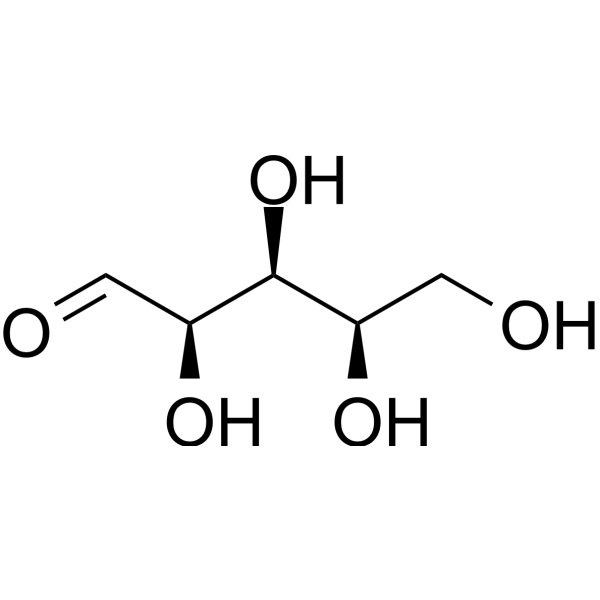
  • HY-N0537
    Xylose
    5 Publications Verification

    D-(+)-Xylose; (+)-Xylose; wood sugar

    Environmental Pollutants Endogenous Metabolite Metabolic Disease
    Xylose (D-(+)-Xylose) is a natural pentose sugar that is catalyzed by xylose isomerase to form xylulose, which is a key step in the anaerobic ethanol fermentation of Xylose. Xylose can be used by microorganisms to produce fuels, chemicals, and bulk industrial enzymes. Xylose provides the substances and energy for cells, as a carbon source for the biosynthesis of high-value chemicals and biofuel. Xylose can be used to fully explore lignocellulose resources and provide a new direction for microbia fermentation .
    Xylose
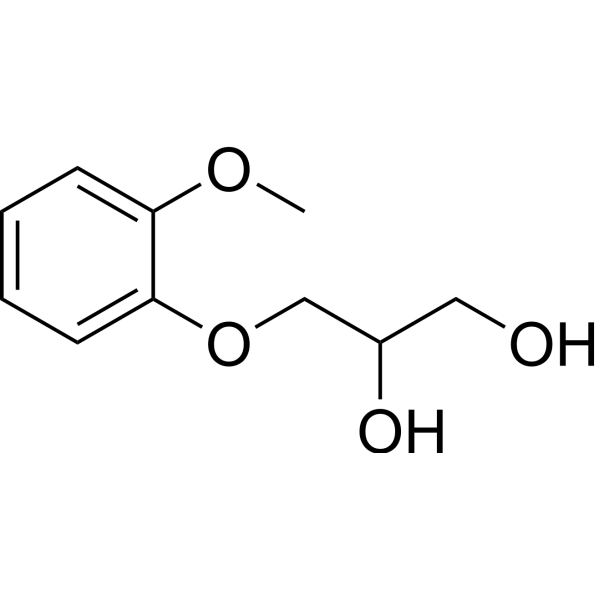
  • HY-B0264

    Guaiacol glyceryl ether; Guaiphenesin; Glycerol guaiacolate

    Mucin Neurological Disease Inflammation/Immunology
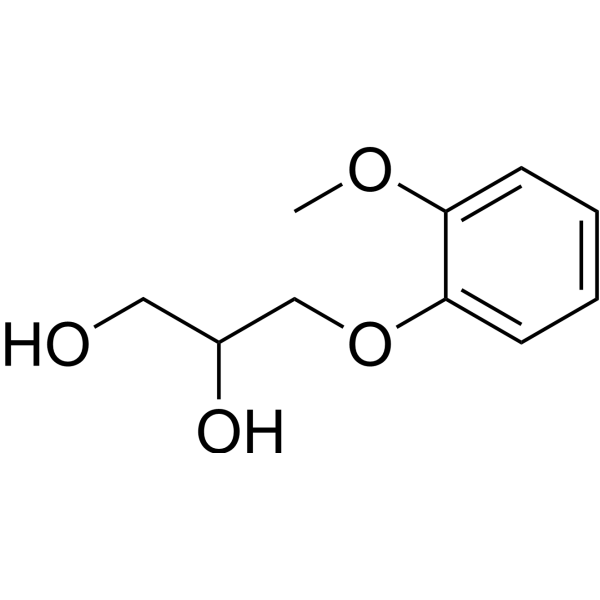
    Guaifenesin (Guaiacol glyceryl ether), a constituent of guaiac resin from the wood of Guajacum officinale Linné, is an expectorant. Guaifenesin can alleviate cough discomfortby increasing sputum volume and decreasing its viscosity, thereby promoting effective cough .
    Guaifenesin
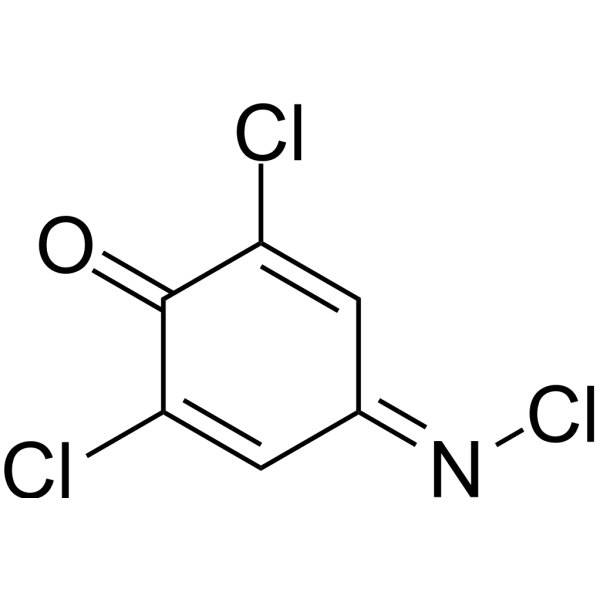
  • HY-W105135

    Biochemical Assay Reagents Others
    2,6-Dichloroquinone-4-chloroimide is a spray reagent for organic compounds. 2,6-Dichloroquinone-4-chloroimide can be used in thin-layer chromatograms and detecting phenol and its derivatives. 2,6-Dichloroquinone-4-chloroimide can be used as an optical sensor for rapid detection of permethrin in treated wood .
    2,6-Dichloroquinone-4-chloroimide
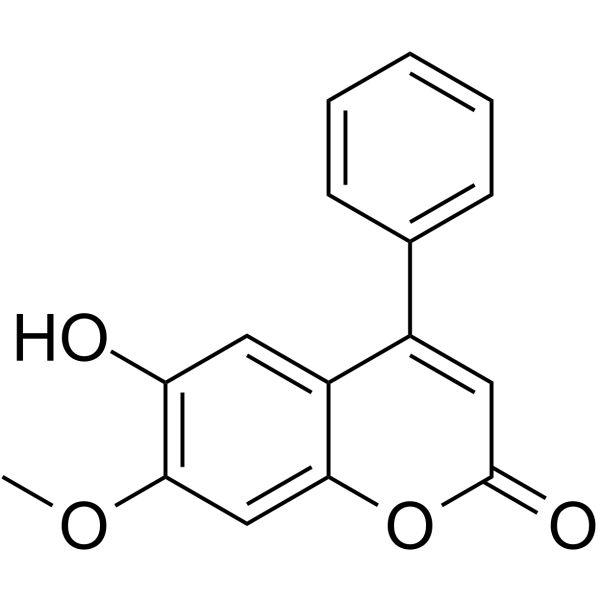
  • HY-N8347

    Apoptosis Others
    Dalbergin is a composition of the extract from the Dalbergia Sissoo Linn. knot wood. Dalbergin demonstrats notable antioxidant ability .
    Dalbergin
  • HY-Y1282

    Environmental Pollutants Biochemical Assay Reagents SOD Cardiovascular Disease Infection Neurological Disease
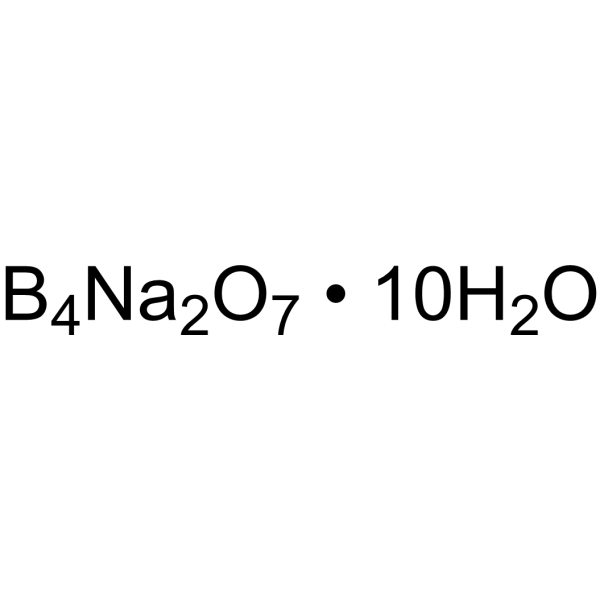
    Sodium tetraborate decahydrate is an orally active biochemical reagent and antibacterial agent. Sodium tetraborate decahydrate leads to an increase in the activity of Catalase, Superoxide dismutase. Sodium tetraborate decahydrate reduces Hydrogen sulfide and the sulfate-reducing bacteria population of swine manure. Sodium tetraborate decahydrate serves as flame suppressant for wood cellulose. Sodium tetraborate decahydrate is a triglyceride transesterification catalyst. Sodium tetraborate decahydrate suppresses the formation of chlorinated by-products in Cl -containing water. Sodium tetraborate decahydrate has a neuroprotective effect against chromium poisoning. Sodium tetraborate decahydrate can protect the heart from chromium damage at low doses. Sodium tetraborate in a low dose with an isolated application shows an antioxidant effect .
    Sodium tetraborate decahydrate
  • HY-112624O

    Dextran 100; Dextran D100; Dextran T100(MW 90000-110000)

    Biochemical Assay Reagents Others
    Dextran T100 (MW 100,000) (Dextran 100; Dextran D100) is a dehydrated glucose polymer with an average molecular weight of 100,000. Dextran T100 (MW 100,000) has an α-(1→6)-linked D-glucose backbone and α-(1→4)-, α-(1→3)- or α-(1→2)-linked D-glucose side chains, and it is synthesized by lactic acid bacteria or their enzymes. Dextran T100 (MW 100,000) possesses favorable biodegradability and biocompatibility, and it can be used in the fields of food, pharmaceuticals, cosmetics and research .
    Dextran T100 (MW 100,000)
  • HY-W009335

    IPBC

    Environmental Pollutants Fungal Infection
    Iodopropynyl butylcarbamate (IPBC) is a potent fungicide and preservative, which has been used in the paints, coatings, wood preservatives, personal care, and cosmetics industries .
    Iodopropynyl butylcarbamate
  • HY-NP0147
    Wheat Germ Agglutinin (Fluorescein)
    1 Publications Verification

    WGA (Fluorescein)

    Fluorescent Dye Infection Neurological Disease
    Wheat Germ Agglutinin (WGA) Fluorescein is a classic fluorescent label that specifically binds to sugar residues such as N-acetylglucosamine, N-acetylneuraminic acid and sialic acid. Wheat Germ Agglutinin Fluorescein performs regionally differential fluorescent staining of the ocular surface epithelial glycocalyx to assess its integrity, and causes no damage to the eye at safe concentrations. Wheat Germ Agglutinin Fluorescein is also used for staining structures including red blood cells, cultured cells, bacteria and pine wood nematodes, and facilitates the isolation of wheat-associated plant-growth-promoting rhizobacterial strains. Wheat Germ Agglutinin Fluorescein can be applied to the detection of ocular glycocalyx integrity and the research of related diseases such as pine wilt disease .
    Wheat Germ Agglutinin (Fluorescein)
  • HY-W350004

    Polyarabinogalactan, 80%

    Environmental Pollutants Biochemical Assay Reagents Others
    (+)-Arabinogalactan, from larch wood, 80% (Polyarabinogalactan, 80%) can be used in glycobiology research.
    (+)-Arabinogalactan,from larch wood, 80%
  • HY-N2324

    (+)-Paulownin

    Others Metabolic Disease
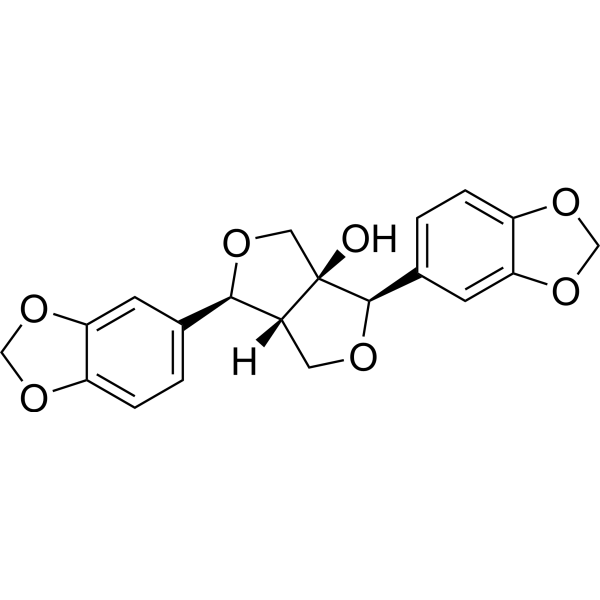
    Paulownin, a component of wood of Paulownia tomentosa Steud, is a constituent of medicinal plants .
    Paulownin
  • HY-NP161

    MAP

    Biochemical Assay Reagents Others
    Mussel Adhesive Protein (MAP) is a mussel-derived mucin. Mussel Adhesive Protein can be formulated into a waterproof, eco-safe adhesive that bonds materials such as glass, plastic, metal and wood to bones or teeth, biological organisms, and other chemicals or molecules .
    Mussel Adhesive Protein
  • HY-N3228

    Others Cardiovascular Disease
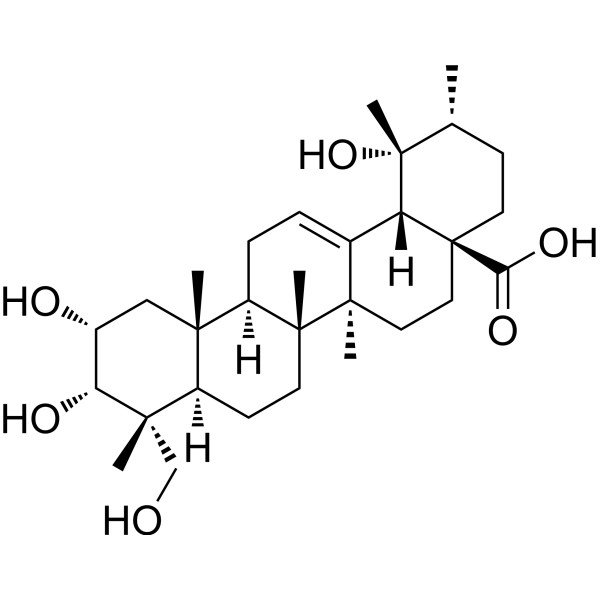
    Myrianthic acid is a pentacyclic triterpenoid compound. Myrianthic acid can exist in the root wood of Myrianthus arboreus and the leaves of Campsis grandiflora. Myrianthic acid inhibits adrenaline-induced platelet aggregation, with a IC50 of 46.2 μM for this activity. Myrianthic acid can be used in studies related to thrombosis .
    Myrianthic acid
  • HY-W779019

    D-(+)-Xylose-13C5; (+)-Xylose-13C5; wood sugar-13C5

    Isotope-Labeled Compounds Endogenous Metabolite Metabolic Disease
    Xylose- 13C5 (D-(+)-Xylose- 13C5) is 13C labeled Xylose. Xylose (D-(+)-Xylose) is a natural pentose sugar that is catalyzed by xylose isomerase to form xylulose, which is a key step in the anaerobic ethanol fermentation of Xylose. Xylose can be used by microorganisms to produce fuels, chemicals, and bulk industrial enzymes. Xylose provides the substances and energy for cells, as a carbon source for the biosynthesis of high-value chemicals and biofuel. Xylose can be used to fully explore lignocellulose resources and provide a new direction for microbia fermentation .
    Xylose-13C5
  • HY-N0537R

    D-(+)-Xylose (Standard); (+)-Xylose (Standard); wood sugar (Standard)

    Reference Standards Endogenous Metabolite Metabolic Disease
    Xylose (Standard) (D-(+)-Xylose (Standard)) is the analytical standard of Xylose (HY-N0537). This product is intended for research and analytical applications. Xylose (D-(+)-Xylose) is a natural pentose sugar that is catalyzed by xylose isomerase to form xylulose, which is a key step in the anaerobic ethanol fermentation of Xylose. Xylose can be used by microorganisms to produce fuels, chemicals, and bulk industrial enzymes. Xylose provides the substances and energy for cells, as a carbon source for the biosynthesis of high-value chemicals and biofuel. Xylose can be used to fully explore lignocellulose resources and provide a new direction for microbia fermentation.
    Xylose (Standard)
  • HY-N0537S3

    D-(+)-Xylose-2-13C; (+)-Xylose-2-13C; wood sugar-2-13C

    Isotope-Labeled Compounds Endogenous Metabolite Metabolic Disease
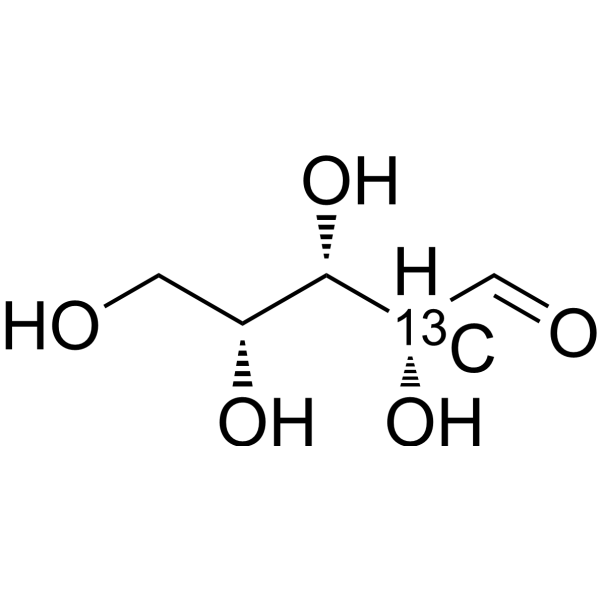
    Xylose-2- 13C (D-(+)-Xylose-2- 13C) is the 13C labeled Xylose (HY-N0537). Xylose (D-(+)-Xylose) is a natural pentose sugar that is catalyzed by xylose isomerase to form xylulose, which is a key step in the anaerobic ethanol fermentation of Xylose. Xylose can be used by microorganisms to produce fuels, chemicals, and bulk industrial enzymes. Xylose provides the substances and energy for cells, as a carbon source for the biosynthesis of high-value chemicals and biofuel. Xylose can be used to fully explore lignocellulose resources and provide a new direction for microbia fermentation .
    Xylose-2-13C
  • HY-W133969

    Shellac wax-free

    Environmental Pollutants Others
    Shellac is a biodegradable resin composed of polyhydroxy acids, primarily aleuritic acid, shellolic acid, and jalaric acid. It originates as a resinous secretion of the insect Kerria lacca, found on several species of trees in India, Thailand, and China. shellac is used as a wood coating, a binder and encapsulate for pharmaceuticals and food supplements, and in cosmetics products.
    Shellac
  • HY-B0264R

    Guaiacol glyceryl ether(Standard); Guaiphenesin(Standard); Glycerol guaiacolate (Standard)

    Reference Standards Others Neurological Disease Inflammation/Immunology
    Guaifenesin (Standard) is the analytical standard of Guaifenesin. This product is intended for research and analytical applications. Guaifenesin (Guaiacol glyceryl ether), a constituent of guaiac resin from the wood of Guajacum officinale Linné, is an expectorant. Guaifenesin can alleviate cough discomfortby increasing sputum volume and decreasing its viscosity, thereby promoting effective cough .
    Guaifenesin (Standard)
  • HY-N1882

    Cytochrome P450 Metabolic Disease
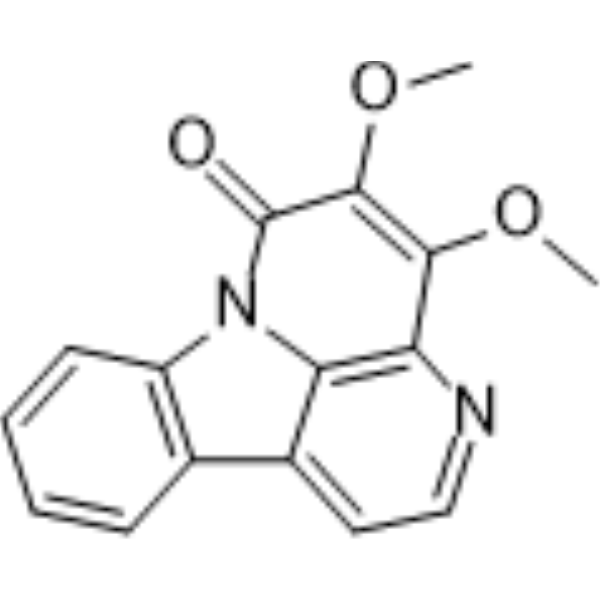
    4,5-Dimethoxycanthin-6-one is a potent and uncompetitive inhibitor of CYP1A2-mediated phenacetin O-deethylation with an IC50 value of 1.7μM and a Ki value of 2.6 μM. 4,5-Dimethoxycanthin-6-one, as an alkaloid, is isolated from the wood of Picrasma quassioides BENNET (Simaroubaceae) .
    4,5-Dimethoxycanthin-6-one
  • HY-N16506

    Others Others
    Koparin is a minor isoflavone constituent that can be isolated from the wood of Castanospermum austral .
    Koparin
  • HY-W794998

    Environmental Pollutants Others
    Cedarwood terpenes is a natural terpene mixture that can be extracted from cedar wood .
    Cedarwood terpenes
  • HY-N4287

    Others Cancer
    Nordalbergin, a coumarin isolated from the wood bark of Dalbergia sissoo. Nordalbergin shows strong activity in the induction of differentiation of HL-60 .
    Nordalbergin
  • HY-N10400

    Complement System Others
    Campneoside II is a compound isolated from Paulownia tomentosa var. tomentosa wood. Campneoside II exhibits excellent anti-complement activity .
    Campneoside II
  • HY-N3560

    6-Methyltaxifolin

    Others Others
    Cedeodarin is a taxifolin that can be isolated from Cedms deodara .
    Cedeodarin
  • HY-19496

    Buagafuran; Buagarofuran

    5-HT Receptor Neurological Disease
    4-Butyl-alpha-agarofuran (AF 5) is an anxiolytic and antidepressant agent. 4-Butyl-alpha-agarofuran a α-agarofuran derivative that can be isolated from Gharu-wood. 4-Butyl-alpha-agarofuran can be used for the research of neurological disease research .
    4-Butyl-alpha-agarofuran
  • HY-120104

    (±)-Nitidanin

    Parasite HCV Infection
    Nitidanin ((±)-Nitidanin) is an antimalarial and antiviral compound that can be isolated from the wood of Xanthoxylum nitidun D. C. Nitidanin is shows IC50 values of 21.2 and 18.4 μM for D6 and W2 clones of Plasmodium falciparum, respectively. Nitidanin can be used for the research of malaria and virus infection .
    Nitidanin
  • HY-N0537S2

    D-(+)-Xylose-1-13C; (+)-Xylose-1-13C; wood sugar-1-13C

    Isotope-Labeled Compounds Endogenous Metabolite Others
    Xylose-1- 13C is the 13C labeled Xylose.
    Xylose-1-13C
  • HY-23497

    Others Others
    Poly(4-vinylphenol) is a polymer cross-linking agent that can be used to prepare non-toxic films. Poly(4-vinylphenol) is a sensitizer of titania for visible light photocatalysis. Poly(4-vinylphenol) also can be used as a water resistive wood adhesive, as a gate dielectric insulator in organic field effect transistors, and as a responsive surface coating .
    Poly(4-vinylphenol)
  • HY-121414

    Phenazine N-oxide; N-Oxyphenazine

    Fungal Infection
    Phenazine oxide (Phenazine N-oxide) is a novel and potent fungicide, bactericide, and wood preservative .
    Phenazine oxide
  • HY-158759

    Environmental Pollutants Biochemical Assay Reagents Others
    Poly(vinyl acetate) is a widely available adhesive used for porous materials like wood, paper, and cloth. Poly(vinyl acetate) is prepared by polymerization of vinyl acetate (VAM) .
    Poly(vinyl acetate)
  • HY-138100

    (+)-Hyalodendrin

    Fungal Infection
    Hyalodendrin ((+)-Hyalodendrin) is a fungal growth inhibitor with inhibitory activity against wood decay fungi. Hyalodendrin has low phytotoxicity, with an acute toxicity (LD50) of 75 mg/kg in mice .
    Hyalodendrin
  • HY-133604

    Drug Intermediate Others
    3,4,5-Trichloroveratrole is one of the biodegradation products of bacterial O-methylation of Tri- and Tetra chloroguaiacols. The Tri- and Tetra chloroguaiacols are formed during bleaching of wood pulp in the paper manufacturing industry .
    3,4,5-Trichloroveratrole
  • HY-N15641

    Dalbegione

    Biochemical Assay Reagents Reactive Oxygen Species (ROS) Others
    Dalbergione (Dalbegione) (Compound 5) can be extracted from the Dalbergia Sissoo Linn. knot wood. Dalbergione exhibits antioxidant ability. Dalbergione can also be obtained from the methanol extract of Dalbergia odorifera heartwood and the alkane extract of Dalbergia parvifera heartwood .
    Dalbergione
  • HY-N0537S4

    D-(+)-Xylose-5-13C; (+)-Xylose-5-13C; wood sugar-5-13C

    Isotope-Labeled Compounds Endogenous Metabolite Others
    Xylose-5- 13C is the 13C labeled Xylose.
    Xylose-5-13C
  • HY-N15600

    (-)-Merulidial

    Antibiotic Fungal Bacterial DNA/RNA Synthesis Infection Cancer
    Merulidial (Compound 1) is an antibiotic and cytotoxic agent with a sesquiterpene dialdehyde structure. Merulidial significantly inhibits the germination of spores and the hyphal growth of the wood-roting basidiomycete Heterobasidion annosum (H. annosum) and the saprophytic mould Cladosporium cucumerinum (C.cucumerinum). Merulidial also inhibits a variety of bacteria, algae and DNA synthesis of ECA cells. Merulidial shows a strong anticancer activity with IC50 s of 20 and 10 μg/mL for ECA and L1210 cells, respectively .
    Merulidial
  • HY-N8504

    NSC 260179; Spectinabilin

    Bacterial Infection
    Neoaureothin is a bacterial metabolite that has been found in Streptomyces. It is an androgen receptor (AR) antagonist that inhibits binding of dihydrotestosterone (DHT) to ARs (IC50=13 μM) and inhibits DHT-induced expression of prostate-specific antigen in LNCaP cells (IC50=1.75 nM). Neoaureothin is cytotoxic to A549, HCT116, and HepG2 cells (IC50s=34.3, 47, and 37.2 μg/mL, respectively). It also has nematocidal activity against the pine wood nematode B. xylophilus (LC50=0.84 μg/mL) and increases survival of P. densiflora trees inoculated with B. xylophilus.
    Neoaureothin
  • HY-N14239

    Parasite Infection
    Jietacin A is a nematicide. Jietacin A exhibits nematicidal activity against pine wood nematodes. Jietacin A can be used in studies related to pine wood nematode infection and pine wilt disease .
    Jietacin A
  • HY-N8110

    Others Others
    8-Chloro-2-(2-phenylethyl)-5,6,7-trihydroxy-5,6,7,8-tetrahydrochromone, a chromone derivative, can be found in MeOH extract of withered wood of Aquilaria sinensis .
    8-Chloro-2-(2-phenylethyl)-5,6,7-trihydroxy-5,6,7,8-tetrahydrochromone
  • HY-167695

    Others Others
    Propiosyringone is derived from the breakdown of Eucalyptus globulus wood by wood-decaying fungi.
    Propiosyringone
  • HY-N12358

    Others Others
    Isogermafurenolide is a cytotoxic Terpenoids from the Wood of Vepris punctata from the Madagascar Rainforest .
    Isogermafurenolide
  • HY-133602

    Biochemical Assay Reagents Others
    Tetrachloroguaiacol is the major chlorinated phenol produced during chlorine bleaching of wood pulp .
    Tetrachloroguaiacol
  • HY-133090

    Others Others
    Erythbidin A is a Flavonoids product that can be isolated from the wood of Erythrina x bidwillii. .
    Erythbidin A
  • HY-N1848

    Others Others
    3-Methoxyfuran is a Miscellaneous product that can be isolated from the woods of Pseudolarix kaempferi. .
    3-Methoxyfuran
  • HY-N4018

    Others Others
    Ifflaiamine is a Alkaloids product that can be isolated from the woods of Flindersia ifflaiana F. Muell. .
    Ifflaiamine
  • HY-N7359

    Others Cancer
    Securitinine is a Securinega alkaloid. Securitinine can be derived from the wood of Japanese medicinal plant Securinega suffruticosa var .
    Securitinine
  • HY-N8665

    Others Others
    1,7-Dihydroxy-4-methoxyxanthone is a Xanthones product that can be isolated from the woods of Cratoxylum maingayi. .
    1,7-Dihydroxy-4-methoxyxanthone
  • HY-N3754

    Parasite Infection
    Dihydropinosylvin monomethyl ether is a natrual compound with nematicidal activity. Dihydropinosylvin monomethyl ether can inhibit pine wood nematodes infection .
    Dihydropinosylvin monomethyl ether
  • HY-N2655

    Others Others
    5,7,4'-Tri-O-methylcatechin is a Flavonoids product that can be isolated from the wood of Acacia catechu (L.F.) Willd. .
    5,7,4'-Tri-O-methylcatechin
  • HY-133605

    Bacterial Others
    Tetrachloroveratrole is one of the biodegradation products of bacterial O-methylation of Tri- and Tetra chloroguaiacols. The Tri- and Tetra chloroguaiacols are formed during bleaching of wood pulp in the paper manufacturing industry .
    Tetrachloroveratrole
  • HY-N1345

    Others Others
    Robtein is a flavone that can be isolated from Robinia pseudoacacia .
    Robtein
  • HY-N10752

    Others Others
    6,7-Dihydroxy-2-(2-phenylethyl)-5,6,7,8-tetrahydrochromone is a natural chromone derivative found in withered wood of Aquilaria sinensis .
    6,7-Dihydroxy-2-(2-phenylethyl)-5,6,7,8-tetrahydrochromone

Inquiry Online

Your information is safe with us. * Required Fields.

Salutation


Country or Region *

Applicant Name *


Organization Name *

Department *


Email Address *


Product Name *

Cat. No.


Requested quantity *

Phone Number *


Remarks

Inquiry Online

Inquiry Information

Product Name:
Cat. No.:
Quantity:
MCE Japan Authorized Agent:

