



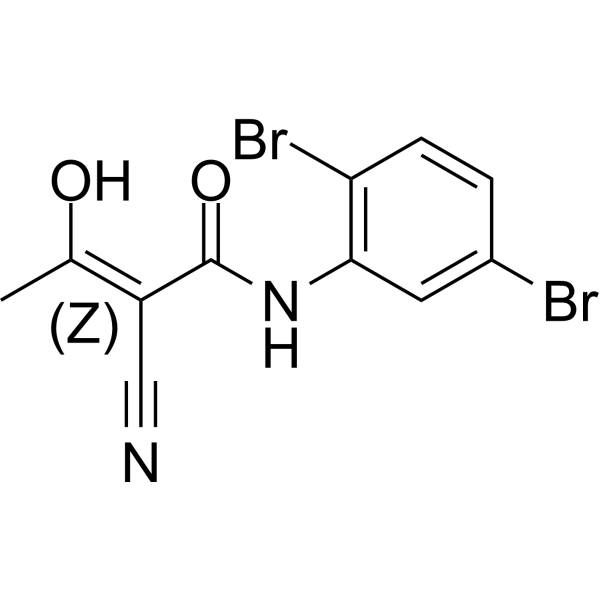
(Z)-LFM-A13
Based on 3 publication(s) in Google Scholar
LFM-A13 is a potent BTK, JAK2, PLK inhibitor, inhibits recombinant BTK, Plx1 and PLK3 with IC50s of 2.5 μM, 10 μM and 61 μM; LFM-A13 shows no effects on JAK1 and JAK3, Src family kinase HCK, EGFR and IRK.
For research use only. We do not sell to patients.
- Purity : 99.80%
- CAS No.: 244240-24-2
- Formula: C11H8Br2N2O2
- Molecular Weight:360.01
-
Storage:Powder -20°C, 3 years , 4°C, 2 years ; In solvent -80°C, 2 years , -20°C, 1 year

To place orders, for customer services and technical support, please contact: MedChemExpress USA
Tel: 609-228-6898 E-mail: [email protected] [email protected]


-
 Biological Activity
-
Chemical Information
-
Solvent & Solubility
- Purity & Documentation
- References
-
 Help & FAQs


-
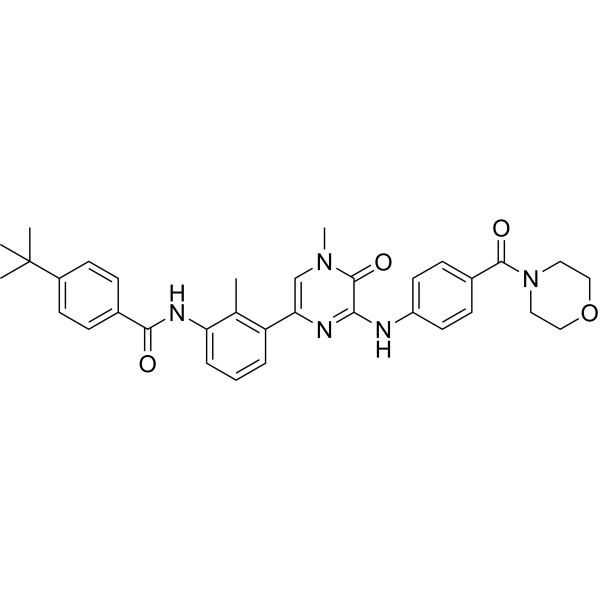
HY-11999
CGI-1746Btk Inhibitor -
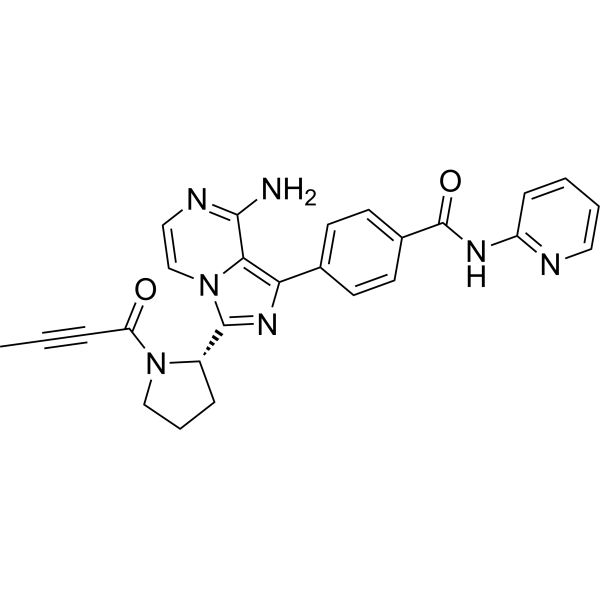
HY-17600
AcalabrutinibBTK Inhibitor -
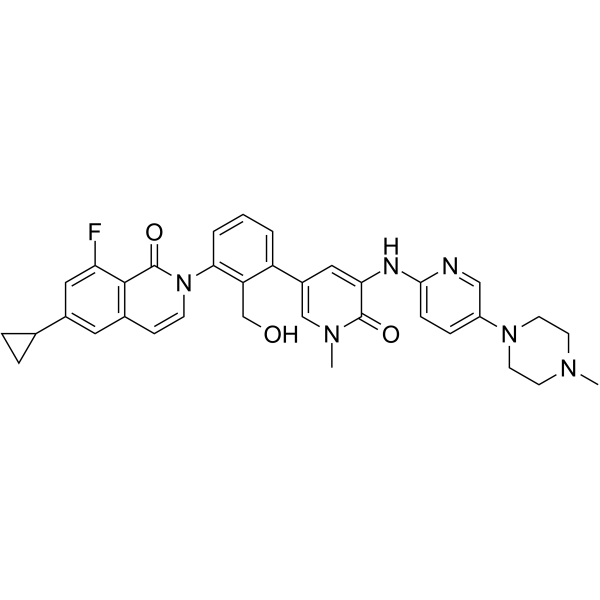
HY-18018
RN486Btk Inhibitor -
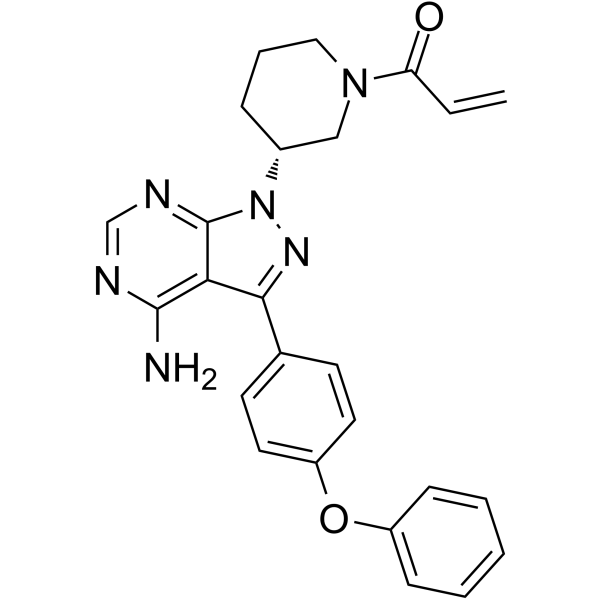
HY-10997
IbrutinibBtk Inhibitor -
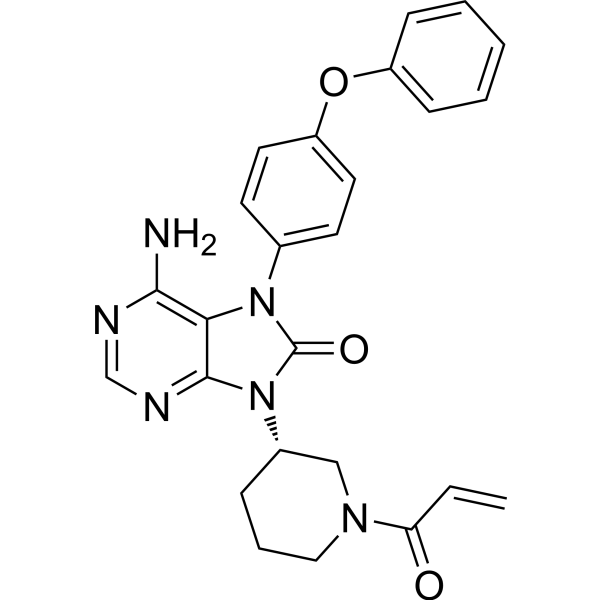
HY-18951
ONO-4059 analogONO-4059 Analog -
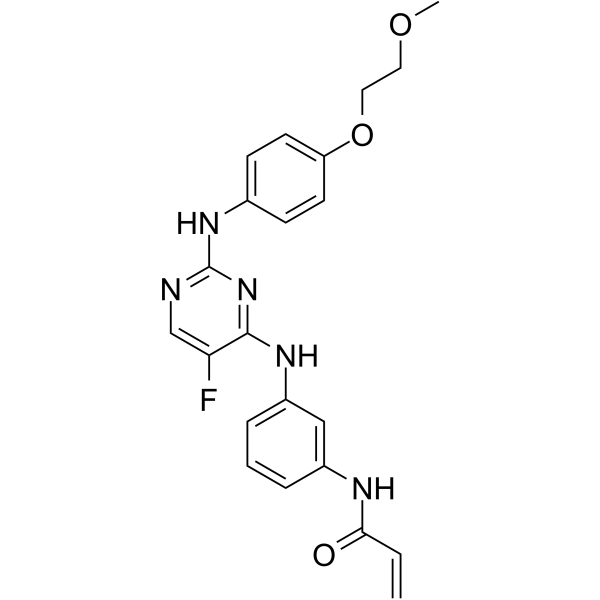
HY-18012
Spebrutinib -
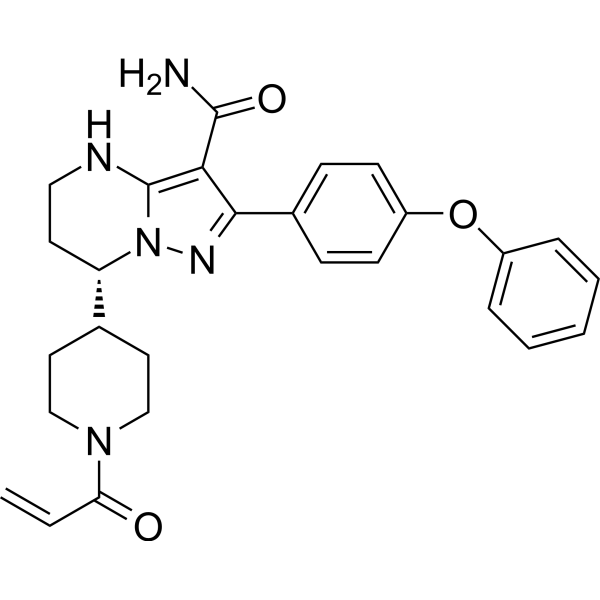
HY-101474A
ZanubrutinibBtk Inhibitor -
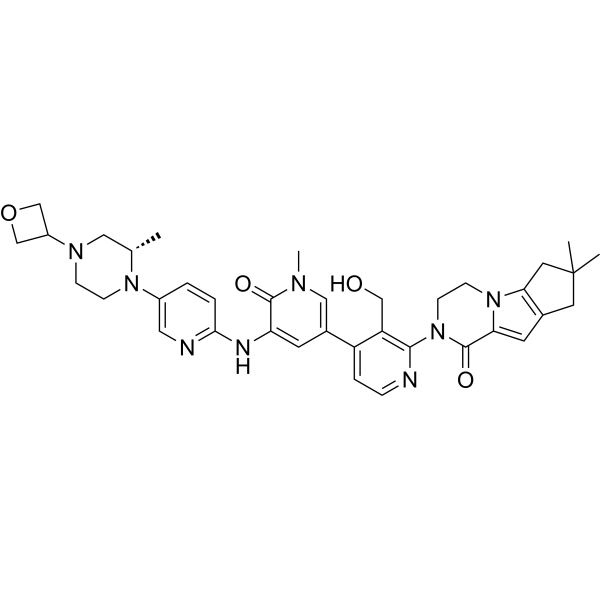
HY-19834
FenebrutinibBtk Inhibitor -
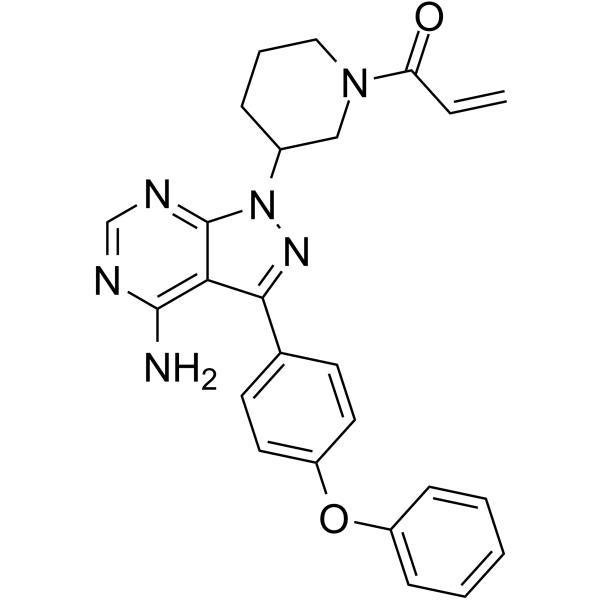
HY-10997A
Ibrutinib RacemateBtk Inhibitor -
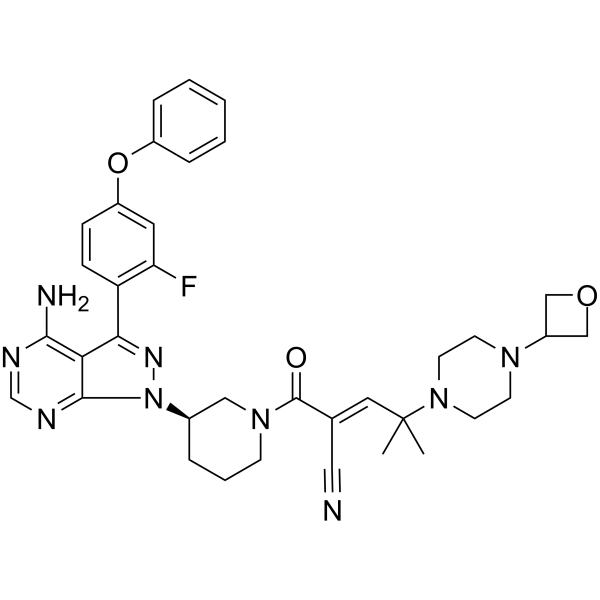
HY-112166
RilzabrutinibBTK Inhibitor -
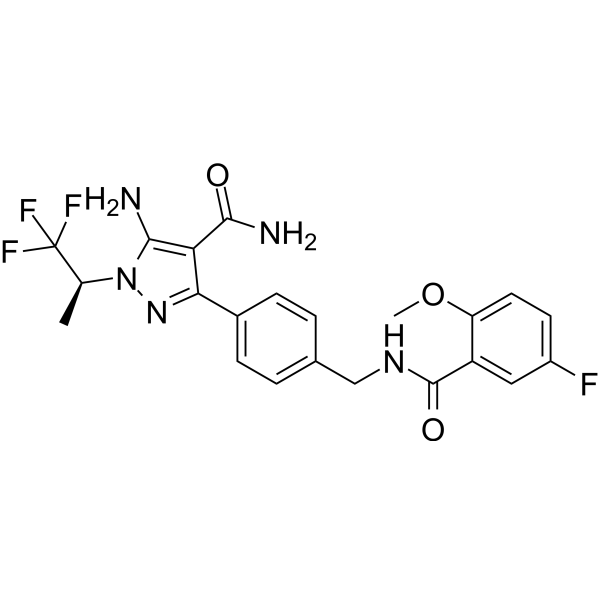
HY-131328
PirtobrutinibBTK Inhibitor -
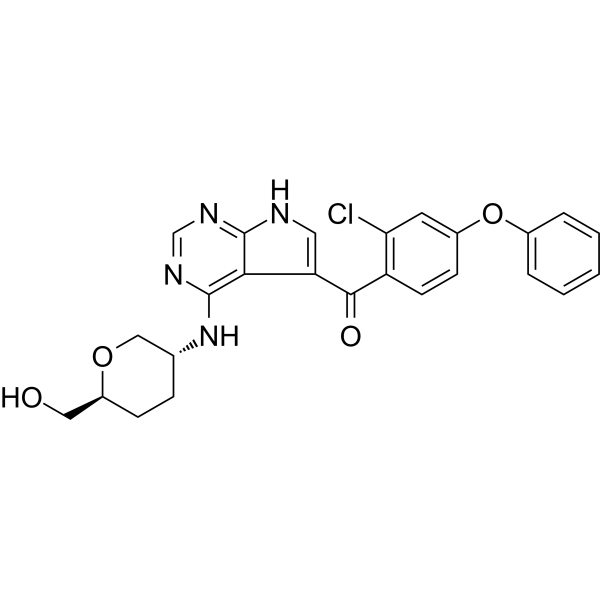
HY-112215
NemtabrutinibBTK Inhibitor
Publications Citing Use of MedChemExpress (MCE) (Z)-LFM-A13
More Customer Validation & Images

-
WB


Biological Activity
Description
|
Plx1 10 μM (IC50) |
PLK3 61 μM (IC50) |
BRK 267 μM (IC50) |
BMX 281 μM (IC50) |
FYN 240 μM (IC50) |
Hepatocyte growth factor receptor kinase (Met) 215 μM (IC50) |
BTK 2.5 μM (IC50) |
Cellular Effect
|
Cell Line

|
Type | Value | Description | References |
|---|---|---|---|---|
| Platelet | IC50 |
2.8 μM
Compound: 36
|
Inhibition of collagen-induced human platelet aggregation preincubated for 20 mins followed by collagen stimulation and measured for 10 mins by aggregometry
Inhibition of collagen-induced human platelet aggregation preincubated for 20 mins followed by collagen stimulation and measured for 10 mins by aggregometry
|
[PMID: 32463237] |
| Sf21 | IC50 |
10.3 μM
Compound: LFM-A13
|
Inhibition of xenopus recombinant Plx1 expressed in Sf21 cells by measuring autophosphorylation by 15-mins kinase assay
Inhibition of xenopus recombinant Plx1 expressed in Sf21 cells by measuring autophosphorylation by 15-mins kinase assay
|
[PMID: 17098432] |
| Sf21 | IC50 |
32.5 μM
Compound: LFM-A13
|
Inhibition of Xenopus recombinant Plx1 expressed in Sf21 cells by GST-Cdc25 substrate phosphorylation assay
Inhibition of Xenopus recombinant Plx1 expressed in Sf21 cells by GST-Cdc25 substrate phosphorylation assay
|
[PMID: 17098432] |
In Vitro
LFM-A13 significantly inhibits BTK activity with an IC50 of 6.2 ± 0.3 μg/mL (= 17.2 ± 0.8 μM). The calculated Kis of LFM-A13 for BTK, JAK1, JAK3, IRK, EGFR and HCK are 1.4, 110, 148, 31.6, 166 and 214 μM. LFM-A13 (200 μM) markedly increases the chemosensitivity of ALL-1 cells to ceramide-induced apoptosis[1]. LFM-A13 (100 μM) suppresses Epo-induced phosphorylation of EpoR, Jak2, Btk, Stat5 and Erk1/2 in R10 cells. LFM-A13 (100 μM) inhibits auto-phosphorylation of Jak2, Tec and Btk rather than Lyn kinase auto-phosphorylation in COS cells[2]. LFM-A13 potently inhibits Plx1 with IC50 of 10 μM; also inhibits BRK, BMX, FYN and with IC50s of 267, 281, 240 and 215 μM[4].
MedChemExpress (MCE) has not independently confirmed the accuracy of these methods. They are for reference only.
In Vivo
MedChemExpress (MCE) has not independently confirmed the accuracy of these methods. They are for reference only.


Chemical Information
-
CAS No. 244240-24-2
-
Appearance Solid
-
Molecular Weight 360.01
-
Formula C11H8Br2N2O2
-
Color Light yellow to yellow
-
SMILES
BrC1=C(NC(/C(C#N)=C(C)\O)=O)C=C(Br)C=C1
-
Shipping
Room temperature in continental US; may vary elsewhere.
-
Storage
Powder -20°C 3 years 4°C 2 years In solvent -80°C 2 years -20°C 1 year


Publications (3)
-
Journal Impact Factor
-
Most Recent
-
Sci Immunol
SLAMF3 and SLAMF4 are immune checkpoints that constrain macrophage phagocytosis of hematopoietic tumors. [Abstract]2022 Jan 21;7(67):eabj5501. PMID: 35061505 -
Dig Dis Sci
Effects of Tec Tyrosine Kinase Inhibition on the Inflammatory Response of Severe Acute Pancreatitis-Associated Acute Lung Injury in Mice. [Abstract]2019 Aug;64(8):2167-2176. PMID: 30761473 -
Oncotarget
BMX/Etk promotes cell proliferation and tumorigenicity of cervical cancer cells through PI3K/AKT/mTOR and STAT3 pathways. [Abstract]2017 Jul 25;8(30):49238-49252. PMID: 28514765
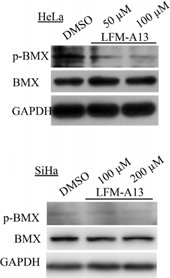
(Z)-LFM-A13 purchased from MedChemExpress. Usage Cited in: Oncotarget. 2017 Jul 25;8(30):49238-49252. [Abstract]
HeLa and SiHa cells are treated with DMSO and LFM-A13, a pharmacologic inhibitor of BMX, and the phosphorylation and total BMX levels are determined using a western blot analysis.


Solvent & Solubility
In Vitro:
DMSO : ≥ 42 mg/mL (116.66 mM; Hygroscopic DMSO has a significant impact on the solubility of product, please use newly opened DMSO)
* "≥" means soluble, but saturation unknown.
Please refer to the solubility information to select the appropriate solvent. Once prepared, please aliquot and store the solution to prevent product inactivation from repeated freeze-thaw cycles.
Storage method and period of stock solution: -80°C, 2 years; -20°C, 1 year. When stored at -80°C, please use it within 2 years. When stored at -20°C, please use it within 1 year.
Please refer to the solubility information to select the appropriate solvent. Once prepared, please aliquot and store the solution to prevent product inactivation from repeated freeze-thaw cycles.
Storage method and period of stock solution: -80°C, 2 years; -20°C, 1 year. When stored at -80°C, please use it within 2 years. When stored at -20°C, please use it within 1 year.
Concentration (start) × Volume (start) = Concentration (final) × Volume (final)
In Vivo:
Select the appropriate dissolution method based on your experimental animal and administration route.
- For the following dissolution methods, please ensure to first prepare a clear stock solution using an In Vitro approach and then sequentially add co-solvents:
- To ensure reliable experimental results, the clarified stock solution can be appropriately stored based on storage conditions. As for the working solution for In Vivo experiments, it is recommended to prepare freshly and use it on the same day.
- The percentages shown for the solvents indicate their volumetric ratio in the final prepared solution. If precipitation or phase separation occurs during preparation, heat and/or sonication can be used to aid dissolution.
Add each solvent one by one: 10% DMSO 40% PEG300 5% Tween-80 45% Saline
Solubility: ≥ 2.5 mg/mL (6.94 mM); Clear solution
This protocol yields a clear solution of ≥ 2.5 mg/mL (saturation unknown).
Taking 1 mL working solution as an example, add 100 μL DMSO stock solution (25.0 mg/mL) to 400 μL PEG300, and mix evenly; then add 50 μL Tween-80 and mix evenly; then add 450 μL Saline to adjust the volume to 1 mL.
Preparation of Saline: Dissolve 0.9 g sodium chloride in ddH₂O and dilute to 100 mL to obtain a clear Saline solution.
Add each solvent one by one: 10% DMSO 90% (20% SBE-β-CD in Saline)
Solubility: 2.5 mg/mL (6.94 mM); Suspended solution; Need ultrasonic
This protocol yields a suspended solution of 2.5 mg/mL. Suspended solution can be used for oral and intraperitoneal injection.
Taking 1 mL working solution as an example, add 100 μL DMSO stock solution (25.0 mg/mL) to 900 μL 20% SBE-β-CD in Saline, and mix evenly.
Preparation of 20% SBE-β-CD in Saline (4°C, storage for one week): 2 g SBE-β-CD powder is dissolved in 10 mL Saline, completely dissolve until clear.
In Vivo Dissolution Calculator
Please enter the basic information of animal experiments:
-
-
-
-
Recommended: Prepare an additional quantity of animals to account for potential losses during experiments.
Please enter your animal formula composition:
-
%DMSO +
Recommended: Keep the proportion of DMSO in working solution below 2% if your animal is weak.
-
%+
-
+%Tween-80 + +
-
%Saline +
The co-solvents required include: DMSO, . All of co-solvents are available by MedChemExpress (MCE). , Tween 80. All of co-solvents are available by MedChemExpress (MCE).
Working solution concentration: 0.22 mg/mL
Method for preparing stock solution: mg drug dissolved in μL DMSO. Stock solution concentration: mg/mL.
1. Take μL DMSO stock solution;
2. Add μL .
μL , mix evenly;
3. Then add μL Tween 80, mix evenly;
4. Then add μL
Please ensure that the stock solution in the first step is dissolved to a clear state, and add co-solvents in sequence. You can use ultrasonic heating (ultrasonic cleaner, recommended frequency 20-40 kHz), vortexing, etc. to assist dissolution.


Purity & Documentation
-
Data Sheet (285 KB)
-
SDS (393 KB)
- English - EN (393 KB)
- Français - FR (393 KB)
- Deutsch - DE (393 KB)
- Norwegian - NO (393 KB)
- Español - ES (393 KB)
- Swedish - SV (393 KB)
- Italian - IT (393 KB)
- Korean - KR (393 KB)
- Portuguese - PT (393 KB)
-
Handling Instructions (2659 KB)
References
[1]. Mahajan S, et al. Rational design and synthesis of a novel anti-leukemic agent targeting Bruton's tyrosine kinase (BTK), LFM-A13 [alpha-cyano-beta-hydroxy-beta-methyl-N-(2, 5-dibromophenyl)propenamide]. J Biol Chem. 1999 Apr 2;274(14):9587-99. [Content Brief]
[2]. van den Akker E, et al. The Btk inhibitor LFM-A13 is a potent inhibitor of Jak2 kinase activity. Biol Chem. 2004 May;385(5):409-13. [Content Brief]
[3]. "Sahin K, et al. LFM-A13, a potent inhibitor of polo-like kinase, inhibits breast carcinogenesis by suppressing proliferation activity and inducing apoptosis in breast tumors of mice. Invest New Drugs. 2017 Nov 15. " [Content Brief]
[4]. Uckun FM, et al. Anti-breast cancer activity of LFM-A13, a potent inhibitor of Polo-like kinase (PLK). Bioorg Med Chem. 2007 Jan 15;15(2):800-14. Epub 2006 Oct 26. [Content Brief]


Complete Stock Solution Preparation Table
Please refer to the solubility information to select the appropriate solvent. Once prepared, please aliquot and store the solution to prevent product inactivation from repeated freeze-thaw cycles.
Storage method and period of stock solution: -80°C, 2 years; -20°C, 1 year. When stored at -80°C, please use it within 2 years. When stored at -20°C, please use it within 1 year.
| Optional Solvent | Concentration Solvent Mass | 1 mg | 5 mg | 10 mg | 25 mg |
|---|---|---|---|---|---|
| DMSO | 1 mM | 2.7777 mL | 13.8885 mL | 27.7770 mL | 69.4425 mL |
| 5 mM | 0.5555 mL | 2.7777 mL | 5.5554 mL | 13.8885 mL | |
| 10 mM | 0.2778 mL | 1.3889 mL | 2.7777 mL | 6.9443 mL | |
| 15 mM | 0.1852 mL | 0.9259 mL | 1.8518 mL | 4.6295 mL | |
| 20 mM | 0.1389 mL | 0.6944 mL | 1.3889 mL | 3.4721 mL | |
| 25 mM | 0.1111 mL | 0.5555 mL | 1.1111 mL | 2.7777 mL | |
| 30 mM | 0.0926 mL | 0.4630 mL | 0.9259 mL | 2.3148 mL | |
| 40 mM | 0.0694 mL | 0.3472 mL | 0.6944 mL | 1.7361 mL | |
| 50 mM | 0.0556 mL | 0.2778 mL | 0.5555 mL | 1.3889 mL | |
| 60 mM | 0.0463 mL | 0.2315 mL | 0.4630 mL | 1.1574 mL | |
| 80 mM | 0.0347 mL | 0.1736 mL | 0.3472 mL | 0.8680 mL | |
| 100 mM | 0.0278 mL | 0.1389 mL | 0.2778 mL | 0.6944 mL |


(Z)-LFM-A13 Related Classifications
HY-18009 Related Classifications
 Powered by Bioz