



GSK2239633A

Based on 1 Customer Validation
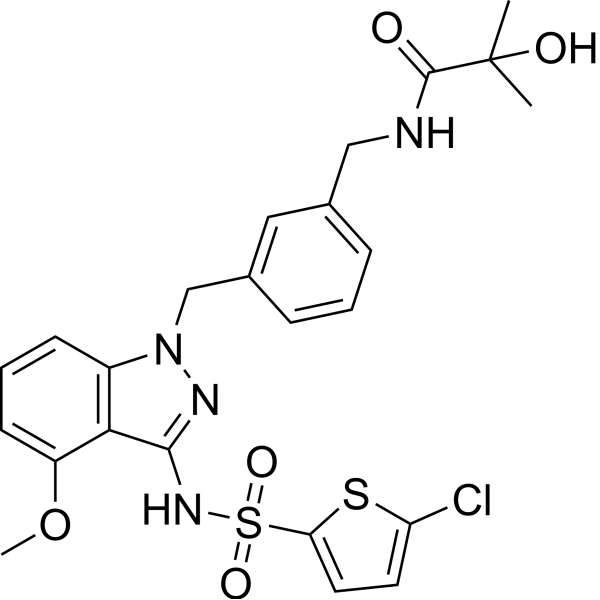
GSK2239633A is a CC-chemokine receptor 4 (CCR4) antagonist, which inhibits the binding of [125I]-TARC to human CCR4 with a pIC50 of 7.96.
For research use only. We do not sell to patients.
- Purity : 99.81%
- CAS No.: 1240516-71-5
- Formula: C24H25ClN4O5S2
- Molecular Weight:549.06
-
Storage:Powder -20°C, 3 years , 4°C, 2 years ; In solvent -80°C, 2 years , -20°C, 1 year

To place orders, for customer services and technical support, please contact: MedChemExpress USA
Tel: 609-228-6898 E-mail: [email protected] [email protected]


-
 Biological Activity
-
Chemical Information
-
Solvent & Solubility
- Purity & Documentation
- References
-
 Help & FAQs


-
HY-15724
VercirnonCCR9 Antagonist -
HY-148494
TivumecirnonCCR4 Antagonist -
HY-13245
PF-4136309CCR2 Antagonist -
![CCR2-RA-[R]](https://file.medchemexpress.com/product_pic/hy-50081.gif)
HY-50081
CCR2-RA-[R]CCR Antagonist -
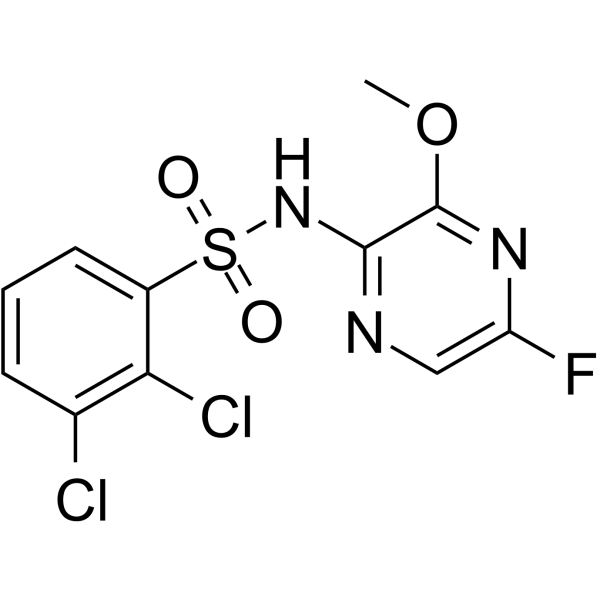
HY-109511
AZD-1678CCR4 Receptor Antagonist -
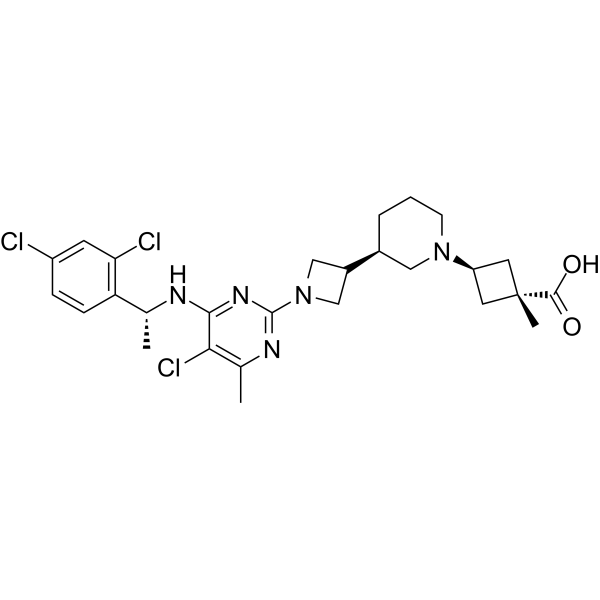
HY-148074
ZelnecirnonCCR4 Inhibitor -
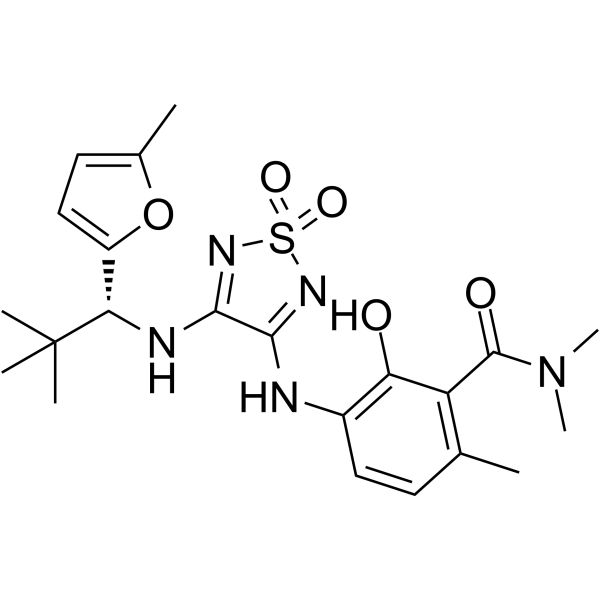
HY-133073
CCR7 Ligand 1CCR7 Antagonist -
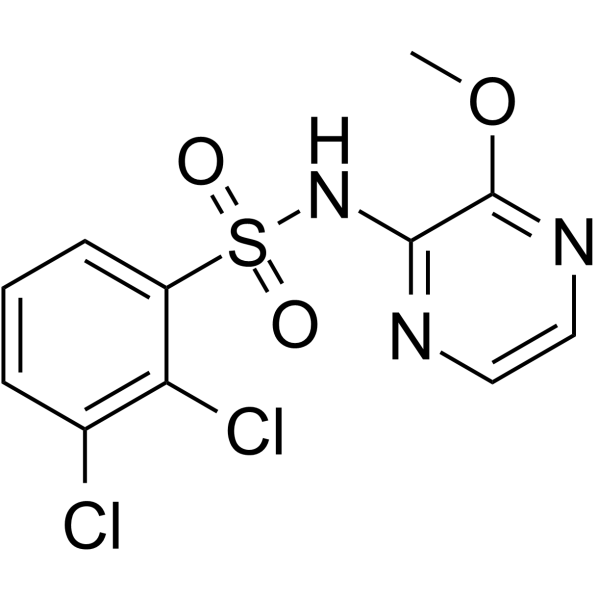
HY-U00064
AZD2098 -
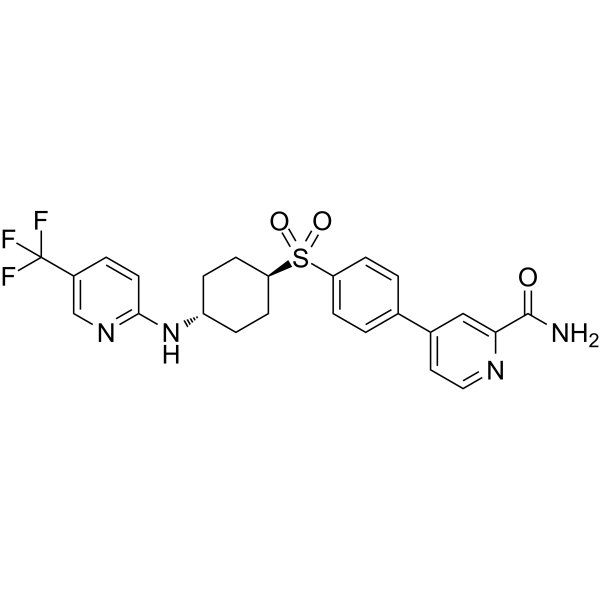
HY-112701
CCR6 inhibitor 1CCR Inhibitor -
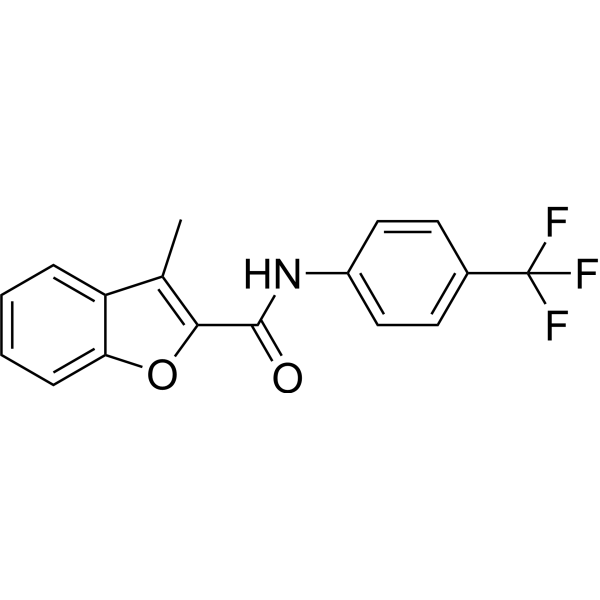
HY-151435
CCR6 antagonist 1CCR6 Antagonist -
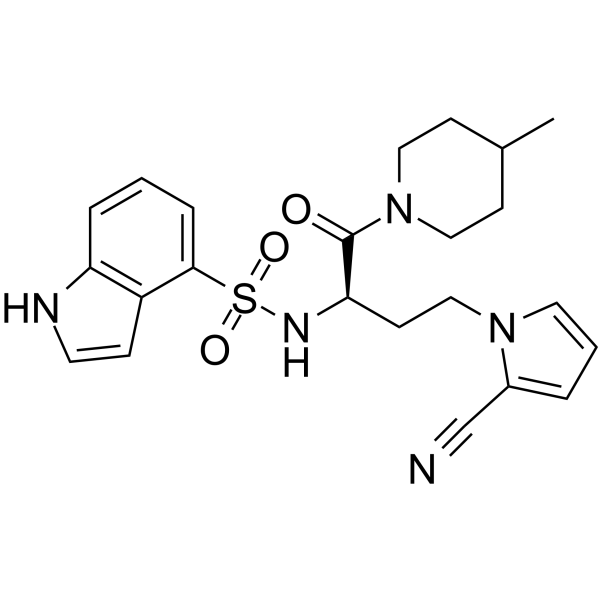
HY-116835
BI-6901CCR10 Antagonist -
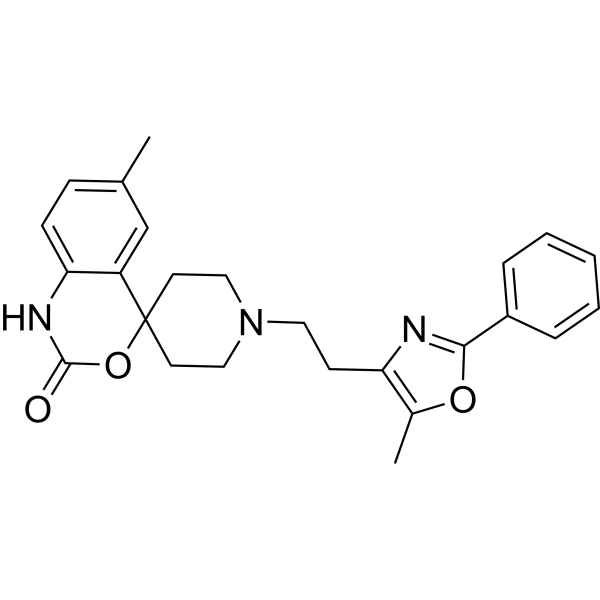
HY-15418
RS 504393CCR2 Antagonist


Biological Activity
Description
IC50 & Target
[1]|
[125I]-TARC-CCR4 7.96 (pIC50) |
In Vitro
The GSK2239633A is an allosteric antagonist of human CCR4. GSK2239633A inhibits the binding of [125I]-TARC to human CCR4 with a pIC50 of 7.96±0.11 and also inhibits thymus- and activation-regulated chemokine-induced (TARC)-induced increases in the F-actin content of isolated human CD4+ CCR4+ T-cells with a pA2 of 7.11±0.29[1]. The effect of GSK2239633A (Compound 3) on CCL17-induced increases in the F-actin content of human CD4+ CCR4+ T cells is measured. The pEC50 value is 8.79±0.22[2].
MedChemExpress (MCE) has not independently confirmed the accuracy of these methods. They are for reference only. .
In Vivo
MedChemExpress (MCE) has not independently confirmed the accuracy of these methods. They are for reference only.


Chemical Information
-
CAS No. 1240516-71-5
-
Appearance Solid
-
Molecular Weight 549.06
-
Formula C24H25ClN4O5S2
-
Color White to off-white
-
SMILES
CC(C)(O)C(NCC1=CC=CC(CN2N=C(NS(=O)(C3=CC=C(Cl)S3)=O)C4=C2C=CC=C4OC)=C1)=O
-
Shipping
Room temperature in continental US; may vary elsewhere.
-
Storage
Powder -20°C 3 years 4°C 2 years In solvent -80°C 2 years -20°C 1 year


Solvent & Solubility
In Vitro:
DMSO : ≥ 250 mg/mL (455.32 mM; Hygroscopic DMSO has a significant impact on the solubility of product, please use newly opened DMSO)
* "≥" means soluble, but saturation unknown.
Please refer to the solubility information to select the appropriate solvent. Once prepared, please aliquot and store the solution to prevent product inactivation from repeated freeze-thaw cycles.
Storage method and period of stock solution: -80°C, 2 years; -20°C, 1 year. When stored at -80°C, please use it within 2 years. When stored at -20°C, please use it within 1 year.
Please refer to the solubility information to select the appropriate solvent. Once prepared, please aliquot and store the solution to prevent product inactivation from repeated freeze-thaw cycles.
Storage method and period of stock solution: -80°C, 2 years; -20°C, 1 year. When stored at -80°C, please use it within 2 years. When stored at -20°C, please use it within 1 year.
Concentration (start) × Volume (start) = Concentration (final) × Volume (final)
In Vivo:
Select the appropriate dissolution method based on your experimental animal and administration route.
- For the following dissolution methods, please ensure to first prepare a clear stock solution using an In Vitro approach and then sequentially add co-solvents:
- To ensure reliable experimental results, the clarified stock solution can be appropriately stored based on storage conditions. As for the working solution for In Vivo experiments, it is recommended to prepare freshly and use it on the same day.
- The percentages shown for the solvents indicate their volumetric ratio in the final prepared solution. If precipitation or phase separation occurs during preparation, heat and/or sonication can be used to aid dissolution.
Add each solvent one by one: 10% DMSO 40% PEG300 5% Tween-80 45% Saline
Solubility: ≥ 2.08 mg/mL (3.79 mM); Clear solution
This protocol yields a clear solution of ≥ 2.08 mg/mL (saturation unknown).
Taking 1 mL working solution as an example, add 100 μL DMSO stock solution (20.8 mg/mL) to 400 μL PEG300, and mix evenly; then add 50 μL Tween-80 and mix evenly; then add 450 μL Saline to adjust the volume to 1 mL.
Preparation of Saline: Dissolve 0.9 g sodium chloride in ddH₂O and dilute to 100 mL to obtain a clear Saline solution.
In Vivo Dissolution Calculator
Please enter the basic information of animal experiments:
-
-
-
-
Recommended: Prepare an additional quantity of animals to account for potential losses during experiments.
Please enter your animal formula composition:
-
%DMSO +
Recommended: Keep the proportion of DMSO in working solution below 2% if your animal is weak.
-
%+
-
+%Tween-80 + +
-
%Saline +
The co-solvents required include: DMSO, . All of co-solvents are available by MedChemExpress (MCE). , Tween 80. All of co-solvents are available by MedChemExpress (MCE).
Working solution concentration: 0.22 mg/mL
Method for preparing stock solution: mg drug dissolved in μL DMSO. Stock solution concentration: mg/mL.
1. Take μL DMSO stock solution;
2. Add μL .
μL , mix evenly;
3. Then add μL Tween 80, mix evenly;
4. Then add μL
Please ensure that the stock solution in the first step is dissolved to a clear state, and add co-solvents in sequence. You can use ultrasonic heating (ultrasonic cleaner, recommended frequency 20-40 kHz), vortexing, etc. to assist dissolution.


Purity & Documentation
-
Data Sheet (287 KB)
-
SDS (251 KB)
- English - EN (251 KB)
- Français - FR (251 KB)
- Deutsch - DE (251 KB)
- Norwegian - NO (251 KB)
- Español - ES (251 KB)
- Swedish - SV (251 KB)
- Italian - IT (251 KB)
- Korean - KR (251 KB)
- Portuguese - PT (251 KB)
-
Handling Instructions (2659 KB)
References
[1]. Cahn A, et al. Safety, tolerability, pharmacokinetics and pharmacodynamics of GSK2239633, a CC-chemokine receptor 4 antagonist, in healthy male subjects: results from an open-label and from a randomised study. BMC Pharmacol Toxicol. 2013 Feb 28;14:14. [Content Brief]
[2]. Slack RJ, et al. Antagonism of human CC-chemokine receptor 4 can be achieved through three distinct binding sites on the receptor. Pharmacol Res Perspect. 2013 Dec;1(2):e00019. [Content Brief]
[3]. Miah AH, et al. Identification of pyrazolopyrimidine arylsulfonamides as CC-chemokine receptor 4 (CCR4) antagonists. Bioorg Med Chem. 2017 Oct 15;25(20):5327-5340. [Content Brief]


Complete Stock Solution Preparation Table
Please refer to the solubility information to select the appropriate solvent. Once prepared, please aliquot and store the solution to prevent product inactivation from repeated freeze-thaw cycles.
Storage method and period of stock solution: -80°C, 2 years; -20°C, 1 year. When stored at -80°C, please use it within 2 years. When stored at -20°C, please use it within 1 year.
| Optional Solvent | Concentration Solvent Mass | 1 mg | 5 mg | 10 mg | 25 mg |
|---|---|---|---|---|---|
| DMSO | 1 mM | 1.8213 mL | 9.1065 mL | 18.2129 mL | 45.5324 mL |
| 5 mM | 0.3643 mL | 1.8213 mL | 3.6426 mL | 9.1065 mL | |
| 10 mM | 0.1821 mL | 0.9106 mL | 1.8213 mL | 4.5532 mL | |
| 15 mM | 0.1214 mL | 0.6071 mL | 1.2142 mL | 3.0355 mL | |
| 20 mM | 0.0911 mL | 0.4553 mL | 0.9106 mL | 2.2766 mL | |
| 25 mM | 0.0729 mL | 0.3643 mL | 0.7285 mL | 1.8213 mL | |
| 30 mM | 0.0607 mL | 0.3035 mL | 0.6071 mL | 1.5177 mL | |
| 40 mM | 0.0455 mL | 0.2277 mL | 0.4553 mL | 1.1383 mL | |
| 50 mM | 0.0364 mL | 0.1821 mL | 0.3643 mL | 0.9106 mL | |
| 60 mM | 0.0304 mL | 0.1518 mL | 0.3035 mL | 0.7589 mL | |
| 80 mM | 0.0228 mL | 0.1138 mL | 0.2277 mL | 0.5692 mL | |
| 100 mM | 0.0182 mL | 0.0911 mL | 0.1821 mL | 0.4553 mL |


GSK2239633A Related Classifications
HY-100183 Related Classifications
 Powered by Bioz