



Tivumecirnon

Based on 1 Customer Validation
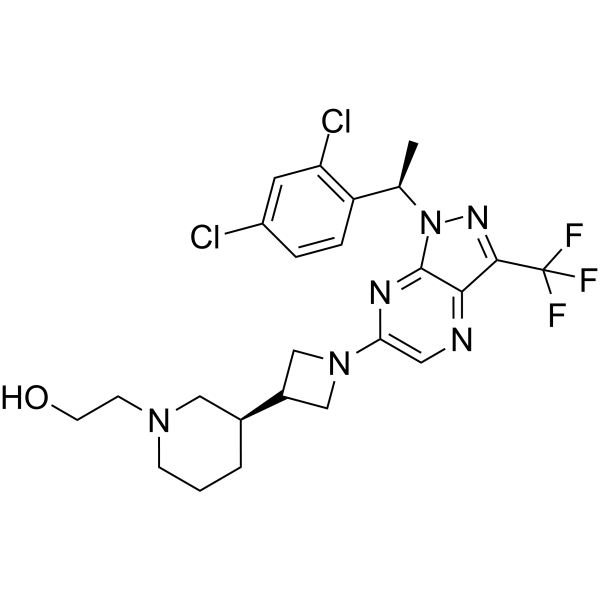
Tivumecirnon (FLX475) is an orally active, selective CCR4 antagonist. Tivumecirnon blocks the binding of CCR4 to its ligands, CCL17 and CCL22, thereby reducing Treg infiltration into the tumor microenvironment. Tivumecirnon has antitumor activity.
Nos produits utilisent uniquement pour la recherche. Nous ne vendons pas aux patients.
- Pureté : 99.48%
- CAS No.: 2174938-78-2
- Formule: C24H27Cl2F3N6O
- Masse moléculaire:543.41
-
Stockage:Powder -20°C, 3 years , 4°C, 2 years ; In solvent -80°C, 6 months , -20°C, 1 month

To place orders, for customer services and technical support, please contact: MedChemExpress USA
Tel: 609-228-6898 E-mail: [email protected] [email protected]


-
 Activité biologique
-
Chemical Information
-
Solvant et solubilité
- Protocole
- Pureté et documentation
- Références
-
 Help & FAQs


-
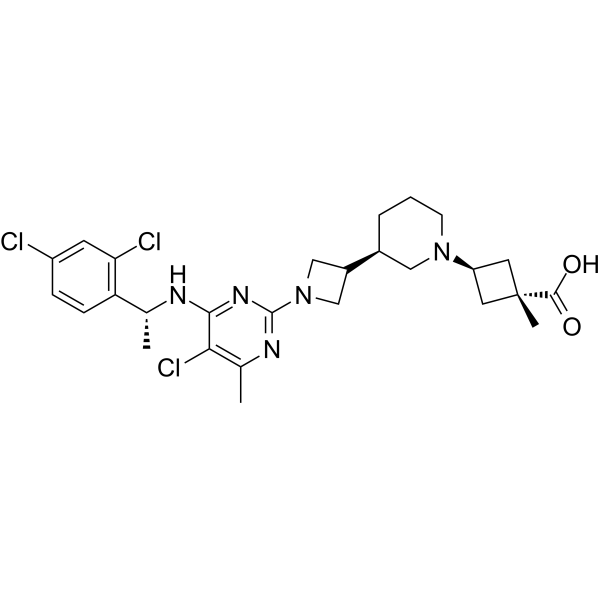
HY-148074
ZelnecirnonCCR4 Inhibitor -
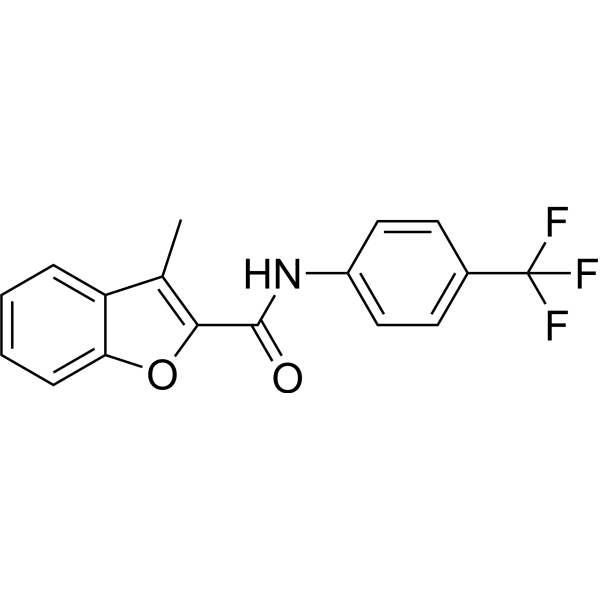
HY-151435
CCR6 antagonist 1CCR6 Antagonist -
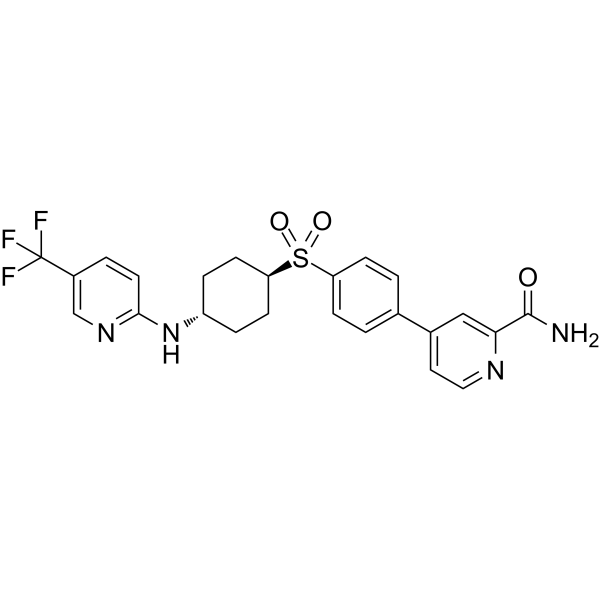
HY-112701
CCR6 inhibitor 1CCR Inhibitor -
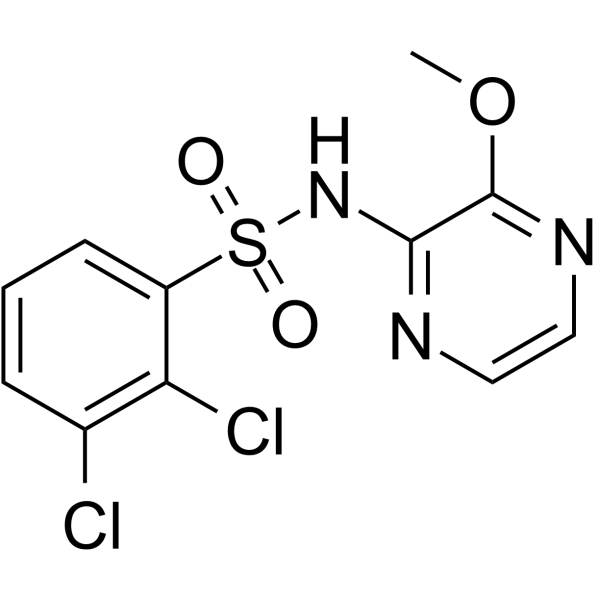
HY-U00064
AZD2098 -
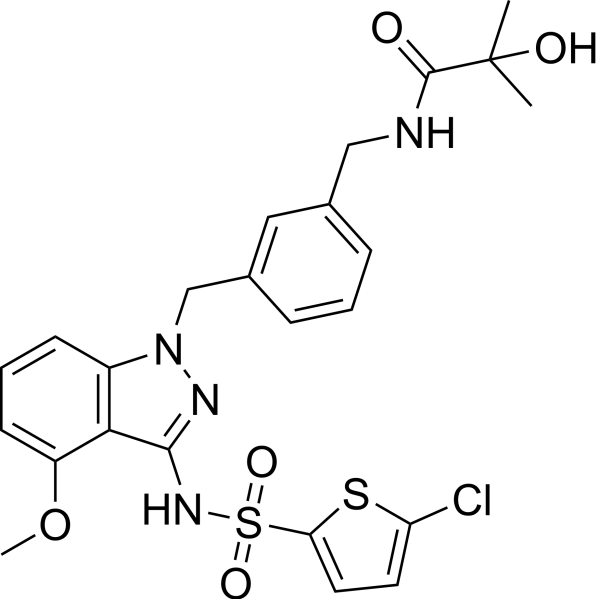
HY-100183
GSK2239633ACCR4 Antagonist -
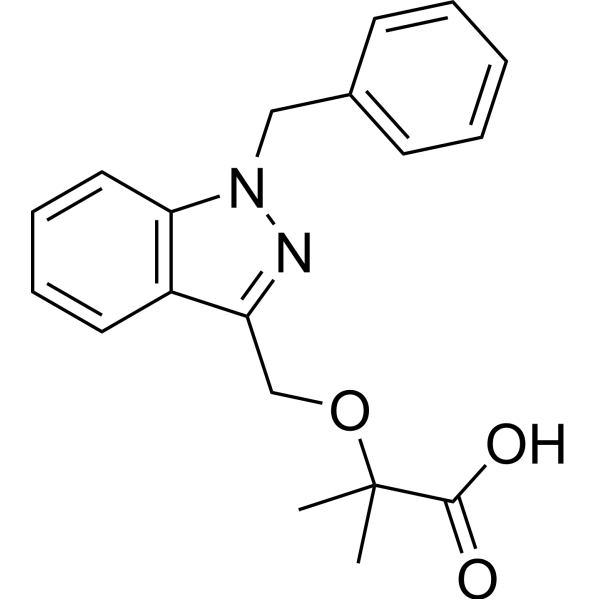
HY-B0498
BindaritMCP/CCL Inhibitor -
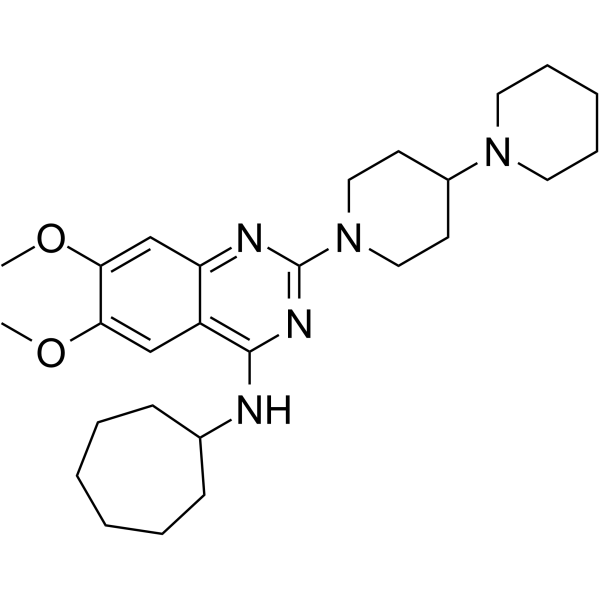
HY-103364
C-021CCR4 Antagonist -
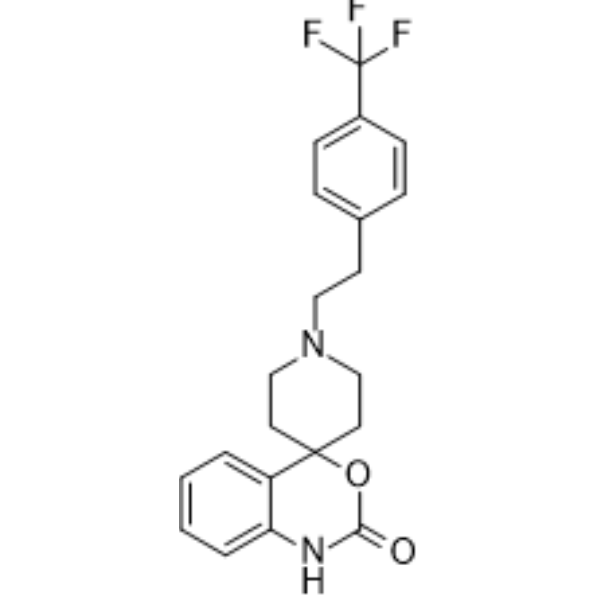
HY-18611A
AbaucinCCR Antagonist -
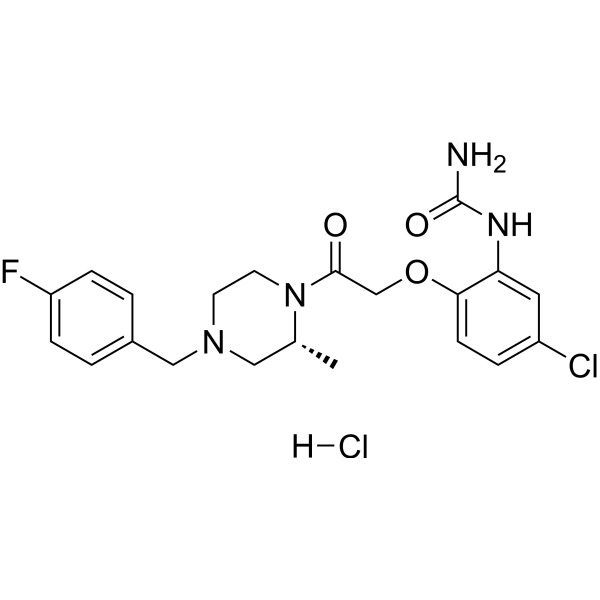
HY-12080A
BX471 hydrochlorideCCR Antagonist -
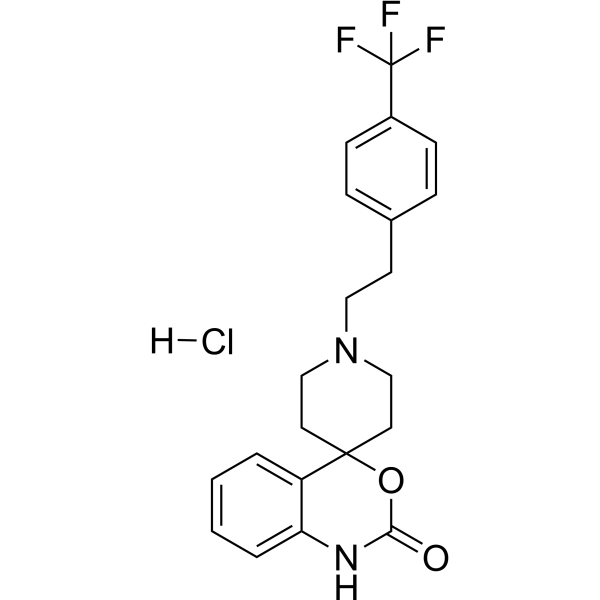
HY-18611
Abaucin hydrochlorideCCR2antagonist -
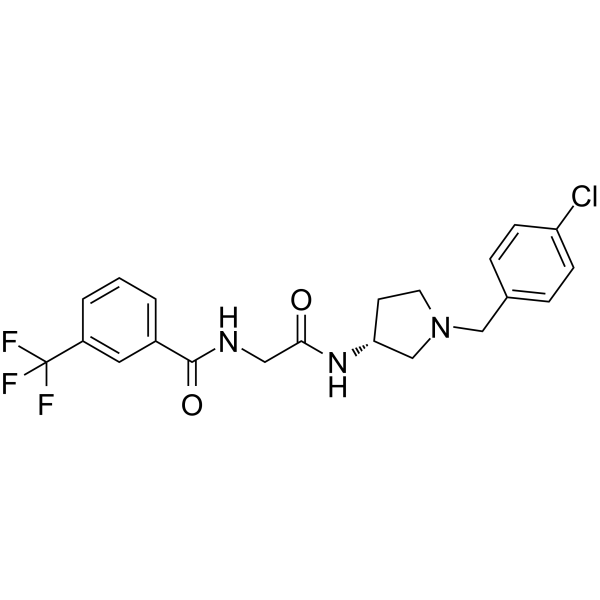
HY-108323
CCR2 antagonist 4CCR2b Antagonist -
HY-119217
AZ084CCR8 Allosteric Antagonist


Activité biologique
Description
IC50 & Target
[2]|
CCR4 |
In Vitro
Tivumecirnon is used in combination with Pembrolizumab (HY-P9902) for the treatment of non-small cell lung cancer[1].
MedChemExpress (MCE) has not independently confirmed the accuracy of these methods. They are for reference only.
Essai clinique
| NCT Number | Sponsor | Condition | Start Date |
Phase

|
|---|---|---|---|---|
| NCT01329991 | Plexxikon| | 2011-05 | PHASE1 |


Chemical Information
-
CAS No. 2174938-78-2
-
Appearance Solid
-
Masse moléculaire 543.41
-
Formule C24H27Cl2F3N6O
-
Color Off-white to light yellow
-
SMILES
C[C@H](C1=C(C=C(C=C1)Cl)Cl)N2C3=NC(N4CC([C@H]5CCCN(C5)CCO)C4)=CN=C3C(C(F)(F)F)=N2
-
Synonyms
FLX475
-
Livraison
Room temperature in continental US; may vary elsewhere.
-
Stockage
Powder -20°C 3 years 4°C 2 years In solvent -80°C 6 months -20°C 1 month


Solvant et solubilité
In Vitro:
DMSO : 100 mg/mL (184.02 mM; Need ultrasonic; Hygroscopic DMSO has a significant impact on the solubility of product, please use newly opened DMSO)
Please refer to the solubility information to select the appropriate solvent. Once prepared, please aliquot and store the solution to prevent product inactivation from repeated freeze-thaw cycles.
Storage method and period of stock solution: -80°C, 6 months; -20°C, 1 month. When stored at -80°C, please use it within 6 months. When stored at -20°C, please use it within 1 month.
Please refer to the solubility information to select the appropriate solvent. Once prepared, please aliquot and store the solution to prevent product inactivation from repeated freeze-thaw cycles.
Storage method and period of stock solution: -80°C, 6 months; -20°C, 1 month. When stored at -80°C, please use it within 6 months. When stored at -20°C, please use it within 1 month.
Concentration (start) × Volume (start) = Concentration (final) × Volume (final)
In Vivo:
Select the appropriate dissolution method based on your experimental animal and administration route.
- For the following dissolution methods, please ensure to first prepare a clear stock solution using an In Vitro approach and then sequentially add co-solvents:
- To ensure reliable experimental results, the clarified stock solution can be appropriately stored based on storage conditions. As for the working solution for In Vivo experiments, it is recommended to prepare freshly and use it on the same day.
- The percentages shown for the solvents indicate their volumetric ratio in the final prepared solution. If precipitation or phase separation occurs during preparation, heat and/or sonication can be used to aid dissolution.
In Vivo Dissolution Calculator
Please enter the basic information of animal experiments:
-
-
-
-
Recommended: Prepare an additional quantity of animals to account for potential losses during experiments.
Please enter your animal formula composition:
-
%DMSO +
Recommended: Keep the proportion of DMSO in working solution below 2% if your animal is weak.
-
%+
-
+%Tween-80 + +
-
%Saline +
The co-solvents required include: DMSO, . All of co-solvents are available by MedChemExpress (MCE). , Tween 80. All of co-solvents are available by MedChemExpress (MCE).
Working solution concentration: 0.22 mg/mL
Method for preparing stock solution: mg drug dissolved in μL DMSO. Stock solution concentration: mg/mL.
1. Take μL DMSO stock solution;
2. Add μL .
μL , mix evenly;
3. Then add μL Tween 80, mix evenly;
4. Then add μL
Please ensure that the stock solution in the first step is dissolved to a clear state, and add co-solvents in sequence. You can use ultrasonic heating (ultrasonic cleaner, recommended frequency 20-40 kHz), vortexing, etc. to assist dissolution.


Pureté et documentation
-
Fiche technique (274 KB)
-
SDS (252 KB)
- English - EN (252 KB)
- Français - FR (252 KB)
- Deutsch - DE (252 KB)
- Norwegian - NO (252 KB)
- Español - ES (252 KB)
- Swedish - SV (252 KB)
- Italian - IT (252 KB)
- Korean - KR (252 KB)
- Portuguese - PT (252 KB)
-
Instruction de manipulation (2659 KB)
Références


Complete Stock Solution Preparation Table
Please refer to the solubility information to select the appropriate solvent. Once prepared, please aliquot and store the solution to prevent product inactivation from repeated freeze-thaw cycles.
Storage method and period of stock solution: -80°C, 6 months; -20°C, 1 month. When stored at -80°C, please use it within 6 months. When stored at -20°C, please use it within 1 month.
| Optional Solvent | Concentration Solvent Mass | 1 mg | 5 mg | 10 mg | 25 mg |
|---|---|---|---|---|---|
| DMSO | 1 mM | 1.8402 mL | 9.2012 mL | 18.4023 mL | 46.0058 mL |
| 5 mM | 0.3680 mL | 1.8402 mL | 3.6805 mL | 9.2012 mL | |
| 10 mM | 0.1840 mL | 0.9201 mL | 1.8402 mL | 4.6006 mL | |
| 15 mM | 0.1227 mL | 0.6134 mL | 1.2268 mL | 3.0671 mL | |
| 20 mM | 0.0920 mL | 0.4601 mL | 0.9201 mL | 2.3003 mL | |
| 25 mM | 0.0736 mL | 0.3680 mL | 0.7361 mL | 1.8402 mL | |
| 30 mM | 0.0613 mL | 0.3067 mL | 0.6134 mL | 1.5335 mL | |
| 40 mM | 0.0460 mL | 0.2300 mL | 0.4601 mL | 1.1501 mL | |
| 50 mM | 0.0368 mL | 0.1840 mL | 0.3680 mL | 0.9201 mL | |
| 60 mM | 0.0307 mL | 0.1534 mL | 0.3067 mL | 0.7668 mL | |
| 80 mM | 0.0230 mL | 0.1150 mL | 0.2300 mL | 0.5751 mL | |
| 100 mM | 0.0184 mL | 0.0920 mL | 0.1840 mL | 0.4601 mL |


Tivumecirnon Related Classifications
HY-148494 Related Classifications
 Powered by Bioz