



PI3K-IN-1
Based on 13 publication(s) in Google Scholar
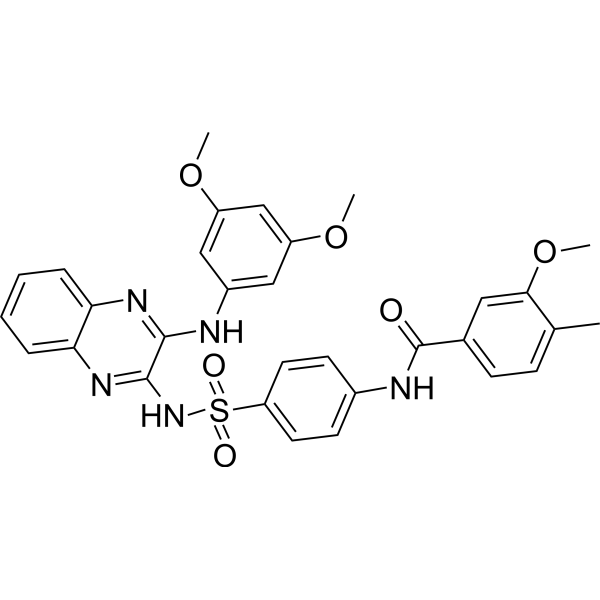
PI3K-IN-1 (XL-147 derivative 1) is a potent inhibitor of PI3K. PI3K-IN-1 (25 μM) blocks PI3K/Akt signaling pathways.
For research use only. We do not sell to patients.
- Purity : 99.46%
- CAS No.: 1349796-36-6
- Formula: C31H29N5O6S
- Molecular Weight:599.66
-
Storage:Powder -20°C, 3 years , 4°C, 2 years ; In solvent -80°C, 2 years , -20°C, 1 year

To place orders, for customer services and technical support, please contact: MedChemExpress USA
Tel: 609-228-6898 E-mail: [email protected] [email protected]


-
 Biological Activity
-
Chemical Information
-
Solvent & Solubility
- Purity & Documentation
- References
-
 Help & FAQs


-
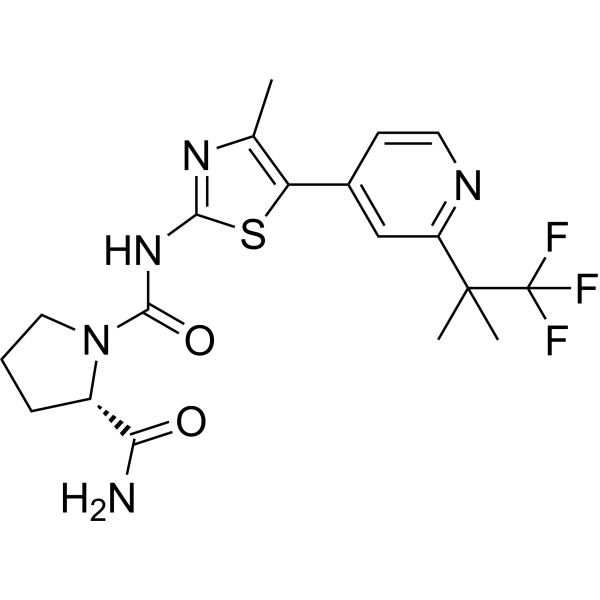
HY-15244
AlpelisibPI3Kα Inhibitor -

HY-P0175
740 Y-PPI3K Activator -
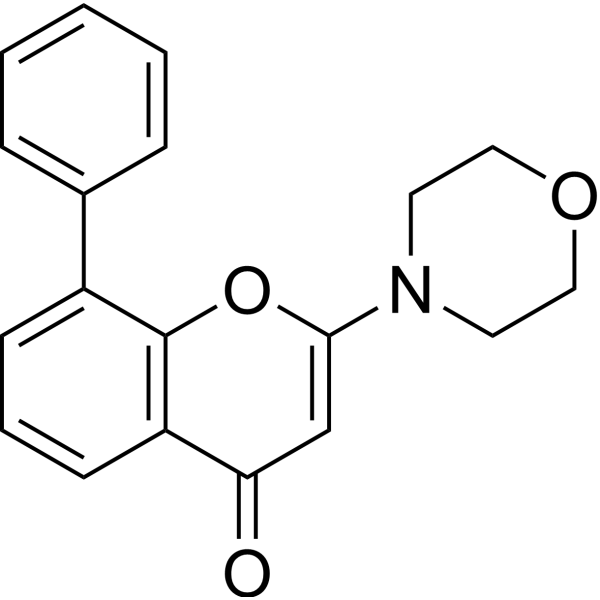
HY-10108
LY294002PI3K Inhibitor -
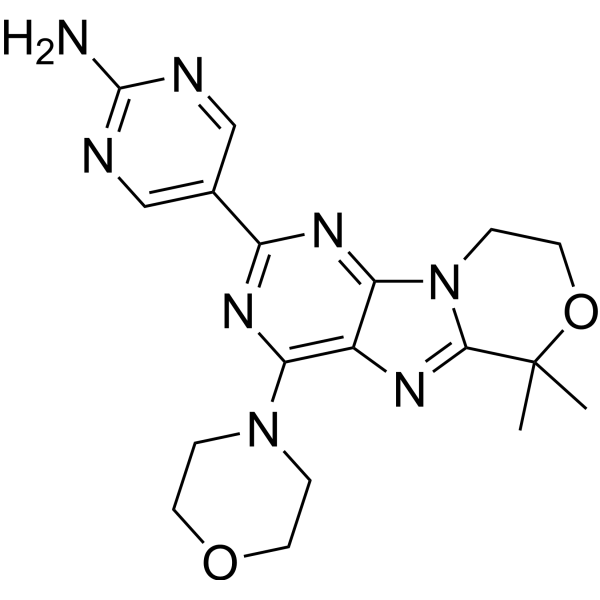
HY-19962
PaxalisibPI3K/mTOR Inhibitor -
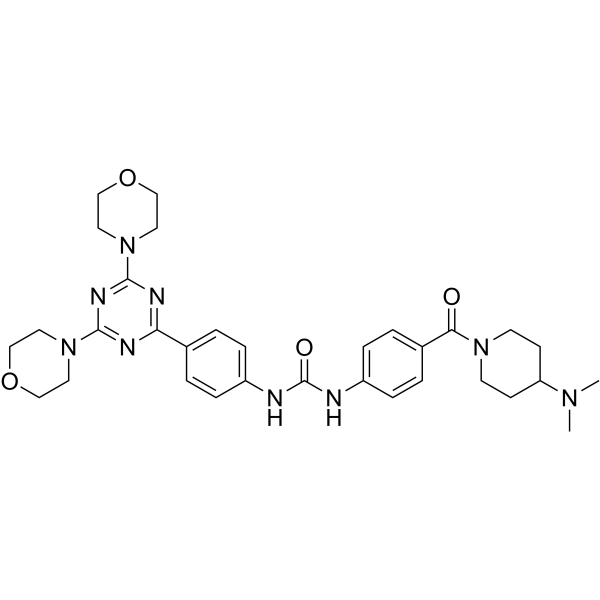
HY-10681
GedatolisibPI3K/mTOR Inhibitor -
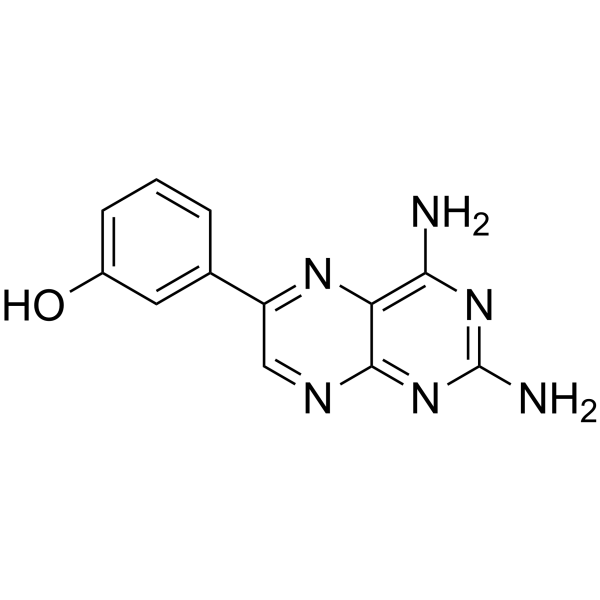
HY-13514
TG 100713PI3K Inhibitor -
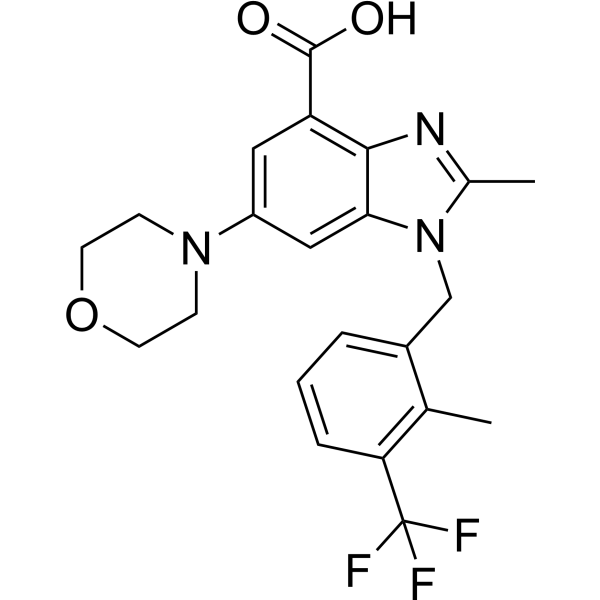
HY-15245
GSK2636771PI3Kβ Inhibitor -

HY-12068R
PI3K-IN-1 (Standard)PI3K Inhibitor -
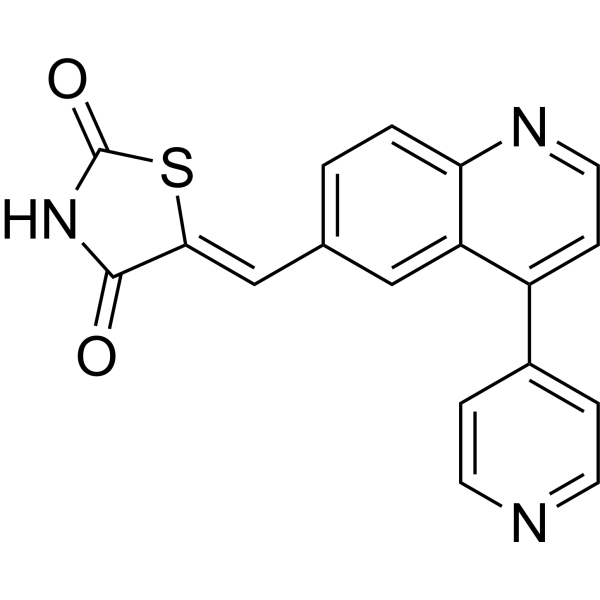
HY-12036
GSK1059615Apoptosis Inducer -
HY-17044
DuvelisibPI3Kδ Inhibitor -
HY-12030
PIK-90PI3K Inhibitor -
HY-13532
AS-252424PI3K Inhibitor
Publications Citing Use of MedChemExpress (MCE) PI3K-IN-1
More- N Engl J Med. 2021 Dec;18(6):1035-1044. [Abstract]
- Cancer Biol Med. 2025 Mar 27:j.issn.2095-3941.2024.0483. [Abstract]
- Cell Death Dis. 2021 Jul 9;12(7):691. [Abstract]
- Br J Pharmacol. 2022 Jan;179(1):159-178. [Abstract]
- J Agric Food Chem. 2025 Jul 23;73(29):18176-18185. [Abstract]
- Front Bioeng Biotechnol. 2020 May 8:8:392. [Abstract]
- J Endocrinol. 2026 Apr 21;269(1):e250227.
- J Cell Mol Med. 2025 Nov;29(21):e70942. [Abstract]
- J Anim Sci. 2025 Jan 4:103:skaf266. [Abstract]
- Mol Reprod Dev. 2026 May;93(5):e70120. [Abstract]
- Oncol Lett. 2021 Dec;22(6):824. [Abstract]
- Heliyon. 2024 Jan 3;10(2):e24042. [Abstract]
- Bioengineered. 2022 Mar;13(3):6866-6879. [Abstract]
 Customer Validation & Images

-
RT-PCR


Biological Activity
Description
IC50 & Target
[1]|
PI3K |
In Vitro
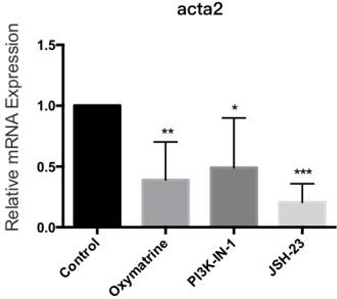
PI3K-IN-1 (25 μM) blocks PI3K/Akt signaling pathways. By using the PI3K inhibitor PI3K-IN-1, TGF-β1 induced transformation into myofibroblast is also inhibited, with relatively reduced expressions of α-SMA, Col-1 and Timp-1[1].
MedChemExpress (MCE) has not independently confirmed the accuracy of these methods. They are for reference only. .


Chemical Information
-
CAS No. 1349796-36-6
-
Appearance Solid
-
Molecular Weight 599.66
-
Formula C31H29N5O6S
-
Color Light yellow to yellow
-
SMILES
COC1=CC(NC2=NC3=CC=CC=C3N=C2NS(C4=CC=C(C=C4)NC(C5=CC=C(C(OC)=C5)C)=O)(=O)=O)=CC(OC)=C1
-
Synonyms
XL-147 derivative 1
-
Shipping
Room temperature in continental US; may vary elsewhere.
-
Storage
Powder -20°C 3 years 4°C 2 years In solvent -80°C 2 years -20°C 1 year


Publications (13)
-
Journal Impact Factor
-
Most Recent
-
N Engl J Med
Extracellular Vesicles from Adipose-Derived Stem Cells Promote Diabetic Wound Healing via the PI3K-AKT-mTOR-HIF-1α Signaling Pathway. [Abstract]2021 Dec;18(6):1035-1044. PMID: 34542841 -
Cancer Biol Med
IL-33/ST2 signalling promotes tumor growth by regulating polarization of alternatively activated macrophages. [Abstract]2025 Mar 27:j.issn.2095-3941.2024.0483. PMID: 40145895 -
Cell Death Dis
MYC-targeted WDR4 promotes proliferation, metastasis, and sorafenib resistance by inducing CCNB1 translation in hepatocellular carcinoma. [Abstract]2021 Jul 9;12(7):691. PMID: 34244479 -
Br J Pharmacol
Butyrate ameliorates skeletal muscle atrophy in diabetic nephropathy by enhancing gut barrier function and FFA2-mediated PI3K/Akt/mTOR signals. [Abstract]2022 Jan;179(1):159-178. PMID: 34638162 -
J Agric Food Chem
PI3K-Mediated Regulation of Glycogen Metabolism To Facilitate Tomato chlorosis Virus Transmission by Bemisia tabaci MED. [Abstract]2025 Jul 23;73(29):18176-18185. PMID: 40626897 -
Front Bioeng Biotechnol
2020 May 8:8:392. PMID: 32457885
PI3K-IN-1 purchased from MedChemExpress. Usage Cited in: Front Bioeng Biotechnol. 2020 May 8:8:392. [Abstract]
Acta2 expression after Signaling inhibitors by q-PCR. For inhibitor treatment, 24 h after seeding, the medium is removed and replaced with the PI3K inhibitor PI3K-IN-1(25 μM) to block the PI3K/Akt signaling pathways.
-
-
J Cell Mol Med
FGFR2 is a Crucial Factor for Adipose-Derived Mesenchymal Stem Cells in Promoting Diabetic Foot Ulcer Healing Through Angiogenesis. [Abstract]2025 Nov;29(21):e70942. PMID: 41230809 -
J Anim Sci
Roles of JNK, ERK, and PI3K/AKT signaling pathways in zinc-mediated alleviation of thermal stress-induced damage to the integrity and barrier function of primary cultured chick jejunal epithelial cells. [Abstract]2025 Jan 4:103:skaf266. PMID: 40795135 -
Mol Reprod Dev
Leucine Promotes Mouse Primordial Follicle Activation Via the PI3K/Akt Signaling Pathway. [Abstract]2026 May;93(5):e70120. PMID: 42200771 -
Oncol Lett
KLK6 mediates stemness and metabolism of gastric carcinoma cells via the PI3K/AKT/mTOR signaling pathway. [Abstract]2021 Dec;22(6):824. PMID: 34691251 -
Heliyon
Synovial mesenchymal stem cell-derived exosomal miR-485-3p relieves cartilage damage in osteoarthritis by targeting the NRP1-mediated PI3K/Akt pathway: Exosomal miR-485-3p relieves cartilage damage. [Abstract]2024 Jan 3;10(2):e24042. PMID: 38293485 -
Bioengineered
Cyclin D1 mediated by the nuclear translocation of nuclear factor kappa B exerts an oncogenic role in lung cancer. [Abstract]2022 Mar;13(3):6866-6879. PMID: 35246017


Solvent & Solubility
In Vitro:
DMSO : 27.5 mg/mL (45.86 mM; Need ultrasonic and warming; Hygroscopic DMSO has a significant impact on the solubility of product, please use newly opened DMSO)
H2O : < 0.1 mg/mL (insoluble)
Please refer to the solubility information to select the appropriate solvent. Once prepared, please aliquot and store the solution to prevent product inactivation from repeated freeze-thaw cycles.
Storage method and period of stock solution: -80°C, 2 years; -20°C, 1 year. When stored at -80°C, please use it within 2 years. When stored at -20°C, please use it within 1 year.
Please refer to the solubility information to select the appropriate solvent. Once prepared, please aliquot and store the solution to prevent product inactivation from repeated freeze-thaw cycles.
Storage method and period of stock solution: -80°C, 2 years; -20°C, 1 year. When stored at -80°C, please use it within 2 years. When stored at -20°C, please use it within 1 year.
Concentration (start) × Volume (start) = Concentration (final) × Volume (final)
In Vivo:
Select the appropriate dissolution method based on your experimental animal and administration route.
- For the following dissolution methods, please ensure to first prepare a clear stock solution using an In Vitro approach and then sequentially add co-solvents:
- To ensure reliable experimental results, the clarified stock solution can be appropriately stored based on storage conditions. As for the working solution for In Vivo experiments, it is recommended to prepare freshly and use it on the same day.
- The percentages shown for the solvents indicate their volumetric ratio in the final prepared solution. If precipitation or phase separation occurs during preparation, heat and/or sonication can be used to aid dissolution.
Add each solvent one by one: 10% DMSO 40% PEG300 5% Tween-80 45% Saline
Solubility: ≥ 2.5 mg/mL (4.17 mM); Clear solution
This protocol yields a clear solution of ≥ 2.5 mg/mL (saturation unknown).
Taking 1 mL working solution as an example, add 100 μL DMSO stock solution (25.0 mg/mL) to 400 μL PEG300, and mix evenly; then add 50 μL Tween-80 and mix evenly; then add 450 μL Saline to adjust the volume to 1 mL.
Preparation of Saline: Dissolve 0.9 g sodium chloride in ddH₂O and dilute to 100 mL to obtain a clear Saline solution.
Add each solvent one by one: 10% DMSO 90% (20% SBE-β-CD in Saline)
Solubility: 2.5 mg/mL (4.17 mM); Suspended solution; Need ultrasonic
This protocol yields a suspended solution of 2.5 mg/mL. Suspended solution can be used for oral and intraperitoneal injection.
Taking 1 mL working solution as an example, add 100 μL DMSO stock solution (25.0 mg/mL) to 900 μL 20% SBE-β-CD in Saline, and mix evenly.
Preparation of 20% SBE-β-CD in Saline (4°C, storage for one week): 2 g SBE-β-CD powder is dissolved in 10 mL Saline, completely dissolve until clear.
In Vivo Dissolution Calculator
Please enter the basic information of animal experiments:
-
-
-
-
Recommended: Prepare an additional quantity of animals to account for potential losses during experiments.
Please enter your animal formula composition:
-
%DMSO +
Recommended: Keep the proportion of DMSO in working solution below 2% if your animal is weak.
-
%+
-
+%Tween-80 + +
-
%Saline +
The co-solvents required include: DMSO, . All of co-solvents are available by MedChemExpress (MCE). , Tween 80. All of co-solvents are available by MedChemExpress (MCE).
Working solution concentration: 0.22 mg/mL
Method for preparing stock solution: mg drug dissolved in μL DMSO. Stock solution concentration: mg/mL.
1. Take μL DMSO stock solution;
2. Add μL .
μL , mix evenly;
3. Then add μL Tween 80, mix evenly;
4. Then add μL
Please ensure that the stock solution in the first step is dissolved to a clear state, and add co-solvents in sequence. You can use ultrasonic heating (ultrasonic cleaner, recommended frequency 20-40 kHz), vortexing, etc. to assist dissolution.


Purity & Documentation
-
Data Sheet (278 KB)
-
SDS (393 KB)
- English - EN (393 KB)
- Français - FR (393 KB)
- Deutsch - DE (393 KB)
- Norwegian - NO (393 KB)
- Español - ES (393 KB)
- Swedish - SV (393 KB)
- Italian - IT (393 KB)
- Korean - KR (393 KB)
- Portuguese - PT (393 KB)
-
Handling Instructions (2659 KB)
References


Complete Stock Solution Preparation Table
Please refer to the solubility information to select the appropriate solvent. Once prepared, please aliquot and store the solution to prevent product inactivation from repeated freeze-thaw cycles.
Storage method and period of stock solution: -80°C, 2 years; -20°C, 1 year. When stored at -80°C, please use it within 2 years. When stored at -20°C, please use it within 1 year.
| Optional Solvent | Concentration Solvent Mass | 1 mg | 5 mg | 10 mg | 25 mg |
|---|---|---|---|---|---|
| DMSO | 1 mM | 1.6676 mL | 8.3381 mL | 16.6761 mL | 41.6903 mL |
| 5 mM | 0.3335 mL | 1.6676 mL | 3.3352 mL | 8.3381 mL | |
| 10 mM | 0.1668 mL | 0.8338 mL | 1.6676 mL | 4.1690 mL | |
| 15 mM | 0.1112 mL | 0.5559 mL | 1.1117 mL | 2.7794 mL | |
| 20 mM | 0.0834 mL | 0.4169 mL | 0.8338 mL | 2.0845 mL | |
| 25 mM | 0.0667 mL | 0.3335 mL | 0.6670 mL | 1.6676 mL | |
| 30 mM | 0.0556 mL | 0.2779 mL | 0.5559 mL | 1.3897 mL | |
| 40 mM | 0.0417 mL | 0.2085 mL | 0.4169 mL | 1.0423 mL |


PI3K-IN-1 Related Classifications
HY-12068 Related Classifications
 Powered by Bioz