



Infection
-
Infection Related Products (18515)
Related Products (18515)

-
Antibodies (22)
-
PNU-103017
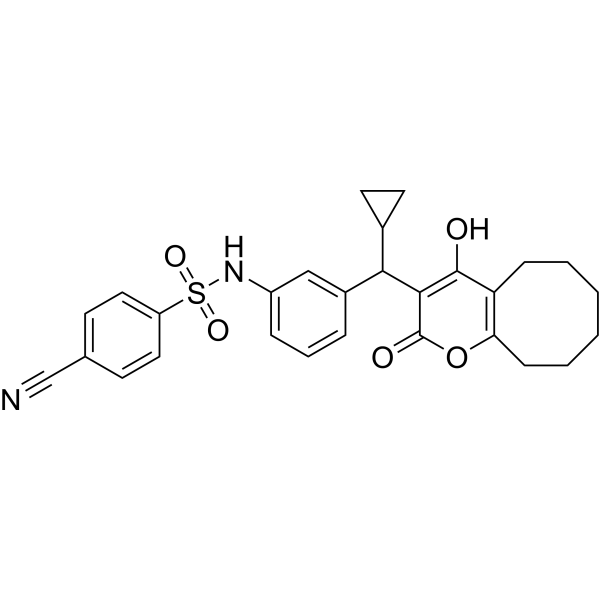 0 ImagesCat. No.: HY-19236CAS No.: 166335-18-8
PNU-103017 is an HIV protease inhibitor.
-
Agaric acid (Standard)
 0 Images
Agaric acid (Standard) (Agaricinic Acid (Standard)) is the analytical standard of Agaric acid (HY-N4104). This product is intended for research and analytical applications. Agaric acid (Agaricinic Acid) is an orally active inhibitor of adenine nucleotide translocase found in specific fungi. Agaric acid can inhibit the biofilm formation of various bacteria such as Salmonella. Agaric acid can also induce mitochondrial permeability transition, prompting mitochondria to release Ca2+, disrupting the transmembrane potential, and causing mitochondrial swelling. In addition, Agaric acid can also inhibit citrate transport in liver mitochondria and participate in the inhibition of fatty acid synthesis, affecting multiple metabolic processes.
-
Clevudine triphosphate
 0 ImagesCat. No.: HY-125719CAS No.: 174625-00-4Synonyms: L-FMAU-TP
Clevudine triphosphate is a thymidine analog. Clevudine triphosphate has anti-human hepatitis B virus (HBV) activity.
-
Omeprazole sulfone N-oxide-13C,d3
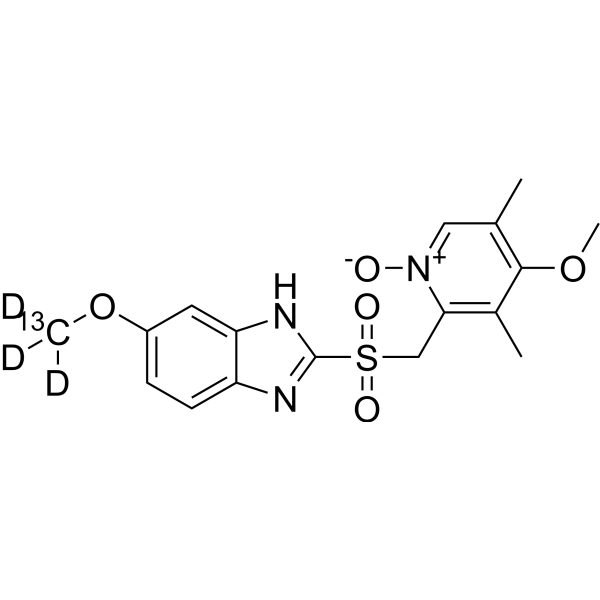 0 ImagesCat. No.: HY-138199SCAS No.: 2740875-18-5
Omeprazole sulfone N-Oxide-13C,d3 is the 13C,d3 Omeprazole sulfone N-Oxide (HY-138199). Omeprazole sulfone N-Oxide is an Omeprazole (HY-B0113) analog with binding affinity to Nilaparvata lugens choline acetyltransferase (ChAT).
-
Dioxolane T
 0 ImagesCat. No.: HY-107082CAS No.: 136982-89-3
Dioxolane T is a nucleoside analogue. Dioxolane T exhibits anti-HIV activity.
-
DprE1-IN-4
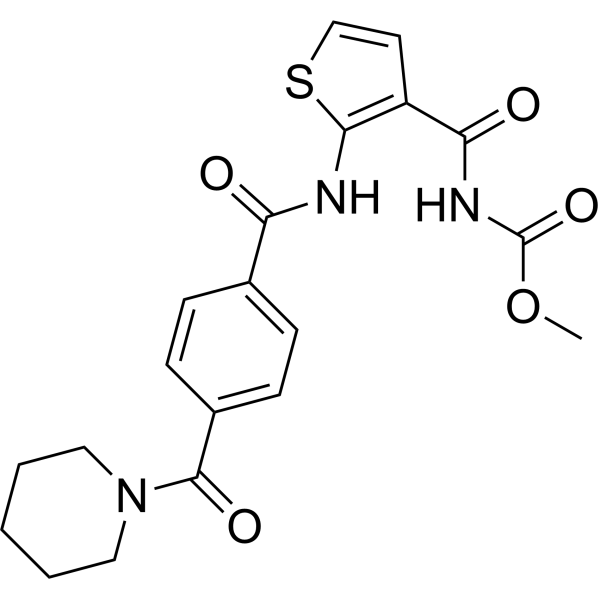 0 ImagesCat. No.: HY-138671CAS No.: 2419160-96-4
DprE1-IN-4 is a potent and orally active noncovalent DprE1 inhibitor with an IC50 of 0.90 μg/mL. DprE1-IN-4 exhibits potent in vitro activity against M. tuberculosis H37Rv and drug-resistant tuberculosis strain with MIC values of 0.12 μg/mL and 0.24 μg/mL, respectively. DprE1-IN-4 displays acceptable pharmacokinetic property and shows significant bactericidal activity in an acute mouse model of tuberculosis.
-
Antitubercular agent-17
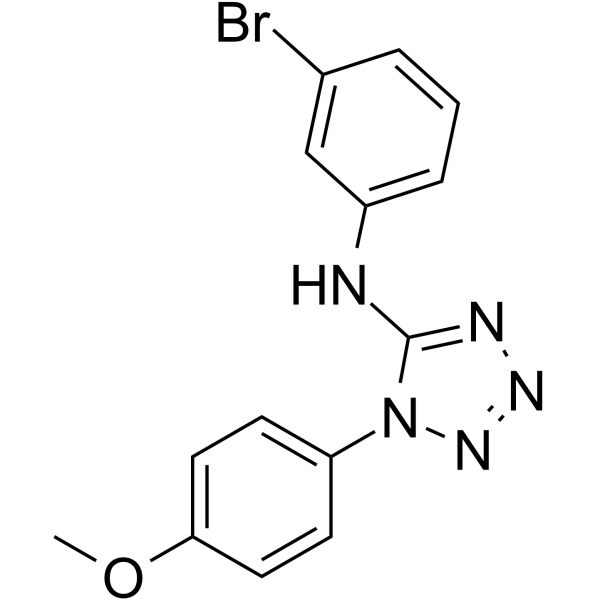 0 ImagesCat. No.: HY-146050CAS No.: 2328751-33-1
Antitubercular agent-17 (Compound 8a) is an antitubercular agent with MIC values of 2, 2, 2 and 128 µg/ml against M. tuberculosis H37Rv, Spec. 192, Spec 210 and Spec. 800, respectively. Antitubercular agent-17 shows highly selective antimycobacterial effects.
-
FtsZ-IN-11
 0 ImagesCat. No.: HY-168630CAS No.: 3042897-74-2
FtsZ-IN-11 (compound B6) is a FtsZ inhibitor with the IC50 of 235 μM against XooFtsZ. FtsZ-IN-11 can interact with XooFtsZ and inhibit its GTPase activity, leading to bacterial cell elongation and even death.
-
APA-APA-MPO dihydrochloride
 0 ImagesCat. No.: HY-115828CAS No.: 1610362-98-5
APA-APA-MPO dihydrochloride is an inhibitor of PCAF bromodomain/Tat-AcK50 interaction with reduced cytotoxic activity. APA-APA-MPO dihydrochloride can effectively inhibit the binding of PCAF to Tat-AcK50, showing its potential in HIV/AIDS inhibitory strategies. APA-APA-MPO dihydrochloride can be used in studies that hinder HIV replication.
-
Aranotin
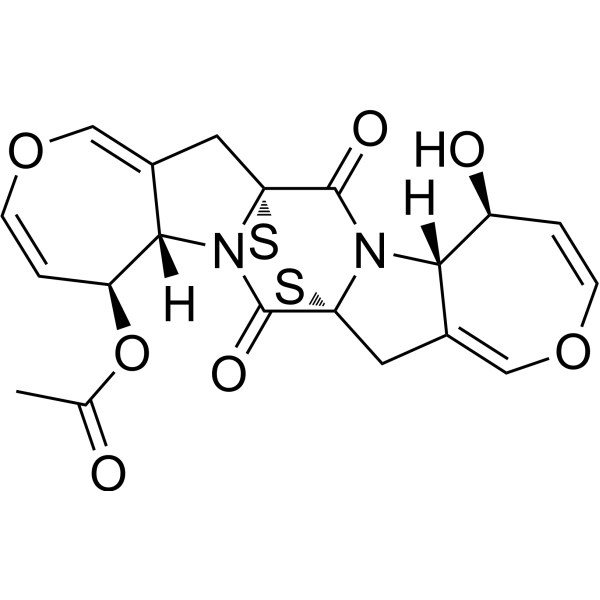 0 ImagesCat. No.: HY-105721CAS No.: 19885-51-9
Aranotin strongly binds to Nsp15 viral protein. Aranotin can be used as promising SARS-CoV-2 replication strong inhibitor. Aranotin has the potential for COVID-19 research.
-
Ac-Atovaquone
 0 ImagesCat. No.: HY-168656CAS No.: 129700-44-3
Ac-Atovaquone is a potent cytochrome bc1 inhibitor and also is an ester-linked acetyl derivative of atovaquone (HY-13832). Ac-Atovaquone has the potential for the research of malaria.

-
FAM labled Fomivirsen sodium
 0 ImagesCat. No.: HY-109528B
FAM labled Fomivirsen sodiumis a FAM labled Fomivirsen sodium.
-
Anti-inflammatory agent 14
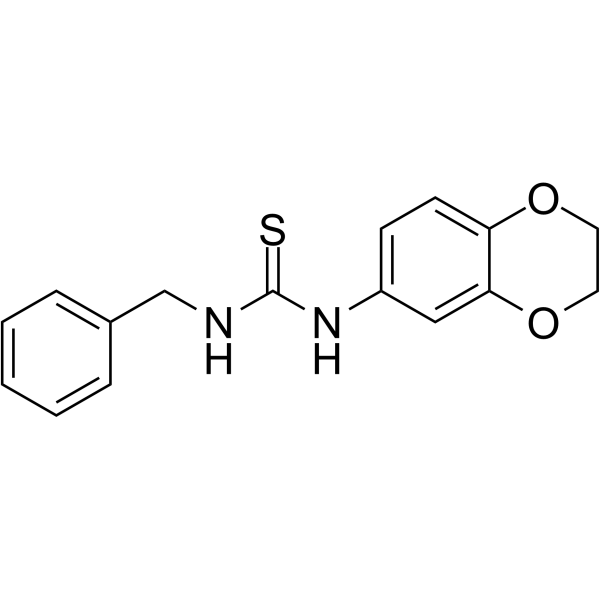 0 ImagesCat. No.: HY-144735CAS No.: 894496-27-6
Anti-inflammatory agent 14 (compound 28) is an anti-inflammatory agent, with a MIC50 of 2 μM for Mtb H37Rv.
-
c-(2'FdAMP-2'FdIMP)
 0 ImagesCat. No.: HY-112880CAS No.: 1951464-78-0
c-(2'FdAMP-2'FdIMP) (Compound 52),a derivative of cAIMP (HY-134375), is a cyclic dinucleotide (CDN). c-(2'FdAMP-2'FdIMP) is a STING activator and significantly induce STING-dependent IRF and NF-κB pathway signaling. c-(2'FdAMP-2'FdIMP) can be used for STING-based immunotherapy, such as cancers and infectious diseases research.
-
SC83288
 0 ImagesCat. No.: HY-182309CAS No.: 1237645-43-0
SC83288 is a Plasmodium falciparum PfDNMT2 inhibitor with an IC50 of 7 μM. SC83288 disrupts the epigenetic regulation of malaria parasites, blocks DNA replication and nuclear division, arrests the development of the asexual blood stage, induces the formation of pyknotic morphology in malaria parasites, and does not affect cytokinesis after nuclear division or parasite egress. SC83288 is applicable to malaria-related research.
-
Antiparasitic agent-17
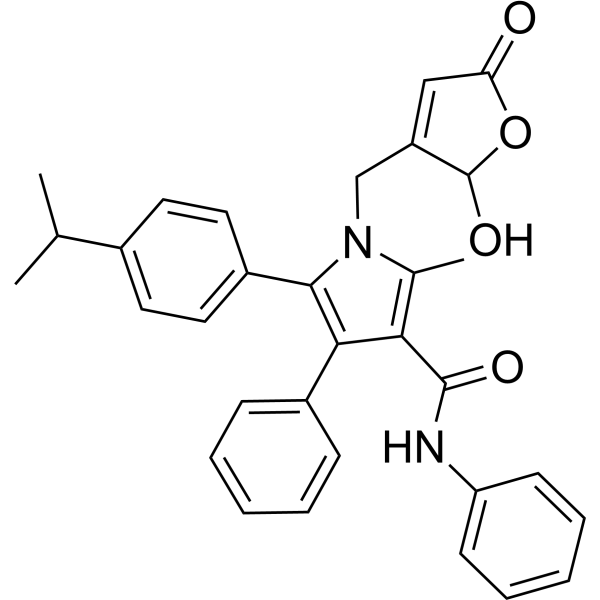 0 ImagesCat. No.: HY-149960CAS No.: 3043821-43-5
Antiparasitic agent-17 (compound 5u) is an orally active antiparasitic agent. Antiparasitic agent-17 inhibits Chloroquine sensitive (Pf3D7) and Chloroquine resistant (PfK1) strain with IC50s of 0.96 μM and 1.67 μM, respectively.
-
Herquline A
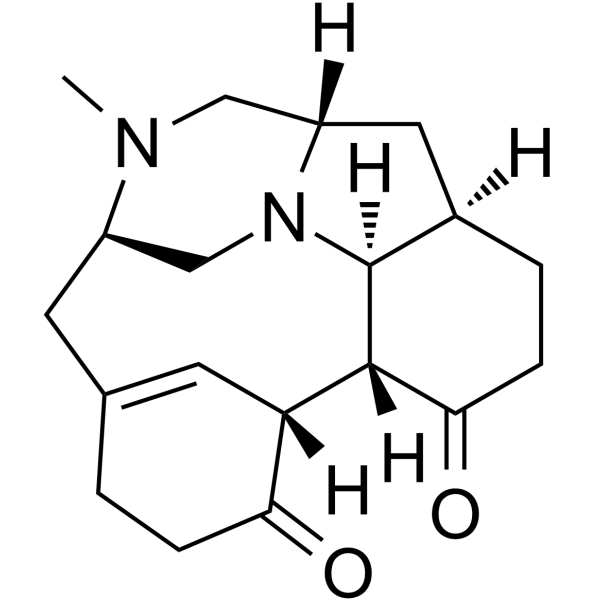 0 ImagesCat. No.: HY-125705CAS No.: 71812-08-3Synonyms: Herqueline A
Herquline A (Herqueline A) is a fungal piperazine alkaloid. Herquline A is a fungal metabolite that inhibits platelet aggregation and replication of the influenza virus.
-
(R)-Efavirenz
 0 ImagesCat. No.: HY-10572ACAS No.: 154801-74-8Synonyms: (R)-DMP 266; (R)-EFV; (R)-L-743726
(R)-Efavirenz ((R)-DMP 266) is a non-nucleoside reverse transcriptase inhibitor that acts by non-competitive inhibition of the viral enzyme. (R)-Efavirenz can be metabolized by CYP2B6 to 8-hydroxyefavirenz in a highly stereoselective manner. (R)-Efavirenz is promising to be a useful probe for the CYP2B6 active site and catalytic mechanisms.
-
Maximin H1
 0 ImagesCat. No.: HY-P5616CAS No.: 853262-60-9
Maximin H1 is an antimicrobial peptide derived from the skin secretions of Chinese red belly toad Bombina maxima. Maximin H1 has activity against Escherichia coli ATCC25922, Staphylococcus aureus ATCC2592, Bacillus pyocyaneus CMCCB1010 and Candida albicans ATCC2002, the MIC values are 9, 4.5, 9, 4.5 μg/ml, respectively.




