ATM/ATR
Ataxia telangiectasia mutated; ATM and RAD3 related
ATM/ATR, members of the phosphatidyl inositol 3-kinase-like family of serine/threonine protein kinases (PIKKs), are widely known as being central players in the mitotic DNA damage response (DDR), mounting responses to DNA double-strand breaks (DSBs) and single-stranded DNA (ssDNA) respectively. Activation of ATM by ionizing radiation results in the activation of signal transduction pathways that induce cell cycle arrest at G1/S, S and G2/M. ATR is required for cell cycle arrest in response to DNA-damaging agents such as ultraviolet radiation that cause bulky lesions.
Upon activation, ATM/ATR phosphorylate numerous targets to stabilize stalled replication forks, repair damaged DNA, and inhibit cell cycle progression to ensure survival of the cell and safeguard integrity of the genome. ATM and ATR are central players in activating cell cycle checkpoints and function as an active barrier against genome instability and tumorigenesis in replicating cells.
ATM/ATR Isoform Specific Products
All Product Categories
-
ATM/ATR Related Products (121)
Related Products (121)

-
Antibodies (7)
-
ATM/ATR Isoform Comparison
-
Elimusertib hydrochloride
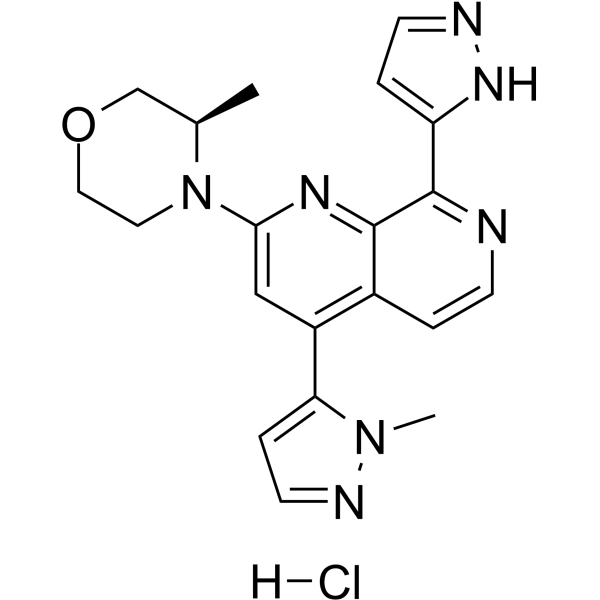 0 ImagesCat. No.: HY-101566APurity: 99.85%Synonyms: BAY 1895344 hydrochlorideElimusertib (BAY 1895344) hydrochloride is a potent, orally active and selective ATR inhibitor with an IC50 of 7 nM. Elimusertib hydrochloride has anti-tumor activity. Elimusertib hydrochloride can be used for the research of solid tumors and lymphomas.
-
Theaflavin-3-gallate
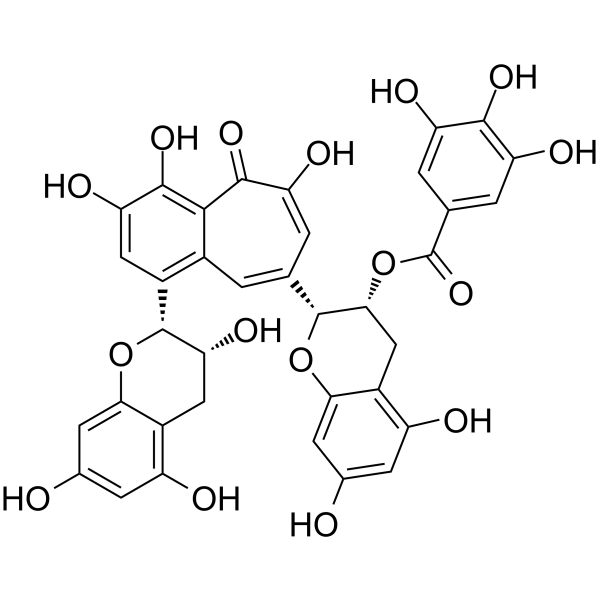 0 ImagesTheaflavin-3-gallate, a black tea theaflavin monomer, is regarded as the biologically important active component of black tea and provides health benefits. Theaflavin-3-gallate acts as prooxidants and induces oxidative stress in the carcinoma cells. Theaflavin-3-gallate reacts directly with reduced glutathione (GSH) in a time- and concentration-dependent manner. Theaflavin-3-gallate induces apoptosis and G1 cell cycle arrest in ovarian cancer A2780/CP70 cells through p53-dependent pathways. Theaflavin-3-gallate induces DNA damage through ATM/Chk/p53 pathway.
-
Adefovir dipivoxil
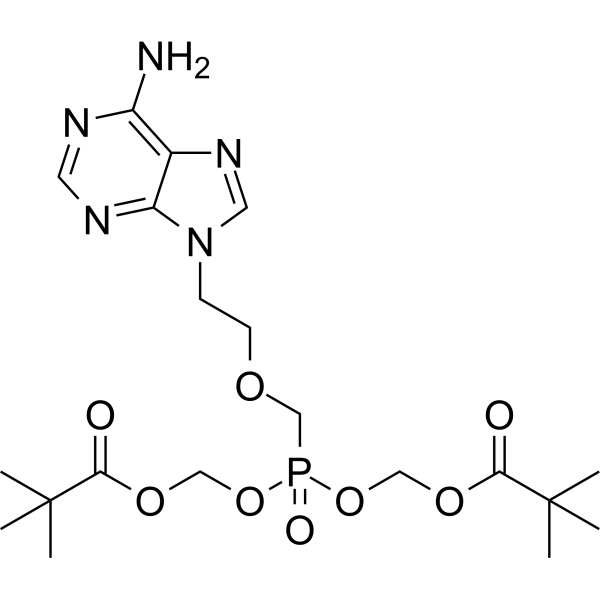 0 ImagesSynonyms: GS 0840Adefovir dipivoxil is an orally active adenosine analog and Adefovir prodrug. Adefovir dipivoxil inhibits DNA synthesis, activates the ATR signaling pathway, and disrupts the KCTD12-CDK1 interaction. Adefovir dipivoxil has antiviral activity against PRV, HBV, and orthopoxviruses. Adefovir dipivoxil has inhibitory effects on both lamivudine-resistant and wild-type strains. Adefovir dipivoxil has antitumor activity against lung and colon cancer.
-
Garcinone C
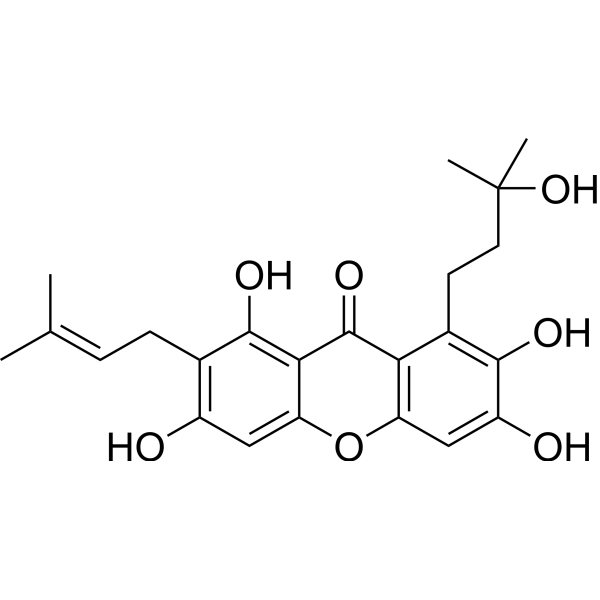 0 ImagesGarcinone C, a xanthone derivative, is a natural compound extracted from Garcinia oblongifolia that is used as an anti-inflammatory, astringency and granulation-promoting medicine, and has potential cytotoxic effects on certain cancers. Garcinone C stimulates the expression levels of ATR and 4E-BP1, arrests the cell cycle, inhibits cell viability of the human Nasopharyngeal carcinoma (NPC) cell lines CNE1, CNE2, HK1 and HONE1 in a time‑ and dose‑dependent manner through inhibition of Hedgehog signaling pathway. Garcinone C is orally active.
-
Ro 90-7501
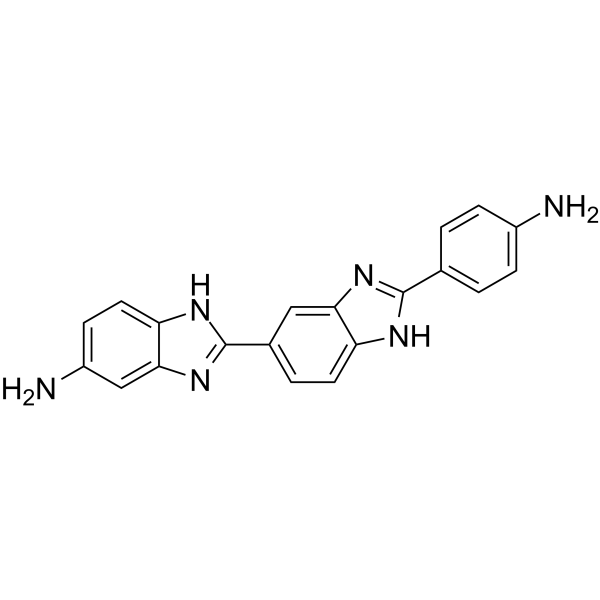 0 ImagesRo 90-7501 is an amyloid β42 (Aβ42) fibril assembly inhibitor that reduces Aβ42-induced cytotoxicity (EC50 of 2 μM). Ro 90-7501 inhibits ATM phosphorylation and DNA repair. RO 90-7501 selectively enhances toll-like receptor 3 (TLR3) and RIG-I-like receptor (RLR) ligand-induced IFN-β gene expression and antiviral response. Ro 90-7501 also inhibits protein phosphatase 5 (PP5) in a TPR-dependent manner. Ro 90-7501 has significant radiosensitizing effects on cervical cancer cells.
-
XRD-0394
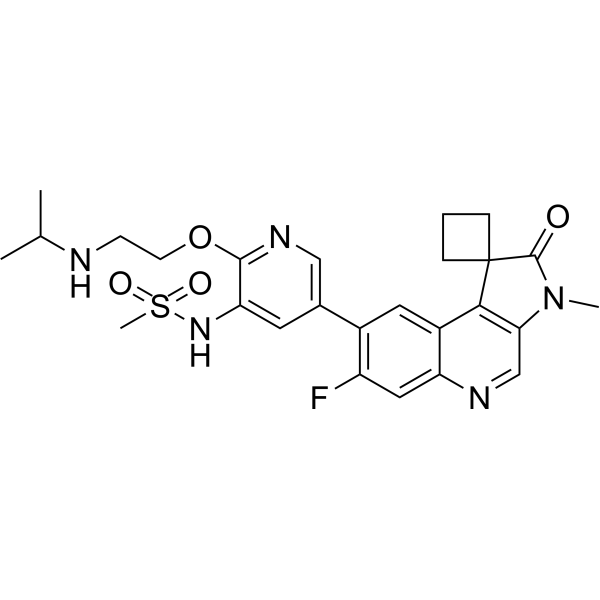 0 ImagesXRD-0394 is a potent and orally active dual ATM and DNA-PKcs inhibitor with IC50s of 0.39 nM and 0.89 nM, respectively. XRD-0394 shows selectivity over other PIKK and PI3K family members. XRD-0394 significantly enhances tumor cell killing in vitro and in vivo under therapeutic ionizing radiation conditions. XRD-0394 can potentiate the effects of PARP and topoisomerase I inhibitors in vitro.
-
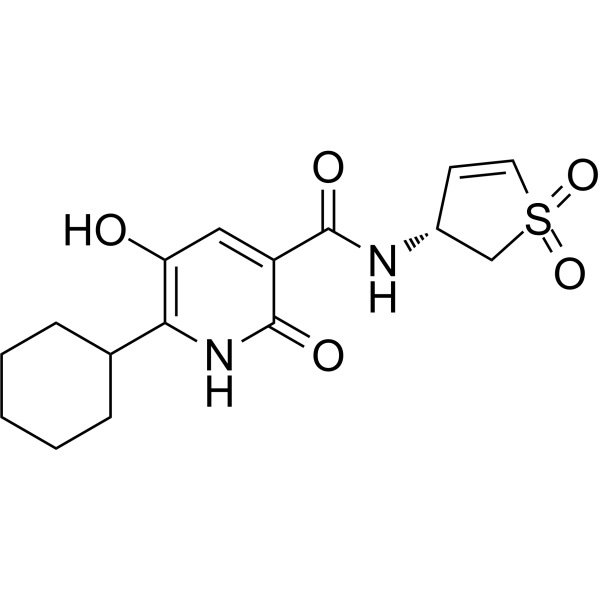
AD1058
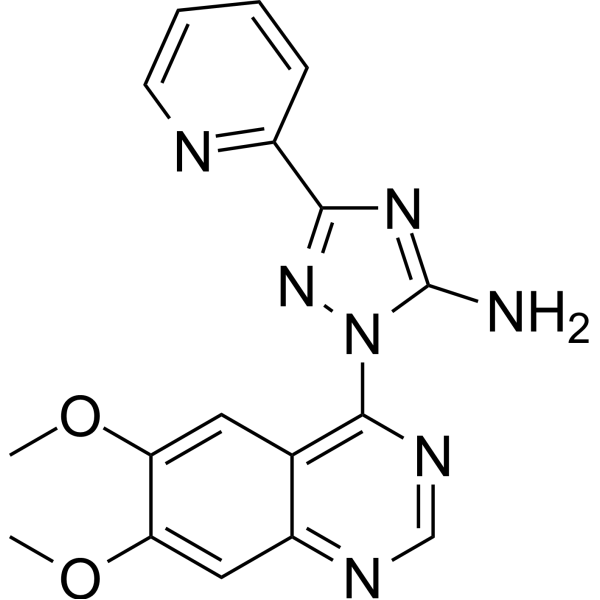
 0 ImagesAD1058 is an orally active, selective, and BBB-permeable inhibitor of ATR (IC50: 1.6 nM). AD1058 exhibits anticancer activity by inhibiting tumor cell proliferation, inducing cell cycle arrest, and promoting apoptosis. AD1058 is suitable for research on advanced malignancies and brain metastases.

-
LL-K12-18
 0 ImagesLL-K12-18 is a CDK12 kinase inhibitor and a dual-site molecular glue. LL-K12-18 inhibits human CDK12 with an IC50 value of 283.9 nM, and selectively degrades cyclin K via the ubiquitin-proteasome system by stabilizing the CDK12-DDB1 complex. LL-K12-18 downregulates DNA damage response genes, reduces the phosphorylation level of CTD Ser2 in RNA polymerase II, and modulates biomarkers such as ATM, RAD51, γ-H2AX and cleaved PARP, thereby effectively inducing apoptosis and inhibiting proliferation of breast cancer cells. LL-K12-18 exhibits high target selectivity and serves as a research tool for studies on triple-negative breast cancer.
-
(S)-Ceralasertib
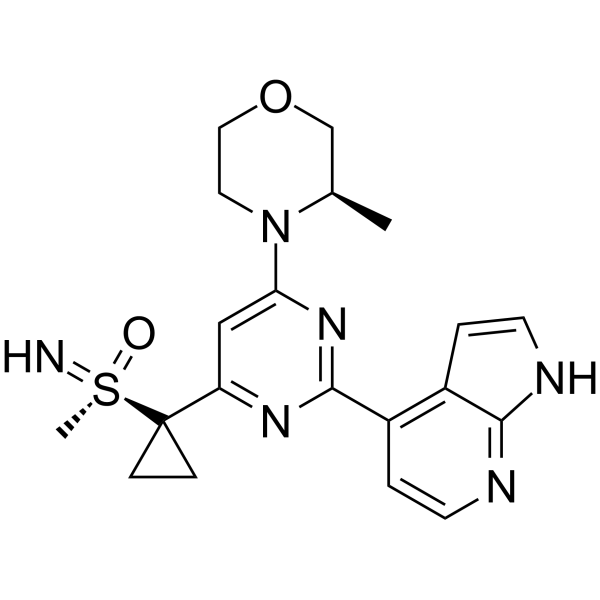 0 ImagesSynonyms: (S)-AZD6738(S)-Ceralasertib ((S)-AZD6738) is the S-enantiomer of Ceralasertib (HY-19323). (S)-Ceralasertib is the inhibitor for ataxia telangiectasia mutated and rad3 related (ATR).
-
PROTAC ATR degrader-1
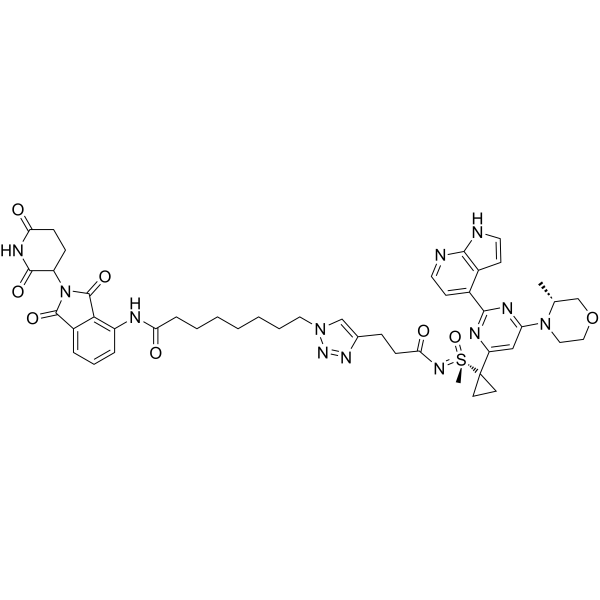 0 ImagesPROTAC ATR degrader-1 is a ATR PROTAC degrader. PROTAC ATR degrader-1 promotes ubiquitination and degradation of ATR. PROTAC ATR degrader-1 facilitates the progression of cells through the G2/M phase, thereby impairing DNA repair and inducing Apoptosis. PROTAC ATR degrader-1 exerts anticancer effects against colorectal cancer either alone or in combination with Cisplatin (HY-17394). PROTAC ATR degrader-1 can be used in research related to colorectal cancer.
-
PROTAC ATR degrader-2
 0 ImagesPROTAC ATR degrader-2 is a selective ATR PROTAC degrader. PROTAC ATR degrader-2 degrades ATR in acute myeloid leukemia (AML) cells MV-4-11 and MOLM-13, with DC50 values of 22.9 nM and 34.5 nM, respectively. PROTAC ATR degrader-2 has an IC50 of 29.6 nM against ATR, and its IC50 values against ATM and PI3K are both greater than 2000 nM. PROTAC ATR degrader-2 induces apoptosis, DNA damage, and upregulates p53 expression. PROTAC ATR degrader-2 inhibits cancer cell proliferation through the kinase-independent function of ATR protein. PROTAC ATR degrader-2 is applicable to research related to acute myeloid leukemia.
-
AZ31
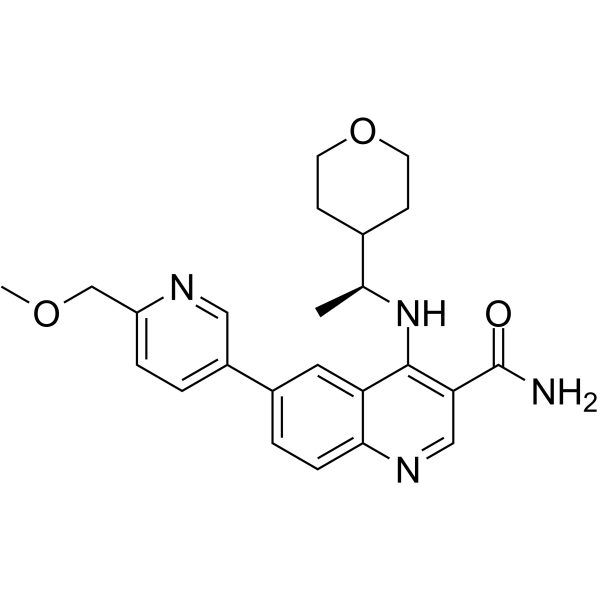 0 ImagesAZ31 is a a potent, highly selective, and orally active ATM inhibitor with an IC50 of <1.2 nM for ATM enzyme, and an IC50 of 46 nM for ATM in cell. AZ31 shows excellent selectivity over ATR (>500-fold) and excellent PIKK-family selectivity and pan-kinase selectivity. AZ31 is a potent radiosensitizer in vitro, it can be used for the research of cancer.