



CaSR
Calcium-sensing receptor
The extracellular CaSR (calcium-sensing receptor is a unique G protein-coupled receptor (GPCR) activated by extracellular Ca2+ and by other physiological cations including Mg2+, amino acids, and polyamines. CaSR is the most important master controller of the extracellular Ca2+ homeostatic system being expressed at high levels in the parathyroid gland, kidney, gut, and bone, where it regulates parathyroid hormone (PTH) secretion, vitamin D synthesis, and Ca2+ absorption and resorption, respectively. Gain and loss of function mutations in the CaSR are responsible for severe disturbances in extracellular Ca2+ metabolism.
The CaSR stimulates two major signal transduction cascades. The first is the Gq/11-phospholipase C (PLC)-mediated generation of inositol 1,4,5-trisphosphate (IP3), which induces a rapid rise in intracellular calcium (Ca2+i) concentrations. The second is the mitogen-activated protein kinases (MAPKs), such as extracellular signal-regulated kinases 1 and 2 (ERK1/2), which phosphorylate proteins mediating cytosolic signaling and translocate into the nucleus to activate transcription factors involved in cellular proliferation and differentiation. The CaSR has been shown to activate MAPK signaling in a manner that depends on the G proteins Gq/11, and Gi/o, which inhibits cyclic adenosine monophosphate (cAMP) synthesis, and by a potentially G protein-independent mechanism involving β-arrestin types 1 and 2.
All Product Categories
-
CaSR Related Products (76)
Related Products (76)

-
Etelcalcetide
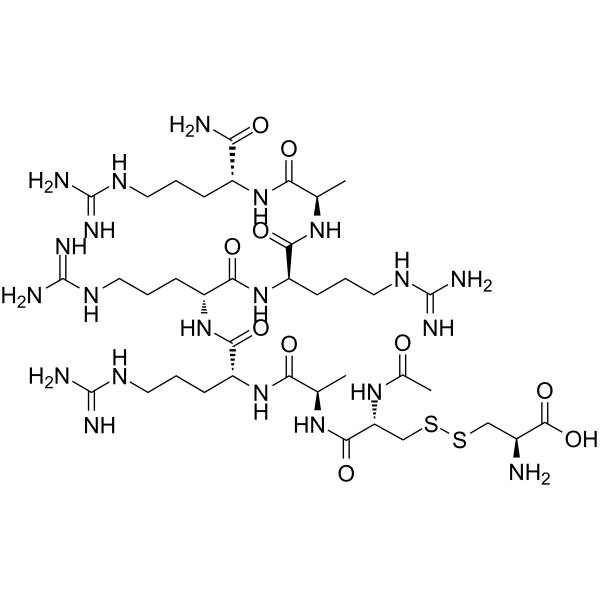 0 ImagesCat. No.: HY-P1955CAS No.: 1262780-97-1Synonyms: Velcalcetide; AMG 416; KAI-4169Etelcalcetide (AMG 416; KAI-4169) is a synthetic calcimimetic as an activator of the calcium sensing receptor (CaSR). Etelcalcetide is effective in lowering parathyroid hormone (PTH) concentrations in patients receiving dialysis with secondary hyperparathyroidism receiving hemodialysis, which is promising for research in the field of secondary hyperparathyroidism and chronic kidney disease.
-
Ronacaleret hydrochloride
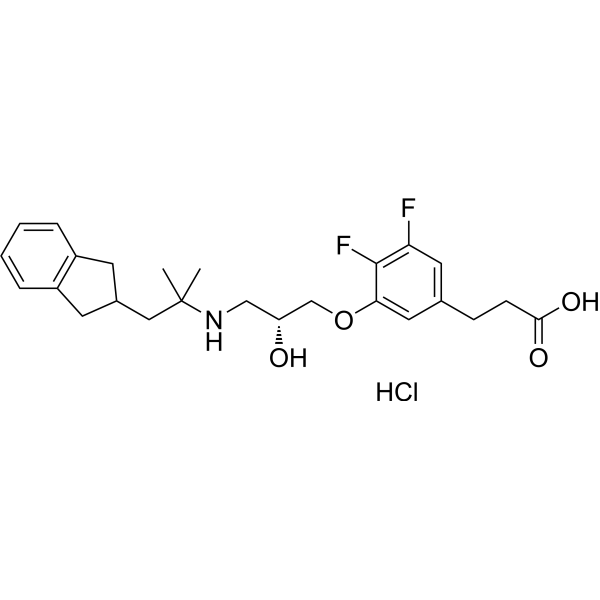 0 ImagesCat. No.: HY-15104CAS No.: 702686-96-2Synonyms: SB 751689ARonacaleret hydrochloride (SB 751689A) is an orally active, potent, and selective calcium-sensing receptor (CaSR) antagonist that stimulates endogenous parathyroid hormone release from the parathyroid glands. Ronacaleret hydrochloride (SB 751689A) is used for the study of postmenopausal osteoporosis.
-
SB-423562
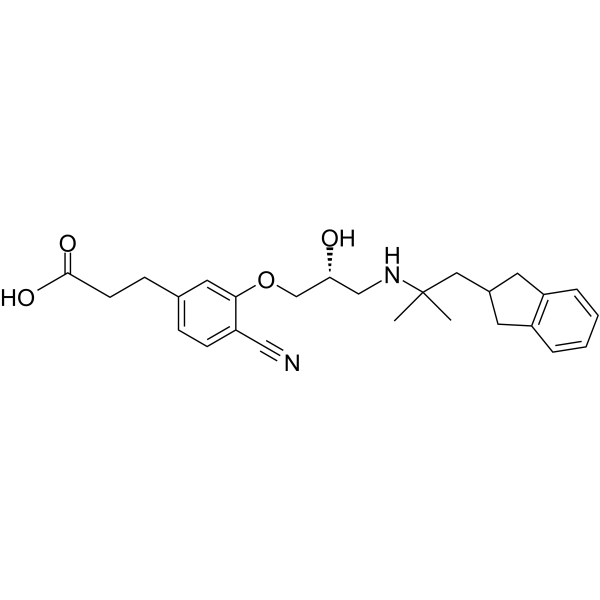 0 ImagesSB-423562 is a short-acting calcium-sensing receptor (CaR) antagonist. SB-423562 has the potential for osteoporosis research.
-
Poly-D-lysine hydrobromide (MW ≥300000)
 0 ImagesCat. No.: HY-139201HCAS No.: 27964-99-4Synonyms: PDLHB (MW ≥300000)Poly-D-lysine hydrobromide (MW ≥300000) (PDLHB (MW ≥300000)) is a cationic polymer and cell adhesion promoter. Poly-D-lysine hydrobromide (MW ≥300000) serves as a substrate coating to support the adhesion and proliferation of rat dorsal root ganglion satellite glial cells in vitro. Poly-D-lysine hydrobromide (MW ≥300000) promotes the adhesion and immobilization of cells on plastic culture dishes. Poly-D-lysine hydrobromide is also known as a calcium-sensing receptor (CaSR) agonist peptide.
-
Cinacalcet hydrochloride (Standard)
 0 ImagesSynonyms: AMG-073 hydrochloride (Standard)Cinacalcet (hydrochloride) (Standard) is the analytical standard of Cinacalcet (hydrochloride). This product is intended for research and analytical applications. Cinacalcet hydrochloride (AMG-073 hydrochloride) is an orally active, allosteric agonist of Ca receptor (CaR), used for cardiovascular disease treatment.
-
Evocalcet (Standard)
 0 ImagesSynonyms: KHK7580 (Standard)Evocalcet (Standard) is the analytical standard of Evocalcet. This product is intended for research and analytical applications. Evocalcet (KHK7580) is an orally active calcium sensing receptor (CaSR) agonist. Evocalcet inhibits the secretion of parathyroid hormone (PTH) from parathyroid gland cells. Evocalcet can be used for the research of hyperparathyroidism.
-
Cinacalcet-d3 hydrochloride
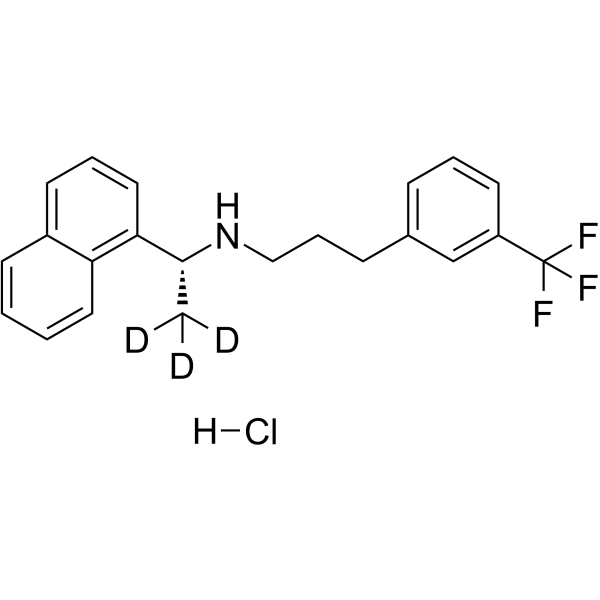 0 ImagesCat. No.: HY-70037ASCAS No.: 2749807-20-1Synonyms: AMG 073-d3 hydrochlorideCinacalcet-d3 (hydrochloride) is the deuterium labeled Cinacalcet (hydrochloride). Cinacalcet hydrochloride (AMG-073 hydrochloride) is an orally active, allosteric agonist of Ca receptor (CaR), used for cardiovascular disease treatment.
-
Upacicalcet
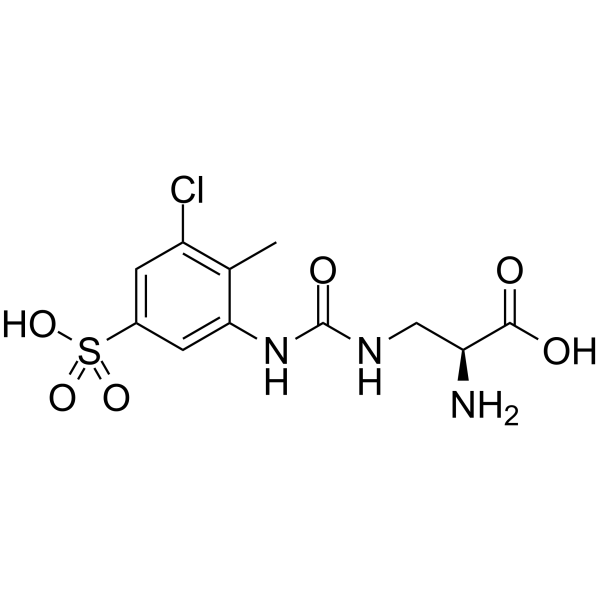 0 ImagesCat. No.: HY-109106CAS No.: 1333218-50-0Synonyms: SK-1403 free acid; AJT240 free acid; PLS240 free acidUpacicalcet is a non-peptide calcimimetic that acts as a CaSR agonist (EC50 = 10.8 nM). Upacicalcet reduces serum intact parathyroid hormone (iPTH) and serum Ca2+ levels, reducing hypocalcemia and gastrointestinal complications. Upacicalcet improves vascular calcification and bone disorders in the Adenine (HY-B0152)-induced secondary hyperparathyroidism (SHPT) rat model. Upacicalcet inhibits cortical pore formation and reduces bone fibrosis in rats with chronic kidney disease (CKD). Upacicalcet is useful for studying SHPT.
-
KP-2067
 0 ImagesCat. No.: HY-179475CAS No.: 1262781-19-0
-
(Rac)-Upacicalcet
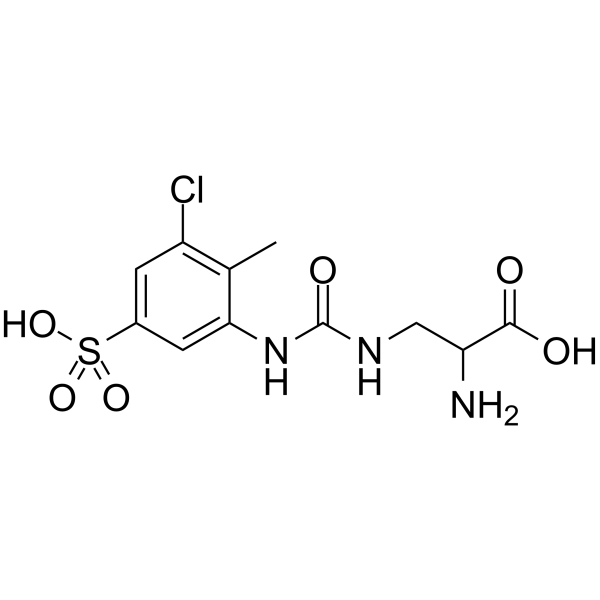 0 ImagesCat. No.: HY-109106BCAS No.: 2649575-19-7Synonyms: (Rac)-SK-1403 free acid; (Rac)-AJT240 free acid; (Rac)-PLS240 free acid(Rac)-Upacicalcet is the racemate of Upacicalcet (HY-109106). Upacicalcet is a non-peptide calcimimetic that acts as a CaSR agonist (EC50 = 10.8 nM). Upacicalcet reduces serum intact parathyroid hormone (iPTH) and serum Ca2+ levels, reducing hypocalcemia and gastrointestinal complications. Upacicalcet improves vascular calcification and bone disorders in the Adenine (HY-B0152)-induced secondary hyperparathyroidism (SHPT) rat model. Upacicalcet inhibits cortical pore formation and reduces bone fibrosis in rats with chronic kidney disease (CKD). Upacicalcet is useful for studying SHPT.
-
SB-423557
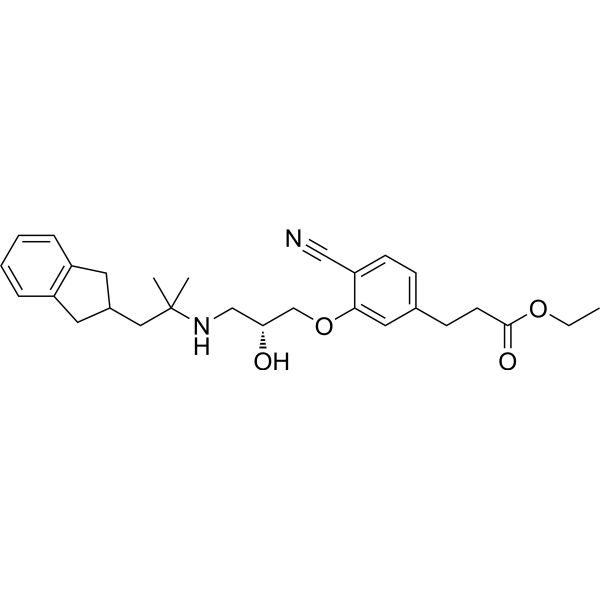 0 ImagesCat. No.: HY-15106CAS No.: 351490-26-1SB-423557 is an orally active calcium-sensing receptor (CaR) antagonist (IC50=520 nM), precursor of SB-423562 (IC50=73 nM). SB-423557 is well tolerated in human and increases plasma concentrations of exogenous parathyroid hormone (PTH) and stimulates bone formation.
-
Cinacalcet-d3
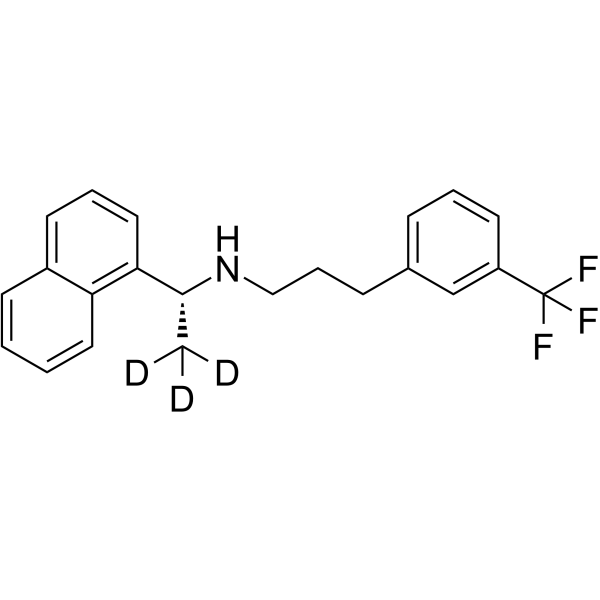 0 ImagesCat. No.: HY-70037SCAS No.: 1228567-12-1Synonyms: AMG 073-d3Cinacalcet-d3 is the deuterium labeled Cinacalcet. Cinacalcet (AMG 073) is an orally active, allosteric agonist of Ca receptor (CaR), used for cardiovascular disease treatment.
-
Ronacaleret
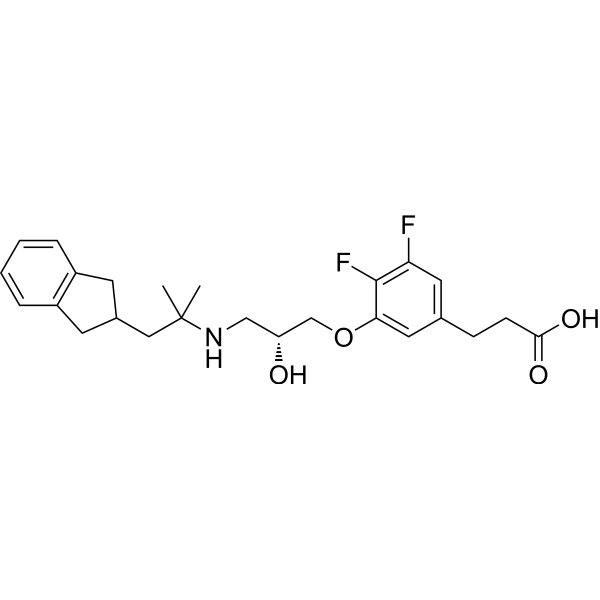 0 ImagesCat. No.: HY-14752CAS No.: 753449-67-1Synonyms: SB 751689Ronacaleret (SB 751689) is an orally active, potent, and selective calcium-sensing receptor (CaSR) antagonist that stimulates endogenous parathyroid hormone release from the parathyroid glands. Ronacaleret (SB 751689) is used for the study of postmenopausal osteoporosis.
-
Poly-D-lysine hydrobromide (MW 1000-5000)
 0 ImagesCat. No.: HY-139201CCAS No.: 27964-99-4Synonyms: PDLHB (MW 1000-5000)Poly-D-lysine hydrobromide (MW 1000-5000) (PDLHB (MW 1000-5000)) is a synthetic cationic polypeptide polymer commonly used as a cell adhesion promoter and surface coating molecule. Poly-D-lysine hydrobromide is also known as a calcium-sensing receptor (CaSR) agonist peptide.
-
AXT-914
 0 ImagesAXT-914 is a Calcium-sensing receptor (CaSR) inhibitor. AXT-914 has antiviral activity against the coronavirus HCoV 229E and SARS-CoV2. AXT914 reduces cytosolic calcium signalling activity of CaSR mutations. AXT-914 can be used for Bartter syndrome type 5 and autosomal dominant hypocalcemia (ADH) and coronavirus infections research.
-
Gamma-Glu-Abu
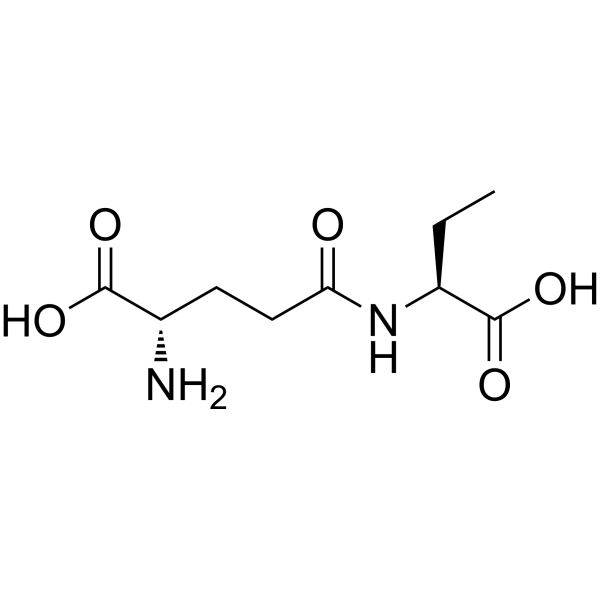 0 ImagesCat. No.: HY-P4376CAS No.: 16869-42-4Gamma-Glu-Abu is a CaSR activator with an EC50 of 0.21 μM (in HEK-293 cells). Gamma-Glu-Abu interacts with the extracellular venus flytrap domain of hCaSR via its N-terminal γ-L-glutamyl residue, the neutral aliphatic side chain of the Abu residue, and the C-terminal carboxylic acid group.
-
Tecalcet
 0 ImagesCat. No.: HY-10167CAS No.: 148717-54-8Synonyms: R-568; NPS R-568 free base
-
Calhex 231
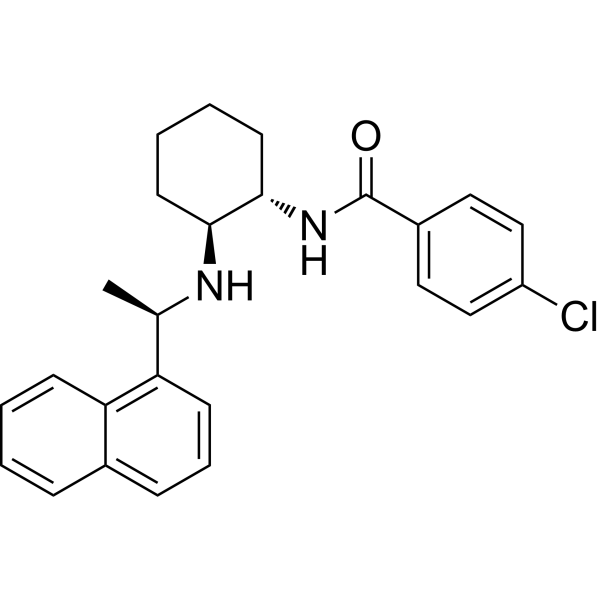 0 ImagesCat. No.: HY-103320CAS No.: 652973-93-8Calhex 231 is a potent negative allosteric modulator that blocks (IC50 = 0.39 μM) increases in [3H]inositol phosphates elicited by activating the human wild-type CaSR transiently Ca2+-sensing receptor. Calhex 231 can be used in the study of traumatic hemorrhagic shock (THS) and diabetic cardiomyopathy (DCM).
-
Calindol hydrochloride-13C,D2
 0 ImagesCat. No.: HY-W777503CAS No.: 1217828-76-6Calindol hydrochloride-13C,d2 is the deuterium and 13C labeled Calindol hydrochloride (HY-122819). Calindol hydrochloride is a positive allosteric modulator (PAM) of calcimimetic calcium-sensing receptor (CaSR) with an EC50 of 132 nM.



