



Notch
Notch signaling is evolutionarily conserved and operates in many cell types and at various stages during development. Notch signaling occurs via cell-cell communication, where transmembrane ligands on one cell activate transmembrane receptors on a juxtaposed cell.
Regulation of Notch signaling is critical to development and maintenance of most eukaryotic organisms. The Notch receptors (NOTCH1, 2, 3, and 4) and ligands (DLL1, 3, and 4, JAG1 and 2) are integral membrane proteins and direct cell-cell interactions are needed to activate signaling. Ligand-expressing cells activate Notch signaling through an unusual mechanism involving Notch proteolysis to release the intracellular domain from the membrane, allowing the Notch receptor to function directly as the downstream signal transducer.
All Product Categories
-
Notch Related Products (123)
Related Products (123)

-
Recombinant Proteins (52)
-
Antibodies (12)
-
Valproic acid-d7 sodium
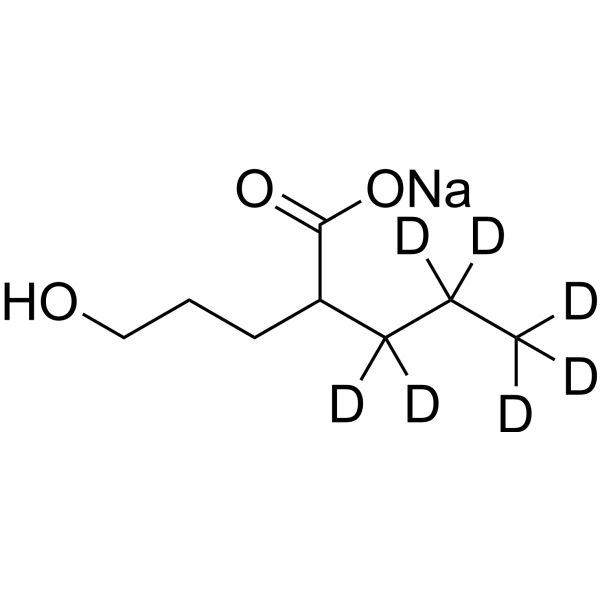 0 ImagesCat. No.: HY-10585ASCAS No.: 1189994-89-5Synonyms: Sodium Valproate-d7; VPA-d7 sodium; 2-Propylpentanoic acid-d7 sodiumValproic acid-d7 (sodium) is the deuterium labeled Valproic acid (sodium salt). Valproic acid sodium salt (Sodium Valproate) is an HDAC inhibitor, with IC50 in the range of 0.5 and 2 mM, also inhibits HDAC1 (IC50, 400 μM), and induces proteasomal degradation of HDAC2. Valproic acid sodium salt activates Notch1 signaling and inhibits proliferation in small cell lung cancer (SCLC) cells. Valproic acid sodium salt is used in the treatment of epilepsy, bipolar disorder and prevention of migraine headaches.
-
Yhhu-3792 hydrochloride
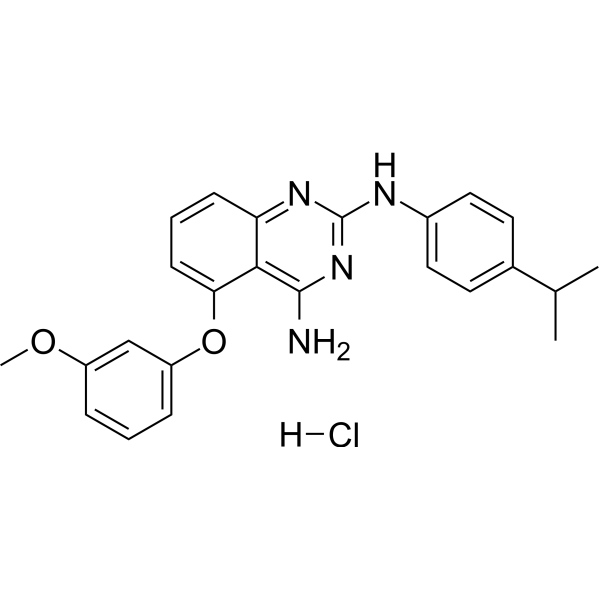 0 ImagesCat. No.: HY-120782ACAS No.: 2624336-93-0Yhhu-3792 hydrochloride is a Notch activator. Yhhu-3792 hydrochloride enhances the self-renewal capability of neural stem cells (NSCs). Yhhu-3792 hydrochloride promotes the expression of Hes3 and Hes5. Yhhu-3792 hydrochloride increases the spatial and episodic memory abilities of mice. Yhhu-3792 hydrochloride can be used for the study of neurodegenerative diseases (such as Alzheimer's disease) or for neural regeneration after brain injury .
-
MAb604.107
 0 ImagesCat. No.: HY-P991328MAb604.107 is a human monoclonal antibody (mAb) targeting NOTCH1. MAb604.107 inhibits the proliferation and CD34/CD44 expression of primary T-ALL cells. MAb604.107 has anti-tumor activity in four tumor xenograft mouse models: MDA-MB-231, HCC-1806, BT-474, and HCT-116. MAb604.107 can be used in T acute lymphoblastic leukemia research.
-
Anti-Mouse Jagged 2 Antibody (HMJ2-1)
 0 ImagesCat. No.: HY-P990206Anti-Mouse Jagged 2 Antibody (HMJ2-1) is an anti-mouse Jagged 2 IgG monoclonal antibody. Anti-Mouse Jagged 2 Antibody (HMJ2-1) regulates Treg/Th17 balance through IL-9. Anti-Mouse Jagged 2 Antibody (HMJ2-1) increases Jagged2-Notch signaling through activation of RBP-Jk. Anti-Mouse Jagged 2 Antibody (HMJ2-1) can be used for researches on inflammation conditions and xenotransplantation such as experimental autoimmune encephalomyelitis (EAE).
-
Valproic acid sodium (2:1)
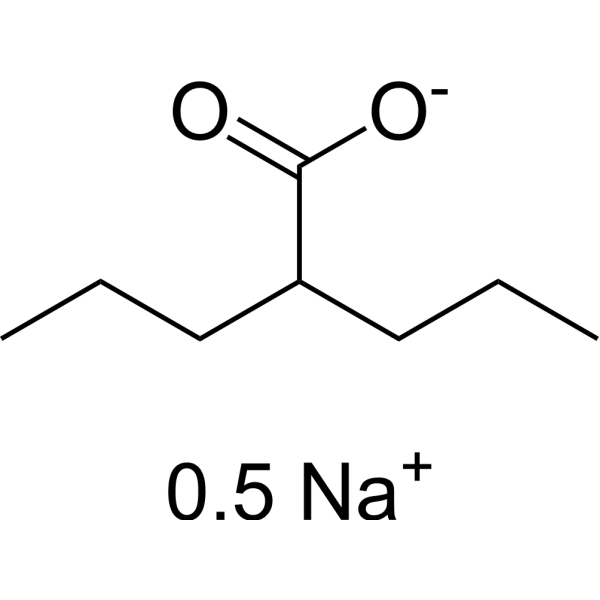 0 ImagesCat. No.: HY-10585BCAS No.: 76584-70-8Synonyms: Sodium Valproate (2:1); VPA sodium (2:1); 2-Propylpentanoic acid sodium (2:1)Valproic acid (VPA) sodium (2:1) is an orally active HDAC inhibitor, with IC50 in the range of 0.5 and 2 mM, also inhibits HDAC1 (IC50, 400 μM), and induces proteasomal degradation of HDAC2. Valproic acid sodium (2:1) activates Notch1 signaling and inhibits proliferation in small cell lung cancer (SCLC) cells. Valproic acid sodium (2:1) is used in the treatment of epilepsy, bipolar disorder, metabolic disease, HIV infection and prevention of migraine headaches.
-
Anti-Notch4 Antibody
 0 ImagesCat. No.: HY-P992279
-
BT-GSI
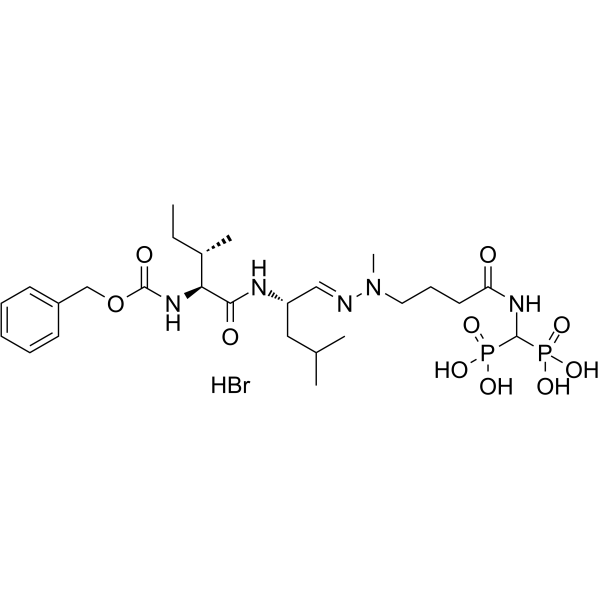 0 ImagesCat. No.: HY-145428BT-GSI is a γ-secretase inhibitor (GSI) and a bone-targeted Notch inhibitor. BT-GSI has dual anti-myeloma and anti-resorptive properties, which can be used for the research of multiple myeloma and associated bone disease. BT-GSI inhibits tumor growth and osteolytic disease progression.
-
Withanolide A (Standard)
 0 ImagesCat. No.: HY-N7028RCAS No.: 32911-62-9Withanolide A (Standard) is the analytical standard of Withanolide A. This product is intended for research and analytical applications. Withanolide A is an orally active extract from the Indian herb Ashwagandha. Withanolide A can induce apoptosis. Withanolide A has anti-inflammatory and antitumor activity. Withanolide A can be used in the study of neurodegenerative diseases.
-
ATOX1-IN-1
 0 ImagesCat. No.: HY-181975CAS No.: 956181-19-4ATOX1-IN-1 is an inhibitor of ATOX1 (a copper chaperone protein) with a Kd value of 12.5 μM. ATOX1-IN-1 induces intracellular copper accumulation, increases the level of DNA methylation in the NOTCH1 promoter region, and inhibits the NOTCH1/HES1 signaling pathway. ATOX1-IN-1 enhances the sensitivity of hepatocellular carcinoma cells to Cisplatin (HY-17394). ATOX1-IN-1 can be used in hepatocellular carcinoma-related research.
-
Anti-Mouse Notch4 Antibody (HMN4-14)
 0 ImagesCat. No.: HY-P990177Anti-Mouse Notch4 Antibody (HMN4-14) is an anti-mouse Notch4 IgG monoclonal antibody. Anti-Mouse Notch4 Antibody (HMN4-14) reduces inflammation by restoring the expression of bispecific proteins. Anti-Mouse Notch4 Antibody (HMN4-14) can inhibit Th2/Th17 cell differentiation and improve Treg cell function. Anti-Mouse Notch4 Antibody (HMN4-14) can be used for research on inflammation conditions such as viral pneumonia and airway inflammation.
-
Psoralidin (Standard)
 0 ImagesPsoralidin (Standard) is the analytical standard of Psoralidin. This product is intended for research and analytical applications. Psoralidin is a dual inhibitor of COX-2 and 5-LOX, regulates ionizing radiation (IR)-induced pulmonary inflammation.Anti-cancer, anti-bacterial, and anti-inflammatory properties. Psoralidin significantly downregulates NOTCH1 signaling. Psoralidin also greatly induces ROS generation.
-
BMS-871
 0 ImagesCat. No.: HY-120372CAS No.: 1584631-89-9BMS-871 is an orally active pan-Notch inhibitor with IC50 values of 4/1/4/3 nM for Notch1/2/3/4, respectively. BMS-871 significantly inhibited the proliferation of TALL-1 and MDA-MB-157 cells and demonstrated significant antitumor activity in T-acute lymphoblastic leukemia and triple-negative breast cancer xenograft models. BMS-871 can be used to study leukemia and breast cancer.
-
XRF-1021
 0 ImagesCat. No.: HY-179378CAS No.: 2968523-32-0XRF-1021 is an orally active HIPK2 inhibitor (IC50 = 0.18 μM). XRF-1021 reduces the expression of fibrotic markers in TGF-β1 stimulated NRK-49F and HK-2 cells, including Fibronectin, Collagen I and α-SMA. XRF-1021 blocks TGF-β, NF-κB, p53, Wnt/β-catenin, and Notch signaling. XRF-1021 reduces renal injury and fibrosis in vivo. XRF-1021 can be used for the research of chronic kidney disease.
-
Valproic acid sodium (GMP)
 0 ImagesCat. No.: HY-10585AGCAS No.: 1069-66-5Synonyms: Sodium Valproate (GMP); VPA sodium (GMP); 2-Propylpentanoic acid sodium (GMP)Valproic acid (Sodium Valproate) sodium is an orally active HDAC inhibitor, with IC50 in the range of 0.5 and 2 mM, also inhibits HDAC1 (IC50, 400 μM), and induces proteasomal degradation of HDAC2. Valproic acid sodium activates Notch1 signaling and inhibits proliferation in small cell lung cancer (SCLC) cells. Valproic acid sodium is used in the treatment of epilepsy, bipolar disorder, metabolic disease, HIV infection and prevention of migraine headaches.
-
Anti-JAG1/CD339 Antibody
 0 ImagesCat. No.: HY-P991860
-
Valproic acid magnesium
 0 ImagesCat. No.: HY-W794759CAS No.: 62959-43-7Synonyms: Magnesium valproate; VPA magnesium; 2-Propylpentanoic acid magnesiumValproic acid magnesium (Magnesium valproate) is an orally active HDAC inhibitor, with IC50 in the range of 0.5 and 2 mM. Valproic acid magnesium inhibits HDAC1 (IC50, 400 μM), and induces proteasomal degradation of HDAC2. Valproic acid magnesium activates Notch1 signaling and inhibits proliferation in small cell lung cancer (SCLC) cells. Valproic acid magnesium is used in the epilepsy, bipolar disorder, metabolic disease, HIV infection and prevention of migraine headaches.
-
IMR-1A (Standard)
 0 ImagesIMR-1A (Standard) is the analytical standard of IMR-1A. This product is intended for research and analytical applications. IMR-1A, a acid metabolite of IMR-1, is a Notch inhibitor with an IC50 of 0.5 μM. IMR-1A has a 50-fold increase in potency with respect to IMR-1. IMR-1 can metabolize in vivo to IMR-1A[1].
-
Procyanidin B2 3,3'-di-O-gallate
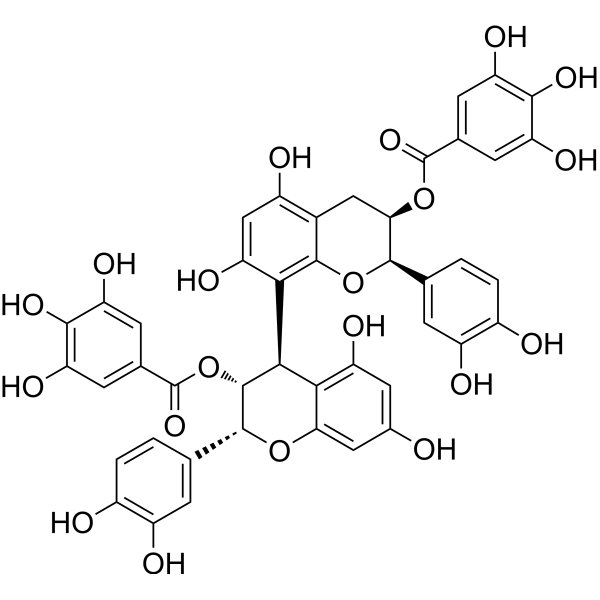 0 ImagesCat. No.: HY-N9790CAS No.: 79907-44-1Procyanidin B2, 3,3'-di-O-gallate is an active constituent. Procyanidin B2, 3,3'-di-O-gallate can be isolated from grape seed extract (GSE) procyanidin mix. Procyanidin B2, 3,3' -di-o-gallate target cancer stem cells (CSCs) in prostate cancer (PCa). Procyanidin B2, 3,3'-di-O-gallate targets both unsorted and sorted CSCs at lower doses. Procyanidin B2, 3,3'-di-O-gallate strongly suppresses the constitutive as well as Jagged1 (Notch1 ligand)-induced activated Notch1 pathway.
-
MRK 003
 0 ImagesCat. No.: HY-15211CAS No.: 623165-93-5MRK 003 is an orally active γ-secretase inhibitor. MRK 003 targets the Notch signaling pathway by blocking the proteolytic cleavage of Notch receptors. MRK 003 inhibits tumor cell proliferation, induces apoptosis, downregulates anti-apoptotic proteins, upregulates phosphorylated Akt, suppresses angiogenesis, and overcomes microenvironment-mediated proliferative protection. MRK 003 can be used in research related to lung cancer, multiple myeloma, non-Hodgkin's lymphoma, pancreatic ductal adenocarcinoma, glioblastoma, and breast cancer.




