



VEGFR
Vascular endothelial growth factor receptor
VEGFRs consist of three subtypes, the fms-like tyrosine kinase Flt-1 (VEGFR1/Flt-1), the kinase domain region, also referred to as fetal liver kinase (VEGFR2/KDR/Flk-1), and Flt-4 (VEGFR3). Each receptor has seven immunoglobulinlike domains in the extracellular domain, a single transmembrane region, and a consensus tyrosine kinase sequence interrupted by a kinase insert domain. VEGFR1 and 2 are expressed on vascular endothelial cells, whereas VEGFR3 is expressed on lymphatic endothelial. The VEGF family members VEGF-A, -B, -C, -D, -E, and PlGF, and the human immunodeficiency (HIV) Tat protein bind in specific patterns to three related receptor protein tyrosine kinases, VEGFR1, 2, and 3, and induce the formation of homo- and heteromeric receptor complexes. Binding of VEGF to VEGFR causes dimerization and autophosphorylation of the receptor. Intracellular proteins such as VEGFR-associated protein (VRAP), PLC, and Sck that associate with specific tyrosine residues of VEGFR are phosphorylated upon receptor activation. Several signal transduction pathways are activated by the binding of VEGF to its receptor, leading to increased proliferation, survival, permeability, and migration of cells.
VEGFR Isoform Specific Products
All Product Categories
-
VEGFR Inhibitors
(721)
View all products
-
VEGFR Agonists
(7)
View all products
-
VEGFR Antagonists
(6)
View all products
-
VEGFR Activators
(16)
View all products
-
VEGFR Modulators
(6)
View all products
-
VEGFR Chemical
(1)
View all products
-
VEGFR Inducer
(1)
View all products
-
VEGFR Degraders
(4)
View all products
-
VEGFR Ligands
(6)
View all products
-
VEGFR Proteins
(36)
View all products
-
VEGFR-1 Proteins
(10)
View all products
-
VEGFR-3 Proteins
(7)
View all products
-
VEGFR Related Products (815)
Related Products (815)

-
Recombinant Proteins (36)
-
Antibodies (9)
-
VEGFR Isoform Comparison
-
GW549390X
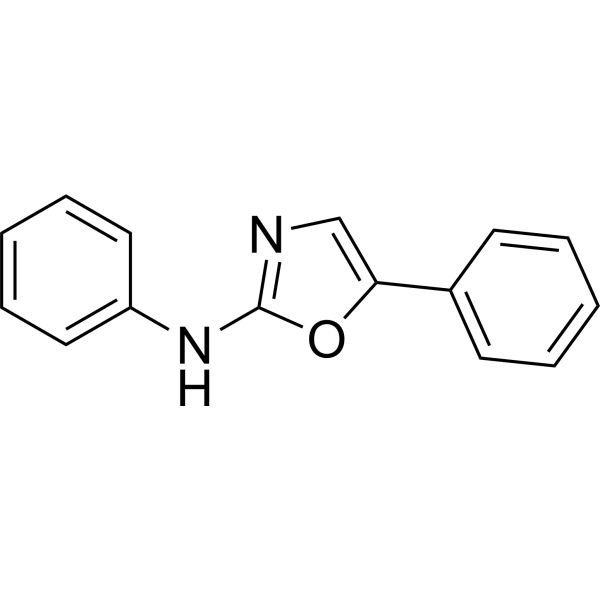 0 ImagesCat. No.: HY-160687CAS No.: 135307-33-4GW549390X is a dual inhibitor of Fluc and VEGFR2 with IC50 of 0.26 μM and 1.2 μM, respectively. GW549390X can bind to the ATP pocket of FLuc through the aniline side chain and is an ATP-competitive inhibitor of Fluc. GW549390X acts as a protein kinase inhibitor across ATP-dependent and -independent luciferases, with potential implications for Fluc reporter assays.
-
Vandetanib-d6
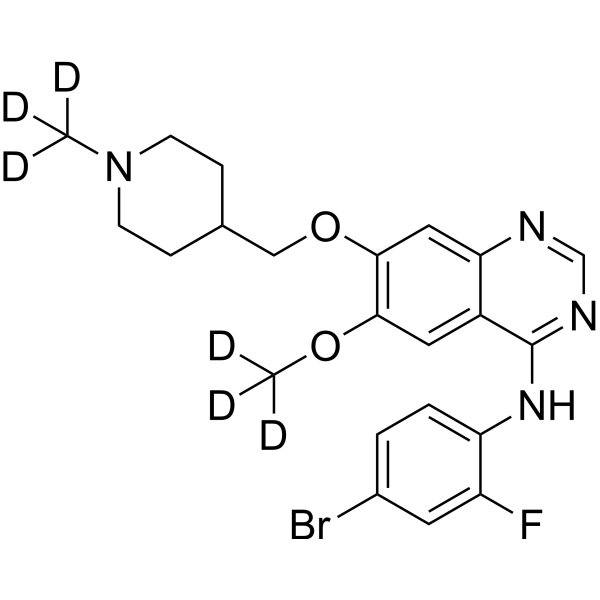 0 ImagesCat. No.: HY-10260SCAS No.: 1174683-49-8Synonyms: ZD6474-d6Vandetanib-d6 is the deuterium labeled Vandetanib. Vandetanib (D6474) is a potent, orally active inhibitor of VEGFR2/KDR tyrosine kinase activity (IC50=40 nM). Vandetanib also has activity versus the tyrosine kinase activity of VEGFR3/FLT4 (IC50=110 nM) and EGFR/HER1 (IC50=500 nM).
-
VEGFR-2-IN-42
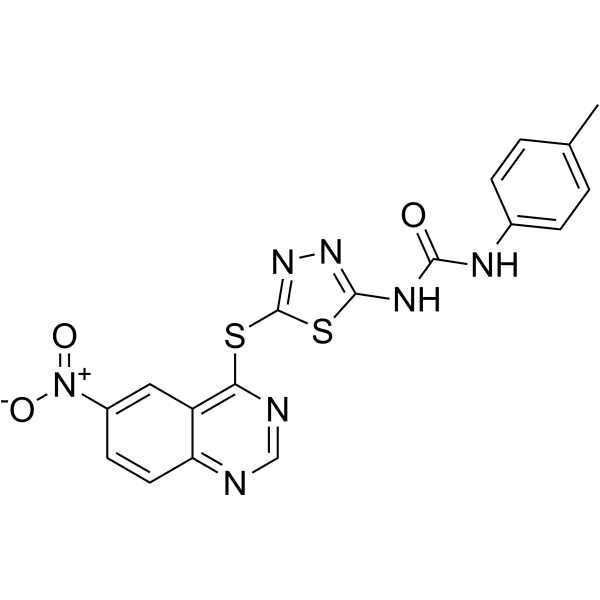 0 ImagesCat. No.: HY-157960CAS No.: 3031592-19-2VEGFR-2-IN-42 (compound 8c) is a potent VEGFR-2 inhibitor. VEGFR-2-IN-42 shows anti-proliferative effect against MCF7 cells with the IC50 of 25 µM.
-
Foretinib phosphate
 0 ImagesCat. No.: HY-10338ACAS No.: 1226999-07-0Foretinib phosphate is an orally bioavailable small molecule with potential anti-tumor activity. Foretinib phosphate can selectively inhibit hepatocyte growth factor (HGF) receptor c-MET and vascular endothelial growth factor receptor 2 (VEGFR2), thereby potentially inhibiting tumor angiogenesis, tumor cell proliferation and metastasis. Foretinib phosphate shows different anti-cancer activity from cabozantinib in lung cancer cells and has stronger inhibitory effects on targets such as MEK1/2, FER and AURKB.
-
Multi-target kinase inhibitor 3
 0 ImagesCat. No.: HY-169216Multi-target kinase inhibitor 3 (compund 6i) is a multi-kinase target inhibitor with anticancer activity. Multi-target kinase inhibitor 3 inhibits EGFR, HER2, VEGFR-2, and CDK2 with IC50s of 0.063 μM, 0.054 μM, 0.119 μM, and 0.448 μM, respectively. Multi-target kinase inhibitor 3 has a good inhibitory effect on breast cancer cells MCF-7, with an IC50 of 6.10 μM.
-
VEGFR-2/P-gp-IN-1
 0 ImagesCat. No.: HY-174324VEGFR-2/P-gp-IN-1, a Licochalcone A (HY-N0372) derivative, is an orally active VEGFR-2 (IC50 = 0.885 μM) and P-gp inhibitor. VEGFR-2/P-gp-IN-1 achieves anti-tumor proliferation and overcomes chemotherapy resistance by synchronously inhibiting VEGFR-2 kinase activity and P-gp drug efflux pump function. VEGFR-2/P-gp-IN-1 inhibits phosphorylation of VEGFR-2 and downstream PI3K/AKT signaling pathway proteins, induces apoptosis, blocks cells in the S phase, and inhibits invasive migration. VEGFR-2/P-gp-IN-1 exerts potent in vivo anti-tumor effects in the HeLa/DDP cell xenograft tumor model. VEGFR-2/P-gp-IN-1 is used in cervical cancer research.
-
DSPE-PEG5000-A7R
 0 ImagesCat. No.: HY-172272BDSPE-PEG5000-A7R is a PEG compound which composed of DSPE and a tumor vascular targeting peptide (A7R). A7R exhibits high affinity and specificity for VEGFR-2, which is overexpressed in various tumors.
-
AP-24567
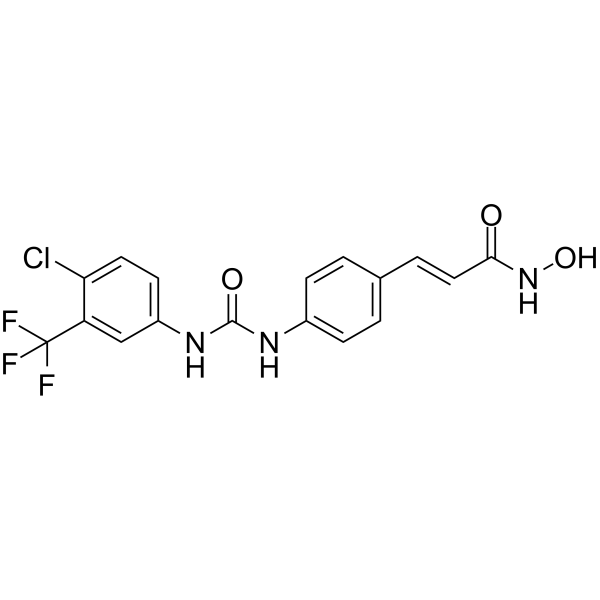
 0 ImagesCat. No.: HY-125142CAS No.: 943319-87-7AP-24567 is a Ligands for Target Protein for PROTAC, which can be used for the synthesis of SB1-G-187 (HY-137342).
-
NY0123
 0 ImagesCat. No.: HY-123795CAS No.: 1801911-70-5NY0123 is a EPAC1 inhibitor. NY0123 significantly inhibits the expression of EPAC1, phosphorylated AKT, phosphorylated ERK1/2 and phosphorylated VEGFR2. NY0123 inhibits angiogenesis and tumor growth of triple-negative breast cancer. NY0123 is applicable to relevant research on triple-negative breast cancer.
-
hCA/VEGFR-2-IN-5
 0 ImagesCat. No.: HY-163710hCA/VEGFR-2 IN-5 (compound 9) is an indolone-phenylsulfonamide and a potential dual inhibitor of cancer-related hCA IX/XII and VEGFR-2. The IC50 values of hCA/VEGFR-2-IN-5 for VEGFR-2, hCA IX and hCA XII are 0.38 μM, 40 and 3.2 nM, respectively. hCA/VEGFR-2-IN-5 has antitumor activity.
-
PF 00337210
 0 ImagesCat. No.: HY-16387CAS No.: 854514-88-8PF-00337210 is a potent and selective inhibitor of VEGFRs, designed for treating age-related macular degeneration via intravitreal injection. The formulation strategy focused on developing an ophthalmic solution that would precipitate upon injection into the vitreous, ensuring sustained drug delivery. Challenges included maintaining low dosing volumes, selecting safe excipients for intravitreal use, and addressing the drug's unique physicochemical properties. The final formulation, an isotonic solution in a citrate-buffered vehicle with NaCl, demonstrated stability, potency, and recovery through intravitreal dosing syringes. It formed a depot upon injection into vitreous humor, representing a novel nonpolymeric in situ-forming depot formulation for intravitreal drug delivery.
-
Coibamide A
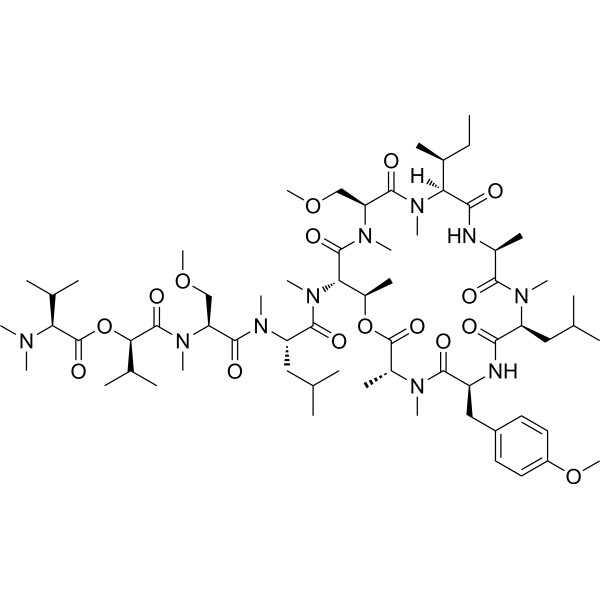 0 ImagesCat. No.: HY-P3990CAS No.: 1029227-48-2Coibamide A, an N-methyl-stabilized cytotoxic depsipeptide, shows potent antiproliferative activity. Coibamide A induces autophagosome accumulation via an mTOR-independent mechanism. Coibamide A induces apoptosis. Coibamide A inhibits VEGFA/VEGFR2 expression and suppresses tumor growth in glioblastoma xenografts.
-
FLT3-IN-37
 0 ImagesCat. No.: HY-179497FLT3-IN-37 (Compound 6z) is a potent inhibitor of FLT3-ITD, with IC50 values of 1.5 and 3.4 nM for FLT3-ITD and TEL-VEGFR2, respectively. FLT3-IN-37 exhibits high selectivity for wild-type FLT3 (WT) and c-Kit. FLT3-IN-37 inhibits FLT3 phosphorylation and downregulates the expression of p-Akt, p-STAT5, and p-ERK. FLT3-IN-37 exerts anti-leukemia effects by blocking the cell cycle and inducing apoptosis (apoptosis). FLT3-IN-37 can be used for research on acute myeloid leukemia (AML).
-
HSP110-IN-1
 0 ImagesCat. No.: HY-184162CAS No.: 2991567-27-0HSP110-IN-1 is a HSP110 inhibitor. HSP110-IN-1 binds to HSP110, inhibits the activity of STAT3, and downregulates the expression of downstream genes VEGF, MMP7 and MMP9. HSP110-IN-1 abrogates IL-6-induced epithelial-mesenchymal transition and inhibits the proliferation of colorectal cancer cells. HSP110-IN-1 remodels the tumor microenvironment by inducing a pro-inflammatory phenotype, regulates macrophages, induces PD-L1 expression, and enhances anti-PD-L1 antibody-mediated tumor regression. HSP110-IN-1 can be used in studies related to colorectal cancer.
-
SA-VA
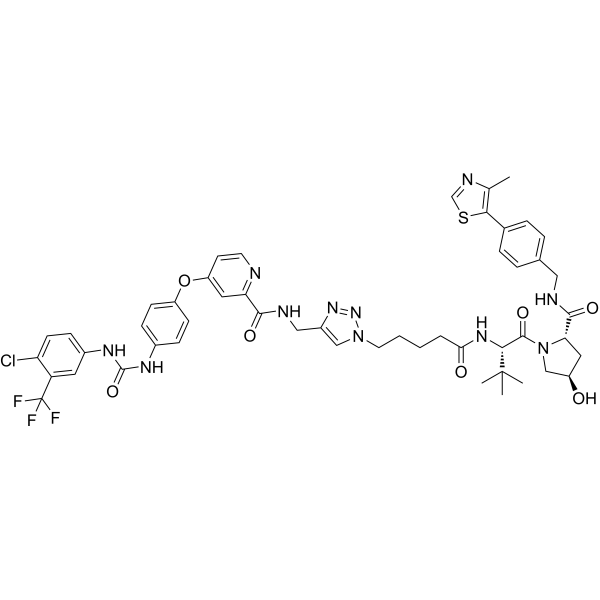 0 ImagesCat. No.: HY-155685CAS No.: 3058085-77-8SA-VA is an intracellular self-assembled PROTAC based on azide and alkyne. SA-VA is able to selectively degrade VEGFR-2 and EphB4 proteins in U87 cells. SA-VA can be converted to PROTAC in situ by click reaction with the help of endogenous copper in tumor tissues. SA-VA promotes apoptosis and blocks cells in S phase.
-
KCN1
 0 ImagesCat. No.: HY-123009CAS No.: 927823-01-6KCN1 is a p300/HIF-1α interaction inhibitor with a Kd value of 345 nM for p300-CH1. KCN1 binds to the CH1 domain of p300, blocks the assembly of the p300/HIF-1α complex, and disrupts the HIF-1α-p300/CBP interaction. KCN1 inhibits cancer cell growth, induces cancer cell cycle arrest and apoptosis. KCN1 inhibits β-galactosidase activity and downregulates the expression of VEGF, Glut1, CA9 and CAIX. KCN1 exerts anticancer activity in mouse tumor xenograft models. KCN1 can be used in research related to malignant glioma, pancreatic cancer and metastatic uveal melanoma.
-
Dovitinib-d8
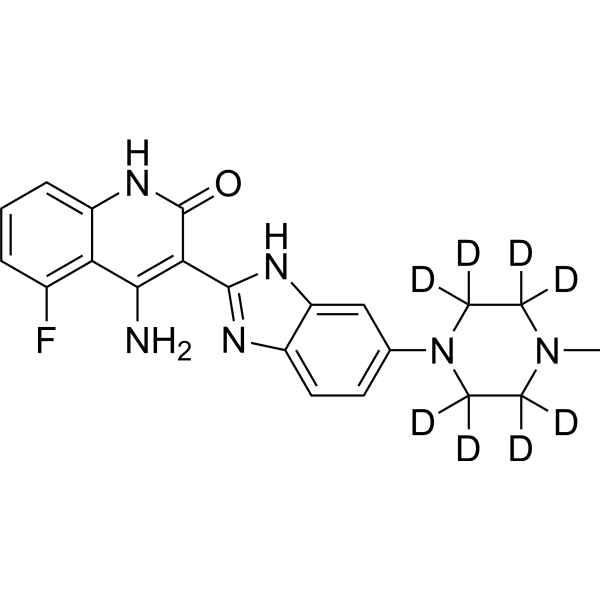 0 ImagesCat. No.: HY-50905SCAS No.: 1246819-84-0
-
Tesevatinib tosylate
 0 ImagesCat. No.: HY-13314ACAS No.: 1000599-06-3Synonyms: XL-647 tosylate; EXEL-7647 tosylate; KD-019tosylateTesevatinib (XL-647) tosylate is an orally available, blood-brain barrier-penetrant inhibitor of the epidermal growth factor receptor (EGFR). Tesevatinib tosylate significantly reduces cellular viability, with IC50 values of 11 nM and 102 nM in GBM12 and GBM6, respectively. Tesevatinib tosylate also inhibits HER2 (IC50=16.1 nM), VEGFR2 (IC50=1.5 nM), and Src (IC50=10.3 nM). Tesevatinib tosylate can inhibit tumor proliferation and exhibits antitumor activity.
-
VEGFR-2/c-Met/EGFR-IN-1
 0 ImagesCat. No.: HY-181775VEGFR-2/c-Met/EGFR-IN-1 is a VEGFR-2/c-Met/EGFR inhibitor with IC50 values of 0.014 μM, 0.072 μM, and 0.94 μM, respectively. c-Met-IN-27 inhibits neovascularization in the chick chorioallantoic membrane (CAM) assay and exhibits in vivo anti-angiogenic activity. c-Met-IN-27 can be used in angiogenesis-related research.




