



VEGFR
Vascular endothelial growth factor receptor
VEGFRs consist of three subtypes, the fms-like tyrosine kinase Flt-1 (VEGFR1/Flt-1), the kinase domain region, also referred to as fetal liver kinase (VEGFR2/KDR/Flk-1), and Flt-4 (VEGFR3). Each receptor has seven immunoglobulinlike domains in the extracellular domain, a single transmembrane region, and a consensus tyrosine kinase sequence interrupted by a kinase insert domain. VEGFR1 and 2 are expressed on vascular endothelial cells, whereas VEGFR3 is expressed on lymphatic endothelial. The VEGF family members VEGF-A, -B, -C, -D, -E, and PlGF, and the human immunodeficiency (HIV) Tat protein bind in specific patterns to three related receptor protein tyrosine kinases, VEGFR1, 2, and 3, and induce the formation of homo- and heteromeric receptor complexes. Binding of VEGF to VEGFR causes dimerization and autophosphorylation of the receptor. Intracellular proteins such as VEGFR-associated protein (VRAP), PLC, and Sck that associate with specific tyrosine residues of VEGFR are phosphorylated upon receptor activation. Several signal transduction pathways are activated by the binding of VEGF to its receptor, leading to increased proliferation, survival, permeability, and migration of cells.
VEGFR Isoform Specific Products
All Product Categories
-
VEGFR Inhibitors
(719)
View all products
-
VEGFR Agonists
(7)
View all products
-
VEGFR Antagonists
(6)
View all products
-
VEGFR Activators
(15)
View all products
-
VEGFR Modulators
(6)
View all products
-
VEGFR Chemical
(1)
View all products
-
VEGFR Inducer
(1)
View all products
-
VEGFR Degraders
(4)
View all products
-
VEGFR Ligands
(6)
View all products
-
VEGFR Proteins
(36)
View all products
-
VEGFR-1 Proteins
(10)
View all products
-
VEGFR-3 Proteins
(7)
View all products
-
VEGFR Related Products (811)
Related Products (811)

-
Recombinant Proteins (36)
-
Antibodies (9)
-
VEGFR Isoform Comparison
-
Nintedanib esylate
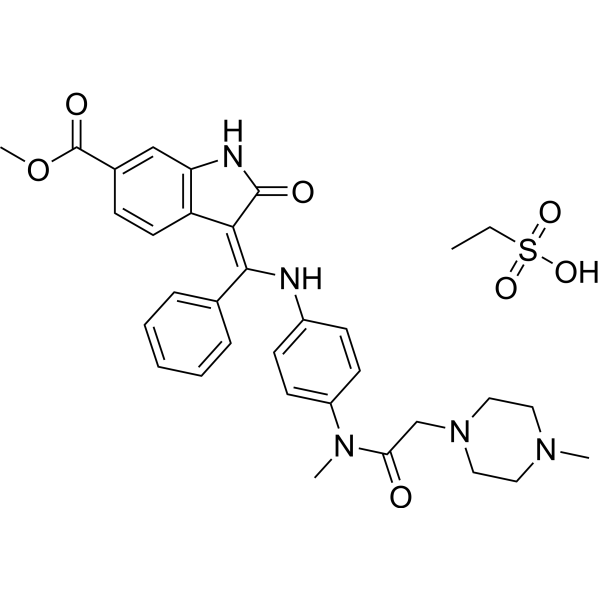 0 ImagesSynonyms: BIBF 1120 esylateNintedanib esylate (BIBF 1120 esylate) is a potent triple angiokinase inhibitor for VEGFR1/2/3, FGFR1/2/3 and PDGFRα/β with IC50s of 34 nM/13 nM/13 nM, 69 nM/37 nM/108 nM and 59 nM/65 nM, respectively.
-
Lenvatinib mesylate
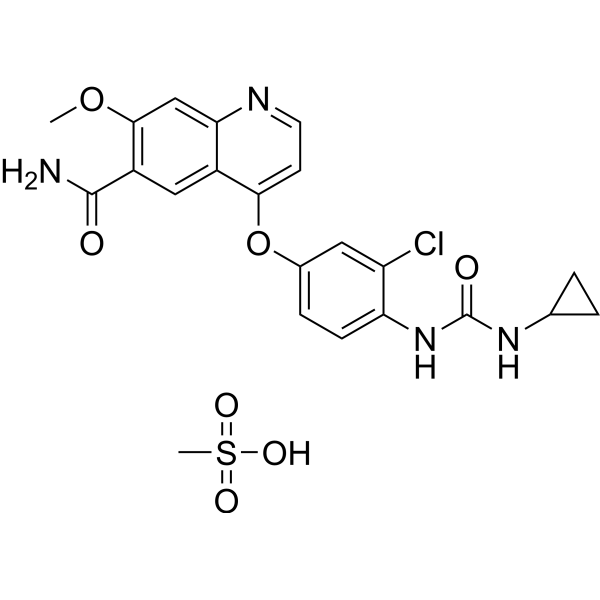 0 ImagesSynonyms: E7080 mesylate
-
Taurocholic acid sodium
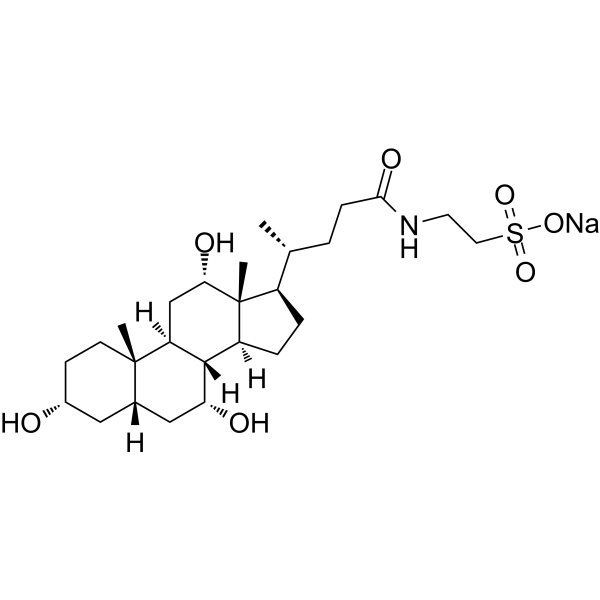 0 ImagesSynonyms: Sodium taurocholate; N-Choloyltaurine sodiumTaurocholic acid sodium (Sodium taurocholate) has marked bioactive effects such as an inhibitory potential against hepatic artery ligation induced biliary damage by upregulation of VEGF-A expression. Taurocholic acid sodium has immunoregulation effect.
-
Vandetanib
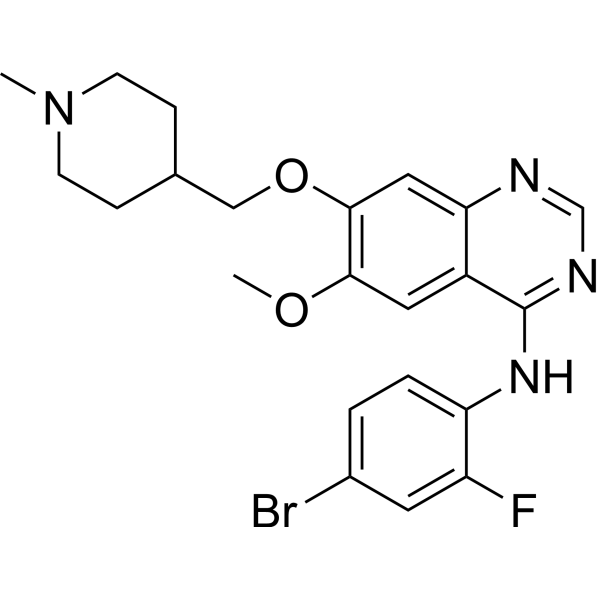 0 ImagesSynonyms: ZD6474Vandetanib (D6474) is a potent, orally active, and blood-brain-barrier penetrate inhibitor of VEGFR2/KDR tyrosine kinase activity (IC50=40 nM). Vandetanib also has activity versus the tyrosine kinase activity of VEGFR3/FLT4 (IC50=110 nM) and EGFR/HER1 (IC50=500 nM).
-
Sunitinib Malate
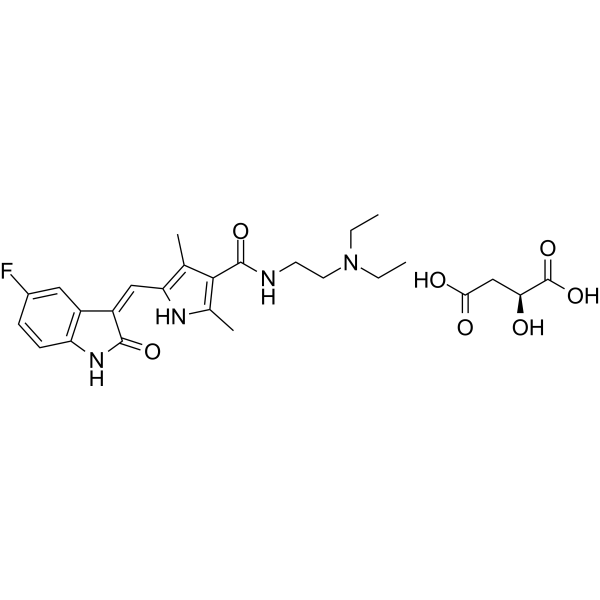 0 ImagesSynonyms: SU 11248 MalateSunitinib (SU 11248) Malat is a multi-targeted receptor tyrosine kinase inhibitor with IC50s of 80 nM and 2 nM for VEGFR2 and PDGFRβ, respectively. Sunitinib Malat, an ATP-competitive inhibitor, effectively inhibits autophosphorylation of Ire1α by inhibiting autophosphorylation and consequent RNase activation.

-
VT3989
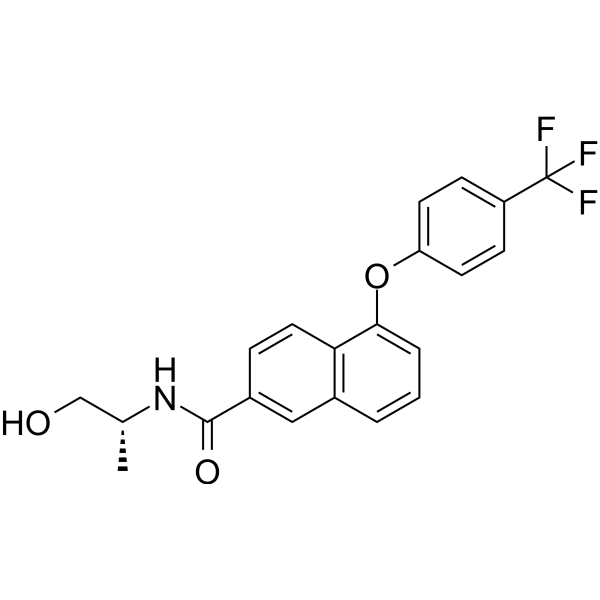 0 ImagesVT3989 is an orally active pan-TEAD autopalmitoylation inhibitor that modulates the Hippo signaling pathway. VT3989 directly binds to TEAD transcription factors to block their palmitoylation modification, thereby disrupting the formation of YAP/TAZ-TEAD complexes and inhibiting downstream oncogenic transcriptional activity. VT3989 effectively inhibits the growth of NF2-deficient schwannoma and meningioma cells and reverses the Schwann cell phenotype. In addition, VT3989 exerts a synergistic effect when combined with Osimtinib (HY-15772) in EGFR-mutant non-small cell lung cancer models, significantly delaying tumor recurrence and prolonging survival. VT3989 can be used for the research of epithelioid hemangioendothelioma, malignant pleural mesothelioma, type 2 neurofibromatosis and related advanced solid tumors.
-
GW806742X
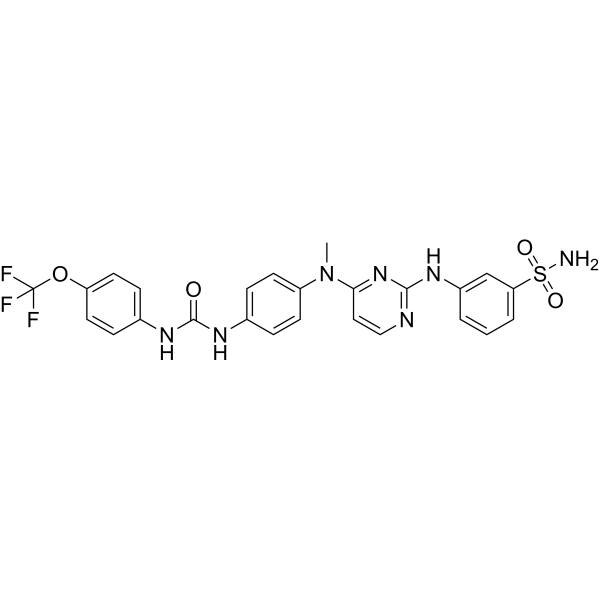 0 ImagesGW806742X, an ATP mimetic and a potent MLKL (Mixed Lineage Kinase Domain-Like protein) inhibitor, binds the MLKL pseudokinase domain with a Kd of 9.3 μM. GW806742X has activity against VEGFR2 (IC50=2 nM). GW806742X retards MLKL membrane translocation and inhibits necroptosis.
-
Liensinine
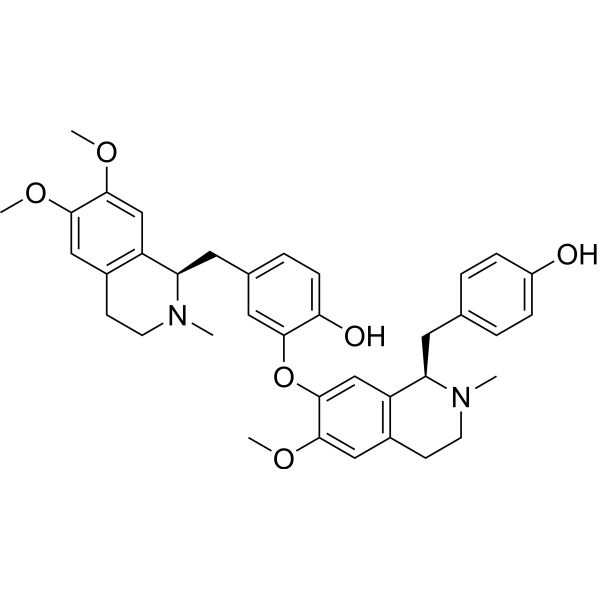 0 ImagesLiensinine is a bisbenzylisoquinoline alkaloid. By inhibiting the PI3K/AKT and JNK/p38-MAPK signaling pathways, Liensinine suppresses autophagy and apoptosis, clears Aβ, and exerts anti-inflammatory, antioxidant and neuroprotective effects. Liensinine activates AMPK and inhibits the expression of HIF-1α and VEGF, thereby suppressing angiogenesis. Liensinine exerts anti-tumor effects through ROS-mediated inhibition of the JAK2/STAT3 signaling pathway. Liensinine can be used for the research of diseases such as Alzheimer's disease, hepatocellular carcinoma, osteosarcoma, sepsis-induced organ injury and stroke.
-
Ripretinib
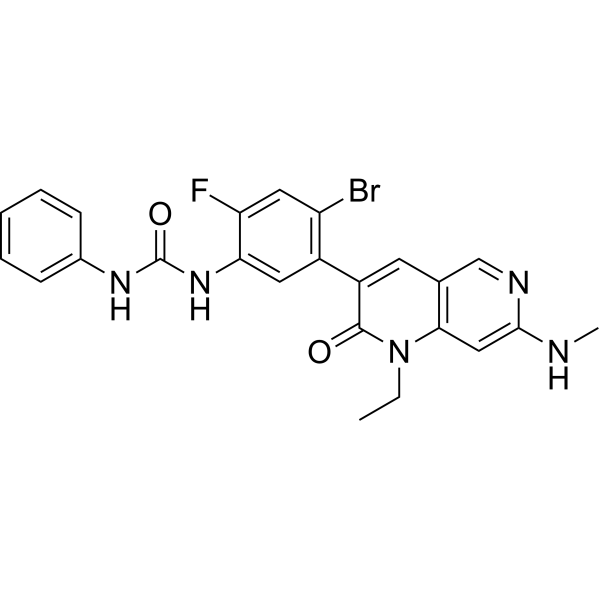 0 ImagesSynonyms: DCC-2618Ripretinib (DCC-2618) is an orally bioavailable, selective KIT and PDGFRA switch-control inhibitor. Ripretinib (DCC-2618) targets and binds to both wild-type and mutant forms of KIT and PDGFRA specifically at their switch pocket binding sites, thereby preventing the switch from inactive to active conformations of these kinases and inactivating their wild-type and mutant forms. Ripretinib (DCC-2618) also inhibits multiple other kinase targets, such as FLT3 and KDR (or VEGFR-2). DCC-2618 exerts antineoplastic effect and induces apoptosis.
-
Tubeimoside I
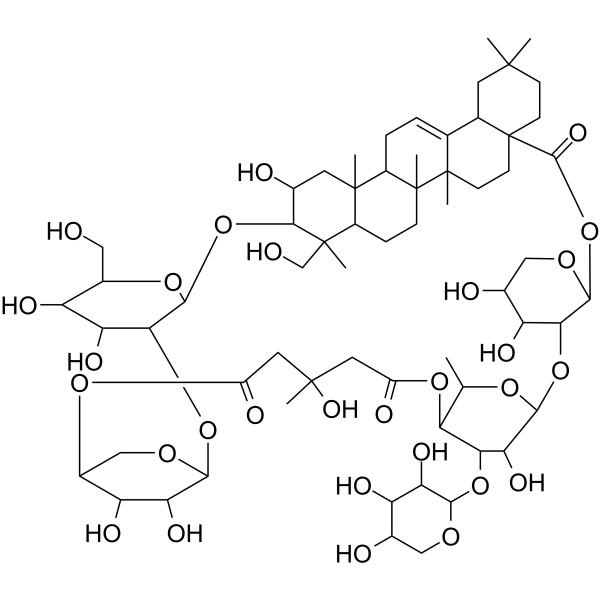 0 ImagesSynonyms: Tubeimoside-1; Lobatoside-HTubeimoside I is an orally active HSPD1 inhibitor. Tubeimoside I inhibits NF-κB, MAPK, as well as regulates eNOS-VEGF. Tubeimoside I induces cytoprotective Autophagy via an Akt-mediated pathway. Tubeimoside I inhibits proinflammatory cytokine (IL-6 and IL-1β) production. Tubeimoside I exhibits anti-inflammatory activities. Tubeimoside I promotes angiogenesis and improves sepsis symptoms. Tubeimoside I is used in the research of inflammatory diseases, various cancers, sepsis and ischemic diseases.
-
Ramucirumab (anti-VEGFR)
 0 ImagesRamucirumab (anti-VEGFR) is a human VEGFR-2 antagonist for the treatment of solid tumors. Ramucirumab (anti-VEGFR) is a recombinant human immunoglobulin G1 monoclonal antibody that binds to the extracellular binding domain of VEGFR-2 and prevents the binding of VEGFR ligands: VEGF-A, VEGF-C, and VEGF-D. Ramucirumab (anti-VEGFR) is also an angiogenesis inhibitor.
-
MAZ51
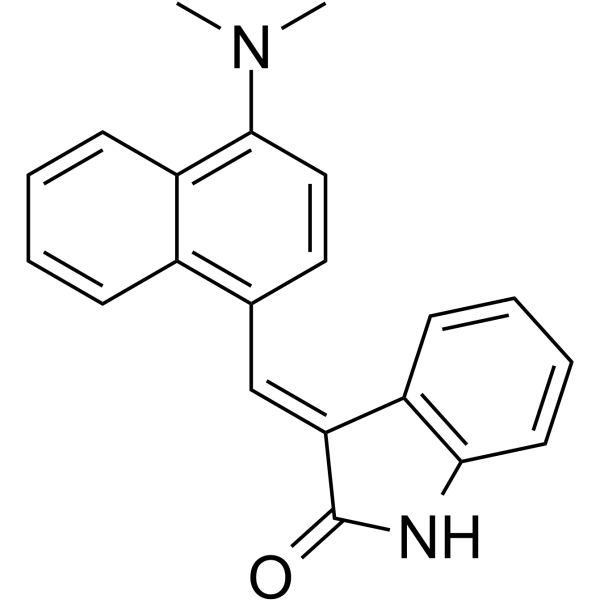 0 ImagesMAZ51 is a selective inhibitor of VEGFR-3 (Flt-4) tyrosine kinase. MAZ51 inhibits VEGF-C-induced activation of VEGFR-3 without blocking VEGF-C-mediated stimulation of VEGFR2. MAZ51 had no effect on ligand-induced autophosphorylation of EGFR, IGF-1R and PDGFRβ. MAZ51 blocks proliferation and induces apoptosis in a wide variety of tumor cells. Antitumor activity.
-
Linifanib
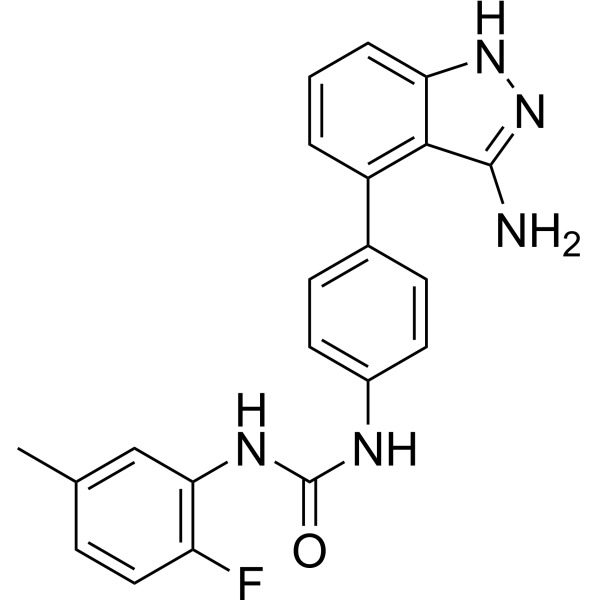 0 ImagesSynonyms: ABT-869; AL-39324Linifanib (ABT-869) is a potent and orally active multi-target inhibitor of VEGFR and PDGFR family with IC50s of 4, 3, 66, and 4 nM for KDR, FLT1, PDGFRβ, and FLT3, respectively. Linifanib shows prominent antitumor activity. Linifanib has much less activity against unrelated RTKs, soluble tyrosine kinases, or serine/threonine kinases. Linifanib is a specific miR-10b inhibitor that blocks miR-10b biogenesis.
-
SPHINX31
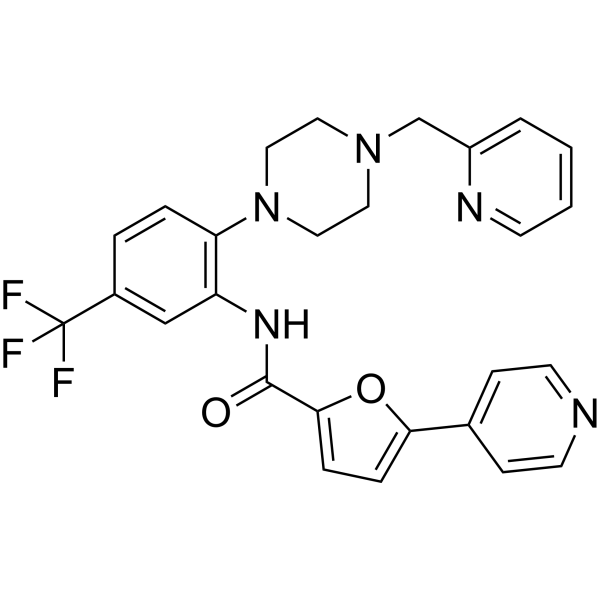 0 ImagesSPHINX31 is a potent and selective SRPK1 inhibitor, with an IC50 of 5.9 nM. SPHINX31 inhibits phosphorylation of serine/arginine-rich splicing factor 1 (SRSF1). SPHINX31 also decreases the mRNA expression of pro-angiogenic VEGF-A165a isoform. SPHINX31 can be used to research neovascular eye disease.
-
SAR131675
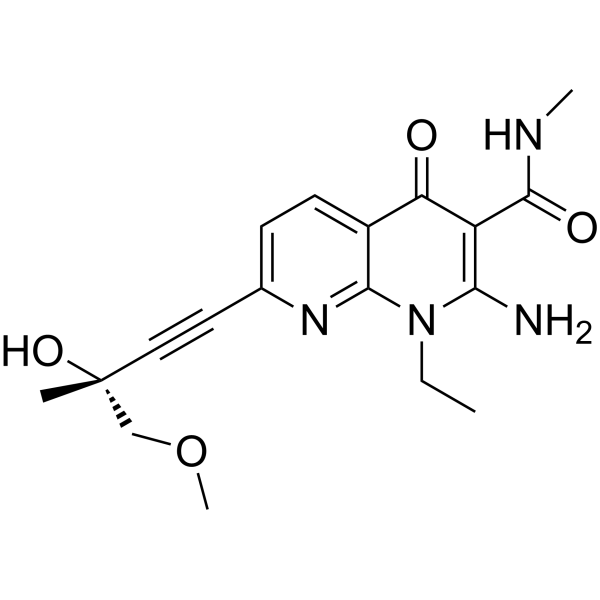 0 ImagesSAR131675 is a potent and selective VEGFR3 inhibitor with an IC50 of 23 nM. SAR131675 is a click chemistry reagent, it contains an Alkyne group and can undergo copper-catalyzed azide-alkyne cycloaddition (CuAAc) with molecules containing Azide groups.
-
Albendazole
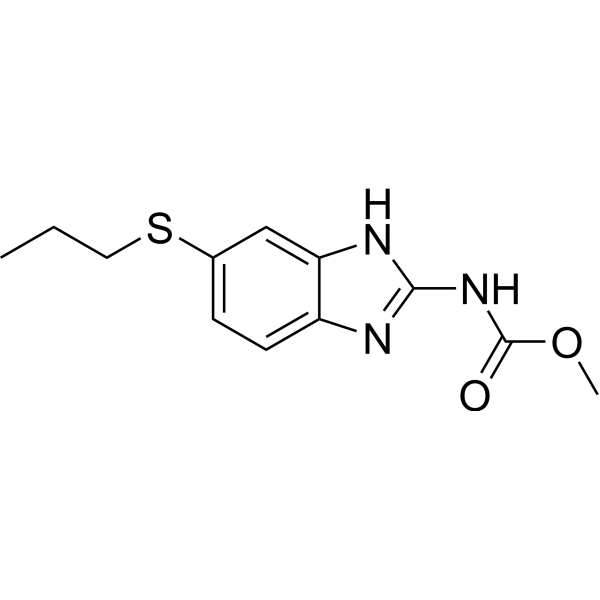 0 ImagesSynonyms: SKF-62979Albendazole (SKF-62979) is an orally active and broad-spectrum parasiticide with high effectiveness and low host toxicity, is used for the research of gastrointestinal parasites in humans and animals. Albendazole induces apoptosis and autophagy in cancer cells. Albendazole also inhibits tubulin polymerization and HIF-1α, VEGF expression, has antioxidant activity, and inhibits the glycolytic process in cancer cells.




