



CPT-2
Carnitine palmitoyltransferase 2 (CPT-2) is a ubiquitously expressed mitochondrial enzyme that catalyzes the conversion of long-chain acylcarnitines to acyl-CoA within mitochondria, thereby enabling mitochondrial β-oxidation of long-chain fatty acids and cellular energy production[1][2]. CPT-2 functions as a core component of the carnitine shuttle, acting downstream of CPT1 to utilize acylcarnitines generated at the outer mitochondrial membrane and support fatty acid flux into oxidative pathways[1][3]. Mechanistically, mitochondrial fatty acid oxidation depends on the coordinated activities of CPT1 and CPT-2, with CPT1 generating acylcarnitines and CPT-2 converting these intermediates back to metabolically active acyl-CoA species[3]. Deficiency of CPT-2 disrupts long-chain fatty acid oxidation and causes CPT II deficiency, a metabolic disorder characterized by impaired utilization of fatty acids as an energy source, particularly during fasting or increased energy demand[2][4]. Disease manifestations range from severe neonatal and infantile forms to the more common myopathic phenotype associated with recurrent muscle symptoms and metabolic crises[4][5]. Compared with related CPT1 isoforms, which display tissue-specific expression patterns including liver, muscle, and brain variants, CPT-2 is ubiquitously expressed and serves as the common downstream mitochondrial enzyme of the carnitine transport system[1][5]. Experimental studies using Cpt2-deficient models demonstrate that loss of CPT-2 abolishes mitochondrial oxidation of non-esterified fatty acids, making CPT-2 a valuable target for investigating fatty acid metabolism and mitochondrial dysfunction[3].
References:
- [1]. Rubio-Gozalbo ME, et al. Carnitine-acylcarnitine translocase deficiency, clinical, biochemical and genetic aspects. Mol Aspects Med. 2004 Oct-Dec;25(5-6):521-32. [Content Brief]
- [2]. Choi J, et al. Carnitine palmitoyltransferase 1 facilitates fatty acid oxidation in a non-cell-autonomous manner. Cell Rep. 2024 Dec 24;43(12):115006. [Content Brief]
- [3]. Seferi S, et al. Carnitine Palmitoyltransferase II (CPT2) Deficiency: An Overlooked and Elusive Cause of Acute Kidney Injury. Cureus. 2024 Sep 29;16(9):e70442. [Content Brief]
All Product Categories
-
CPT-2 Related Products (9)
Related Products (9)

-
Perhexiline maleate
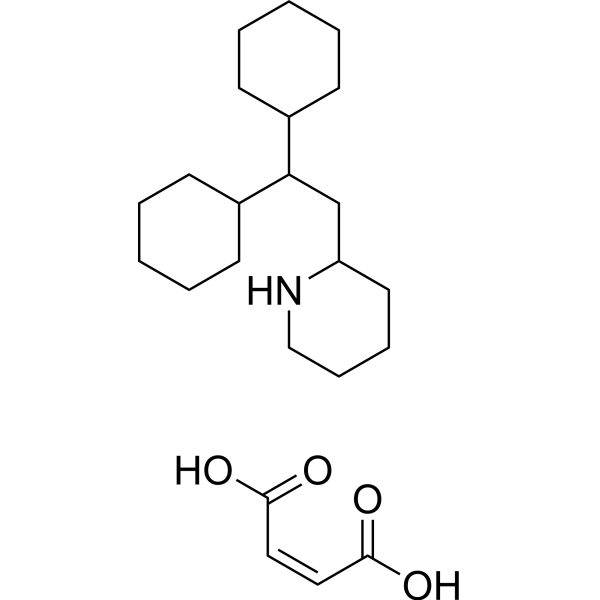 0 ImagesPerhexiline maleate is an orally active CPT1 and CPT2 inhibitor that reduces fatty acid metabolism. Perhexiline maleate induces mitochondrial dysfunction and apoptosis in hepatic cells. Perhexiline maleate can cross the blood brain barrier (BBB) and shows anti-tumor activity. Perhexiline maleate can be used in the research of cancers, and cardiovascular disease like angina.
-
Linoleyl carnitine
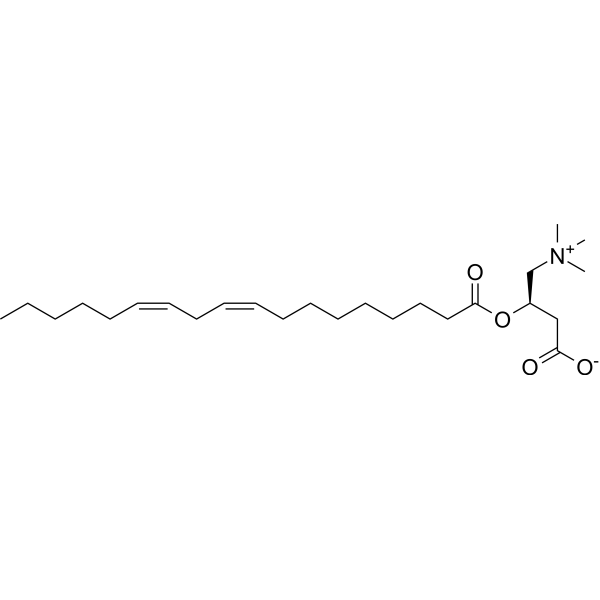 0 ImagesLinoleyl carnitine is an acylcarnitine and metabolite. Linoleyl carnitine in the liver is negatively correlated with pantothenic acid and citric acid in serum. Linoleyl carnitine accumulates in mitochondrial CPT II deficiency.
-
Perhexiline
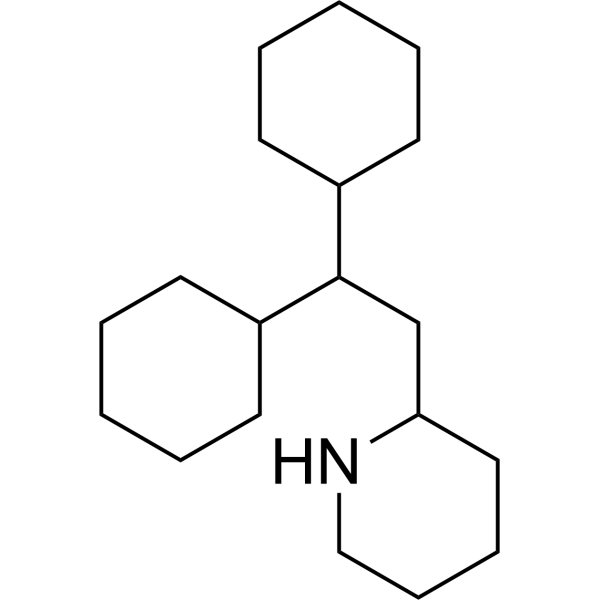 0 ImagesPerhexiline is an orally active CPT1 and CPT2 inhibitor that reduces fatty acid metabolism. Perhexiline induces mitochondrial dysfunction and apoptosis in hepatic cells. Perhexiline can cross the blood brain barrier (BBB) and shows anti-tumor activity. Perhexiline can be used in the research of cancers, and cardiovascular disease like angina.
-
Cpt2 Rat Pre-designed siRNA Set A
 0 ImagesCat. No.: HY-RS23907Cpt2 Rat Pre-designed siRNA Set A contains three designed siRNAs for Cpt2 gene (Rat), as well as a negative control, a positive control, and a FAM-labeled negative control.
-
CPT2 Human Pre-designed siRNA Set A
 0 ImagesCat. No.: HY-RS03125
CPT2 Human Pre-designed siRNA Set A contains three designed siRNAs for CPT2 gene (Human), as well as a negative control, a positive control, and a FAM-labeled negative control.
-
LCB-2151
 0 ImagesCat. No.: HY-175673CAS No.: 2211175-99-2LCB-2151 (Compound 2), a nucleoside analogue, is an anticancer agent. LCB-2151 disrupts the two primary sources of ATP production (glycolysis and mitochondrial oxidative phosphorylation), reducing the bioenergetic capacity of KRAS-mutated pancreatic cancer cells and inducing ROS formation. LCB-2151 effectively inhibits key enzymes (such as CACT and CPT2) in glycolysis, the TCA cycle and fatty acid β-oxidation. LCB-2151 has significant cytotoxicity and induces cells apoptosis. LCB-2151 can be used for radiation therapy of cancers research.
-
Perhexiline-d11 maleate
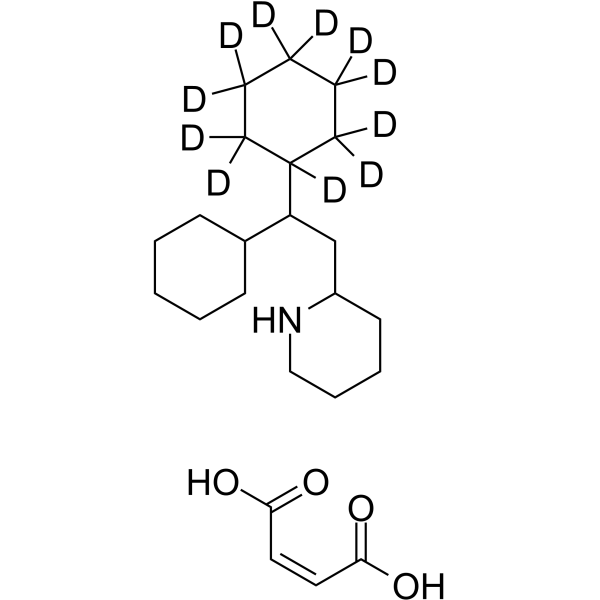 0 ImagesCat. No.: HY-B1334ASPerhexiline-d11 (maleate) is the deuterium labeled Perhexiline maleate. Perhexiline maleate is a potent carnitine palmitoyltransferase 1 (CPT 1) inhibitor with IC50s of 77 and 148 μM for rat heart and liver CPT 1, respectively.
-
Perhexiline maleate (Standard)
 0 ImagesPerhexiline (maleate) (Standard) is the analytical standard of Perhexiline (maleate). This product is intended for research and analytical applications. Perhexiline maleate is an orally active CPT1 and CPT2 inhibitor that reduces fatty acid metabolism. Perhexiline maleate induces mitochondrial dysfunction and apoptosis in hepatic cells. Perhexiline maleate can cross the blood brain barrier (BBB) and shows anti-tumor activity. Perhexiline maleate can be used in the research of cancers, and cardiovascular disease like angina.
-
Cpt2 Mouse Pre-designed siRNA Set A
 0 ImagesCat. No.: HY-RS17451
Cpt2 Mouse Pre-designed siRNA Set A contains three designed siRNAs for Cpt2 gene (Mouse), as well as a negative control, a positive control, and a FAM-labeled negative control.



