



Cyclophilin C
Cyclophilin C (CypC/PPIC) is a peptidyl-prolyl cis-trans isomerase that supports protein folding in the endoplasmic reticulum and binds cyclosporin A[1][2]. Mechanistically, CypC acts with cyclophilin B in ER redox homeostasis, because combined depletion altered transferrin secretion, albumin oxidative folding, protein-disulfide isomerase oxidation, and oxidized glutathione balance[2]. In an HCMV immune-evasion model, CypC co-isolated with US2 and HLA-A2, and either depletion or overexpression impaired US2-mediated MHC class I degradation[3]. Compared with related isoforms, extracellular CypA and CypC increased IL-6, MCP-1, CD147, and NF-κB-p65 activation in pancreatic microendothelial cells, whereas extracellular CypB did not affect these pro-inflammatory markers[4]. For experimental applications, cyclosporin A binds CypC, reversed extracellular CypC-driven endothelial responses, and induced ER depletion of cyclophilins B and C in redox studies[1][2][4]. Serum CypC was also associated with coronary artery disease risk, supporting its use as a biomarker candidate rather than a validated therapeutic target[5].
References:
- [1]. Schneider H, et al. Human cyclophilin C: primary structure, tissue distribution, and determination of binding specificity for cyclosporins. Biochemistry. 1994 Jul 12;33(27):8218-24. [Content Brief]
- [2]. Stocki P, et al. Depletion of cyclophilins B and C leads to dysregulation of endoplasmic reticulum redox homeostasis. J Biol Chem. 2014 Aug 15;289(33):23086-23096. [Content Brief]
- [3]. Chapman DC, et al. Cyclophilin C Participates in the US2-Mediated Degradation of Major Histocompatibility Complex Class I Molecules. PLoS One. 2015 Dec 21;10(12):e0145458. [Content Brief]
- [4]. Alvariño R, et al. Extracellular cyclophilins A and C induce dysfunction of pancreatic microendothelial cells. Front Physiol. 2022 Oct 5;13:980232. [Content Brief]
- [5]. Alfonso A, et al. High Serum Cyclophilin C levels as a risk factor marker for Coronary Artery Disease. Sci Rep. 2019 Jul 22;9(1):10576. [Content Brief]
All Product Categories
-
Cyclophilin C Related Products (1)
Related Products (1)

-
CypE-IN-1
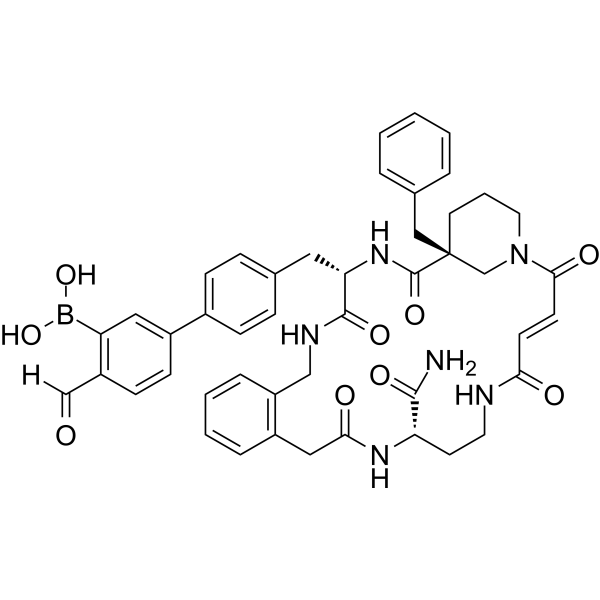 0 ImagesCat. No.: HY-151489CAS No.: 3023438-33-4CypE-IN-1 is a potent and subtype-selective cyclophilin E (CypE) inhibitor. CypE-IN-1 has CypE affinity with IC50 and Ki values of 0.013 μM and 0.072 μM, respectively. CypE-IN-1 can be used for the research of several diseases including oxidative stress, neurodegenerative disorders, liver diseases, aging, autophagy and diabetes.



