



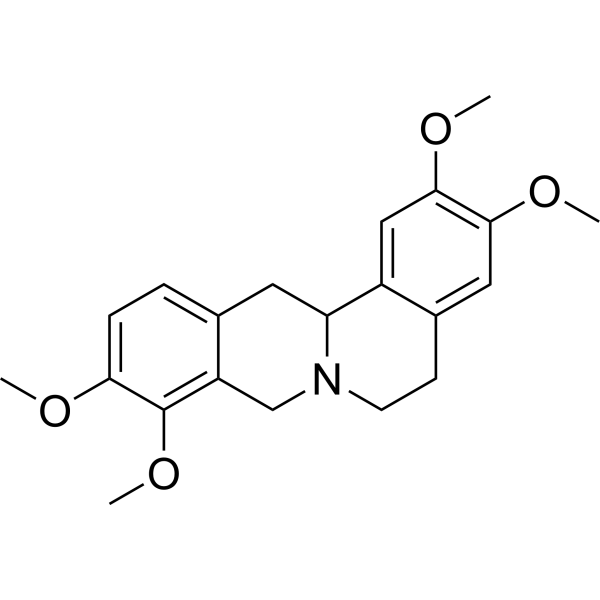
Tetrahydropalmatine
Based on 3 publication(s) in Google Scholar
Tetrahydropalmatine possesses analgesic effects. Tetrahydropalmatine acts through inhibition of amygdaloid release of dopamine to inhibit an epileptic attack in rats.
For research use only. We do not sell to patients.
- Purity : 99.93%
- CAS No.: 2934-97-6
- Formula: C21H25NO4
- Molecular Weight:355.43
-
Storage:Powder -20°C, 3 years , 4°C, 2 years ; In solvent -80°C, 2 years , -20°C, 1 year

To place orders, for customer services and technical support, please contact: MedChemExpress USA
Tel: 609-228-6898 E-mail: [email protected] [email protected]


-
 Biological Activity
-
Chemical Information
-
Solvent & Solubility
- Purity & Documentation
- References
-
 Help & FAQs


-
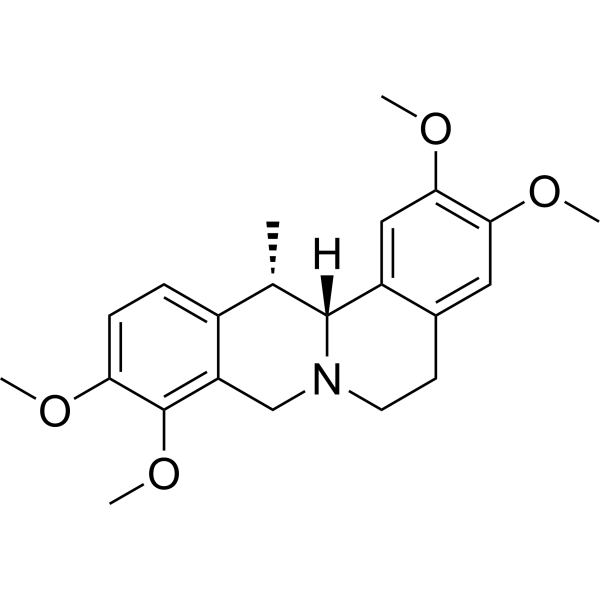
HY-N0923
CorydalineCholinesterase (ChE) Inhibitor -
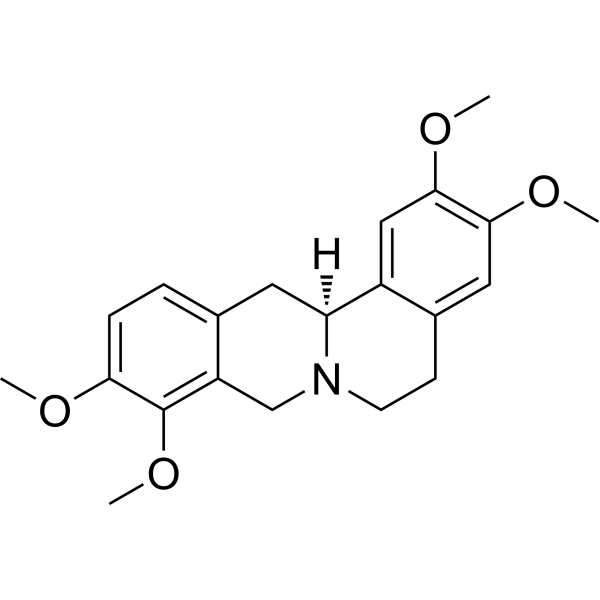
HY-N0096
RotundineDopamine Receptor Antagonist -
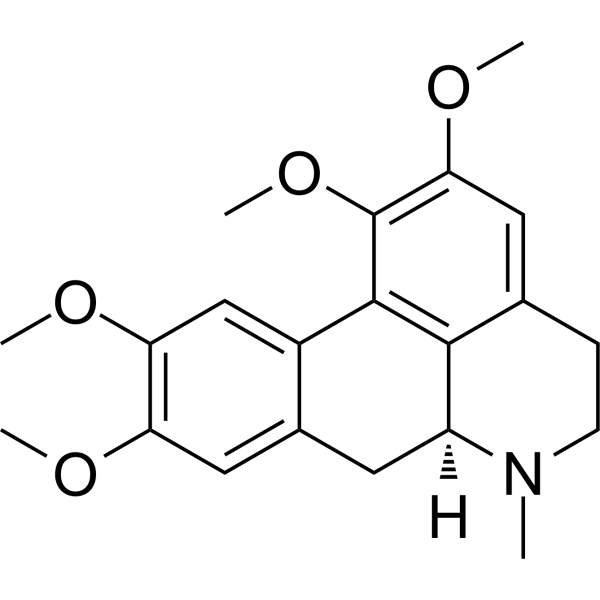
HY-N3945
GlaucinePDE4 Inhibitor -
HY-N0039
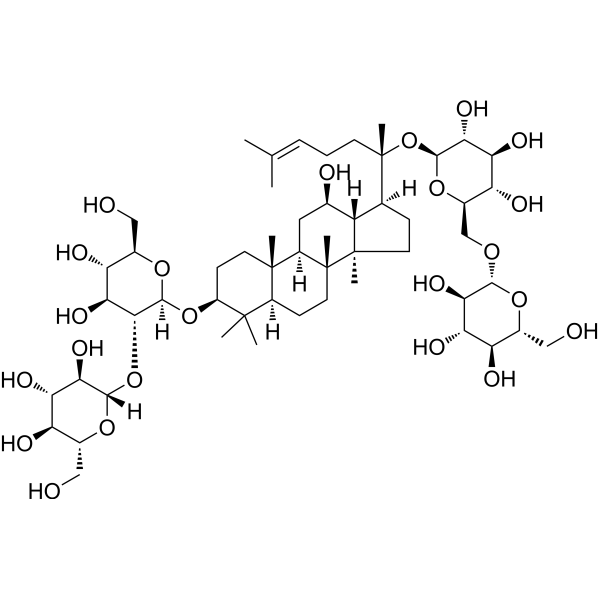
Ginsenoside Rb1Autophagy Inducer -

HY-N0300R
Tetrahydropalmatine (Standard)Apoptosis Inducer -
HY-N0110
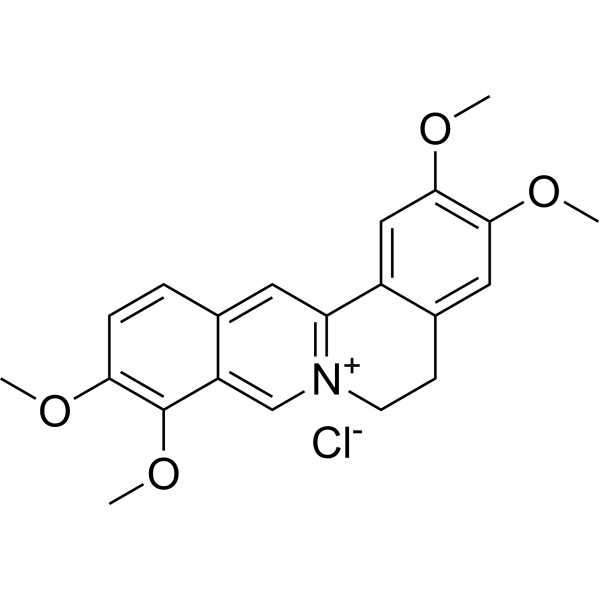
Palmatine chlorideIDO-1/NS2B-NS3 Inhibitor -
HY-B1836
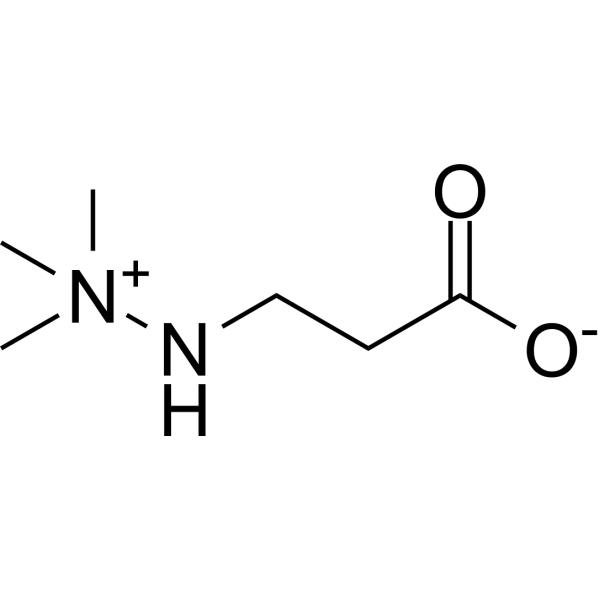
MeldoniumBBOX1/OCTN2 Inhibitor -
HY-13764
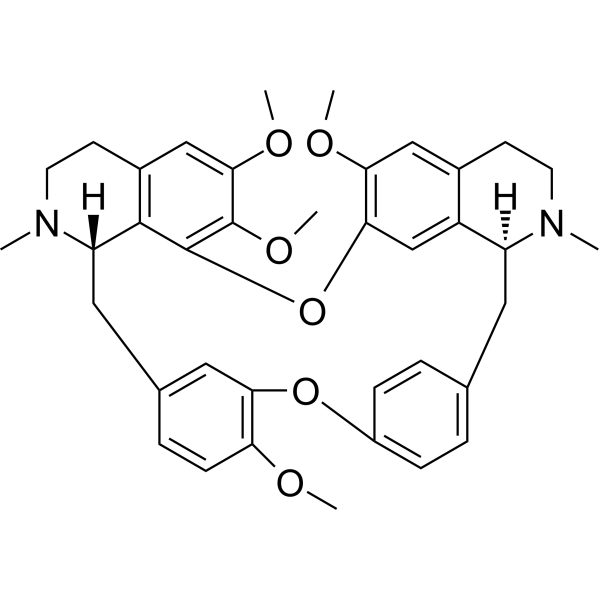
TetrandrineCalcium Channel Inhibitor -
HY-B1751
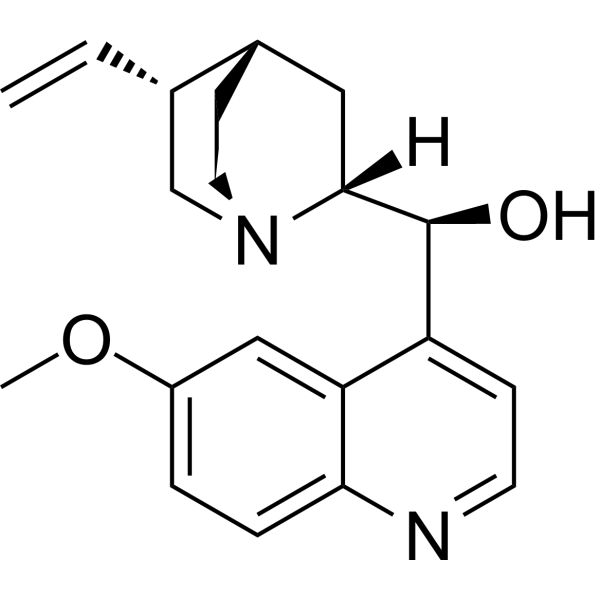
Quinidine (15% dihydroquinidine)Anti-arrythmic Agent -
HY-N0263
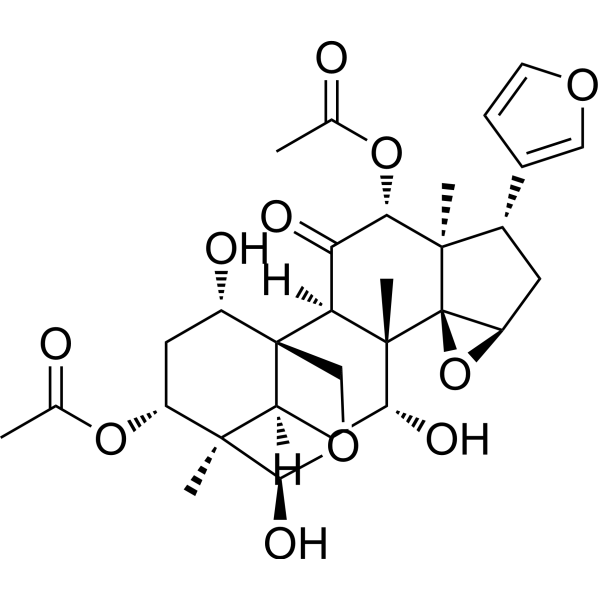
ToosendaninAnti-Inflammatory Agent -
HY-N0793
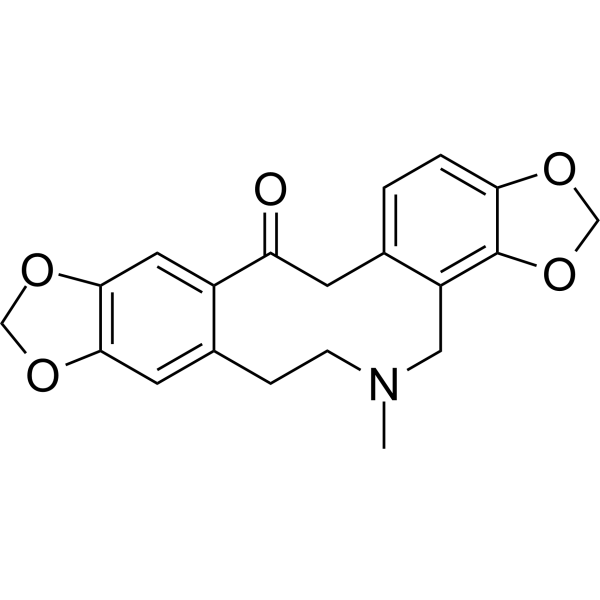
ProtopineAcetylcholinesterase Inhibitor -
HY-N0925
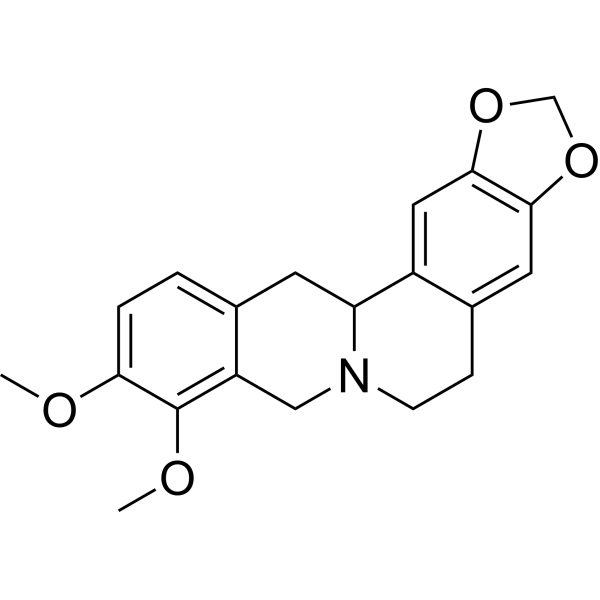
TetrahydroberberineDopamine Receptor Antagonist
Publications Citing Use of MedChemExpress (MCE) Tetrahydropalmatine
More Customer Validation & Images

-
In Vivo Imaging
-
IHC
-
Bio/Physico-chemical Assay
-
Cell Imaging/Staining
All Dopamine Receptor Isoforms
More

Biological Activity
Description
IC50 & Target
Dopamine[1]
Cellular Effect
|
Cell Line

|
Type | Value | Description | References |
|---|---|---|---|---|
| THP-1 | IC50 |
14.98 nM
Compound: 2
|
Inhibition of tissue factor procoagulant activity in LPS-stimulated human THP1 cells preincubated for 1 hr before LPS addition measured after 5 hrs
Inhibition of tissue factor procoagulant activity in LPS-stimulated human THP1 cells preincubated for 1 hr before LPS addition measured after 5 hrs
|
[PMID: 23199480] |
In Vivo
MedChemExpress (MCE) has not independently confirmed the accuracy of these methods. They are for reference only.


Chemical Information
-
CAS No. 2934-97-6
-
Appearance Solid
-
Molecular Weight 355.43
-
Formula C21H25NO4
-
Color White to off-white
-
SMILES
COC1=CC=C2C(CN3CCC4=CC(OC)=C(OC)C=C4C3C2)=C1OC
-
Synonyms
DL-Tetrahydropalmatine
-
Structure Classification
-
Initial Source
-
Shipping
Room temperature in continental US; may vary elsewhere.
-
Storage
Powder -20°C 3 years 4°C 2 years In solvent -80°C 2 years -20°C 1 year


Publications (3)
-
Journal Impact Factor
-
Most Recent
-
J Anim Sci
2022 Apr 1;100(4):skac069. PMID: 35247050
Tetrahydropalmatine purchased from MedChemExpress. Usage Cited in: J Anim Sci. 2022 Apr 1;100(4):skac069. [Abstract]
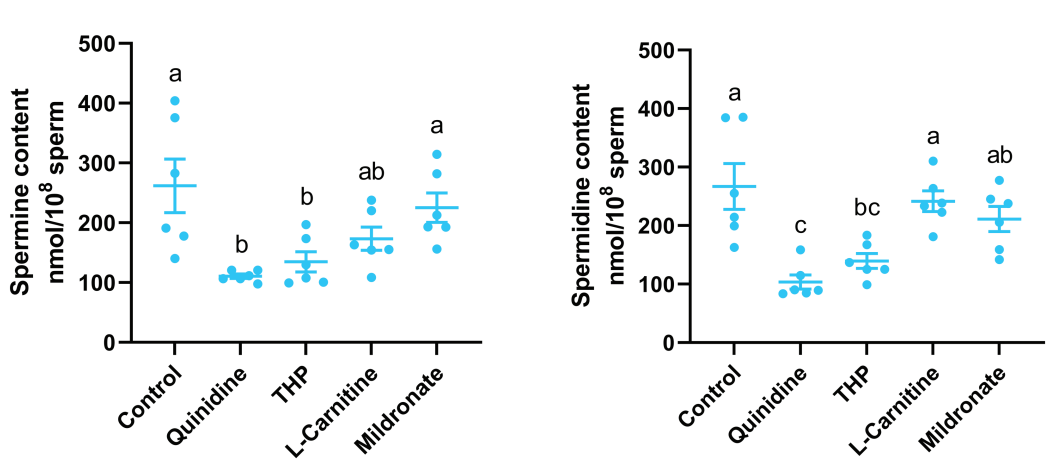
The accumulation of spermine or spermidine in boar sperm was inhibited by 60 μmol/L quinidine or 60 μmol/L Tetrahydropalmatine (THP), but neither 60 μmol/L mildronate nor 60 μmol/L l-carnitine.
Tetrahydropalmatine purchased from MedChemExpress. Usage Cited in: J Anim Sci. 2022 Apr 1;100(4):skac069. [Abstract]
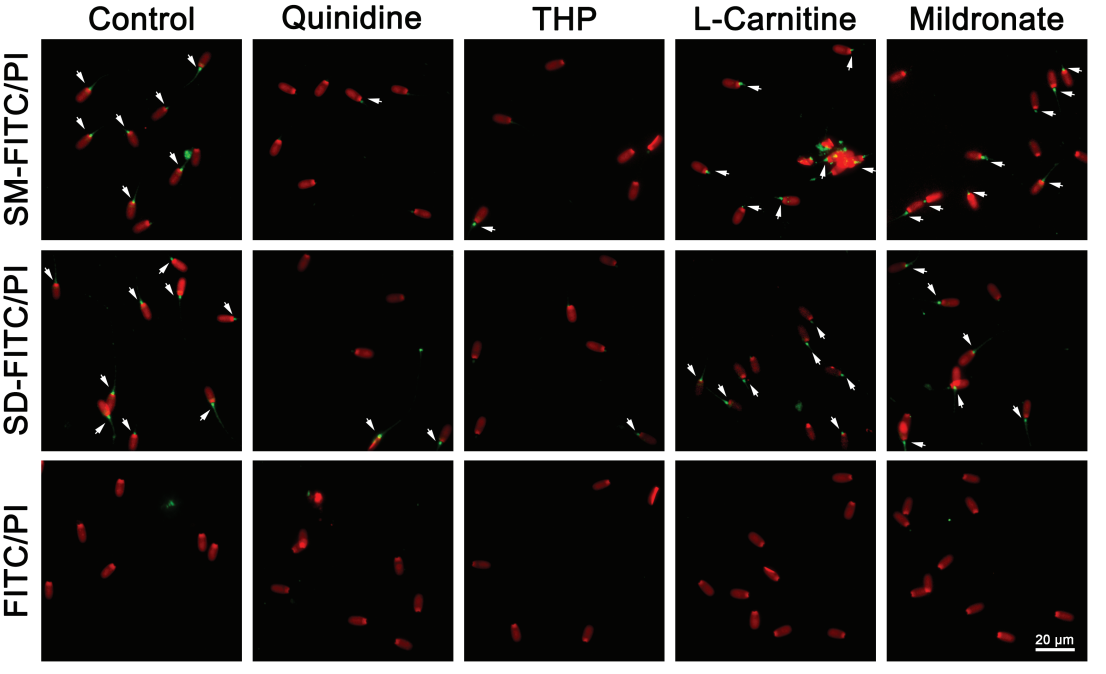
SM-FITC or SD-FITC in the sperm was significantly decreased after the supplementation of 60 μmol/L quinidine or 60 μmol/L Tetrahydropalmatine (THP).
-
Chem Biol Drug Des
Tetrahydropalmatine Alleviates Osteoarthritis-Associated Pain and Inflammation by Suppressing KDM4A/MDM2/HIF-1α-Mediated M1 Macrophage Polarization. [Abstract]2026 Mar;107(3):e70279. PMID: 41857767 -
Biomed Pharmacother
Tetrahydropalmatine: Orchestrating survival - Regulating autophagy and apoptosis via the PI3K/AKT/mTOR pathway in perforator flaps. [Abstract]2023 Dec 31:169:115887. PMID: 37984303
Tetrahydropalmatine purchased from MedChemExpress. Usage Cited in: Biomed Pharmacother. 2023 Dec 31:169:115887. [Abstract]
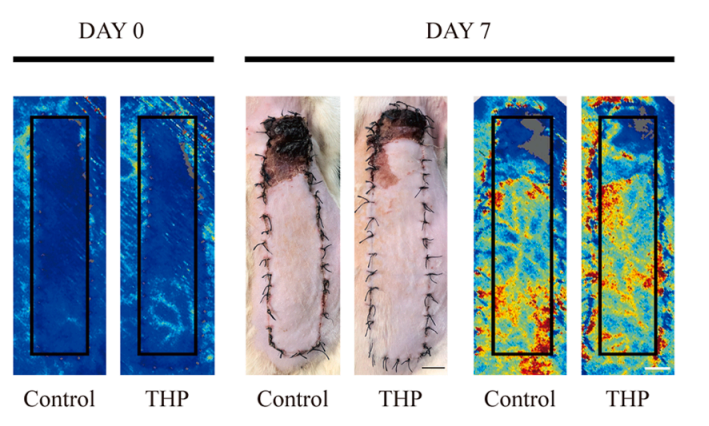
High-definition digital photos and Doppler images illustrating flap survival and necrosis areas on days 0 and 7 for both the control and Tetrahydropalmatine (THP, 2 mg/kg) groups.
Tetrahydropalmatine purchased from MedChemExpress. Usage Cited in: Biomed Pharmacother. 2023 Dec 31:169:115887. [Abstract]
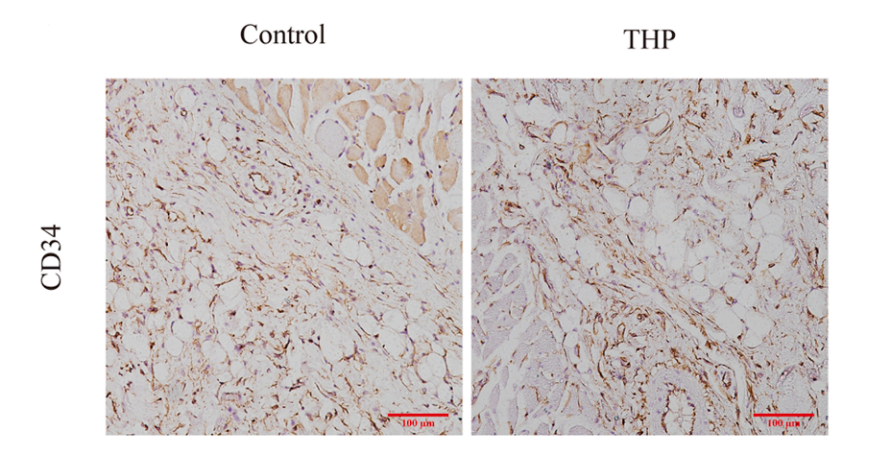
IHC for CD34-positive microvessels in the choke II region of the control and Tetrahydropalmatine (THP) groups (200X); scale bar, 100 µm.


Solvent & Solubility
In Vitro:
DMSO : 16.67 mg/mL (46.90 mM; ultrasonic and warming and heat to 60°C; Hygroscopic DMSO has a significant impact on the solubility of product, please use newly opened DMSO)
Please refer to the solubility information to select the appropriate solvent. Once prepared, please aliquot and store the solution to prevent product inactivation from repeated freeze-thaw cycles.
Storage method and period of stock solution: -80°C, 2 years; -20°C, 1 year. When stored at -80°C, please use it within 2 years. When stored at -20°C, please use it within 1 year.
Please refer to the solubility information to select the appropriate solvent. Once prepared, please aliquot and store the solution to prevent product inactivation from repeated freeze-thaw cycles.
Storage method and period of stock solution: -80°C, 2 years; -20°C, 1 year. When stored at -80°C, please use it within 2 years. When stored at -20°C, please use it within 1 year.
Concentration (start) × Volume (start) = Concentration (final) × Volume (final)
In Vivo:
Select the appropriate dissolution method based on your experimental animal and administration route.
- For the following dissolution methods, please ensure to first prepare a clear stock solution using an In Vitro approach and then sequentially add co-solvents:
- To ensure reliable experimental results, the clarified stock solution can be appropriately stored based on storage conditions. As for the working solution for In Vivo experiments, it is recommended to prepare freshly and use it on the same day.
- The percentages shown for the solvents indicate their volumetric ratio in the final prepared solution. If precipitation or phase separation occurs during preparation, heat and/or sonication can be used to aid dissolution.
Add each solvent one by one: 10% DMSO 40% PEG300 5% Tween-80 45% Saline
Solubility: ≥ 1.67 mg/mL (4.70 mM); Clear solution
This protocol yields a clear solution of ≥ 1.67 mg/mL (saturation unknown).
Taking 1 mL working solution as an example, add 100 μL DMSO stock solution (16.7 mg/mL) to 400 μL PEG300, and mix evenly; then add 50 μL Tween-80 and mix evenly; then add 450 μL Saline to adjust the volume to 1 mL.
Preparation of Saline: Dissolve 0.9 g sodium chloride in ddH₂O and dilute to 100 mL to obtain a clear Saline solution.
Add each solvent one by one: 10% DMSO 90% (20% SBE-β-CD in Saline)
Solubility: ≥ 1.67 mg/mL (4.70 mM); Clear solution
This protocol yields a clear solution of ≥ 1.67 mg/mL (saturation unknown).
Taking 1 mL working solution as an example, add 100 μL DMSO stock solution (16.7 mg/mL) to 900 μL 20% SBE-β-CD in Saline, and mix evenly.
Preparation of 20% SBE-β-CD in Saline (4°C, storage for one week): 2 g SBE-β-CD powder is dissolved in 10 mL Saline, completely dissolve until clear.
In Vivo Dissolution Calculator
Please enter the basic information of animal experiments:
-
-
-
-
Recommended: Prepare an additional quantity of animals to account for potential losses during experiments.
Please enter your animal formula composition:
-
%DMSO +
Recommended: Keep the proportion of DMSO in working solution below 2% if your animal is weak.
-
%+
-
+%Tween-80 + +
-
%Saline +
The co-solvents required include: DMSO, . All of co-solvents are available by MedChemExpress (MCE). , Tween 80. All of co-solvents are available by MedChemExpress (MCE).
Working solution concentration: 0.22 mg/mL
Method for preparing stock solution: mg drug dissolved in μL DMSO. Stock solution concentration: mg/mL.
1. Take μL DMSO stock solution;
2. Add μL .
μL , mix evenly;
3. Then add μL Tween 80, mix evenly;
4. Then add μL
Please ensure that the stock solution in the first step is dissolved to a clear state, and add co-solvents in sequence. You can use ultrasonic heating (ultrasonic cleaner, recommended frequency 20-40 kHz), vortexing, etc. to assist dissolution.


Purity & Documentation
-
Data Sheet (275 KB)
-
SDS (396 KB)
- English - EN (396 KB)
- Français - FR (396 KB)
- Deutsch - DE (396 KB)
- Norwegian - NO (396 KB)
- Español - ES (396 KB)
- Swedish - SV (396 KB)
- Italian - IT (396 KB)
- Korean - KR (396 KB)
- Portuguese - PT (396 KB)
-
Handling Instructions (2659 KB)
References


Complete Stock Solution Preparation Table
Please refer to the solubility information to select the appropriate solvent. Once prepared, please aliquot and store the solution to prevent product inactivation from repeated freeze-thaw cycles.
Storage method and period of stock solution: -80°C, 2 years; -20°C, 1 year. When stored at -80°C, please use it within 2 years. When stored at -20°C, please use it within 1 year.
| Optional Solvent | Concentration Solvent Mass | 1 mg | 5 mg | 10 mg | 25 mg |
|---|---|---|---|---|---|
| DMSO | 1 mM | 2.8135 mL | 14.0675 mL | 28.1349 mL | 70.3373 mL |
| 5 mM | 0.5627 mL | 2.8135 mL | 5.6270 mL | 14.0675 mL | |
| 10 mM | 0.2813 mL | 1.4067 mL | 2.8135 mL | 7.0337 mL | |
| 15 mM | 0.1876 mL | 0.9378 mL | 1.8757 mL | 4.6892 mL | |
| 20 mM | 0.1407 mL | 0.7034 mL | 1.4067 mL | 3.5169 mL | |
| 25 mM | 0.1125 mL | 0.5627 mL | 1.1254 mL | 2.8135 mL | |
| 30 mM | 0.0938 mL | 0.4689 mL | 0.9378 mL | 2.3446 mL | |
| 40 mM | 0.0703 mL | 0.3517 mL | 0.7034 mL | 1.7584 mL |


Tetrahydropalmatine Related Classifications
HY-N0300 Related Classifications
 Powered by Bioz