



ApoC3 Antibody (YA3349)
(Synonyms: APOC3; APO C3; Apo CIII; ApoC III; APOC3; ApoCIII; Apolipoprotein C III; Apolipoprotein C3)
Based on 1 Customer Validation
ApoC3 Antibody (YA3349) is a Rabbit-derived and non-conjugated IgG monoclonal antibody, targeting to ApoC3.
-
Host:
Rabbit
-
Isotype:
IgG
-
Application:
WB, IHC-P
-
Reactivity :
Human
-
Formulation:
Supplied in 50mM Tris-Glycine(pH 7.4), 0.15M NaCl, 40%Glycerol, 0.01% sodium azide and 0.05% BSA.
-
Conjugation:
Non-conjugated


To place orders, for customer services and technical support, please contact: MedChemExpress USA
Tel: 609-228-6898 E-mail: [email protected] [email protected]





Applications
| Application |
WB

WB: Western Blot
|
IHC-P
IHC-P: Immunohistochemistry-Paraffin
|
|---|---|---|
| Dilution Ratio | 1:1000-1:2000 | 1:50-1:100 |


Product Details
ApoC3 Antibody (YA3349) is a Rabbit-derived and non-conjugated IgG monoclonal antibody, targeting to ApoC3.
-
Host Rabbit

-
Clonality Recombinant,Monoclonal

-
Species ReactivityHuman
-
Observed Molecular WeightObserved band size: 11-15 kDa
Note: Due to possible protein modifications or aggregation, the molecular weight should be confirmed by actual measurement, and the predicted value is for reference only.

-
Calculated Molecular Weight Predicted band size: 11 kDa

A synthesized peptide derived from human APOC3 aa55-99/99.
Endogenous
Affinity Chromatography
Non-conjugated
Unmodified
IgG


Product Properties
-
Appearance
Solution
-
Formulation
Supplied in 50mM Tris-Glycine(pH 7.4), 0.15M NaCl, 40%Glycerol, 0.01% sodium azide and 0.05% BSA.
-
Concentration
Batch-dependent, Please check the COA for the concentration of each lot. Check Lot Concentration
-
Storage & Stability
Stored at -20°C for 1 year. Avoid repeated freeze / thaw cycles.
-
Shipping
Shipping with blue ice.


Verification Images
-
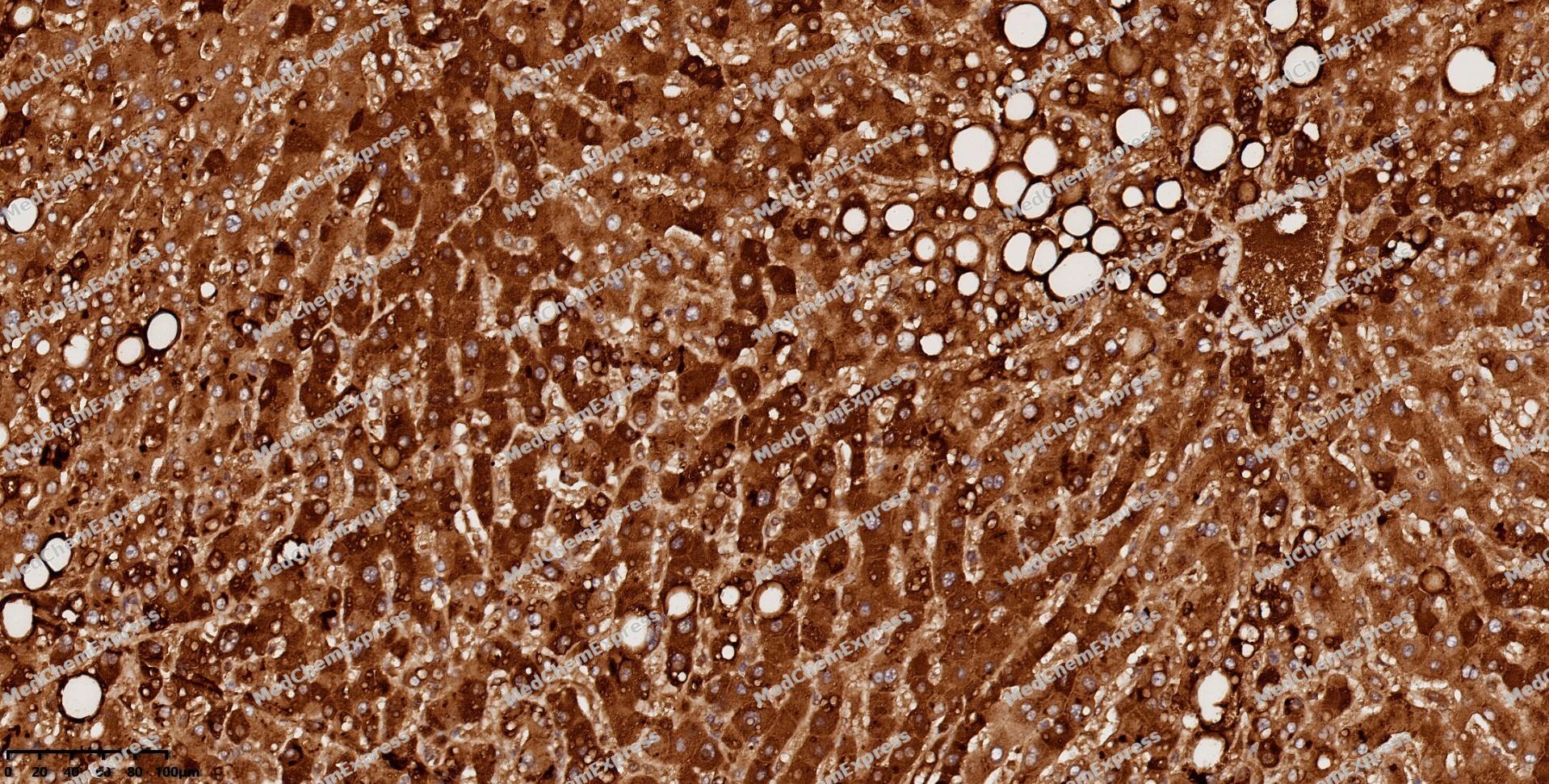 Immunohistochemical analysis of paraffin-embedded human liver using ApoC3 antibody. The section was pre-treated using heat mediated antigen retrieval with EDTA (pH 9.0) for 14 minutes. The tissues were blocked in 5% BSA for 30 minutes at room temperature, washed with TBST, and then probed with the primary antibody (HY-P83604, 1/200) for 30 minutes at room temperature. The detection was performed using Polymer HRP-conjugated Goat Anti-Mouse/Rabbit lgG(H&L) secondary antibody (HY-P83652). DAB was used as the chromogen. Tissues were counterstained with hematoxylin and mounted with DPX.
 -
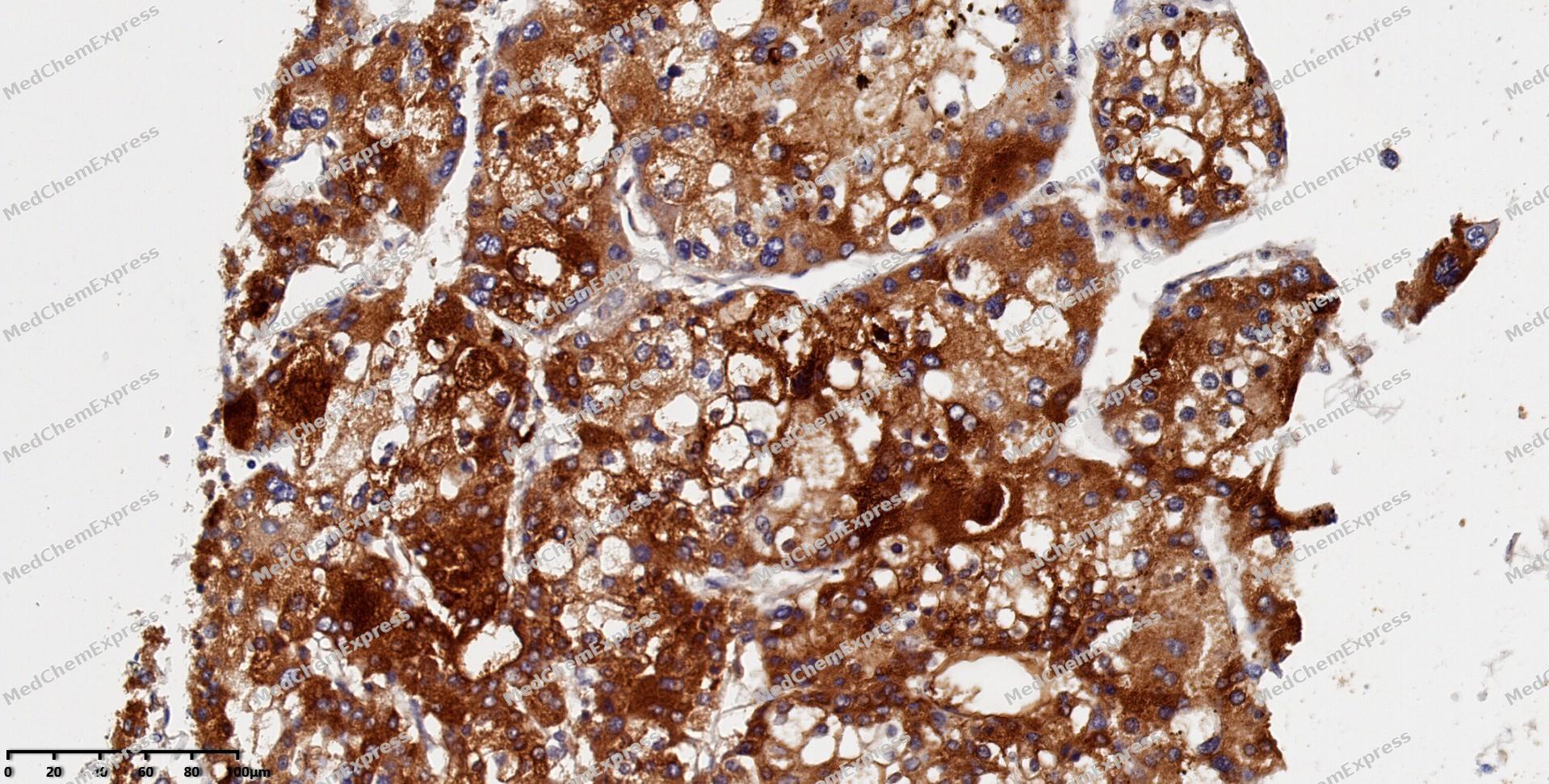 Immunohistochemical analysis of paraffin-embedded human liver cancer using ApoC3 antibody. The section was pre-treated using heat mediated antigen retrieval with EDTA (pH 9.0) for 14 minutes. The tissues were blocked in 5% BSA for 30 minutes at room temperature, washed with TBST, and then probed with the primary antibody (HY-P83604, 1/200) for 30 minutes at room temperature. The detection was performed using Polymer HRP-conjugated Goat Anti-Mouse/Rabbit lgG(H&L) secondary antibody (HY-P83652). DAB was used as the chromogen. Tissues were counterstained with hematoxylin and mounted with DPX.


Background
-
Function
Apolipoprotein C-III (apoC3) is a liver-derived apolipoprotein and a central regulator of triglyceride-rich lipoprotein metabolism that controls plasma triglyceride homeostasis through effects on lipolysis and lipoprotein clearance[1][2]. Mechanistically, apoC3 inhibits lipoprotein lipase (LPL) -mediated hydrolysis of triglyceride-rich lipoproteins and impairs hepatic clearance of remnant particles through LDL receptor family pathways, thereby prolonging the circulation of triglyceride-rich lipoproteins and increasing plasma triglyceride levels[1][3][4]. Through these actions, apoC3 regulates the metabolism of very-low-density lipoproteins (VLDL), chylomicrons, and their remnants and contributes to the accumulation of atherogenic lipoprotein particles[2][4]. In cardiovascular disease, elevated apoC3 levels are associated with hypertriglyceridemia, increased coronary artery disease risk, lipoprotein retention, and vascular inflammation, whereas loss-of-function variants in APOC3 reduce triglyceride levels and cardiovascular risk[2][5]. Experimental studies in apoC3-deficient and apoC3-transgenic mouse models further demonstrate that apoC3 is an effective inhibitor of VLDL triglyceride hydrolysis and triglyceride-rich lipoprotein clearance, supporting a causal role in dyslipidemia and atherosclerosis-related phenotypes[1][2]. Compared with related exchangeable apolipoproteins such as apoC-II, which activates LPL, apoC3 exerts an opposing effect and serves as a negative regulator of triglyceride catabolism, making the balance between these isoforms a critical determinant of lipid metabolism[2]. For experimental applications, apoC3 inhibition has emerged as a validated therapeutic strategy, and antisense oligonucleotides, small interfering RNAs, and other apoC3-targeted approaches are widely used to investigate triglyceride metabolism and cardiometabolic disease mechanisms[2][6].
-
Subcellular Localization
Secreted
-
Expression
Tissue_specificity:Liver -
SwissProt ID
-
Synonyms
APOC3; APO C3; Apo CIII; ApoC III; APOC3; ApoCIII; Apolipoprotein C III; Apolipoprotein C3
-
Research Field
Cardiovascular


Documentation
-
Data Sheet (262 KB)
-
SDS (251 KB)
- English - EN (251 KB)
- Français - FR (251 KB)
- Deutsch - DE (251 KB)
- Norwegian - NO (251 KB)
- Español - ES (251 KB)
- Swedish - SV (251 KB)
- Italian - IT (251 KB)
- Korean - KR (251 KB)
- Portuguese - PT (251 KB)
-
User Guide for Antibodies (1077 KB)
References
[1]. Giammanco A, et al. APOC-III: a gatekeeper in controlling triglyceride metabolism. Curr Atheroscler Rep. 2023;25(3):67-76. [Content Brief]
[2]. Huff MW, et al. Apolipoprotein C-III: going back to the future for a lipid drug target. Circ Res. 2013 May 24;112(11):1405-8. [Content Brief]
[3]. Gómez Hernández MT, et al. The «Weekday Effect» Does Not Have an Impact on the Development of Complications or Mortality After Pulmonary Resection: Retrospective Cohort Study. Cir Esp (Engl Ed). 2021 Apr;99(4):296-301. English, Spanish. [Content Brief]
[5]. Dib I, et al. Apolipoprotein C-III and cardiovascular diseases: when genetics meet molecular pathologies. Mol Biol Rep. 2021;48(1):875-886. [Content Brief]
[6]. Packard CJ, et al. Exploring apolipoprotein C-III: pathophysiological and pharmacological relevance. Cardiovasc Res. 2024;119(18):2833-2847. [Content Brief]

 Powered by Bioz
