



DKC1 Antibody (YA1750)
(Synonyms: DKC1; NOLA4; H/ACA ribonucleoprotein complex subunit 4; CBF5 homolog; Dyskerin; Nopp140-associated protein of 57 kDa; Nucleolar protein NAP57; Nucleolar protein family A member 4; snoRNP protein DKC1)
Based on 1 Customer Validation
DKC1 Antibody (YA1750) is a Rabbit-derived and non-conjugated IgG monoclonal antibody, targeting to DKC1.
-
Host:
Rabbit
-
Isotype:
IgG
-
Application:
WB, IHC-P, ICC/IF
-
Reactivity :
Human, Mouse, Rat
-
Formulation:
Supplied in rabbit IgG in PBS(pH 7.4), 150mM sodium chloride, 0.05% BSA, 0.02% sodium azide and 50% glycerol.
-
Conjugation:
Non-conjugated


To place orders, for customer services and technical support, please contact: MedChemExpress USA
Tel: 609-228-6898 E-mail: [email protected] [email protected]





Applications
| Application |
WB

WB: Western Blot
|
IHC-P
IHC-P: Immunohistochemistry-Paraffin
|
ICC/IF
ICC/IF: Immunocytochemistry/
Immunofluorescence |
|---|---|---|---|
| Dilution Ratio | 1:1000-2000 | 1:100-200 | 1:50-200 |


Product Details
DKC1 Antibody (YA1750) is a Rabbit-derived and non-conjugated IgG monoclonal antibody, targeting to DKC1.
-
Host Rabbit

-
Clonality Recombinant,Monoclonal

-
Species ReactivityHuman, Mouse, Rat
-
Observed Molecular WeightObserved band size: 58 kDa
Note: Due to possible protein modifications or aggregation, the molecular weight should be confirmed by actual measurement, and the predicted value is for reference only.

-
Calculated Molecular Weight Predicted band size: 58 kDa

Entrez Gene: 1736 Human ; 245474 Mouse ; 170944 Rat
SwissProt: O60832 Human ; Q9ESX5 Mouse ; P40615 Rat
OMIM: 305000 Human
A synthesized peptide derived from human DKC1 aa350-400/514.
Endogenous
Affinity Chromatography
Non-conjugated
Unmodified
IgG


Product Properties
-
Appearance
Solution
-
Formulation
Supplied in rabbit IgG in PBS(pH 7.4), 150mM sodium chloride, 0.05% BSA, 0.02% sodium azide and 50% glycerol.
-
Concentration
Batch-dependent, Please check the COA for the concentration of each lot. Check Lot Concentration
-
Storage & Stability
Stored at -20°C for 1 year. Avoid repeated freeze / thaw cycles.
-
Shipping
Shipping with blue ice.


Verification Images
-
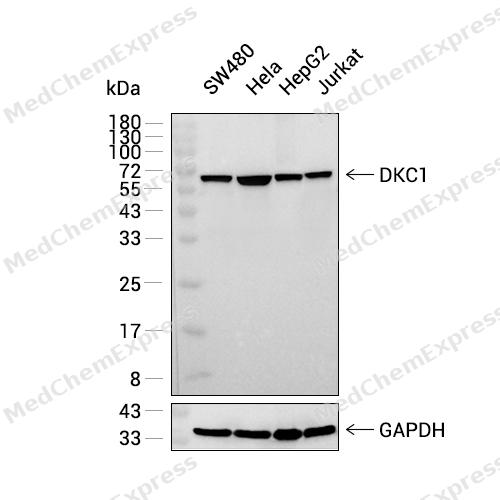 Western blot analysis was performed on extracts from SW480 (lane 1, 20 μg), HeLa (lane 2, 20 μg), HepG2 (lane 3, 20 μg), and Jurkat (lane 4, 20 μg) using DKC1 Rabbit mAb.Proteins were transferred to a PVDF membrane and blocked with 5% non - fat milk in TBST at 4°C overnight.The primary antibody (1:1000 dilution) and the loading control antibody (GAPDH, HY-P2804, 1:5000 dilution) were incubated in 5% non-fat milk in TBST for 1 hour at 37°C.Goat Anti - Rabbit IgG - HRP Secondary Antibody (1:20000 dilution) was then applied for 40 minutes at 37°C.
 -
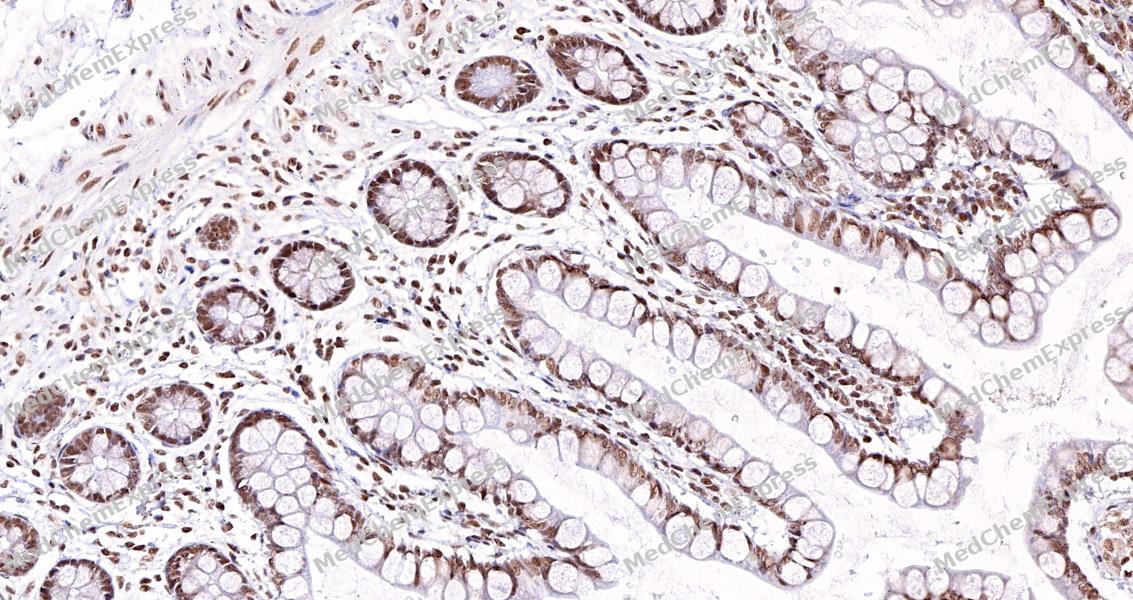 Immunohistochemical analysis of paraffin-embedded human small intestine tissue using DKC1 Antibody (HY-P82005, 1/100). The section was pretreated using heat mediated antigen retrieval with sodium citrate buffer (pH 6.0) for 8 minutes. The tissues were blocked with quick block buffer for 0.5 hours at room temperature, washed with PBS and PBST, and then incubated with the primary antibody overnight at 4℃. The detection was performed using an HRP conjugated compact polymer system. DAB was used as the chromogen. Tissues were counterstained with hematoxylin and mounted with DPX.
 -
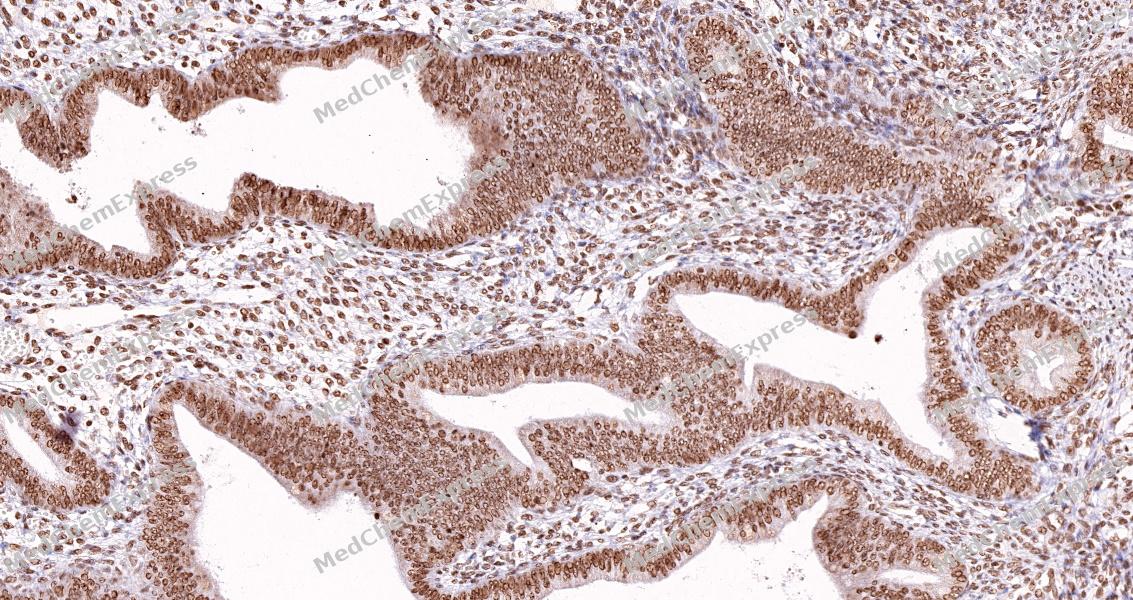 Immunohistochemical analysis of paraffin-embedded human endometrium tissue using DKC1 Antibody (HY-P82005, 1/100). The section was pretreated using heat mediated antigen retrieval with sodium citrate buffer (pH 6.0) for 8 minutes. The tissues were blocked with quick block buffer for 0.5 hours at room temperature, washed with PBS and PBST, and then incubated with the primary antibody overnight at 4℃. The detection was performed using an HRP conjugated compact polymer system. DAB was used as the chromogen. Tissues were counterstained with hematoxylin and mounted with DPX.
 -
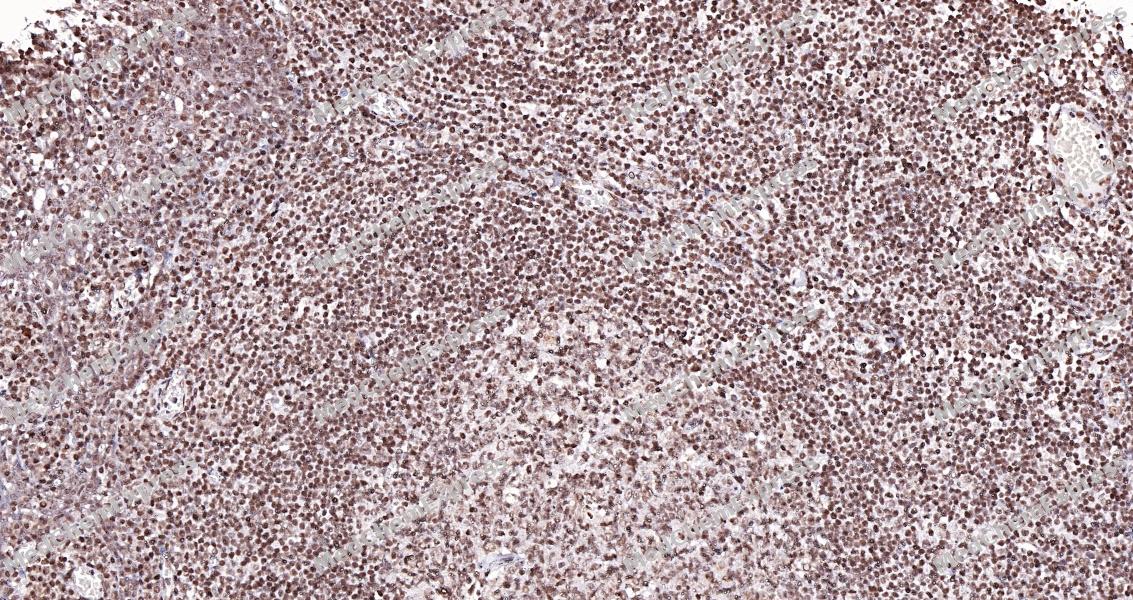 Immunohistochemical analysis of paraffin-embedded human spleen tissue using DKC1 Antibody (HY-P82005, 1/100). The section was pretreated using heat mediated antigen retrieval with sodium citrate buffer (pH 6.0) for 8 minutes. The tissues were blocked with quick block buffer for 0.5 hours at room temperature, washed with PBS and PBST, and then incubated with the primary antibody overnight at 4℃. The detection was performed using an HRP conjugated compact polymer system. DAB was used as the chromogen. Tissues were counterstained with hematoxylin and mounted with DPX.
 -
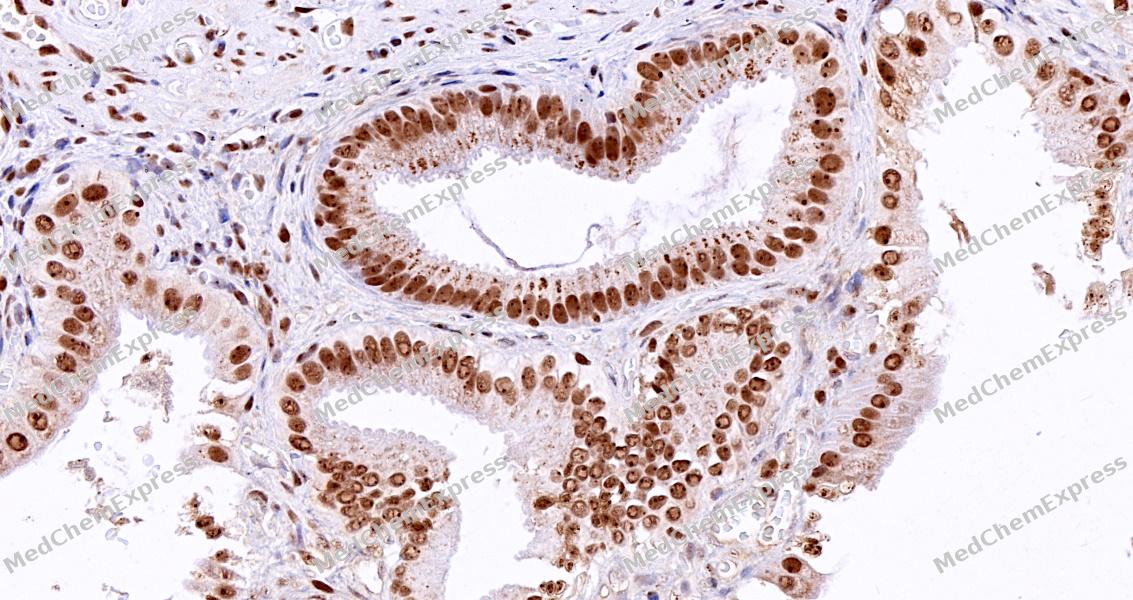 Immunohistochemical analysis of paraffin-embedded human gallbladder tissue using DKC1 Antibody (HY-P82005, 1/100). The section was pretreated using heat mediated antigen retrieval with sodium citrate buffer (pH 6.0) for 8 minutes. The tissues were blocked with quick block buffer for 0.5 hours at room temperature, washed with PBS and PBST, and then incubated with the primary antibody overnight at 4℃. The detection was performed using an HRP conjugated compact polymer system. DAB was used as the chromogen. Tissues were counterstained with hematoxylin and mounted with DPX.
 -
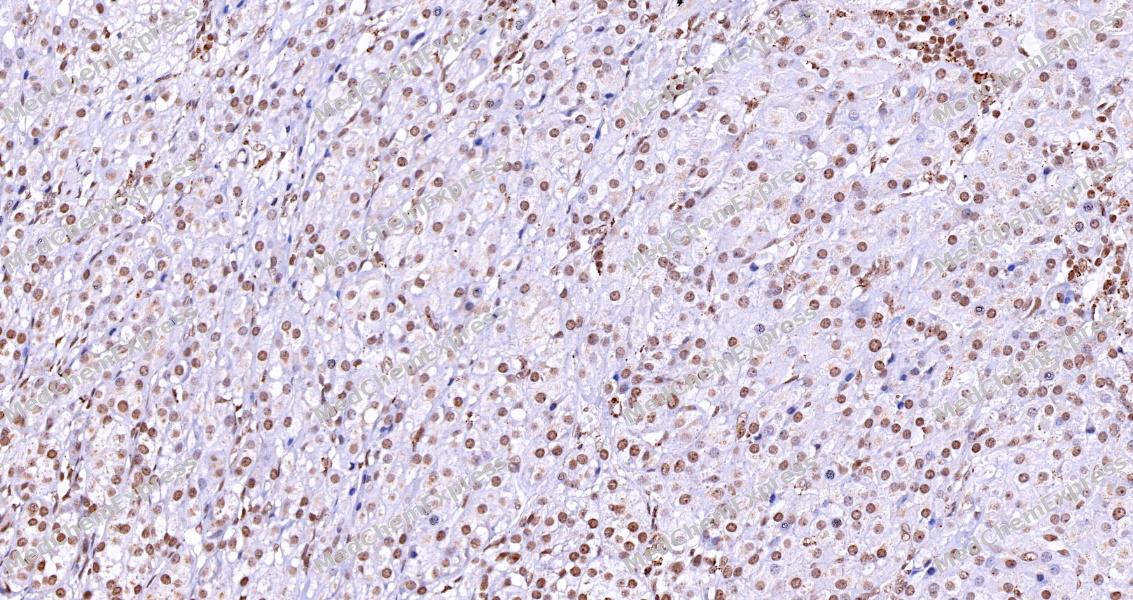 Immunohistochemical analysis of paraffin-embedded human adrenal gland tissue using DKC1 Antibody (HY-P82005, 1/100). The section was pretreated using heat mediated antigen retrieval with sodium citrate buffer (pH 6.0) for 8 minutes. The tissues were blocked with quick block buffer for 0.5 hours at room temperature, washed with PBS and PBST, and then incubated with the primary antibody overnight at 4℃. The detection was performed using an HRP conjugated compact polymer system. DAB was used as the chromogen. Tissues were counterstained with hematoxylin and mounted with DPX.
 -
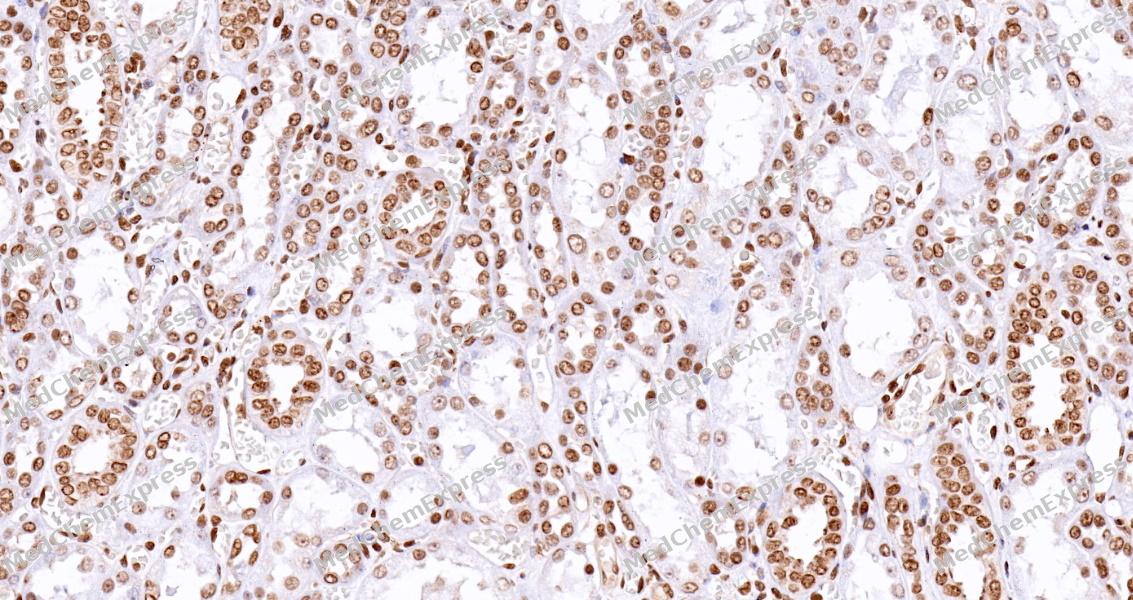 Immunohistochemical analysis of paraffin-embedded human kidney tissue using DKC1 Antibody (HY-P82005, 1/100). The section was pretreated using heat mediated antigen retrieval with sodium citrate buffer (pH 6.0) for 8 minutes. The tissues were blocked with quick block buffer for 0.5 hours at room temperature, washed with PBS and PBST, and then incubated with the primary antibody overnight at 4℃. The detection was performed using an HRP conjugated compact polymer system. DAB was used as the chromogen. Tissues were counterstained with hematoxylin and mounted with DPX.


Background
-
Function
DKC1 is a Catalytic subunit of H/ACA small nucleolar ribonucleoprotein (H/ACA snoRNP) complex, which catalyzes pseudouridylation of rRNA. This involves the isomerization of uridine such that the ribose is subsequently attached to C5, instead of the normal N1. Each rRNA can contain up to 100 pseudouridine ('psi') residues, which may serve to stabilize the conformation of rRNAs. Required for ribosome biogenesis and telomere maintenance. Also required for correct processing or intranuclear trafficking of TERC, the RNA component of the telomerase reverse transcriptase (TERT) holoenzyme; Promotes cell to cell and cell to substratum adhesion, increases the cell proliferation rate and leads to cytokeratin hyper-expression[1][2][3].
-
Subcellular Localization
Nucleus, nucleolus; Nucleus, Cajal body; Cytoplasm
-
Expression
Tissue_specificity:Ubiquitously expressed -
Isoforms & Post-Translational Modification
O60832 has 2 isomers: O60832-1: 57674 Da (predicted); O60832-2: 47603 Da (predicted).
-
Subunit
Part of the H/ACA small nucleolar ribonucleoprotein (H/ACA snoRNP) complex, which contains NHP2/NOLA2, GAR1/NOLA1, NOP10/NOLA3, and DKC1/NOLA4, which is presumed to be the catalytic subunit (PubMed:15044956). The complex contains a stable core formed by binding of one or two NOP10-DKC1 heterodimers to NHP2; GAR1 subsequently binds to this core via DKC1 (PubMed:15044956). The complex binds a box H/ACA small nucleolar RNA (snoRNA), which may target the specific site of modification within the RNA substrate (PubMed:15044956). During assembly, the complex contains NAF1 instead of GAR1/NOLA1 (PubMed:16601202, PubMed:16618814). The complex also interacts with TERC, which contains a 3'-terminal domain related to the box H/ACA snoRNAs. Specific interactions with snoRNAs or TERC are mediated by GAR1 and NHP2. Associates with NOLC1/NOPP140 (PubMed:15044956). H/ACA snoRNPs interact with the SMN complex, consisting of SMN1 or SMN2, GEMIN2/SIP1, DDX20/GEMIN3, and GEMIN4. This is mediated by interaction between GAR1 and SMN1 or SMN2. The SMN complex may be required for correct assembly of the H/ACA snoRNP complex (PubMed:15044956). Component of the telomerase holoenzyme complex composed of one molecule of TERT, one molecule of WRAP53/TCAB1, two molecules of H/ACA ribonucleoprotein complex subunits DKC1, NOP10, NHP2 and GAR1, and a telomerase RNA template component (TERC) (PubMed:11074001, PubMed:19179534, PubMed:20351177, PubMed:29695869). The telomerase holoenzyme complex is associated with TEP1, SMG6/EST1A and POT1 (PubMed:19179534). Interacts with SHQ1; this interaction may lead to the stabilization of DKC1, from the time of its synthesis until its association with NOP10, NHP2, and NAF1 at the nascent H/ACA RNA (PubMed:19383767, PubMed:19734544). Interacts with HMBOX1 (PubMed:23685356). Interacts with DHX36 (PubMed:21846770)
-
SwissProt ID
-
Synonyms
DKC1; NOLA4; H/ACA ribonucleoprotein complex subunit 4; CBF5 homolog; Dyskerin; Nopp140-associated protein of 57 kDa; Nucleolar protein NAP57; Nucleolar protein family A member 4; snoRNP protein DKC1
-
Research Field
Epigenetics and Nuclear Signaling


Documentation
-
Data Sheet (261 KB)
-
SDS (252 KB)
- English - EN (252 KB)
- Français - FR (252 KB)
- Deutsch - DE (252 KB)
- Norwegian - NO (252 KB)
- Español - ES (252 KB)
- Swedish - SV (252 KB)
- Italian - IT (252 KB)
- Korean - KR (252 KB)
- Portuguese - PT (252 KB)
-
User Guide for Antibodies (1077 KB)
References
[1]. Schwartz S, et al. Transcriptome-wide mapping reveals widespread dynamic-regulated pseudouridylation of ncRNA and mRNA. Cell. 2014 Sep 25;159(1):148-162. [Content Brief]
[3]. Venteicher AS, et al. A human telomerase holoenzyme protein required for Cajal body localization and telomere synthesis. Science. 2009 Jan 30;323(5914):644-8. [Content Brief]

 Powered by Bioz
