



2'-Acetylacteoside
Based on 1 publication(s) in Google Scholar
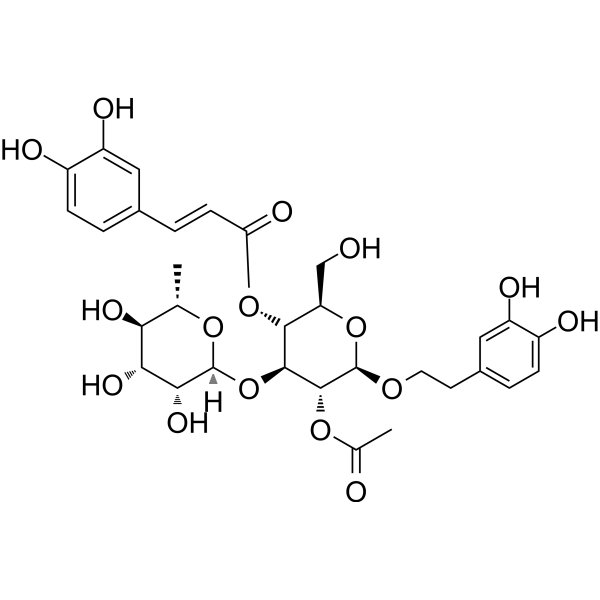
2'-Acetylacteoside (2'-AA) is a natural compound with oral activity and blood-brain barrier permeability. 2'-Acetylacteosideexhibits MAO‑B inhibitory activity (IC50 = 17.71 μM, Ki = 13.81 μM). 2'-Acetylacteoside downregulates the expression of RANK, TRAF6, NF‑κB, NFATc1 and IKKβ, disrupts the RANKL/RANK interaction, blocks downstream signaling pathways, and increases the level of phosphorylated Akt. 2'-Acetylacteoside possesses potent anti-osteoclastogenic, anti-bone resorptive, pro-neurogenic, neuroprotective and antioxidant activities. 2'-Acetylacteoside can be used in the research of osteoporosis, ischemic stroke and Parkinson's disease.
Nos produits utilisent uniquement pour la recherche. Nous ne vendons pas aux patients.
- Pureté: 99.73%
- CAS No.: 94492-24-7
- Formule: C31H38O16
- Masse moléculaire:666.62
-
Stockage:
-20°C, sealed storage, away from moisture and light
* In solvent : -80°C, 6 months; -20°C, 1 month (sealed storage, away from moisture and light)

To place orders, for customer services and technical support, please contact: MedChemExpress USA
Tel: 609-228-6898 E-mail: [email protected] [email protected]


-
 Activité biologique
-
Chemical Information
-
Solvant et solubilité
- Pureté et documentation
- Références
-
 Help & FAQs
-

Apoptosis Compound Library
HY-L003
-
Immunology/Inflammation Compound Library
HY-L007
-
Kinase Inhibitor Library
HY-L009
-
Neuronal Signaling Compound Library
HY-L013
-
NF-κB Signaling Compound Library
HY-L014
-
Stem Cell Signaling Compound Library
HY-L017
-
Natural Product Library
HY-L021
-
CNS-Penetrant Compound Library
HY-L028
-
Anti-Aging Compound Library
HY-L034
-
Antioxidant Compound Library
HY-L037
-
Differentiation Inducing Compound Library
HY-L038
-
Reprogramming Compound Library
HY-L039
-
Glycoside Compound Library
HY-L042
-
Oxygen Sensing Compound Library
HY-L045
-
Anti-Cardiovascular Disease Compound Library
HY-L046
-
Medicine Food Homology Compound Library
HY-L055
-
Pyroptosis Compound Library
HY-L059
-
Orally Active Compound Library
HY-L061
-
Traditional Chinese Medicine Active Compound Library
HY-L065
-
Neuroprotective Compound Library
HY-L070
-
Anti-Breast Cancer Compound Library
HY-L074
-
Anti-Pancreatic Cancer Compound Library
HY-L077
-
Anti-Blood Cancer Compound Library
HY-L079
-
Anti-Cancer Metabolism Compound Library
HY-L083
-
Anti-Parkinson's Disease Compound Library
HY-L085
-
Neurodegenerative Disease-related Compound Library
HY-L086
-
Anti-Obesity Compound Library
HY-L087
-
Angiogenesis-Related Compound Library
HY-L088
-
Mitochondria-Targeted Compound Library
HY-L089
-
Transcription Factor-Targeted Library
HY-L090
-
Anti-Liver Cancer Compound Library
HY-L101
-
Antidepressant Compound Library
HY-L108
-
Anti-inflammatory Traditional Chinese Medicine Active Compound Library
HY-L114
-
Plant-Sourced Natural Product Library
HY-L115
-
Anti-Prostate Cancer Compound Library
HY-L124
-
Anti-Pulmonary Fibrosis Compound Library
HY-L125
-
Osteogenesis Compound Library
HY-L131
-
Cancer Stem Cells Compound Library
HY-L135
-
Pain-Related Compound Library
HY-L139
-
Mitochondrial Protection Compound Library
HY-L144
-
Metabolic Enzyme Compound Library
HY-L146
-
Membrane Protein-targeted Compound Library
HY-L149
-
Membrane Receptor-targeted Compound Library
HY-L150
-
Autoimmune Disease Compound Library
HY-L156
-
Highly Selective Inhibitors Library
HY-L158
-
Cytokine Inhibitors Library
HY-L161
-
Serine/Threonine Kinase Inhibitor Library
HY-L164
-
Anti-Hematopathy Compound Library
HY-L171
-
Anti-Ovarian Cancer Compound Library
HY-L173
-
Multi-Target Compound Library
HY-L176
-
Radioprotector Library
HY-L178
-
Bioactive Compound Library Max
HY-L181
-
Natural Product Library Plus
HY-L021P
-
Natural Product and Natural Product-Like Compound Library
HY-L021M
-
Bioactive Compound Library
HY-L001
-
Anti-Fibrosis Compound Library
HY-L185
-
Heat-Clearing and Detoxification Traditional Chinese Medicine Compound Library
HY-L194
-
Protein Kinase Compound Library
HY-L196
-
Non-Alcoholic Fatty Liver Disease (NAFLD) Compound Library
HY-L199
-
Cell Proliferation Compound Library
HY-L201
-
High-Throughput Bioactive Compound Library
HY-L205
-
High-Throughput Natural Product Library
HY-L206
-
Ancient Chinese Classical Formulas Traditional Chinese Medicine Active Compound Library
HY-L209
-
Anti-Rheumatic Arthritis Compound Library
HY-L210
-
Diarrhea-Related Traditional Chinese Medicine Active Compound Library
HY-L224
-
Mongolian Medicine Compound Library
HY-L238
-
Tonifying Traditional Chinese Medicine Monomer Compound Library
HY-L246
-
Lactylation Compound Library
HY-L249
-
Mass Spectrometry Natural Product Library
HY-L262


Publications Citing Use of MedChemExpress (MCE) 2'-Acetylacteoside
MoreVoir tous les produits spécifiques à Isoform TNF Receptor
More

Activité biologique
|
MAO-B |
NF-κB |
IKKβ |
2'-Acetylacteoside (10-7-10-5 mol/L; 0.5 h, 24 h, 6 days) inhibits RANKL-induced osteoclast differentiation of RAW264.7 cells and down-regulates the expression of key proteins in the RANKL/RANK/TRAF6-mediated NF-κB/NFATc1 pathway[1].
2'-Acetylacteoside binds to Akt3 protein in cultured adult SVZ-derived NSCs, protecting it from protease degradation[2].
2'-Acetylacteoside (5-40 μM; 24 h) promotes proliferation of OGD/R-treated adult SVZ-derived NSCs[2].
2'-Acetylacteoside (10 μM; 24 h) enhances the proliferation of OGD/R-treated adult SVZ-derived NSCs in vitro, as shown by a significant increase in EdU-positive cells[2].
2'-Acetylacteoside (10 μM) promotes differentiation of OGD/R-treated adult SVZ-derived NSCs into immature neurons (DCX-positive) in vitro, without affecting gliogenesis[2].
2'-Acetylacteoside (10 μM) promotes proliferation and neurogenesis of OGD/R-treated adult SVZ-derived NSCs in vitro via activation of the PI3K/Akt pathway, as shown by increased p-Akt, p-CREB, DCX, and NeuN expression[2].
2'-Acetylacteoside alters gene expression in OGD/R-treated adult SVZ-derived NSCs in vitro, with significant enrichment of differentially expressed genes in the PI3K/Akt signaling pathway, and up-regulates neurogenesis-related genes including VEGFα, Errb4, Col1a1, and Igfbp5[2].
2'-Acetylacteoside potently inhibited purified MAO-B enzyme in vitro with an IC₅₀ of 17.71 μM and acted as a reversible mixed inhibitor with high affinity for free MAO-B (Ki = 13.81 μM)[3].
2'-Acetylacteoside (25-100 μM) scavenges superoxide radicals in a concentration-dependent manner in a cell-free in vitro system[4].
MedChemExpress (MCE) has not independently confirmed the accuracy of these methods. They are for reference only.
-
Cell Line:cultured adult subventricular zone (SVZ)-derived neural stem cells (NSCs) under oxygen-glucose deprivation/reoxygenation (OGD/R) conditions
-
Concentration:5, 10, 20, 40 μM (post-OGD/R incubation); 10 μM (optimal, 24 h incubation)
-
Incubation Time:24 h (optimal concentration incubation); 2 h (CCK-8 solution incubation)
-
Result:Increased NSC viability significantly at all tested concentrations, with 10 μM showing the most potent effect on proliferation.
Reached the highest proliferation rate 24 h post-treatment.
-
Cell Line:cultured adult subventricular zone (SVZ)-derived neural stem cells (NSCs) under oxygen-glucose deprivation/reoxygenation (OGD/R) conditions
-
Concentration:10 μM (post-OGD/R incubation); 50 μM (EdU medium)
-
Incubation Time:24 h (post-OGD/R incubation); 2 h (EdU medium incubation)
-
Result:Increased the number of EdU-positive cells significantly compared to the OGD/R-only group, with approximately 30% of control cells being EdU-positive and OGD/R treatment already increasing proliferative capacity.
-
Cell Line:Mouse neural stem cells (NSCs)
-
Concentration:10 μM
-
Incubation Time:24 h
-
Result:Upregulated the expression of p-Akt, p-CREB, DCX, and NeuN.
2'-Acetylacteoside (2'-AA) (total glycosides of Cistanche deserticola, p.o.) was detected in brain tissue, and specifically binds to the central target MAO‑B in the brain as determined by UPLC-Q-Exactive-Orbitrap MS[3].
MedChemExpress (MCE) has not independently confirmed the accuracy of these methods. They are for reference only.
-
Animal Model:Kunming (female, 8-week-old, 26 g, osteoporosis induced by bilateral ovariectomy)[1]
-
Dosage:10 mg/kg/day; 20 mg/kg/day; 40 mg/kg/day
-
Administration:p.o.; daily; 12 weeks
-
Result:Left body, uterus, and vagina weights unchanged in OVX mice.Enhanced femoral mechanical properties, trabecular BMD, BMC, TMC, BVF, Tb.Th, and Tb.N.Reduced trabecular separation across all doses.
Inhibited serum TRAP, cathepsin K, and DPD activities at 40 mg/kg/day.
Diminished bone resorption markers significantly at lower doses.
Showed no significant effect on bone formation markers (ALP, BGP).
Downregulated RANK, TRAF6, IKKβ, NF‑κB, and NFATc1 expression, blocking the RANKL/RANK/TRAF6‑mediated NF‑κB/NFATc1 pathway.


Chemical Information
-
CAS No. 94492-24-7
-
Appearance Solid
-
Masse moléculaire 666.62
-
Formule C31H38O16
-
Color Off-white to light yellow
-
SMILES
OC1=CC=C(/C=C/C(O[C@H]2[C@H](O[C@]3([H])O[C@@H](C)[C@H](O)[C@@H](O)[C@H]3O)[C@@H](OC(C)=O)[C@H](OCCC4=CC=C(O)C(O)=C4)O[C@@H]2CO)=O)C=C1O
-
Synonyms
2'-AA
-
Structure Classification
-
Initial Source
-
Livraison
Room temperature in continental US; may vary elsewhere.
-
Stockage
-20°C, sealed storage, away from moisture and light
* In solvent : -80°C, 6 months; -20°C, 1 month (sealed storage, away from moisture and light)


Publications (1)
-
Journal Impact Factor
-
Most Recent
-
Neurotox Res
Tubuloside B Alleviates Aβ25-35 Induced PC12 Cell Injury by Attenuating Pyroptosis, Apoptosis and Excessive Autophagy. [Abstract]2026 Mar 19;44(2):12. PMID: 41854817


Solvant et solubilité
DMSO : 100 mg/mL (150.01 mM; Need ultrasonic; Hygroscopic DMSO has a significant impact on the solubility of product, please use newly opened DMSO)
Ethanol : ≥ 100 mg/mL (150.01 mM)
* "≥" means soluble, but saturation unknown.
Please refer to the solubility information to select the appropriate solvent. Once prepared, please aliquot and store the solution to prevent product inactivation from repeated freeze-thaw cycles.
Storage method and period of stock solution: -80°C, 6 months; -20°C, 1 month (sealed storage, away from moisture and light). When stored at -80°C, please use it within 6 months. When stored at -20°C, please use it within 1 month.
Please refer to the solubility information to select the appropriate solvent. Once prepared, please aliquot and store the solution to prevent product inactivation from repeated freeze-thaw cycles.
Storage method and period of stock solution: -80°C, 6 months; -20°C, 1 month (sealed storage, away from moisture and light). When stored at -80°C, please use it within 6 months. When stored at -20°C, please use it within 1 month.
Concentration (start) × Volume (start) = Concentration (final) × Volume (final)
Select the appropriate dissolution method based on your experimental animal and administration route.
- For the following dissolution methods, please ensure to first prepare a clear stock solution using an In Vitro approach and then sequentially add co-solvents:
- To ensure reliable experimental results, the clarified stock solution can be appropriately stored based on storage conditions. As for the working solution for In Vivo experiments, it is recommended to prepare freshly and use it on the same day.
- The percentages shown for the solvents indicate their volumetric ratio in the final prepared solution. If precipitation or phase separation occurs during preparation, heat and/or sonication can be used to aid dissolution.
Add each solvent one by one: 10% DMSO 40% PEG300 5% Tween-80 45% Saline
Solubility: ≥ 2.5 mg/mL (3.75 mM); Clear solution
This protocol yields a clear solution of ≥ 2.5 mg/mL (saturation unknown).
Taking 1 mL working solution as an example, add 100 μL DMSO stock solution (25.0 mg/mL) to 400 μL PEG300, and mix evenly; then add 50 μL Tween-80 and mix evenly; then add 450 μL Saline to adjust the volume to 1 mL.
Preparation of Saline: Dissolve 0.9 g sodium chloride in ddH₂O and dilute to 100 mL to obtain a clear Saline solution.
Add each solvent one by one: 10% DMSO 90% (20% SBE-β-CD in Saline)
Solubility: ≥ 2.5 mg/mL (3.75 mM); Clear solution
This protocol yields a clear solution of ≥ 2.5 mg/mL (saturation unknown).
Taking 1 mL working solution as an example, add 100 μL DMSO stock solution (25.0 mg/mL) to 900 μL 20% SBE-β-CD in Saline, and mix evenly.
Preparation of 20% SBE-β-CD in Saline (4°C, storage for one week): 2 g SBE-β-CD powder is dissolved in 10 mL Saline, completely dissolve until clear.
Add each solvent one by one: 10% EtOH 40% PEG300 5% Tween-80 45% Saline
Solubility: ≥ 2.5 mg/mL (3.75 mM); Clear solution
This protocol yields a clear solution of ≥ 2.5 mg/mL (saturation unknown).
Taking 1 mL working solution as an example, add 100 μL EtOH stock solution (25.0 mg/mL) to 400 μL PEG300, and mix evenly; then add 50 μL Tween-80 and mix evenly; then add 450 μL Saline to adjust the volume to 1 mL.
Preparation of Saline: Dissolve 0.9 g sodium chloride in ddH₂O and dilute to 100 mL to obtain a clear Saline solution.
Add each solvent one by one: 10% EtOH 90% (20% SBE-β-CD in Saline)
Solubility: ≥ 2.5 mg/mL (3.75 mM); Clear solution
This protocol yields a clear solution of ≥ 2.5 mg/mL (saturation unknown).
Taking 1 mL working solution as an example, add 100 μL EtOH stock solution (25.0 mg/mL) to 900 μL 20% SBE-β-CD in Saline, and mix evenly.
Preparation of 20% SBE-β-CD in Saline (4°C, storage for one week): 2 g SBE-β-CD powder is dissolved in 10 mL Saline, completely dissolve until clear.
Add each solvent one by one: 10% EtOH 90% Corn Oil
Solubility: ≥ 2.5 mg/mL (3.75 mM); Clear solution
This protocol yields a clear solution of ≥ 2.5 mg/mL (saturation unknown). If the continuous dosing period exceeds half a month, please choose this protocol carefully.
Taking 1 mL working solution as an example, add 100 μL EtOH stock solution (25.0 mg/mL) to 900 μL Corn oil, and mix evenly.
Please enter the basic information of animal experiments:
-
-
-
-
Recommended: Prepare an additional quantity of animals to account for potential losses during experiments.
Please enter your animal formula composition:
-
%DMSO +
Recommended: Keep the proportion of DMSO in working solution below 2% if your animal is weak.
-
%+
-
+%Tween-80 + +
-
%Saline +
The co-solvents required include: DMSO, . All of co-solvents are available by MedChemExpress (MCE). , Tween 80. All of co-solvents are available by MedChemExpress (MCE).
Working solution concentration: 0.22 mg/mL
Method for preparing stock solution: mg drug dissolved in μL DMSO. Stock solution concentration: mg/mL. * In solvent : -80°C, 6 months; -20°C, 1 month (sealed storage, away from moisture and light)
1. Take μL DMSO stock solution;
2. Add μL .
μL , mix evenly;
3. Then add μL Tween 80, mix evenly;
4. Then add μL
Please ensure that the stock solution in the first step is dissolved to a clear state, and add co-solvents in sequence. You can use ultrasonic heating (ultrasonic cleaner, recommended frequency 20-40 kHz), vortexing, etc. to assist dissolution.


Pureté et documentation
-
Fiche technique (285 KB)
-
SDS (396 KB)
- English - EN (396 KB)
- Français - FR (396 KB)
- Deutsch - DE (396 KB)
- Norwegian - NO (396 KB)
- Español - ES (396 KB)
- Swedish - SV (396 KB)
- Italian - IT (396 KB)
- Korean - KR (396 KB)
- Portuguese - PT (396 KB)
-
Instruction de manipulation (2659 KB)
Références
[1]. Li Y, et al. Beneficial effect of 2'-acetylacteoside on ovariectomized mice via modulating the function of bone resorption. Biomed Pharmacother. 2020;131:110747. [Content Brief]
[2]. Wang M, et al. 2-Acetylacteoside improves recovery after ischemic stroke by promoting neurogenesis via the PI3K/Akt pathway. Free Radic Biol Med. 2024;225:415-429. [Content Brief]
[3]. Zhai X, et al. Evaluation of the Neuroprotective Effect of Total Glycosides of Cistanche deserticola and Investigation of Novel Brain-Targeting Natural MAO-B Inhibitors. ACS Chem Neurosci. 2024 Dec 18;15(24):4544-4558. [Content Brief]
[4]. He ZD, et al. Antioxidant activity of phenylethanoid glycosides from Brandisia hancei. J Ethnopharmacol. 2000;71(3):483-486. [Content Brief]


Complete Stock Solution Preparation Table
Please refer to the solubility information to select the appropriate solvent. Once prepared, please aliquot and store the solution to prevent product inactivation from repeated freeze-thaw cycles.
Storage method and period of stock solution: -80°C, 6 months; -20°C, 1 month (sealed storage, away from moisture and light). When stored at -80°C, please use it within 6 months. When stored at -20°C, please use it within 1 month.
| Optional Solvent | Concentration Solvent Mass | 1 mg | 5 mg | 10 mg | 25 mg |
|---|---|---|---|---|---|
| DMSO / Ethanol | 1 mM | 1.5001 mL | 7.5005 mL | 15.0011 mL | 37.5026 mL |
| 5 mM | 0.3000 mL | 1.5001 mL | 3.0002 mL | 7.5005 mL | |
| 10 mM | 0.1500 mL | 0.7501 mL | 1.5001 mL | 3.7503 mL | |
| 15 mM | 0.1000 mL | 0.5000 mL | 1.0001 mL | 2.5002 mL | |
| 20 mM | 0.0750 mL | 0.3750 mL | 0.7501 mL | 1.8751 mL | |
| 25 mM | 0.0600 mL | 0.3000 mL | 0.6000 mL | 1.5001 mL | |
| 30 mM | 0.0500 mL | 0.2500 mL | 0.5000 mL | 1.2501 mL | |
| 40 mM | 0.0375 mL | 0.1875 mL | 0.3750 mL | 0.9376 mL | |
| 50 mM | 0.0300 mL | 0.1500 mL | 0.3000 mL | 0.7501 mL | |
| 60 mM | 0.0250 mL | 0.1250 mL | 0.2500 mL | 0.6250 mL | |
| 80 mM | 0.0188 mL | 0.0938 mL | 0.1875 mL | 0.4688 mL | |
| 100 mM | 0.0150 mL | 0.0750 mL | 0.1500 mL | 0.3750 mL |


2'-Acetylacteoside Related Classifications
HY-N0026 Related Classifications
 Powered by Bioz