



Ansornitinib

Based on 1 Customer Validation
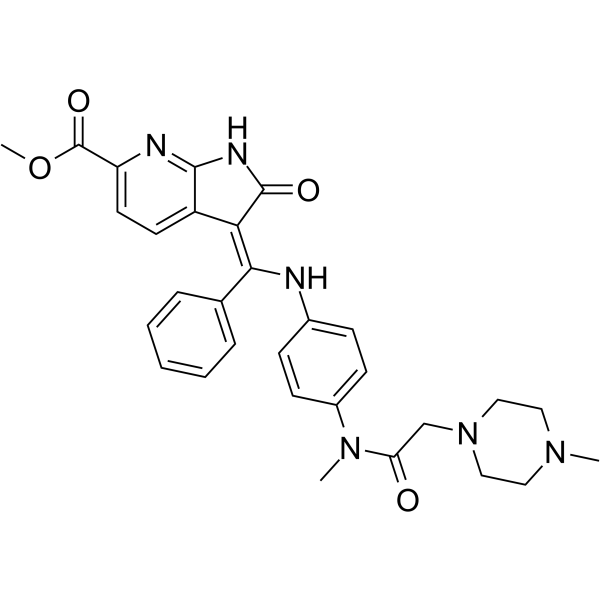
Ansornitinib is an orally active dual kinase inhibitor that inhibits platelet-derived growth factor receptor (PDGFR) and vascular endothelial growth factor receptor (VEGFR2). Ansornitinib can be used as an antifibrotic agent in lung, liver, kidney, and gastrointestinal fibrotic diseases.
Nur für Forschungszwecke. Wir verkaufen nicht an Patienten.
- Reinheit: 98.23%
- CAS. Nr.: 1448874-96-1
- Formel: C30H32N6O4
- Molecular Weight:540.61
-
Speicherung:Powder -20°C, 3 years , 4°C, 2 years ; In solvent -80°C, 6 months , -20°C, 1 month

To place orders, for customer services and technical support, please contact: MedChemExpress USA
Tel: 609-228-6898 E-mail: [email protected] [email protected]


-
 Biologische Aktivität
-
Chemical Information
-
Lösungsmittel & Löslichkeit
- Reinheit & Dokumentation
- Verweise
-
 Help & FAQs


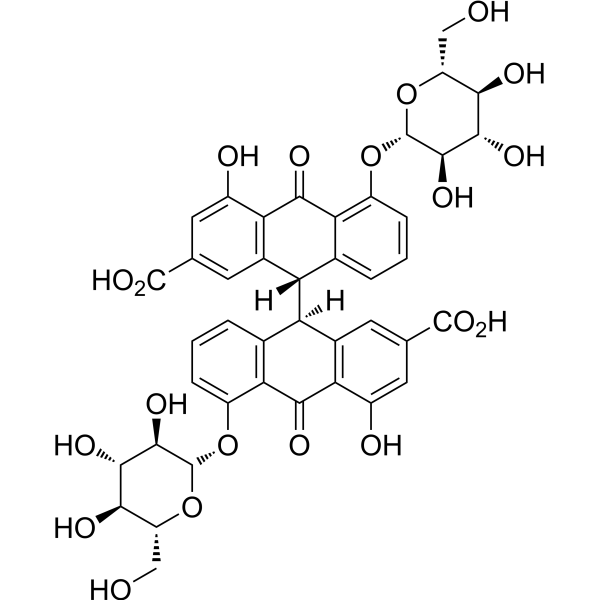
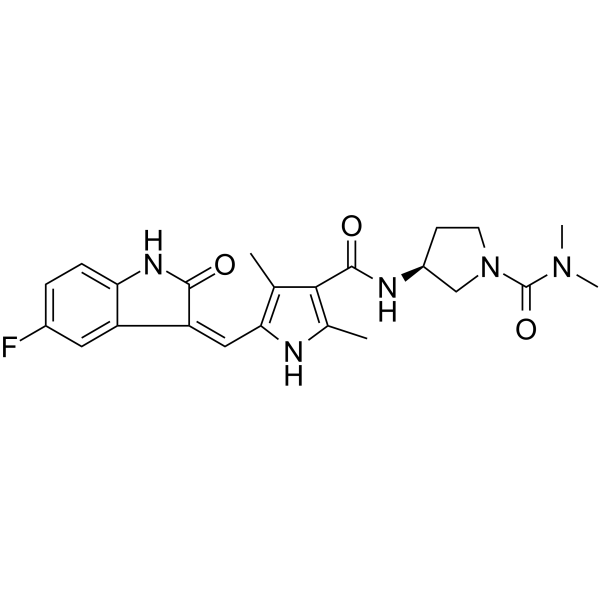
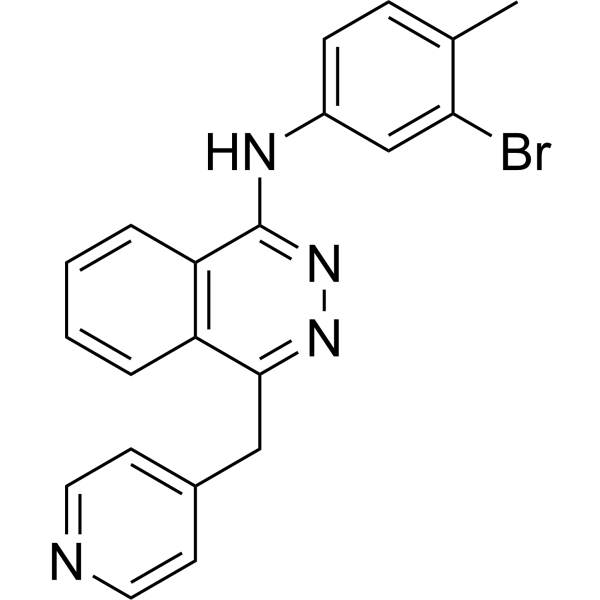
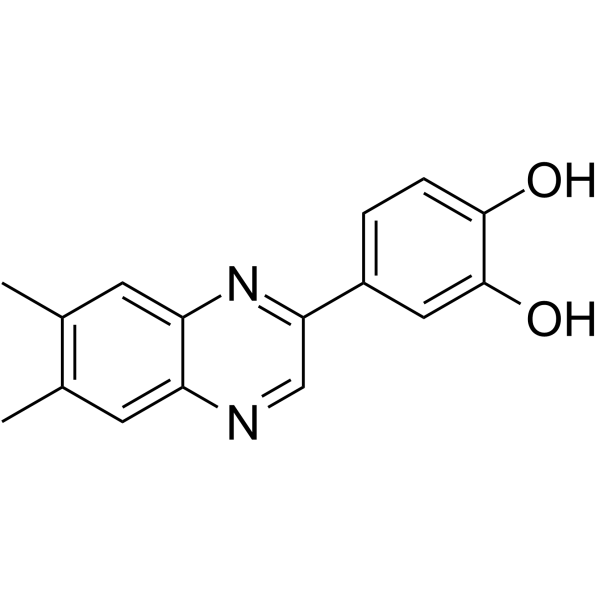
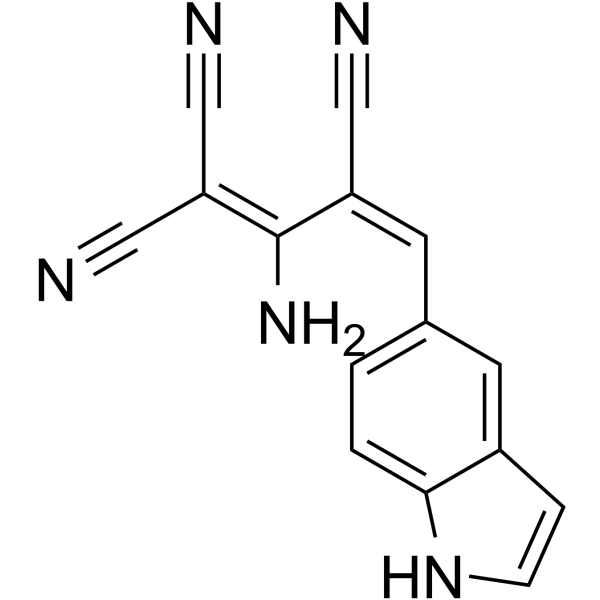
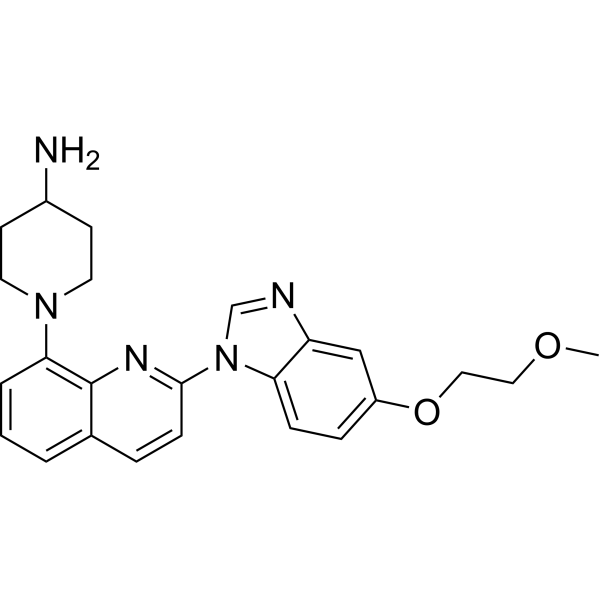
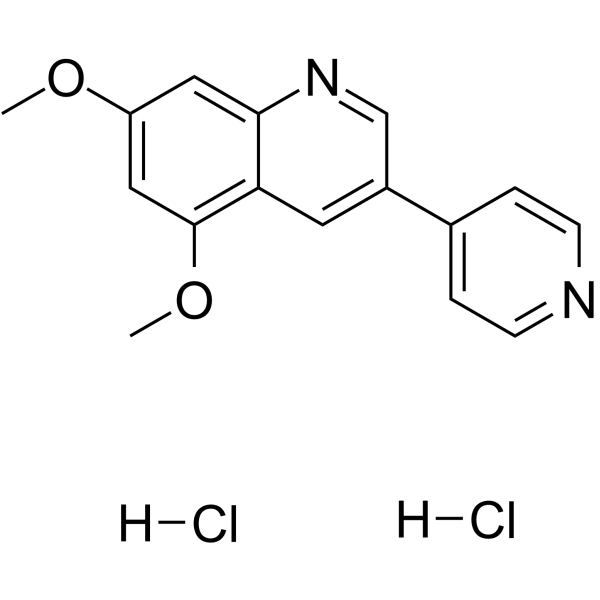

Alle VEGFR Isoform-spezifische Produkte anzeigen
More

Biologische Aktivität
Ansornitinib (compound I) (0.1 nM-10 μM, 2 h) can significantly inhibit the phosphorylation of PDGFRβ in human hepatic stellate cells and KDR phosphorylation in human umbilical vein endothelial cells (HUVEC)[1].
Ansornitinib (compound I) (0.1-13 μM, 48 h) can induce a decrease in the expression of many different inflammation-related markers, such as macrophage colony-stimulating factor (M-CSF), soluble interleukin 8, and fibrosis-related markers, such as N-calmodulin, α-SMA, etc., in a dose-dependent manner[1].
MedChemExpress (MCE) has not independently confirmed the accuracy of these methods. They are for reference only.
Ansornitinib (compound I) (5-45 mg/kg, p.o., twice a day, 4 days) can reduce inflammatory bowel disease (IBD) in TNBS-induced IBD/acute colitis male CD-1 mice[1].
MedChemExpress (MCE) has not independently confirmed the accuracy of these methods. They are for reference only.
-
Animal Model:8-10 weeks TGFβ positive female mice[1]
-
Dosage:25 mg/kg
-
Administration:Oral administration; twice a day; 4 weeks
-
Result:Reduced lung fibrosis score, lung hydroxyproline levels and αSMA, a marker of early pulmonary fibrosis.
-
Animal Model:TNBS-induced IBD/acute colitis male CD-1 mice[1]
-
Dosage:5, 15, 45 mg/kg
-
Administration:Oral administration; twice a day; 4 days
-
Result:Improved colonic histology and reduced the TNBS-induced loss of cupped cells at 15 mg/kg and 45 mg/kg significantly.
Reduced the expression level of myeloperoxidase (MPO) at 5 mg/kg and 15 mg/kg significantly while there was no statistical difference at 45 mg/kg.
-
Animal Model:Male Sprague Dawley rats[1]
-
Dosage:30 mg/kg
-
Administration:Intravenous injection; once
-
Result:The pharmacokinetic parameters of Ansornitinib (compound I)
Parameter Ansornitinib (compound I) t1/2 4.1 h Tmax 0.518 h Cmax 7860 ng/mL Clearance 173 mL/kg/min steady-state volume 18.2 L/kg AUC0-last 3180 ng/mL*h AUC0‑inf_obs 3200 ng/mL*h
| NCT Number | Sponsor | Condition | Start Date |
Phase

|
|---|---|---|---|---|
| NCT01329991 | Plexxikon| | 2011-05 | PHASE1 |


Chemical Information
-
CAS. Nr. 1448874-96-1
-
Appearance Solid
-
Molecular Weight 540.61
-
Formel C30H32N6O4
-
Color Light yellow to yellow
-
SMILES
CN(CC1)CCN1CC(N(C)C(C=C2)=CC=C2N/C(C3=CC=CC=C3)=C4C5=CC=C(C(OC)=O)N=C5NC/4=O)=O
-
Synonyms
ANG-3070
-
Versand
Room temperature in continental US; may vary elsewhere.
-
Speicherung
Powder -20°C 3 years 4°C 2 years In solvent -80°C 6 months -20°C 1 month


Lösungsmittel & Löslichkeit
DMSO : 40 mg/mL (73.99 mM; ultrasonic and warming and heat to 80°C; Hygroscopic DMSO has a significant impact on the solubility of product, please use newly opened DMSO)
Please refer to the solubility information to select the appropriate solvent. Once prepared, please aliquot and store the solution to prevent product inactivation from repeated freeze-thaw cycles.
Storage method and period of stock solution: -80°C, 6 months; -20°C, 1 month. When stored at -80°C, please use it within 6 months. When stored at -20°C, please use it within 1 month.
Please refer to the solubility information to select the appropriate solvent. Once prepared, please aliquot and store the solution to prevent product inactivation from repeated freeze-thaw cycles.
Storage method and period of stock solution: -80°C, 6 months; -20°C, 1 month. When stored at -80°C, please use it within 6 months. When stored at -20°C, please use it within 1 month.
Konzentration (Stammlösung) × Volumen (Stammlösung) = Konzentration (Ziellösung) × Volumen (Ziellösung)
Select the appropriate dissolution method based on your experimental animal and administration route.
- For the following dissolution methods, please ensure to first prepare a clear stock solution using an In Vitro approach and then sequentially add co-solvents:
- To ensure reliable experimental results, the clarified stock solution can be appropriately stored based on storage conditions. As for the working solution for In Vivo experiments, it is recommended to prepare freshly and use it on the same day.
- The percentages shown for the solvents indicate their volumetric ratio in the final prepared solution. If precipitation or phase separation occurs during preparation, heat and/or sonication can be used to aid dissolution.
Add each solvent one by one: 10% DMSO 40% PEG300 5% Tween-80 45% Saline
Solubility: 5 mg/mL (9.25 mM); Clear solution; Need ultrasonic
This protocol yields a clear solution of 5 mg/mL.
Taking 1 mL working solution as an example, add 100 μL DMSO stock solution (50.0 mg/mL) to 400 μL PEG300, and mix evenly; then add 50 μL Tween-80 and mix evenly; then add 450 μL Saline to adjust the volume to 1 mL.
Preparation of Saline: Dissolve 0.9 g sodium chloride in ddH₂O and dilute to 100 mL to obtain a clear Saline solution.
Add each solvent one by one: 10% DMSO 90% (20% SBE-β-CD in Saline)
Solubility: 5 mg/mL (9.25 mM); Clear solution; Need ultrasonic
This protocol yields a clear solution of 5 mg/mL.
Taking 1 mL working solution as an example, add 100 μL DMSO stock solution (50.0 mg/mL) to 900 μL 20% SBE-β-CD in Saline, and mix evenly.
Preparation of 20% SBE-β-CD in Saline (4°C, storage for one week): 2 g SBE-β-CD powder is dissolved in 10 mL Saline, completely dissolve until clear.
Please enter the basic information of animal experiments:
-
-
-
-
Recommended: Prepare an additional quantity of animals to account for potential losses during experiments.
Please enter your animal formula composition:
-
%DMSO +
Recommended: Keep the proportion of DMSO in working solution below 2% if your animal is weak.
-
%+
-
+%Tween-80 + +
-
%Saline +
The co-solvents required include: DMSO, . All of co-solvents are available by MedChemExpress (MCE). , Tween 80. All of co-solvents are available by MedChemExpress (MCE).
Working solution concentration: 0.22 mg/mL
Method for preparing stock solution: mg drug dissolved in μL DMSO. Stock solution concentration: mg/mL.
1. Take μL DMSO stock solution;
2. Add μL .
μL , mix evenly;
3. Then add μL Tween 80, mix evenly;
4. Then add μL
Please ensure that the stock solution in the first step is dissolved to a clear state, and add co-solvents in sequence. You can use ultrasonic heating (ultrasonic cleaner, recommended frequency 20-40 kHz), vortexing, etc. to assist dissolution.


Reinheit & Dokumentation
-
Data Sheet (279 KB)
-
SDS (251 KB)
- English - EN (251 KB)
- Français - FR (251 KB)
- Deutsch - DE (251 KB)
- Norwegian - NO (251 KB)
- Español - ES (251 KB)
- Swedish - SV (251 KB)
- Italian - IT (251 KB)
- Korean - KR (251 KB)
- Portuguese - PT (251 KB)
-
Handling Instructions (2659 KB)
Verweise


Complete Stock Solution Preparation Table
Please refer to the solubility information to select the appropriate solvent. Once prepared, please aliquot and store the solution to prevent product inactivation from repeated freeze-thaw cycles.
Storage method and period of stock solution: -80°C, 6 months; -20°C, 1 month. When stored at -80°C, please use it within 6 months. When stored at -20°C, please use it within 1 month.
| Optional Solvent | Concentration Solvent Mass | 1 mg | 5 mg | 10 mg | 25 mg |
|---|---|---|---|---|---|
| DMSO | 1 mM | 1.8498 mL | 9.2488 mL | 18.4976 mL | 46.2441 mL |
| 5 mM | 0.3700 mL | 1.8498 mL | 3.6995 mL | 9.2488 mL | |
| 10 mM | 0.1850 mL | 0.9249 mL | 1.8498 mL | 4.6244 mL | |
| 15 mM | 0.1233 mL | 0.6166 mL | 1.2332 mL | 3.0829 mL | |
| 20 mM | 0.0925 mL | 0.4624 mL | 0.9249 mL | 2.3122 mL | |
| 25 mM | 0.0740 mL | 0.3700 mL | 0.7399 mL | 1.8498 mL | |
| 30 mM | 0.0617 mL | 0.3083 mL | 0.6166 mL | 1.5415 mL | |
| 40 mM | 0.0462 mL | 0.2312 mL | 0.4624 mL | 1.1561 mL | |
| 50 mM | 0.0370 mL | 0.1850 mL | 0.3700 mL | 0.9249 mL | |
| 60 mM | 0.0308 mL | 0.1541 mL | 0.3083 mL | 0.7707 mL |


Ansornitinib Related Classifications
HY-147243 Related Classifications
 Powered by Bioz