



Silymarin
Based on 11 publication(s) in Google Scholar
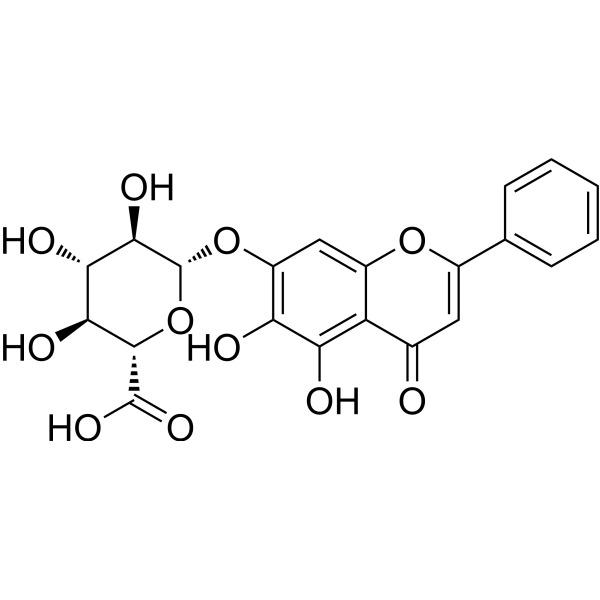
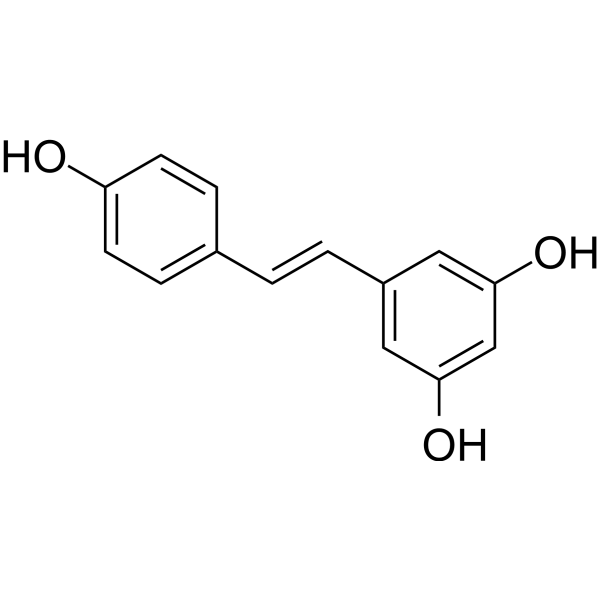
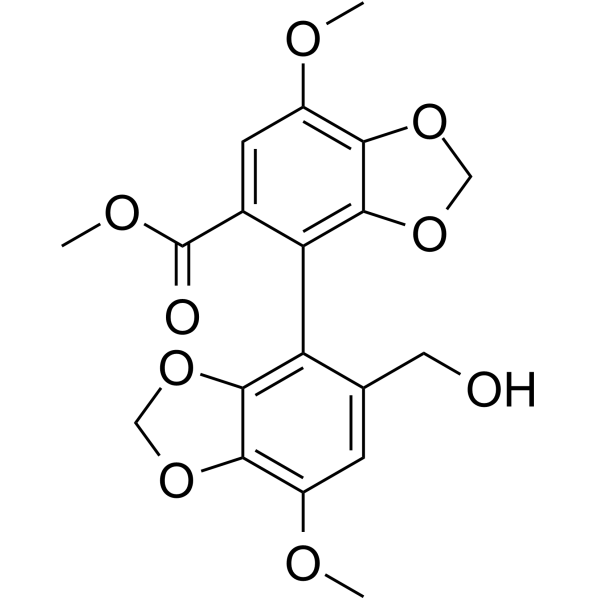
Silymarin is an extract of the milk thistle (Silybum marianum). Silymarin is an effective SARS-CoV-2 main protease (Mpro) inhibitor. Silymarin can significantly reduce tumor cell proliferation, angiogenesis as well as insulin resistance. Silymarin has the chemopreventive effect on hepatocellular carcinoma (HCC). Silymarin has the potential for COVID-19 research.
Nos produits utilisent uniquement pour la recherche. Nous ne vendons pas aux patients.
- Pureté: 84.0%
- CAS No.: 65666-07-1
-
Stockage:Powder -20°C, 3 years ; In solvent -80°C, 6 months , -20°C, 1 month

To place orders, for customer services and technical support, please contact: MedChemExpress USA
Tel: 609-228-6898 E-mail: [email protected] [email protected]


-
 Activité biologique
-
Chemical Information
-
Solvant et solubilité
- Pureté et documentation
- Références
-
 Help & FAQs


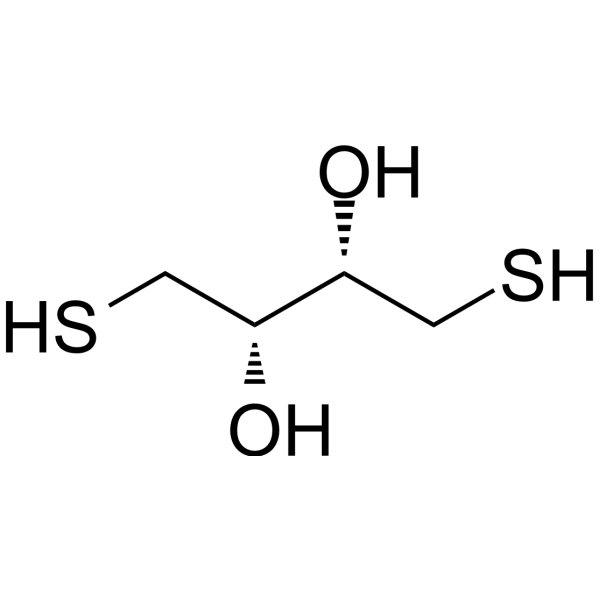
Publications Citing Use of MedChemExpress (MCE) Silymarin
More- J Ethnopharmacol. 2025 Jun 12:349:119957. [Abstract]
- Int J Mol Sci. 2026 Feb 5;27(3):1576. [Abstract]
- Bioorg Chem. 2024 Jun:147:107412. [Abstract]
- Molecules. 2021 Mar 5;26(5):1409. [Abstract]
- Naunyn Schmiedebergs Arch Pharmacol. 2025 Oct 2. [Abstract]
- Naunyn Schmiedebergs Arch Pharmacol. 2023 Oct;396(10):2379-2391. [Abstract]
- J Bioenerg Biomembr. 2025 Oct 28. [Abstract]
- Vet Microbiol. 2026 May:316:110992. [Abstract]
- Oncol Lett. 2025 Jul 4;30(3):426. [Abstract]
- Biomed Chromatogr. 2022 Sep;36(9):e5427. [Abstract]
- Indian J Exp Biol. 2022 Dec.
 Customer Validation & Images

-
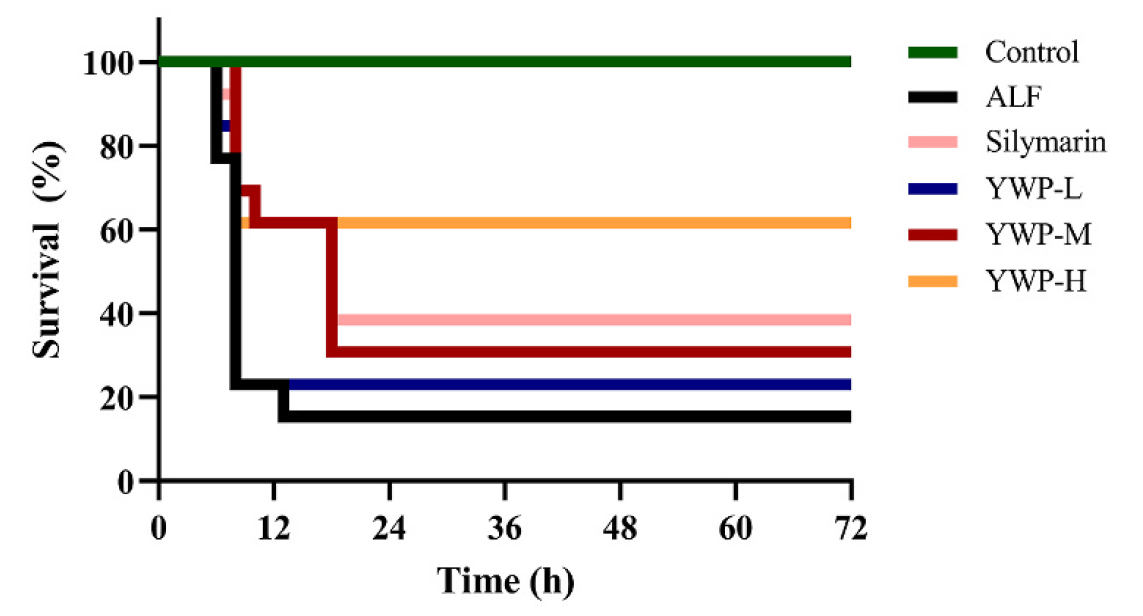
In Vivo Efficacy Study
-
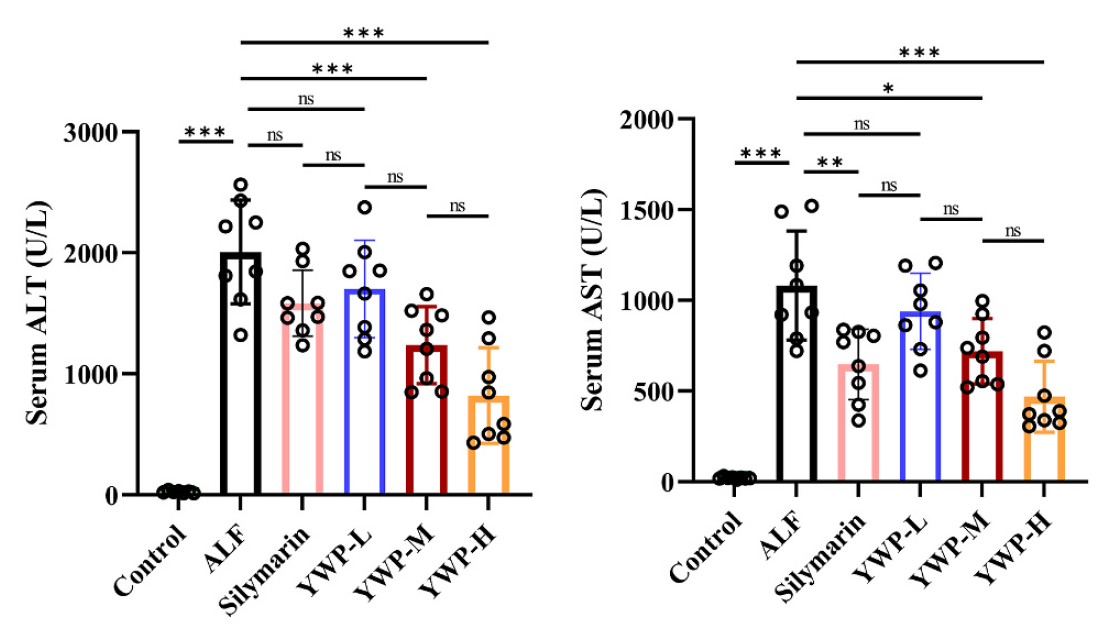
Bio/Physico-chemical Assay
-
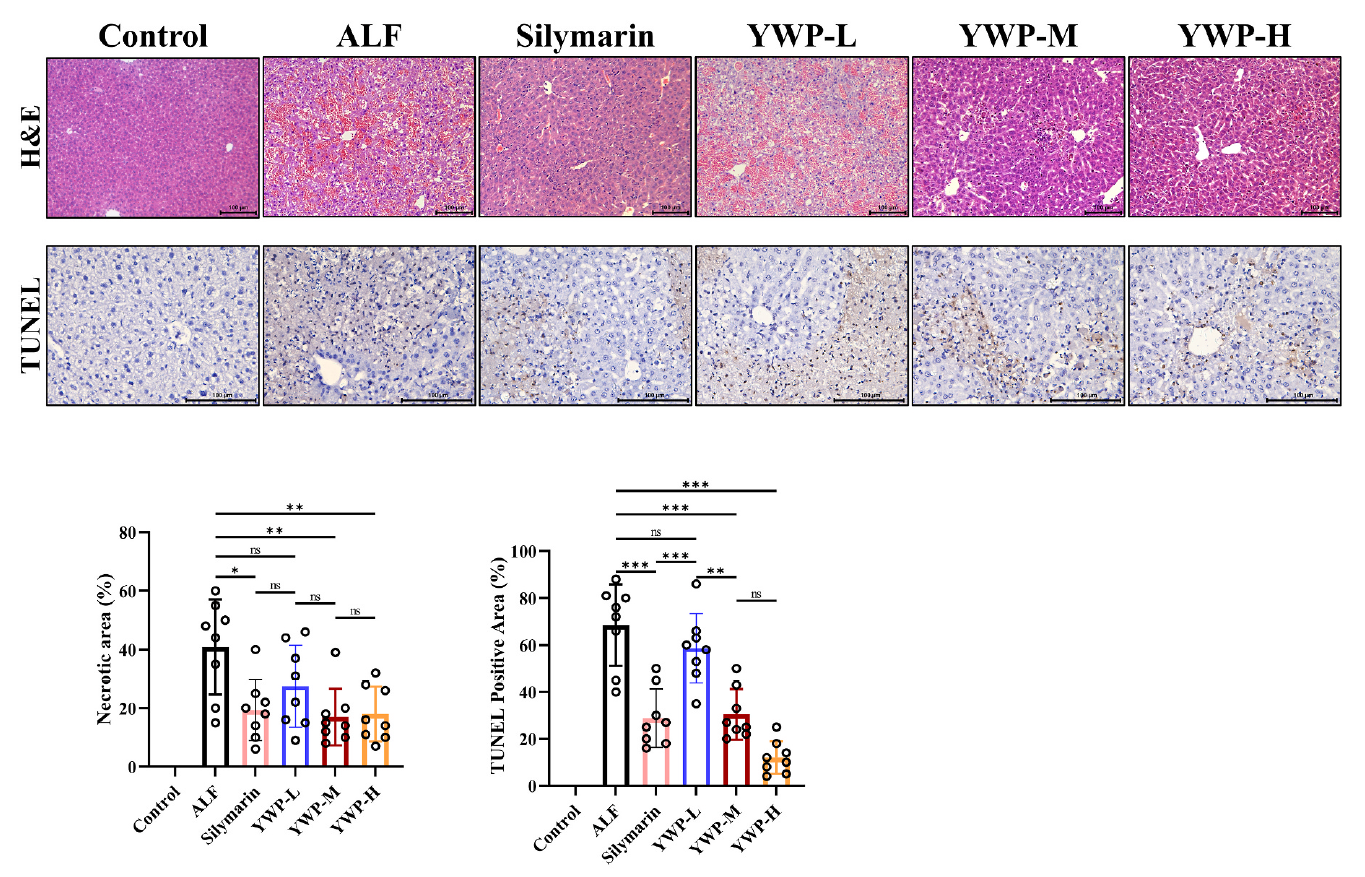
Histological Imaging/Staining
-
In Vivo Efficacy Study
-
In Vivo Efficacy Study


Activité biologique
Silymarin (0-120 μg/ml; 24 hours) inhibits AGS cell viability, the viability of AGS cells is 77.9% in the presence of 20 μg/ml silymarin, 71.5% at 40 μg/ml, 59.8% at 60 μg/ml, 44.5% at 80 μg/ml, 35.3% at 100 μg/ml and 33.9% at 120 μg/ml[1].Silymarin (40-80 μg/ml; 24 hours) inhibits the migration of the AGS cells in a concentration-dependent manner. It inhibit migration of AGS cells 59.4% at 40 μg/ml and 21.7% at 80 μg/ml,respectively[1].
MedChemExpress (MCE) has not independently confirmed the accuracy of these methods. They are for reference only.
-
Cell Line:AGS cells
-
Concentration:20 µg/ml, 40 µg/ml, 80 µg/ml, 100 µg/ml and 120 µg/ml
-
Incubation Time:24 hours
-
Result:Indicated a significant concentration-dependent inhibitory effect on AGS cells starting at 20 µg/ml.
MedChemExpress (MCE) has not independently confirmed the accuracy of these methods. They are for reference only.
| NCT Number | Sponsor | Condition | Start Date |
Phase

|
|---|---|---|---|---|
| NCT01329991 | Plexxikon| | 2011-05 | PHASE1 |


Chemical Information
-
CAS No. 65666-07-1
-
Appearance Solid
-
Color Light yellow to yellow
-
SMILES
[Silymarin]
-
Structure Classification
-
Livraison
Room temperature in continental US; may vary elsewhere.
-
Stockage
Powder -20°C 3 years In solvent -80°C 6 months -20°C 1 month


Publications (11)
-
Journal Impact Factor
-
Most Recent
-
J Ethnopharmacol
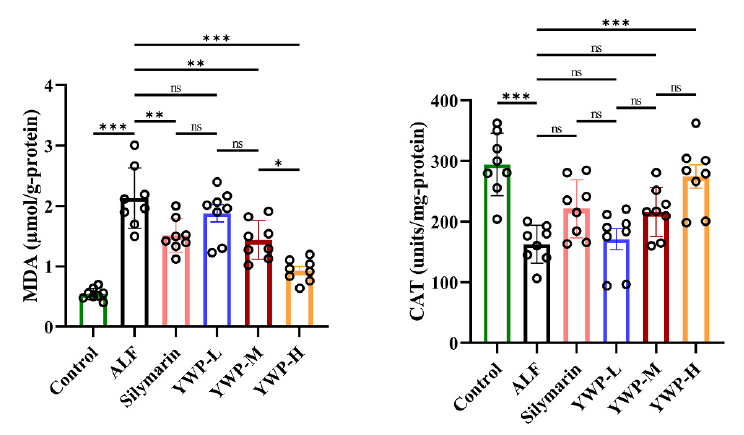
Yin-chen Wu-ling powder inhibits MAPKs/CXCL1/CXCR2-induced neutrophil infiltration to alleviate LPS/D-GalN-induced acute liver failure. [Abstract]2025 Jun 12:349:119957. PMID: 40368257
Silymarin purchased from MedChemExpress. Usage Cited in: J Ethnopharmacol. 2025 Jun 12:349:119957. [Abstract]
Silymarin (80 mg/kg; i.g.) increased the survival rate of ALF (acute liver failure) mice induced by LPS/D-GalN to nearly 40%.
Silymarin purchased from MedChemExpress. Usage Cited in: J Ethnopharmacol. 2025 Jun 12:349:119957. [Abstract]
Silymarin (80 mg/kg; i.g.) treatment significantly reduced serum ALT and AST levels in ALF (acute liver failure) mice induced by LPS/D-GalN compared to the ALF group.
Silymarin purchased from MedChemExpress. Usage Cited in: J Ethnopharmacol. 2025 Jun 12:349:119957. [Abstract]
Silymarin (80 mg/kg; i.g.) decreased hepatocyte death and infiltrated blood cells in ALF (acute liver failure) mice induced by LPS/D-GalN.
Silymarin purchased from MedChemExpress. Usage Cited in: J Ethnopharmacol. 2025 Jun 12:349:119957. [Abstract]
Silymarin (80 mg/kg; i.g.) treatment produced a decrease in MDA and an increase in CAT activity in the liver tissue of ALF (acute liver failure) mice induced by LPS/D-GalN.
-
Int J Mol Sci
Dual Targeting of HIF-1α and DLL4 by Isoxanthohumol Potentiates Immune Checkpoint Blockade. [Abstract]2026 Feb 5;27(3):1576. PMID: 41683994 -
Bioorg Chem
Identification of FTY720 and COH29 as novel topoisomerase I catalytic inhibitors by experimental and computational studies. [Abstract]2024 Jun:147:107412. PMID: 38696845 -
Molecules
2021 Mar 5;26(5):1409. PMID: 33807773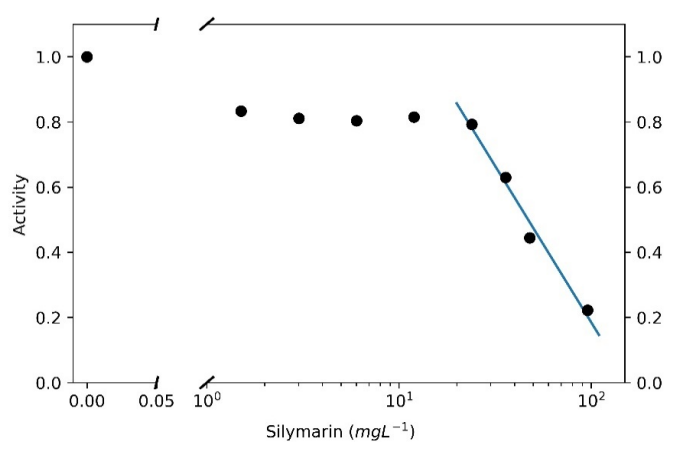
Silymarin purchased from MedChemExpress. Usage Cited in: Molecules. 2021 Mar 5;26(5):1409. [Abstract]
Inhibition of Mpro (SARS-CoV-2 main protease) by Silymarin (0-100 mg/L).
-
Naunyn Schmiedebergs Arch Pharmacol
β-sitosterol attenuates hepatic lipid accumulation and fibrosis via NLRP3 signaling in MASH mice. [Abstract]2025 Oct 2. PMID: 41037128 -
Naunyn Schmiedebergs Arch Pharmacol
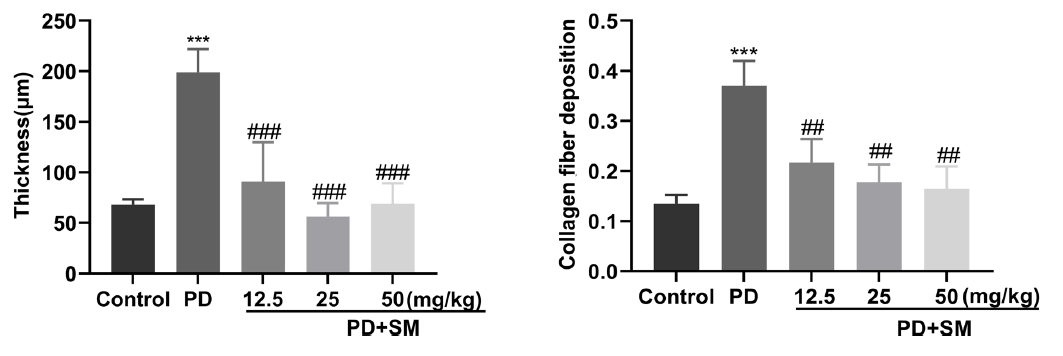
Silymarin ameliorates peritoneal fibrosis by inhibiting the TGF-β/Smad signaling pathway. [Abstract]2023 Oct;396(10):2379-2391. PMID: 37052642
Silymarin purchased from MedChemExpress. Usage Cited in: Naunyn Schmiedebergs Arch Pharmacol. 2023 Oct;396(10):2379-2391. [Abstract]
Silymarin (SM) (12.5-50 mg/kg; i.g.; once daily for 4 weeks) considerably decreased peritoneal thickness and collagen fiber deposition in peritoneal fibrosis (PF) mice.
-
J Bioenerg Biomembr
Fisetinidin chloride ameliorates carbon tetrachloride-induced hepatotoxicity in HepaRG cells. [Abstract]2025 Oct 28. PMID: 41148503 -
Vet Microbiol
The Chinese medicine monomer Schisandrin C inhibits PRRSV infection by regulating the OGT-PI3K/AKT/mTOR signaling pathway. [Abstract]2026 May:316:110992. PMID: 41865607 -
Oncol Lett
Silymarin induces multiple myeloma cell apoptosis by inhibiting the JAK2/STAT3 signaling pathway. [Abstract]2025 Jul 4;30(3):426. PMID: 40688586 -
Biomed Chromatogr
In-depth investigation of the Silymarin effect on the pharmacokinetic parameters of sofosbuvir, GS-331007 and ledipasvir in rat plasma using LC-MS. [Abstract]2022 Sep;36(9):e5427. PMID: 35708053 -


Solvant et solubilité
DMSO : 100 mg/mL (Need ultrasonic; Hygroscopic DMSO has a significant impact on the solubility of product, please use newly opened DMSO)
Select the appropriate dissolution method based on your experimental animal and administration route.
- For the following dissolution methods, please ensure to first prepare a clear stock solution using an In Vitro approach and then sequentially add co-solvents:
- To ensure reliable experimental results, the clarified stock solution can be appropriately stored based on storage conditions. As for the working solution for In Vivo experiments, it is recommended to prepare freshly and use it on the same day.
- The percentages shown for the solvents indicate their volumetric ratio in the final prepared solution. If precipitation or phase separation occurs during preparation, heat and/or sonication can be used to aid dissolution.
Add each solvent one by one: 10% DMSO 40% PEG300 5% Tween-80 45% Saline
Solubility: ≥ 3 mg/mL; Clear solution
This protocol yields a clear solution of ≥ 3 mg/mL (saturation unknown).
Taking 1 mL working solution as an example, add 100 μL DMSO stock solution (30.0 mg/mL) to 400 μL PEG300, and mix evenly; then add 50 μL Tween-80 and mix evenly; then add 450 μL Saline to adjust the volume to 1 mL.
Preparation of Saline: Dissolve 0.9 g sodium chloride in ddH₂O and dilute to 100 mL to obtain a clear Saline solution.
For the following dissolution methods, please prepare the working solution directly:
It is recommended to prepare fresh solutions and use them promptly within a short period of time.
The percentages shown for the solvents indicate their volumetric ratio in the final prepared solution. If precipitation or phase separation occurs during preparation, heat and/or sonication can be used to aid dissolution.
Add each solvent one by one: 0.5% CMC-Na/saline water
Solubility: 2.5 mg/mL; Suspended solution; Need ultrasonic
Please enter the basic information of animal experiments:
-
-
-
-
Recommended: Prepare an additional quantity of animals to account for potential losses during experiments.
Please enter your animal formula composition:
-
%DMSO +
Recommended: Keep the proportion of DMSO in working solution below 2% if your animal is weak.
-
%+
-
+%Tween-80 + +
-
%Saline +
The co-solvents required include: DMSO, . All of co-solvents are available by MedChemExpress (MCE). , Tween 80. All of co-solvents are available by MedChemExpress (MCE).
Working solution concentration: 0.22 mg/mL
Method for preparing stock solution: mg drug dissolved in μL DMSO. Stock solution concentration: mg/mL.
1. Take μL DMSO stock solution;
2. Add μL .
μL , mix evenly;
3. Then add μL Tween 80, mix evenly;
4. Then add μL
Please ensure that the stock solution in the first step is dissolved to a clear state, and add co-solvents in sequence. You can use ultrasonic heating (ultrasonic cleaner, recommended frequency 20-40 kHz), vortexing, etc. to assist dissolution.


Pureté et documentation
-
Fiche technique (272 KB)
-
SDS (393 KB)
- English - EN (393 KB)
- Français - FR (393 KB)
- Deutsch - DE (393 KB)
- Norwegian - NO (393 KB)
- Español - ES (393 KB)
- Swedish - SV (393 KB)
- Italian - IT (393 KB)
- Korean - KR (393 KB)
- Portuguese - PT (393 KB)
-
Instruction de manipulation (2659 KB)
Références
[1]. Féher J, et al. Silymarin in the prevention and treatment of liver diseases and primary liver cancer. Curr Pharm Biotechnol. 2012 Jan;13(1):210-7. [Content Brief]
[2]. Sung-Hyun Kim, et al.Silymarin induces inhibition of growth and apoptosis through modulation of the MAPK signaling pathway in AGS human gastric cancer cells. Oncol Rep. 2019 Nov;42(5):1904-1914. [Content Brief]
[3]. Mina Khoshnoodi, et al. Possible involvement of nitric oxide in antidepressant-like effect of silymarin in male mice. Pharm Biol. 2015 May;53(5):739-45. [Content Brief]

Calculators
Concentration (start) × Volume (start) = Concentration (final) × Volume (final)


Silymarin Related Classifications
HY-N7073 Related Classifications
 Powered by Bioz