



IL-6 Protein, Mouse
Based on 33 publication(s) in Google Scholar
IL-6 Protein is a multifunctional cytokine secreted by both immune and non-immune cells, and belongs to the interleukin family. IL-6 Protein plays a key role in immune responses, inflammatory reactions and other processes. IL-6 Protein, Mouse is a recombinant IL-6 protein expressed by E. coli without a tag.
- Species: Mouse
- Source: E. coli
-
Almacenamiento:Stored at -20°C for 2 years from date of receipt. After reconstitution, it is stable at 4°C for 1 week or -20°C for longer (with carrier protein). It is recommended to freeze aliquots at -20°C or -80°C for extended storage.


To place orders, for customer services and technical support, please contact: MedChemExpress USA
Tel: 609-228-6898 E-mail: [email protected] [email protected]


-
 Actividad biológica
-
Technical Parameters
-
Product Properties
- Documentación
- Referencias
- Help & FAQs


-

HY-P7090
TNF-alpha/TNFSF2 Protein, Mouse (156a.a) -
HY-P7073
IL-1 beta Protein, Mouse -
HY-P7361
GM-CSF Protein, Mouse -
HY-P7044
IL-6 Protein, Human -
HY-P7117
TGF beta 1/TGFB1 Protein, Mouse/Rat (HEK293, Tag Free) -
HY-P7071
IFN-gamma Protein, Mouse -
HY-18739
Phorbol 12-myristate 13-acetatePKC Activator -
HY-P7077
IL-2 Protein, Mouse -
HY-13434
IonomycinCalcium Ionophore -
HY-P70517
IL-10 Protein, Mouse -
HY-P70648
TGF beta 1/TGFB1 Protein, Mouse/Rat (HEK293) -
HY-P70571
TNF-alpha/TNFSF2 Protein, Mouse (147a.a)


Actividad biológica
Descripciòn
IL-6 Protein is a multifunctional cytokine secreted by both immune and non-immune cells, and belongs to the interleukin family. IL-6 Protein plays a key role in immune responses, inflammatory reactions and other processes. IL-6 Protein, Mouse is a recombinant IL-6 protein expressed by E. coli without a tag[1][2][3].
Background
IL-6 is a multifunctional cytokine secreted by immune cells (such as T cells, B cells, and macrophages) and non-immune cells (such as fibroblasts, endothelial cells, and hepatocytes). IL-6 transmits signals by binding to its receptor. As a cytokine rapidly and transiently produced in response to infection and tissue damage, IL-6 participates in host defense by stimulating acute-phase responses, hematopoiesis, and immune reactions. Its dysregulation can trigger chronic inflammation and autoimmune diseases. In the initial stage of inflammation, IL-6 is transported via blood to the liver to induce the synthesis of multiple acute-phase proteins. It also participates in regulating serum iron and zinc levels and platelet release. In immune responses, IL-6 promotes Th17 differentiation, inhibits Treg differentiation, and affects immune tolerance[1][2][3].
In Vitro
IL-6 Protein (Mouse; 25 ng/mL; 24 h) can promote the production of inflammatory factors MCP-1, MMP-3, CCL5, CXCL12 and the expression of hypertrophic markers COL10A1 and RUNX2 in primary mouse chondrocytes. The mechanism involves the activation of the JAK2/STAT3 pathway[3].
In Vivo
IL-6 Protein (Mouse; 0.3 μg/kg; intra-articular injection; single dose) can cause spinal hyperexcitability in rats[3].
Verified Bioactivity
1.The ED50 is <0.02 ng/mL as measured by murine 7TD1 cells, corresponding to a specific activity of >5 × 10⁷ units/mg.
2. Measured by its binding ability in a functional ELISA. When Recombinant Mouse IL-6 Protein is immobilized at 5 μg/mL (100 µL/well) can bind Biotinylated Recombinant Mouse IL-6 R alpha (HY-P72538). The ED50 for this effect is 20-156 ng/mL.
3. Measured by its binding ability in a functional ELISA. Immobilized Mouse IL-6 at 5 μg/mL (100 μL/well) on the plate can bind Mouse IL-6R alpha (HY-P72538). The ED50 for this effect is 20-156 ng/mL.
MCE Validation Data
-
Purity - SDS-PAGE
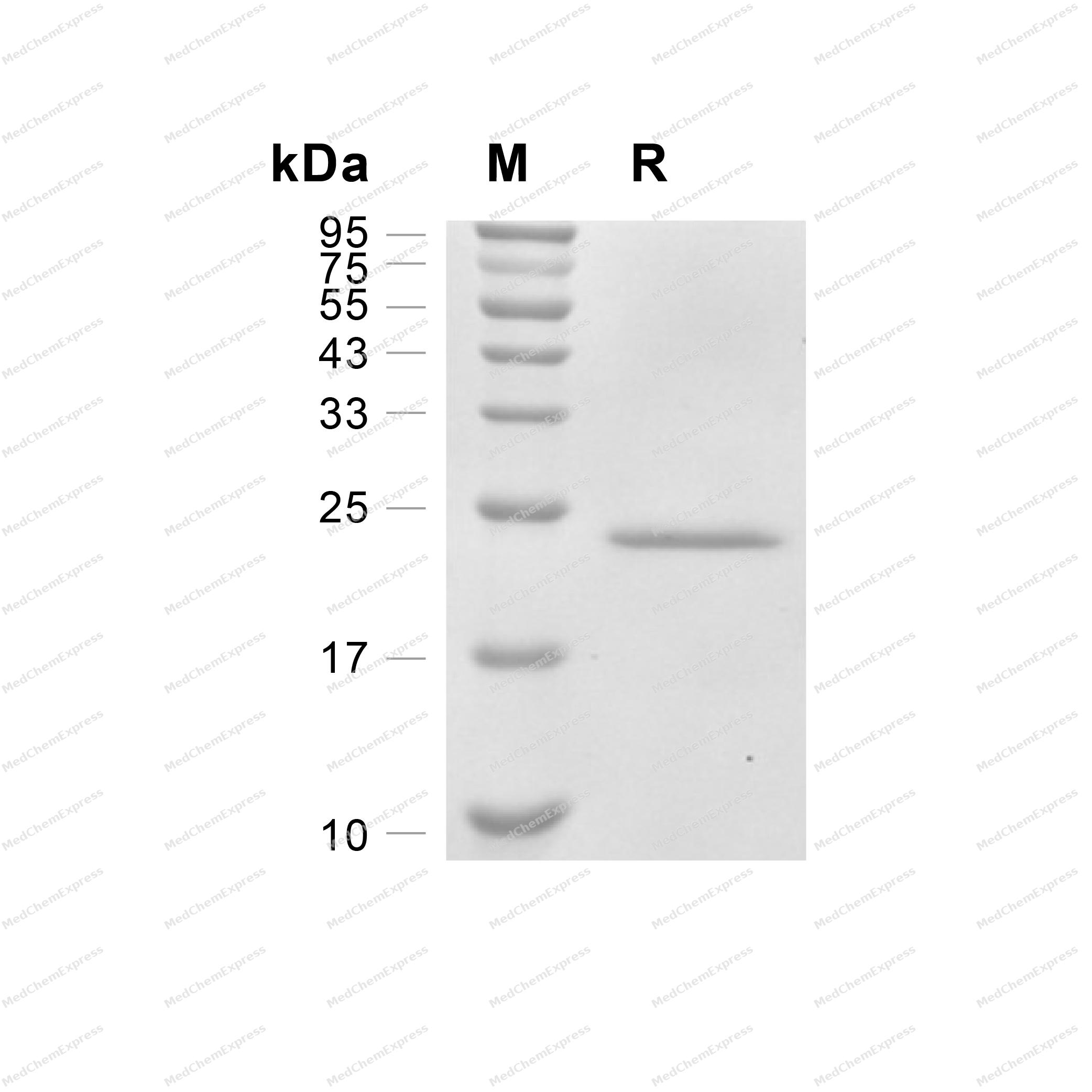
Purity - SDS-PAGE
-
Bioactivity - ELISA
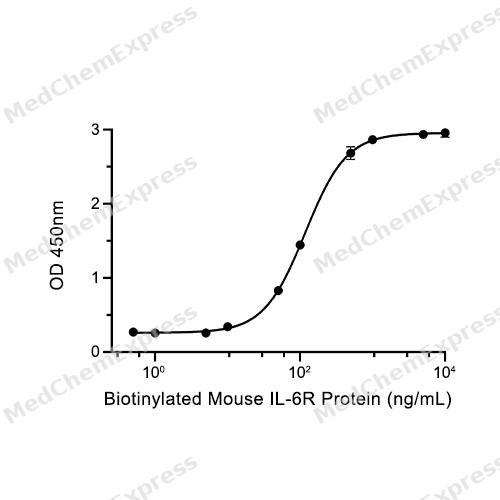
Bioactivity - ELISA


Publications (33)
-
Journal Impact Factor
-
Most Recent
-
Cell Metab
Gut microbiota-derived isovaleric acid alleviates atrial fibrillation by suppressing GSDME-dependent pyroptosis. [Abstract]2026 Feb 3;38(2):370-387.e10. PMID: 41638192 -
Autophagy
MAP1S limits autoimmune uveitis by suppressing Th17 differentiation through dual Control of the EGR2-LCN2 axis and autophagic flux. [Abstract]2026 Jul 23:1-20. PMID: 42454709 -
Nat Commun
Macrophage STING signaling promotes fibrosis in benign airway stenosis via an IL6-STAT3 pathway. [Abstract]2025 Jan 3;16(1):289. PMID: 39753529 -
ACS Nano
An Engineered Bionic Nanoparticle Sponge as a Cytokine Trap and Reactive Oxygen Species Scavenger to Relieve Disc Degeneration and Discogenic Pain. [Abstract]2024 Jan 30;18(4):3053-3072. PMID: 38237054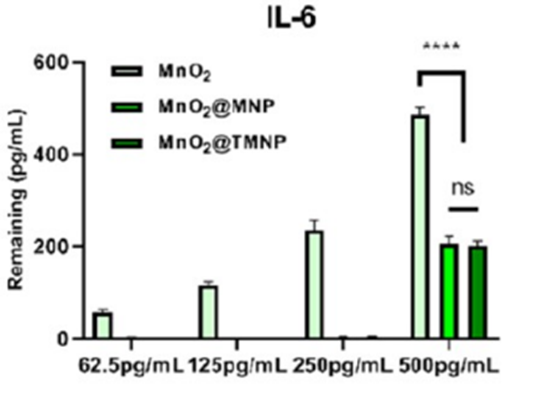
IL-6 Protein, Mouse purchased from MedChemExpress. Usage Cited in: ACS Nano. 2024 Jan 30;18(4):3053-3072. [Abstract]
Validation of adsorption capacity of nanomaterials with different concentration gradients on inflammatory factors/LPS/NGF. The remaining concentrations of IL-6 (0-100 μg/mL, 2 h) were detected by an enzyme-linked immunosorbent assay (ELISA), after coculturing with MnO2 nanoparticles, MnO2@MNP nanoparticles, and MnO2@TMNP nanoparticles at different concentrations.
-
J Nanobiotechnology
Tumor microenvironment remodeling with a telomere-targeting agent and its cooperative antitumor effects with a nanovaccine. [Abstract]2025 Jun 8;23(1):429. PMID: 40484928 -
J Nanobiotechnology
MSCs-EVs harboring OA immune memory reprogram macrophage phenotype via modulation of the mt-ND3/NADH-CoQ axis for OA treatment. [Abstract]2025 Feb 25;23(1):140. PMID: 40001168 -
-
J Exp Clin Cancer Res
Augmented ERO1α upon mTORC1 activation induces ferroptosis resistance and tumor progression via upregulation of SLC7A11. [Abstract]2024 Apr 13;43(1):112. PMID: 38610018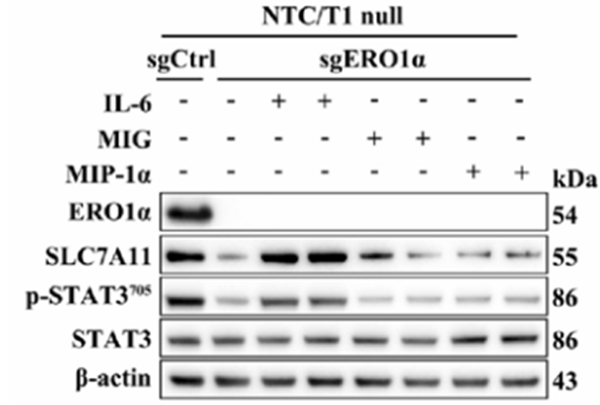
IL-6 Protein, Mouse purchased from MedChemExpress. Usage Cited in: J Exp Clin Cancer Res. 2024 Apr 13;43(1):112. [Abstract]
sgERO1α NTC/T1 null cells were treated with IL-6 (20 ng/ml), MIP-1α (100 ng/ml), or MIG (100 ng/ml) for 24 h.
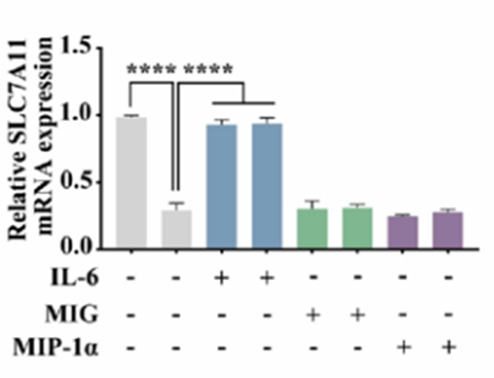
IL-6 Protein, Mouse purchased from MedChemExpress. Usage Cited in: J Exp Clin Cancer Res. 2024 Apr 13;43(1):112. [Abstract]
sgERO1α NTC/T1 null cells were treated with IL-6 (20 ng/ml), MIP-1α (100 ng/ml), or MIG (100 ng/ml) for 24 h.
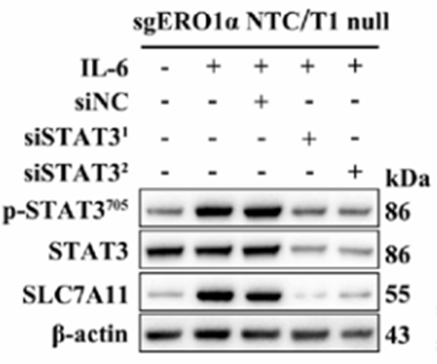
IL-6 Protein, Mouse purchased from MedChemExpress. Usage Cited in: J Exp Clin Cancer Res. 2024 Apr 13;43(1):112. [Abstract]
IL-6 (20 ng/ml, 12 h) pre-treated sgERO1α NTC/T1 null cells were transfected with STAT3 siRNAs or control siRNA (siNC) for 48 h. H IL-6 (20 ng/ml, 12 h) pre-treated sgERO1α NTC/T1 null cells were treated with different concentrations of S3I-201 for 24 h.
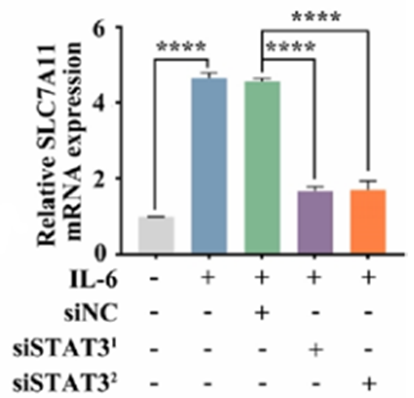
IL-6 Protein, Mouse purchased from MedChemExpress. Usage Cited in: J Exp Clin Cancer Res. 2024 Apr 13;43(1):112. [Abstract]
IL-6 (20 ng/ml, 12 h) pre-treated sgERO1α NTC/T1 null cells were transfected with STAT3 siRNAs or control siRNA (siNC) for 48 h. H IL-6 (20 ng/ml, 12 h) pre-treated sgERO1α NTC/T1 null cells were treated with different concentrations of S3I-201 for 24 h.
-
Sci Adv
Epitranscriptomic m5C methylation of SARS-CoV-2 RNA regulates viral replication and the virulence of progeny viruses in the new infection. [Abstract]2024 Aug 9;10(32):eadn9519. PMID: 39110796 -
Phytomedicine
Modified Shenlingbaizhu decoction suppresses colon cancer via enhancing memory-like Tfh differentiation and B cell responses. [Abstract]2026 Apr:153:158001. PMID: 41763139 -
Mater Today Bio
Phosphorus-32 microspheres: A dual-modality transarterial radioembolization approach for hepatocellular carcinoma therapy and Anti-PD1 immunotherapy potentiation. [Abstract]2025 Aug 16:34:102210. PMID: 40893370 -
Acta Pharmacol Sin
Inhibiting the Otub1/phosphorylated STAT3 axis for the treatment of non-small cell lung cancer. [Abstract]2025 Jan;46(1):184-195. PMID: 39198663 -
Int J Biol Macromol
FES suppresses macrophage-mediated inflammation and atherosclerotic plaque formation by modulating the PU.1/Arg1 axis. [Abstract]2026 Jun 26:373:153133. PMID: 42361942 -
-
Cell Rep
Blocking glycogen synthase 1 in white adipose tissue alleviates hypermetabolism following severe burn injury through inhibition of JAK2 by UDPG. [Abstract]2025 Nov 18;44(12):116577. PMID: 41259203 -
Blood Adv
Targeting bone marrow mesenchymal stromal cells-derived IL-6 to overcome acute myeloid leukemia chemoresistance. [Abstract]2025 Jul 16:bloodadvances.2024015496. PMID: 40668612 -
Brain Behav Immun
2026 Feb:132:106218. PMID: 41381012 -
CNS Neurosci Ther
Mettl8 Regulates Hippocampal Neural Stem Cell Proliferation and Neurogenesis via mTOR/4E-BP1 Signaling. [Abstract]2026 May;32(5):e70953. PMID: 42178900 -
Inflamm Res
2025 Sep 16;74(1):129. PMID: 40956436 -
RSC Adv
2023 Mar 13;13(11):7656-7663. PMID: 36923299 -
Int Immunopharmacol
Protective role of pretreatment with Anisodamine against sepsis-induced diaphragm atrophy via inhibiting JAK2/STAT3 pathway. [Abstract]2024 May 30:133:112133. PMID: 38652962 -
Int Immunopharmacol
Blockade of JAK2 retards cartilage degeneration and IL-6-induced pain amplification in osteoarthritis. [Abstract]2022 Dec;113(Pt A):109340. PMID: 36330910 -
Int J Mol Sci
LPS-Induced Inhibition of miR-143 Expression in Brown Adipocytes Promotes Thermogenesis and Fever. [Abstract]2022 Nov 9;23(22):13805. PMID: 36430282 -
FASEB J
Complanatuside A ameliorates 2,4,6-trinitrobenzene sulfonic acid-induced colitis in mice by regulating the Th17/Treg balance via the JAK2/STAT3 signaling pathway. [Abstract]2024 May 31;38(10):e23667. PMID: 38742812 -
Clin Immunol
2024 Sep:266:110312. PMID: 39019339 -
BMC Cancer
2024 Mar 19;24(1):354. PMID: 38504172 -
J Cell Physiol
Identification of key events and regulatory networks in the formation process of primordial germ cell based on proteomics. [Abstract]2023 Mar;238(3):610-630. PMID: 36745473 -
Immunol Invest
Timosaponin A-III Alleviates Asthma-Induced Airway Inflammation, Th17 Cell Differentiation, and STAT3/RORγt Pathway. [Abstract]2025 May;54(4):544-559. PMID: 39817657 -
bioRxiv
Encoded cell-material interactions to reroute cytokine signaling for regenerative medicine. [Abstract]2025 Oct 25:2025.10.24.684449. PMID: 41280063 -
-
Biomed Pharmacother
Targeted inhibition of STAT3 (Tyr705) by xanthatin alleviates osteoarthritis progression through the NF-κB signaling pathway. [Abstract]2024 May:174:116451. PMID: 38520869 -
-
Bioengineered
Cilengitide, an αvβ3-integrin inhibitor, enhances the efficacy of anti-programmed cell death-1 therapy in a murine melanoma model. [Abstract]2022 Feb;13(2):4557-4572. PMID: 35142593


Technical Parameters
-
Species Mouse
-
Source E. coli
-
Tag Tag Free
-
Accession
P08505 (F25-T211)
-
Molecular Construction
-
N-term
-
IL-6 (F25-T211)
Accession # P08505 -
C-term
-
-
Protein Length
Full Length of Mature Protein
-
Synonyms
IL6; Hybridoma Growth Factor; Prev. IFNB2; IFN-Beta-2; IL-6; BSF-2; Interleukin-6; CDF; BSF2; Interleukin 6 (Interferon, Beta 2); HGF; B-Cell Differentiation Factor; HSF; Truncated Interleukin 6; B-Cell Stimulatory Factor 2; Interferon, Beta 2; CTL Differentiation Factor; Interleukin BSF-2; Interleukin 6; Interferon Beta-2
-
AA Sequence
FPTSQVRRGDFTEDTTPNRPVYTTSQVGGLITHVLWEIVEMRKELCNGNSDCMNNDDALAENNLKLPEIQRNDGCYQTGYNQEICLLKISSGLLEYHSYLEYMKNNLKDNKKDKARVLQRDTETLIHIFNQEVKDLHKIVLPTPISNALLTDKLESQKEWLRTKTIQFILKSLEEFLKVTLRSTRQT
-
Predicted Molecular Mass
21.8 kDa
-
Peso molecular
Approximately 22 kDa, based on SDS-PAGE under reducing conditions.
-
Pureza
≥ 95%, as determined by reducing SDS-PAGE.


Product Properties
Lyophilized powder
1.Lyophilized from a 0.22 μm filtered solution of PBS, pH 7.4.
2.Lyophilized from a 0.22 μm filtered solution of PBS, pH 7.4, 8% trehalose.
3.Lyophilized from a 0.22 μm filtered solution of 50 mM Tris-HCl, 200 mM NaCl, 500 mM arginine, pH 8.0.
4.Lyophilized from a 0.22 μm filtered solution of 30 mM Acetic Acid, pH 3.0, 150 mM NaCl, 5% trehalose, 0.02 % Tween 20.
Please refer to the lot-specific COA for specific buffer information.
Note: For SPR assay, please replace the buffer. Primary amine components (e.g., Tris, imidazole) can affect protein-coupled chips.
<1 EU/μg, determined by LAL method.
It is not recommended to reconstitute to a concentration less than 100 μg/mL in ddH2O. For long term storage it is recommended to add a carrier protein (0.1% BSA, 5% HSA, 10% FBS or 5% Trehalose).
Stored at -20°C for 2 years from date of receipt. After reconstitution, it is stable at 4°C for 1 week or -20°C for longer (with carrier protein). It is recommended to freeze aliquots at -20°C or -80°C for extended storage.
Room temperature in continental US; may vary elsewhere.


Documentación
-
Ficha de datos (263 KB)
-
SDS (252 KB)
- English - EN (252 KB)
- Français - FR (252 KB)
- Deutsch - DE (252 KB)
- Norwegian - NO (252 KB)
- Español - ES (252 KB)
- Swedish - SV (252 KB)
- Italian - IT (252 KB)
- Korean - KR (252 KB)
- Portuguese - PT (252 KB)
-
Instrucciones de manejo (2659 KB)


Referencias
[1]. Frorath B, et al. Production of recombinant rat interleukin-6 in Escherichia coli using a novel highly efficient expression vector pGEX-3T. Biotechniques. 1992 Apr;12(4):558-63. [Content Brief]
[2]. Tanaka T, et al. IL-6 in inflammation, immunity, and disease. Cold Spring Harb Perspect Biol. 2014 Sep 4;6(10):a016295. [Content Brief]
[3]. Mima Z, et al. Blockade of JAK2 retards cartilage degeneration and IL-6-induced pain amplification in osteoarthritis. Int Immunopharmacol. 2022 Dec;113(Pt A):109340. [Content Brief]

Calculators
Concentration (start) × Volume (start) = Concentration (final) × Volume (final)


 Powered by Bioz

