



HIV-2 Infection
-
HIV-2 Infection (2)

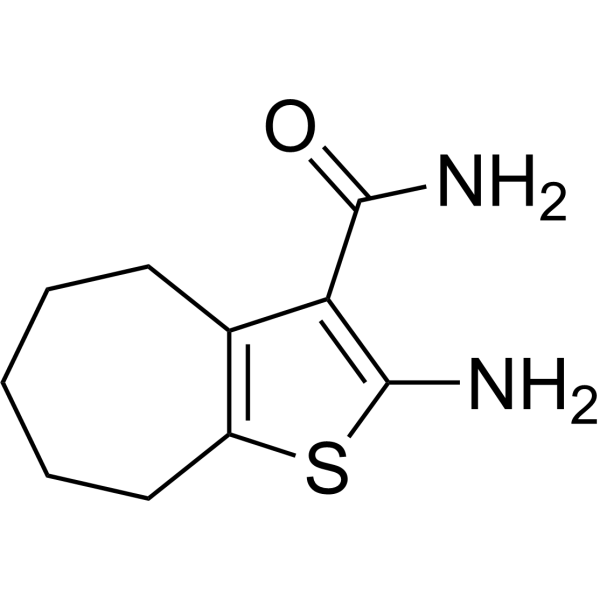
- Formula: C10H14N2OS
- Molecular Weight: 210.30
NSC727447 is a vinyl urea-based allosteric inhibitor of HIV reverse transcriptase-associated RNase H with IC50 values of 2.0 μM and 2.5 μM against HIV-1 and HIV-2 RNase H, respectively, and IC50 values of 100 μM and 10.6 μM against Escherichia coli and human RNase H, respectively. NSC727447 exerts allosteric inhibitory effects mainly by interacting with the region adjacent to α-helix I in the thumb subdomain of the p51 subunit of HIV-1 reverse transcriptase. Cys280, Lys281 and the RNase H primer grip region are involved in its action, and it may inhibit the catalytic activity of RNase H by altering the positioning of nucleic acid substrates or the geometry of the RNase H active site. NSC727447 can be used in studies related to HIV infection, the function of HIV reverse transcriptase RNase H, and allosteric inhibition mechanisms.

- Formula: C19H12N4O3
- Molecular Weight: 344.32
INDOPY-1 (Indolopyridone-1) is a selective, reversible, and competitive HIV-1 reverse transcriptase inhibitor. INDOPY-1 reversibly binds to the active site of reverse transcriptase. INDOPY-1 inhibits DNA synthesis. INDOPY-1 exhibits antiviral activity against various retroviruses, including HIV-1 IIIB, HIV-1 HXB2 K103N Y181C, HIV-2 ROD, and SIV Mac251. INDOPY-1 can be used in the research of immunodeficiency virus infection.



