



HX531

Based on 1 Customer Validation
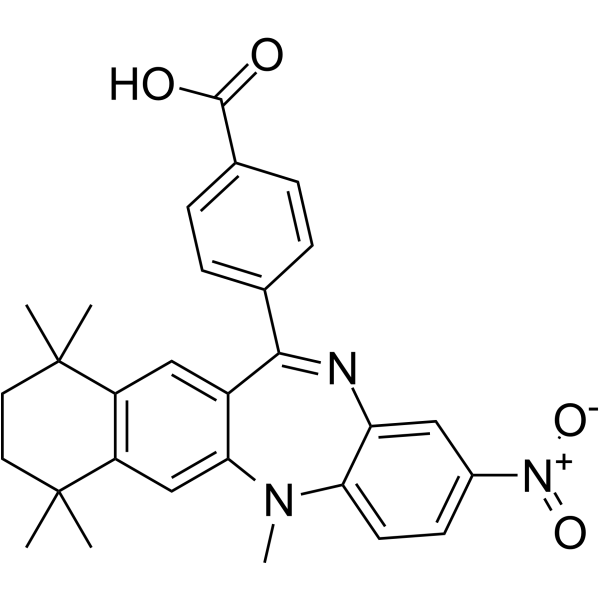
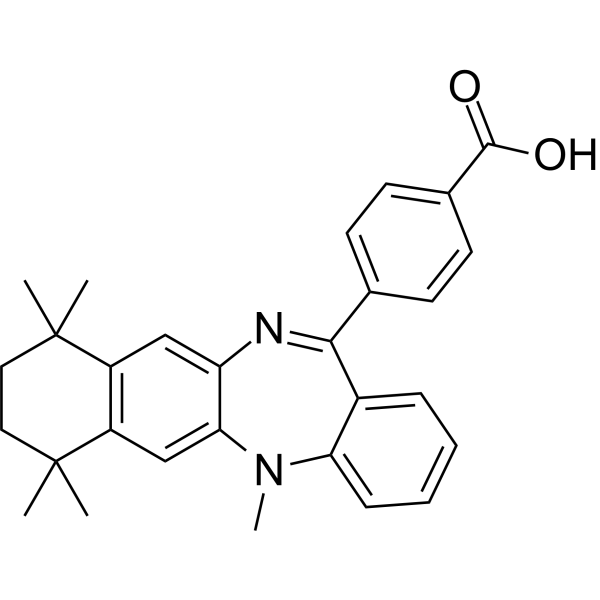
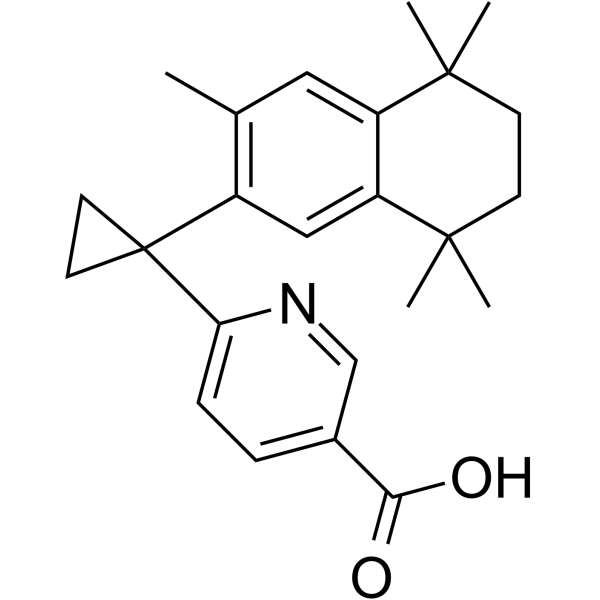
HX531 is an orally active RXR antagonist with an IC50 of 18 nM. HX531 upregulates the p53-p21Cip1 pathway. HX531 abrogates the anti-apoptotic effect of t-RA. HX531 exerts anti-obesity, anti-diabetic and anti-melanoma activities.
Para uso exclusivo en investigación. No vendemos a pacientes.
- Pureza: 99.87%
- No. CAS: 188844-34-0
- Fòrmula: C29H29N3O4
- Peso molecular:483.56
-
Almacenamiento:Powder -20°C, 3 years , 4°C, 2 years ; In solvent -80°C, 6 months , -20°C, 1 month

To place orders, for customer services and technical support, please contact: MedChemExpress USA
Tel: 609-228-6898 E-mail: [email protected] [email protected]


-
 Actividad biológica
-
Chemical Information
-
Solvente y solubilidad
- Pureza y Documentación
- Referencias
-
 Help & FAQs


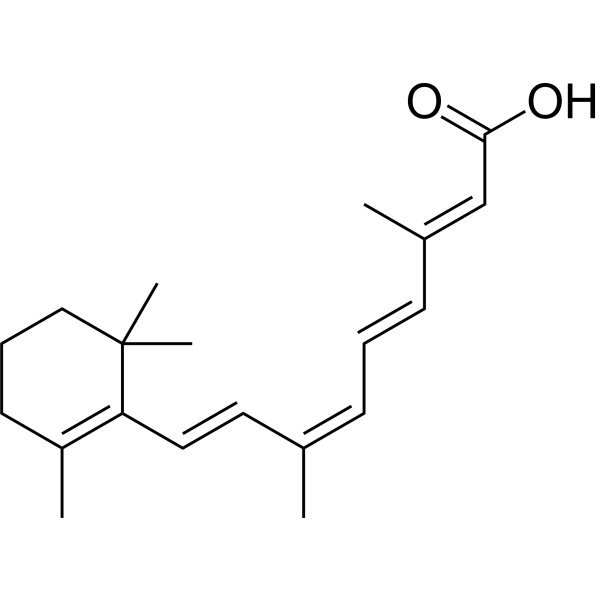
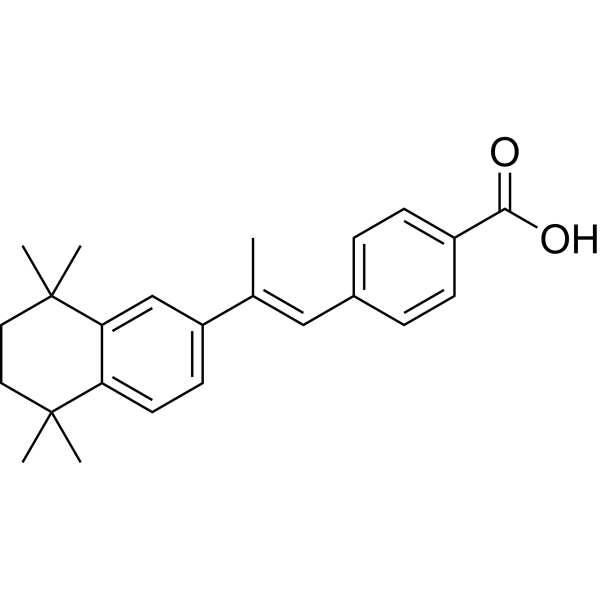
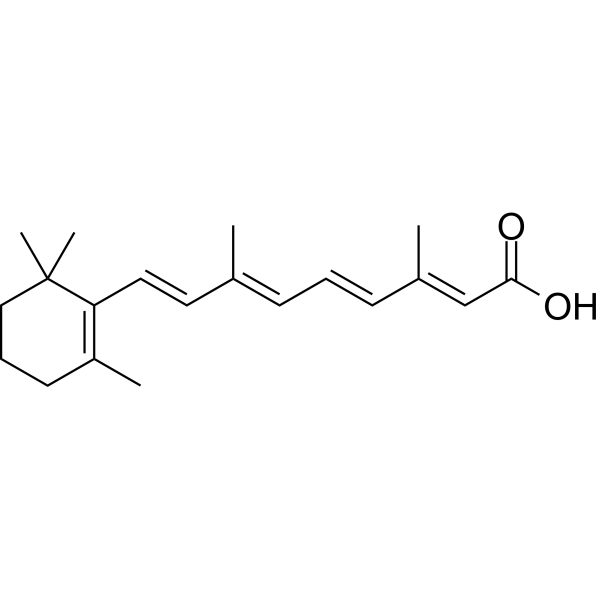
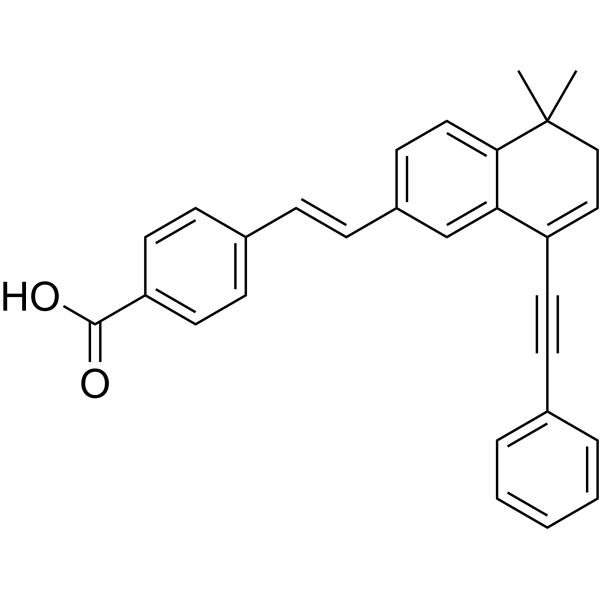


Actividad biológica
|
Cell Line

|
Type | Value | Description | References |
|---|---|---|---|---|
| COS-1 | IC50 |
0.044 μM
Compound: 7, HX531
|
Antagonist activity at RXRbeta expressed in african green monkey COS1 cells assessed as inhibition of LGD-1069-induced agonist activity
Antagonist activity at RXRbeta expressed in african green monkey COS1 cells assessed as inhibition of LGD-1069-induced agonist activity
|
[PMID: 19095448] |
| COS-1 | IC50 |
0.29 μM
Compound: 7, HX531
|
Antagonist activity at RXRalpha expressed in african green monkey COS1 cells assessed as inhibition of LGD-1069-induced agonist activity
Antagonist activity at RXRalpha expressed in african green monkey COS1 cells assessed as inhibition of LGD-1069-induced agonist activity
|
[PMID: 19095448] |
| COS-1 | IC50 |
0.38 μM
Compound: 7, HX531
|
Antagonist activity at RXRgamma expressed in african green monkey COS1 cells assessed as inhibition of LGD-1069-induced agonist activity
Antagonist activity at RXRgamma expressed in african green monkey COS1 cells assessed as inhibition of LGD-1069-induced agonist activity
|
[PMID: 19095448] |
| HEK293 | IC50 |
0.9 μM
Compound: HX531
|
Antagonist activity at human RXRalpha expressed in EK293 cells assessed as inhibition of 9-cis-retinoic acid-induced transactivation
Antagonist activity at human RXRalpha expressed in EK293 cells assessed as inhibition of 9-cis-retinoic acid-induced transactivation
|
[PMID: 17651969] |
| HEK293 | IC50 |
1.2 μM
Compound: HX531
|
Antagonist activity at human RXRalpha expressed in EK293 cells assessed as inhibition of LG-100268-induced transactivation
Antagonist activity at human RXRalpha expressed in EK293 cells assessed as inhibition of LG-100268-induced transactivation
|
[PMID: 17651969] |
HX531 (2.5 μM, 30 min) eliminates the anti-apoptotic effect of t-RA[1].
HX531 (0-10 μM, 24 h) has no significant effect on transcriptional activation induced by PPARα/RXR agonists and molecular expression induced by PPARγ agonists[2].
HX531 (2.5 μM, 0-10 days) upregulates the p53-p21Cip1 pathway, inducing G0/G1 cell cycle arrest and inhibiting the differentiation of human visceral preadipocytes HPV[3].
HX531 (2.5 μM, 0-10 days) reverses high glucose-induced G0/G1 cell cycle arrest to normal glucose levels in normal human mesangial cells (NHMCs)[3].
HX531 delays resistance to melanoma and prevents M2 macrophage polarization in the tumor microenvironment[4].
MedChemExpress (MCE) has not independently confirmed the accuracy of these methods. They are for reference only.
-
Cell Line:Mesangial cells
-
Concentration:2.5 μM
-
Incubation Time:30 min
-
Result:Increased the activity of AP-1, eliminating the anti-apoptotic effect of t-RA.
-
Cell Line:FAO
-
Concentration:0, 1, 10 μM
-
Incubation Time:24 h
-
Result:Had no significant effect on transcriptional activation induced by PPARα/RXR agonists and molecular expression induced by PPARγ agonists.
-
Cell Line:HVP; NHMCs
-
Concentration:2.5 μM
-
Incubation Time:0, 2, 4, 6, 8, 10 days
-
Result:Reduced the number and size of lipid droplets, upregulated cell cycle regulators p53, p21Cip1, cyclin D1, Fbxw7, and Skp2, and enhanced the expression of pAMPKα in HVP.
ShRNA lentivirus knockdown of p53 reversed the HX531-induced upregulation of p21Cip1 in HVP.
Suppressed the expression of p21Cip1, p27Kip1, p53, and cyclin D1, while the phosphorylation levels of p44/42 MAPK and p38 MAPK returned to baseline levels under normal glucose conditions in NHMCs.
-
Cell Line:NHMCs
-
Concentration:2.5 μM
-
Incubation Time:0, 2, 4, 6, 8, 10 days
-
Result:Reversed high sugar-induced G0/G1 cell cycle arrest back to normal glucose levels.
HX531 (0.1% and 0.3% food additive, oral, for two weeks) blocks the enlargement of fat cells and alleviates insulin resistance[2].
HX531 (0.1% and 0.3% food additive, oral, for two weeks) directly antagonizes PPARγ/RXR, reducing molecules involved in fatty acid influx and fat formation in skeletal muscle, while increasing molecules involved in energy expenditure[2].
HX531 (0.1% and 0.3% food additive, oral, for 3-4 weeks) leads to a rebound in high blood sugar and insulin resistance associated with fat atrophy[2].
HX531 (10mg/kg, oral, daily, for 30 weeks) reduces body weight in rats, inhibits fat cell enlargement, and induces G0/G1 cell cycle arrest in fat cells[3].
MedChemExpress (MCE) has not independently confirmed the accuracy of these methods. They are for reference only.
-
Animal Model:KKAy mouse induced by HF or HC[2]
-
Dosage:0.1% and 0.3% food additive, 2 weeks
-
Administration:Oral
-
Result:Reduced the body weight of mice, fasting blood glucose, fasting plasma insulin, and insulin tolerance. Increased Rectal temperature, rosed oxygen consumption , and serum leptin levels went up.
Lowered the expression of fatty acid translocase/CD36, increased the expression of β3-adrenergic receptors (β3-AR), and decreased free fatty acids (FFA), TNF-α, and resistin.
Reduced the expression of lipogenic enzymes SREBP1 and SCD1, increased the expression of molecules involved in fatty acid burning like ACO, and molecules that dissipate energy like UCP2, lowered long-chain FA-CoA and triglyceride levels in muscle.
-
Animal Model:PPARγ deficient mice [2]
-
Dosage:0.1% and 0.3% food additive, 3 and 4 weeks
-
Administration:Oral
-
Result:Prevented the reoccurrence of high blood sugar and insulin resistance associated with fatty atrophy.
-
Animal Model:LETO and OLETF rats[3]
-
Dosage:10 mg/kg, daily, 30 weeks
-
Administration:Oral
-
Result:Suppressed weight gain and reduced the excretion of urinary albumin.Led to G0/G1 cell cycle arrest, inhibited adipocyte hypertrophy, and suppressed the proliferation activity of fat cells.


Chemical Information
-
No. CAS 188844-34-0
-
Appearance Solid
-
Peso molecular 483.56
-
Fòrmula C29H29N3O4
-
Color Light yellow to orange
-
SMILES
O=C(O)C1=CC=C(C2=NC3=CC([N+]([O-])=O)=CC=C3N(C)C4=CC5=C(C(C)(C)CCC5(C)C)C=C42)C=C1
-
Envío
Room temperature in continental US; may vary elsewhere.
-
Almacenamiento
Powder -20°C 3 years 4°C 2 years In solvent -80°C 6 months -20°C 1 month


Solvente y solubilidad
DMSO : 33.33 mg/mL (68.93 mM; ultrasonic and warming and heat to 60°C; Hygroscopic DMSO has a significant impact on the solubility of product, please use newly opened DMSO)
Please refer to the solubility information to select the appropriate solvent. Once prepared, please aliquot and store the solution to prevent product inactivation from repeated freeze-thaw cycles.
Storage method and period of stock solution: -80°C, 6 months; -20°C, 1 month. When stored at -80°C, please use it within 6 months. When stored at -20°C, please use it within 1 month.
Please refer to the solubility information to select the appropriate solvent. Once prepared, please aliquot and store the solution to prevent product inactivation from repeated freeze-thaw cycles.
Storage method and period of stock solution: -80°C, 6 months; -20°C, 1 month. When stored at -80°C, please use it within 6 months. When stored at -20°C, please use it within 1 month.
Concentration (start) × Volume (start) = Concentration (final) × Volume (final)
Select the appropriate dissolution method based on your experimental animal and administration route.
- For the following dissolution methods, please ensure to first prepare a clear stock solution using an In Vitro approach and then sequentially add co-solvents:
- To ensure reliable experimental results, the clarified stock solution can be appropriately stored based on storage conditions. As for the working solution for In Vivo experiments, it is recommended to prepare freshly and use it on the same day.
- The percentages shown for the solvents indicate their volumetric ratio in the final prepared solution. If precipitation or phase separation occurs during preparation, heat and/or sonication can be used to aid dissolution.
Add each solvent one by one: 10% DMSO 40% PEG300 5% Tween-80 45% Saline
Solubility: ≥ 2.5 mg/mL (5.17 mM); Clear solution
This protocol yields a clear solution of ≥ 2.5 mg/mL (saturation unknown).
Taking 1 mL working solution as an example, add 100 μL DMSO stock solution (25.0 mg/mL) to 400 μL PEG300, and mix evenly; then add 50 μL Tween-80 and mix evenly; then add 450 μL Saline to adjust the volume to 1 mL.
Preparation of Saline: Dissolve 0.9 g sodium chloride in ddH₂O and dilute to 100 mL to obtain a clear Saline solution.
Add each solvent one by one: 10% DMSO 90% (20% SBE-β-CD in Saline)
Solubility: 2.5 mg/mL (5.17 mM); Suspended solution; Need ultrasonic
This protocol yields a suspended solution of 2.5 mg/mL. Suspended solution can be used for oral and intraperitoneal injection.
Taking 1 mL working solution as an example, add 100 μL DMSO stock solution (25.0 mg/mL) to 900 μL 20% SBE-β-CD in Saline, and mix evenly.
Preparation of 20% SBE-β-CD in Saline (4°C, storage for one week): 2 g SBE-β-CD powder is dissolved in 10 mL Saline, completely dissolve until clear.
Please enter the basic information of animal experiments:
-
-
-
-
Recommended: Prepare an additional quantity of animals to account for potential losses during experiments.
Please enter your animal formula composition:
-
%DMSO +
Recommended: Keep the proportion of DMSO in working solution below 2% if your animal is weak.
-
%+
-
+%Tween-80 + +
-
%Saline +
The co-solvents required include: DMSO, . All of co-solvents are available by MedChemExpress (MCE). , Tween 80. All of co-solvents are available by MedChemExpress (MCE).
Working solution concentration: 0.22 mg/mL
Method for preparing stock solution: mg drug dissolved in μL DMSO. Stock solution concentration: mg/mL.
1. Take μL DMSO stock solution;
2. Add μL .
μL , mix evenly;
3. Then add μL Tween 80, mix evenly;
4. Then add μL
Please ensure that the stock solution in the first step is dissolved to a clear state, and add co-solvents in sequence. You can use ultrasonic heating (ultrasonic cleaner, recommended frequency 20-40 kHz), vortexing, etc. to assist dissolution.


Pureza y Documentación
-
Ficha de datos (290 KB)
-
SDS (396 KB)
- English - EN (396 KB)
- Français - FR (396 KB)
- Deutsch - DE (396 KB)
- Norwegian - NO (396 KB)
- Español - ES (396 KB)
- Swedish - SV (396 KB)
- Italian - IT (396 KB)
- Korean - KR (396 KB)
- Portuguese - PT (396 KB)
-
Instrucciones de manejo (2659 KB)
Referencias
[1]. Konta T, et al. Selective roles of retinoic acid receptor and retinoid x receptor in the suppression of apoptosis by all-trans-retinoic acid. J Biol Chem. 2001 Apr 20;276(16):12697-701. [Content Brief]
[2]. Yamauchi T, et al. Inhibition of RXR and PPARgamma ameliorates diet-induced obesity and type 2 diabetes. J Clin Invest. 2001 Oct;108(7):1001-13. [Content Brief]
[3]. Atsuko Nakatsuka, et al. RXR antagonism induces G0 /G1 cell cycle arrest and ameliorates obesity by up-regulating the p53-p21(Cip1) pathway in adipocytes. J Pathol. 2012 Apr;226(5):784-95. [Content Brief]


Complete Stock Solution Preparation Table
Please refer to the solubility information to select the appropriate solvent. Once prepared, please aliquot and store the solution to prevent product inactivation from repeated freeze-thaw cycles.
Storage method and period of stock solution: -80°C, 6 months; -20°C, 1 month. When stored at -80°C, please use it within 6 months. When stored at -20°C, please use it within 1 month.
| Optional Solvent | Concentration Solvent Mass | 1 mg | 5 mg | 10 mg | 25 mg |
|---|---|---|---|---|---|
| DMSO | 1 mM | 2.0680 mL | 10.3400 mL | 20.6800 mL | 51.6999 mL |
| 5 mM | 0.4136 mL | 2.0680 mL | 4.1360 mL | 10.3400 mL | |
| 10 mM | 0.2068 mL | 1.0340 mL | 2.0680 mL | 5.1700 mL | |
| 15 mM | 0.1379 mL | 0.6893 mL | 1.3787 mL | 3.4467 mL | |
| 20 mM | 0.1034 mL | 0.5170 mL | 1.0340 mL | 2.5850 mL | |
| 25 mM | 0.0827 mL | 0.4136 mL | 0.8272 mL | 2.0680 mL | |
| 30 mM | 0.0689 mL | 0.3447 mL | 0.6893 mL | 1.7233 mL | |
| 40 mM | 0.0517 mL | 0.2585 mL | 0.5170 mL | 1.2925 mL | |
| 50 mM | 0.0414 mL | 0.2068 mL | 0.4136 mL | 1.0340 mL | |
| 60 mM | 0.0345 mL | 0.1723 mL | 0.3447 mL | 0.8617 mL |


HX531 Related Classifications
HY-108521 Related Classifications
 Powered by Bioz