



Ascomycin
Based on 6 publication(s) in Google Scholar
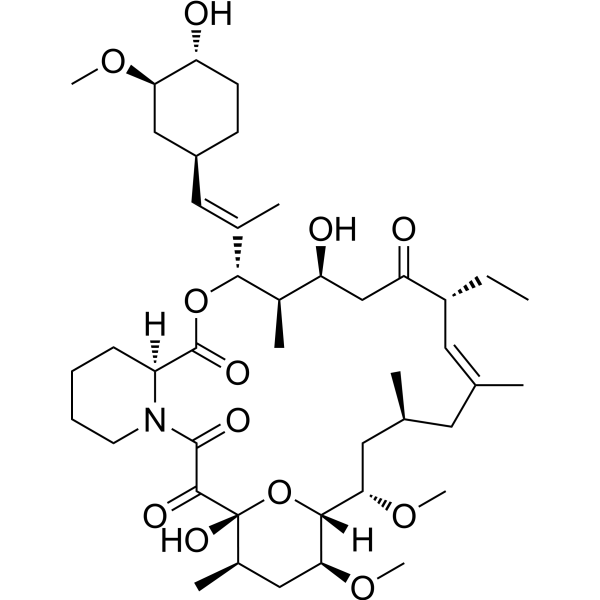
Ascomycin (Immunomycin; FR-900520; FK520) is an ethyl analog of Tacrolimus (FK506) with strong immunosuppressant properties. Ascomycin is also a macrocyclic polyketide antibiotic with multiple biological activities such as anti-malarial, anti-fungal and anti-spasmodic. Ascomycin prevents graft rejection and has potential for varying skin ailments research.
For research use only. We do not sell to patients.
- Purity : 99.96%
- CAS No.: 104987-12-4
- Formula: C43H69NO12
- Molecular Weight:792.01
-
Storage:Powder -20°C, 3 years , 4°C, 2 years ; In solvent -80°C, 2 years , -20°C, 1 year

To place orders, for customer services and technical support, please contact: MedChemExpress USA
Tel: 609-228-6898 E-mail: [email protected] [email protected]


-
 Biological Activity
-
Chemical Information
-
Solvent & Solubility
- Purity & Documentation
- References
-
 Help & FAQs


-
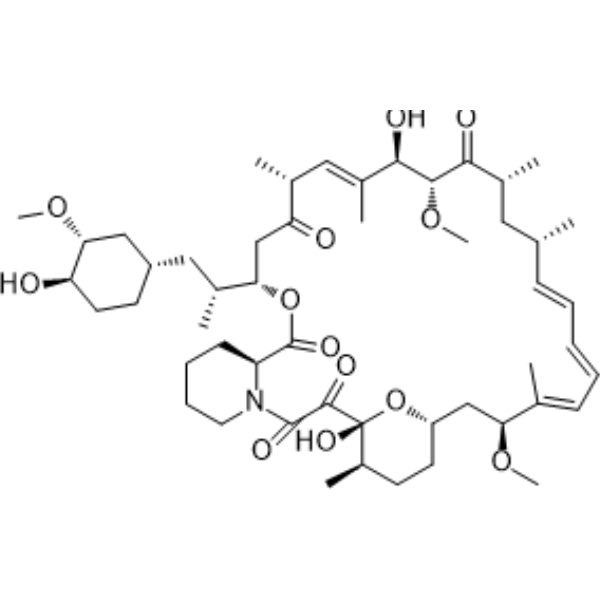
HY-10219
RapamycinmTOR Inhibitor -
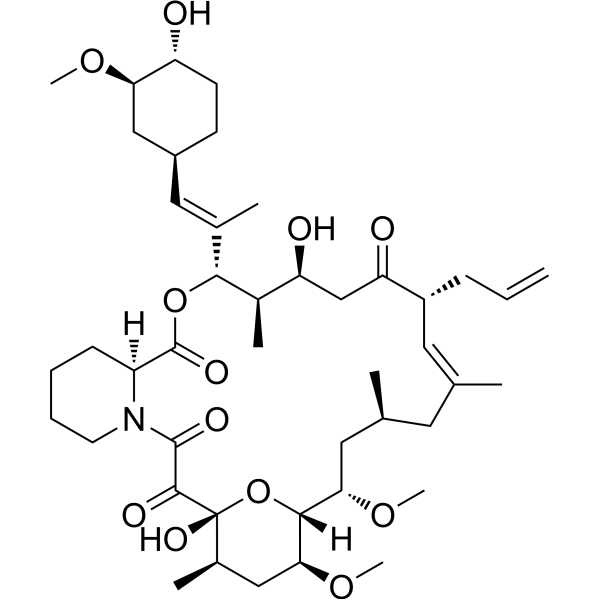
HY-13756
TacrolimusCalcineurin Inhibitor -
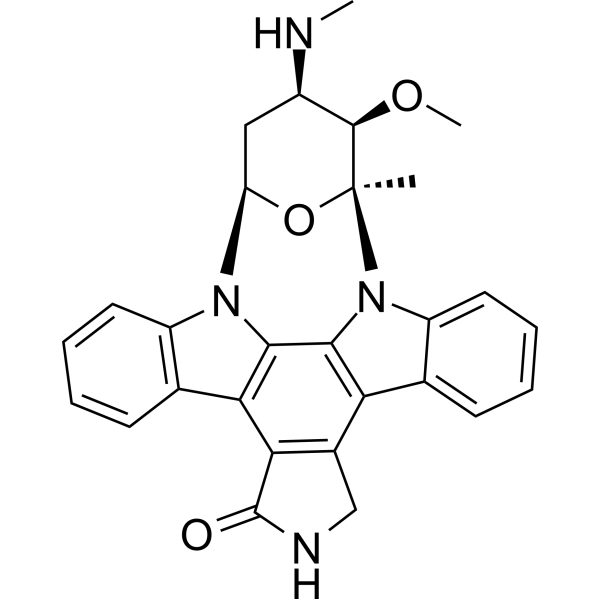
HY-15141
StaurosporinePKC/PKA Inhibitor -

HY-13557R
Ascomycin (Standard)Immunosuppressant Agent -
HY-13723
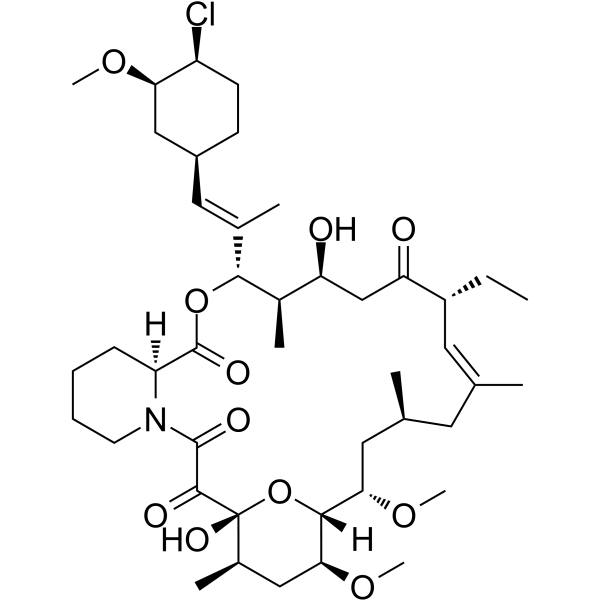
PimecrolimusCalcineurin Inhibitor -
HY-10218
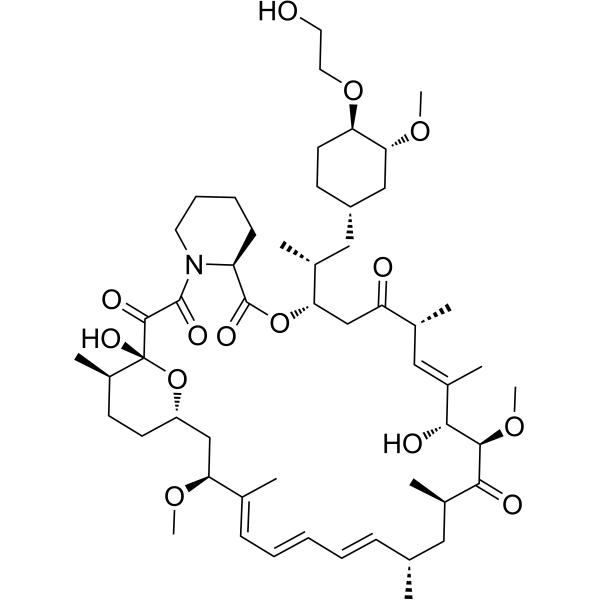
EverolimusmTORC Inhibitor -
HY-10218R
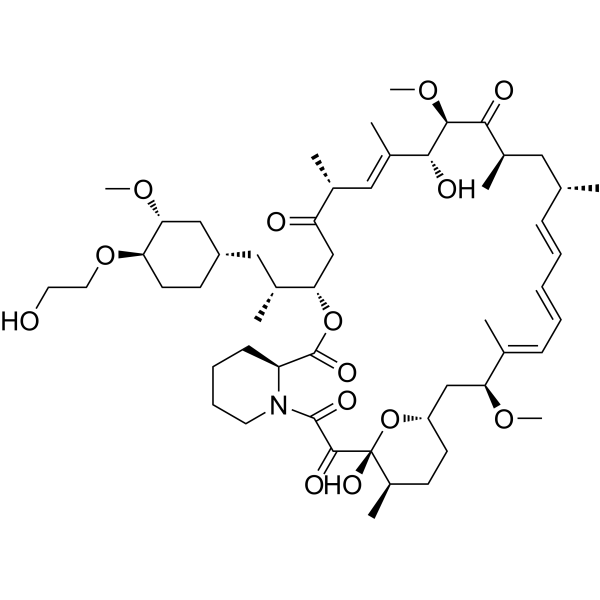
Everolimus (Standard)mTORC Inhibitor -
HY-13756A
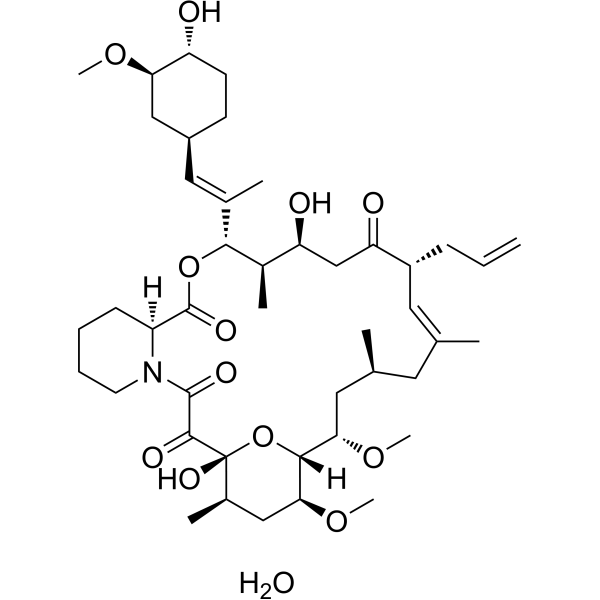
Tacrolimus monohydrateCalcineurin Inhibitor -
HY-16046
RimiducidDimerization Inducer -
HY-15310
IvermectinAnti-parasite Agent -

HY-10219G
Rapamycin (GMP)mTOR Inhibitor -

HY-10219R
Rapamycin (Standard)Reference Standard
Publications Citing Use of MedChemExpress (MCE) Ascomycin
More- Proc Natl Acad Sci U S A. 2021 Jan 12;118(2):e2009539118. [Abstract]
- Pharmaceutics. 2023 Jan 31;15(2):473. [Abstract]
- mBio. 2017 Oct 24;8(5):e01752-17. [Abstract]
- Neurochem Res. 2019 Feb;44(2):465-471. [Abstract]
- Biopharm Drug Dispos. 2023 Apr;44(2):157-164. [Abstract]
- Hong Kong Polytechnic University. 2023 Apr.
 Customer Validation & Images

-
Cell Proliferation/Viability Assay
All Parasite Isoforms
MoreAll Antibiotic Isoforms
More

Biological Activity
Description
IC50 & Target
|
Plasmodium |
Cellular Effect
|
Cell Line

|
Type | Value | Description | References |
|---|---|---|---|---|
| Jurkat | IC50 |
0.205 nM
Compound: 2, FK520
|
Inhibition of calcineurin in human Jurkat cells assessed as inhibition of NFAT-mediated IL-2 production after 8 hrs by beta-lactamase reporter gene assay
Inhibition of calcineurin in human Jurkat cells assessed as inhibition of NFAT-mediated IL-2 production after 8 hrs by beta-lactamase reporter gene assay
|
10.1039/C2MD20266B |
| Murine T-cell line | IC50 |
0.69 nM
Compound: 2
|
Inhibition of proliferation of PMA and Ionomycin stimulated murine T cells
Inhibition of proliferation of PMA and Ionomycin stimulated murine T cells
|
10.1016/0960-894X(95)00161-L |
| T-cell | IC50 |
0.69 nM
Compound: 3 (Ascomycin)
|
Agonistic activity in a murine splenic T-cell proliferation assay was calculated by measurement of [3H]thymidine uptake relative to control
Agonistic activity in a murine splenic T-cell proliferation assay was calculated by measurement of [3H]thymidine uptake relative to control
|
10.1016/S0960-894X(01)81248-8 |
| T-cell | IC50 |
0.69 nM
Compound: 1
|
In vitro immunosuppressive activity in murine splenic T cells
In vitro immunosuppressive activity in murine splenic T cells
|
[PMID: 10450986] |
| T-cell | IC50 |
0.69 nM
Compound: 1
|
Immunosuppressive activity was determined as the ability to inhibit T cell proliferation.
Immunosuppressive activity was determined as the ability to inhibit T cell proliferation.
|
[PMID: 9873523] |
| T-cell | IC50 |
0.69 nM
Compound: 2 ; 2A, (L-683590)
|
In vitro immunosuppressive activity against proliferation of antigen stimulated murine splenic T cells
In vitro immunosuppressive activity against proliferation of antigen stimulated murine splenic T cells
|
10.1016/S0960-894X(01)80265-1 |
| T-cell | IC50 |
0.69 nM
Compound: 2, (L-683590)
|
In vitro evaluation for immunosuppressive activity against proliferation of antigen stimulated murine splenic T cells
In vitro evaluation for immunosuppressive activity against proliferation of antigen stimulated murine splenic T cells
|
10.1016/S0960-894X(01)80264-X |
| T-cell | IC50 |
0.69 nM
Compound: Ascomycin
|
In vitro suppression of T-cell proliferation.
In vitro suppression of T-cell proliferation.
|
10.1016/S0960-894X(97)00409-5 |
In Vitro
Ascomycin (FR-900520) suppresses immune response in vitro with an IC50 value of 0.55 nM for mouse mixed lymphocyte reaction[1].
Ascomycin is a powerful calcium-dependent serine/threonine protein phosphatase (calcineurin [CaN], protein phosphatase 2B) inhibitors. Its mechanism of action involves the formation of a molecular complex with the intracellular FK506-binding protein-12 (FKBP12), thereby acquiring the ability to interact with CaN and to interfere with the dephosphorylation of various substrates[3].
MedChemExpress (MCE) has not independently confirmed the accuracy of these methods. They are for reference only.
In Vivo
MedChemExpress (MCE) has not independently confirmed the accuracy of these methods. They are for reference only.
-
Animal Model:WKA rats (8-10 weeks old) transplanted with F344 skin allografts[1]
-
Dosage:0.32 mg/kg, 1 mg/kg, 3.2 mg/kg, 10 mg/kg, 32 mg/kg
-
Administration:i.m.; 5 days a week; for 2 weeks
-
Result:Clearly prolonged skin allograft survival in rats


Chemical Information
-
CAS No. 104987-12-4
-
Appearance Solid
-
Molecular Weight 792.01
-
Formula C43H69NO12
-
Color White to off-white
-
SMILES
O=C([C@@](CCCC1)([H])N1C(C([C@@]2(O)[C@H](C)C[C@H](OC)[C@@](O2)([H])[C@@H](OC)C[C@@H](C)C/C(C)=C/[C@H]3CC)=O)=O)O[C@H](/C(C)=C/[C@H]4C[C@@H](OC)[C@H](O)CC4)[C@H](C)[C@@H](O)CC3=O
-
Synonyms
Immunomycin; FR-900520; FK520
-
Initial Source
Streptomyces tubercidicus
-
Shipping
Room temperature in continental US; may vary elsewhere.
-
Storage
Powder -20°C 3 years 4°C 2 years In solvent -80°C 2 years -20°C 1 year


Publications (6)
-
Journal Impact Factor
-
Most Recent
-
Proc Natl Acad Sci U S A
2021 Jan 12;118(2):e2009539118. PMID: 33376206 -
Pharmaceutics
Synergistic Combination of Irinotecan and Rapamycin Orally Delivered by Nanoemulsion for Enhancing Therapeutic Efficacy of Pancreatic Cancer. [Abstract]2023 Jan 31;15(2):473. PMID: 36839795 -
mBio
FKBP12-Dependent Inhibition of Calcineurin Mediates Immunosuppressive Antifungal Drug Action in Malassezia. [Abstract]2017 Oct 24;8(5):e01752-17. PMID: 29066552
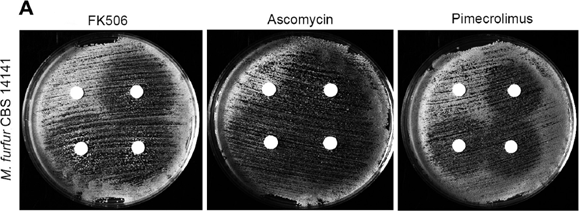
Ascomycin purchased from MedChemExpress. Usage Cited in: mBio. 2017 Oct 24;8(5):e01752-17. [Abstract]
Deletion of the FKB1 gene of M. furfur confers resistance to FK506. Sensitivity of the M. furfur strain CBS 14141 to the calcineurin inhibitors FK506, Ascomycin, and Pimecrolimus.
-
Neurochem Res
Systemic Rapamycin Attenuates Morphine-Induced Analgesic Tolerance and Hyperalgesia in Mice. [Abstract]2019 Feb;44(2):465-471. PMID: 30547365 -
Biopharm Drug Dispos
2023 Apr;44(2):157-164. PMID: 36840704 -


Solvent & Solubility
In Vitro:
DMSO : ≥ 39 mg/mL (49.24 mM; Hygroscopic DMSO has a significant impact on the solubility of product, please use newly opened DMSO)
* "≥" means soluble, but saturation unknown.
Please refer to the solubility information to select the appropriate solvent. Once prepared, please aliquot and store the solution to prevent product inactivation from repeated freeze-thaw cycles.
Storage method and period of stock solution: -80°C, 2 years; -20°C, 1 year. When stored at -80°C, please use it within 2 years. When stored at -20°C, please use it within 1 year.
Please refer to the solubility information to select the appropriate solvent. Once prepared, please aliquot and store the solution to prevent product inactivation from repeated freeze-thaw cycles.
Storage method and period of stock solution: -80°C, 2 years; -20°C, 1 year. When stored at -80°C, please use it within 2 years. When stored at -20°C, please use it within 1 year.
Concentration (start) × Volume (start) = Concentration (final) × Volume (final)
In Vivo:
Select the appropriate dissolution method based on your experimental animal and administration route.
- For the following dissolution methods, please ensure to first prepare a clear stock solution using an In Vitro approach and then sequentially add co-solvents:
- To ensure reliable experimental results, the clarified stock solution can be appropriately stored based on storage conditions. As for the working solution for In Vivo experiments, it is recommended to prepare freshly and use it on the same day.
- The percentages shown for the solvents indicate their volumetric ratio in the final prepared solution. If precipitation or phase separation occurs during preparation, heat and/or sonication can be used to aid dissolution.
Add each solvent one by one: 10% DMSO 90% (20% SBE-β-CD in Saline)
Solubility: 2.5 mg/mL (3.16 mM); Suspended solution; Need ultrasonic
This protocol yields a suspended solution of 2.5 mg/mL. Suspended solution can be used for oral and intraperitoneal injection.
Taking 1 mL working solution as an example, add 100 μL DMSO stock solution (25.0 mg/mL) to 900 μL 20% SBE-β-CD in Saline, and mix evenly.
Preparation of 20% SBE-β-CD in Saline (4°C, storage for one week): 2 g SBE-β-CD powder is dissolved in 10 mL Saline, completely dissolve until clear.
Add each solvent one by one: 10% DMSO 40% PEG300 5% Tween-80 45% Saline
Solubility: ≥ 2.08 mg/mL (2.63 mM); Clear solution
This protocol yields a clear solution of ≥ 2.08 mg/mL (saturation unknown).
Taking 1 mL working solution as an example, add 100 μL DMSO stock solution (20.8 mg/mL) to 400 μL PEG300, and mix evenly; then add 50 μL Tween-80 and mix evenly; then add 450 μL Saline to adjust the volume to 1 mL.
Preparation of Saline: Dissolve 0.9 g sodium chloride in ddH₂O and dilute to 100 mL to obtain a clear Saline solution.
In Vivo Dissolution Calculator
Please enter the basic information of animal experiments:
-
-
-
-
Recommended: Prepare an additional quantity of animals to account for potential losses during experiments.
Please enter your animal formula composition:
-
%DMSO +
Recommended: Keep the proportion of DMSO in working solution below 2% if your animal is weak.
-
%+
-
+%Tween-80 + +
-
%Saline +
The co-solvents required include: DMSO, . All of co-solvents are available by MedChemExpress (MCE). , Tween 80. All of co-solvents are available by MedChemExpress (MCE).
Working solution concentration: 0.22 mg/mL
Method for preparing stock solution: mg drug dissolved in μL DMSO. Stock solution concentration: mg/mL.
1. Take μL DMSO stock solution;
2. Add μL .
μL , mix evenly;
3. Then add μL Tween 80, mix evenly;
4. Then add μL
Please ensure that the stock solution in the first step is dissolved to a clear state, and add co-solvents in sequence. You can use ultrasonic heating (ultrasonic cleaner, recommended frequency 20-40 kHz), vortexing, etc. to assist dissolution.


Purity & Documentation
-
Data Sheet (282 KB)
-
SDS (607 KB)
- English - EN (607 KB)
- Français - FR (607 KB)
- Deutsch - DE (607 KB)
- Norwegian - NO (607 KB)
- Español - ES (607 KB)
- Swedish - SV (607 KB)
- Italian - IT (607 KB)
- Korean - KR (607 KB)
- Portuguese - PT (607 KB)
-
Handling Instructions (2659 KB)
References
[1]. Hatanaka H, et al. FR-900520 and FR-900523, novel immunosuppressants isolated from a Streptomyces. II. Fermentation, isolation and physico-chemical and biological characteristics. J Antibiot (Tokyo). 1988 Nov;41(11):1592-601. [Content Brief]
[2]. Krishika Sambyal, et al. Bioprocess and genetic engineering aspects of ascomycin production: a review. J Genet Eng Biotechnol. 2020 Nov 19;18(1):73. [Content Brief]
[3]. Germán Sierra-Paredes, et al. Ascomycin and FK506: pharmacology and therapeutic potential as anticonvulsants and neuroprotectants. CNS Neurosci Ther. Spring 2008;14(1):36-46. [Content Brief]


Complete Stock Solution Preparation Table
Please refer to the solubility information to select the appropriate solvent. Once prepared, please aliquot and store the solution to prevent product inactivation from repeated freeze-thaw cycles.
Storage method and period of stock solution: -80°C, 2 years; -20°C, 1 year. When stored at -80°C, please use it within 2 years. When stored at -20°C, please use it within 1 year.
| Optional Solvent | Concentration Solvent Mass | 1 mg | 5 mg | 10 mg | 25 mg |
|---|---|---|---|---|---|
| DMSO | 1 mM | 1.2626 mL | 6.3131 mL | 12.6261 mL | 31.5653 mL |
| 5 mM | 0.2525 mL | 1.2626 mL | 2.5252 mL | 6.3131 mL | |
| 10 mM | 0.1263 mL | 0.6313 mL | 1.2626 mL | 3.1565 mL | |
| 15 mM | 0.0842 mL | 0.4209 mL | 0.8417 mL | 2.1044 mL | |
| 20 mM | 0.0631 mL | 0.3157 mL | 0.6313 mL | 1.5783 mL | |
| 25 mM | 0.0505 mL | 0.2525 mL | 0.5050 mL | 1.2626 mL | |
| 30 mM | 0.0421 mL | 0.2104 mL | 0.4209 mL | 1.0522 mL | |
| 40 mM | 0.0316 mL | 0.1578 mL | 0.3157 mL | 0.7891 mL |


Ascomycin Related Classifications
HY-13557 Related Classifications
 Powered by Bioz