



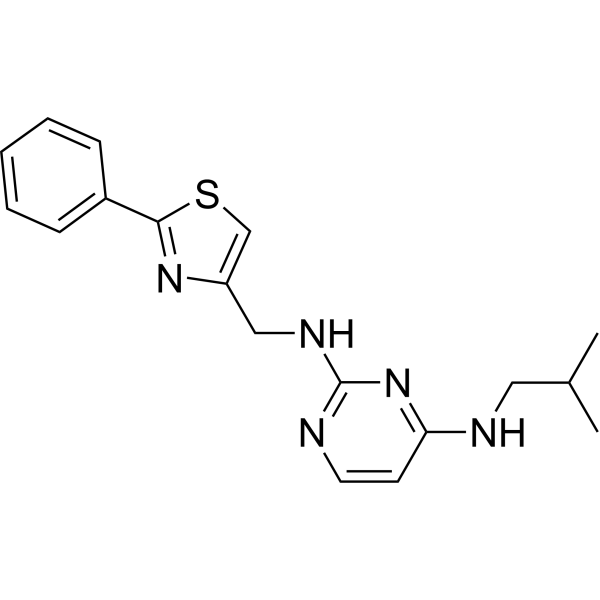
KHS101
Based on 2 publication(s) in Google Scholar
KHS101 is a blood-brain barrier-penetrant anticancer agent that primarily functions by inhibiting HSPD1 (IC50 = 14.4 μM) and TACC3 across different cellular backgrounds. KHS101 promotes the aggregation of HSPD1 with client proteins, destabilizes TACC3, and reduces the levels of TACC3, Aurora A and PLK1. KHS101 induces autophagy, apoptosis, cell cycle exit and neuronal differentiation; it suppresses cancer cell growth, motility, EMT and stemness; it also impairs mitochondrial bioenergetics and glycolysis in glioblastoma cells. KHS101 can be used in research related to glioblastoma multiforme and breast cancer.
Nur für Forschungszwecke. Wir verkaufen nicht an Patienten.
- CAS. Nr.: 1262770-73-9
- Formel: C18H21N5S
- Molecular Weight:339.46
-
Speicherung:
Please store the product under the recommended conditions in the Certificate of Analysis.

To place orders, for customer services and technical support, please contact: MedChemExpress USA
Tel: 609-228-6898 E-mail: [email protected] [email protected]


-
 Biologische Aktivität
-
Chemical Information
- Protokoll
- Reinheit & Dokumentation
- Verweise
-
 Help & FAQs


Publications Citing Use of MedChemExpress (MCE) KHS101
MoreAlle Aurora Kinase Isoform-spezifische Produkte anzeigen
More

Biologische Aktivität
Beschreibung
Cellular Effect
|
Cell Line

|
Type | Value | Description | References |
|---|---|---|---|---|
| JIMT-1 | IC50 |
32.98 μM
Compound: 7a
|
Antiproliferative activity against human JIMT-1 cells assessed as cell growth inhibition measured after 72 hrs by MTT assay
Antiproliferative activity against human JIMT-1 cells assessed as cell growth inhibition measured after 72 hrs by MTT assay
|
[PMID: 36332551] |
| MDA-MB-231 | IC50 |
31.13 μM
Compound: 7a
|
Antiproliferative activity against human MDA-MB-231 cells assessed as cell growth inhibition measured after 72 hrs by MTT assay
Antiproliferative activity against human MDA-MB-231 cells assessed as cell growth inhibition measured after 72 hrs by MTT assay
|
[PMID: 36332551] |
| SK-OV-3 | IC50 |
21.44 μM
Compound: 7a
|
Antiproliferative activity against human SK-OV-3 cells assessed as cell growth inhibition measured after 72 hrs by MTT assay
Antiproliferative activity against human SK-OV-3 cells assessed as cell growth inhibition measured after 72 hrs by MTT assay
|
[PMID: 36332551] |
| U-251 | IC50 |
49.13 μM
Compound: 7a
|
Cytotoxicity against human U251 cells assessed as inhibition of cell growth measured after 72 hrs by MTT assay
Cytotoxicity against human U251 cells assessed as inhibition of cell growth measured after 72 hrs by MTT assay
|
[PMID: 36332551] |
| U-87MG ATCC | IC50 |
37.85 μM
Compound: 7a
|
Antiproliferative activity against human U87 cells assessed as inhibition of cell growth incubated for 72 hrs by MTT assay
Antiproliferative activity against human U87 cells assessed as inhibition of cell growth incubated for 72 hrs by MTT assay
|
[PMID: 36332551] |
In Vitro
KHS101 (0-20 μM; 5 days) induces dose-dependent cytotoxicity in all 6 patient-derived GBM cell lines as well as U251/U87 cells, with IC50 values at 5 days of treatment as follows: 2.23 μM in GBM1 cells, 0.97 μM in GBM4 cells, 5.05 μM in GBM11 cells, 3.28 μM in GBM13 cells, 1.98 μM in GBM14 cells, and 1.87 μM in GBM20 cells[1].
Treatment with KHS101 (1-7.5 μM; 12 h) selectively induces concentration-dependent autophagy in patient-derived human glioblastoma (GBM) cell lines (GBM1, GBM4, GBM11, GBM13, GBM14, GBM20), whereas no observable effect is detected in non-cancerous NP1 neural progenitor cells[1].
KHS101 (7.5 μM; 48 h) selectively induces time-dependent apoptosis in patient-derived human GBM cell lines (GBM1, GBM11, GBM20), while exerting minimal effects on non-cancerous NP1 neural progenitor cells, and this apoptosis is independent of late-stage autophagy[1].
KHS101 (7.5 μM) selectively disrupts the metabolic phenotype of patient-derived human GBM cell lines and induces a significant hypoxic shift in metabolic activity, whereas acute treatment at 7.5 μM causes only minimal glycolytic changes in non-cancerous cell lines (NP1, NP2, NHAs)[1].
KHS101 (7.5 μM; 4-24 h) selectively impairs aerobic glycolysis and tricarboxylic acid (TCA) cycle activity in patient-derived human GBM1 cells, reduces the incorporation of glucose-derived carbon into key metabolic intermediates, and decreases total cellular ATP levels by ≥ 50% after 24 hours; this agent exerts no such effects in non-cancerous NP1 neural progenitor cells[1].
KHS101 (7.5 μM; 1 h) selectively induces the aggregation of HSPD1 and key metabolic enzymes in patient-derived human GBM1 cells, whereas only minimal aggregation is observed in non-cancerous NP1 neural progenitor cells[1].
KHS101 (10-100 μM; 24 h) inhibits the proliferation of MDA-MB-231, MDA-MB-468 and MCF7 breast cancer cells in a TACC3 expression-dependent manner, with 20 μM selectively suppressing the growth of breast cancer cells without affecting the non-tumorigenic mammary epithelial cell line MCF10A[2].
KHS101 (5-20 μM; 24 h) reduces TACC3 protein levels in MDA-MB-231 and SKBR3 breast cancer cells at the concentration of 20 μM, but does not alter TACC3 levels in MDA-MB-468 and BT549 breast cancer cells after 24 h of treatment[2].
KHS101 (5-20 μM; 7 days) inhibits mammosphere formation and reduces mammosphere formation efficiency in MDA-MB-468 and SKBR3 breast cancer cells[2].
KHS101 (5-20 μM; 24 h) reduces the mRNA expression levels of the stem cell markers Oct4, Sox2 and Nanog in MDA-MB-231 breast cancer cells[2].
KHS101 (20 μM; 24 h) reduces the protein expression levels of mesenchymal markers (N-cadherin, Vimentin) and the stemness marker CD44 in MDA-MB-231 breast cancer cells[2].
KHS101 (20 μM; 24 h) reduces the mRNA expression levels of EMT transcription factors including Snail, Slug and Twist in MDA-MB-231 breast cancer cells[2].
KHS101 (20-60 μM; 16 h) inhibits the migration of MDA-MB-231 and MDA-MB-468 breast cancer cells[2].
KHS101 (20 μM; 24 h) inhibits the invasion of MDA-MB-231 and MDA-MB-468 breast cancer cells after treatment at 20 μM for 24 h[2].
KHS101 (20 μM; 24-72 h) increases the sub-G1 phase apoptotic cell population in MDA-MB-231 and MDA-MB-468 breast cancer cells after treatment at 20 μM for 24, 48, and 72 h, and exerts cell type-specific effects on the overall cell cycle distribution[2].
KHS101 (20 μM; 24-72 h) induces time-dependent apoptosis in MDA-MB-231 and MDA-MB-468 breast cancer cells after treatment at 20 μM for 24, 48, and 72 h, with a stronger effect on MDA-MB-468 cells[2].
KHS101 (20 μM) alters the global proteomic profile of MDA-MB-468 breast cancer cells, with significant changes observed in proteins involved in catalytic activity, binding, metabolic processes, cellular processes, and multiple cancer-related signaling pathways[2].
KHS101 (20 μM; 24 h) reduces the protein expression of Aurora A and PLK1 mitotic kinases in MDA-MB-468, SKBR3 and MCF7 breast cancer cells[2].
KHS101 (0.6-5 μM; 1-12 d) induces neuronal differentiation of adherently cultured adult rat hippocampal neural progenitor cells (NPCs) in a dose-dependent manner, with an EC50 of approximately 1 μM; treatment at 5 μM for 12 days generates functionally mature neurons[3].
KHS101 (1.5-5 μM; 4 d) induces neuronal differentiation of secondary neurospheres derived from neural precursor cells (NPCs) in the hippocampus and SVZ of adult rats. Under the condition of treatment with 1.5-5 μM for 4 days, 40%-60% of the cells become TuJ1-positive neurons[3].
KHS101 (0.6-5 μM; 4 d) dose-dependently inhibits BMP4-induced differentiation of adult rat hippocampal neural precursor cells (NPCs) into astrocytes and promotes their differentiation into neurons[3].
KHS101 (0.6-5 μM; 24 h-72 h) upregulates the expression of Cdkn1 in a dose-dependent manner, and inhibits the proliferation and mitotic activity of neural precursor cells (NPCs) in the hippocampus of adult rats; after treatment with 5 μM for 72 h, the number of Ki67-positive cells decreases significantly[3].
KHS101 (5-15 μM; 12-24 h) enhances the nuclear localization of ARNT2 in ectopically expressing 293T cells and adult rat hippocampal neural precursor cells (NPCs)[3].
MedChemExpress (MCE) has not independently confirmed the accuracy of these methods. They are for reference only. Further protocols information, click here.
-
Cell Line:Patient-derived human GBM cell lines (GBM1, GBM4, GBM11, GBM13, GBM14, GBM20), noncancerous adult brain neural progenitor (NP1) cell line
-
Concentration:1 μM, 2.5 μM, 7.5 μM
-
Incubation Time:12 h
-
Result:Induced pronounced intracellular vacuole development and increased LC3B-positive autophagosomal compartments in GBM1 cells compared to NP1 cells and vehicle-treated controls after 12 hours of treatment with 7.5 μM.
Increased LC3B staining in all tested GBM cell lines, while NP1 cells showed no such increase.
Caused concentration-dependent increase in LC3B-positive cytoplasmic area in GBM1, GBM11, and GBM20 cells after 12 hours, with the highest response at 7.5 μM.
Increased CYTO-ID positive cells in GBM1 cells in a concentration-dependent manner, with > 80% of cells positive after 12 hours of treatment with 7.5 μM.
-
Cell Line:Patient-derived human GBM cell lines (GBM1, GBM11, GBM20), noncancerous adult brain neural progenitor (NP1) cell line
-
Concentration:7.5 μM
-
Incubation Time:48 h
-
Result:Induced a time-dependent increase in caspase 3/7 activation in GBM1 cells over 50 hours, with significantly higher activation than vehicle controls at the 48-hour time point.
Caused marked increases in relative caspase 3/7 activation in GBM1, GBM11, and GBM20 cells compared to NP1 cells after 48 hours of treatment with 7.5 μM.
Induced significant accumulation of annexin V-positive apoptotic cells in GBM1 cells 48 hours after treatment, and this apoptotic cell death was not prevented by chemical inhibition of late-stage autophagy.
-
Cell Line:MCF10A non-tumorigenic human mammary epithelial cells, MDA-MB-231, MDA-MB-468, and MCF7 breast cancer cells
-
Concentration:10, 20, 40, 60, 80, 100 μM
-
Incubation Time:24 h
-
Result:Showed breast cancer cells (MDA-MB-231, MDA-MB-468, MCF7) were more sensitive to KHS101 than MCF10A cells, with proliferation inhibition correlated to endogenous TACC3 expression.
Revealed MDA-MB-231 and MDA-MB-468 (high TACC3) showed greater sensitivity than MCF7 (low/undetectable TACC3).
Suppressed breast cancer cell growth at 20 μM but did not affect MCF10A cell growth.
-
Cell Line:MDA-MB-231, MDA-MB-468, SKBR3, and BT549 breast cancer cells
-
Concentration:5, 10, 20 μM
-
Incubation Time:24 h
-
Result:Significantly reduced TACC3 protein levels at 20 μM in MDA-MB-231 and SKBR3 cells.
Showed no significant change in TACC3 levels in MDA-MB-468 and BT549 cells.
-
Cell Line:MDA-MB-231 breast cancer cells
-
Concentration:5, 10, 20 μM
-
Incubation Time:24 h
-
Result:Reduced mRNA expression of stem cell markers Oct4, Sox2, and Nanog in a concentration-dependent manner.
Showed all tested concentrations significantly decreased marker expression relative to control.
-
Cell Line:MDA-MB-468 and MDA-MB-231 breast cancer cells
-
Concentration:20 μM
-
Incubation Time:24 h
-
Result:Reduced protein expression of mesenchymal markers N-cadherin and Vimentin, and stemness marker CD44 in MDA-MB-231 cells.
Found MDA-MB-468 cells showed undetectable N-cadherin and CD44 levels, and reduced TACC3 expression.
-
Cell Line:MDA-MB-231 breast cancer cells
-
Concentration:20 μM
-
Incubation Time:24 h
-
Result:Significantly reduced mRNA expression of EMT transcription factors Snail, Slug, and Twist relative to control.
-
Cell Line:MDA-MB-231 and MDA-MB-468 breast cancer cells
-
Concentration:20, 40, 60 μM
-
Incubation Time:16 h
-
Result:Reduced relative migration of MDA-MB-231 and MDA-MB-468 cells in a concentration-dependent manner.
Showed all tested concentrations significantly decreased migration relative to control.
-
Cell Line:MDA-MB-231 and MDA-MB-468 breast cancer cells
-
Concentration:20 μM
-
Incubation Time:24 h
-
Result:Significantly reduced relative invasion of MDA-MB-231 and MDA-MB-468 cells relative to control.
-
Cell Line:MDA-MB-231 and MDA-MB-468 breast cancer cells
-
Concentration:20 μM
-
Incubation Time:24, 48, 72 h
-
Result:Induced cell cycle distribution changes in a cell type-dependent manner.
Significantly increased the sub-G1 population (a marker of apoptotic cells) in both MDA-MB-231 and MDA-MB-468 cells in a time-dependent manner.
-
Cell Line:MDA-MB-231 and MDA-MB-468 breast cancer cells
-
Concentration:20 μM
-
Incubation Time:24, 48, 72 h
-
Result:Increased the percentage of apoptotic cells in both MDA-MB-231 and MDA-MB-468 cells in a time-dependent manner.
Found MDA-MB-468 cells showed a greater magnitude of apoptotic induction than MDA-MB-231 cells.
-
Cell Line:MDA-MB-468, SKBR3, and MCF7 breast cancer cells
-
Concentration:20 μM
-
Incubation Time:24 h
-
Result:Significantly reduced protein expression of mitotic kinases Aurora A and PLK1 in MDA-MB-468, SKBR3, and MCF7 cells, regardless of endogenous TACC3 expression levels.
In Vivo
KHS101 (6 mg/kg; subcutaneous injection; twice daily; alternating 3 or 5 days of administration per week for a total of 10 weeks) significantly improves the survival rate and reduces tumor volume in GBMX1 intracranial xenograft mouse models, with no obvious toxicity[1].
KHS101 (6 mg/kg; subcutaneous injection; twice daily for 14 consecutive days) significantly increases the neuronal differentiation level of endogenous neural progenitor cells in adult rats, elevating the proportion of BrdU/NeuN double-positive cells from approximately 20% to approximately 40%. Meanwhile, it reduces the proliferative capacity of neural progenitor cells without inducing apoptosis or causing obvious toxicity[3].
MedChemExpress (MCE) has not independently confirmed the accuracy of these methods. They are for reference only.
-
Animal Model:Immunodeficient mice[1]
-
Dosage:6 mg/kg
-
Administration:s.c.; twice daily; 10 days
-
Result:Increased NAD(P)H autofluorescence signal area in tumor tissue.
Increased HK2-positive tumor area.
Reduced tumor cell proliferation by ~2-fold (assessed by MKI67 staining).
Increased acellular/pyknotic areas in tumor sections.
Reduced frontal-to-caudal tumor expansion across sequential brain sections.
Reduced vimentin-positive tumor cell invasion across the corpus callosum by ≥ 2-fold.
Showed no discernible hepatic toxicity.
-
Animal Model:Immunodeficient mice[1]
-
Dosage:6 mg/kg
-
Administration:s.c.; twice daily; biweekly alternating 5 and 3 treatment days per week for 10 weeks
-
Result:Increased survival of GBMX1 tumor-bearing mice in both cohorts.
Reduced tumor size by ~2-fold compared with vehicle-treated mice.
Showed no treatment-related adverse effects leading to study removal.
-
Animal Model:Fisher 344 (adult, ~10 weeks old)[3]
-
Dosage:6 mg/kg
-
Administration:s.c.; twice daily; 14 days
-
Result:Increased the percentage of BrdU/NeuN double-positive cells from ~20% to ~40% in the hippocampal dentate gyrus.
Significantly reduced the number of Ki67-positive cells and BrdU-positive cells in the subgranular layer of the dentate gyrus.
Showed no significant difference in the percentage of BrdU/GFAP double-positive cells.
Left apoptosis (assessed via cleaved caspase 3 staining) in the dentate gyrus unchanged compared to vehicle controls.
Caused no signs of lethargy, weight loss, or sickness in treated animals.


Chemical Information
-
CAS. Nr. 1262770-73-9
-
Molecular Weight 339.46
-
Formel C18H21N5S
-
SMILES
CC(C)CNC1=NC(NCC2=CSC(C3=CC=CC=C3)=N2)=NC=C1
-
Versand
Room temperature in continental US; may vary elsewhere.
-
Speicherung
Please store the product under the recommended conditions in the Certificate of Analysis.


Publications (2)
-
Journal Impact Factor
-
Most Recent

Protokoll
-
Somatic Cell Culture
A method of simulating the in vivo environment in vitro to maintain the cell growth, differentation and main functions.
-
Cell differentiation
Cell differentiation refers to the process in which cells of the same origin gradually produce cell groups with different morphological structure and functional characteristics.
-
Breast Cancer Modeling
Breast cancer is a heterogeneous cancer, and it has been distinguished into four subtypes: luminal A, luminal B, HER2-positive and basal-like. Molecular mutations, epigenetic alterations, hormone exposure and immune microenvironment are related to the progression of breast cancer.
-
Directly Induced Neuron Culture
Directly induced neuron culture converts somatic cells, most commonly fibroblasts, into induced neurons without passing through a pluripotent or neural progenitor stage; classic evidence shows that mouse fibroblasts can be converted by Ascl1, Brn2/Pou3f2, and Myt1l, human fibroblasts can be converted by defined neuronal transcription factors, and human fibroblasts can also be converted by miR-9/9-124 with neurogenic or subtype-specifying transcription factors. The readout is acquisition of neuronal identity and function, assessed by neuronal morphology, neuronal markers such as Tuj1/βIII-tubulin, MAP2, synapsin, and subtype markers when relevant, together with functional assays such as action-potential firing, synaptic activity, and electrophysiology.
-
PC12 NGF-Induced Neuronal Differentiation Culture
PC12 cells are a rat adrenal pheochromocytoma clonal line that responds to NGF by stopping proliferation and extending branching neurite-like processes; after longer NGF exposure, cells develop long processes and neuronal-like ultrastructural and functional features. NGF-induced differentiation is read out mainly by neurite outgrowth, reduced proliferation, microtubule assembly, and neuronal differentiation-associated proteins such as MAPs, tau, GAP-43, and synapsin-1.
-
iPSC/hPSC-Derived Neuron Differentiation Culture
iPSC/hPSC-derived neuron differentiation culture directs pluripotent cells toward neuroectoderm and then neuronal lineages by suppressing developmental signals that maintain non-neural fates; the classic monolayer dual-SMAD approach blocks BMP and Activin/TGF-β signaling with Noggin or dorsomorphin/LDN193189 plus SB431542, producing PAX6-positive neural progenitors that can be further matured into neurons. The readout is generated by morphology, neural progenitor markers, neuronal markers, subtype markers, and functional assays: PAX6/SOX1/NESTIN indicate neural progenitor induction, βIII-tubulin/TUJ1 and MAP2 indicate neuronal differentiation, cortical programs can be assessed by FOXG1, TBR1, CTIP2, SATB2, and synaptic maturation can be assessed by synaptic proteins, calcium activity, multielectrode arrays, or patch-clamp electrophysiology.
-
Detection of Apoptosis
Apoptosis, also called programmed cell death, is generally characterized by distinct morphological characteristics.
-
TUNEL staining for apoptotic DNA fragmentation
TUNEL staining detects DNA strand breaks by using terminal deoxynucleotidyl transferase to add labeled nucleotides to exposed 3′-OH DNA termini, generating either microscopic staining in fixed cells or tissue sections, or fluorescence/cytometric signal in cell suspensions. TUNEL positivity reflects DNA fragmentation but should not be interpreted alone as definitive apoptosis, because TUNEL can also label necrotic, autolytic, mechanically damaged, or DNA-repair-associated DNA breaks.
-
Flow cytometric DNA-content cell-cycle staining
Flow cytometric DNA-content cell-cycle staining measures the fluorescence intensity of DNA-bound fluorochromes in single cells or nuclei to estimate DNA content distributions, allowing assignment of populations to G0/G1, S, and G2/M phases by DNA histogram deconvolution. Propidium iodide (PI) intercalates into DNA, and PI fluorescence is proportional to cellular DNA content when staining is performed under conditions that make DNA accessible and minimize non-DNA signal. Cells with G2/M DNA content are expected to show approximately twice the fluorescence intensity of G0/G1 cells, while S-phase cells occupy intermediate fluorescence values. PI-based DNA-content analysis can also detect cells with fractional DNA content, often reported as sub-G1, when DNA fragmentation and extraction during staining reduce retained DNA signal in apoptotic cells. DAPI is an alternative DNA fluorochrome for univariate DNA-content analysis, while bivariate approaches combining DNA content with proliferation
-
SH-SY5Y Neuronal Differentiation Culture
SH-SY5Y neuronal differentiation culture uses sequential exposure to retinoic acid and neurotrophic factors to reduce proliferative neuroblastoma-like behavior and induce neuron-like morphology, including neurite extension, neuronal marker expression, and, in RA/BDNF protocols, greater synaptic-marker expression than undifferentiated culture. Retinoic acid is commonly used as the initiating differentiation cue, while BDNF in serum-reduced or serum-free medium supports later maturation and neurotrophic-factor-dependent neuron-like survival.
-
Autophagy
Autophagy is a process in which eukaryotic cells use lysosomes to degrade their own cytoplasmic proteins and damaged organelles under the regulation of autophagy related gene (Atg). Microtubule-associated proteins light chain 3 (LC3) is recognized as autophagy marker, which transfers from cytoplasmic LC3 (LC3-I) to membrane type (LC3-II). LC3-II/I ratio could be detected by Western Blot and fluorescence microscopy.
-
Apoptosis Solutions
Apoptosis is a regulated, generally non-lytic cell-death pathway that removes unwanted, damaged, infected, or abnormal cells through coordinated morphological changes, caspase activation, DNA fragmentation, and membrane remodeling. The intrinsic apoptosis pathway is controlled mainly by mitochondrial outer membrane permeabilization, BCL-2 family proteins, cytochrome c release, apoptosome formation, caspase-9 activation, and downstream executioner caspase-3/7 activation. The extrinsic apoptosis pathway is initiated by death receptors such as Fas, TNFR, and TRAIL receptors, which recruit adaptor proteins and activate caspase-8 before engaging executioner caspases or mitochondrial amplification through BID cleavage. Apoptosis is linked to many phenotypes, including cancer cell killing, tissue homeostasis, immune regulation, neurodegeneration, infection response, and treatment-induced cytotoxicity; unresolved questions include how apoptosis interacts with necroptosis, pyroptosis, ferroptos
-
Lysosome and acidic-vesicle live-cell staining
Lysosome and acidic-vesicle live-cell staining detects acidic intracellular compartments by using membrane-permeant acidotropic probes that accumulate in low-pH vesicles, including lysosomes, late endosomes, autolysosomes, and acidic phagosomes. LysoTracker staining is commonly used as an intensity-based readout of acidic lysosomal compartment abundance or enlargement, while acridine orange produces green fluorescence in less concentrated compartments and red fluorescence after concentration-dependent accumulation in acidic vesicular organelles. Loss or reduction of acridine-orange red signal can be used as a readout of lysosomal membrane permeabilization or reduced acidic-vesicle integrity. This protocol is designed for live cultured cells and can be adapted for fluorescence microscopy, high-content imaging, plate-reader readout, or flow cytometry when the selected literature supports the readout. Because these dyes report acidotropic accumulation rather than lysosome identity alone,
-
MTT Cell Proliferation Assay
The MTT assay is a colorimetric endpoint assay for estimating viable cell number, cell growth, cytotoxicity, or cell activation in cultured mammalian cells. Living cells reduce the yellow tetrazolium salt MTT into purple/blue formazan, while dead cells do not generate the same signal; the resulting color can be quantified with a multiwell spectrophotometer. MTT reduction is commonly interpreted as a readout of metabolic activity that often correlates with viable cell number, but it should not be treated as a direct cell-counting method unless the assay is optimized for the cell type and experimental condition. Studies show that MTT reduction can involve mitochondrial and non-mitochondrial reducing systems, and formazan may accumulate in intracellular lipid droplets rather than simply marking mitochondria.
-
Macroautophagy Solutions
Macroautophagy is a conserved lysosome-dependent degradation pathway in which cytoplasmic material is sequestered into double-membrane autophagosomes and delivered to lysosomes for degradation and recycling. The pathway supports cellular homeostasis during nutrient limitation, organelle stress, protein-aggregate accumulation, infection, differentiation, and tissue remodeling by coupling cargo sequestration, autophagosome maturation, lysosomal fusion, and degradation of cargo-derived macromolecules. The core molecular sequence includes initiation by nutrient- and stress-regulated autophagy machinery, autophagosome nucleation, LC3/ATG8-family conjugation to autophagosomal membranes, cargo selection through receptors such as SQSTM1/p62, autophagosome-lysosome fusion, and lysosomal degradation. LC3 was identified as a mammalian homolog of yeast Atg8 that localizes to autophagosomal membranes after processing, and p62/SQSTM1 was shown to connect ubiquitinated cargo with autophagic degradati
-
Annexin V plus membrane-impermeant dye apoptosis staining
Annexin V-based apoptosis assays rely on the detection of phosphatidylserine (PS) externalization from the inner leaflet of the plasma membrane to the outer leaflet, an early biochemical hallmark of apoptosis. Fluorescently labeled Annexin V binds PS in a calcium-dependent manner, enabling identification of early apoptotic cells by flow cytometry or fluorescence microscopy. When combined with a membrane-impermeant DNA-binding dye (e. g. , propidium iodide), this approach allows discrimination between viable (Annexin V−/dye−), early apoptotic (Annexin V+/dye−), and late apoptotic or necrotic (Annexin V+/dye+) cell populations by assessing membrane integrity and PS exposure.
-
BrdU Incorporation Assay
Bromodeoxyuridine (BrdU) incorporation assay is based on the principle that BrdU, a thymidine analog, is incorporated into newly synthesized DNA during the S phase of the cell cycle, thereby serving as a marker of DNA replication and cellular proliferation. Incorporated BrdU can be detected using anti-BrdU antibodies following DNA denaturation, enabling visualization or quantification of proliferating cells through immunochemical detection methods such as immunofluorescence or immunohistochemistry.
-
Protocol for Cell Cycle
Cell-cycle analysis by flow cytometry measures DNA content in single cells to estimate the fraction of cells in G0/G1, S, and G2/M phases. Propidium iodide intercalates into DNA, and after RNA removal with RNase, fluorescence intensity reflects cellular DNA content: 2N cells are assigned to G0/G1, cells between 2N and 4N to S phase, and 4N cells to G2/M. DNA-content analysis alone cannot reliably separate G0 from G1 or G2 from M. Ki-67 can distinguish quiescent G0 cells from cycling cells, EdU or BrdU incorporation marks active DNA synthesis in S phase, and phospho-histone H3 staining identifies mitotic cells within the 4N population.
-
CCK-8/WST-8 Cell Proliferation Assay
The CCK-8/WST-8 assay is based on the reduction of the water-soluble tetrazolium salt WST-8 to a water-soluble formazan product by cellular dehydrogenases in metabolically active cells, where the generated formazan amount is proportional to the number of living cells and is quantified by measuring absorbance in the visible range, providing a colorimetric readout for cell viability and proliferation assessment. This class of tetrazolium-based assays improves upon earlier MTT-based systems by producing a water-soluble formazan, eliminating the need for organic solubilization steps and enabling direct spectrophotometric measurement in culture medium.
-
PC12 NGF-induced neuronal-like differentiation
PC12 cells are a rat adrenal pheochromocytoma-derived clonal cell line that responds to nerve growth factor by stopping proliferation and extending neurites, producing a sympathetic neuron-like phenotype used to study neuronal differentiation and neurite outgrowth. NGF acts through TrkA-dependent signaling, and neurite outgrowth is associated with ERK/Akt signaling, microtubule organization, neuronal-marker expression, and increased electrophysiological neuronal features such as sodium-channel density. The main assay readout is morphological differentiation, usually measured as the percentage of neurite-bearing cells, neurite length, neurite number, or total neurite length per cell. Additional readouts include GAP-43, tyrosine hydroxylase, βIII-tubulin, neurofilament, synapsin I, synaptophysin, ERK phosphorylation, Akt phosphorylation, and sodium-channel current density.
-
Cell Counting-Based Growth Curve Assay
Cell counting-based growth curve assays quantify cell proliferation by directly measuring changes in viable cell number over time using manual or automated counting methods such as hemocytometer-based counting or instrument-assisted cell enumeration, enabling construction of growth curves that reflect population expansion dynamics in response to culture conditions. A widely used approach is trypan blue exclusion with hemocytometer counting, where membrane-compromised (non-viable) cells take up the dye, allowing discrimination between viable and non-viable cells while simultaneously enabling total cell number quantification. Repeated sampling across time points allows estimation of proliferation rate, growth phases, and comparative growth kinetics between experimental conditions.
-
Cell Viability Determination by MTT Colorimetric Assay
The following protocol uses the MTT colorimetric assay as a classic literature-established method for assessing cell viability/metabolic activity in cultured mammalian cells. MTT[3-(4,5-dimethylthiazol-2-yl)-2,5-diphenyltetrazolium bromide] is reduced by metabolically active cells to a colored formazan product; the amount of formazan is quantified spectrophotometrically and provides an indirect measure of metabolically active viable cells. Importantly, MTT reduction reflects cellular oxidoreductase/metabolic activity rather than an absolute direct count of living cells, so changes in cellular metabolism can alter the signal independently of cell number.
-
Human pluripotent stem cell neural induction and neuron differentiation
Human pluripotent stem cell neural induction can be achieved by blocking BMP and TGFβ/Activin/Nodal SMAD signaling, which suppresses non-neural differentiation and promotes early neuroectodermal identity; the expected readout is loss of pluripotency markers such as OCT4 and induction of neural markers such as PAX6, followed by neural progenitor and neuron marker acquisition during differentiation. This protocol uses dual-SMAD neural induction as the core induction method, followed by cortical neuron differentiation as a representative neuron differentiation model; published cortical protocols describe generation of cortical progenitors, temporally ordered cortical projection neurons, action-potential firing, synaptogenesis, and neural network formation over an approximately 80-day process.
-
Protocol for Cell Counting and Cell Density Analysis
Cell counting and cell-density analysis estimate the number of cells in a known volume or field area. Manual hemocytometer counting uses a chamber of defined geometry to convert counted cells into cells/mL, while automated counters and image-analysis workflows detect cell objects from optical, brightfield, fluorescence, impedance, or digital-image features. Trypan blue viability counting is based on dye exclusion: viable cells with intact membranes exclude dye, while non-viable cells with compromised membranes stain blue. The readout is total cell density, viable-cell density, dead-cell density, and percent viability. Cell density can also be estimated from microscopy images by counting objects per image area, from flow cytometry using calibrated volume or reference particles, or from in situ microscopy in bioreactors after calibration against reference methods such as hemocytometer or flow cytometry.
-
SH-SY5Y neuronal-like differentiation
SH-SY5Y neuronal-like differentiation uses defined culture conditions to shift proliferative human neuroblastoma cells toward a neuron-like state, mainly assessed by reduced proliferation, neurite extension, neuronal-marker expression, and, in some protocols, increased dependence on neurotrophic support. Retinoic acid (RA) is commonly used for the first differentiation phase, and sequential RA followed by brain-derived neurotrophic factor (BDNF) in serum-free medium is a well-characterized approach for generating neuron-like SH-SY5Y cultures with extensive neurite outgrowth. The primary readouts are morphology-based neurite outgrowth and marker-based confirmation using proteins such as βIII-tubulin, MAP2, GAP43, synaptophysin, NeuN, NSE, TH, or related neuronal/synaptic markers, depending on the study endpoint.


Reinheit & Dokumentation
Verweise
[1]. Polson ES, et al. KHS101 disrupts energy metabolism in human glioblastoma cells and reduces tumor growth in mice. Sci Transl Med. 2018;10(454):eaar2718. [Content Brief]
[2]. Campo L, et al. Inhibition of TACC3 by a small molecule inhibitor in breast cancer. Biochem Biophys Res Commun. 2018;498(4):1085-1092. [Content Brief]
[3]. Wurdak H, et al. A small molecule accelerates neuronal differentiation in the adult rat. Proc Natl Acad Sci U S A. 2010;107(38):16542-16547. [Content Brief]

Calculators
Konzentration (Stammlösung) × Volumen (Stammlösung) = Konzentration (Ziellösung) × Volumen (Ziellösung)


KHS101 Related Classifications
HY-10996 Related Classifications
 Powered by Bioz