



2',4'-Dihydroxyacetophenone (Standard)
2',4'-Dihydroxyacetophenone (Resacetophenone) is acetophenone carrying hydroxy substituents at positions 2' and 4'. 2',4'-Dihydroxyacetophenone involves in a practical CsHCO3-mediated alkylation that efficiently provide 4-alkylated products with excellent regioselectivity, good isolated yields and a broad substrate scope. 2',4'-Dihydroxyacetophenone is a plant metabolite.
연구목적의 판매만을 진행합니다. 환자를 대상으로 한 판매는 하지 않습니다.
- Purity: 98%
- CAS No.: 89-84-9
- 화학식: C8H8O3
- 분자량:152.15
-
보관:
Please store the product under the recommended conditions in the Certificate of Analysis.


To place orders, for customer services and technical support, please contact: MedChemExpress USA
Tel: 609-228-6898 E-mail: [email protected] [email protected]


-
 Product Information
-
Chemical Information
- 순도&문서
-
 Help & FAQs


-
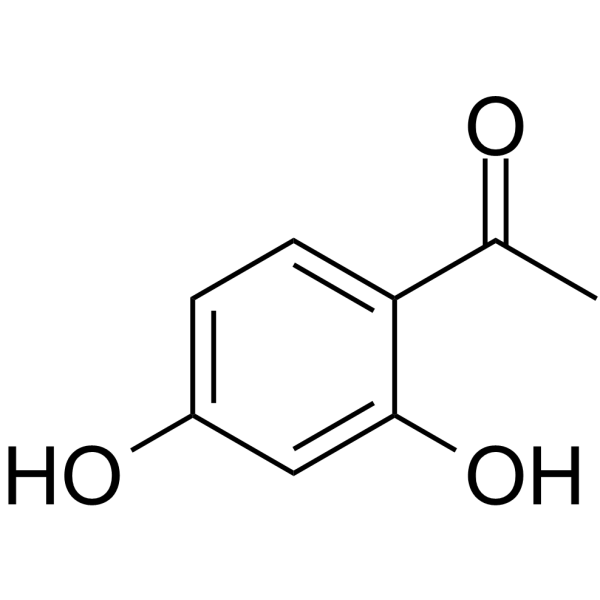
HY-Y0694
2',4'-Dihydroxyacetophenone -
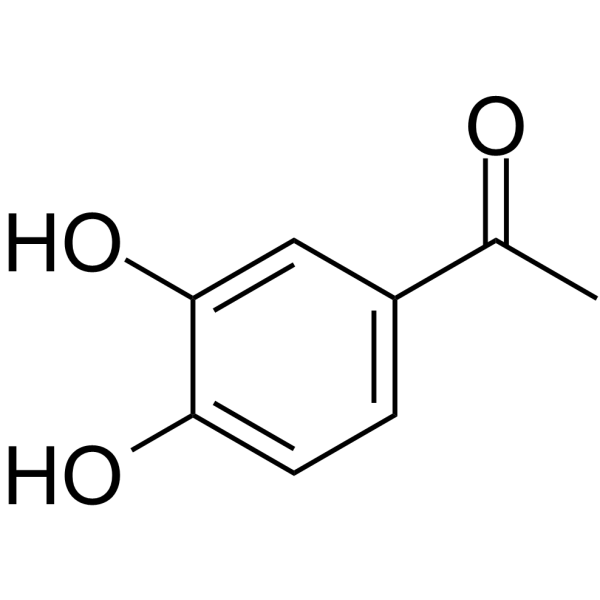
HY-N1775
3',4'-Dihydroxyacetophenone -
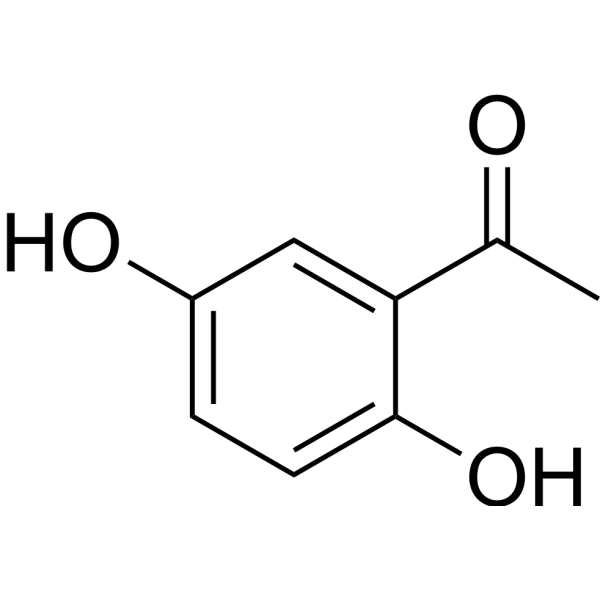
HY-W001174
2,5-Dihydroxyacetophenone -
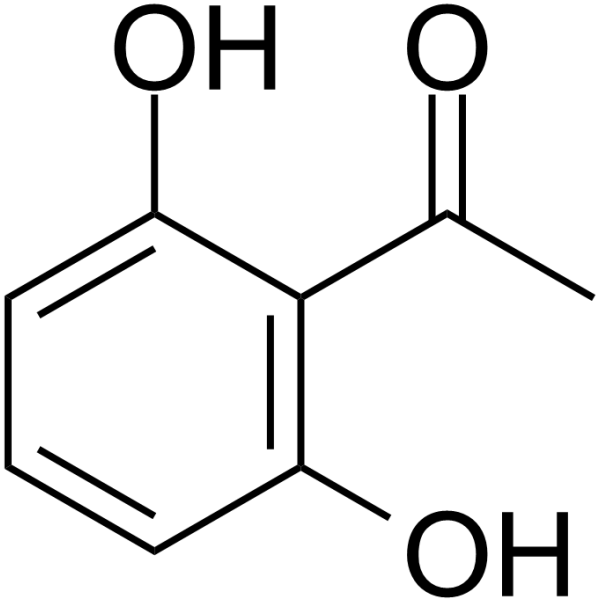
HY-Y0106
2,6-Dihydroxyacetophenone -
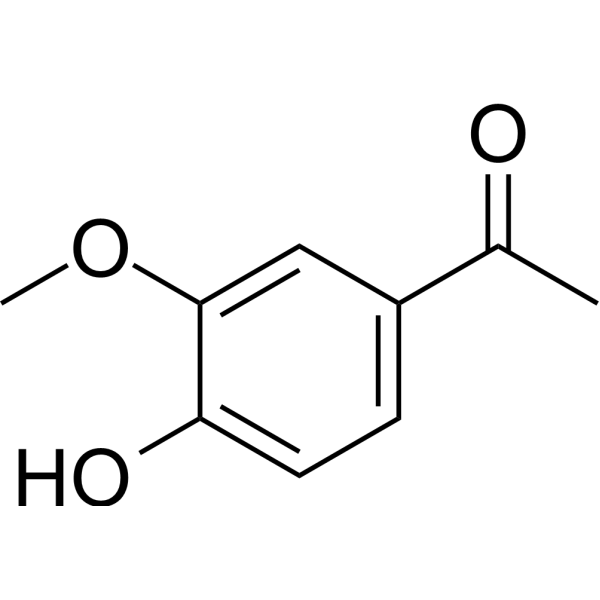
HY-N0088
Apocynin -

HY-N1775R
3',4'-Dihydroxyacetophenone (Standard) -

HY-W001174R
2,5-Dihydroxyacetophenone (Standard) -

HY-Y0106R
2,6-Dihydroxyacetophenone (Standard) -
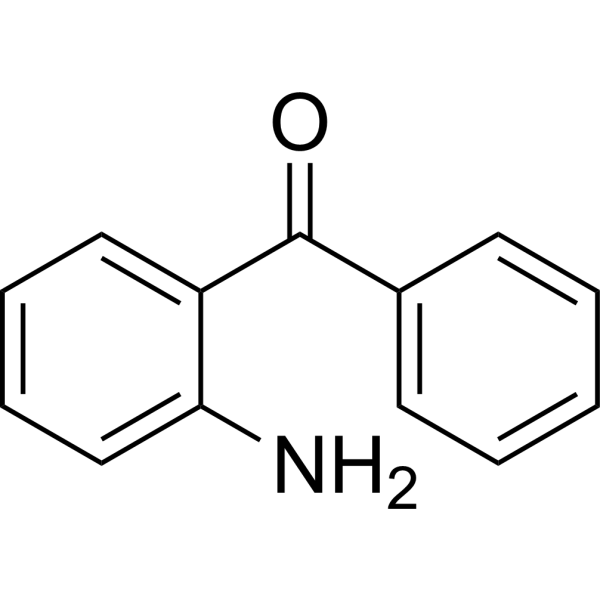
HY-W009849
2-Aminobenzophenone -

HY-W016168R
2-Chloro-1-(3,4-dihydroxyphenyl)ethanone (Standard) -

HY-33040
2,2',4'-Trichloroacetophenone -

HY-N0088R
Apocynin (Standard)


Product Information
Information
신청
The compound is the grade of analytical standard, which is the reference standard supplied assay. It is commonly used in qualitative, quantitative and methodological research experiments in HPLC, GC and MS.


Chemical Information
-
CAS No. 89-84-9
-
분자량 152.15
-
화학식 C8H8O3
-
SMILES
CC(C1=CC=C(O)C=C1O)=O
-
Synonyms
Resacetophenone (Standard); 1-(2,4-Dihydroxyphenyl)ethanone (Standard)
-
Structure Classification
-
Initial Source
-
선적
Room temperature in continental US; may vary elsewhere.
-
보관
Please store the product under the recommended conditions in the Certificate of Analysis.


순도&문서
References
[1]. Li XJ, et al. Bioactive metabolites from biotransformation of paeonol by the white-rot basidiomycete Coriolus versicolor. Nat Prod Commun. 2011 Aug;6(8):1129-30. [Content Brief]
[2]. Baughman RG, et al. 2,4-Dinitrophenylhydrazones of 2,4-dihydroxybenzaldehyde, 2,4-dihydroxyacetophenone and 2,4-dihydroxybenzophenone. Acta Crystallogr C. 2004 Feb;60(Pt 2):o103-6. [Content Brief]
[3]. Frank A, et al. Regioselective alkylation of 2,4-dihydroxybenzyaldehydes and 2,4-dihydroxyacetophenones. Tetrahedron Lett. 2022 Apr 13;95:153755. [Content Brief]
[4]. Mutoh M, et al., Suppression by flavonoids of cyclooxygenase-2 promoter-dependent transcriptional activity in colon cancer cells: structure-activity relationship. Jpn J Cancer Res. 2000 Jul;91(7):686-91. [Content Brief]

Calculators
Concentration (start) × Volume (start) = Concentration (final) × Volume (final)


2',4'-Dihydroxyacetophenone (Standard) Related Classifications
HY-Y0694R Related Classifications
 Powered by Bioz