1. Search Result
Search Result
Results for "

2-DG

" in MedChemExpress (MCE) Product Catalog:

22

Inhibitors & Agonists

3

Natural
Products

4

Isotope-Labeled Compounds

1

Antibodies

7

Oligonucleotides

Cat. No. Product Name Target Research Areas Chemical Structure
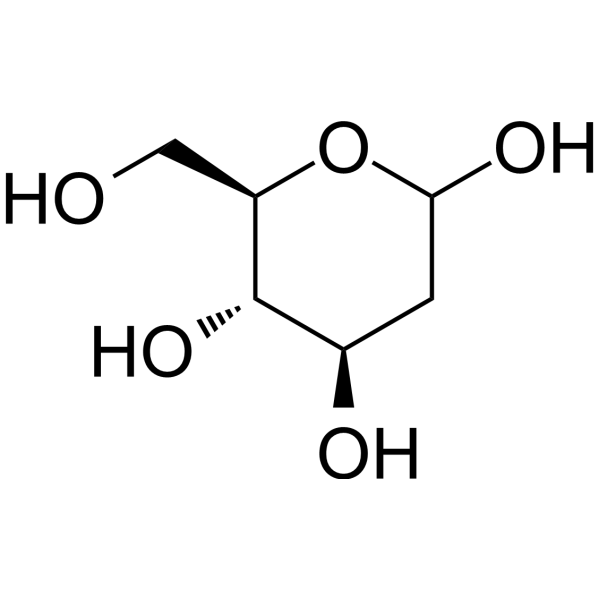
  • HY-13966
    2-Deoxy-D-glucose
    340+ Cited Publications

    2-DG; 2-Deoxy-D-arabino-hexose; D-Arabino-2-deoxyhexose

    Hexokinase HSV Apoptosis Cancer
    2-Deoxy-D-glucose is a glucose analog that acts as a competitive inhibitor of glucose metabolism, inhibiting glycolysis via its actions on hexokinase .
    2-Deoxy-D-glucose
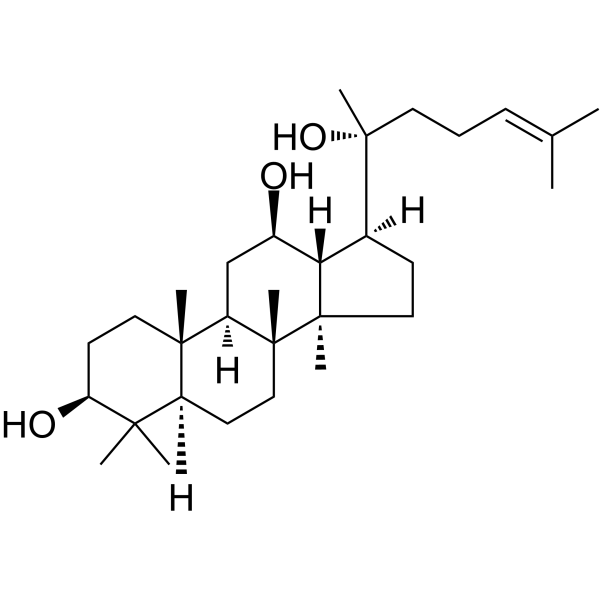
  • HY-N2040
    (20R)-Protopanaxadiol
    1 Publications Verification

    Bacterial Interleukin Related Infection Inflammation/Immunology Cancer
    (20R)-Protopanaxadiol is a metabolite of ginsenosides. (20R)-Protopanaxadiol has anti-inflammatory and antibacterial activities, but shows no significant cytotoxicity against tumor cell lines. In addition, (20R)-Protopanaxadiol can inhibit the uptake of 2-deoxy-D-glucose (2-DG) [2] .
    (20R)-Protopanaxadiol
  • HY-148009

    16:0-18:1 Cardiolipin sodium

    Biochemical Assay Reagents Others
    Cardiolipin (16:0/18:1/16:0/18:1) (16:0-18:1 Cardiolipin) sodium is a di-saturated mitochondrial-specific anionic phospholipid sodium salt containing the long-chain fatty acid palmitic acid (HY-N0830) and the monounsaturated fatty acid oleic acid (HY-N1446). Cardiolipin (16:0/18:1/16:0/18:1) sodium undergoes in-source fragmentation via diglyceride (DG)-H2O fragment formation and (DG-H2O) fragment loss pathways. Cardiolipin (16:0/18:1/16:0/18:1) sodium can be used in the synthesis of lipid nanodiscs for application in in situ mass spectrometry .
    Cardiolipin (16:0/18:1/16:0/18:1) sodium
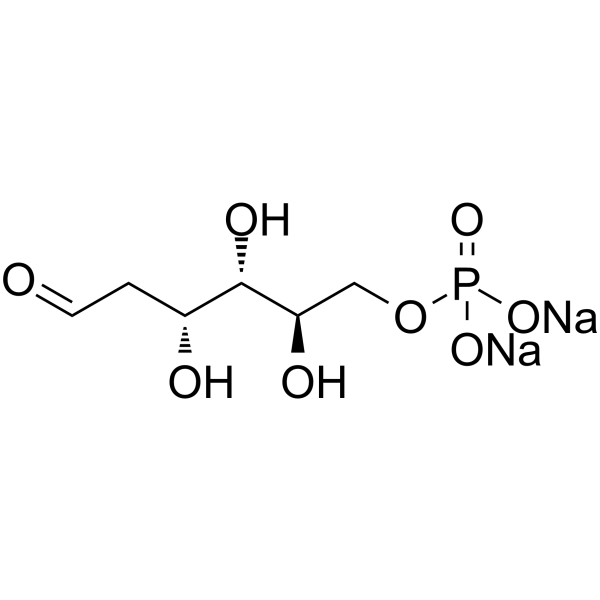
  • HY-139409A
    2-Deoxy-D-glucose 6-phosphate disodium
    2 Publications Verification

    Hexokinase Glucose-6-Phosphate Isomerase (GPI) Cancer
    2-Deoxy-D-glucose 6-phosphate disodium is an ATP-competitive, 2-deoxy-D-glucose non-competitive Hexokinase inhibitor, with a Ki value of 1.45 mM against bovine heart hexokinase. 2-Deoxy-D-glucose 6-phosphate disodium exerts ATP-competitive and 2-deoxy-D-glucose non-competitive inhibitory effects on bovine heart hexokinase. 2-DG inhibits glycolysis via the production and intracellular accumulation of 2-Deoxy-D-glucose 6-phosphate disodium, thereby inhibiting the functions of hexokinase and Glucose-6-phosphate isomerase, and inducing cell death. 2-Deoxy-D-glucose 6-phosphate disodium can be used in cancer-related research [2].
    2-Deoxy-D-glucose 6-phosphate disodium
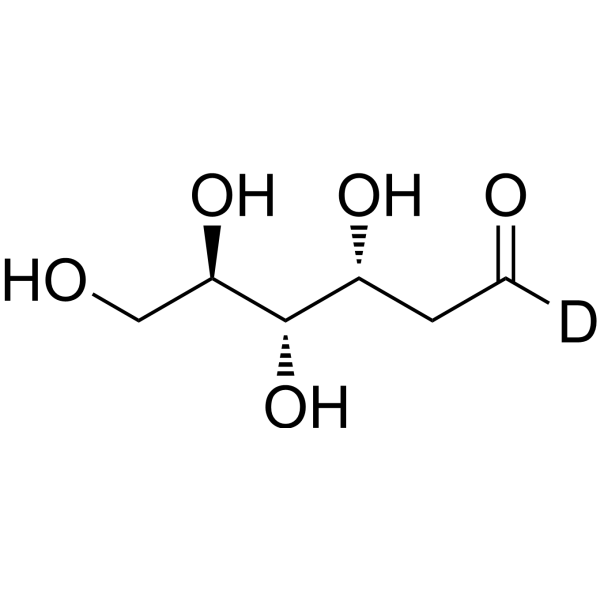
  • HY-13966S
    2-Deoxy-D-glucose-d1
    1 Publications Verification

    2-DG-d1; 2-Deoxy-D-arabino-hexose-d1; D-Arabino-2-deoxyhexose-d1

    Isotope-Labeled Compounds Apoptosis Hexokinase HSV Cancer
    2-Deoxy-D-glucose-d is the deuterium labeled 2-Deoxy-D-glucose. 2-Deoxy-D-glucose is a glucose analog that acts as a competitive inhibitor of glucose metabolism, inhibiting glycolysis via its actions on hexokinase [2].
    2-Deoxy-D-glucose-d1
  • HY-116930

    Melatonin Receptor Metabolic Disease
    S-20928 is an antagonist for melatonin receptor through inhibition of binding of melatonin to its receptors. S-20928 enhances the 2-Deoxy-D-glucose (2DG) (HY-13966)-induced increase in blood glucose and glucagon levels in rats brain .
    S-20928
  • HY-159728

    PROTACs Histone Methyltransferase Apoptosis Early 2 Factor (E2F) c-Myc Cancer
    PROTAC PRMT3 degrader 1 is a selective PRMT3 PROTAC degrader with a DC50 of 2.566 μM. PROTAC PRMT3 degrader 1 forms a ternary complex with MDM2 E3 ubiquitin ligase to induce proteasomal and neddylation-dependent degradation of PRMT3. PROTAC PRMT3 degrader 1 activates intrinsic apoptosis, endoplasmic reticulum stress signaling pathways. PROTAC PRMT3 degrader 1 downregulates E2F, MYC, oxidative phosphorylation pathways. PROTAC PRMT3 degrader 1 reduces cellular asymmetric dimethylarginine (ADMA) levels. PROTAC PRMT3 degrader 1 inhibits acute leukemia cell growth. PROTAC PRMT3 degrader 1 acts with glycolysis inhibitor 2-DG to reduce ATP production, induce intrinsic apoptosis, drive synergistic antiproliferative effects. PROTAC PRMT3 degrader 1 can be used for the research of acute leukemia .
    PROTAC PRMT3 degrader 1
  • HY-154602

    Nucleoside Antimetabolite/Analog Phosphoramidites Cancer
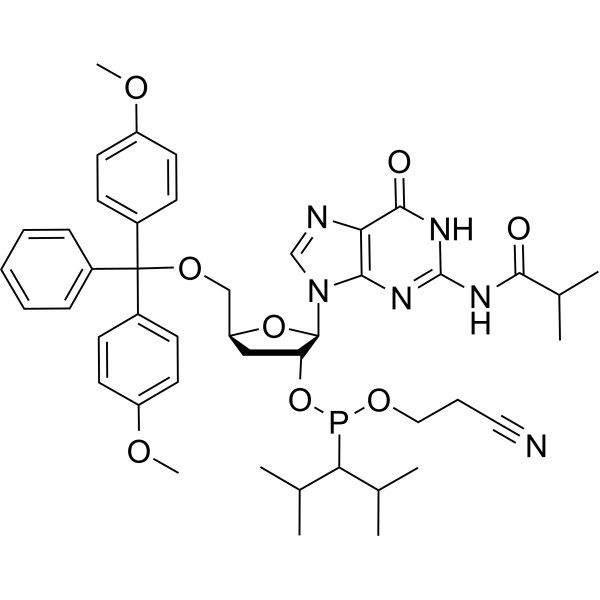
    2’-dG (iBu)-2’-phosphoramidite is a purine nucleoside analog. Purine nucleoside analogs have broad antitumor activity targeting indolent lymphoid malignancies. Anticancer mechanisms in this process rely on inhibition of DNA synthesis, induction of apoptosis, etc .
    2’-dG (iBu)-2’-phosphoramidite
  • HY-13966S2

    2-DG-13C; 2-Deoxy-D-arabino-hexose-13C; D-Arabino-2-deoxyhexose-13C

    Isotope-Labeled Compounds Apoptosis Hexokinase HSV Cancer
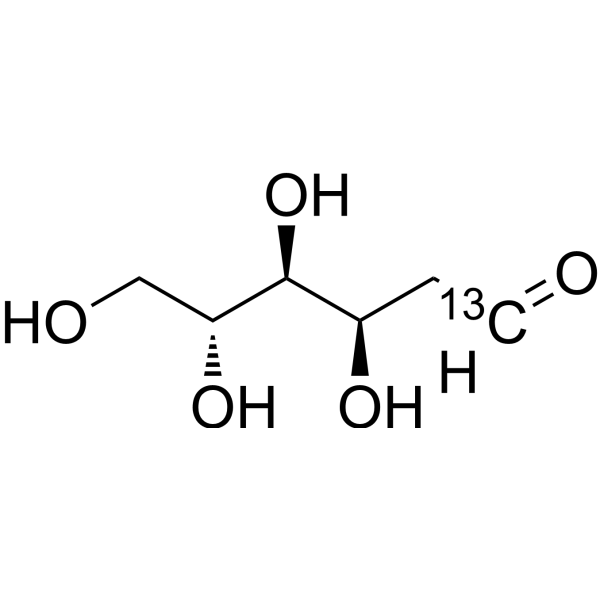
    2-Deoxy-D-glucose- 13C is the 13C labeled 2-Deoxy-D-glucose. 2-Deoxy-D-glucose is a glucose analog that acts as a competitive inhibitor of glucose metabolism, inhibiting glycolysis via its actions on hexokinase [2].
    2-Deoxy-D-glucose-13C
  • HY-113970A

    WEB 1881 FU hydrochloride

    mAChR Calcium Channel Neurological Disease
    Nebracetam (WEB 1881 FU) hydrochloride is an orally active M1 muscarinic receptor agonist. Nebracetam hydrochloride can induce an increase in intracellular Ca 2+ concentration, with an EC50 value of 1.59 mM. Nebracetam hydrochloride exhibits neuroprotective activity and the ability to improve cognitive impairment. Nebracetam hydrochloride can be used in the research of neurological diseases such as Alzheimer's disease [2].
    Nebracetam hydrochloride
  • HY-N16321

    Biochemical Assay Reagents Others
    C18:0 DG-PEG2K-triGalNAc is a functionalized PEG lipid that consists of a C18:0 DG unit conjugated to a triGalNAc. C18:0 DG-PEG2K-triGalNAc can be used to prepare lipid nanoparticles for drug delivery.
    C18:0 DG-PEG2K-triGalNAc
  • HY-139409

    Hexokinase Glucose-6-Phosphate Isomerase (GPI) Cancer
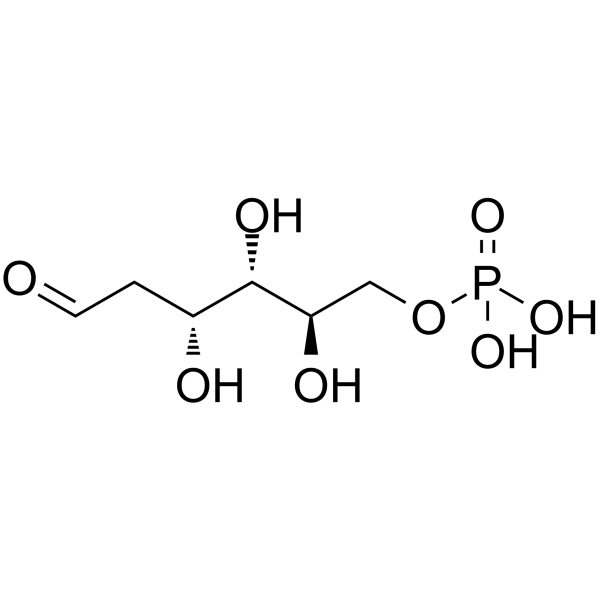
    2-Deoxy-D-glucose 6-phosphate disodium is an ATP-competitive and 2-deoxy-D-glucose non-competitive Hexokinase inhibitor, with a Ki value of 1.45 mM against bovine heart hexokinase. 2-Deoxy-D-glucose 6-phosphate disodium exerts ATP-competitive and 2-deoxy-D-glucose non-competitive inhibitory effects on bovine heart hexokinase. 2-DG inhibits glycolysis via the generation and intracellular accumulation of 2-Deoxy-D-glucose 6-phosphate disodium, thereby inhibiting the functions of hexokinase and Glucose-6-phosphate isomerase, and inducing cell death. 2-Deoxy-D-glucose 6-phosphate disodium can be used in cancer-related research [2].
    2-Deoxy-D-glucose 6-phosphate
  • HY-13966S3

    2-DG-13C6; 2-Deoxy-D-arabino-hexose-13C6; D-Arabino-2-deoxyhexose-13C6

    Isotope-Labeled Compounds Apoptosis Hexokinase HSV Cancer
    2-Deoxy-D-glucose- 13C6 (2-DG- 13C6) is 13C labeled 2-Deoxy-D-glucose. 2-Deoxy-D-glucose is a glucose analog that acts as a competitive inhibitor of glucose metabolism, inhibiting glycolysis via its actions on hexokinase [2].
    2-Deoxy-D-glucose-13C6
  • HY-13966S4

    2-DG-13C-1; 2-Deoxy-D-arabino-hexose-13C-1; D-Arabino-2-deoxyhexose-13C-1

    Isotope-Labeled Compounds Apoptosis Hexokinase HSV Cancer
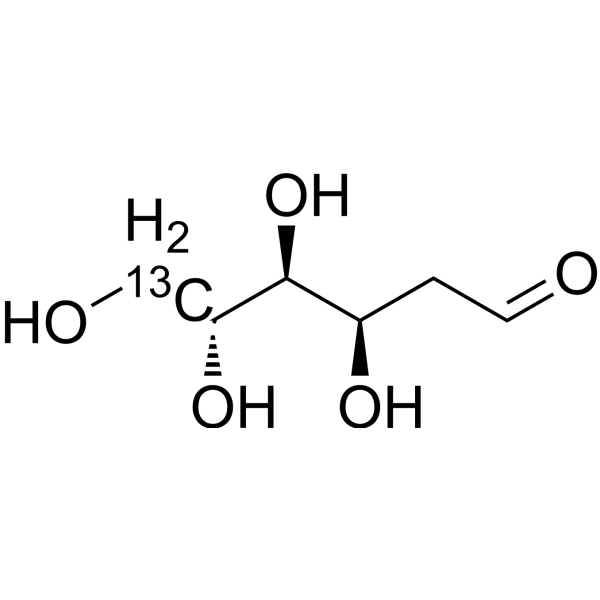
    2-Deoxy-D-glucose- 13C-1 is the 13C labeled 2-Deoxy-D-glucose. 2-Deoxy-D-glucose is a glucose analog that acts as a competitive inhibitor of glucose metabolism, inhibiting glycolysis via its actions on hexokinase [2].
    2-Deoxy-D-glucose-13C-1
  • HY-179631

    Apoptosis Cancer
    2DG-ODDA is a 2-deoxyglucose (2-DG) (HY-13966) derivative with potent antitumor activity. 2DG-ODDA induces apoptosis, and reduces ATP production. 2DG-ODDA is taken up through both fatty acid and glucose transporters and is cleaved by α-Mannosidase (HY-P2950), releases 2DG to inhibit N-glycosylation and disrupt cellular metabolism. 2DG-ODDA inhibits tumor growth in a 4T1 mouse model. 2DG-ODDA can be used for the research of triple-negative breast cancer (TNBC) .
    2DG-ODDA
  • HY-176051

    RgE

    GLUT Cancer
    Rapaglutin E (RgE) is a glucose transporter (GLUT) inhibitor. Rapaglutin E exhibits dose-dependent inhibition of [ 3H]-2DG uptake in A549, Jurkat T, PANC10.05, and RBC, with IC50 values 8.9 nM, 3.1 nM, 35.5 nM, 74.2 nM. Rapaglutin E inhibits cell proliferation in A549, PANC10.05, HeLa, Jurkat T, and HEK293T cells .
    Rapaglutin E
  • HY-178590

    Nucleoside Antimetabolite/Analog Metabolic Disease
    3'-O-Phthalimido-2'-dG is a monomeric raw material that can be used for nucleic acid synthesis.
    3'-O-Phthalimido-2'-dG
  • HY-W048518

    7-Deaza-2'-deoxyguanosine

    Nucleoside Antimetabolite/Analog Metabolic Disease
    7-Deaza-2'-dG (7-Deaza-2'-deoxyguanosine) is a monomeric raw material that can be used for nucleic acid synthesis.
    7-Deaza-2'-dG
  • HY-139409B

    Drug Derivative Metabolic Disease
    2-Deoxy-D-glucose 6-phosphate sodium, a derivative of 2-Deoxy-D-glucose (HY-13966), is produced in mammalian cells by the action of hexokinase on 2-DG. 2-Deoxy-D-glucose is a glucose analog that acts as a competitive inhibitor of glucose metabolism, inhibiting glycolysis via its actions on hexokinase [2].
    2-Deoxy-D-glucose 6-phosphate sodium
  • HY-W1008068

    Nucleoside Antimetabolite/Analog Metabolic Disease
    3'-O-TBDMS-2'-dG(iBu) is a monomeric raw material that can be used for nucleic acid synthesis.
    3'-O-TBDMS-2'-dG(iBu)
  • HY-178637

    Nucleoside Antimetabolite/Analog Metabolic Disease
    3'-O-NH2-2'-dG is a monomeric raw material that can be used for nucleic acid synthesis.
    3'-O-NH2-2'-dG
  • HY-178621

    Nucleoside Antimetabolite/Analog Phosphoramidites Metabolic Disease
    DMTr-2'-dG(iBu)-3'-S-CE-phosphoramidite is a monomeric raw material that can be used for nucleic acid synthesis.
    DMTr-2'-dG(iBu)-3'-S-CE-phosphoramidite

Inquiry Online

Your information is safe with us. * Required Fields.

Salutation


Country or Region *

Applicant Name *


Organization Name *

Department *


Email Address *


Product Name *

Cat. No.


Requested quantity *

Phone Number *


Remarks

Inquiry Online

Inquiry Information

Product Name:
Cat. No.:
Quantity:
MCE Japan Authorized Agent:

