17 Results for "

5-HT1A autoreceptor

" in MedChemExpress (MCE) Product Catalog:
Products (17)

17 Results for "5-HT1A autoreceptor" in MCE Product Catalog:

19
19 Publications Verification
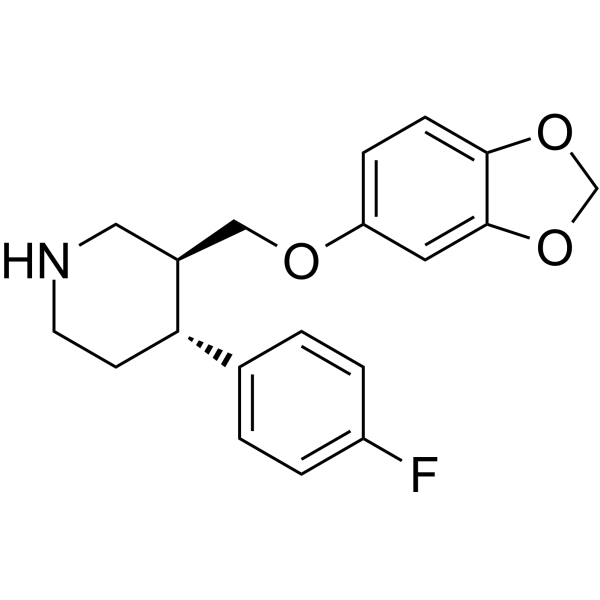
Cat. No.: HY-122272
CAS No.: 61869-08-7
Purity:  99.92%
Synonyms: BRL29060
Paroxetine (BRL29060) is an orally active and selective serotonin reuptake inhibitor (SSRI) and apoptosis inducer with blood-brain barrier permeability. Paroxetine inhibits nitric oxide synthase and CYP2D6, induces desensitization of 5-HT1A/1B/1D autoreceptors, downregulates 5-HT2 receptors, and promotes the production of inflammatory cytokines. Paroxetine is a weak norepinephrine (NE) uptake inhibitor and possesses antitumor activity. Paroxetine is widely used in research concerning depression, obsessive-compulsive disorder, panic disorder, social phobia, generalized anxiety disorder, post-traumatic stress disorder, premenstrual dysphoric disorder, hot flashes, and related conditions .
loading...
    loading...
19
19 Publications Verification
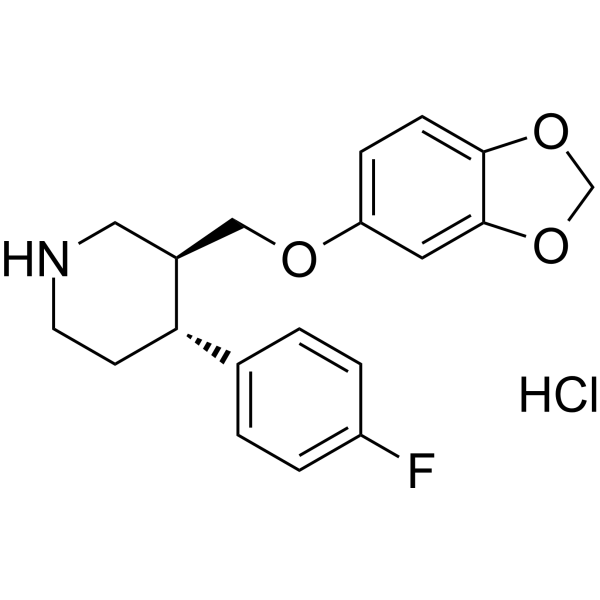
Cat. No.: HY-B0492
CAS No.: 78246-49-8
Synonyms: BRL29060 hydrochloride; BRL29060A
Paroxetine (BRL29060) hydrochloride is an orally active and selective serotonin reuptake inhibitor (SSRI) and apoptosis inducer with blood-brain barrier permeability. Paroxetine hydrochloride inhibits nitric oxide synthase and CYP2D6, induces desensitization of 5-HT1A/1B/1D autoreceptors, downregulates 5-HT2 receptors, and promotes the production of inflammatory cytokines. Paroxetine hydrochloride is a weak norepinephrine (NE) uptake inhibitor and possesses antitumor activity. Paroxetine hydrochloride is widely used in research concerning depression, obsessive-compulsive disorder, panic disorder, social phobia, generalized anxiety disorder, post-traumatic stress disorder, premenstrual dysphoric disorder, hot flashes, and related conditions .
loading...
    loading...
11
11 Cited Publications
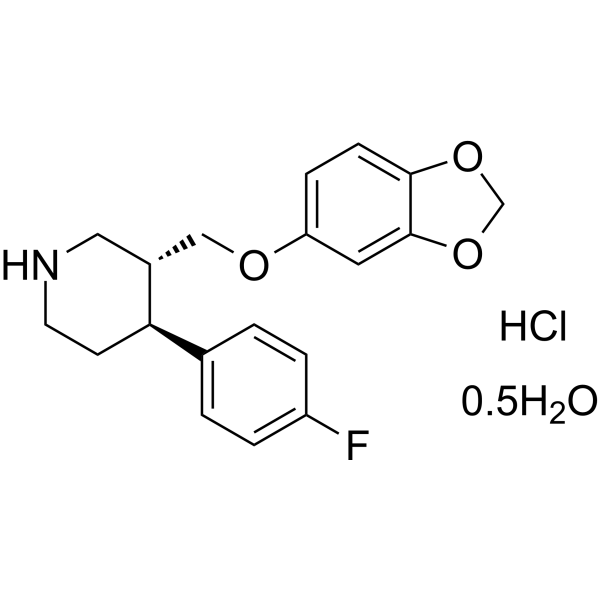
Cat. No.: HY-B0492A
CAS No.: 110429-35-1
Synonyms: BRL29060 hydrochloride hemihydrate; BRL29060A hemihydrate
Paroxetine (BRL29060) hydrochloride hemihydrate is an orally active and selective serotonin reuptake inhibitor (SSRI) and apoptosis inducer with blood-brain barrier permeability. Paroxetine hydrochloride hemihydrate inhibits nitric oxide synthase and CYP2D6, induces desensitization of 5-HT1A/1B/1D autoreceptors, downregulates 5-HT2 receptors, and promotes the production of inflammatory cytokines. Paroxetine hydrochloride hemihydrate is a weak norepinephrine (NE) uptake inhibitor and possesses antitumor activity. Paroxetine hydrochloride hemihydrate is widely used in research concerning depression, obsessive-compulsive disorder, panic disorder, social phobia, generalized anxiety disorder, post-traumatic stress disorder, premenstrual dysphoric disorder, hot flashes, and related conditions .
loading...
    loading...
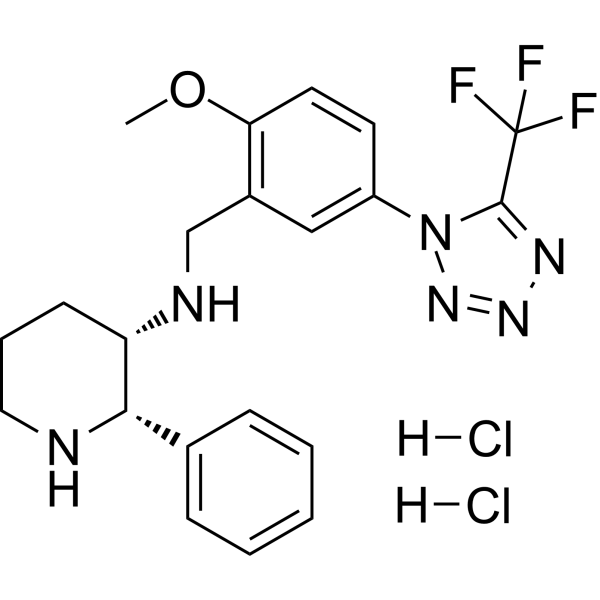
Cat. No.: HY-12143
CAS No.: 168266-51-1
Purity:  99.11%
Synonyms: GR 205171A
Target:  

Neurokinin Receptor

Research Areas:  

Neurological Disease

Vofopitant dihydrochloride (GR 205171A) is a blood-brain barrier-permeable NK1 receptor inhibitor with a pKi of 9.02 in mice. Vofopitant dihydrochloride blocks vomiting-related responses and inhibits pseudoptyalism. Vofopitant dihydrochloride exerts anxiolytic effects, regulates 5-HT receptor function and increases central 5-HT release. Vofopitant dihydrochloride improves hyperarousal symptoms of post-traumatic stress disorder. Vofopitant dihydrochloride can be used in research related to depression, anxiety, vomiting and postoperative nausea and vomiting .
loading...
    loading...
Cat. No.: HY-W795507
CAS No.: 69906-85-0
Research Areas:  

Neurological Disease

Cyanopindolol is an β3-adrenoceptor antagonist. Cyanopindolol is a potent and selective antagonist at the presynaptic serotonin autoreceptor in the rat brain cortex. Cyanopindolol has binding affinity for 5-HT1A and 5-HT1B receptor (Ki: 2.1 and 3 nM respectively) .
loading...
    loading...
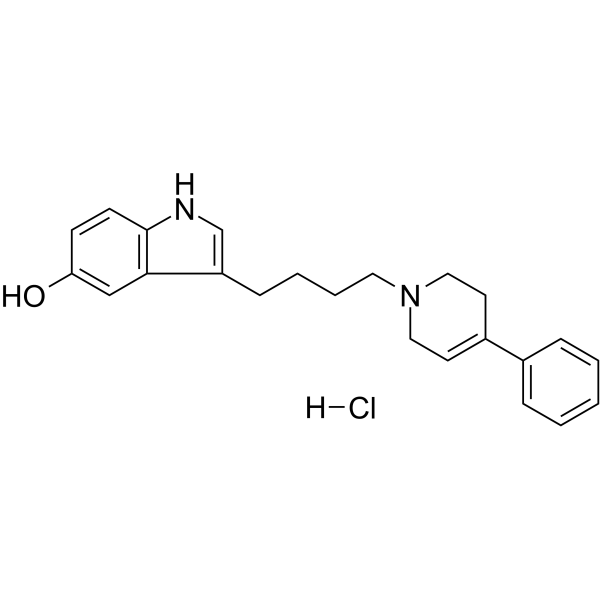
Cat. No.: HY-106100A
CAS No.: 108050-82-4
Purity:  99.53%
Synonyms: EMD 38362
Roxindole hydrochloride (EMD 38362), an indot-alkyl-pipenidine, is a potent agonist at dopamine autoreceptors, with an affinity for the D2-like subtype in the low nanomolar range. Roxindole can be used for the research of positive and negative schizophrenic symptoms. Roxindole is a 5-HT1A agonist and 5-HT uptake inhibitor with high affinity for 5-HT1A (IC50=0.9 nM). Antipsychotic and antidepressant activities .
loading...
    loading...
Cat. No.: HY-122272R
CAS No.: 61869-08-7
Synonyms: BRL29060 (Standard)
Paroxetine (BRL29060) (Standard) is the analytical standard of Paroxetine (HY-122272). This product is intended for research and analytical applications. Paroxetine (BRL29060) is an orally active and selective serotonin reuptake inhibitor (SSRI) and apoptosis inducer with blood-brain barrier permeability. Paroxetine inhibits nitric oxide synthase and CYP2D6, induces desensitization of 5-HT1A/1B/1D autoreceptors, downregulates 5-HT2 receptors, and promotes the production of inflammatory cytokines. Paroxetine is a weak norepinephrine (NE) uptake inhibitor and possesses antitumor activity. Paroxetine is widely used in research concerning depression, obsessive-compulsive disorder, panic disorder, social phobia, generalized anxiety disorder, post-traumatic stress disorder, premenstrual dysphoric disorder, hot flashes, and related conditions .
loading...
    loading...
Cat. No.: HY-105328
CAS No.: 153607-44-4
Target:  

5-HT Receptor

Research Areas:  

Neurological Disease

S-14489 is an orally active selective postsynaptic 5-HT1A receptor antagonist with a pKi of 9.2. S-14489 can act as a 5-HT1A autoreceptor agonist and inhibit striatal 5-hydroxytryptophan accumulation. S-14489 can be used for the research of neurological disease .
loading...
    loading...
Cat. No.: HY-B0773
CAS No.: 217797-14-3
Synonyms: BRL29060 mesylate
Paroxetine (BRL29060) mesylate is an orally active and selective serotonin reuptake inhibitor (SSRI) and apoptosis inducer with blood-brain barrier permeability. Paroxetine mesylate inhibits nitric oxide synthase and CYP2D6, induces desensitization of 5-HT1A/1B/1D autoreceptors, downregulates 5-HT2 receptors, and promotes the production of inflammatory cytokines. Paroxetine mesylate is a weak norepinephrine (NE) uptake inhibitor and possesses antitumor activity. Paroxetine mesylate is widely used in research concerning depression, obsessive-compulsive disorder, panic disorder, social phobia, generalized anxiety disorder, post-traumatic stress disorder, premenstrual dysphoric disorder, hot flashes, and related conditions .
loading...
    loading...
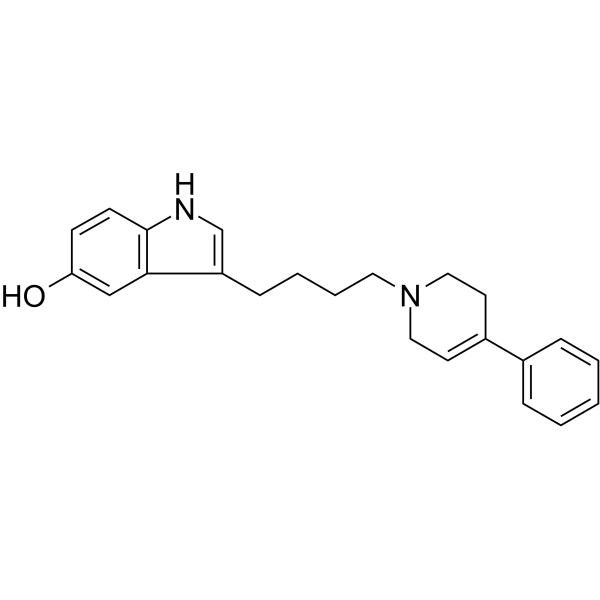
Cat. No.: HY-106100
CAS No.: 112192-04-8
Synonyms: EMD 49980
Roxindole (EMD 49980), an indot-alkyl-pipenidine, is a potent agonist at dopamine autoreceptors, with an affinity for the D2-like subtype in the low nanomolar range. Roxindole can be used for the research of positive and negative schizophrenic symptoms. Roxindole is a 5-HT1A agonist and 5-HT uptake inhibitor. Antipsychotic and antidepressant activities .
loading...
    loading...
Cat. No.: HY-106100AR
CAS No.: 108050-82-4
Synonyms: EMD 38362 (Standard)
Roxindole (hydrochloride) (Standard) is the analytical standard of Roxindole (hydrochloride). This product is intended for research and analytical applications. Roxindole hydrochloride (EMD 38362), an indot-alkyl-pipenidine, is a potent agonist at dopamine autoreceptors, with an affinity for the D2-like subtype in the low nanomolar range. Roxindole can be used for the research of positive and negative schizophrenic symptoms. Roxindole is a 5-HT1A agonist and 5-HT uptake inhibitor with high affinity for 5-HT1A (IC50=0.9 nM). Antipsychotic and antidepressant activities .
loading...
    loading...
Cat. No.: HY-114578
CAS No.: 104229-37-0
Research Areas:  

Neurological Disease

PD 118717 is a selective dopamine (DA) D-2 autoreceptor agonist. PD 118717 has significant affinity for 5-HT1A but not 5-HT1B and 5-HT2 receptors. PD 118717 is active in antagonizing the tau-Butyrolactone-induced accumulation of dopa in rat striatum and mesolimbic regions. PD 118717 exhibits an antipsychotic-like profile .
loading...
    loading...
Cat. No.: HY-111124
CAS No.: 923932-43-8
Synonyms: BRL29060-d2
Paroxetine-d2 (BRL29060-d2) is the deuterated-labeled Paroxetine (HY-122272). Paroxetine (BRL29060) is an orally active and selective serotonin reuptake inhibitor (SSRI) and apoptosis inducer with blood-brain barrier permeability. Paroxetine inhibits nitric oxide synthase and CYP2D6, induces desensitization of 5-HT1A/1B/1D autoreceptors, downregulates 5-HT2 receptors, and promotes the production of inflammatory cytokines. Paroxetine is a weak norepinephrine (NE) uptake inhibitor and possesses antitumor activity. Paroxetine is widely used in research concerning depression, obsessive-compulsive disorder, panic disorder, social phobia, generalized anxiety disorder, post-traumatic stress disorder, premenstrual dysphoric disorder, hot flashes, and related conditions .
loading...
    loading...
Cat. No.: HY-122272S
CAS No.: 923932-45-0
Synonyms: BRL29060-d4
Paroxetine-d4 (BRL29060-d4) is the deuterated-labeled Paroxetine (HY-122272). Paroxetine (BRL29060) is an orally active and selective serotonin reuptake inhibitor (SSRI) and apoptosis inducer with blood-brain barrier permeability. Paroxetine inhibits nitric oxide synthase and CYP2D6, induces desensitization of 5-HT1A/1B/1D autoreceptors, downregulates 5-HT2 receptors, and promotes the production of inflammatory cytokines. Paroxetine is a weak norepinephrine (NE) uptake inhibitor and possesses antitumor activity. Paroxetine is widely used in research concerning depression, obsessive-compulsive disorder, panic disorder, social phobia, generalized anxiety disorder, post-traumatic stress disorder, premenstrual dysphoric disorder, hot flashes, and related conditions .
loading...
    loading...
Cat. No.: HY-122272S2
CAS No.: 1435728-63-4
Synonyms: BRL29060-d6-1
Paroxetine-d6-1 (BRL29060-d6-1) is the deuterated-labeled Paroxetine (HY-122272). Paroxetine (BRL29060) is an orally active and selective serotonin reuptake inhibitor (SSRI) and apoptosis inducer with blood-brain barrier permeability. Paroxetine inhibits nitric oxide synthase and CYP2D6, induces desensitization of 5-HT1A/1B/1D autoreceptors, downregulates 5-HT2 receptors, and promotes the production of inflammatory cytokines. Paroxetine is a weak norepinephrine (NE) uptake inhibitor and possesses antitumor activity. Paroxetine is widely used in research concerning depression, obsessive-compulsive disorder, panic disorder, social phobia, generalized anxiety disorder, post-traumatic stress disorder, premenstrual dysphoric disorder, hot flashes, and related conditions .
loading...
    loading...
Cat. No.: HY-179579
Target:  

5-HT Receptor

Research Areas:  

Neurological Disease

TMU4142 is a selective 5-HT1a agonist with high GoA activity. TMU4142 has weak Gi3 activity, can elicit rapid antidepressant like effects without triggering significant activation of dorsal raphe nucleus (DRN) 5-HT1a R autoreceptors or serotonergic neuron firing. TMU4142 demonstrates fast-acting efficacy in mouse models of depression. TMU4142 can be used for antidepressants research .
loading...
    loading...
Cat. No.: HY-122272A
CAS No.: 72471-80-8
Synonyms: BRL29060 acetate
Paroxetine (BRL29060) acetate is an orally active and selective serotonin reuptake inhibitor (SSRI) and apoptosis inducer with blood-brain barrier permeability. Paroxetine acetate inhibits nitric oxide synthase and CYP2D6, induces desensitization of 5-HT1A/1B/1D autoreceptors, downregulates 5-HT2 receptors, and promotes the production of inflammatory cytokines. Paroxetine acetate is a weak norepinephrine (NE) uptake inhibitor and possesses antitumor activity. Paroxetine acetate is widely used in research concerning depression, obsessive-compulsive disorder, panic disorder, social phobia, generalized anxiety disorder, post-traumatic stress disorder, premenstrual dysphoric disorder, hot flashes, and related conditions .
loading...
    loading...
  • 1

