Search Result
Results for "
Anesthesia
" in MedChemExpress (MCE) Product Catalog:
2
Biochemical Assay Reagents
5
Isotope-Labeled Compounds
| Cat. No. |
Product Name |
Target |
Research Areas |
Chemical Structure |
-
- HY-12721
-
-
-
- HY-A0134
-
-
-
- HY-B1240
-
|
Dehydrobenzperidol
|
Dopamine Receptor
GABA Receptor
nAChR
|
Neurological Disease
|
|
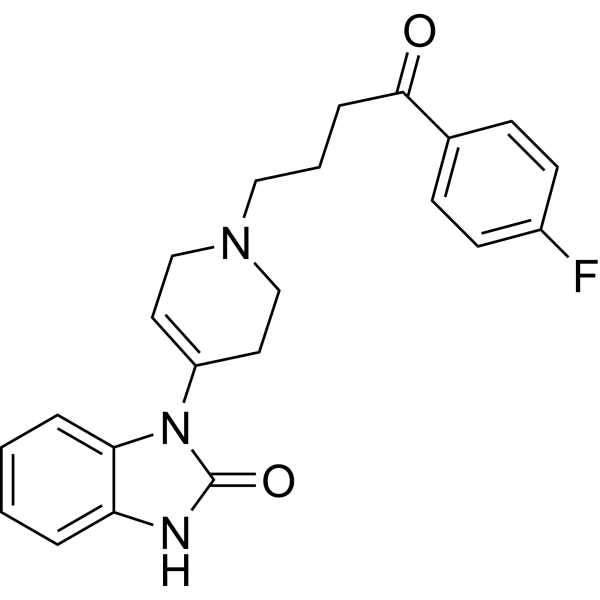
Droperidol (Dehydrobenzperidol) is a butyrophenone pamine-2 receptor antagonist that inhibits the activation of GABA(A) and neuronal nicotinic receptors (nAChR), with IC50 values of 12.6 nM and 5.8 μM. Droperidol has anesthetic and sedative properties .
|
-
-
- HY-Y1683
-
|
Racementhol
|
Environmental Pollutants
GABA Receptor
|
Infection
Neurological Disease
|
|
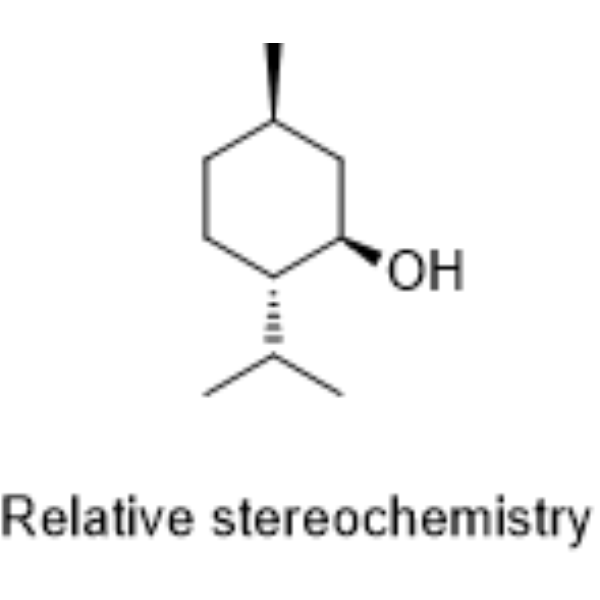
DL-Menthol (Racementhol) is an orally active, GABAaR positive allosteric modulator and UDP-glucuronosyltransferase (UGT) inhibitor that can cross the blood-brain barrier. DL-Menthol binds to GABAAR and exhibits an allosteric activation effect, enhancing GABA-mediated chloride influx and inhibiting neuronal excitability. DL-Menthol can induce surgical anesthesia in fish and inhibit the metabolic detoxification of tobacco carcinogens by human liver and intestinal UGT enzymes, resulting in reduced NNAL-N-Gluc production .
|
-
-
- HY-B0423
-
|
Eustigmin bromide; Neoserine bromide
|
Cholinesterase (ChE)
|
Neurological Disease
|
|
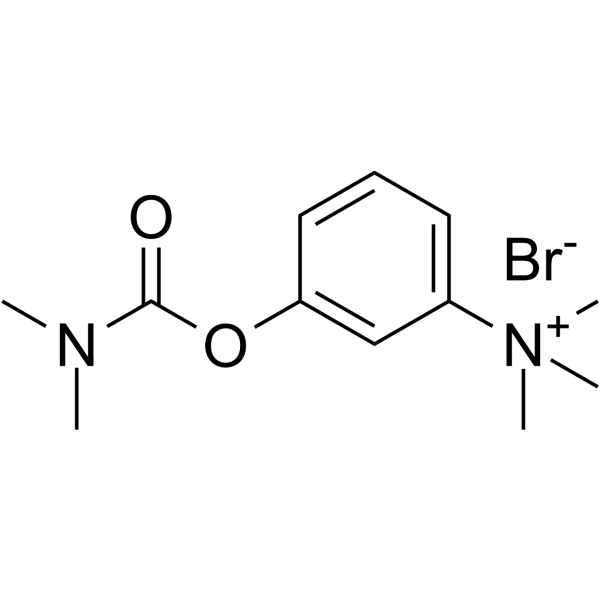
Neostigmine (Eustigmin) Bromide is an orally active and reversible cholinesterase inhibitor that acts on myasthenia gravis to prolong and intensify the muscarinic and nicotinic effects of acetylcholine. Neostigmine Bromide can be used in anesthesia to reverse the neuromuscular blockade produced by competitive neuromuscular blockers .
|
-
-
- HY-B0118A
-
|
ORG NC 45
|
nAChR
|
Neurological Disease
Cancer
|
|
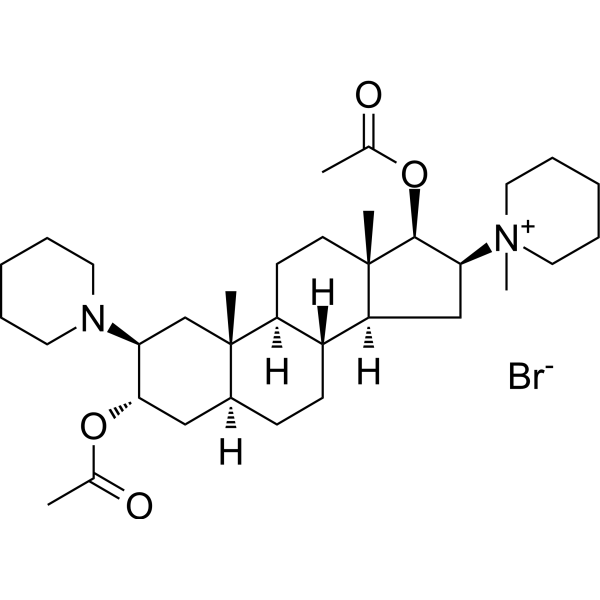
Vecuronium (ORG NC 45) bromide is a non-depolarizing neuromuscular blocking agent that also acts as a nicotinic acetylcholine receptor (nAChR) inhibitor, a muscle relaxant, and can be used for pre-surgical anesthesia .
|
-
-
- HY-B0551
-
|
|
Potassium Channel
|
Neurological Disease
|
|
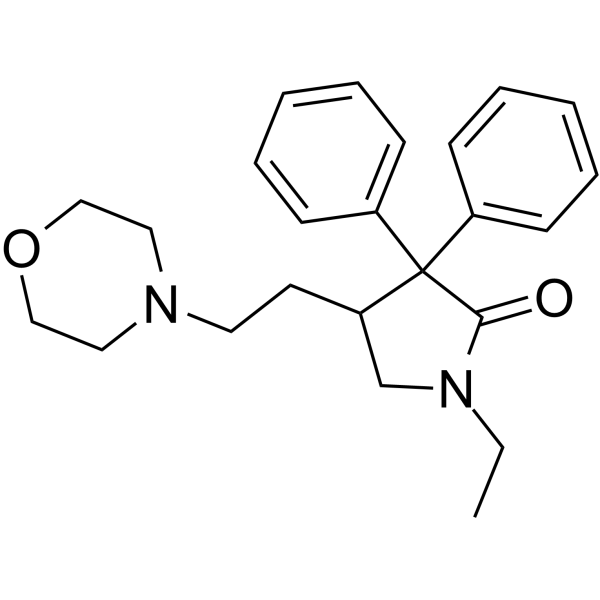
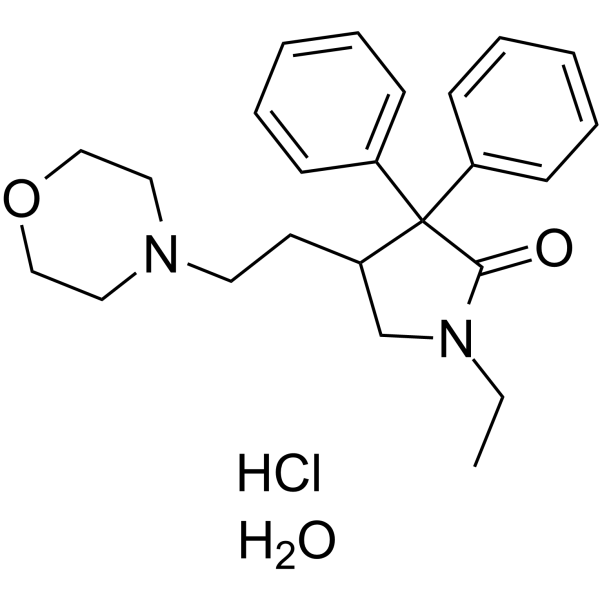
Doxapram is a respiratory stimulant. Doxapram increases breathing rate and depth by acting on the brain's respiratory centers and peripheral chemoreceptors. Doxapram inhibits TASK-1, TASK-3, TASK-1/TASK-3 heterodimeric channel function with EC50s of 410 nM, 37 μM, 9 μM, respectively. Doxapram inhibits the Ca²⁺-activated potassium current (IC50 ≈ 13 μM) and Ca²⁺-independent potassium current (IC50 ≈ 20 μM) in type I cells of the carotid body. Doxapram significantly prolongs the effective refractory period of the atrium and has an anti-arrhythmic effect. Doxapram can be used for the study of respiratory depression such as post-anesthesia respiratory depression, chronic obstructive pulmonary disease and apnea of prematurity .
|
-
-
- HY-B0551A
-
|
|
Potassium Channel
|
Neurological Disease
|
|
Doxapram hydrochloride hydrate is a respiratory stimulant. Doxapram hydrochloride hydrate increases breathing rate and depth by acting on the brain's respiratory centers and peripheral chemoreceptors. Doxapram hydrochloride hydrate inhibits TASK-1, TASK-3, TASK-1/TASK-3 heterodimeric channel function with EC50s of 410 nM, 37 μM, 9 μM, respectively. Doxapram hydrochloride hydrate inhibits the Ca²⁺-activated potassium current (IC50 ≈ 13 μM) and Ca²⁺-independent potassium current (IC50 ≈ 20 μM) in type I cells of the carotid body. Doxapram hydrochloride hydrate significantly prolongs the effective refractory period of the atrium and has an anti-arrhythmic effect. Doxapram hydrochloride hydrate can be used for the study of respiratory depression such as post-anesthesia respiratory depression, chronic obstructive pulmonary disease and apnea of prematurity .
|
-
-
- HY-B0079
-
-
-
- HY-B0563A
-
|
|
Sodium Channel
Potassium Channel
|
Cardiovascular Disease
Neurological Disease
Cancer
|
|
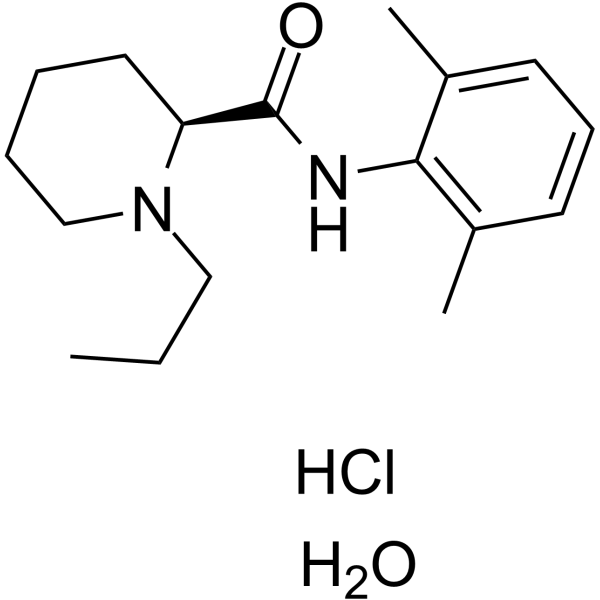
Ropivacaine hydrochloride monohydrate is a potent sodium channel blocker and blocks impulse conduction via reversible inhibition of sodium ion influx in nerve fibrese . Ropivacaine is also an inhibitor of K2P (two-pore domain potassium channel) TREK-1 with an IC50 of 402.7 μM in COS-7 cell's membrane . Ropivacaine is widely used for regional anesthesia and neuropathic pain management in vivo .
|
-
-
- HY-B0516
-
|
Hoe-045
|
Sodium Channel
NF-κB
NOD-like Receptor (NLR)
|
Neurological Disease
Inflammation/Immunology
|
|
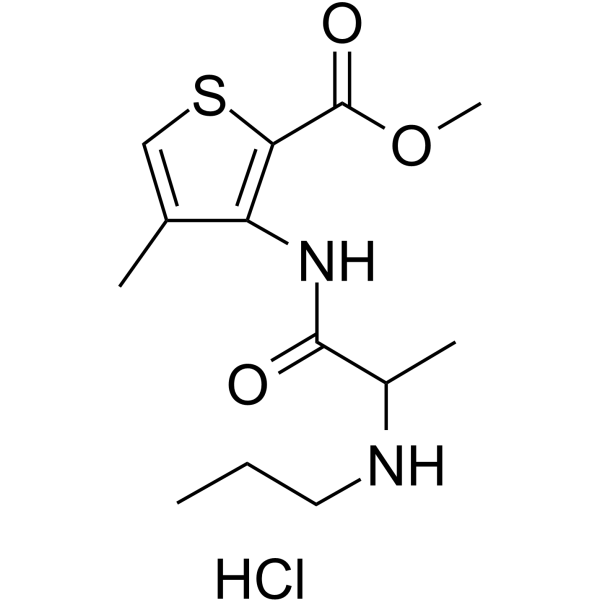
Articaine (Hoe-045) hydrochloride is a selective inhibitor of voltage-gated sodium channels (such as rNav1.4, hNav1.7, and rNav1.8), with an IC50 of 15.8 μM for open-state Na + channels, and IC50 of 40.6 μM and 378 μM for inactivated and resting-state Na + channels, respectively. Articaine hydrochloride exerts local anesthetic activity by inhibiting Na + influx to block nerve impulse conduction, and can also inhibit NF-κB activation and NLRP3 inflammasome pathways, exhibiting anti-inflammatory function. Articaine hydrochloride can be used in the study of dental local anesthesia and inflammatory-related diseases (such as acute kidney injury) .
|
-
-
- HY-B1752
-
|
LY 171555; (-)-LY 141865
|
Dopamine Receptor
Calcium Channel
Bcl-2 Family
iGluR
Apoptosis
|
Neurological Disease
|
|
Quinpirole (LY 171555; (-)-LY 141865) is a D2/D3 dopamine receptor agonist and a CaV1.3 calcium channel modulator. Quinpirole normalizes dendritic spine density in dopamine-depleted striatum, upregulates the protein expression of BCL2 and GluR2, downregulates the protein expression of BAX, and delays the onset of seizures. Quinpirole enhances learning and memory, inhibits neuronal apoptosis (apoptosis), and induces anxiety-like, stereotyped, and compulsive behaviors. Quinpirole disrupts prepulse inhibition in rhesus monkeys, enhances the activity of paraventricular thalamic neurons to promote recovery from Isoflurane anesthesia, and alters the composition of the gut microbiota in rats. Quinpirole can be used in research related to dyskinesia, pain, epilepsy, and neurological disorders including anxiety disorder, obsessive-compulsive disorder, and schizophrenia .
|
-
-
- HY-P0083
-
|
POR-8
|
Vasopressin Receptor
|
Cardiovascular Disease
|
|
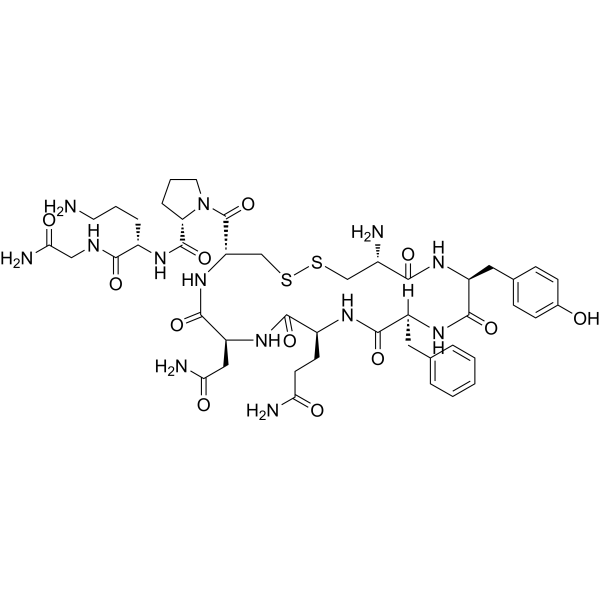
Ornipressin (POR-8) is a vasopressin agonist specific for the V1 receptor. Ornipressin can be used as a local vasoconstrictor. Ornipressin can reverse the hypotension associated with combine general/epidural anesthesia. Ornipressin has antidiuretic activity. Ornipressin decreases renal vascular resistance and increases renal blood flow in renal failure model .
|
-
-
- HY-176515
-
|
Ciprofol Glucuronide
|
Drug Metabolite
|
Neurological Disease
|
|
Cipepofol glucuronide (Ciprofol Glucuronide) (M4) is a glucuronide metabolite of Ciprofol (HY-116152). Cipepofol glucuronide has no significant inhibitory activity toward P450s and UDP-glucuronosyltransferases (UGTs), and it has a lower risk of acting as a perpetrator for drug-drug interactions (DDIs). Cipepofol glucuronide can be used for anesthesia research .
|
-
-
- HY-W016414
-
|
|
Environmental Pollutants
Endogenous Metabolite
|
Cardiovascular Disease
|
|
Triethyl phosphate is a versatile phosphate ester compound. Triethyl phosphate induces rapid and short-acting anesthesia, and exhibits hypotensive, smooth muscle relaxant, and cardiac inhibitory effects. Triethyl phosphate also modulates cholinergic toxicity; its anesthetic effect shows sex- and age-dependency in rodents, and it interacts with SKF 525-A (HY-B1311) to alter the duration of anesthesia .
|
-
-
- HY-W080730
-
|
|
Drug Intermediate
|
Others
|
|
Difluoromethyl 2,2,2-trifluoroethyl ether is an intermediate of Isoflurane (HY-A0134). Isoflurane is a volatile general anaesthetic used for induction and maintenance of general anesthesia. Isoflurane binds to and enhances GABAA receptor. Isoflurane inhibits electron transfer in respiratory complex I.
|
-
-
- HY-W357818
-
|
GX
|
Sodium Channel
ERK
MEK
NF-κB
Drug Metabolite
|
Cancer
|
|
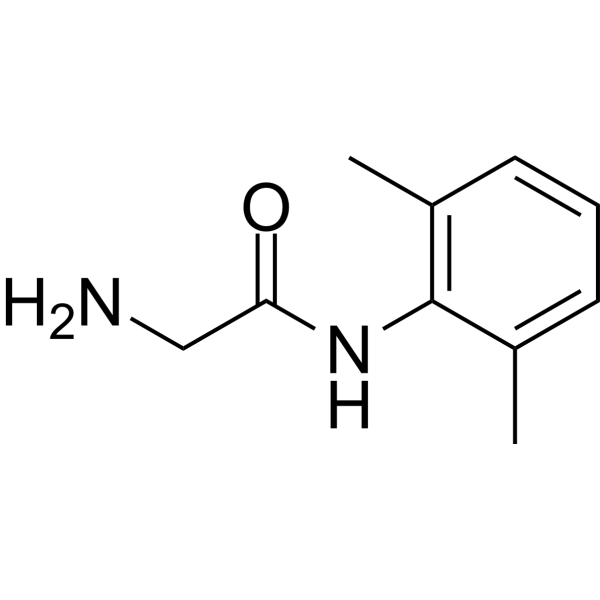
Glycinexylidide (GX) is the active metabolite of Lidocaine. Lidocaine is a local agent that can suppress or relieve pain, that inhibits sodium channels involving complex voltage and dependence. Lidocaine also reduces the growth, migration and invasion of gastric cancer cells. Glycinexylidide has research potential for use in anesthesia, cancer, and cardiovascular disease .
|
-
-
- HY-U00051
-
|
|
Histamine Receptor
Dopamine Receptor
|
Neurological Disease
|
|
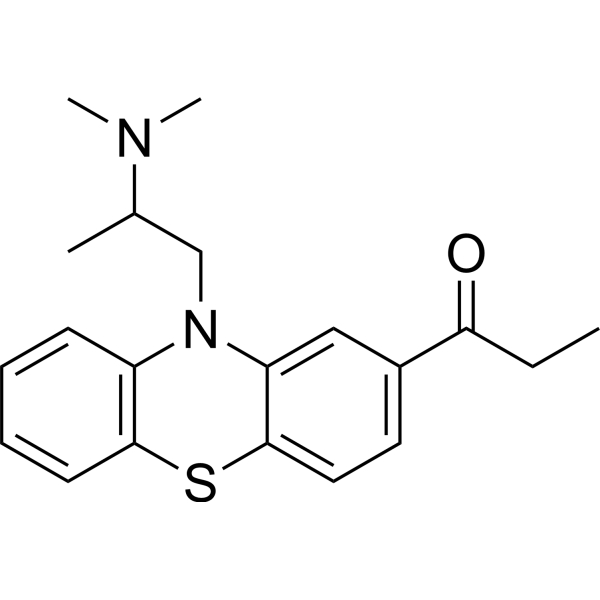
Propiomazine is an orally active antihistamine agent. Propiomazine is a potent prolactin (PRL) release stimulant, whose effect depends on the antagonism of the dopaminergic system and can inhibit the secretion of luteinizing hormone (LH). Propiomazine is mainly used for anesthesia assistance, mental disorders and anxiety-induced sedation, and can also be used in research related to insomnia .
|
-
-
- HY-P0083A
-
|
POR-8 acetate
|
Vasopressin Receptor
|
Cardiovascular Disease
|
|
Ornipressin (POR-8) acetate is a potent vasoconstrictor, hemostatic and renal agent. Ornipressin acetate is a vasopressin agonist specific for the V1 receptor. Ornipressin acetate can be used as a local vasoconstrictor. Ornipressin acetate can reverse the hypotension associated with combine general/epidural anesthesia. Ornipressin acetate has antidiuretic activity. Ornipressin acetate decreases renal vascular resistance and increases renal blood flow in renal failure model .
|
-
-
- HY-12721R
-
-
-
- HY-B0079A
-
-
-
- HY-15401
-
|
|
5-HT Receptor
|
Neurological Disease
Metabolic Disease
|
|
WAY 163909 is an orally active, blood-brain barrier permeable 5-HT2C receptor-selective agonist. WAY 163909 exhibits an EC50 of 8 nM and a Ki of 10.5 nM for h5-HT2C. Instead of triggering apoptosis, WAY 163909 induces anorectic, antipsychotic-like, antidepressant-like, anti-aggressive and anti-compulsive effects. WAY 163909 alleviates ketamine-induced hypothermia, but impairs sexual function at high doses. With rapid antidepressant-like properties, WAY 163909 can be used in research related to obesity, schizophrenia, depression, obsessive-compulsive disorder, and anesthesia-induced hypothermia .
|
-
-
- HY-W016083
-
|
β-Naphthoxyethanol
|
Biochemical Assay Reagents
|
Neurological Disease
|
|
Anavenol (β-Naphthoxyethanol) is an anesthetic. Anavenol exerts anesthetic effects on horses. Anavenol can be used in studies on adverse events associated with equine anesthesia .
|
-
-
- HY-W703936
-
|
|
Adrenergic Receptor
Cytochrome P450
|
Cardiovascular Disease
|
|
Cloranolol is an orally active nonselective β-adrenoceptor blocker. Cloranolol can reduce the content of cytochrome P-450 in rat hepatocytes, prolong hexobarbital anesthesia time, and inhibit aminopyrine-N-demethylation activity. Cloranolol can be used in the research of cardiovascular diseases such as hypertension .
|
-
-
- HY-B0516A
-
|
Hoe-045 free base
|
Sodium Channel
NF-κB
NOD-like Receptor (NLR)
|
Neurological Disease
Inflammation/Immunology
|
|
Articaine (Hoe-045) is a selective inhibitor of voltage-gated sodium channels (such as rNav1.4, hNav1.7, and rNav1.8), with an IC50 of 15.8 μM for open-state Na + channels, and IC50 of 40.6 μM and 378 μM for inactivated and resting-state Na + channels, respectively. Articaine exerts local anesthetic activity by inhibiting Na + influx to block nerve impulse conduction, and can also inhibit NF-κB activation and NLRP3 inflammasome pathways, exhibiting anti-inflammatory function. Articaine can be used in the study of dental local anesthesia and inflammatory-related diseases (such as acute kidney injury) .
|
-
-
- HY-B0705
-
-
-
- HY-127147
-
|
AH 8165 bromide
|
Drug Intermediate
|
Others
|
|
Fazadinium bromide (AH 8165 bromide) is a neuromuscular blocking agent, that can prevent the muscle contraction. Fazadinium bromide can be used as a muscle relaxant during anesthesia .
|
-
-
- HY-148157
-
|
|
Drug Derivative
|
Others
|
|
Amylocaine is a local agent that can suppress or relieve pain of the ester type. Amylocaine can cause reversible insensitization near the area where it is administered. Amylocaine is used mostly in spinal anesthesia .
|
-
-
- HY-129451
-
|
|
GABA Receptor
|
Others
|
|
HIE-124 is a potent ultra-short acting hypnotic that exhibits a rapid onset of action and a shorter duration of action with no acute tolerance or noticeable side effects. HIE-124 is promising for research of preanesthetic medication and anesthesia inducer .
|
-
-
- HY-118765
-
|
|
Prostaglandin Receptor
|
Cardiovascular Disease
|
|
Ro 23-3423 is a thromboxane synthase inhibitor with an IC50 value of 0.33 μM for human platelet microsomal thromboxane synthase. Ro 23-3423 increases plasma levels of PGF and PGE2 in a dose-dependent manner, accompanied by a decrease in mean systemic arterial pressure and systemic vascular resistance. Ro 23-3423 can be used in the study of general anesthesia .
|
-
-
- HY-163855
-
|
|
Sodium Channel
GABA Receptor
|
Neurological Disease
|
|
KGP-25 is an inhibitor of voltage-gated sodium channel 1.8 (Nav1.8), which can be used for analgesia by targeting Nav1.8 in the peripheral nervous system (PNS). KGP-25 can also target γ-aminobutyric acid subtype A receptor (GABAA) in the central nervous system (CNS) for general anesthesia .
|
-
-
- HY-121886
-
|
|
Endogenous Metabolite
|
Neurological Disease
|
|
Bucricaine is an anesthetic compound with analgesic activity. Bucricaine is used in clinical anesthesia to reduce pain during surgery. The mechanism of action of Bucricaine involves inhibition of nerve signaling. Bucricaine's applications include local anesthesia and dental anesthesia. Bucricaine is widely used during surgery and other medical procedures to improve patient comfort .
|
-
-
- HY-105525A
-
-
-
- HY-122231
-
|
|
Adenosine Receptor
|
Neurological Disease
|
|
MRS3558 is a potent and selective A3AR agonist, with Ki values of 0.6 nM for humans and 0.9 nM for rats, making it suitable for research in the fields of neuropathic pain and anesthesia .
|
-
-
- HY-126175
-
|
|
Endogenous Metabolite
|
Neurological Disease
|
|
Neostigmine iodide is a reversible acetylcholinesterase inhibitor with muscle tone-enhancing activity. Neostigmine iodide is primarily used to improve muscle function in patients with myasthenia gravis. Neostigmine iodide is also used in routine anesthesia to reverse the effects of nondepolarizing muscle relaxants such as rocuronium .
|
-
-
- HY-169432
-
|
|
GABA Receptor
|
Neurological Disease
|
|
TET-13 is a positive allosteric modulator of GABAA receptor with an EC50 of 5.65 μM, lower than that of Etomidate (EC50: 9.29 μM). TET-13 shows potent anesthetic effects in both mice and rats (ED50: 0.48 mg/kg and 0.69 mg/kg, respectively) .
|
-
-
- HY-B0118AR
-
|
ORG NC 45 (Standard)
|
Reference Standards
nAChR
|
Neurological Disease
Cancer
|
|
Vecuronium (bromide) (Standard) is the analytical standard of Vecuronium (bromide). This product is intended for research and analytical applications. Vecuronium (ORG NC 45) bromide is a non-depolarizing neuromuscular blocking agent that also acts as a nicotinic acetylcholine receptor (nAChR) inhibitor, a muscle relaxant, and can be used for pre-surgical anesthesia .
|
-
-
- HY-U00051A
-
|
|
Histamine Receptor
|
Neurological Disease
|
|
Propiomazine hydrochloride is an orally active antihistamine agent. Propiomazine hydrochloride is a potent prolactin (PRL) release stimulant, whose effect depends on the antagonism of the dopaminergic system and can inhibit the secretion of luteinizing hormone (LH). Propiomazine hydrochloride is mainly used for anesthesia assistance, mental disorders and anxiety-induced sedation, and can also be used in research related to insomnia .
|
-
-
- HY-W127670
-
|
|
Biochemical Assay Reagents
|
Others
|
|
Decamethonium (iodide) is an organic compound containing ammonium and iodide ions. It is commonly used as a neuromuscular blocking agent in anesthesia to induce muscle relaxation during surgery. Decamethonium Iodide acts by binding to nicotinic acetylcholine receptors (nAChRs) in the neuromuscular junction, causing depolarization block and subsequent skeletal muscle paralysis. In addition, it can also serve as a reference standard for pharmacological studies of nAChRs.
|
-
-
- HY-U00051AS1
-
|
|
Isotope-Labeled Compounds
|
Neurological Disease
|
|
(R)-Propiomazine-d6 hydrochloride is deuterium labeled Propiomazine hydrochloride. Propiomazine hydrochloride is an orally active antihistamine agent. Propiomazine hydrochloride is a potent prolactin (PRL) release stimulant, whose effect depends on the antagonism of the dopaminergic system and can inhibit the secretion of luteinizing hormone (LH). Propiomazine hydrochloride is mainly used for anesthesia assistance, mental disorders and anxiety-induced sedation, and can also be used in research related to insomnia.
|
-
-
- HY-U00051AS
-
|
|
Isotope-Labeled Compounds
Histamine Receptor
|
Neurological Disease
|
|
Propiomazine-d6 hydrochloride is deuterium labeled Propiomazine hydrochloride. Propiomazine hydrochloride is an orally active antihistamine agent. Propiomazine hydrochloride is a potent prolactin (PRL) release stimulant, whose effect depends on the antagonism of the dopaminergic system and can inhibit the secretion of luteinizing hormone (LH). Propiomazine hydrochloride is mainly used for anesthesia assistance, mental disorders and anxiety-induced sedation, and can also be used in research related to insomnia.
|
-
-
- HY-U00051AS2
-
|
|
Isotope-Labeled Compounds
|
Neurological Disease
|
|
(S)-Propiomazine-d6 hydrochloride is deuterium labeled Propiomazine hydrochloride. Propiomazine hydrochloride is an orally active antihistamine agent. Propiomazine hydrochloride is a potent prolactin (PRL) release stimulant, whose effect depends on the antagonism of the dopaminergic system and can inhibit the secretion of luteinizing hormone (LH). Propiomazine hydrochloride is mainly used for anesthesia assistance, mental disorders and anxiety-induced sedation, and can also be used in research related to insomnia.
|
-
-
- HY-B0563AR
-
|
|
Reference Standards
Sodium Channel
Potassium Channel
|
Cardiovascular Disease
Neurological Disease
Cancer
|
|
Ropivacaine (hydrochloride monohydrate) (Standard) is the analytical standard of Ropivacaine (hydrochloride monohydrate). This product is intended for research and analytical applications. Ropivacaine hydrochloride monohydrate is a potent sodium channel blocker and blocks impulse conduction via reversible inhibition of sodium ion influx in nerve fibrese . Ropivacaine is also an inhibitor of K2P (two-pore domain potassium channel) TREK-1 with an IC50 of 402.7 μM in COS-7 cell's membrane . Ropivacaine is widely used for regional anesthesia and neuropathic pain management in vivo .
|
-
-
- HY-129146S
-
|
|
Isotope-Labeled Compounds
Potassium Channel
|
Others
|
|
Doxapram-d5 hydrochloride is deuterium labeled Doxapram hydrochloride. Doxapram hydrochloride is a respiratory stimulant. Doxapram hydrochloride increases breathing rate and depth by acting on the brain's respiratory centers and peripheral chemoreceptors. Doxapram hydrochloride inhibits TASK-1, TASK-3, TASK-1/TASK-3 heterodimeric channel function with EC50s of 410 nM, 37 μM, 9 μM, respectively. Doxapram hydrochloride inhibits the Ca²⁺-activated potassium current (IC50 ≈ 13 μM) and Ca²⁺-independent potassium current (IC50 ≈ 20 μM) in type I cells of the carotid body. Doxapram hydrochloride significantly prolongs the effective refractory period of the atrium and has an anti-arrhythmic effect. Doxapram hydrochloride can be used for the study of respiratory depression such as post-anesthesia respiratory depression, chronic obstructive pulmonary disease and apnea of prematurity.
|
-
-
- HY-B0551S
-
|
|
Isotope-Labeled Compounds
Potassium Channel
|
Neurological Disease
|
|
Doxapram-d8 is deuterated labeled Doxapram (HY-B0551). Doxapram is a respiratory stimulant. Doxapram increases breathing rate and depth by acting on the brain's respiratory centers and peripheral chemoreceptors. Doxapram inhibits TASK-1, TASK-3, TASK-1/TASK-3 heterodimeric channel function with EC50s of 410 nM, 37 μM, 9 μM, respectively. Doxapram inhibits the Ca²⁺-activated potassium current (IC50 ≈ 13 μM) and Ca²⁺-independent potassium current (IC50 ≈ 20 μM) in type I cells of the carotid body. Doxapram significantly prolongs the effective refractory period of the atrium and has an anti-arrhythmic effect. Doxapram can be used for the study of respiratory depression such as post-anesthesia respiratory depression, chronic obstructive pulmonary disease and apnea of prematurity.
|
-
-
- HY-B0551AR
-
|
|
Reference Standards
Potassium Channel
|
Neurological Disease
|
|
Doxapram hydrochloride hydrate (Standard) is the analytical standard of Doxapram hydrochloride hydrate (HY-B0551A). This product is intended for research and analytical applications. Doxapram hydrochloride hydrate is a respiratory stimulant. Doxapram hydrochloride hydrate increases breathing rate and depth by acting on the brain's respiratory centers and peripheral chemoreceptors. Doxapram hydrochloride hydrate inhibits TASK-1, TASK-3, TASK-1/TASK-3 heterodimeric channel function with EC50s of 410 nM, 37 μM, 9 μM, respectively. Doxapram hydrochloride hydrate inhibits the Ca²⁺-activated potassium current (IC50 ≈ 13 μM) and Ca²⁺-independent potassium current (IC50 ≈ 20 μM) in type I cells of the carotid body. Doxapram hydrochloride hydrate significantly prolongs the effective refractory period of the atrium and has an anti-arrhythmic effect. Doxapram hydrochloride hydrate can be used for the study of respiratory depression such as post-anesthesia respiratory depression, chronic obstructive pulmonary disease and apnea of prematurity.
|
-
-
- HY-B0516R
-
|
Hoe-045 (Standard)
|
Reference Standards
Sodium Channel
NF-κB
NOD-like Receptor (NLR)
|
Neurological Disease
|
|
Articaine (Hoe-045) hydrochloride (Standard) is the analytical standard of Articaine hydrochloride (HY-B0516). This product is intended for research and analytical applications. Articaine (Hoe-045) hydrochloride is a selective inhibitor of voltage-gated sodium channels (such as rNav1.4, hNav1.7, and rNav1.8), with an IC50 of 15.8 μM for open-state Na + channels, and IC50 of 40.6 μM and 378 μM for inactivated and resting-state Na + channels, respectively. Articaine hydrochloride exerts local anesthetic activity by inhibiting Na + influx to block nerve impulse conduction, and can also inhibit NF-κB activation and NLRP3 inflammasome pathways, exhibiting anti-inflammatory function. Articaine hydrochloride can be used in the study of dental local anesthesia and inflammatory-related diseases (such as acute kidney injury) .
|
-
-
- HY-B0516AR
-
|
Hoe-045 free base (Standard)
|
Reference Standards
Sodium Channel
NF-κB
NOD-like Receptor (NLR)
|
Inflammation/Immunology
|
|
Articaine (Standard) is the analytical standard of Articaine (HY-B0516A). This product is intended for research and analytical applications. Articaine (Hoe-045) hydrochloride is a selective inhibitor of voltage-gated sodium channels (such as rNav1.4, hNav1.7, and rNav1.8), with an IC50 of 15.8 μM for open-state Na + channels, and IC50 of 40.6 μM and 378 μM for inactivated and resting-state Na + channels, respectively. Articaine hydrochloride exerts local anesthetic activity by inhibiting Na + influx to block nerve impulse conduction, and can also inhibit NF-κB activation and NLRP3 inflammasome pathways, exhibiting anti-inflammatory function. Articaine hydrochloride can be used in the study of dental local anesthesia and inflammatory-related diseases (such as acute kidney injury) .
|
-
-
- HY-19410
-
|
|
Drug Derivative
|
Neurological Disease
|
|
ORG-25435 is an alpha amino acid phenolic ester derivative. ORG-25435 has intravenous anesthesia activity. ORG-25435 can be used for anesthesia related research .
|
-
-
- HY-105881
-
|
Biglumide; K 2004
|
Others
|
Neurological Disease
|
|
Taglutimide (Biglumide; K 2004) is an orally active hypnotic agent. Taglutimide lowers plasma levels of diphenhydramine in rats and shortens the duration of anesthesia. Taglutimide is used in research on neurological disorders such as sedation and hypnosis .
|
-
- HY-U00051B
-
|
|
Histamine Receptor
Dopamine Receptor
|
Neurological Disease
|
|
Propiomazine maleate is an orally active antihistamine agent. Propiomazine maleate is a potent prolactin (PRL) release stimulant, whose effect depends on the antagonism of the dopaminergic system and can inhibit the secretion of luteinizing hormone (LH). Propiomazine maleate is mainly used for anesthesia assistance, mental disorders and anxiety-induced sedation, and can also be used in research related to insomnia .
|
-
-
-
HY-L120
-
|
|
204 compounds
|
|
GABA receptors are a class of receptors that respond to the neurotransmitter gamma-aminobutyric acid (GABA), the chief inhibitory neurotransmitter in the vertebrate central nervous system. There are two classes of GABA receptors: GABAA and GABAB. GABAA receptors are ligand-gated ion channels (also known as ionotropic receptors), whereas GABAB receptors are G protein-coupled receptors (also known asmetabotropic receptors). GABA receptors are significant drug targets in the treatment of neuropsychiatric disorders such as epilepsy, insomnia, and anxiety, as well as in anesthesia in surgical operations.
MCE offers a unique collection of 204 GABA receptors inhibitors and activators, which is an efficient tool for neuropsychiatric disorders drugs discovery.
|
| Cat. No. |
Product Name |
Type |
-
- HY-W357818
-
|
GX
|
Biochemical Assay Reagents
|
|
Glycinexylidide (GX) is the active metabolite of Lidocaine. Lidocaine is a local agent that can suppress or relieve pain, that inhibits sodium channels involving complex voltage and dependence. Lidocaine also reduces the growth, migration and invasion of gastric cancer cells. Glycinexylidide has research potential for use in anesthesia, cancer, and cardiovascular disease .
|
-
- HY-W127670
-
|
|
Biochemical Assay Reagents
|
|
Decamethonium (iodide) is an organic compound containing ammonium and iodide ions. It is commonly used as a neuromuscular blocking agent in anesthesia to induce muscle relaxation during surgery. Decamethonium Iodide acts by binding to nicotinic acetylcholine receptors (nAChRs) in the neuromuscular junction, causing depolarization block and subsequent skeletal muscle paralysis. In addition, it can also serve as a reference standard for pharmacological studies of nAChRs.
|
| Cat. No. |
Product Name |
Target |
Research Area |
-
- HY-P0083
-
|
POR-8
|
Vasopressin Receptor
|
Cardiovascular Disease
|
|
Ornipressin (POR-8) is a vasopressin agonist specific for the V1 receptor. Ornipressin can be used as a local vasoconstrictor. Ornipressin can reverse the hypotension associated with combine general/epidural anesthesia. Ornipressin has antidiuretic activity. Ornipressin decreases renal vascular resistance and increases renal blood flow in renal failure model .
|
-
- HY-P0083A
-
|
POR-8 acetate
|
Vasopressin Receptor
|
Cardiovascular Disease
|
|
Ornipressin (POR-8) acetate is a potent vasoconstrictor, hemostatic and renal agent. Ornipressin acetate is a vasopressin agonist specific for the V1 receptor. Ornipressin acetate can be used as a local vasoconstrictor. Ornipressin acetate can reverse the hypotension associated with combine general/epidural anesthesia. Ornipressin acetate has antidiuretic activity. Ornipressin acetate decreases renal vascular resistance and increases renal blood flow in renal failure model .
|
| Cat. No. |
Product Name |
Category |
Target |
Chemical Structure |
| Cat. No. |
Product Name |
Chemical Structure |
-
- HY-U00051AS1
-
|
|
|
(R)-Propiomazine-d6 hydrochloride is deuterium labeled Propiomazine hydrochloride. Propiomazine hydrochloride is an orally active antihistamine agent. Propiomazine hydrochloride is a potent prolactin (PRL) release stimulant, whose effect depends on the antagonism of the dopaminergic system and can inhibit the secretion of luteinizing hormone (LH). Propiomazine hydrochloride is mainly used for anesthesia assistance, mental disorders and anxiety-induced sedation, and can also be used in research related to insomnia.
|
-
-
- HY-U00051AS
-
|
|
|
Propiomazine-d6 hydrochloride is deuterium labeled Propiomazine hydrochloride. Propiomazine hydrochloride is an orally active antihistamine agent. Propiomazine hydrochloride is a potent prolactin (PRL) release stimulant, whose effect depends on the antagonism of the dopaminergic system and can inhibit the secretion of luteinizing hormone (LH). Propiomazine hydrochloride is mainly used for anesthesia assistance, mental disorders and anxiety-induced sedation, and can also be used in research related to insomnia.
|
-
-
- HY-U00051AS2
-
|
|
|
(S)-Propiomazine-d6 hydrochloride is deuterium labeled Propiomazine hydrochloride. Propiomazine hydrochloride is an orally active antihistamine agent. Propiomazine hydrochloride is a potent prolactin (PRL) release stimulant, whose effect depends on the antagonism of the dopaminergic system and can inhibit the secretion of luteinizing hormone (LH). Propiomazine hydrochloride is mainly used for anesthesia assistance, mental disorders and anxiety-induced sedation, and can also be used in research related to insomnia.
|
-
-
- HY-129146S
-
|
|
|
Doxapram-d5 hydrochloride is deuterium labeled Doxapram hydrochloride. Doxapram hydrochloride is a respiratory stimulant. Doxapram hydrochloride increases breathing rate and depth by acting on the brain's respiratory centers and peripheral chemoreceptors. Doxapram hydrochloride inhibits TASK-1, TASK-3, TASK-1/TASK-3 heterodimeric channel function with EC50s of 410 nM, 37 μM, 9 μM, respectively. Doxapram hydrochloride inhibits the Ca²⁺-activated potassium current (IC50 ≈ 13 μM) and Ca²⁺-independent potassium current (IC50 ≈ 20 μM) in type I cells of the carotid body. Doxapram hydrochloride significantly prolongs the effective refractory period of the atrium and has an anti-arrhythmic effect. Doxapram hydrochloride can be used for the study of respiratory depression such as post-anesthesia respiratory depression, chronic obstructive pulmonary disease and apnea of prematurity.
|
-
-
- HY-B0551S
-
|
|
|
Doxapram-d8 is deuterated labeled Doxapram (HY-B0551). Doxapram is a respiratory stimulant. Doxapram increases breathing rate and depth by acting on the brain's respiratory centers and peripheral chemoreceptors. Doxapram inhibits TASK-1, TASK-3, TASK-1/TASK-3 heterodimeric channel function with EC50s of 410 nM, 37 μM, 9 μM, respectively. Doxapram inhibits the Ca²⁺-activated potassium current (IC50 ≈ 13 μM) and Ca²⁺-independent potassium current (IC50 ≈ 20 μM) in type I cells of the carotid body. Doxapram significantly prolongs the effective refractory period of the atrium and has an anti-arrhythmic effect. Doxapram can be used for the study of respiratory depression such as post-anesthesia respiratory depression, chronic obstructive pulmonary disease and apnea of prematurity.
|
-
Your information is safe with us. * Required Fields.
Inquiry Information
- Product Name:
- Cat. No.:
- Quantity:
- MCE Japan Authorized Agent:

